Can You Have Two Car Loans?

Contents
- 1 Key Takeaways
- 2 📑 Table of Contents
- 3 Can You Have Two Car Loans? The Short Answer
- 4 Why People Consider Two Car Loans
- 5 How Lenders Evaluate Your Ability to Handle Two Car Loans
- 6 Real-World Examples: When Two Car Loans Make Sense (and When They Don’t)
- 7 Risks and Hidden Costs of Having Two Car Loans
- 8 Smart Strategies for Managing Two Car Loans
- 9 Alternatives to Taking Out a Second Car Loan
- 10 Conclusion: Yes, You Can—But Should You?
- 11 Frequently Asked Questions



Yes, you can have two car loans at once, but lenders scrutinize your debt-to-income ratio, credit score, and overall financial stability. While it’s legally allowed, qualifying for a second auto loan depends on your ability to manage monthly payments without overextending your budget.
Key Takeaways
- Legally allowed: There’s no law preventing you from having two car loans simultaneously.
- Lender approval varies: Each lender evaluates your credit, income, and existing debt differently—some may reject a second application.
- Debt-to-income ratio matters: If your DTI exceeds 43–50%, lenders may see you as high-risk.
- Credit score impact: Applying for multiple loans in a short time can temporarily lower your score due to hard inquiries.
- Insurance and registration costs add up: Two vehicles mean double the insurance premiums, registration fees, and maintenance expenses.
- Consider alternatives: Leasing one vehicle or co-signing with a partner might be smarter than taking on two loans.
- Plan for the long term: Always run the numbers to ensure you can comfortably afford both payments—even if one car is for a teen driver or a second household.
📑 Table of Contents
- Can You Have Two Car Loans? The Short Answer
- Why People Consider Two Car Loans
- How Lenders Evaluate Your Ability to Handle Two Car Loans
- Real-World Examples: When Two Car Loans Make Sense (and When They Don’t)
- Risks and Hidden Costs of Having Two Car Loans
- Smart Strategies for Managing Two Car Loans
- Alternatives to Taking Out a Second Car Loan
- Conclusion: Yes, You Can—But Should You?
Can You Have Two Car Loans? The Short Answer
So, you’re thinking about buying a second car—maybe your teenager just got their license, your spouse needs a reliable commuter, or you simply want a weekend joyride. But here’s the big question: *Can you have two car loans?*
The quick answer is **yes**, you absolutely can. There’s no federal or state law that says you’re limited to just one auto loan at a time. However, just because it’s *legal* doesn’t mean it’s always *wise*—or even *possible*. Lenders don’t operate on legality alone; they care deeply about risk. And when you already have one car payment eating into your monthly income, adding another can make you look like a risky borrower.
Think of it like this: if you’re already paying $400 a month for your current vehicle, and you apply for a second loan that would cost $350, that’s $750 total in monthly car payments. If your take-home pay is $5,000, that’s 15% of your income—just on cars. Add in rent, utilities, groceries, and other debts, and suddenly your budget feels tight. That’s exactly what lenders worry about.
But don’t let that scare you off entirely. With the right financial footing, solid credit, and a clear plan, having two car loans is totally doable. The key is understanding *how* lenders evaluate your application, what factors they consider, and how you can position yourself as a responsible borrower—even with existing debt.
Why People Consider Two Car Loans
There are plenty of legitimate reasons why someone might want—or need—two vehicles financed at once. Life changes, and so do transportation needs. Here are some of the most common scenarios:
Growing Families
When kids start driving, many families realize one car simply isn’t enough. Whether it’s shuttling teens to school, sports, or part-time jobs, or needing a separate vehicle for work commutes, a second car becomes essential. In dual-income households, both partners may need reliable transportation, especially if they work in different directions or have irregular schedules.

Visual guide about Can You Have Two Car Loans?
Image source: fintopi.com
Work Requirements
Some jobs demand a vehicle—think sales reps, delivery drivers, or field technicians. If your primary car isn’t up to the task (or you don’t want to put excessive mileage on it), financing a second, more durable vehicle makes sense. Similarly, remote workers who occasionally need to travel might opt for a fuel-efficient second car for occasional use.
Lifestyle Upgrades
Maybe you’ve always dreamed of owning a classic muscle car or a rugged off-road SUV. You already have a sensible sedan for daily driving, but now you want something fun for weekends. Financing a second vehicle for recreational use is a popular—and understandable—choice.
Replacement While Keeping the Old One
Sometimes, people buy a new car before selling their old one. This gives them time to clean it up, fix minor issues, or wait for the best offer. During that transition period, they may carry two loans for a few months. It’s temporary, but it counts as having two active auto loans.
Co-Ownership or Shared Use
In some cases, couples or family members jointly finance a second vehicle. For example, a parent might co-sign for a teen’s first car, or a married couple might take out a second loan for a shared family SUV. Even if only one person is on the loan, the household is effectively managing two payments.
Whatever your reason, it’s important to be honest with yourself: is this a *need* or a *want*? If it’s a need—like getting your child to school safely—then planning carefully makes sense. If it’s a want, consider whether leasing, buying used, or delaying the purchase might be smarter financially.
How Lenders Evaluate Your Ability to Handle Two Car Loans
Now that we’ve covered *why* someone might want two cars, let’s talk about *how* lenders decide whether to approve that second loan. Banks, credit unions, and online lenders all use similar criteria—but they weigh them differently. Here’s what they’re really looking at:
Debt-to-Income Ratio (DTI)
This is arguably the most important factor. Your DTI compares your total monthly debt payments to your gross monthly income. For example, if you earn $6,000 a month and pay $1,800 in debts (including rent, credit cards, student loans, and your current car payment), your DTI is 30%. Most lenders prefer a DTI below 43%, though some auto lenders may go up to 50% for qualified borrowers.

Visual guide about Can You Have Two Car Loans?
Image source: cdn-blog.supermoney.com
If you already have a $400 car payment and apply for a second $350 loan, that’s $750 in auto debt alone. Add in other obligations, and you could easily push your DTI over the limit. Lenders see high DTI as a red flag—it suggests you’re stretched thin and more likely to miss payments.
Credit Score and History
Your credit score tells lenders how reliably you’ve managed debt in the past. A score above 720 is generally considered “good” and increases your chances of approval—even with existing loans. But if your score is below 650, lenders may worry you’re taking on too much risk.
Also, applying for multiple loans in a short window triggers “hard inquiries” on your credit report. Each inquiry can drop your score by a few points. While one or two aren’t disastrous, three or more in a month can signal financial distress to lenders.
Loan-to-Value Ratio (LTV)
This measures how much you’re borrowing compared to the car’s value. If you’re putting little or no down payment on the second car, your LTV will be high—say, 100% or more. Lenders prefer lower LTVs because it means you have equity in the vehicle from day one. High LTV loans are riskier, especially if the car depreciates quickly.
Employment and Income Stability
Lenders want to see steady income. If you’ve been at your job for less than a year, or your income varies (like freelancers or commission-based workers), they may be hesitant—especially if you already have a car loan. Consistent paychecks reassure them you can handle additional payments.
Existing Loan Terms
How much you still owe on your current car matters. If you’re upside-down (owe more than the car is worth), some lenders may be wary. Others might require you to pay off the first loan before approving a second—though this is rare.
Down Payment and Cash Reserves
A larger down payment on the second car reduces the loan amount and shows financial responsibility. It also lowers your monthly payment, which helps your DTI. Plus, having savings set aside for emergencies proves you’re prepared for unexpected costs—like repairs or insurance hikes.
In short, lenders aren’t just checking if you *can* pay—they’re assessing if you *will* pay, even if life throws you a curveball. The stronger your financial profile, the better your chances of approval.
Real-World Examples: When Two Car Loans Make Sense (and When They Don’t)
Let’s look at a couple of real-life scenarios to see how this plays out.
Example 1: The Dual-Income Family
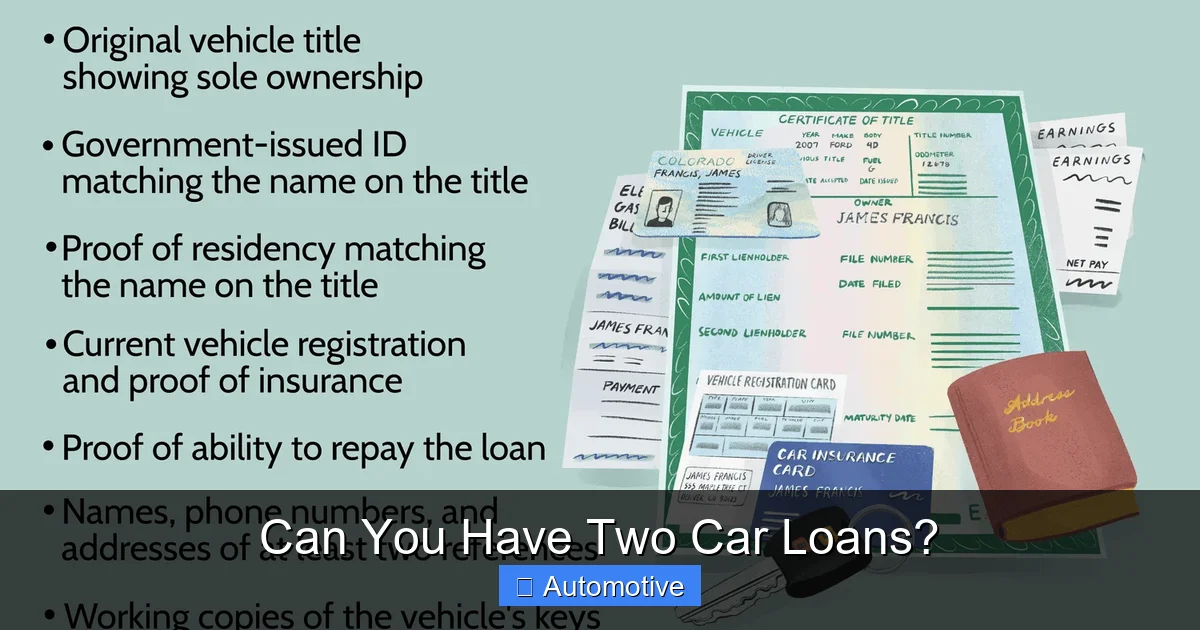
Sarah and Mike both work full-time. Sarah drives a 2018 Honda Civic with a $280 monthly payment. Mike uses public transit but just landed a job 30 miles away with no reliable bus route. They decide to buy him a used Toyota Camry for $15,000 with a $300 monthly payment.
Visual guide about Can You Have Two Car Loans?
Image source: investopedia.com
Their combined income is $9,000/month. Their total debt (mortgage, student loans, credit cards, and both car payments) is $3,600—giving them a 40% DTI. They have a 740 credit score and put $3,000 down on the Camry. Their lender approves the second loan because their DTI is manageable, their credit is strong, and they’ve shown financial discipline with a down payment.
Example 2: The Overextended Buyer
Jake has a $450 monthly payment on a leased BMW. He loves driving and decides he wants a vintage Mustang as a weekend car. He applies for a $25,000 loan with a $500 monthly payment. His income is $5,500/month, and his total debt (including rent, student loans, and credit cards) is already $2,800—putting his DTI at 51% even before the new loan.
His credit score is 680, and he has no down payment. The lender denies his application, citing high DTI and insufficient equity. Jake realizes he’d be paying over $1,400/month just on vehicles—nearly 26% of his income. He decides to wait, pay down some debt, and save for a larger down payment.
These examples show that context matters. Two car loans aren’t inherently bad—but they require careful planning.
Risks and Hidden Costs of Having Two Car Loans
Even if you get approved, owning two financed vehicles comes with hidden expenses that can sneak up on you. Here’s what to watch out for:
Double the Insurance
Insuring two cars costs significantly more than one. Full coverage on two vehicles could easily run $200–$400/month, depending on your location, driving history, and vehicle types. If one car is a sports car or luxury model, premiums jump even higher.
Maintenance and Repairs
Two cars mean twice the oil changes, tire rotations, brake jobs, and unexpected repairs. Even if both are reliable, wear and tear add up. A blown transmission or major engine issue on one vehicle can derail your budget—especially if you’re already stretched thin.
Depreciation
New cars lose value fast—often 20–30% in the first year. If you finance two new vehicles, you’re locking in steep depreciation. You could end up owing more than either car is worth, making it hard to sell or trade in later.
Registration and Taxes
Each state charges registration fees, and some impose personal property taxes on vehicles. These aren’t huge, but they’re recurring costs that add up. In states like Virginia or Missouri, annual car taxes can be hundreds of dollars per vehicle.
Opportunity Cost
Every dollar you spend on car payments, insurance, and maintenance is a dollar you can’t invest, save, or use for other goals—like retirement, a home down payment, or your child’s education. Over five years, two car loans could cost you $30,000–$50,000. That’s a significant chunk of change.
Risk of Default
If you lose your job or face a medical emergency, managing two car payments becomes extremely difficult. Defaulting on an auto loan can lead to repossession, credit damage, and legal trouble. Having two loans doubles that risk.
The bottom line? Two car loans aren’t just about monthly payments—they’re a long-term financial commitment with real consequences.
Smart Strategies for Managing Two Car Loans
If you’ve weighed the pros and cons and still want to move forward, here are some smart ways to make it work:
Improve Your Credit Before Applying
Pay down credit card balances, correct errors on your credit report, and avoid new credit applications for a few months. Even a 20–30 point boost in your score can qualify you for better rates.
Make a Larger Down Payment
Aim for at least 20% down on the second car. This reduces your loan amount, lowers monthly payments, and improves your LTV ratio—making you more attractive to lenders.
Choose a Shorter Loan Term
While longer terms (like 72 or 84 months) lower monthly payments, they increase total interest paid. Opting for a 48- or 60-month term saves money in the long run and builds equity faster.
Consider a Co-Signer
If your income or credit isn’t strong enough, a co-signer with good credit can help you qualify. Just remember: they’re equally responsible for the loan, so only do this with someone you trust completely.
Shop Around for Lenders
Don’t settle for the first offer. Compare rates from banks, credit unions, and online lenders. Credit unions often offer lower rates and more flexible terms, especially for members with existing relationships.
Create a Separate Budget Category
Track both car payments, insurance, gas, and maintenance in a dedicated budget. Use apps like Mint or YNAB to monitor spending and avoid surprises.
Have an Emergency Fund
Before taking on a second loan, build a savings buffer of 3–6 months’ worth of expenses. This protects you if one car breaks down or you face income loss.
Reassess Annually
Review your financial situation each year. If one car is paid off or your income increases, you might refinance or pay off the second loan early.
With discipline and planning, two car loans can fit comfortably into your life—without derailing your financial future.
Alternatives to Taking Out a Second Car Loan
Before you sign on the dotted line, consider these alternatives that might save you money and stress:
Lease One Vehicle
Leasing typically requires lower monthly payments than financing. You could lease a second car for your teen or spouse while keeping your current financed vehicle. Just be mindful of mileage limits and wear-and-tear fees.
Buy a Used or Certified Pre-Owned Car
A reliable used car often costs half as much as a new one. With a smaller loan amount, your monthly payment—and DTI impact—will be significantly lower.
Share a Vehicle or Use Ride-Sharing
If both drivers have flexible schedules, consider carpooling or using services like Uber or Lyft for occasional trips. This reduces the need for a second car altogether.
Pay Cash (If Possible)
Saving up and paying cash eliminates interest and loan payments. It may take time, but it’s the most financially sound option.
Trade In Your Current Car
If your current vehicle has equity, trade it in for a more affordable model and use the proceeds toward a second, cheaper car—ideally with a smaller loan or no loan at all.
Sometimes, the best decision isn’t getting a second car—it’s finding a smarter way to meet your transportation needs.
Conclusion: Yes, You Can—But Should You?
So, can you have two car loans? Absolutely. Is it always a good idea? Not necessarily.
The decision hinges on your financial health, lifestyle needs, and long-term goals. If you have strong credit, stable income, and a solid plan for managing dual payments, two car loans can work—especially for growing families or dual-income households. But if you’re already stretched thin, adding another loan could lead to stress, debt, and potential financial trouble.
Before applying, run the numbers. Calculate your DTI, compare insurance quotes, and factor in maintenance costs. Talk to lenders, but also talk to a financial advisor if you’re unsure. And remember: just because you *can* do something doesn’t mean you *should*.
At the end of the day, cars are tools—not trophies. The goal isn’t to have two loans; it’s to have reliable transportation that fits your life without breaking the bank. With careful planning and realistic expectations, you can drive confidently—in one car, or two.
Frequently Asked Questions
Can I get a second car loan if I already have one?
Yes, it’s possible—but approval depends on your credit score, income, debt-to-income ratio, and the lender’s policies. Some lenders may reject your application if you’re already carrying significant debt.
Will having two car loans hurt my credit?
Not necessarily. Making on-time payments on both loans can actually improve your credit over time. However, applying for multiple loans in a short period may cause a temporary dip due to hard inquiries.
Do I need a down payment for a second car loan?
It’s not always required, but a down payment (ideally 20% or more) improves your chances of approval, lowers your monthly payment, and reduces the risk of being upside-down on the loan.
Can I have two car loans in different states?
Yes, you can finance vehicles in different states, but registration, insurance, and tax rules vary by location. Make sure you understand the requirements in each state where you’ll be driving.
What happens if I can’t afford both car payments?
If you fall behind, contact your lenders immediately to discuss options like deferment or refinancing. Defaulting could lead to repossession and serious credit damage.
Is it better to lease or finance a second car?
Leasing often has lower monthly payments and less upfront cost, but you don’t build equity. Financing lets you own the car outright after the loan ends—but costs more per month. Choose based on your budget and long-term goals.