Can You Extend a Car Lease?

Contents
- 1 Key Takeaways
- 2 📑 Table of Contents
- 3 Can You Extend a Car Lease? Everything You Need to Know
- 4 How Car Lease Extensions Work
- 5 Why You Might Want to Extend Your Car Lease
- 6 How to Request a Lease Extension
- 7 Costs and Fees Associated with Lease Extensions
- 8 Pros and Cons of Extending a Car Lease
- 9 Alternatives to Extending Your Lease
- 10 Final Tips for a Smooth Lease Extension
- 11 Conclusion
- 12 Frequently Asked Questions

Rear View Camera

Anti-Slip Dashboard Mat

Car USB Charger

Magnetic Car Phone Mount
Yes, you can often extend a car lease—but it’s not automatic. Most leasing companies allow short-term extensions, usually 1–6 months, though terms and fees vary. It’s best to ask early and understand your options before your contract ends.
Key Takeaways
- Lease extensions are possible: Most leasing companies offer short-term extensions, typically ranging from one to six months, to help you avoid immediate decisions at lease-end.
- Early communication is key: Contact your leasing company at least 30–60 days before your lease ends to discuss extension options and avoid last-minute stress.
- Fees and mileage limits apply: Extending your lease often comes with monthly payments, possible mileage restrictions, and sometimes administrative fees—read the fine print.
- Not all leases are extendable: Some contracts prohibit extensions, especially if the vehicle is in poor condition or has exceeded mileage limits.
- It’s a temporary fix: A lease extension is not a long-term solution. Use it to buy time while deciding whether to buy, lease a new car, or return the vehicle.
- Negotiation may be possible: In some cases, you can negotiate better terms, especially if you’re planning to lease another vehicle from the same brand.
- Consider alternatives: Buying the car, leasing a new one, or returning it might be better options depending on your financial goals and needs.
📑 Table of Contents
- Can You Extend a Car Lease? Everything You Need to Know
- How Car Lease Extensions Work
- Why You Might Want to Extend Your Car Lease
- How to Request a Lease Extension
- Costs and Fees Associated with Lease Extensions
- Pros and Cons of Extending a Car Lease
- Alternatives to Extending Your Lease
- Final Tips for a Smooth Lease Extension
- Conclusion
Can You Extend a Car Lease? Everything You Need to Know
So, your car lease is almost up—and you’re not quite ready to say goodbye. Maybe you love the vehicle, or perhaps you’re still weighing your next move. Whatever the reason, you’re probably wondering: Can you extend a car lease? The good news? In most cases, yes—you can. But it’s not as simple as just keeping the keys and driving on. Lease extensions come with rules, costs, and conditions that vary by leasing company and contract.
Car leasing has become increasingly popular over the past decade. It offers lower monthly payments, the chance to drive a new car every few years, and less long-term commitment than buying. But when the lease term ends—typically 24 to 36 months—lessees face a big decision: return the car, buy it, or lease a new one. That’s where a lease extension can step in as a helpful bridge.
Think of a lease extension like hitting the snooze button on your lease-end decision. It gives you extra time to figure out your next steps without the pressure of an immediate return or purchase. Whether you’re waiting for a new model to arrive, saving up for a down payment, or just not ready to part with your current ride, an extension can offer breathing room.
But before you assume you can just keep driving, it’s important to understand how extensions work, what they cost, and when they make the most sense. This guide will walk you through everything you need to know about extending your car lease—from how to request one to the pros and cons of doing so.
How Car Lease Extensions Work

Visual guide about Can You Extend a Car Lease?
Image source: autogos.com
At its core, a lease extension is simply an agreement between you and your leasing company to continue using the vehicle beyond the original lease term. It’s not a new lease, but rather a temporary continuation of the existing one. Most extensions are short-term, usually lasting between one and six months, though some companies may allow longer under special circumstances.
The process typically starts with a conversation. You’ll need to contact your leasing company—usually through their customer service line or online portal—and request an extension. Be prepared to explain why you need more time. Common reasons include waiting for a new car delivery, financial planning, or uncertainty about your next vehicle choice.
Once you request an extension, the leasing company will review your account. They’ll check your payment history, vehicle condition, and mileage to determine eligibility. If approved, you’ll receive a formal agreement outlining the new terms. These usually include a monthly payment amount, any additional fees, and updated mileage limits.
For example, let’s say your 36-month lease on a 2021 Honda Accord ends in June. You’re waiting for the 2024 model to arrive in August, so you ask for a two-month extension. The leasing company agrees and offers a monthly payment of $350 (slightly higher than your original $320), with a mileage cap of 2,000 miles per month. You sign the extension agreement and keep driving.
It’s important to note that extensions are not automatic. You can’t just keep making payments and assume it’s approved. Doing so could result in penalties, repossession, or damage to your credit. Always get written confirmation before continuing to use the vehicle past your lease end date.
Types of Lease Extensions
Not all extensions are created equal. Depending on your leasing company and contract, you may have different options:
– **Short-Term Extension (1–6 months):** The most common type. Ideal for temporary needs like waiting for a new car or resolving financial timing.
– **Month-to-Month Extension:** Some companies allow rolling monthly extensions after the original term. This offers flexibility but often comes with higher monthly payments.
– **Long-Term Extension (6+ months):** Rare and usually only offered in special cases, such as if you’re leasing a commercial vehicle or have a strong relationship with the leasing company.
Each type has its own pros and cons. Short-term extensions are predictable and easy to plan around. Month-to-month offers maximum flexibility but less stability. Long-term extensions are uncommon and often require renegotiation of terms.
Why You Might Want to Extend Your Car Lease
Visual guide about Can You Extend a Car Lease?
Image source: dealerinspire-image-library-prod.s3.us-east-1.amazonaws.com
There are several practical reasons why extending your car lease might be the right move. Let’s explore the most common scenarios where an extension makes sense.
Waiting for a New Vehicle
One of the top reasons people extend their lease is to bridge the gap between their current car and a new one. Maybe you’ve already ordered a new vehicle, but it’s delayed due to supply chain issues or manufacturing backlogs. Or perhaps you’re waiting for a specific trim or color to become available.
For instance, imagine you’ve leased a Toyota RAV4 and want to upgrade to the new hybrid version. You place your order in March, but delivery isn’t expected until July—three months after your lease ends. Instead of scrambling to find a temporary car or paying for a rental, a lease extension lets you keep driving your RAV4 until the new one arrives.
This not only saves you the hassle of switching vehicles twice in a short period but also avoids the cost and inconvenience of renting a car for several months.
Financial Timing
Sometimes, it’s not about the car—it’s about the money. You might be in the middle of a big financial transition, such as starting a new job, moving, or paying off debt. Extending your lease gives you time to stabilize your finances before committing to a new car payment or a large down payment.
For example, let’s say your lease ends in December, but you’re expecting a bonus in February. You’d prefer to use that bonus for a down payment on a new lease or purchase. A two-month extension allows you to wait without rushing into a decision you’re not ready for.
Uncertainty About Next Steps
Not everyone knows what they want to do next. Maybe you’re torn between buying your current car, leasing a new one, or switching to an electric vehicle. Or perhaps you’re considering downsizing or changing your lifestyle (like working from home more).
A lease extension buys you time to think. Instead of making a hasty decision under pressure, you can research your options, test drive new models, and consult with family or financial advisors. This thoughtful approach often leads to better long-term choices.
Love Your Current Car
Let’s be honest—some cars are just hard to let go of. If you’ve grown attached to your vehicle and it’s still in great condition, an extension lets you keep enjoying it a little longer. This is especially true if the car has low mileage, minimal wear, and you’re happy with its performance.
For example, you might have leased a Mazda CX-5 and fallen in love with its handling, fuel efficiency, and sleek design. Even though your lease is up, you’re not ready to part with it. A short extension gives you more time to decide whether to buy it outright or lease a similar model.
How to Request a Lease Extension
Visual guide about Can You Extend a Car Lease?
Image source: capitalmotorcars.com
If you think a lease extension might work for you, the next step is to reach out to your leasing company. But don’t wait until the last minute—timing is crucial.
When to Ask
The ideal time to request an extension is at least 30 to 60 days before your lease ends. This gives the leasing company enough time to process your request and send you the necessary paperwork. It also shows that you’re responsible and planning ahead.
Waiting until the final week can limit your options. Some companies may not be able to accommodate last-minute requests, especially if they need to prepare the vehicle for resale or inspection.
How to Contact Your Leasing Company
Most leasing companies offer multiple ways to get in touch:
– **Customer Service Phone Line:** Call the number on your lease agreement or monthly statement. Be ready to provide your lease number, VIN, and reason for the extension.
– **Online Portal:** Many companies have customer portals where you can submit extension requests, view account details, and sign documents electronically.
– **Email or Chat Support:** Some brands offer email or live chat support for lease inquiries.
When you contact them, be polite and clear. Explain why you need the extension and how long you’re requesting. For example:
“Hi, my lease on my 2021 Ford Escape ends on August 15. I’m waiting for delivery of a new 2024 model, which is expected in October. I’d like to request a two-month extension. Can you let me know if this is possible and what the terms would be?”
What to Expect After You Apply
After submitting your request, the leasing company will review your account. They’ll check:
– Your payment history (are you up to date?)
– Current mileage (have you exceeded your limit?)
– Vehicle condition (any damage beyond normal wear?)
If everything looks good, they’ll send you an extension agreement. This document will outline:
– The new end date
– Monthly payment amount
– Any additional fees (e.g., administrative or processing fees)
– Updated mileage allowance
– Return instructions
Read this carefully before signing. If anything seems unclear or unfair, don’t hesitate to ask questions or request adjustments.
Costs and Fees Associated with Lease Extensions
While a lease extension can be convenient, it’s not always free. In fact, you may end up paying more per month than you did during your original lease. Here’s why.
Higher Monthly Payments
Lease extensions often come with higher monthly payments. This is because the leasing company is taking on additional risk by keeping the vehicle longer. The car is depreciating, and they may miss out on selling it at peak value.
For example, your original lease payment might have been $300 per month. For a two-month extension, the company might charge $350 or $375 per month. Over two months, that’s an extra $100–$150.
Administrative and Processing Fees
Some leasing companies charge a one-time fee just to process your extension request. This can range from $50 to $200, depending on the brand and lender. It’s usually non-refundable, even if you decide not to proceed.
Mileage Restrictions and Overages
Your extension agreement will likely include a mileage limit—often 1,000 to 2,000 miles per month. If you exceed this, you’ll be charged an overage fee, typically $0.10 to $0.25 per mile.
For instance, if your extension allows 1,500 miles per month and you drive 2,000, you’ll owe an extra $50–$125 in overage fees.
Wear and Tear Considerations
Even during an extension, you’re still responsible for maintaining the vehicle and avoiding excessive wear. If the car is returned with significant damage—like deep scratches, dents, or stained upholstery—you could face additional charges.
It’s a good idea to keep up with regular maintenance during your extension, such as oil changes, tire rotations, and cleaning. This helps protect your security deposit and reduces the risk of surprise fees at return.
Pros and Cons of Extending a Car Lease
Like any financial decision, extending your lease has both advantages and disadvantages. Let’s break them down so you can make an informed choice.
Pros
- Convenience: No need to switch cars or deal with rentals. You keep driving the vehicle you already know and love.
- Time to Decide: Gives you breathing room to research, save money, or wait for a new model.
- Lower Upfront Cost: Compared to buying or leasing a new car, an extension requires little to no down payment.
- No Credit Check (Usually):strong> Most extensions don’t require a new credit application, which saves time and avoids a hard inquiry.
Cons
- Higher Monthly Cost: Extension payments are often higher than your original lease.
- Short-Term Solution: You’re only delaying the inevitable decision about your next vehicle.
- Mileage Limits: You could face overage fees if you drive more than allowed.
- No Equity Building: Unlike buying, you’re not building ownership or equity in the vehicle.
- Potential for Damage Fees: Any wear and tear during the extension could cost you at return.
Alternatives to Extending Your Lease
Before committing to an extension, it’s worth considering other options. Depending on your situation, one of these might be a better fit.
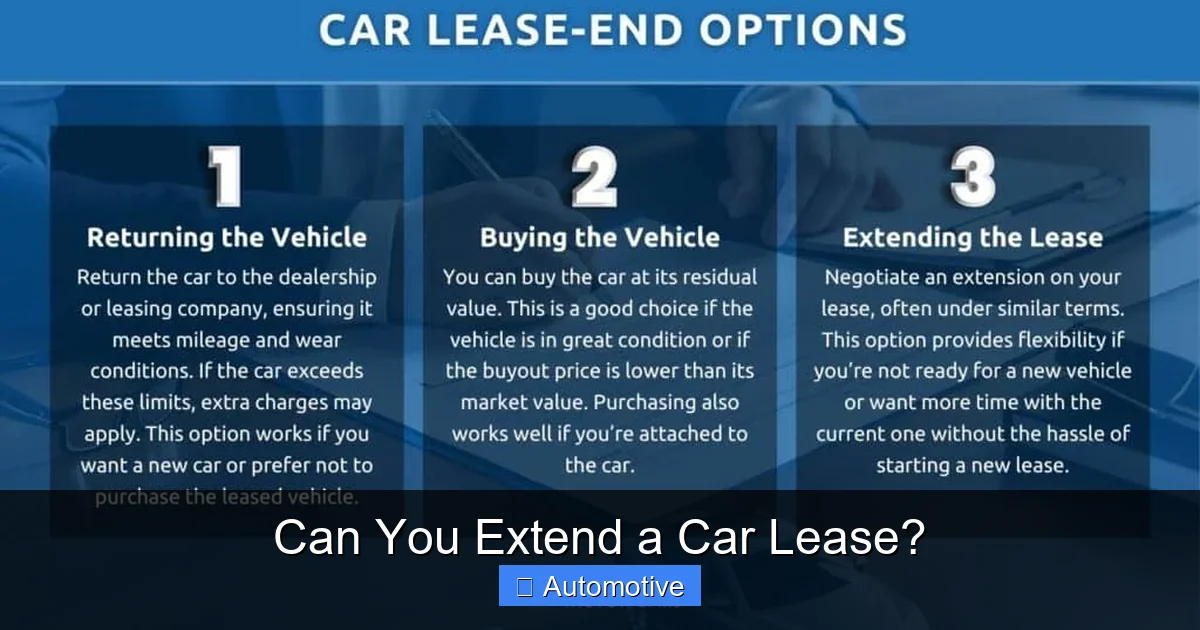
Buy Your Current Car
If you love your vehicle and it’s in good condition, buying it at the end of the lease could be a smart move. Most leases include a predetermined buyout price (also called the residual value), which is often lower than the car’s market value.
For example, your lease might allow you to purchase the car for $18,000. If similar models are selling for $20,000, you’re getting a great deal. You can either keep the car long-term or sell it yourself for a profit.
Lease a New Car
If you enjoy driving new vehicles every few years, leasing a new car might be the way to go. Many brands offer lease-end programs that make it easy to transition from one lease to the next—sometimes with incentives like waived fees or loyalty bonuses.
For instance, Honda and Toyota often provide $500–$1,000 toward your next lease if you’re coming from one of their vehicles. This can offset the cost of a new down payment or monthly payments.
Return the Car and Go Car-Free (or Use Alternatives)
If you live in a city with good public transit, ride-sharing, or car-sharing services, you might consider returning the car and going without one temporarily. This can save you money on insurance, fuel, and maintenance.
Alternatively, you could use a rental car for occasional trips or join a car-sharing program like Zipcar for flexibility.
Finance a Purchase
If you want to keep driving but don’t want to lease again, you could finance the purchase of your current car or a different vehicle. This builds equity and gives you full ownership, though it comes with higher monthly payments and long-term commitment.
Final Tips for a Smooth Lease Extension
If you decide to extend your lease, here are a few tips to make the process as smooth as possible:
– **Start early:** Contact your leasing company at least 60 days before your lease ends.
– **Read the fine print:** Understand all fees, mileage limits, and return conditions.
– **Keep the car clean and maintained:** Avoid unnecessary wear and tear.
– **Track your mileage:** Use a mileage tracker app to stay within limits.
– **Plan your next move:** Use the extension time wisely to decide what’s next.
Remember, a lease extension is a temporary solution—not a long-term plan. Use it to buy time, not to avoid making decisions.
Conclusion
So, can you extend a car lease? The answer is usually yes—but it depends on your leasing company, your contract, and your specific situation. Lease extensions can be a lifesaver when you need a little more time to decide what’s next, whether you’re waiting for a new car, stabilizing your finances, or just not ready to say goodbye to your current ride.
However, they’re not free, and they’re not forever. You’ll likely pay more per month, face mileage restrictions, and still need to return or buy the car eventually. That’s why it’s important to weigh the pros and cons, consider alternatives, and plan ahead.
If you do choose to extend, communicate early, read the terms carefully, and use the extra time wisely. Whether you end up buying, leasing, or going car-free, the goal is to make a decision that fits your lifestyle, budget, and long-term goals.
Ultimately, a lease extension is a tool—not a trap. Use it smartly, and it can help you navigate the transition between leases with confidence and ease.
Frequently Asked Questions
Can you extend a car lease?
Yes, most leasing companies allow short-term extensions, typically ranging from one to six months. However, it’s not automatic—you must request it in advance and meet eligibility requirements.
How much does it cost to extend a car lease?
Extension costs vary, but monthly payments are often higher than your original lease. You may also pay administrative fees and face mileage overage charges if you exceed the limit.
Can you extend a lease month-to-month?
Some leasing companies offer month-to-month extensions after the original term ends. These provide flexibility but usually come with higher monthly payments and no long-term commitment.
What happens if I don’t extend my lease and keep driving?
Driving past your lease end date without approval can result in penalties, repossession, or damage to your credit. Always get written confirmation before continuing to use the vehicle.
Can I negotiate the terms of a lease extension?
In some cases, yes—especially if you’re planning to lease another vehicle from the same brand. Be polite, explain your situation, and ask if they can offer better rates or waive fees.
Is it better to extend a lease or buy the car?
It depends on your goals. Buying builds equity and avoids ongoing payments, while extending offers short-term convenience. Compare the buyout price to market value and consider your long-term needs.