Can You Charge a Hybrid Car?

Contents
- 1 Key Takeaways
- 2 📑 Table of Contents
- 3 The Simple Answer and The Important Details
- 4 Family Tree of Hybrids: Standard vs. Plug-In
- 5 How to Charge a Plug-In Hybrid: Your Practical Guide
- 6 The Other Battery: Your Hybrid’s 12-Volt System
- 7 Practical Tips and Best Practices for Hybrid Owners
- 8 Common Myths and Misconceptions Debunked
- 9 The Bottom Line: What You Need to Do
- 10 Frequently Asked Questions

Car Wax Polish

Car Dent Repair Kit

Tire Shine Spray

Octane Booster
Yes, you can charge a hybrid car, but the answer isn’t simple. It all depends on whether you have a standard hybrid (like a classic Toyota Prius) or a plug-in hybrid electric vehicle (PHEV). Standard hybrids charge their batteries solely through regenerative braking and the gas engine, requiring no plug. PHEVs have larger batteries that must be plugged in to achieve significant electric-only range. Understanding your specific vehicle type is the first step to proper ownership and maintenance.
Key Takeaways
- Not all hybrids are plug-in hybrids: Standard hybrids self-charge and cannot be plugged in, while PHEVs require external charging for their larger batteries.
- Charging a PHEV is straightforward: You can use a standard 120V outlet (Level 1) or install a 240V station (Level 2) for faster charging at home.
- The 12V battery is separate: Every hybrid has a traditional 12-volt battery for accessories, which can be charged with a standard charger if it dies, just like in a regular car.
- Regenerative braking is key: All hybrids recapture energy during braking to recharge the traction battery, improving efficiency without plugging in.
- DC Fast Charging is for EVs and some PHEVs: Most standard hybrids cannot use public DC fast chargers; this capability is reserved for fully electric vehicles and select newer PHEVs.
- Charging habits affect battery health: For lithium-ion batteries in PHEVs, avoiding extreme charge states (consistently 0% or 100%) and extreme heat helps longevity.
- You never “push” electricity to the engine: The hybrid system intelligently manages power flow; your role is simply to provide electricity to the battery via a plug (for PHEVs) or let the system handle it (for standard hybrids).
📑 Table of Contents
- The Simple Answer and The Important Details
- Family Tree of Hybrids: Standard vs. Plug-In
- How to Charge a Plug-In Hybrid: Your Practical Guide
- The Other Battery: Your Hybrid’s 12-Volt System
- Practical Tips and Best Practices for Hybrid Owners
- Common Myths and Misconceptions Debunked
- The Bottom Line: What You Need to Do
The Simple Answer and The Important Details
So, you’re looking at a hybrid car, or maybe you already own one, and the big question bubbles up: “Can you charge a hybrid car?” It seems like it should have a yes or no answer, but the beautiful world of hybrid technology requires a bit more nuance. Think of it like asking, “Can you swim?” The answer is yes for humans, but not for dogs—different systems, different capabilities. The same is true for hybrids.
In the broadest sense, all hybrid vehicles manage and replenish electrical energy. But when people ask about “charging,” they usually mean plugging into a wall or a charging station. For that specific action, the split is crystal clear. You have two main families: the self-sustaining standard hybrid and the plug-in hybrid electric vehicle (PHEV), which genuinely needs an external power source to unlock its full potential. Let’s break down exactly what your hybrid can and cannot do when it comes to getting more juice.
Family Tree of Hybrids: Standard vs. Plug-In
To understand charging, you must first identify your hybrid’s lineage. This isn’t just academic; it dictates your entire fueling and maintenance routine.

Visual guide about Can You Charge a Hybrid Car?
Image source: carpro.com
The Standard Hybrid (HEV): The Self-Charging Genius
This is the classic hybrid, pioneered by the Toyota Prius and now found in models from Honda, Ford, Hyundai, and others. The standard hybrid has a relatively small high-voltage (HV) battery pack, typically between 0.6 to 1.8 kWh. Its entire energy strategy is a closed loop. It charges this battery in two primary ways:
- Regenerative Braking: When you coast or brake, the electric motor acts as a generator, converting the car’s kinetic energy into electricity and storing it in the HV battery. That’s why you see the battery charge icon jump during stop-and-go traffic.
- Engine Charging: When the battery gets low, the gas engine starts up—not to drive the wheels directly (though it can), but primarily to spin a generator that recharges the HV battery pack.
There is no plug. You never, ever plug a standard hybrid into an outlet. You refuel it with gasoline, and the car’s sophisticated computer system handles all the electrical energy management automatically. The electric motor assists the engine for better fuel economy, and at low speeds, it might drive the car alone for short bursts (a mile or so), but you cannot choose to drive on electricity alone for any meaningful distance or pre-charge it from your garage.
The Plug-In Hybrid (PHEV): The Best of Both Worlds (With a Cord)
The plug-in hybrid is a different beast. It has a much larger battery pack, typically ranging from 8 kWh to over 20 kWh. This size allows for a true electric-only driving range, often between 20 and 50 miles, depending on the model (think Ford Escape PHEV, Toyota RAV4 Prime, or Hyundai Tucson Plug-in).
Because of this larger battery, the PHEV must be plugged in to fully utilize its design. You have two modes of operation:
- EV Mode: When the large battery is charged, the car drives solely on electricity, producing zero tailpipe emissions. This is perfect for daily commutes, school runs, or errands.
- Hybrid Mode: Once the battery’s electric range is depleted, the PHEV seamlessly transitions into operating like a standard hybrid, using its gas engine and regenerative braking to manage a smaller buffer of electrical energy.
For a PHEV owner, plugging in is a non-negotiable part of the routine if you want to maximize fuel savings and minimize gas consumption. It’s the core feature that separates it from its standard hybrid sibling.
How to Charge a Plug-In Hybrid: Your Practical Guide
If you have or are considering a PHEV, here is exactly how you charge it. The process is designed to be simple and integrates into home life easily.

Visual guide about Can You Charge a Hybrid Car?
Image source: www-europe.nissan-cdn.net
Level 1 Charging: The Standard Household Outlet
Every PHEV comes with a portable electric vehicle supply equipment (EVSE) cord, often called a “granny charger.” This cord plugs into any standard 120-volt household outlet (NEMA 5-15).
- Speed: Very slow. You’ll add about 4-6 miles of electric range per hour of charging. A full charge on a 15 kWh battery from empty can take 8-12 hours.
- Use Case: Perfect for overnight charging at home if your daily drive is within the car’s electric range. It’s also the only option for charging at many hotels or friends’ houses without a dedicated station.
- Considerations: Ensure the outlet is on a dedicated circuit and in good condition. Avoid using an extension cord if possible, but if you must, use a heavy-duty (14-gauge or higher), short cord rated for outdoor use.
This method requires no special installation and is the default starting point for all PHEV owners.
Level 2 Charging: The Home & Public Workhorse
This is the recommended method for daily PHEV ownership. Level 2 charging uses a 240-volt outlet (like what powers an electric dryer or oven) and a dedicated charging station.
- Speed: Significantly faster. Expect to add 10-25 miles of range per hour. A full charge typically takes 2-5 hours.
- Installation: You’ll need an electrician to install a 240V circuit and a dedicated charging station (like those from ChargePoint, JuiceBox, or the manufacturer). Costs vary but are generally reasonable compared to the convenience gained.
- Public Access: Thousands of public Level 2 stations exist at shopping centers, workplaces, and parking garages. They often require an account or RFID card but are widely available.
For a PHEV driver, having a Level 2 charger at home transforms the ownership experience, allowing a full recharge every night with plenty of buffer.
DC Fast Charging: Not for Most PHEVs
This is the high-power (50 kW to 350 kW) charging seen at major highway corridors. It’s designed for battery electric vehicles (BEVs) with large, fast-charging-capable battery packs.
- Compatibility: Most standard PHEVs cannot use DC fast chargers. Their battery packs and charging systems are not engineered for the extreme power and thermal management required. A few newer, long-range PHEVs (like the Kia Niro EV/PHEV variant in some markets) may have limited DC fast charging capability, but it’s the exception, not the rule.
- For Standard Hybrids: Absolutely not. There is no external charging port at all.
If you own a PHEV, your owner’s manual is the final authority on DC fast charging compatibility. Assuming your car can use it will lead to frustration at the charging station.
The Other Battery: Your Hybrid’s 12-Volt System
Here’s a critical point that causes endless confusion. Your hybrid has two separate battery systems.

Visual guide about Can You Charge a Hybrid Car?
Image source: diycarexpert.com
- The High-Voltage (HV) Traction Battery: This is the large, powerful battery (usually under the floor or in the trunk) that powers the electric motor(s). In a standard hybrid, you cannot and should not attempt to charge it externally. In a PHEV, you charge it via the plug as described above.
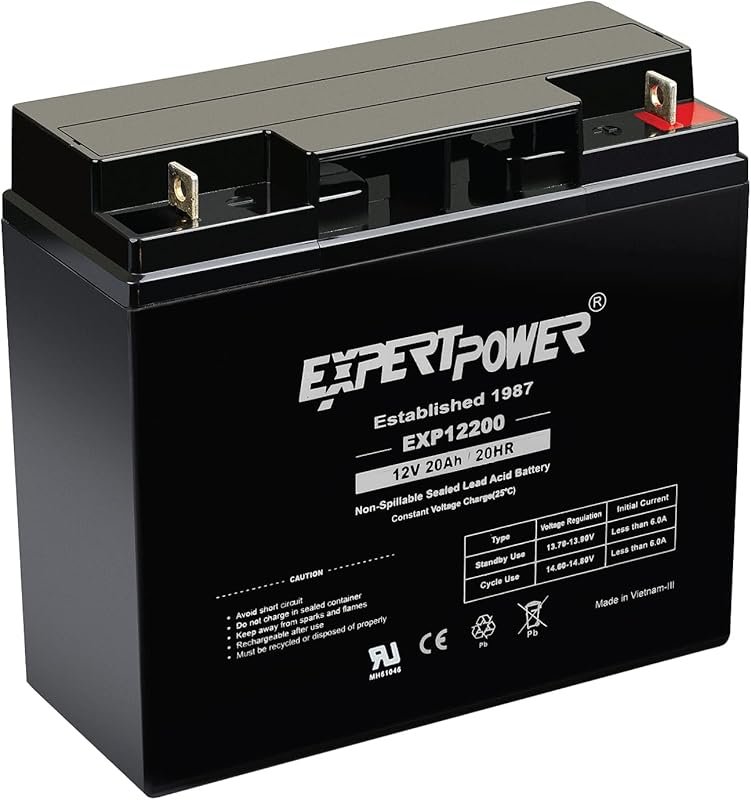
- The 12-Volt (12V) Auxiliary Battery: This is just like the battery in any conventional car. It powers the computer, lights, radio, and starter motor (for the gas engine). It is charged by the car’s DC-DC converter, which draws power from the HV battery.
What happens if the 12V battery dies? Your hybrid may not start, even if the big HV battery is fully charged. The solution is the same as for any car: you can jump-start it or use a standard 12V battery charger on the auxiliary battery terminals. Some people worry about the high-voltage system, but when jump-starting a hybrid, you connect to the dedicated 12V jump-start terminals (location shown in the manual), completely isolated from the HV system. It’s a standard procedure. You can learn the exact safe steps for charging a dead car battery, which applies directly to the 12V battery in your hybrid.
Furthermore, if you need to replace the 12V battery, you can often do it yourself, but you must follow the manufacturer’s procedure to avoid electrical system glitches. In some modern hybrids, the 12V battery is in the trunk or under a cover, but it’s still a standard unit. For more on maintenance, see our guide on whether you can charge a car battery while connected, which also applies here.
Practical Tips and Best Practices for Hybrid Owners
Now that you know the “how,” let’s talk about the “how to do it best.” These tips will save you money, time, and potential headaches.
For PHEV Owners: Maximize Your Electric Miles
Your goal is to use the battery as much as possible. Charge every night if you have a home charger. Even a few hours on Level 1 can top up for a short commute. Plan your charging around your routine. Many utilities offer cheaper “off-peak” rates for overnight charging—check with your provider. Use your car’s app or timer to schedule charging for the cheapest hours.
When using public chargers, be a good neighbor. Don’t park in a charging spot if you’re not actively charging. Move your car promptly when charging is complete. Apps like PlugShare help find available stations.
For Standard Hybrid Owners: Drive for Efficiency
Since you can’t plug in, your focus is on driving style to maximize regenerative charging.
- Brake earlier and gently: This maximizes energy recapture. Anticipate traffic stops.
- Use the EV mode button (if equipped): This encourages the car to use the electric motor more aggressively at low speeds, which can help build a buffer of electrical energy for later use.
- Maintain proper tire pressure: Under-inflated tires create more rolling resistance, forcing the engine to work harder and reducing regenerative opportunities.
Remember, your “charge” comes from your driving habits and the gas in your tank.
Battery Health and Longevity
Both standard and plug-in hybrids use sophisticated lithium-ion battery packs with long warranties (often 8 years/100,000 miles). To help them last:
- Avoid extreme heat: Park in shade or a garage when possible. Extreme heat is the number one enemy of battery longevity.
- For PHEVs, avoid deep cycling: While lithium batteries don’t have a “memory,” constantly draining to 0% and charging to 100% causes more stress. Most systems limit the usable range to protect the battery (e.g., a 15 kWh pack might only use 13 kWh). There’s no need to micromanage; just plug in when convenient.
- Let the system manage itself: Don’t try to game the system. The hybrid control computer is far better at managing battery state of charge than any human driver.
Common Myths and Misconceptions Debunked
The world of hybrids is rife with old wives’ tales. Let’s clear the air.
Myth: “You can overcharge a hybrid battery by leaving it plugged in.”
False. The charging system in a PHEV is fully managed by the vehicle’s computer. Once the battery reaches 100%, the charger shuts off. It will trickle-maintain the charge if needed, but it cannot be “overcharged” in the dangerous sense. Leaving it plugged in overnight or for days is perfectly safe and is actually a common practice for daily readiness.
Myth: “You need a special, expensive outlet to charge a hybrid.”
Mostly False. For a standard hybrid, there is no outlet. For a PHEV, you can use a standard 120V outlet (Level 1) with the included cord. A Level 2 charger requires a 240V outlet, which is the same type used for clothes dryers. While installation has a cost, it’s a common household circuit, not a proprietary “special” outlet.
Myth: “The gas engine will wear out faster because it starts and stops so much.”
False. Hybrid engines are specifically designed for frequent start-stop cycles. They often have different valve timing (Atkinson cycle) and no conventional starter motor (the electric motor handles starting). They are engineered for this duty and, in many cases, experience less wear from idling and low-speed operation than a conventional engine.
Myth: “Hybrid batteries are dangerous and can explode.”
Highly Unlikely. Hybrid HV batteries are robust, sealed, and come with extensive safety systems. They are designed to disconnect automatically in a severe collision. The risk of a catastrophic failure is astronomically low. The 12V battery, while containing lead-acid or AGM chemistry, is no more dangerous than the one in any other car. For general battery safety, it’s always good to understand the potential risks of a car battery, but these are minimal with proper handling.
The Bottom Line: What You Need to Do
So, can you charge a hybrid car? The final answer is: It depends entirely on which type of hybrid you have.
- If you own a Standard Hybrid (HEV): You do not charge it. You put gas in the tank. Your job is to drive efficiently to help the system recapture energy. The car handles all battery charging internally.
- If you own a Plug-in Hybrid (PHEV): You absolutely should charge it regularly, ideally daily, using a standard outlet or a dedicated 240V charger. This is how you get the most value, fuel savings, and zero-emission driving from your vehicle.
The most important step for any hybrid owner is to read your owner’s manual. It will state clearly if your vehicle is a plug-in and provide the definitive charging instructions, safety information, and recommended practices. Understanding your specific machine is the key to enjoying the hybrid advantage for years to come.
Frequently Asked Questions
Can I charge a standard hybrid car with an external charger?
No, you cannot. Standard hybrid electric vehicles (HEVs) like the non-plug-in Toyota Prius or Honda Insight have no external charging port. Their batteries are charged only through regenerative braking and the gas engine. Attempting to find a port to plug into will be futile.
How often should I charge my plug-in hybrid?
For maximum fuel economy and to utilize the electric-only mode, you should charge your PHEV as often as possible, ideally every night if you have a home charger. The more you drive on electricity, the less gasoline you’ll use. There’s no harm in frequent charging; the battery management system protects the battery.
Can I use a regular household outlet to charge my PHEV?
Yes, all PHEVs come with a cord that plugs into a standard 120V household outlet (Level 1 charging). It’s slower, adding about 4-6 miles of range per hour, but it’s perfectly safe and effective for overnight charging if your daily driving is within the car’s electric range.
Will charging my hybrid damage the battery over time?
No. Modern hybrid and PHEV batteries are lithium-ion and have sophisticated battery management systems (BMS) that prevent overcharging, overheating, and deep discharging. They are designed to last the life of the vehicle. Avoiding extreme heat and very deep cycles (consistently draining to 0%) can further extend their life.
What’s the difference between charging a hybrid and charging a full electric car?
The main difference is that most hybrids (standard HEVs) cannot be externally charged at all. For PHEVs, the charging process using Level 1 and Level 2 stations is identical to a full electric car (BEV). However, PHEV batteries are smaller and typically cannot use the fastest DC fast chargers, which are designed for the larger, more robust battery packs in BEVs.
If my hybrid’s 12V battery dies, can I charge it like a normal car battery?
Yes, absolutely. The 12V auxiliary battery is just like the one in any conventional car. You can safely jump-start it using another vehicle or a portable jump starter, following standard procedures. You can also use a standard 12V battery charger on it. Always connect to the designated jump-start terminals, as detailed in your owner’s manual. For a full guide on this process, you can read about charging a dead car battery.