Can Toyota Service Lexus Vehicles?

Contents
- 1 Key Takeaways
- 2 📑 Table of Contents
- 3 Can Toyota Service Lexus Vehicles?
- 4 Shared Heritage: Toyota and Lexus Under One Roof
- 5 What Can Toyota Service Centers Handle?
- 6 When Should You Go to a Lexus Dealership?
- 7 Real-World Examples: When Toyota Service Works
- 8 Tips for Getting Your Lexus Serviced at a Toyota Dealership
- 9 Conclusion: Yes, But With Caveats
- 10 Frequently Asked Questions




Yes, many Toyota dealerships can service Lexus vehicles—especially since both brands are under the Toyota Motor Corporation umbrella. While Lexus vehicles often require specialized tools and training, trained Toyota technicians with access to proper equipment can handle routine maintenance and repairs. However, for complex issues or warranty work, visiting a Lexus-certified service center is usually recommended.
Key Takeaways
- Toyota and Lexus share engineering roots: Many components, platforms, and engines are shared between the two brands, making cross-service feasible.
- Not all Toyota technicians are Lexus-certified: While some Toyota service advisors and mechanics are trained on Lexus models, full certification is required for certain repairs.
- Routine maintenance can often be done at Toyota: Oil changes, brake inspections, tire rotations, and fluid top-offs are commonly handled at Toyota service centers.
- Warranty and software updates may require Lexus: For warranty-covered repairs or advanced diagnostics, a Lexus dealership is typically necessary.
- Parts availability varies by location: Larger Toyota dealerships with Lexus partnerships or shared facilities are more likely to stock Lexus-specific parts.
- Customer experience differs: Lexus service centers offer a premium experience with loaner cars, complimentary inspections, and concierge-level support.
- Always check with your local dealer: Policies and capabilities vary by dealership, so calling ahead ensures you get accurate information.
📑 Table of Contents
- Can Toyota Service Lexus Vehicles?
- Shared Heritage: Toyota and Lexus Under One Roof
- What Can Toyota Service Centers Handle?
- When Should You Go to a Lexus Dealership?
- Real-World Examples: When Toyota Service Works
- Tips for Getting Your Lexus Serviced at a Toyota Dealership
- Conclusion: Yes, But With Caveats
Can Toyota Service Lexus Vehicles?
If you own a Lexus but live near a Toyota dealership—or simply prefer the convenience of a local Toyota service center—you might be wondering: *Can Toyota service Lexus vehicles?* It’s a fair question, especially since both brands are part of the same parent company, Toyota Motor Corporation. The short answer is: **yes, in many cases, Toyota can service Lexus vehicles**, but there are important nuances to understand.
Lexus is the luxury division of Toyota, launched in 1989 to compete with brands like BMW, Mercedes-Benz, and Audi. While Lexus vehicles are built with higher-end materials, advanced technology, and refined performance, they still share much of their DNA with Toyota models. For example, the Lexus ES shares its platform with the Toyota Camry, and the Lexus RX shares components with the Toyota Highlander. This shared engineering means that many mechanical systems—like engines, transmissions, brakes, and suspension—are similar or identical.
Because of this overlap, Toyota service centers are often equipped to handle basic maintenance and even some repairs on Lexus vehicles. However, Lexus vehicles also come with unique features, such as adaptive suspension systems, advanced driver-assistance suites (like Lexus Safety System+), and premium interiors that may require specialized tools, software, or training to service properly.
In this article, we’ll explore the ins and outs of whether Toyota can service Lexus vehicles, what types of work are typically covered, and when it’s best to go directly to a Lexus dealership. Whether you’re looking to save money, save time, or simply understand your options, this guide will help you make an informed decision.
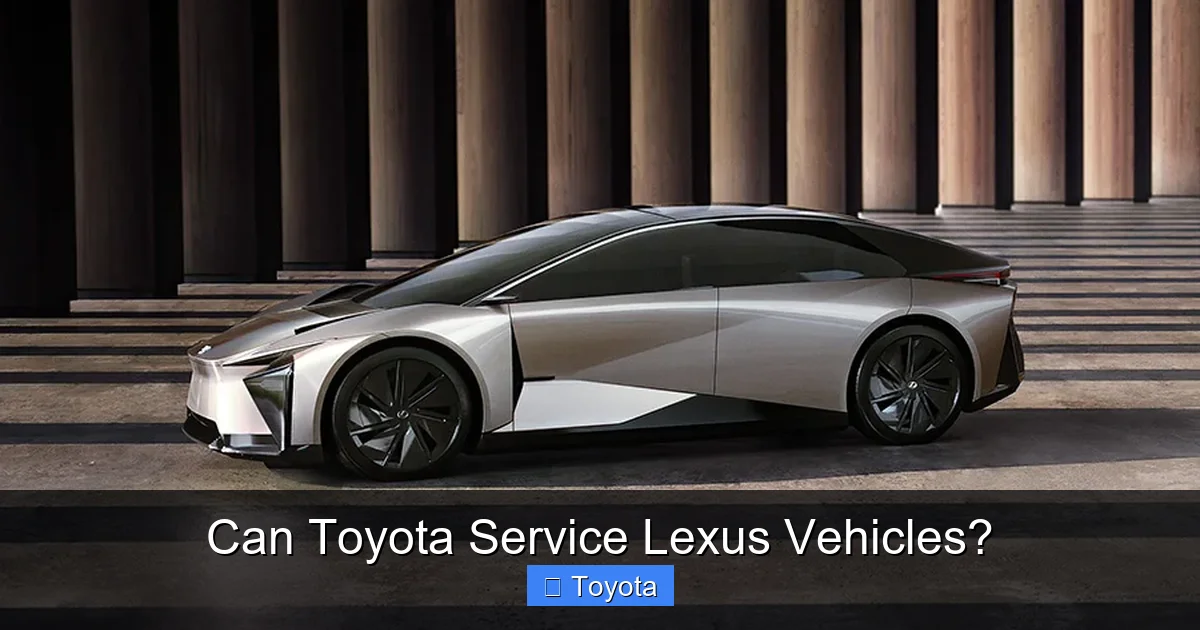
Visual guide about Can Toyota Service Lexus Vehicles?
Image source: global.toyota
To understand why Toyota can sometimes service Lexus vehicles, it helps to know how closely the two brands are connected. Lexus isn’t just a rebadged Toyota—it’s a carefully crafted luxury brand that builds on Toyota’s reputation for reliability and engineering excellence. But the foundation is undeniably shared.
Common Platforms and Components
Many Lexus models are built on the same vehicle platforms as their Toyota counterparts. For instance:
– The **Lexus ES** is closely related to the **Toyota Camry**, sharing the same front-wheel-drive platform, engine options (like the 2.5L 4-cylinder and 3.5L V6), and even some interior components.
– The **Lexus RX** shares its platform with the **Toyota Highlander**, including the hybrid powertrain in the RX 450h and Highlander Hybrid.
– The **Lexus NX** is built on the same platform as the **Toyota RAV4**, with similar suspension geometry and engine choices.
This shared architecture means that many mechanical parts—such as brake pads, rotors, shocks, belts, and filters—are interchangeable or very similar. Even electrical systems and wiring harnesses often follow the same design principles.
Engine and Transmission Overlap
Toyota and Lexus frequently use the same engines across their lineups. For example:
– The 2.5-liter Dynamic Force 4-cylinder engine appears in both the Toyota Camry and the Lexus ES 250.
– The 3.5-liter V6 engine used in the Lexus RX 350 is essentially the same as the one in the Toyota Highlander and Sienna.
– Hybrid systems like Toyota’s Hybrid Synergy Drive are used in both Toyota and Lexus hybrids, including the Prius, Camry Hybrid, Lexus ES Hybrid, and RX Hybrid.
Because of this, Toyota technicians who work on hybrid or V6-powered Toyotas are often already familiar with the core mechanics of equivalent Lexus models.
Manufacturing and Quality Control
Lexus vehicles are built in dedicated facilities, often with stricter quality control standards than standard Toyota plants. However, some models—like the Lexus ES—are actually manufactured in the same factories as Toyota vehicles, using the same production lines and quality assurance processes. This further blurs the line between the two brands when it comes to serviceability.
What Can Toyota Service Centers Handle?
Visual guide about Can Toyota Service Lexus Vehicles?
Image source: dsf.my
Now that we’ve established the shared foundation between Toyota and Lexus, let’s dive into what types of service work Toyota dealerships can realistically perform on Lexus vehicles.
Routine Maintenance Tasks
For everyday maintenance, many Toyota service centers are fully capable of servicing Lexus vehicles. These tasks include:
– **Oil and filter changes:** Most Toyota techs are trained on Toyota’s oil specifications, which are often the same or compatible with Lexus requirements. Synthetic oil changes for Lexus models like the ES or RX can typically be done at a Toyota shop.
– **Tire rotations and balancing:** This is a straightforward task that doesn’t require brand-specific tools or software.
– **Brake inspections and pad replacements:** Since brake systems are often shared or very similar, Toyota technicians can inspect and replace brake pads and rotors on many Lexus models.
– **Fluid top-offs and replacements:** Coolant, brake fluid, transmission fluid, and windshield washer fluid can usually be serviced at a Toyota center.
– **Battery testing and replacement:** Toyota service centers have the tools to test and replace 12-volt batteries, which are standard across both brands.
Basic Repairs and Part Replacements
Beyond maintenance, Toyota technicians can often handle basic repairs, such as:
– **Replacing air filters and cabin filters:** These are typically easy to access and don’t require special tools.
– **Fixing minor electrical issues:** Things like blown fuses, faulty door locks, or malfunctioning window switches can often be diagnosed and repaired.
– **Suspension component replacements:** Struts, shocks, and sway bar links are often similar enough between Toyota and Lexus models that a Toyota tech can install them.
For example, if your Lexus RX needs new front struts, and your local Toyota dealership has the parts in stock (or can order them), a trained technician can likely perform the replacement without issue.
Limitations and Exceptions
However, there are clear limits to what Toyota can do. Some repairs require:
– **Lexus-specific diagnostic tools:** Lexus vehicles use specialized software (like Techstream) for advanced diagnostics, especially for hybrid systems, adaptive cruise control, or lane-keeping assist.
– **Brand-specific training:** While many Toyota technicians are cross-trained, not all have completed Lexus certification programs.
– **Proprietary parts:** Some components, like premium audio systems, climate control modules, or advanced infotainment units, are unique to Lexus and may not be available at Toyota parts counters.
Additionally, if your Lexus is still under warranty, having non-certified technicians perform repairs could potentially void certain coverage—especially if improper procedures are followed.
When Should You Go to a Lexus Dealership?
Visual guide about Can Toyota Service Lexus Vehicles?
Image source: mag.lexus.co.uk
While Toyota can handle many service needs, there are several situations where visiting a Lexus-certified service center is the smarter—and sometimes necessary—choice.
Warranty and Recall Work
If your Lexus is under the factory warranty (typically 4 years/50,000 miles for basic coverage and 6 years/70,000 miles for powertrain), any repairs related to defects or recalls should be done at a Lexus dealership. This ensures:
– Use of genuine Lexus parts
– Proper documentation for warranty claims
– Compliance with manufacturer repair procedures
Attempting to perform warranty-covered repairs at a Toyota center could result in denied claims or complications down the road.
Advanced Diagnostics and Software Updates
Modern Lexus vehicles are packed with technology. Features like:
– Adaptive suspension (AVS)
– Dynamic radar cruise control
– Pre-collision systems
– Lane tracing assist
…require specialized diagnostic tools and software updates that are only available through Lexus service networks. Toyota technicians may not have access to these systems, making it difficult—or impossible—to properly diagnose or repair certain issues.
For example, if your Lexus NX’s adaptive headlights are malfunctioning, a Toyota tech might be able to replace a bulb, but they likely can’t recalibrate the system or update the control module without Lexus-specific equipment.
Hybrid and Performance Systems
Lexus hybrids, like the ES 300h or RX 450h, use complex hybrid powertrains that require specialized knowledge. While Toyota technicians are experts in hybrid technology (thanks to models like the Prius), Lexus hybrids often have unique control modules, battery configurations, and regenerative braking systems.
Similarly, performance-oriented models like the Lexus IS F or RC F use high-output engines and suspension setups that go beyond standard Toyota offerings. Servicing these vehicles requires experience with high-performance components.
Customer Experience and Perks
Even if a Toyota center *can* service your Lexus, the experience may not match what you’d get at a Lexus dealership. Lexus service centers typically offer:
– Complimentary vehicle inspections
– Loaner cars or shuttle service
– Premium waiting areas with Wi-Fi, refreshments, and workstations
– Dedicated service advisors who specialize in luxury vehicles
These perks are part of the Lexus brand promise—and they’re not always available at Toyota locations.
Real-World Examples: When Toyota Service Works
To bring this information to life, let’s look at a few real-world scenarios where Toyota service centers have successfully serviced Lexus vehicles.
Example 1: Oil Change on a Lexus ES 350
Sarah owns a 2020 Lexus ES 350 and lives in a rural area where the nearest Lexus dealership is 45 minutes away. Her local Toyota dealership, however, is just 10 minutes from home. She calls ahead and asks if they can perform an oil change.
The service advisor confirms they can. The ES 350 uses the same 3.5L V6 engine as the Toyota Highlander, and the oil specification (0W-20 full synthetic) is standard across both brands. The technician performs the oil change, resets the maintenance light, and even tops off the windshield washer fluid—all for a lower labor rate than the Lexus dealer would charge.
Example 2: Brake Pad Replacement on a Lexus RX 350
Mike’s 2018 Lexus RX 350 needs new front brake pads. He takes it to his regular Toyota service center, which has experience with Highlander brake systems. Since the RX and Highlander share the same brake setup, the technician installs the new pads and resurfaces the rotors. The job is completed in under two hours, and Mike saves $150 compared to the Lexus dealer quote.
Example 3: Failed Scenario – Infotainment System Glitch
Lisa’s 2021 Lexus NX has a glitch in its infotainment system—the screen freezes during navigation. She takes it to a Toyota dealership, hoping they can help. Unfortunately, the issue requires a software update using Lexus Techstream, which the Toyota center doesn’t have. They recommend she visit a Lexus dealer, where the update is completed in 30 minutes.
This example highlights the limits of Toyota service: while mechanical work is often feasible, software and electronics may require brand-specific tools.
Tips for Getting Your Lexus Serviced at a Toyota Dealership
If you’re considering having your Lexus serviced at a Toyota center, here are some practical tips to ensure a smooth experience:
Call Ahead and Ask Specific Questions
Don’t assume all Toyota dealerships can service Lexus vehicles. Call ahead and ask:
– “Do you have technicians trained on Lexus models?”
– “Can you perform [specific service] on a [year/make/model] Lexus?”
– “Do you have access to Lexus parts or can you order them?”
This prevents wasted trips and sets clear expectations.
Choose a Dealership with Lexus Experience
Some Toyota dealerships are located near Lexus stores or have partnerships with them. These locations are more likely to have cross-trained staff and access to Lexus resources. Look for dealerships that mention “Lexus-certified” or “experienced with luxury vehicles” in their service descriptions.
Bring Your Owner’s Manual
Your Lexus owner’s manual contains important service intervals, fluid specifications, and maintenance recommendations. Sharing this with the Toyota service advisor ensures they follow the correct procedures.
Keep Records of All Work
Whether you go to Toyota or Lexus, keep detailed records of all maintenance and repairs. This is especially important if you plan to sell the vehicle later, as a complete service history increases resale value.
Know When to Go to Lexus
Be honest about your vehicle’s needs. If it’s under warranty, has complex electronics, or requires software updates, it’s best to go to a Lexus dealer. Trying to save money upfront could lead to bigger issues—and costs—down the road.
Conclusion: Yes, But With Caveats
So, can Toyota service Lexus vehicles? The answer is a qualified **yes**. Thanks to shared engineering, platforms, and components, many Toyota service centers are capable of handling routine maintenance and basic repairs on Lexus vehicles. For tasks like oil changes, brake work, tire rotations, and fluid replacements, a Toyota dealership can be a convenient and cost-effective option.
However, when it comes to warranty work, advanced diagnostics, hybrid systems, or software-related issues, a Lexus-certified service center is the safer and often necessary choice. The expertise, tools, and customer experience at a Lexus dealership are tailored to the luxury brand’s standards—something that not all Toyota locations can match.
Ultimately, the decision comes down to your vehicle’s specific needs, your location, and your priorities. If you value convenience and cost savings, and your Lexus only needs basic service, a Toyota center might be a great fit. But if you want peace of mind, full warranty protection, and access to the latest technology, heading to a Lexus dealer is the way to go.
The key is to stay informed, ask questions, and choose the right service provider for the job. After all, your Lexus deserves the best care—whether it’s from Toyota or Lexus.
Frequently Asked Questions
Can a Toyota dealership perform warranty repairs on my Lexus?
Generally, no. Warranty repairs should be performed at a Lexus-certified service center to ensure compliance with manufacturer standards and to avoid potential voiding of coverage. Toyota technicians may not have access to the required tools or documentation.
Will servicing my Lexus at a Toyota dealership void my warranty?
Not necessarily, but it depends on the work performed. Routine maintenance like oil changes won’t void your warranty, but if a repair is done incorrectly or without proper procedures, it could affect coverage. Always check with your warranty provider first.
Do Toyota technicians receive training on Lexus vehicles?
Some do, especially at dealerships near Lexus stores or those with cross-trained staff. However, full Lexus certification requires additional training and access to specialized tools, which not all Toyota technicians have.
Can Toyota service centers order Lexus parts?
Many can, especially common parts like filters, belts, and brake components. However, for proprietary or high-end parts (like infotainment systems or adaptive suspension modules), a Lexus dealer is more reliable.
Is it cheaper to service a Lexus at a Toyota dealership?
Often, yes—especially for routine maintenance. Toyota labor rates are typically lower than Lexus rates, and parts may be less expensive. However, the savings must be weighed against the availability of expertise and tools.
What if my local Toyota dealership refuses to service my Lexus?
This is common, especially at smaller or less experienced dealerships. They may lack the tools, training, or confidence to work on luxury vehicles. In that case, your best option is to visit a Lexus service center or find a Toyota dealer with Lexus experience.