Can Low Oil Cause Overheating?

Contents
- 1 Key Takeaways
- 2 📑 Table of Contents
- 3 Introduction: The Silent Heat Builder Under Your Hood
- 4 How Your Engine Actually Cools Itself: The Oil’s Secret Job
- 5 The Direct Link: How Low Oil Triggers an Overheating Event
- 6 Recognizing the Warning Signs: It’s Not Always Just the Temperature Gauge
- 7 What to Do the Moment You Suspect Trouble: An Action Plan
- 8 Prevention: Your Proactive Defense Against Overheating
- 9 Debunking Myths: Oil vs. Coolant in the Overheating Story
- 10 Conclusion: Respect the Liquid in Your Dipstick
- 11 Frequently Asked Questions
Fuel Injector Cleaner

Anti Rust Spray

Car Bumper Protector

Tire Pressure Monitoring System (TPMS)
Yes, low oil can absolutely cause your engine to overheat. Engine oil does more than just lubricate; it’s a vital part of the cooling system that draws heat away from components and reduces friction. When oil levels drop too low, increased metal-on-metal contact generates excessive heat, and the oil can’t dissipate that heat effectively. This creates a dangerous cycle that can lead to severe engine damage very quickly. Recognizing the signs and maintaining proper oil levels is non-negotiable for engine health.
Key Takeaways
- Oil is a coolant: Engine oil actively absorbs and carries heat away from critical components like pistons and bearings, working alongside your coolant system.
- Low oil means more friction: Insufficient oil leads to direct metal contact, generating intense friction-based heat that the cooling system must then handle.
- Warning signs overlap: Overheating from low oil often shows as a high temperature gauge, oil pressure warning light, strange noises, or even smoke from the engine bay.
- Act immediately: If you suspect low oil is causing overheating, safely pull over, shut off the engine, and check the oil level. Do not continue driving.
- Prevention is key: Regular oil checks, timely oil changes with the correct oil type, and fixing leaks are the best defenses against this problem.
- It’s a chain reaction: Low oil can cause overheating, but prolonged overheating can also degrade oil, creating a destructive feedback loop that destroys engines.
- Don’t confuse systems: While both are critical, low oil and low coolant cause overheating through different mechanisms. Both need proper levels to function.
[FEATURED_IMAGE_PLACEHOLDER]
📑 Table of Contents
- Introduction: The Silent Heat Builder Under Your Hood
- How Your Engine Actually Cools Itself: The Oil’s Secret Job
- The Direct Link: How Low Oil Triggers an Overheating Event
- Recognizing the Warning Signs: It’s Not Always Just the Temperature Gauge
- What to Do the Moment You Suspect Trouble: An Action Plan
- Prevention: Your Proactive Defense Against Overheating
- Debunking Myths: Oil vs. Coolant in the Overheating Story
- Conclusion: Respect the Liquid in Your Dipstick
Introduction: The Silent Heat Builder Under Your Hood
You’re driving down the highway, the temperature gauge starts to creep into the red, and your heart sinks. Your first thought is usually the coolant, right? That bright green or orange liquid is the star of the cooling show. But what if we told you the quiet, dark liquid in your oil pan plays just as crucial a role in keeping your engine at a safe temperature? The connection between low oil and overheating is a direct and dangerous one, and it’s a chain reaction that can wreck an engine in minutes. Many drivers simply don’t realize that engine oil is a primary component of the thermal management system. It’s not just for lubrication; it’s a heat transfer fluid. So, can low oil cause overheating? The unequivocal answer is yes. Let’s pop the hood and see exactly how this happens, how to spot it, and what you must do about it.
How Your Engine Actually Cools Itself: The Oil’s Secret Job
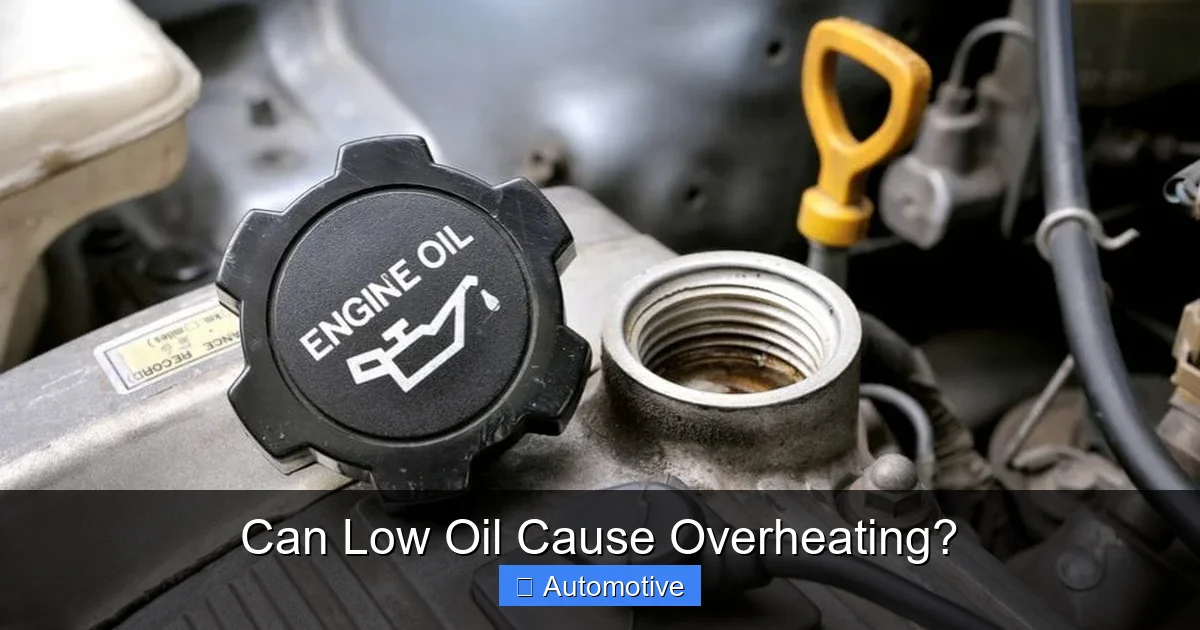
When we think of engine cooling, we picture the radiator, coolant hoses, and the water pump. That’s the primary system for managing the massive heat from combustion. But the oil system is its essential partner, often called the “secondary cooling system.” It works on a different scale and in different places.

Visual guide about Can Low Oil Cause Overheating?
Image source: vehiclefreak.com
Lubrication is Friction Control, Which is Heat Control
At its core, oil’s main job is to create a protective film between moving metal parts. Think about rubbing your hands together quickly—they get warm from friction. Now imagine thousands of metal parts—pistons, bearings, camshafts, valve trains—sliding and spinning against each other at incredible speeds and pressures. Without oil, that friction would generate catastrophic heat almost instantly. Oil eliminates most of that friction, and by doing so, it eliminates the primary source of excessive heat. Low oil means that film breaks down. Metal begins to contact metal. This isn’t just wear; it’s a heat factory. The energy from the friction has to go somewhere, and it goes into heating the parts themselves and the surrounding oil.
Oil as a Heat Transfer Fluid
Oil has a specific job to pick up that heat. As it circulates under pressure, it soaks up thermal energy from the hottest zones—especially the piston crowns and cylinder walls under the combustion chamber. It then carries that heat away to the oil pan, where it can dissipate into the engine block and eventually the air. Some engines even have an oil cooler, a small radiator dedicated to cooling the oil, much like the main radiator cools the coolant. This system is vital for protecting components that the coolant can’t easily reach. If oil level is low, there’s simply less fluid to perform this heat-siphoning duty. The remaining oil gets hotter faster and can’t cool down effectively between cycles.
The Viscosity Factor: Thinner Oil, Weaker Protection
Oil isn’t just a liquid; it has a specific thickness, or viscosity, designed for your engine’s operating temperature. When oil levels are low, the remaining oil is forced to work harder. It can get aerated (mixed with air), which reduces its ability to lubricate and carry heat. Furthermore, as the engine runs hotter due to other causes, oil thins out. Low quantity plus high temperature means the oil film can fail catastrophically, leading to instant metal contact and a spike in localized heat. This is why maintaining the correct oil level with the right viscosity grade is so critical for thermal management.
In summary, your engine has two intertwined cooling systems. The coolant handles the bulk of the combustion heat, while the oil handles the friction heat from moving parts and assists with overall thermal balance. When low oil causes overheating, it’s usually because the friction-generated heat overwhelms the system.
The Direct Link: How Low Oil Triggers an Overheating Event
Now let’s connect the dots from a dipstick reading low to a steaming hood. The process is often swift and severe.

Visual guide about Can Low Oil Cause Overheating?
Image source: vehiclefreak.com
Step 1: Loss of the Lubricating Film
When the oil level drops below the minimum mark on the dipstick, the oil pump starts to suck air along with oil. This aerated oil can’t maintain a consistent, robust film. Critical areas like the main bearings, connecting rod bearings, and the interface between piston rings and cylinder walls start to experience “boundary lubrication” or even metal-to-metal contact. This is the moment friction—and its heat byproduct—goes from a controlled factor to a runaway problem.
Step 2: Exponential Heat Generation
The moment metal touches metal, the coefficient of friction skyrockets. The energy that was previously used for smooth motion is now converted almost entirely into heat. The temperature in those specific areas can spike hundreds of degrees in seconds. This localized superheat conducts into the surrounding metal parts and the remaining oil. The oil itself begins to break down chemically, losing its lubricating properties and turning into a gummy, ineffective sludge. This is a point of no return for many engines.
Step 3: The Domino Effect on the Whole Engine
The intense heat from the poorly lubricated areas doesn’t stay isolated. It radiates into the engine block and heads. This adds a massive, unexpected heat load to the primary coolant system. The coolant is now trying to cool not just the combustion chambers, but also these superheated bearing areas and block sections. It’s overwhelmed. The temperature gauge climbs. Simultaneously, the hot, broken-down oil loses its ability to cool the parts it’s supposed to, accelerating the cycle. The engine is now overheating from two fronts: excessive friction heat and an overburdened coolant system.
Why It Can Happen So Fast
This isn’t a slow, gradual problem. An engine with severely low oil can go from normal temperature to critical overheating in under a minute of driving, especially under load (like climbing a hill or towing). The driver might first notice a change in engine sound—a new, deep knocking or tapping (often called “rod knock”) from the damaged bearings. Then, the temperature gauge rises. By the time the gauge is in the red, significant and often irreversible damage has likely occurred. For a deeper dive into the specific symptoms that accompany this process, our article on Can Low Oil Cause Car To Overheat Explained With Key Signs And Solutions provides a detailed checklist.
Recognizing the Warning Signs: It’s Not Always Just the Temperature Gauge
Because low oil cause overheating through a different pathway than a coolant leak, the symptoms can be a menacing mix. You need to be aware of the full spectrum.
Visual guide about Can Low Oil Cause Overheating?
Image source: vehiclechef.com
The Obvious: Temperature Gauge and Warning Lights
The most direct sign is a rising temperature gauge or an illuminated engine temperature warning light. This means the engine’s core temperature has exceeded its safe limit. However, this is a late-stage warning. By the time this light comes on, the engine is already overheating. You might also see the oil pressure warning light illuminate. This is a critical dual warning: you have low oil pressure (likely from low oil) AND the engine is overheating. This combination is a severe, stop-immediately scenario.
The Sensory Clues: Sounds and Smells
Pay attention to your ears and nose. A low-oil/overheating scenario often produces:
- Knocking or Tapping Noises: A rhythmic knock from the engine bay, often louder under acceleration, signals bearing damage from lack of lubrication and heat.
- Sizzling or Hissing: If oil has leaked onto hot exhaust components due to a separate leak (which caused the low level), you might hear it sizzle or smell a sharp, acrid burning oil odor.
- Sweet Smell with a Side of Trouble: If you smell coolant (sweet, like maple syrup), that points to a coolant leak as the primary cause. But if the smell is purely burning oil, your focus should be on the oil level and system.
The Visual Evidence: Smoke and Leaks
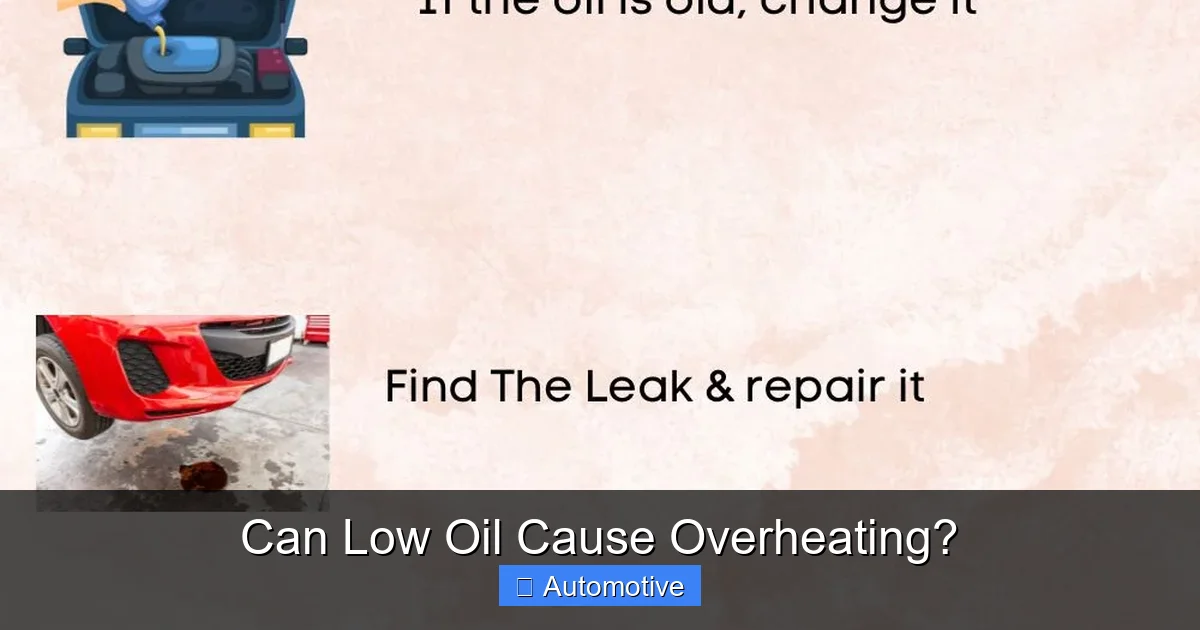
Look under the car and in the engine bay. Blueish-gray smoke from the exhaust can indicate oil is burning in the combustion chambers due to extreme heat and wear. You might also see smoke or vapor rising from the engine bay if oil is leaking onto hot surfaces. Always check for visible oil leaks around the engine, oil pan, and valve covers after parking. A puddle of oil is a direct cause of low oil levels.
The Performance Feel: Loss of Power and Rough Running
As components expand from heat and lubrication fails, the engine’s efficiency plummets. You might experience:
- A noticeable loss of power and acceleration.
- Rough idling or misfires (the heat can affect spark plugs and ignition coils).
- In extreme cases, the engine may begin to stall or shut off to prevent total destruction. If your car is stalling and overheating, low oil could be a culprit. Our guide on Can Low Oil Cause Car To Stall explores that specific connection.
What to Do the Moment You Suspect Trouble: An Action Plan
If your temperature gauge is rising and you suspect low oil might be involved (or you just don’t know), time is your enemy. Follow these steps precisely.
1. Safely Pull Over and Shut Off the Engine
Do not drive further. Find a safe spot off the road. Turn off the engine immediately. Continuing to run an overheating engine, especially with suspected low oil, will cause catastrophic damage in a very short time. Let the engine cool for at least 15-20 minutes. The coolant system is pressurized and scalding hot; never open the radiator cap while hot.
2. Check the Oil Level (When Cool)
After the engine has cooled, locate the dipstick. Pull it out, wipe it clean, reinsert it fully, and pull it out again to read. Check if the oil is below the “MIN” or “L” mark. Also, look at the oil’s condition. Is it extremely dark, gritty, or does it smell burnt? That indicates it has been overheating and breaking down. If it’s low, note how low. A quart or more below full is a serious problem.
3. Check the Coolant Level (As a Secondary Check)
Once the engine is cool, check the coolant reservoir. Is it also low? This could indicate a separate coolant leak that is the primary overheating cause, or the overheating from low oil has caused coolant to boil off. You need to know both levels.
4. Add Oil If It’s Low, But Understand the Limits
If the oil is low, add the correct type of oil for your vehicle (check your owner’s manual) to bring it to the proper level. Do not overfill. This might allow you to drive a very short distance (a mile or two at most) to a safe location or repair shop, but only if the engine is not making abnormal noises and the temperature gauge is not in the red zone. If the engine was already overheating badly, adding oil is a diagnostic step, not a cure. The damage may already be done. You should have the vehicle towed.
5. Call for Help and Get a Professional Diagnosis
This is not a problem to diagnose on the side of the road. Have the car towed to a trusted mechanic. Explain exactly what happened: the symptoms, the oil level you found, and any noises you heard. The mechanic needs to check for:
- The cause of the low oil (leak? not changed? burned off due to another problem?).
- Any internal engine damage from the overheating and lack of lubrication (bearing scoring, piston seizure, head gasket failure).
- The overall health of the cooling system.
Ignoring this event or just “adding oil and driving on” is a recipe for a blown engine. For more on the severe outcomes of neglecting oil levels, read about What Happens If You Have Low Oil In Your Car.
Prevention: Your Proactive Defense Against Overheating
The best strategy is to never let the oil get low enough to cause this chain reaction. Prevention is straightforward and inexpensive compared to an engine replacement.
Monthly Oil Level Checks: Non-Negotiable
Make checking your oil a monthly ritual, or even every two weeks if you drive an older car or notice it using oil. Do it on level ground, with the engine cold (or after it’s been off for 10+ minutes). Pull the dipstick, wipe, reinsert, and read. The goal is to see the oil level between the MIN and MAX marks, ideally right at or near the MAX. If it’s consistently dropping, you have a problem—either a leak or the engine is burning oil.
Timely and Correct Oil Changes
Oil degrades. It loses its viscosity, its additive package depletes, and it gets contaminated with fuel, water, and metal particles. Old, degraded oil is less effective at lubricating and cooling. Stick to the severe service schedule in your owner’s manual if you do a lot of short trips, extreme temperatures, or dusty driving. Use the exact oil viscosity and specification (API, ACEA) recommended. Using the wrong oil can affect its heat-transfer properties. Skipping oil changes is a direct path to oil breakdown and increased heat. Our article on Can Skipping Oil Changes Cause Overheating details how old oil turns from protector to problem.
Address Leaks Immediately
A single drop of oil per day is a problem. Find the source. Common leak points are the valve cover gasket, oil pan gasket, crankshaft seals, and oil filter. A professional mechanic can diagnose and repair these. Do not just keep adding oil to cover up a leak; you’re managing a symptom while the underlying problem—and your oil level—worsens.
Listen to Your Engine and Your Warnings
Modern cars have oil level sensors and oil pressure switches. If your oil pressure light comes on, treat it as a five-alarm fire. Stop driving immediately. Some newer cars will also display a “Check Oil Level” message on the dash. Don’t ignore it. Also, develop an ear for your engine’s normal sound. Any new knocking, tapping, or excessive noise should be investigated right away, as it could be the first sound of low-lubrication heat damage.
Debunking Myths: Oil vs. Coolant in the Overheating Story
Because both systems manage heat, there’s a lot of confusion. Let’s clear it up.
Myth 1: “If the Temperature Gauge is High, It’s Always the Coolant.”
False. While coolant system failures (leaks, bad thermostat, failed water pump) are the most common cause of overheating, they are not the only cause. As we’ve detailed, a severe low oil situation can and will cause the temperature to rise independently. The two systems can also fail together. Always check both levels when diagnosing overheating.
Myth 2: “Adding Coolant Will Fix an Overheat Caused by Low Oil.”
This is a dangerous misconception. If your engine is overheating because it has no oil, adding coolant does nothing to solve the friction-heat problem. The metal parts are still destroying themselves through contact. You might temporarily lower the overall block temperature, but the localized bearing temperatures will remain lethal. The correct fix is to address the oil level and any internal damage.
Myth 3: “Synthetic Oil Can’t Cause Overheating, So My Level Doesn’t Matter.”
Synthetic oil is superior in many ways—better high-temperature stability, better lubrication. But it is not invincible. It still needs to be at the proper level. A quart low is a quart low, whether it’s conventional or synthetic. The physics of friction and fluid dynamics don’t change. You still must check the level.
Myth 4: “A Little Bit Low is Fine.”
This is perhaps the most dangerous myth. There is a minimum mark on your dipstick for a reason. Operating even slightly below that mark reduces the oil’s ability to function as a hydraulic fluid (for things like variable valve timing) and as a coolant. The margin for error is very small. It’s always best to keep it at or near the full mark.
Understanding the distinct roles of oil and coolant is key. For a complete picture of how coolant operates and what happens when it’s low, see our explanation of Can Low Antifreeze Cause Overheating. Both systems are vital, and the failure of either can lead to the same devastating outcome: a ruined engine.
Conclusion: Respect the Liquid in Your Dipstick
The question “Can low oil cause overheating?” is not a theoretical one for mechanics; it’s a daily, real-world diagnosis that leads to expensive engine rebuilds. The oil in your engine is a multi-tasker. It lubricates, it cleans, it seals, and it cools. When you let the level drop, you remove a critical pillar of your engine’s thermal defense. The resulting friction heat is brutal, fast, and often fatal.
The solution is beautifully simple: check your oil regularly, change it on time, and fix leaks immediately. It takes two minutes a month and can save you thousands of dollars and a world of inconvenience. Your temperature gauge is watching your coolant system, but your dipstick is watching the system that protects your engine from the inside out. Give it the respect it deserves. If you ever see that gauge climbing and remember your oil was low, don’t gamble. Stop, check, and get professional help. Your engine’s life depends on it.
Frequently Asked Questions
Can low oil alone cause overheating, even if the coolant is full?
Yes, absolutely. Low oil causes overheating by allowing friction-based heat from moving parts (like bearings and pistons) to build up uncontrollably. This adds a massive heat load to the engine that the coolant system wasn’t designed to handle, causing the overall temperature to rise even with perfect coolant levels.
How long can I drive before severe damage occurs if I suspect low oil is causing overheating?
Very little time—often less than a minute of driving under load. As soon as you see the temperature gauge rise or hear abnormal knocking, you should shut off the engine immediately. Continuing to drive, even for a short distance, can cause irreversible bearing damage, piston scoring, or a seized engine.
Will switching to synthetic oil prevent overheating from low oil?
Synthetic oil has better high-temperature stability and lubricity, which can provide a slightly larger margin of safety. However, it does not change the fundamental requirement: the oil level must be correct. A quart low is a problem regardless of oil type. Synthetic oil is a better tool, but you still need to use it properly by maintaining the correct level.
Is the oil pressure light the same as the engine overheating warning?
No, they are different warnings for different problems, but they are related. The oil pressure light indicates low oil pressure, which can be caused by low oil level, a failing pump, or a blocked passage. The temperature light indicates high engine coolant temperature. However, if both lights come on together, it’s a severe emergency indicating a catastrophic failure affecting both systems, often from extreme heat and low oil.
My car is overheating and making a knocking noise. Is it definitely low oil?
It’s a very strong indicator. The knocking noise is classic for bearing damage from lack of lubrication and extreme heat. While other issues like a failed water pump or thermostat cause overheating, they don’t typically cause a rhythmic knocking sound. This combination strongly points to a lubrication failure (low oil) that has already caused internal damage. Stop the engine immediately.
If I add oil and the temperature goes back to normal, is my car safe?
Not necessarily. If the engine overheated severely enough to trigger the gauge or warning light, internal damage has likely already occurred. The oil addition might allow the engine to run at a normal temperature again, but damaged bearings or pistons will continue to make noise and will eventually fail completely. The car must be inspected by a mechanic before being driven regularly again.