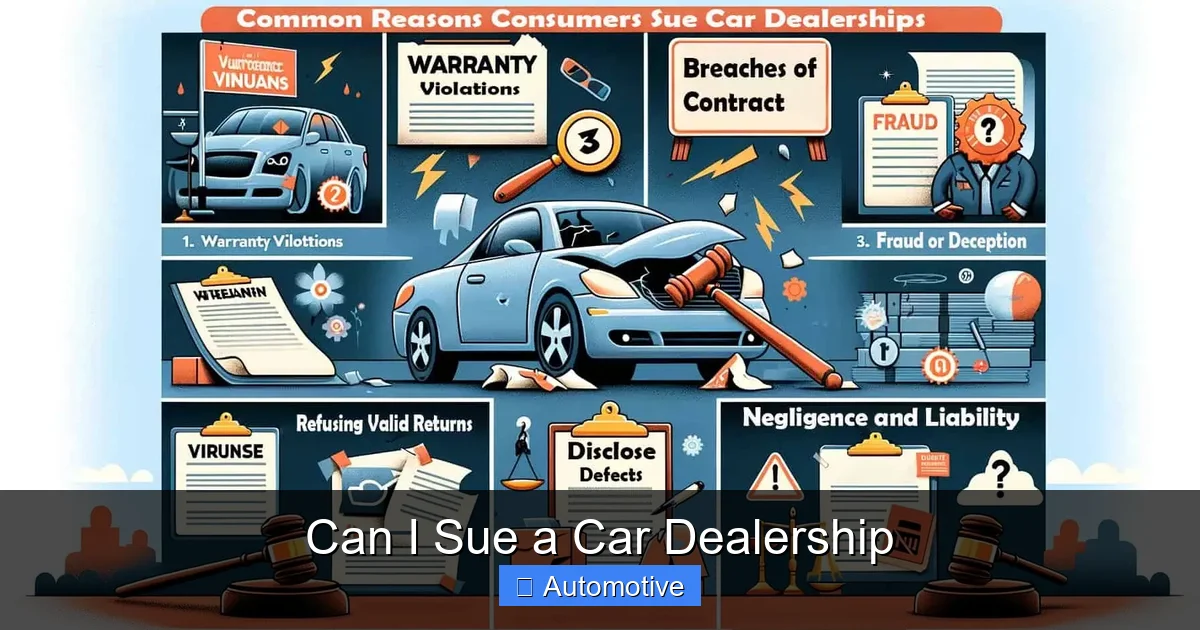
Can I Sue a Car Dealership

Contents
- 1 Key Takeaways
- 2 📑 Table of Contents
- 3 Can I Sue a Car Dealership? Understanding Your Legal Rights as a Car Buyer
- 4 When Is It Legal to Sue a Car Dealership?
- 5 Federal and State Laws That Protect Car Buyers
- 6 How to Build a Strong Case Against a Car Dealership
- 7 Should You Hire a Lawyer or Go to Small Claims Court?
- 8 Real-Life Examples: When Lawsuits Against Dealerships Succeeded
- 9 What Not to Do When Dealing with a Problematic Dealership
- 10 Conclusion: Know Your Rights and Take Action
- 11 Frequently Asked Questions


Yes, you can sue a car dealership—but only under specific circumstances. If a dealer engaged in fraud, violated consumer protection laws, or sold you a defective vehicle without disclosure, you may have legal grounds for a lawsuit. Understanding your rights and gathering solid evidence are key to winning your case.
Key Takeaways
- You can sue a car dealership for fraud or misrepresentation: If the dealer lied about a vehicle’s condition, history, or features, you may have a valid legal claim.
- State lemon laws protect buyers of defective new and used cars: These laws allow you to seek repairs, replacements, or refunds if your car has recurring issues.
- Dealerships must comply with federal and state consumer protection laws: Violations like odometer tampering, bait-and-switch tactics, or failing to disclose prior accidents can lead to lawsuits.
- Document everything from the moment you suspect wrongdoing: Keep records of conversations, contracts, repair invoices, and photos to strengthen your case.
- Consult a consumer rights attorney before filing: Legal professionals can assess your situation, guide you through the process, and improve your chances of success.
- Small claims court is an option for smaller disputes: If your claim is under your state’s limit (often $5,000–$15,000), you can sue without a lawyer.
- Not every bad car purchase qualifies for a lawsuit: Buyer’s remorse or minor issues without deception usually don’t justify legal action.
📑 Table of Contents
- Can I Sue a Car Dealership? Understanding Your Legal Rights as a Car Buyer
- When Is It Legal to Sue a Car Dealership?
- Federal and State Laws That Protect Car Buyers
- How to Build a Strong Case Against a Car Dealership
- Should You Hire a Lawyer or Go to Small Claims Court?
- Real-Life Examples: When Lawsuits Against Dealerships Succeeded
- What Not to Do When Dealing with a Problematic Dealership
- Conclusion: Know Your Rights and Take Action
Can I Sue a Car Dealership? Understanding Your Legal Rights as a Car Buyer
Buying a car is one of the biggest financial decisions most people make—right after purchasing a home. You expect honesty, transparency, and a fair deal. But what happens when the car dealership you trusted turns out to be anything but honest? Maybe they sold you a car with a rolled-back odometer, hid flood damage, or promised features that don’t exist. Suddenly, that dream car feels like a nightmare.
The good news? You may have the right to sue a car dealership—but only if certain legal conditions are met. It’s not as simple as being unhappy with your purchase. Legal action requires proof of wrongdoing, such as fraud, breach of contract, or violation of consumer protection laws. This article will walk you through when suing a dealership is justified, what laws protect you, and how to take action if you’ve been wronged.
We’ll cover everything from lemon laws and odometer fraud to how to gather evidence and whether small claims court is the right path. By the end, you’ll know exactly what steps to take if you believe a car dealership has treated you unfairly.
When Is It Legal to Sue a Car Dealership?

Visual guide about Can I Sue a Car Dealership
Image source: autohitch.com
Not every bad car-buying experience qualifies for a lawsuit. Just because your car broke down a week after purchase doesn’t automatically mean the dealer is liable. However, there are specific situations where legal action is not only possible but often necessary to protect your rights and recover damages.
Let’s break down the most common scenarios where suing a car dealership is legally justified.
Fraud and Misrepresentation
One of the strongest grounds for a lawsuit is fraud—when a dealership knowingly lies or conceals important facts about a vehicle. This could include:
– Rolling back the odometer to show lower mileage
– Hiding that the car was in a major accident or flood
– Claiming a used car is “certified pre-owned” when it doesn’t meet standards
– Falsely advertising a vehicle’s fuel efficiency, safety ratings, or warranty coverage
For example, imagine you buy a used SUV advertised as “accident-free” and “mechanically perfect.” A month later, a mechanic discovers frame damage from a previous collision. If the dealer knew about the damage and didn’t disclose it, that’s fraud. You could sue for the cost of repairs, diminished value, or even rescind the purchase.
Breach of Contract
When you sign a purchase agreement, you and the dealership enter into a legally binding contract. If the dealer fails to uphold their end—such as not delivering the car on time, delivering a different model than agreed, or refusing to honor a written warranty—you may have a breach of contract claim.
Say you paid for a red sedan with leather seats and a sunroof, but the dealer delivers a black cloth-interior model without the sunroof. If the contract specified those features, the dealer breached the agreement. You could sue for the difference in value or demand the correct vehicle.
Violation of Lemon Laws
Both new and some used cars are protected under lemon laws, which vary by state but generally require manufacturers—and sometimes dealers—to repair, replace, or refund vehicles with serious defects that can’t be fixed after a reasonable number of attempts.
For instance, if your new car has a persistent transmission issue and the dealer has tried to fix it four times without success, you may qualify for a lemon law claim. In many states, the dealer or manufacturer must buy back the car or provide a replacement.
Odometer Fraud
Tampering with a vehicle’s odometer is a federal crime under the Motor Vehicle Information and Cost Savings Act. If a dealer rolls back the mileage to make a car appear newer or less used, they can be held liable. You could sue for up to three times the actual damages, plus attorney fees.
Failure to Disclose Prior Damage or Use
Dealers are legally required to disclose certain information, especially if it affects the car’s safety or value. This includes:
– Flood or water damage
– Salvage or rebuilt title status
– Previous use as a rental, taxi, or police vehicle
– Major accidents or structural repairs
If a dealer hides this information, you may have a claim for failure to disclose, which is a form of consumer fraud.
Federal and State Laws That Protect Car Buyers

Visual guide about Can I Sue a Car Dealership
Image source: coursepivot.com
You’re not alone in this fight. Several federal and state laws are designed to protect consumers from deceptive dealership practices. Understanding these laws can help you determine if you have a case and what remedies are available.
Magnuson-Moss Warranty Act
This federal law governs warranties on consumer products, including cars. It requires dealers and manufacturers to clearly explain warranty terms and prohibits them from voiding a warranty simply because you used an independent mechanic. If a dealer refuses to honor a valid warranty, you may have a claim under this act.
Federal Trade Commission (FTC) Used Car Rule
The FTC’s Used Car Rule requires dealers to post a Buyer’s Guide on every used car they sell. This guide must disclose whether the car is sold “as is” or with a warranty, and it must list major mechanical and safety systems. If the dealer fails to provide this guide or misrepresents the warranty, they’re breaking the law.
State Lemon Laws
Every state has its own lemon law, but most cover new vehicles and some used cars still under warranty. These laws typically require:
– A reasonable number of repair attempts (usually 3–4) for the same issue
– The defect must substantially impair the car’s use, value, or safety
– The problem must occur within a certain time or mileage limit (e.g., 12 months or 12,000 miles)
If your car qualifies, you may be entitled to a refund or replacement. Some states also allow you to recover attorney fees, making it easier to pursue legal action.
Consumer Protection Acts
Most states have broad consumer protection laws that prohibit unfair or deceptive business practices. These laws often allow you to sue for damages, including emotional distress in some cases, and may award triple damages for willful violations.
For example, California’s Consumer Legal Remedies Act (CLRA) lets consumers sue for false advertising, hidden fees, and other deceptive tactics. Similar laws exist in New York, Florida, Texas, and many other states.
How to Build a Strong Case Against a Car Dealership

Visual guide about Can I Sue a Car Dealership
Image source: thelemonpros.com
So, you believe a dealership has wronged you. What now? Winning a lawsuit—or even getting the dealer to settle—requires solid evidence and a clear strategy. Here’s how to build a strong case.
Gather All Documentation
Start by collecting every piece of paper related to your purchase:
– The sales contract and financing agreement
– The Buyer’s Guide (for used cars)
– Warranty documents
– Advertisements or brochures that made specific claims
– Emails, text messages, or notes from conversations with salespeople
These documents can prove what the dealer promised versus what you received.
Get a Professional Inspection
If you suspect hidden damage or mechanical issues, take the car to an independent mechanic or body shop for a thorough inspection. Ask for a written report detailing any problems, especially those that weren’t disclosed. This report can be crucial evidence in court.
Document All Repair Attempts
If your car has recurring issues, keep detailed records of every repair visit:
– Dates and times
– Names of technicians
– Description of the problem
– What work was done
– Whether the issue was resolved
This log helps prove that the dealer or manufacturer failed to fix the problem after multiple attempts—a key requirement under lemon laws.
Take Photos and Videos
Visual evidence can be powerful. Take clear photos of:
– Damage not disclosed at purchase
– Warning lights on the dashboard
– Odometer readings over time
– Any misleading signage or ads at the dealership
Time-stamped photos can show that problems existed shortly after purchase.
Keep a Timeline of Events
Create a chronological log of everything that happened, from your first visit to the dealership to your latest repair attempt. Include dates, times, people you spoke with, and what was said. This helps you stay organized and provides a clear narrative for your attorney or judge.
Check for Recalls or Known Issues
Sometimes, a car’s problems are due to a manufacturer defect or recall. Check the National Highway Traffic Safety Administration (NHTSA) website for recalls related to your vehicle. If the dealer sold you a car with a known safety issue without disclosure, that strengthens your case.
Should You Hire a Lawyer or Go to Small Claims Court?
One of the biggest questions car buyers face is whether to hire an attorney or handle the case themselves. The answer depends on the amount of money involved, the complexity of the case, and your comfort level with legal procedures.
When to Hire a Consumer Rights Attorney
Consider hiring a lawyer if:
– Your claim involves significant damages (e.g., a $30,000 car with major defects)
– The case involves fraud, odometer tampering, or complex legal issues
– The dealership is fighting back aggressively
– You’re seeking compensation beyond the car’s value (e.g., emotional distress, lost wages)
Many consumer attorneys work on a contingency basis, meaning they only get paid if you win. This makes legal help accessible even if you can’t afford upfront fees.
When Small Claims Court Makes Sense
If your claim is under your state’s small claims limit (typically $5,000 to $15,000), you can file without a lawyer. Small claims court is designed for everyday disputes and has simpler rules.
For example, if you paid $8,000 for a used car that the dealer claimed was “flood-free,” but you later discovered water damage, you could sue for the cost of repairs or the car’s diminished value. You’d present your evidence, testify, and let a judge decide.
How to File in Small Claims Court
1. **Check your state’s limit**: Make sure your claim is within the allowable amount.
2. **Gather your evidence**: Bring contracts, photos, repair records, and witness statements.
3. **File a claim**: Visit your local courthouse or file online. Pay a small filing fee (usually $30–$100).
4. **Serve the dealership**: Legally notify the dealer of the lawsuit (usually via certified mail or sheriff’s deputy).
5. **Attend the hearing**: Present your case clearly and calmly. Stick to the facts.
Even without a lawyer, you can win if your evidence is strong and your story is clear.
Real-Life Examples: When Lawsuits Against Dealerships Succeeded
Seeing real cases can help you understand what kinds of situations lead to successful lawsuits. Here are a few examples:
Case 1: Odometer Fraud in Texas
A buyer in Houston purchased a used truck with 45,000 miles on the odometer. Later, a mechanic discovered evidence of odometer tampering and estimated the true mileage was over 120,000. The buyer sued under federal odometer laws and won $15,000 in damages—three times the actual loss—plus attorney fees.
Case 2: Lemon Law Win in California
A family bought a new minivan that repeatedly stalled on the highway. The dealer attempted repairs five times over six months but couldn’t fix the issue. They filed a lemon law claim and received a full refund, including taxes and registration fees.
Case 3: Failure to Disclose Flood Damage in Florida
A woman bought a used SUV from a dealership that advertised it as “clean title” and “flood-free.” After heavy rain, mold and electrical issues appeared. An inspection revealed flood damage. She sued under Florida’s consumer protection laws and won $12,000 in compensation.
These cases show that when dealers break the law, buyers can and do win.
What Not to Do When Dealing with a Problematic Dealership
While it’s important to stand up for your rights, there are some common mistakes that can weaken your case or even get you in trouble.
Don’t Wait Too Long
Most legal claims have a statute of limitations—a deadline for filing a lawsuit. This varies by state and claim type, but it’s often 2–4 years from the date of purchase or discovery of the problem. Waiting too long can bar your claim entirely.
Don’t Threaten or Harass the Dealership
While it’s frustrating, yelling, making threats, or showing up unannounced can backfire. It may be used against you in court or even lead to a restraining order. Stay calm, professional, and focused on the facts.
Don’t Sign Anything Without Reading It
Dealers may offer a settlement or repair agreement. Read every word. Some agreements include clauses that waive your right to sue in the future. If you’re unsure, have a lawyer review it first.
Don’t Assume the Dealer Will Fix It If You Just Ask
While it’s worth trying to resolve the issue amicably, don’t rely on the dealer’s goodwill. Start documenting and seeking legal advice as soon as you suspect a problem.
Conclusion: Know Your Rights and Take Action
So, can you sue a car dealership? The answer is a resounding yes—if the dealer broke the law. Whether it’s fraud, breach of contract, lemon law violations, or failure to disclose critical information, you have legal options.
The key is to act quickly, gather strong evidence, and understand the laws that protect you. Don’t let a bad car purchase ruin your finances or your peace of mind. With the right approach, you can hold dishonest dealers accountable and get the justice you deserve.
Remember: not every disappointment warrants a lawsuit, but every consumer deserves honesty and fairness. If you’ve been misled, don’t suffer in silence. Consult a consumer rights attorney, explore small claims court, and take back control of your car-buying experience.
Frequently Asked Questions
Can I sue a car dealership for selling me a bad car?
You can only sue if the dealer engaged in illegal behavior, such as fraud, misrepresentation, or violating lemon laws. Simply buying a car that breaks down isn’t enough—there must be proof of wrongdoing.
How long do I have to sue a car dealership?
The statute of limitations varies by state and claim type, but it’s typically 2 to 4 years from the date of purchase or when you discovered the problem. Check your state’s laws to be sure.
Do I need a lawyer to sue a car dealership?
Not always. For smaller claims (under $10,000–$15,000), you can file in small claims court without a lawyer. For complex cases involving fraud or large damages, hiring a consumer rights attorney is recommended.
What evidence do I need to sue a dealership?
Key evidence includes the sales contract, warranty documents, repair records, photos of damage, inspection reports, and any communications with the dealer. The more documentation, the stronger your case.
Can I get my money back if the dealer sold me a lemon?
Yes, under state lemon laws, you may be entitled to a full refund, replacement vehicle, or cash compensation if your new or used car has unfixable defects after multiple repair attempts.
What if the dealership refuses to cooperate?
If the dealer ignores your complaints or refuses to fix the issue, you can escalate by filing a complaint with your state’s attorney general, the BBB, or pursuing legal action through small claims court or an attorney.