Can I Sell My Car to My Llc
Selling your car to your LLC is legally possible, but it requires careful planning to avoid tax pitfalls and compliance issues. You’ll need to handle proper documentation, fair market valuation, and potential depreciation recapture. Done correctly, it can benefit your business—but mistakes can cost you.
[FEATURED_IMAGE_PLACEHOLOGER]
So, you’ve got a car—maybe it’s your daily driver, maybe it’s a weekend cruiser—and you’re wondering: *Can I sell my car to my LLC?* The short answer? Yes. But the long answer? It’s a bit more complicated than just signing over the title and calling it a day.
Many small business owners, freelancers, and entrepreneurs consider transferring personal assets—like vehicles—into their LLCs to unlock tax benefits, improve recordkeeping, or streamline operations. A car used for business deliveries, client meetings, or travel can become a valuable business asset. But moving it from your personal name to your company’s name isn’t just a formality. It’s a legal and financial transaction that needs to be handled correctly.
Think of it like this: your LLC is a separate legal entity. Even though you own it, it’s not *you*. So when you “sell” your car to the LLC, you’re essentially selling it to another party—your business. That means the same rules apply as if you were selling to a stranger: fair price, proper documentation, and tax reporting. Skip these steps, and you could face penalties, audits, or even jeopardize your LLC’s liability protection.
In this guide, we’ll walk you through everything you need to know about selling your car to your LLC—from the legal requirements to the tax implications, paperwork, and practical tips to make the process smooth and compliant. Whether you’re running a consulting firm, a delivery service, or a creative agency, understanding this process can save you time, money, and headaches down the road.
In This Article
- 1 Key Takeaways
- 2 📑 Table of Contents
- 3 Why Would You Want to Sell Your Car to Your LLC?
- 4 Legal Requirements for Selling a Car to Your LLC
- 5 Tax Implications of Selling Your Car to Your LLC
- 6 How to Value Your Car for the Sale
- 7 Common Mistakes to Avoid
- 8 When It Makes Sense (and When It Doesn’t)
- 9 Final Tips for a Smooth Transfer
- 10 Frequently Asked Questions
- 10.1 Can I sell my car to my LLC for $1?
- 10.2 Do I have to pay sales tax when transferring a car to my LLC?
- 10.3 Can my LLC deduct the full cost of the car?
- 10.4 What happens if I use the car for personal trips after the sale?
- 10.5 Do I need a new insurance policy after the transfer?
- 10.6 Can I reverse the sale and take the car back personally?
Key Takeaways
- It’s legally allowed: You can sell a personal vehicle to your LLC, but it must be treated as a formal transaction with proper documentation.
- Fair market value matters: The sale price should reflect the car’s current market value to avoid IRS scrutiny or gift tax implications.
- Tax implications vary: Depending on how the car was used before and after the sale, you may face depreciation recapture, sales tax, or changes in deductible expenses.
- Paperwork is critical: A bill of sale, updated title, and internal LLC resolution are essential to prove the transaction’s legitimacy.
- Insurance must be updated: Once the car belongs to the LLC, personal auto insurance no longer covers it—business insurance is required.
- Depreciation benefits shift: After the sale, the LLC can depreciate the vehicle, but you lose personal use deductions and may trigger recapture if the car was previously depreciated.
- Consult professionals: Always involve your accountant and attorney to ensure compliance with state laws and federal tax rules.
📑 Table of Contents
Why Would You Want to Sell Your Car to Your LLC?
There are several compelling reasons why business owners consider transferring a personal vehicle to their LLC. The most common motivation is tax efficiency. Once a car is owned by your business, you may be able to deduct expenses like gas, maintenance, insurance, and—most importantly—depreciation. This can significantly reduce your taxable income, especially if the vehicle is used primarily for business.
For example, let’s say you drive a reliable sedan for client meetings, site visits, and office commutes. If you keep the car in your name, you can only deduct the business-use percentage of your expenses using the standard mileage rate or actual expense method. But if the car belongs to the LLC, the business can claim 100% of those costs—provided the vehicle is used exclusively for business purposes.
Another benefit is asset protection. When a car is owned by your LLC, it’s shielded from personal liabilities. If you’re ever sued personally, creditors generally can’t go after business assets like company-owned vehicles. This adds a layer of security, especially for high-risk professions or businesses with physical operations.
Additionally, having company-owned vehicles can improve your business’s professionalism. Clients may perceive a branded vehicle or a dedicated company car as a sign of stability and legitimacy. It also simplifies expense tracking—no more splitting receipts or estimating mileage. Everything goes through the business books, making accounting cleaner and audits easier.
But here’s the catch: these benefits only apply if the transfer is done correctly. If the IRS views the sale as a sham or undervalued transaction, they can disallow deductions, impose penalties, or even challenge your LLC’s structure. That’s why understanding the “how” is just as important as the “why.”
Legal Requirements for Selling a Car to Your LLC
Selling a car to your LLC isn’t just a financial move—it’s a legal one. Because you’re transferring ownership from an individual to a business entity, you must follow state-specific vehicle transfer laws. These rules vary by state, but they generally include updating the title, registering the vehicle under the LLC, and paying any applicable taxes or fees.
Step 1: Verify Your LLC’s Legal Status
Before anything else, make sure your LLC is in good standing with your state. This means it’s properly registered, has an active status, and has a registered agent. You’ll need your LLC’s formation documents (Articles of Organization) and possibly an Employer Identification Number (EIN) from the IRS to complete the transfer.
Some states require the LLC to be listed as the legal owner on the title, while others allow a “doing business as” (DBA) name. Check with your local Department of Motor Vehicles (DMV) to confirm the exact requirements.
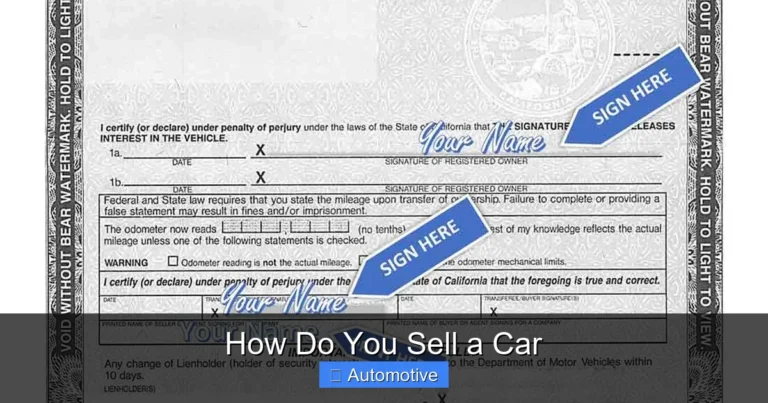
Step 2: Draft a Bill of Sale
A bill of sale is a legal document that records the transfer of ownership. It should include:
– The names and addresses of both parties (you and your LLC)
– The vehicle’s make, model, year, VIN, and mileage
– The sale price
– The date of transfer
– Signatures from both parties
Even though you’re selling to yourself (via your LLC), this document is crucial. It proves the transaction occurred and establishes the fair market value. Without it, the DMV may reject the title transfer, or the IRS may question the legitimacy of the sale.
Step 3: Update the Title and Registration
Once the bill of sale is signed, you’ll need to transfer the title into the LLC’s name. This typically involves:
– Submitting the signed title (with the LLC listed as the new owner)
– Providing the bill of sale
– Paying a title transfer fee (usually $10–$50)
– Paying sales tax (if applicable—more on that below)
Some states allow online title transfers, while others require in-person visits. Be prepared to show proof of insurance in the LLC’s name before the transfer is completed.
Step 4: Notify Your Insurance Company
This step is often overlooked but critically important. Once the car is owned by the LLC, your personal auto insurance policy no longer covers it. You’ll need to switch to a commercial auto insurance policy under the business name.
Commercial policies are typically more expensive than personal ones, but they offer broader coverage—including liability for business use, hired/non-owned vehicle coverage, and higher limits. Some insurers offer “business use” endorsements for personal policies, but full ownership by the LLC usually requires a standalone commercial policy.
Tax Implications of Selling Your Car to Your LLC
Taxes are where things get tricky. The IRS treats the sale of a personal asset to a business as a taxable event, even if the business is owned by the same person. How you handle this can affect your income tax, self-employment tax, and future deductions.
Fair Market Value Is Key
The sale price must reflect the car’s fair market value (FMV). This is the price a willing buyer would pay a willing seller in an open market. You can determine FMV using resources like Kelley Blue Book, Edmunds, or NADA Guides.
For example, if your 2018 Honda Accord has 60,000 miles and is in good condition, the FMV might be $16,000. Selling it to your LLC for $10,000 could raise red flags with the IRS, as it may look like a gift or an attempt to shift value tax-free. Conversely, selling it for $20,000 when it’s only worth $16,000 could trigger gift tax issues if the difference is considered a transfer of wealth.
Depreciation and Recapture
If you’ve been deducting car expenses on your personal taxes (using the standard mileage rate or actual expenses), the IRS considers the vehicle partially depreciated. When you sell it to your LLC, you may trigger “depreciation recapture”—meaning you’ll owe taxes on the depreciation you’ve already claimed.
For instance, if you’ve deducted $8,000 in depreciation over three years and sell the car for $16,000 (its FMV), the IRS may treat the $8,000 as taxable income. This is because you’ve already benefited from writing off that value, and now you’re realizing it in a sale.
However, if the car hasn’t been depreciated (e.g., you only used the standard mileage rate without claiming actual depreciation), recapture may not apply. Consult your accountant to determine your specific situation.
Sales Tax Considerations
Most states charge sales tax when a vehicle changes ownership—even between an individual and their LLC. The tax is usually based on the sale price or the FMV, whichever is higher.
Some states offer exemptions for transfers between family members or business entities, but these are rare and often require specific conditions. For example, California charges use tax on all vehicle transfers unless the transfer is between spouses or due to inheritance.
Check your state’s DMV website for details. In many cases, you’ll pay 6–8% of the sale price in sales or use tax at the time of title transfer.
Impact on Business Deductions
After the sale, your LLC can begin depreciating the vehicle under IRS rules. For cars, this typically means using the Modified Accelerated Cost Recovery System (MACRS) over five years. However, there are limits on how much you can deduct each year, especially for luxury vehicles.
For 2024, the first-year depreciation limit for a new passenger car is $12,400 (or $20,400 if bonus depreciation applies). Used cars have lower limits. If your car is used primarily for business (over 50%), you can deduct a percentage of these limits based on usage.
Keep detailed records of mileage, repairs, insurance, and fuel to support your deductions. The IRS requires contemporaneous logs—don’t rely on memory or rough estimates.
How to Value Your Car for the Sale
Pricing the car correctly is one of the most important steps. Too high, and you risk gift tax issues. Too low, and the IRS may challenge the transaction. Here’s how to get it right.
Use Reputable Valuation Tools
Start with trusted sources like:
– Kelley Blue Book (KBB)
– Edmunds True Market Value (TMV)
– NADA Guides
– Autotrader or Cars.com listings for similar vehicles in your area
Look at private party sale prices, not trade-in values. Trade-in values are lower because dealers need to make a profit. Since you’re selling to your LLC (not a dealer), private party value is more accurate.
Adjust for Condition and Mileage
A car with low mileage, no accidents, and regular maintenance will be worth more than one with high mileage and wear. Be honest about your vehicle’s condition. If it needs new tires or has minor dents, adjust the price accordingly.
For example, if KBB says your car is worth $16,000 in “good” condition, but yours has 10,000 extra miles and a small scratch, you might price it at $15,000.
Get a Professional Appraisal (Optional)
For high-value vehicles (e.g., luxury cars, classic cars, or trucks over $30,000), consider hiring a certified appraiser. This adds credibility and can help defend your valuation if questioned by the IRS.
An appraisal typically costs $100–$300 but may be worth it for expensive or unique vehicles.
Document Your Valuation
Keep screenshots, printouts, or reports from valuation websites. Include notes on comparable vehicles, mileage, and condition. This documentation supports your sale price in case of an audit.
Common Mistakes to Avoid
Even with the best intentions, many business owners make errors when transferring a car to their LLC. Here are the most common pitfalls—and how to avoid them.
Undervaluing the Car
Selling the car for $1 when it’s worth $15,000 might seem like a clever way to avoid taxes, but it’s a red flag. The IRS can reclassify the transaction as a gift, potentially triggering gift tax reporting (Form 709) if the value exceeds the annual exclusion ($18,000 in 2024).
Always use fair market value.
Skipping the Bill of Sale
Some people think, “It’s my car and my LLC—why do I need paperwork?” But without a bill of sale, the DMV may not process the title transfer, and the IRS has no record of the transaction. Always create and sign a formal bill of sale.
Forgetting to Update Insurance
Driving a company-owned car on a personal policy is a coverage gap. If you get in an accident, your insurer may deny the claim, saying the vehicle wasn’t listed on the policy. Switch to commercial insurance immediately after the transfer.
Mixing Personal and Business Use
If your LLC owns the car but you use it for personal trips, the IRS may disallow deductions or treat the personal use as taxable income to you. Keep a mileage log and limit personal use to under 50% if you want full business deductions.
Ignoring State-Specific Rules
Each state has different requirements for title transfers, sales tax, and LLC registration. What works in Texas may not work in New York. Always check with your local DMV and state tax authority.
When It Makes Sense (and When It Doesn’t)
Selling your car to your LLC isn’t always the best move. Consider your business needs, tax situation, and long-term goals.
Good Scenarios
– You use the car extensively for business (over 50% of mileage)
– You want to maximize depreciation and expense deductions
– You’re expanding your business and need dedicated vehicles
– You’re protecting personal assets from business liabilities
Not-So-Good Scenarios
– You rarely use the car for business
– The car is old or has low value (transfer costs may outweigh benefits)
– You’re close to selling the car personally
– Your state charges high sales tax on transfers
For example, if you’re a freelance writer who works from home and only drives to the post office once a week, transferring your car to the LLC probably isn’t worth the hassle. But if you’re a contractor visiting job sites daily, it could save you thousands in taxes.
Final Tips for a Smooth Transfer
– Consult your accountant and attorney: They can help you navigate tax laws and ensure compliance.
– Keep detailed records: Save all documents—bill of sale, title, insurance, mileage logs, and valuation reports.
– Use a formal resolution: Have your LLC’s operating agreement or a board resolution approve the purchase.
– Plan for insurance costs: Commercial insurance can be 20–50% more expensive than personal coverage.
– Review annually: Reassess whether the arrangement still makes sense for your business.
Selling your car to your LLC can be a smart financial move—if done correctly. With proper planning, documentation, and professional guidance, you can turn a personal asset into a valuable business tool while staying compliant with the law.
Frequently Asked Questions
Can I sell my car to my LLC for $1?
No, selling your car to your LLC for $1 is not advisable. The IRS requires the sale to be at fair market value. A $1 sale could be seen as a gift, potentially triggering gift tax reporting or audit scrutiny.
Do I have to pay sales tax when transferring a car to my LLC?
Yes, in most states you’ll pay sales or use tax based on the car’s fair market value or sale price. Some states offer exemptions, but they’re rare. Check your local DMV for specific rules.
Can my LLC deduct the full cost of the car?
Your LLC can depreciate the car over five years under IRS rules, but annual deductions are capped. The exact amount depends on the car’s value, age, and business use percentage.
What happens if I use the car for personal trips after the sale?
Personal use reduces your business deduction percentage. If personal use exceeds 50%, you may lose certain tax benefits. Keep a mileage log to track usage accurately.
Do I need a new insurance policy after the transfer?
Yes. Once the car is owned by your LLC, you must switch to a commercial auto insurance policy. Personal policies don’t cover business-owned vehicles.
Can I reverse the sale and take the car back personally?
Technically yes, but it’s complex. You’d need to repurchase the car from the LLC at fair market value, pay taxes again, and update titles and insurance. It’s often easier to sell the car outright if you no longer need it for business.