Can I Sell My Car to a Salvage Yard

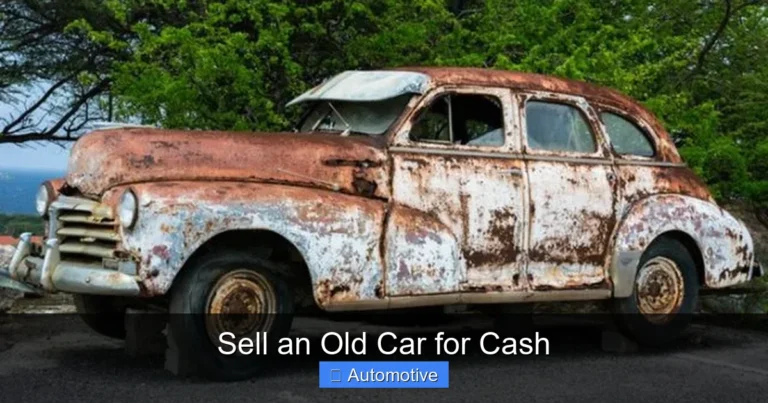
Yes, you can sell your car to a salvage yard—even if it’s damaged, non-running, or totaled. Salvage yards buy vehicles for parts, scrap metal, and recycling, offering a fast, hassle-free way to get cash for your old car. With the right preparation and knowledge, you can turn a liability into a quick payout.
[FEATURED_IMAGE_PLACEOLDER]
So, your car’s seen better days. Maybe it’s been in an accident, won’t start, or just isn’t worth fixing anymore. You’re staring at it in the driveway, wondering what to do next. Selling it privately feels like a hassle—especially if it’s not roadworthy. Trading it in at a dealership gives you pennies on the dollar. But what if there’s another option? One that’s quick, easy, and puts cash in your pocket fast?
That’s where salvage yards come in.
Yes, you *can* sell your car to a salvage yard—even if it’s totaled, flooded, or completely dead. In fact, that’s exactly what they’re built for. Salvage yards specialize in buying damaged, old, or non-running vehicles. They dismantle them for usable parts, recycle the metal, and responsibly dispose of hazardous materials. And the best part? They’ll pay you for it.
This guide will walk you through everything you need to know about selling your car to a salvage yard. From understanding how the process works to getting the best possible price, we’ll cover it all. Whether your car is barely running or sitting in a junkyard pose, you’ll learn how to turn it into cash—without the stress.
Let’s dive in.
In This Article
- 1 Key Takeaways
- 2 📑 Table of Contents
- 3 What Is a Salvage Yard?
- 4 Can You Really Sell Any Car to a Salvage Yard?
- 5 How Much Can You Get for Your Car at a Salvage Yard?
- 6 The Step-by-Step Process of Selling Your Car to a Salvage Yard
- 7 Pros and Cons of Selling to a Salvage Yard
- 8 Tips to Get the Best Price
- 9 Is Selling to a Salvage Yard Right for You?
- 10 Final Thoughts
- 11 Frequently Asked Questions
- 11.1 Can I sell my car to a salvage yard if it doesn’t run?
- 11.2 Do I need a title to sell my car to a salvage yard?
- 11.3 How much will a salvage yard pay for my car?
- 11.4 Will the salvage yard tow my car for free?
- 11.5 What happens to my car after I sell it to a salvage yard?
- 11.6 Can I sell a car with a salvage title to a salvage yard?
Key Takeaways
- You can sell almost any car to a salvage yard: Even if it’s wrecked, flooded, or won’t start, salvage yards often accept it.
- Get paid in cash or check: Most salvage yards offer immediate payment, especially for vehicles with valuable parts or high scrap value.
- Title and paperwork are essential: You’ll need a valid title (or proper documentation if the title is missing) to complete the sale legally.
- Shop around for the best offer: Prices vary by location, vehicle condition, and market demand—get multiple quotes.
- Free towing is commonly included: Many salvage yards provide free pickup, saving you time and money.
- Remove personal items and license plates: Always clear out belongings and return plates to avoid fees or legal issues.
- Selling to a salvage yard is eco-friendly: Recycling cars reduces waste and conserves resources, supporting sustainable practices.
📑 Table of Contents
- What Is a Salvage Yard?
- Can You Really Sell Any Car to a Salvage Yard?
- How Much Can You Get for Your Car at a Salvage Yard?
- The Step-by-Step Process of Selling Your Car to a Salvage Yard
- Pros and Cons of Selling to a Salvage Yard
- Tips to Get the Best Price
- Is Selling to a Salvage Yard Right for You?
- Final Thoughts
What Is a Salvage Yard?
Before we get into the nitty-gritty of selling your car, let’s clarify what a salvage yard actually is. You might know them as junkyards, auto recyclers, or scrap yards—but they all serve the same basic purpose: to buy, dismantle, and recycle end-of-life vehicles.
Salvage yards are businesses that purchase cars that are no longer functional or cost-effective to repair. These vehicles might be damaged from accidents, worn out from age, or simply too expensive to fix. Once acquired, the yard removes valuable parts—like engines, transmissions, alternators, and electronics—that can be resold to mechanics, body shops, or DIYers. The remaining shell is crushed and sold as scrap metal to recycling facilities.
But salvage yards aren’t just dumping grounds. They’re part of a larger ecosystem of automotive recycling that helps reduce waste, conserve resources, and support the repair industry. In fact, the auto recycling industry is one of the most efficient recycling sectors in the world. According to the Automotive Recyclers Association, over 95% of retired vehicles are processed for reuse or recycling.
So when you sell your car to a salvage yard, you’re not just getting rid of a problem—you’re contributing to a sustainable cycle that keeps valuable materials in use and out of landfills.
How Salvage Yards Make Money
You might wonder: why would a salvage yard pay *you* for a broken-down car? After all, it’s not like they’re going to drive it off the lot.
The answer lies in the value of parts and materials. Even a severely damaged car can contain components worth hundreds—or even thousands—of dollars. For example:
– A working engine or transmission can sell for $500–$2,000.
– Airbags, catalytic converters, and electronics are in high demand.
– Aluminum wheels, batteries, and radiators have scrap value.
– The steel and iron in the car’s frame can be melted down and reused.
Salvage yards assess each vehicle based on its make, model, year, condition, and current market demand for parts. They then offer a price that reflects the potential profit from resale and recycling—minus their operating costs.
This means that even if your car looks like a lost cause, it might still have hidden value. And that value translates into cash for you.
Can You Really Sell Any Car to a Salvage Yard?
Short answer: yes—almost any car.
Salvage yards are designed to handle vehicles in all conditions. Whether your car is:
– Totaled in an accident
– Flood-damaged
– Not starting due to mechanical failure
– Missing parts or heavily rusted
– Abandoned or sitting for years
…they’ll likely take it.
But there are a few exceptions. Most salvage yards won’t accept vehicles that are:
– Missing the engine or major components (unless specified)
– Severely stripped or vandalized beyond recognition
– Contaminated with hazardous materials (like fuel leaks or chemical spills) without proper cleanup
Even then, some yards may still take the vehicle for scrap value alone.
What About Cars Without Titles?
This is a common concern. What if you lost your title, or never received one? Can you still sell your car?
The answer depends on your state’s laws. In most cases, you *can* sell a car without a title—but you’ll need to provide alternative documentation. This might include:
– A bill of sale
– A notarized affidavit of ownership
– A salvage or rebuilt title (if applicable)
– Proof of registration and ID
Some states allow salvage yards to purchase vehicles with a “bonded title” or through a special process for untitled cars. However, the yard may pay less or require additional paperwork.
To avoid complications, it’s best to contact the salvage yard ahead of time and ask about their requirements. Many will walk you through the process and tell you exactly what you need.
Example: Selling a Flood-Damaged Car
Let’s say your car was caught in a flood. The interior is soaked, the electronics are fried, and it won’t start. You’re worried it’s worthless.
But here’s the thing: even flood-damaged cars have value. The engine block, transmission, and metal frame are often undamaged. The wheels, seats, and body panels can be cleaned or recycled. And the catalytic converter? That’s pure gold—literally. It contains precious metals like platinum, palladium, and rhodium, which are highly valuable.
A salvage yard might offer $800 for a flood-damaged sedan—not because the car runs, but because of the parts and materials inside. That’s $800 you wouldn’t get from a dealership trade-in.
How Much Can You Get for Your Car at a Salvage Yard?
Now for the million-dollar question: how much will you actually get paid?
The amount varies widely based on several factors. But on average, most people receive between $100 and $5,000 when selling a car to a salvage yard. Here’s what influences the price:
1. Vehicle Make, Model, and Year
Newer cars, especially popular models, tend to fetch higher prices. Why? Because their parts are in demand. A 2018 Honda Civic with a working transmission is worth more than a 1995 Ford Taurus with the same part.
Luxury vehicles also command higher prices due to expensive components. A BMW or Mercedes with intact airbags or electronics can be worth thousands—even if it’s not running.
2. Condition of the Car
This doesn’t mean “how clean it is.” It means:
– Are major components intact? (Engine, transmission, drivetrain)
– Are there valuable parts still attached? (Catalytic converter, alternator, starter)
– Is the body heavily damaged or rusted?
A car with a missing engine will sell for scrap value only—maybe $200–$400. But if the engine is there and functional, the price jumps significantly.
3. Current Scrap Metal Prices
Steel and aluminum prices fluctuate based on global markets. When metal prices are high, salvage yards can afford to pay more for vehicles—even if they’re just for scrap.
For example, if scrap steel is selling for $200 per ton, a 3,000-pound car (1.5 tons) is worth about $300 in metal alone. Add in usable parts, and the total offer could be $800 or more.
4. Location and Local Demand
Prices vary by region. In areas with high demand for used parts—like rural communities or regions with older vehicle fleets—salvage yards may pay more to secure inventory.
Urban areas with many repair shops also see higher competition among yards, which can drive up offers.
5. Whether the Car Runs
This is a big one. A running car—even if it needs repairs—is almost always worth more than a non-running one. Why? Because it’s easier to test parts, and the yard can verify functionality.
A car that starts and drives might get $1,000–$3,000. The same car, dead and towed in, might only get $500–$1,200.
But don’t despair if your car won’t start. Many yards still pay well for non-running vehicles—especially if they’re newer or have valuable parts.
Real-World Example: 2010 Toyota Camry
Let’s say you have a 2010 Toyota Camry that was rear-ended. The back end is smashed, the trunk won’t open, and the car won’t start. But the engine, transmission, and front end are intact.
A salvage yard might offer $1,200. Here’s the breakdown:
– Scrap metal: $300
– Usable parts (alternator, starter, wheels, etc.): $600
– Catalytic converter: $300
Total: $1,200
If the same car were running, the offer might jump to $1,800–$2,200.
The Step-by-Step Process of Selling Your Car to a Salvage Yard
Selling your car to a salvage yard is surprisingly simple. Here’s how it works, step by step.
Step 1: Research Local Salvage Yards
Start by searching online for “salvage yards near me” or “cash for cars [your city].” Look for yards with good reviews, clear pricing, and free towing.
Check websites or call to ask:
– Do they buy non-running cars?
– What paperwork do you need?
– Do they offer free pickup?
– How quickly can they come?
Some national companies like Copart, IAAI, and CashForCars also buy salvage vehicles—often through online auctions.
Step 2: Get Quotes
Contact at least 3–5 yards and request quotes. Be honest about the car’s condition. Provide:
– Year, make, and model
– Mileage (if known)
– Damage description (e.g., “front-end collision,” “engine seized”)
– Whether it runs or not
Most yards will give you a ballpark estimate over the phone or online. Some may ask for photos.
Step 3: Compare Offers
Don’t just take the first offer. Compare prices, services, and terms. Look for:
– Highest payout
– Free towing
– Fast pickup (same day or next day)
– Clear payment method (cash or check)
If one yard offers $1,000 with free towing, and another offers $1,100 but charges $100 for pickup, the first option is better.
Step 4: Prepare the Car
Before the tow truck arrives:
– Remove all personal items (gloves, chargers, documents)
– Take out the license plates (you’ll need to return them to the DMV)
– Drain fluids if required (some yards ask you to remove gas, oil, or coolant)
– Gather paperwork (title, registration, ID)
Step 5: Complete the Sale
When the tow truck arrives:
– Sign over the title (or provide alternative documentation)
– Sign a bill of sale (the yard usually provides this)
– Receive payment (cash or check)
Once the car is loaded, the transaction is complete. The yard will handle the rest—dismantling, recycling, and resale.
Step 6: Notify the DMV
After the sale, contact your state’s DMV to report the vehicle as sold. This protects you from liability if the car is later involved in an accident or traffic violation.
In most states, you’ll need to submit a release of liability form—either online, by mail, or in person.
Pros and Cons of Selling to a Salvage Yard
Like any decision, selling your car to a salvage yard has advantages and drawbacks. Let’s break them down.
Pros
- Fast and easy: No need to list, advertise, or meet buyers. Most sales are completed in a day.
- Get paid quickly: Cash or check on the spot—no waiting for bank transfers or escrow.
- No repairs needed: Sell the car as-is, even if it’s damaged or non-running.
- Free towing: Most yards cover pickup costs, saving you hundreds.
- Eco-friendly: Supports recycling and reduces landfill waste.
- No haggling: The price is set—no back-and-forth negotiations.
Cons
- Lower payout than private sale: You’ll get less than if you sold the car privately to a buyer who plans to fix it.
- Title issues can complicate things: Without a title, the process takes longer and may reduce the offer.
- Not all yards are reputable: Some may lowball you or charge hidden fees. Always research first.
- Limited negotiation: Once you accept the offer, it’s usually final.
Overall, the pros far outweigh the cons—especially if you need a quick, hassle-free solution.
Tips to Get the Best Price
Want to maximize your payout? Follow these expert tips.
1. Clean Out the Car
Even though it’s going to a junkyard, remove all personal items. This includes:
– Trunk contents
– Glove compartment papers
– Floor mats
– Phone chargers
Some yards may charge a fee if they have to clean it out.
2. Provide Accurate Information
Be honest about the car’s condition. If you say it runs but it doesn’t, the yard may reduce the offer—or refuse it altogether.
3. Time Your Sale
Scrap metal prices rise and fall. If you can wait, monitor market trends. Selling when metal prices are high can boost your payout by $100–$300.
4. Remove High-Value Parts (Optional)
If you’re handy, consider removing parts like the catalytic converter, battery, or wheels and selling them separately. You might make more than if you left them in the car.
But be careful: some yards won’t buy a car that’s been partially stripped. Check their policy first.
5. Use Online Tools
Websites like JunkCarMasters, Peddle, or CarBrain let you get instant quotes from multiple buyers. Compare offers and choose the best one.
Is Selling to a Salvage Yard Right for You?
Selling your car to a salvage yard makes sense if:
– The repair costs exceed the car’s value
– The car is totaled or non-running
– You need cash fast
– You don’t want the hassle of private selling
– You’re environmentally conscious
It’s less ideal if:
– The car is still drivable and could be repaired cheaply
– You’re hoping to get top dollar (a private sale might be better)
– You’re emotionally attached and want it to go to a good home
But for most people with a damaged or old car, a salvage yard is the smartest, fastest, and most reliable option.
Final Thoughts
So, can you sell your car to a salvage yard? Absolutely.
It’s a legitimate, legal, and often lucrative way to dispose of a vehicle that’s past its prime. Whether your car is wrecked, flooded, or just won’t start, there’s value in it—and a salvage yard will pay you for that value.
The process is simple: get quotes, prepare the car, sign the paperwork, and get paid. No ads, no test drives, no waiting. Just cash in hand and one less problem on your driveway.
And beyond the financial benefit, you’re doing something good for the planet. Auto recycling saves energy, reduces pollution, and keeps millions of tons of metal out of landfills every year.
So the next time you’re staring at that old clunker, don’t see a burden—see an opportunity. Sell it to a salvage yard, walk away with cash, and feel good about making a smart, sustainable choice.
Frequently Asked Questions
Can I sell my car to a salvage yard if it doesn’t run?
Yes, most salvage yards buy non-running cars. They’re interested in parts, scrap metal, and recyclable materials—not whether the engine turns over. Just be honest about the condition when getting a quote.
Do I need a title to sell my car to a salvage yard?
In most cases, yes—but some states allow alternative documentation like a bill of sale or notarized affidavit. Contact the yard ahead of time to confirm their requirements.
How much will a salvage yard pay for my car?
Prices range from $100 to $5,000+, depending on the car’s make, model, year, condition, and current scrap metal prices. Get multiple quotes to find the best offer.
Will the salvage yard tow my car for free?
Most reputable yards offer free towing as part of the service. Always confirm this before finalizing the sale to avoid surprise fees.
What happens to my car after I sell it to a salvage yard?
The yard will dismantle it for usable parts, recycle the metal, and safely dispose of hazardous materials. Over 95% of the vehicle is reused or recycled.
Can I sell a car with a salvage title to a salvage yard?
Yes, you can. A salvage title means the car was previously declared a total loss, but it doesn’t affect your ability to sell it. The yard will assess its value based on parts and scrap.