Can I Add Blind Spot Monitoring to My Car

Contents
- 1 Key Takeaways
- 2 📑 Table of Contents
- 3 Can I Add Blind Spot Monitoring to My Car?
- 4 What Is Blind Spot Monitoring and How Does It Work?
- 5 Can You Really Add It to Any Car?
- 6 Types of Aftermarket Blind Spot Monitoring Systems
- 7 How Much Does It Cost to Add Blind Spot Monitoring?
- 8 Step-by-Step: How to Add Blind Spot Monitoring to Your Car
- 9 Pros and Cons of Adding Blind Spot Monitoring
- 10 Is Adding Blind Spot Monitoring Worth It?
- 11 Final Thoughts
- 12 Frequently Asked Questions

Liquid Car Polish

Interior Cleaner Spray

Car Seat Cover (Universal Fit)
Dash Cam
Blind spot monitoring (BSM) isn’t just for new cars anymore. Many older or base-model vehicles can be retrofitted with aftermarket blind spot detection systems that improve safety and reduce lane-change accidents. With the right tools and professional installation, you can enjoy this advanced driver-assistance feature without buying a new car.
Key Takeaways
- Blind spot monitoring can be added to most cars: Even if your vehicle didn’t come with factory-installed BSM, aftermarket systems are widely available and compatible with many makes and models.
- Professional installation is recommended: While DIY kits exist, proper sensor placement and calibration require expertise to ensure accuracy and reliability.
- Costs range from $200 to $800: Prices vary based on system complexity, brand, and whether you include cross-traffic alert or rear sensors.
- Look for radar-based systems: These are more reliable than camera-only options, especially in poor weather or low-light conditions.
- Check compatibility with your vehicle: Not all systems work with every car—verify fitment before purchasing.
- It significantly improves safety: Studies show blind spot monitoring reduces lane-change crashes by up to 14%, making it a smart upgrade.
- Some systems integrate with existing displays: Advanced kits can show alerts on your dashboard or side mirrors, mimicking factory setups.
📑 Table of Contents
- Can I Add Blind Spot Monitoring to My Car?
- What Is Blind Spot Monitoring and How Does It Work?
- Can You Really Add It to Any Car?
- Types of Aftermarket Blind Spot Monitoring Systems
- How Much Does It Cost to Add Blind Spot Monitoring?
- Step-by-Step: How to Add Blind Spot Monitoring to Your Car
- Pros and Cons of Adding Blind Spot Monitoring
- Is Adding Blind Spot Monitoring Worth It?
- Final Thoughts
Can I Add Blind Spot Monitoring to My Car?
If you’ve ever changed lanes only to hear a sudden horn blast or feel a jolt as another car zips past in your blind spot, you know how dangerous those unseen zones can be. Blind spots—those areas around your vehicle that aren’t visible through your mirrors—are responsible for thousands of accidents every year. That’s why blind spot monitoring (BSM) has become one of the most valuable safety features in modern cars.
But what if your car didn’t come with it? Maybe you drive an older model, a base trim, or a used vehicle that skipped the high-tech options. The good news? You don’t need to trade in your car to get this life-saving technology. Thanks to advances in aftermarket automotive electronics, adding blind spot monitoring to your vehicle is not only possible—it’s increasingly affordable and accessible.
Whether you’re a daily commuter, a weekend road-tripper, or someone who just wants extra peace of mind on the highway, retrofitting your car with blind spot detection could be one of the smartest upgrades you make. In this guide, we’ll walk you through everything you need to know: how it works, what it costs, how to install it, and whether it’s worth the investment.
What Is Blind Spot Monitoring and How Does It Work?

Visual guide about Can I Add Blind Spot Monitoring to My Car
Image source: blindspotmonitor.com
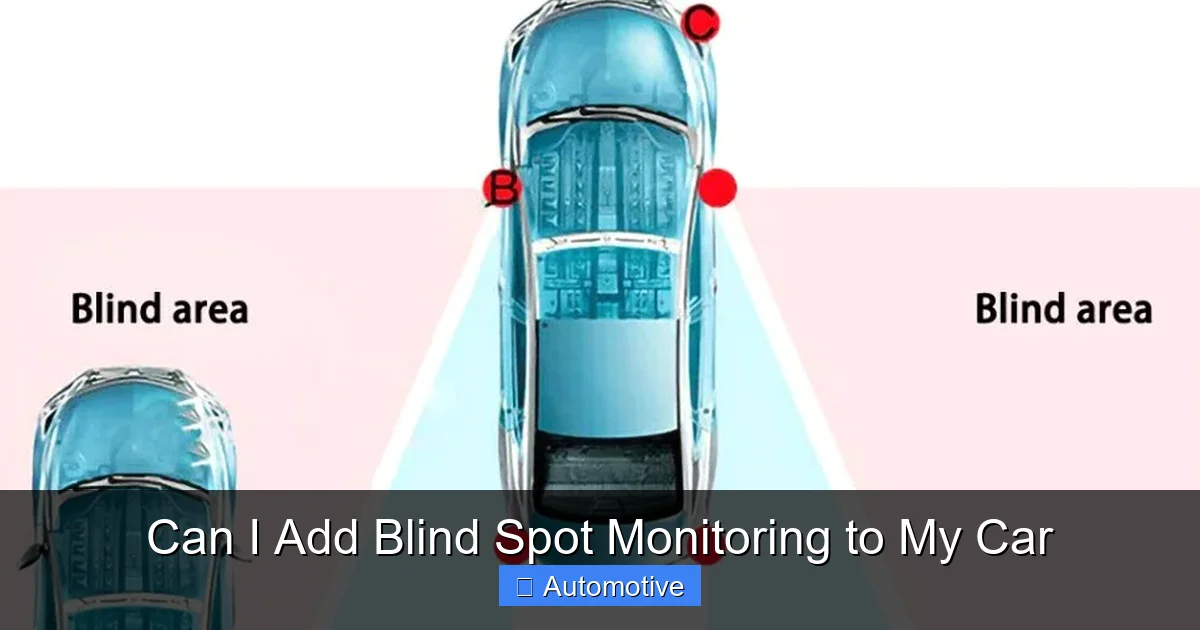
Blind spot monitoring is a driver-assistance system designed to detect vehicles in your car’s blind zones—typically the areas just behind and to the sides of your vehicle, where your side mirrors can’t see. When another vehicle enters this zone, the system alerts you, usually with a visual warning (like a light in your side mirror) or an audible alert if you signal to change lanes.
Most modern BSM systems use radar sensors mounted behind your rear bumper or quarter panels. These sensors emit radio waves that bounce off nearby objects, allowing the system to detect the speed, distance, and direction of other vehicles. Some advanced systems also include cross-traffic alert, which warns you when vehicles are approaching from the side while you’re reversing—perfect for busy parking lots or driveways.
There are two main types of blind spot monitoring systems:
Factory-Installed Systems
These come built into new vehicles from the manufacturer. They’re integrated with the car’s electronics, often appearing as lights in the side mirrors or on the A-pillars. Because they’re designed specifically for that vehicle, they tend to be highly reliable and seamless in operation.
Aftermarket Systems
These are retrofitted kits you can install on older or non-equipped vehicles. They use similar radar or ultrasonic technology but are designed to be universal or semi-universal. While not always as polished as factory systems, many aftermarket options offer comparable performance at a fraction of the cost of a new car.
One key difference? Factory systems are often tied into the car’s central computer, allowing for features like automatic braking or lane-keeping assist. Aftermarket systems usually focus on alerts only—but for most drivers, that’s more than enough to prevent accidents.
Can You Really Add It to Any Car?
Visual guide about Can I Add Blind Spot Monitoring to My Car
Image source: carradio.ie
The short answer: yes, in most cases. But there are some important caveats.
Blind spot monitoring can be added to the vast majority of passenger vehicles, including sedans, SUVs, trucks, and even some older models from the early 2000s. However, compatibility depends on a few factors:
Vehicle Make and Model
Some cars are easier to retrofit than others. For example, vehicles with plastic bumpers (common on modern cars) allow for easier sensor mounting than those with metal bumpers, which can interfere with radar signals. Compact cars may have less space for sensor placement, while larger SUVs and trucks often have more room—but also larger blind spots.
Electrical System Compatibility
Aftermarket BSM systems need to connect to your car’s power supply and, in some cases, the turn signal circuit to activate alerts when you use your blinker. Most kits are designed to tap into existing wiring, but older cars with simpler electrical systems may require additional adapters or professional help.
Mirror and Dashboard Integration
If you want the alerts to appear in your side mirrors (like factory systems), your mirrors must have space for indicator lights. Some aftermarket kits include adhesive warning lights that stick to the mirror housing, while others require drilling—something not all drivers are comfortable with. Alternatively, alerts can appear on a small dashboard display or via a smartphone app.
Professional vs. DIY Installation
While some kits are marketed as “plug-and-play” or “DIY-friendly,” blind spot monitoring involves precise sensor alignment and calibration. Even a few degrees off can cause false alerts or missed detections. That’s why most experts recommend professional installation, especially for radar-based systems.
That said, if you’re handy with tools and have experience with car electronics, a DIY installation is possible—just be prepared to spend time reading manuals, testing signals, and fine-tuning placement.
Types of Aftermarket Blind Spot Monitoring Systems

Visual guide about Can I Add Blind Spot Monitoring to My Car
Image source: newkidscar.com
Not all blind spot monitoring kits are created equal. Here’s a breakdown of the most common types you’ll find on the market:
Radar-Based Systems
These are the gold standard for aftermarket BSM. They use radar sensors (usually 24GHz or 77GHz) to detect vehicles in your blind spot. Radar works well in all weather conditions—rain, fog, snow—and isn’t affected by dirt or glare. Most high-end aftermarket systems, like those from brands such as EchoMaster, Rostra, or Brandmotion, use radar technology.
Pros: Highly accurate, reliable in bad weather, long detection range (up to 80 feet).
Cons: More expensive, require professional calibration.
Ultrasonic Systems
These use sound waves to detect nearby objects. They’re commonly found in parking sensors but are less effective for blind spot monitoring because they have a shorter range and can be confused by wind, rain, or other noise.
Pros: Lower cost, easy to install.
Cons: Limited range, less reliable at highway speeds, prone to false alerts.
Camera-Based Systems
These use small cameras mounted on the side mirrors or rear bumper to monitor blind spots. The video feed is processed by software to detect vehicles. Some systems even display a live feed on a dashboard screen when you signal to change lanes.
Pros: Visual confirmation, can show exact vehicle position.
Cons: Affected by dirt, glare, and poor lighting; higher power consumption.
Hybrid Systems
Some advanced kits combine radar and camera technology for maximum accuracy. These are the most sophisticated (and expensive) options, often used in commercial fleets or high-end retrofits.
When choosing a system, consider your driving habits. If you frequently drive in rain, snow, or at night, radar is your best bet. If you mostly drive in clear conditions and want a visual aid, a camera system might suit you.
How Much Does It Cost to Add Blind Spot Monitoring?
The cost of adding blind spot monitoring to your car varies widely depending on the system type, brand, and installation method. Here’s a general breakdown:
Basic DIY Kits: $200–$400
These are typically ultrasonic or simple radar systems designed for easy installation. They often include adhesive warning lights and basic sensors. Brands like Auto-Vox or Esky offer budget-friendly options. While affordable, they may lack advanced features like cross-traffic alert or smartphone integration.
Mid-Range Professional Systems: $400–$600
These radar-based kits offer better range, reliability, and features. They often include cross-traffic alert, adjustable sensitivity, and mirror-integrated alerts. Brands like EchoMaster and Rostra fall into this category. Installation is usually recommended and may cost an extra $100–$200.
High-End Integrated Systems: $600–$800+
These are premium kits that mimic factory installations. They may include multiple sensors, dashboard displays, smartphone apps, and integration with other safety features. Some even offer lane departure warnings or collision alerts. Professional installation is almost always required.
Installation Costs
If you go the professional route, expect to pay $100–$300 for labor, depending on your location and the complexity of the install. Some shops offer package deals that include the system and installation.
Is It Worth the Cost?
Consider this: the average cost of a lane-change collision can exceed $5,000 in repairs, medical bills, and insurance hikes. A $500 blind spot monitoring system could pay for itself with a single avoided accident. Plus, many insurance companies offer discounts for vehicles with advanced safety features—check with your provider.
Step-by-Step: How to Add Blind Spot Monitoring to Your Car
Ready to upgrade? Here’s a general guide to adding blind spot monitoring to your vehicle. Note: Always consult your vehicle’s manual and the kit’s instructions before starting.
Step 1: Choose the Right System
Research kits that are compatible with your car’s make, model, and year. Read reviews, check warranty terms, and confirm whether the system includes cross-traffic alert if you want that feature.
Step 2: Gather Tools and Materials
You’ll typically need:
– Screwdrivers and trim removal tools
– Wire strippers and electrical tape
– Drill (if mounting sensors in bumpers)
– Multimeter (to test wiring)
– Zip ties and mounting brackets
Step 3: Mount the Sensors
Radar sensors are usually installed behind the rear bumper, angled slightly outward. Use a template (often included) to mark drilling points. Be careful not to damage wiring or fuel lines. For ultrasonic or camera systems, follow the manufacturer’s placement guide.
Step 4: Run the Wiring
Route wires from the sensors to the control module, usually located under the dashboard or in the trunk. Use existing wire harnesses or grommets to pass through the firewall. Secure all wires with zip ties to prevent rattling or damage.
Step 5: Connect to Power and Signals
Connect the system to a 12V power source (often the fuse box) and, if applicable, the turn signal circuit. This allows the system to activate alerts only when you signal. Use a fuse tap for a clean, safe connection.
Step 6: Install Alert Indicators
Mount warning lights in your side mirrors, A-pillars, or dashboard. Some kits use adhesive pads; others require drilling. Test each light to ensure it works.
Step 7: Calibrate the System
This is crucial. Most radar systems require calibration to ensure accurate detection. This may involve driving at a specific speed or using a calibration tool. Follow the instructions carefully—improper calibration can lead to false alerts or missed detections.
Step 8: Test and Adjust
Take your car for a test drive. Have a friend drive alongside you to simulate a vehicle in your blind spot. Adjust sensitivity settings if needed.
Pros and Cons of Adding Blind Spot Monitoring
Like any upgrade, retrofitting blind spot monitoring has its advantages and drawbacks.
Pros
- Improved Safety: Reduces the risk of lane-change collisions, especially on highways.
- Peace of Mind: Constant awareness of surrounding traffic reduces driver stress.
- Cost-Effective: Far cheaper than buying a new car with factory BSM.
- Resale Value: Adds a desirable feature that can increase your car’s market value.
- Customizable: Choose features like cross-traffic alert or smartphone alerts.
Cons
- Installation Complexity: Not all systems are plug-and-play; professional help may be needed.
- Potential for False Alerts: Poorly calibrated systems may warn you about stationary objects or motorcycles.
- Aesthetic Impact: External sensors or lights may affect your car’s appearance.
- No Integration with Other Systems: Unlike factory setups, aftermarket systems usually don’t connect to lane-keeping or automatic braking.
- Warranty Concerns: Modifying your car’s electronics could void certain warranties—check with your dealer.
Is Adding Blind Spot Monitoring Worth It?
For most drivers, the answer is a resounding yes. Blind spot monitoring is one of the most effective safety features available, and the ability to add it to an existing vehicle makes it accessible to a wider audience.
Consider your driving habits:
– Do you frequently change lanes on highways?
– Do you drive in heavy traffic or bad weather?
– Do you often carry passengers or tow trailers (which increase blind spots)?
If you answered yes to any of these, blind spot monitoring could be a game-changer.
Moreover, as autonomous and semi-autonomous driving features become more common, having foundational safety systems like BSM puts you ahead of the curve. It’s not just about avoiding accidents—it’s about driving smarter, safer, and more confidently.
While no system is perfect, the benefits far outweigh the drawbacks for the average driver. And with prices continuing to drop and technology improving, there’s never been a better time to upgrade.
Final Thoughts
Adding blind spot monitoring to your car is no longer a luxury reserved for new vehicles. With a wide range of aftermarket options available, you can enhance your safety, reduce stress, and potentially avoid costly accidents—all without stepping foot in a dealership.
Whether you choose a basic DIY kit or invest in a professional radar system, the key is to do your research, prioritize quality, and ensure proper installation. Your safety—and the safety of others on the road—is worth the effort.
So, can you add blind spot monitoring to your car? Absolutely. And in today’s world of distracted driving and crowded roads, it might just be one of the best decisions you make for your vehicle.
Frequently Asked Questions
Can I install blind spot monitoring myself?
Yes, some kits are designed for DIY installation, especially basic ultrasonic or camera-based systems. However, radar-based systems often require precise calibration, so professional installation is recommended for best results.
Will adding blind spot monitoring void my car’s warranty?
It depends. Modifying your car’s electrical system could affect certain warranties, particularly if damage occurs due to the installation. Check with your dealer or warranty provider before proceeding.
Do all blind spot monitoring systems work in rain or snow?
Radar-based systems perform well in all weather conditions, while camera and ultrasonic systems may struggle in heavy rain, snow, or fog. Choose radar for the most reliable performance.
Can I add blind spot monitoring to a car with manual mirrors?
Yes. Many aftermarket systems use external warning lights that attach to the mirror housing or A-pillars, so power mirrors aren’t required.
How long does it take to install blind spot monitoring?
A professional installation typically takes 2–4 hours. DIY installations can take longer, especially if you’re unfamiliar with car electronics.
Do insurance companies offer discounts for blind spot monitoring?
Some insurers do offer discounts for vehicles with advanced safety features. Contact your provider to see if retrofitting your car qualifies for a reduced rate.