Cold Weather Car Battery Problems Explained
Cold weather is a car battery’s worst enemy. It dramatically slows the chemical reaction inside the battery, reducing its power output just when your engine needs more power to start. This double-whammy of reduced capacity and increased demand is the primary cause of winter breakdowns.
In This Article
- 1 Key Takeaways
- 2 📑 Table of Contents
- 3 Cold Weather Car Battery Problems Explained
- 4 The Science Behind the Struggle: Why Cold Kills Batteries
- 5 Key Battery Ratings to Understand for Winter
- 6 Common Signs Your Battery is Succumbing to the Cold
- 7 Proactive Prevention: How to Protect Your Battery in Winter
- 8 What to Do If Your Battery Dies in the Cold
- 9 Choosing the Right Battery for Cold Climates
- 10 Conclusion: Empowerment Through Understanding
- 11 Frequently Asked Questions
- 11.1 Can a completely dead car battery freeze?
- 11.2 How often should I replace my car battery to avoid cold weather problems?
- 11.3 Does idling my car to “warm up the battery” help?
- 11.4 Is it bad to jump-start a car in very cold temperatures?
- 11.5 Will a battery tender prevent cold-weather starting issues?
- 11.6 Why does my new battery die in the cold?
Key Takeaways
- Chemistry Slows Down: Cold temperatures thicken the battery’s electrolyte, slowing the chemical reaction that produces electricity, reducing available power by up to 50%.
- Engine Oil Thickens: Cold, viscous engine oil requires the starter motor to work much harder, placing a massive, sudden demand on an already weakened battery.
- Parasitic Drain Matters More: Normal background electrical drains (alarm, computers) consume a larger percentage of a battery’s reduced cold-weather capacity, leading to a dead battery faster.
- Voltage is Misleading: A battery can show 12+ volts on a meter but still fail under load (cranking) because it lacks the necessary Cold Cranking Amps (CCA).
- Prevention is Key: Proactive steps like battery testing, keeping terminals clean, using a battery blanket, and minimizing short trips can prevent most cold-weather failures.
- Age Amplifies Problems: An older battery with diminished capacity will struggle far more in the cold than a healthy, new one. Most batteries need replacement every 3-5 years.
📑 Table of Contents
- Cold Weather Car Battery Problems Explained
- The Science Behind the Struggle: Why Cold Kills Batteries
- Key Battery Ratings to Understand for Winter
- Common Signs Your Battery is Succumbing to the Cold
- Proactive Prevention: How to Protect Your Battery in Winter
- What to Do If Your Battery Dies in the Cold
- Choosing the Right Battery for Cold Climates
- Conclusion: Empowerment Through Understanding
Cold Weather Car Battery Problems Explained
You wake up on a frigid morning. The world is quiet and covered in frost. You grab your keys, head to your car, turn the ignition, and… click. Nothing. Or worse, a slow, labored groaning sound as the engine tries and fails to turn over. If this has happened to you, you’ve met the most common winter driving villain: a cold-weather car battery failure.
It’s not a coincidence. Winter is the peak season for dead batteries. But why does this happen? Is your battery just being difficult? The truth is, it’s a perfect storm of physics and chemistry working against you. Understanding the “why” is the first step to preventing the dreaded no-start.
This guide will walk you through exactly how cold weather affects your car battery. We’ll break down the science in simple terms. Then, we’ll give you practical, actionable tips to keep your battery strong all winter long. Let’s get your car starting reliably, no matter what the thermometer says.
The Science Behind the Struggle: Why Cold Kills Batteries
Your car battery is a chemical power plant. It doesn’t store electricity like a bucket holds water. Instead, it generates electricity through a chemical reaction between lead plates and a liquid electrolyte (a mix of sulfuric acid and water). Temperature is a huge factor in how well this reaction works.
Visual guide about Cold Weather Car Battery Problems Explained
Image source: cdn1.byjus.com
The Chemical Slowdown
Think of the chemicals inside your battery like workers in a factory. On a warm day, they’re moving quickly, producing lots of power (amps). When it gets cold, those workers slow down. They’re moving through molasses. The electrolyte fluid becomes thicker and more resistant. This dramatically slows the chemical reaction that produces electricity. At 32°F (0°C), a battery has only about 65% of the power it has at 80°F (27°C). At 0°F (-18°C), that plummets to roughly 40%. Your battery is essentially half as strong.
Increased Physical Demand
Here’s the cruel twist. Just as your battery’s output is dropping, your engine’s demand for power is skyrocketing. Cold engine oil is thick and syrupy. It provides much more resistance. Your starter motor has to fight against this viscous oil to spin the engine. This requires a massive, brief burst of electrical current—far more than on a warm summer day. Your weakened battery is asked to do a Herculean task.
It’s a classic double-whammy: less power available, and more power needed. This mismatch is the core reason for winter starting problems.
Key Battery Ratings to Understand for Winter
When shopping for a battery or diagnosing a problem, two ratings are critical. Knowing these will help you make smarter choices.
Visual guide about Cold Weather Car Battery Problems Explained
Image source: i.huffpost.com
Cold Cranking Amps (CCA)
This is the most important number for winter. CCA measures the number of amps a 12-volt battery can deliver at 0°F for 30 seconds while maintaining at least 7.2 volts. In simple terms, it’s the battery’s brute strength for starting in the cold. A higher CCA rating means more starting power. If you live in a cold climate, prioritize a battery with a high CCA rating that meets or exceeds your vehicle’s manufacturer specification.
Reserve Capacity (RC)
Reserve Capacity measures how long a battery can run essential accessories if the alternator fails. It’s the number of minutes a battery can deliver 25 amps at 80°F before dropping below 10.5 volts. While more critical for summer and electrical loads, a good RC also indicates a robust battery that can handle the deep cycles of short winter trips where the alternator doesn’t have time to fully recharge it.
Common Signs Your Battery is Succumbing to the Cold
Your car often gives you warnings before it completely fails. Watch for these red flags as temperatures drop.
Visual guide about Cold Weather Car Battery Problems Explained
Image source: png.pngtree.com
- Slow Engine Crank: The starter sounds sluggish and labored, like it’s dragging. The engine takes longer to fire up.
- Dim Headlights and Interior Lights: When you turn the key to the “on” position (before starting), your headlights and dashboard lights appear noticeably dimmer than usual.
- Clicking Sound: You turn the key and hear a rapid clicking noise, but the engine doesn’t crank. This often means there’s enough power to activate the starter solenoid (click) but not enough to engage the starter motor itself.
- Electrical Gremlins: You might see warning lights flicker, power windows move slower, or the infotainment system act erratically. Unstable voltage causes weird electrical issues.
- Swollen Battery Case: In extreme cases, a failing battery that has frozen can cause the case to bulge or crack. If you see this, the battery is dead and needs immediate, safe replacement.
Proactive Prevention: How to Protect Your Battery in Winter
Don’t wait for a failure. A little preparation can save you a huge headache on a cold morning.
1. Get a Pre-Winter Battery Test
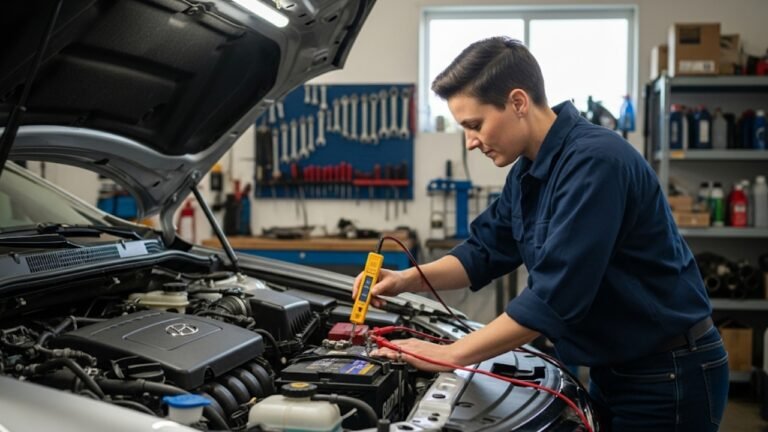
Most auto parts stores offer free battery testing. A professional load test is best. It doesn’t just check voltage; it simulates the high demand of starting. This test can tell you the battery’s actual health and its remaining capacity. Do this in the fall, before the deep cold sets in.
2. Keep It Clean and Tight
Corrosion on the battery terminals (those white, blue, or green crusty deposits) creates resistance. Resistance makes it harder for the battery’s precious power to reach the starter. Clean terminals with a wire brush and a baking soda/water solution. Ensure the cable connections are tight and secure.
3. Consider a Battery Blanket or Maintainer
Battery Blanket (Warmer): This is an insulated electric pad that wraps around the battery, plugged into an outlet. It keeps the battery warm, preserving its chemical efficiency. Great for cars parked outside in extreme climates.
Trickle Charger/Maintainer: If you take lots of short trips, your battery never gets fully charged. A maintainer plugs into a wall outlet and connects to your battery, providing a small, steady charge to keep it at 100%. It’s like a vitamin for your battery.
4. Minimize Drain Before Starting
Before you crank the engine, turn off all accessories: heater fan, defroster, radio, seat warmers, and headlights. This gives every available amp to the starter motor. Let the car run for a minute before turning on major electrical loads.
5. Take Longer Drives
Short trips (under 15 minutes) are brutal on batteries in winter. The starter uses a huge amount of power, and the alternator needs time to put it back. If you only drive short distances, the battery slowly drains over time. Once a week, take a drive of at least 20-30 minutes on the highway to allow the alternator to fully recharge the battery.
What to Do If Your Battery Dies in the Cold
Despite your best efforts, it might still happen. Here’s your action plan.
Jump-Starting Safely
You’ll need jumper cables and a donor vehicle with a good battery. Important: Ensure neither battery is frozen (cracked or bulging case). A frozen battery can explode when jump-started.
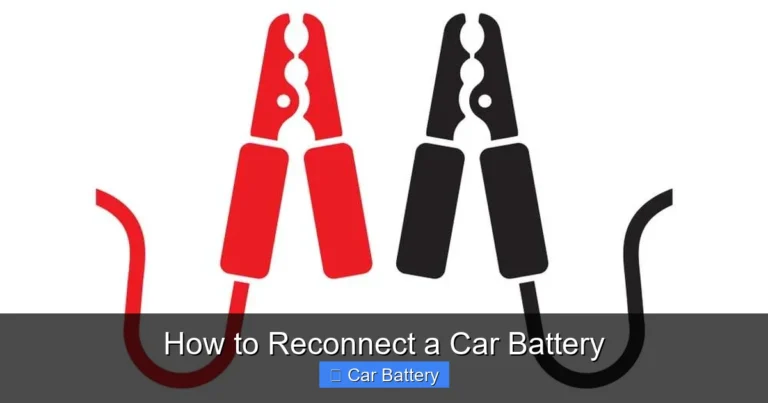
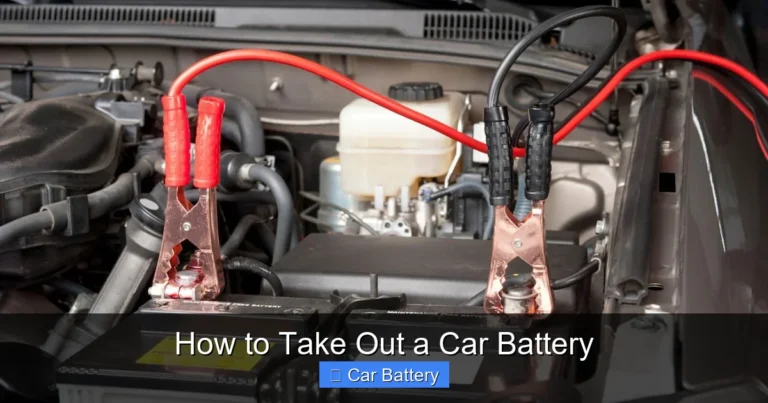
Steps: 1) Park cars close, not touching. Turn both off. 2) Connect RED clamp to DEAD battery’s positive (+) terminal. 3) Connect other RED clamp to GOOD battery’s positive (+). 4) Connect BLACK clamp to GOOD battery’s negative (-). 5) Connect final BLACK clamp to an UNPAINTED METAL BOLT on the dead car’s engine block (NOT the dead battery’s negative terminal). 6) Start the donor car, let it run. 7) Try to start the dead car. 8. If it starts, carefully remove cables in reverse order.
When to Call a Professional
If jump-starting fails after a few proper attempts, the problem may be more than the battery. It could be a bad starter, alternator, or a severe parasitic drain. This is when it’s time to call a tow truck or mobile mechanic. Don’t keep trying and risk damaging electronics.
Choosing the Right Battery for Cold Climates
When it’s time for a replacement, choose wisely. Not all batteries are created equal for winter duty.
- Prioritize CCA: Match or exceed your vehicle’s original equipment (OE) CCA specification. If you regularly experience sub-zero temperatures, opting for a battery with a higher CCA than required is smart insurance.
- Consider AGM Technology: Absorbent Glass Mat (AGM) batteries are more robust. They are sealed, spill-proof, handle deep discharges better, and often have higher CCA ratings. They perform exceptionally well in cold weather but are more expensive.
- Check the Date: Batteries degrade on the shelf. Look for a manufacturing date sticker. A letter (A-L for Jan-Dec) and a number (the year) e.g., “C23” for March 2023. Buy the freshest battery possible.
Conclusion: Empowerment Through Understanding
Cold weather car battery problems aren’t magic or bad luck. They are a predictable result of chemistry and physics. By understanding the “why”—the slowed chemical reaction and the thickened engine oil—you can move from frustration to preparedness.
The key is to be proactive. Treat your battery as a critical winter component. Test it in the fall. Keep it clean. Consider a maintainer if your driving habits are hard on it. And when it’s time for a new one, invest in quality with a strong CCA rating.
A little knowledge and preparation can ensure that on the coldest morning, your only worry is scraping ice off the windshield, not wondering if your car will start. Stay warm and drive safely!
Frequently Asked Questions
Can a completely dead car battery freeze?
Yes, and it’s a serious risk. A fully charged battery has a freezing point around -76°F (-60°C). A discharged battery, however, can freeze at just 20°F (-7°C) because the electrolyte is mostly water. A frozen battery can crack its case, ruin the internal plates, and may even explode if jump-started.
How often should I replace my car battery to avoid cold weather problems?
Most car batteries last 3 to 5 years. As a battery ages, its capacity to hold a charge diminishes. An older battery is far more likely to fail in the cold. It’s wise to proactively test your battery each fall after it hits the 3-year mark and plan for replacement around year 4 or 5, especially in cold climates.
Does idling my car to “warm up the battery” help?
Not really. Idling charges the battery very slowly because the alternator runs at low RPM. A long drive is far more effective. The best way to warm a battery is to drive the car, as under-hood heat from the engine will gradually warm the battery and restore its efficiency.
Is it bad to jump-start a car in very cold temperatures?
The act of jump-starting is fine if done correctly. The critical step is to first visually inspect the dead battery for signs of freezing (a bulging or cracked case). Never attempt to jump-start a frozen battery, as it can explode. If it looks normal, proceed with caution and follow the proper connection sequence.
Will a battery tender prevent cold-weather starting issues?
Absolutely. A battery tender (or maintainer) is one of the best preventions. It keeps the battery at a full state of charge, which not only provides maximum starting power but also significantly lowers its freezing point. A fully charged battery is a healthy, winter-ready battery.
Why does my new battery die in the cold?
If a relatively new battery fails in the cold, the issue is likely not the battery itself. The problem could be a failing alternator that isn’t recharging it, a parasitic drain (something drawing power when the car is off), or excessive short-trip driving that never allows the battery to recharge fully. A professional diagnostic check is needed.