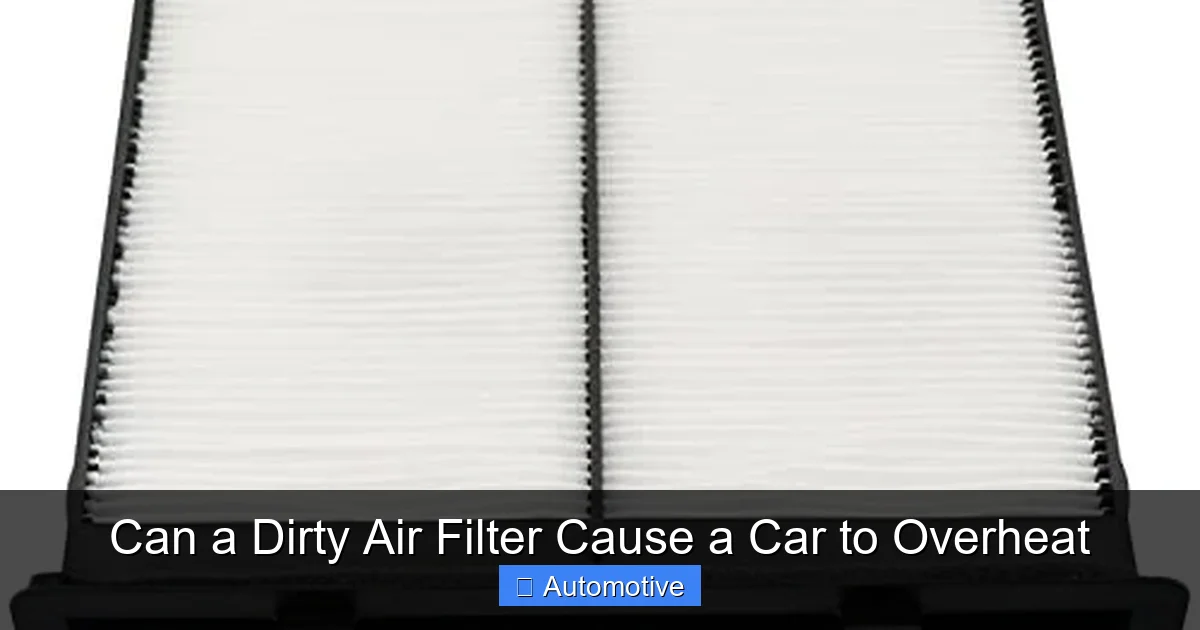
Can a Dirty Air Filter Cause a Car to Overheat

Contents
- 1 Key Takeaways
- 2 📑 Table of Contents
- 3 Can a Dirty Air Filter Cause a Car to Overheat?
- 4 How Air Filters Work and Why They Matter
- 5 The Connection Between Air Filters and Engine Temperature
- 6 When a Dirty Air Filter Can Lead to Overheating
- 7 Signs Your Air Filter Might Be Causing Engine Problems
- 8 How to Prevent Overheating Related to Air Filter Issues
- 9 Other Common Causes of Car Overheating
- 10 Conclusion: Stay Cool with Regular Maintenance
- 11 Frequently Asked Questions

Car Windshield Wiper Blades

Radiator Coolant

Car Vacuum Cleaner (Portable)
Car Inverter
Yes, a dirty air filter can contribute to a car overheating—especially in extreme conditions or older vehicles. While it’s rarely the sole cause, restricted airflow affects combustion efficiency, increases engine load, and strains the cooling system, raising the risk of overheating.
Key Takeaways
- Air filters impact engine performance: A clogged filter restricts airflow, leading to a rich fuel mixture and inefficient combustion.
- Overheating is usually multifactorial: While a dirty air filter alone rarely causes overheating, it can worsen existing cooling system issues.
- Engine strain increases heat output: Poor combustion from restricted airflow forces the engine to work harder, generating excess heat.
- Modern engines are more resilient: Advanced engine management systems compensate for airflow issues, reducing overheating risk in newer cars.
- Regular maintenance prevents problems: Replacing air filters every 12,000–15,000 miles helps maintain optimal engine performance and temperature.
- Watch for warning signs: Reduced acceleration, poor fuel economy, and unusual engine noises may signal a dirty air filter.
- Check other cooling components: Always inspect coolant levels, radiator, thermostat, and water pump when diagnosing overheating.
📑 Table of Contents
- Can a Dirty Air Filter Cause a Car to Overheat?
- How Air Filters Work and Why They Matter
- The Connection Between Air Filters and Engine Temperature
- When a Dirty Air Filter Can Lead to Overheating
- Signs Your Air Filter Might Be Causing Engine Problems
- How to Prevent Overheating Related to Air Filter Issues
- Other Common Causes of Car Overheating
- Conclusion: Stay Cool with Regular Maintenance
Can a Dirty Air Filter Cause a Car to Overheat?
You’re cruising down the highway, enjoying the breeze through your open window, when suddenly the temperature gauge on your dashboard starts creeping into the red zone. Your heart skips a beat. Is your car about to overheat? You pull over, pop the hood, and start scanning for the usual suspects—low coolant, a leaking radiator, or a faulty thermostat. But what if the real culprit is something much simpler, something you might have overlooked for months? Could it be your air filter?
It’s a question many drivers ask, especially when they notice their car running hotter than usual. The short answer? Yes, a dirty air filter can contribute to a car overheating—but it’s rarely the only factor. While it’s not typically the primary cause, a clogged air filter can create a chain reaction that increases engine strain, reduces efficiency, and ultimately pushes your engine’s temperature beyond safe limits. Understanding how this happens—and how to prevent it—can save you from costly repairs and roadside breakdowns.
In this article, we’ll dive deep into the relationship between air filters and engine temperature. We’ll explore how air filters work, why they matter, and how neglecting them can indirectly lead to overheating. Whether you’re a seasoned car enthusiast or a casual driver, this guide will help you keep your engine cool, efficient, and running smoothly.
How Air Filters Work and Why They Matter

Visual guide about Can a Dirty Air Filter Cause a Car to Overheat
Image source: compressorlab.com
Before we get into the overheating connection, let’s start with the basics: what does an air filter actually do?
Your car’s engine is essentially a giant air pump. It needs a steady supply of clean air to mix with fuel for combustion. This air-fuel mixture is what powers your vehicle. The air filter’s job is to clean the air before it enters the engine, trapping dirt, dust, pollen, and other debris that could damage internal components.
Most modern cars use a paper, foam, or cotton gauze filter housed in a plastic or metal box near the engine. As air flows through the filter, contaminants are captured, and only clean air reaches the intake manifold. Over time, however, this filter becomes clogged with dirt and debris. When that happens, airflow is restricted—and that’s where problems begin.
A clean air filter ensures optimal airflow, which is critical for efficient combustion. When the filter is dirty, the engine doesn’t get enough air. This imbalance leads to a “rich” fuel mixture—meaning there’s too much fuel and not enough air. A rich mixture doesn’t burn as efficiently, which can cause a host of issues, including reduced power, poor fuel economy, and increased engine heat.
But here’s the key point: while a dirty air filter affects combustion, it doesn’t directly cool the engine. That’s the job of the cooling system—coolant, radiator, water pump, and thermostat. So how does a clogged air filter tie into overheating? Let’s break it down.
The Connection Between Air Filters and Engine Temperature
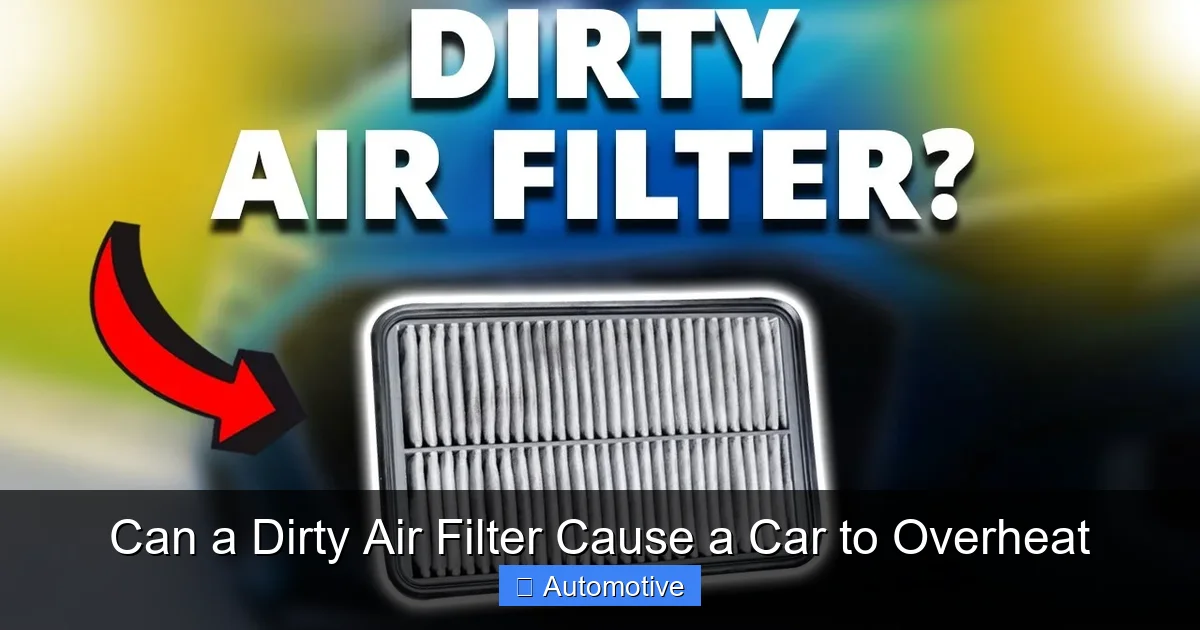
Visual guide about Can a Dirty Air Filter Cause a Car to Overheat
Image source: i.ytimg.com
At first glance, it might seem like air filters and engine temperature have nothing to do with each other. One deals with air intake, the other with heat management. But the truth is, they’re more connected than you might think.
When your air filter is clogged, the engine has to work harder to pull in air. This increased effort generates more heat. Think of it like trying to breathe through a straw—your lungs have to work harder, and you get warmer. The same principle applies to your engine.
Here’s how it happens step by step:
1. **Restricted Airflow**: A dirty filter blocks airflow, reducing the amount of oxygen available for combustion.
2. **Rich Fuel Mixture**: The engine’s computer (ECU) detects the lack of air and may inject more fuel to compensate, creating a rich mixture.
3. **Incomplete Combustion**: A rich mixture doesn’t burn completely, leading to unburned fuel in the exhaust and increased heat in the combustion chamber.
4. **Increased Engine Load**: The engine has to work harder to maintain performance, which generates more internal heat.
5. **Cooling System Strain**: The extra heat puts additional stress on the cooling system, especially if it’s already compromised.
Now, in a perfectly healthy car with a strong cooling system, this extra heat might not cause overheating. But if your radiator is clogged, your coolant is low, or your water pump is failing, that extra heat can push the system over the edge.
Let’s look at a real-world example. Imagine you’re driving in stop-and-go traffic on a hot summer day. Your car is already under stress—high ambient temperature, frequent idling, and limited airflow through the radiator. If your air filter is also dirty, the engine is working harder than it should. The cooling system is already struggling, and now it has to deal with even more heat from inefficient combustion. The result? The temperature gauge starts climbing.
When a Dirty Air Filter Can Lead to Overheating

Visual guide about Can a Dirty Air Filter Cause a Car to Overheat
Image source: driverlessrevolutions.com
So, can a dirty air filter cause a car to overheat? The answer is: it depends.
In most modern vehicles with advanced engine management systems, a dirty air filter alone is unlikely to cause overheating. These systems are designed to compensate for airflow issues by adjusting fuel injection and ignition timing. However, in certain situations—especially in older cars or under extreme conditions—a clogged filter can be the tipping point.
Let’s explore the scenarios where a dirty air filter is most likely to contribute to overheating.
1. Older or High-Mileage Vehicles
Older cars often have less sophisticated engine controls and weaker cooling systems. If your vehicle is 10+ years old and has high mileage, a dirty air filter can have a more pronounced effect. The engine may not adjust as effectively to airflow restrictions, leading to richer mixtures and more heat. Additionally, older radiators and water pumps may already be operating at reduced efficiency, making them more vulnerable to additional heat loads.
2. Extreme Driving Conditions
Driving in hot weather, high altitudes, or heavy traffic increases the risk of overheating. In these conditions, your engine is already under stress. A dirty air filter adds to that stress by reducing efficiency and increasing combustion heat. For example, if you’re towing a trailer up a mountain pass on a 95°F day, every bit of engine performance counts. A clogged filter could be the difference between making it to the top and breaking down on the side of the road.
3. Pre-Existing Cooling System Issues
This is perhaps the most common scenario. If your car already has a weak cooling system—low coolant, a clogged radiator, a failing thermostat, or a worn water pump—a dirty air filter can push it over the edge. The cooling system is already struggling to keep up, and the extra heat from poor combustion makes it impossible to maintain safe temperatures.
For instance, let’s say your radiator has a partial blockage from sediment buildup. Under normal conditions, your engine might run a little warmer than ideal, but not dangerously so. But if your air filter is also dirty, the engine generates more heat, and the compromised radiator can’t dissipate it effectively. The result? Overheating.
4. Performance Modifications or High-Performance Engines
If you’ve modified your car for performance—such as adding a turbocharger, supercharger, or high-flow exhaust—your engine may be more sensitive to airflow restrictions. These modifications often increase airflow demands, and a dirty filter can significantly impact performance and heat generation. High-performance engines also tend to run hotter, so any additional strain can quickly lead to overheating.
Signs Your Air Filter Might Be Causing Engine Problems
How do you know if your air filter is dirty enough to affect your engine’s temperature? While overheating itself is a clear warning sign, there are other symptoms that may point to a clogged air filter.
Reduced Acceleration and Power
One of the most common signs of a dirty air filter is sluggish acceleration. If your car feels like it’s struggling to pick up speed, especially when you press the gas pedal hard, it could be due to restricted airflow. The engine isn’t getting enough air to burn fuel efficiently, so it can’t generate full power.
Poor Fuel Economy
A clogged air filter forces the engine to use more fuel to compensate for the lack of air. This leads to lower gas mileage. If you notice you’re filling up more often than usual, even though your driving habits haven’t changed, your air filter might be to blame.
Rough Idling or Stalling
When the air-fuel mixture is too rich, the engine may idle roughly or even stall, especially when coming to a stop. You might hear sputtering or notice the engine shaking. This is a sign that combustion isn’t happening smoothly.
Check Engine Light
Modern cars are equipped with sensors that monitor airflow, fuel mixture, and engine performance. If the air filter is severely clogged, it can trigger the check engine light. Common trouble codes include P0171 (system too lean) or P0172 (system too rich), depending on how the engine is compensating.
Unusual Engine Noises
A dirty air filter can cause the engine to make popping or coughing sounds, especially during acceleration. These noises are often due to unburned fuel igniting in the exhaust system.
Visible Dirt or Debris
The easiest way to check your air filter is to inspect it. Open the air filter housing (usually a black plastic box near the engine) and remove the filter. If it’s covered in dirt, dust, or debris, it’s time for a replacement. A clean filter should look white or light gray; a dirty one will be dark and clogged.
How to Prevent Overheating Related to Air Filter Issues
The good news is that preventing air filter-related overheating is simple and inexpensive. Regular maintenance is the key.
Replace Your Air Filter on Schedule
Most manufacturers recommend replacing the air filter every 12,000 to 15,000 miles, or once a year—whichever comes first. However, if you drive in dusty conditions (like dirt roads or construction zones), you may need to replace it more often. Check your owner’s manual for specific recommendations.
Inspect the Filter Regularly
Even if you’re not due for a replacement, it’s a good idea to inspect the air filter every few months. Pop open the housing and take a look. If it’s dirty, replace it—even if it’s early. It’s a small cost compared to the potential damage from overheating.
Use Quality Filters
Not all air filters are created equal. Cheap filters may not trap contaminants effectively or may restrict airflow even when clean. Invest in a high-quality filter from a reputable brand. OEM (original equipment manufacturer) filters are a safe bet, but many aftermarket brands offer excellent performance at a lower price.
Check the Entire Air Intake System
While you’re inspecting the air filter, take a moment to check the air intake system for leaks or damage. Cracks in the intake hose or loose clamps can allow unfiltered air into the engine, reducing efficiency and potentially causing damage.
Maintain the Cooling System
Since a dirty air filter can exacerbate cooling system problems, it’s important to keep your cooling system in top shape. Check coolant levels regularly, flush the system every 30,000 to 50,000 miles, and inspect the radiator, hoses, and water pump for signs of wear.
Monitor Engine Temperature
Keep an eye on your temperature gauge, especially during hot weather or heavy use. If you notice the needle creeping into the red zone, pull over safely and let the engine cool. Continuing to drive while overheating can cause severe engine damage.
Other Common Causes of Car Overheating
While a dirty air filter can contribute to overheating, it’s important to remember that it’s rarely the only cause. Here are some other common culprits:
Low Coolant Level
Coolant (also called antifreeze) absorbs heat from the engine and transfers it to the radiator. If the coolant level is low—due to a leak or evaporation—the engine can’t cool properly. Always check the coolant reservoir and top it off if needed.
Faulty Thermostat
The thermostat regulates coolant flow between the engine and radiator. If it gets stuck closed, coolant can’t circulate, and the engine overheats. A stuck-open thermostat can also cause the engine to run too cool, reducing efficiency.
Radiator Problems
A clogged or damaged radiator can’t dissipate heat effectively. Dirt, debris, or internal corrosion can block coolant flow. External damage from rocks or accidents can also impair performance.
Water Pump Failure
The water pump circulates coolant through the engine and radiator. If it fails, coolant stops flowing, and the engine quickly overheats. Signs include coolant leaks, whining noises, or steam from the engine.
Cooling Fan Issues
Electric cooling fans help pull air through the radiator when the car is idling or moving slowly. If the fan isn’t working—due to a blown fuse, faulty motor, or bad sensor—the radiator can’t cool the coolant, leading to overheating.
Head Gasket Failure
A blown head gasket can allow coolant to leak into the combustion chamber or oil passages. This not only causes overheating but can also lead to white smoke from the exhaust, milky oil, and engine damage.
Conclusion: Stay Cool with Regular Maintenance
So, can a dirty air filter cause a car to overheat? The answer is nuanced. While it’s not typically the primary cause, a clogged air filter can contribute to overheating—especially in older vehicles, under extreme conditions, or when other cooling system issues are present. By restricting airflow, it forces the engine to work harder, generates more heat, and puts additional strain on an already stressed cooling system.
The best defense is prevention. Regularly inspecting and replacing your air filter is one of the simplest and most effective ways to maintain engine performance and prevent overheating. Combine that with routine cooling system maintenance, and you’ll keep your car running cool, efficient, and reliable for years to come.
Remember, your car is a complex machine with many interconnected systems. A small issue like a dirty air filter might seem insignificant, but it can have a ripple effect. Stay proactive, stay informed, and don’t wait for the temperature gauge to hit red before taking action. Your engine—and your wallet—will thank you.
Frequently Asked Questions
Can a dirty air filter cause a car to overheat?
Yes, a dirty air filter can contribute to overheating, especially in older cars or under extreme conditions. It restricts airflow, leading to inefficient combustion and increased engine heat, which can strain the cooling system.
How often should I replace my air filter?
Most manufacturers recommend replacing the air filter every 12,000 to 15,000 miles or once a year. If you drive in dusty areas, check and replace it more frequently.
What are the symptoms of a clogged air filter?
Common signs include reduced acceleration, poor fuel economy, rough idling, engine stalling, unusual noises, and a triggered check engine light.
Can I clean my air filter instead of replacing it?
Some reusable filters (like cotton gauze) can be cleaned, but most paper filters must be replaced. Cleaning a paper filter can damage it and reduce effectiveness.
Will a new air filter improve my car’s performance?
Yes, a clean air filter ensures optimal airflow, improves combustion efficiency, and can restore lost power and fuel economy.
Should I check my air filter if my car is overheating?
Yes, but also inspect the cooling system—coolant level, radiator, thermostat, and water pump. A dirty air filter is rarely the sole cause of overheating.