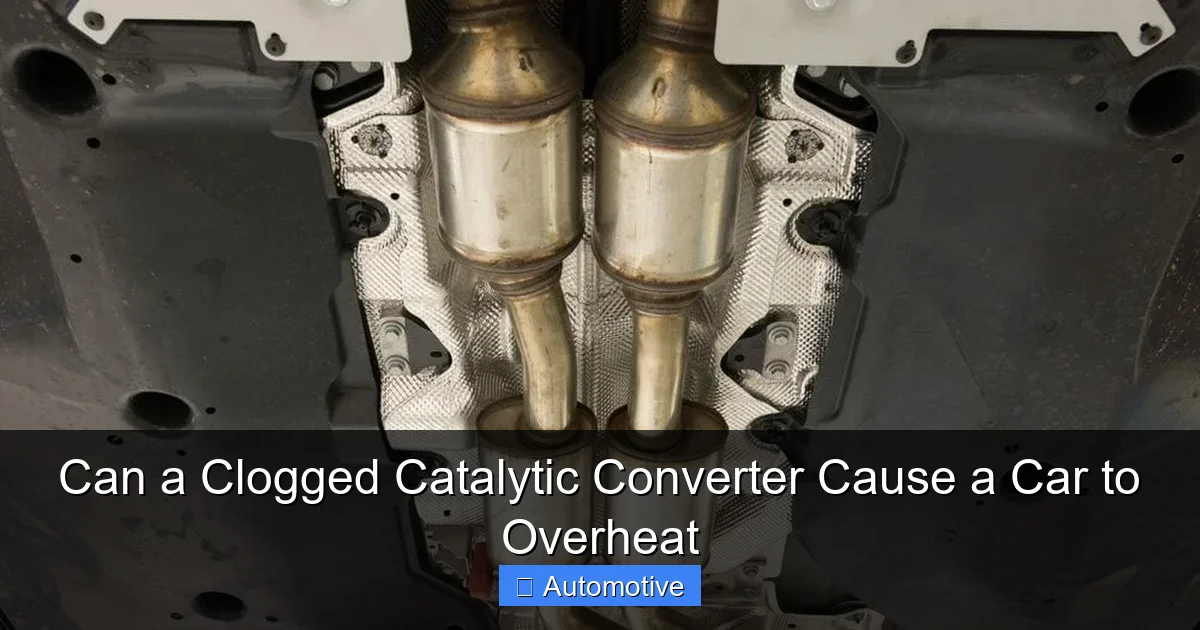
Can a Clogged Catalytic Converter Cause a Car to Overheat

Contents
- 1 Key Takeaways
- 2 📑 Table of Contents
- 3 Can a Clogged Catalytic Converter Cause a Car to Overheat?
- 4 What Is a Catalytic Converter and How Does It Work?
- 5 How a Clogged Catalytic Converter Leads to Overheating
- 6 Common Symptoms of a Clogged Catalytic Converter
- 7 Diagnosing a Clogged Catalytic Converter
- 8 Can You Fix a Clogged Catalytic Converter?
- 9 Conclusion: Protect Your Engine from Overheating and Converter Damage
- 10 Frequently Asked Questions

Car Interior LED Light

Car Bumper Protector

Car Battery Tester

LED Emergency Road Flares
A clogged catalytic converter can restrict exhaust flow, leading to excessive backpressure and engine overheating. This issue not only reduces performance but can also damage other engine components if ignored. Recognizing the symptoms early and addressing them promptly can save you from costly repairs and keep your vehicle running smoothly.
Key Takeaways
- A clogged catalytic converter restricts exhaust flow: This creates backpressure in the engine, forcing it to work harder and generate excess heat, which can lead to overheating.
- Overheating is a secondary symptom: While not the most common sign, engine overheating can occur when a severely clogged converter disrupts normal exhaust and combustion processes.
- Look for performance issues first: Sluggish acceleration, reduced fuel efficiency, and a sulfur smell are early warning signs of a clogged catalytic converter.
- Ignoring the problem risks engine damage: Prolonged overheating from exhaust restriction can warp cylinder heads, damage pistons, or even cause engine failure.
- Regular maintenance helps prevent clogs: Using quality fuel, fixing engine misfires quickly, and avoiding short trips can extend the life of your catalytic converter.
- Professional diagnosis is essential: A mechanic can use a backpressure test or scan tool to confirm if the catalytic converter is the root cause of overheating.
- Replacement may be necessary: If the converter is melted or severely clogged, cleaning won’t help—replacement is often the only safe solution.
📑 Table of Contents
- Can a Clogged Catalytic Converter Cause a Car to Overheat?
- What Is a Catalytic Converter and How Does It Work?
- How a Clogged Catalytic Converter Leads to Overheating
- Common Symptoms of a Clogged Catalytic Converter
- Diagnosing a Clogged Catalytic Converter
- Can You Fix a Clogged Catalytic Converter?
- Conclusion: Protect Your Engine from Overheating and Converter Damage
Can a Clogged Catalytic Converter Cause a Car to Overheat?
You’re driving down the highway, and suddenly the temperature gauge on your dashboard starts creeping into the red zone. Your first thought might be a coolant leak, a faulty thermostat, or a failing water pump. But what if the real culprit is something less obvious—like a clogged catalytic converter?
Yes, it’s possible. While a clogged catalytic converter isn’t the most common cause of engine overheating, it can definitely contribute to rising engine temperatures, especially in severe cases. The catalytic converter plays a vital role in your vehicle’s exhaust system, converting harmful emissions into less toxic gases. But when it becomes clogged, it can disrupt the entire exhaust flow, creating backpressure that forces your engine to work harder. This extra strain generates more heat than usual, and if the cooling system can’t keep up, overheating becomes a real risk.
Understanding how this happens—and how to spot the signs—can save you from a breakdown, expensive repairs, or even engine damage. In this article, we’ll dive deep into the relationship between a clogged catalytic converter and engine overheating. We’ll explain the science behind it, explore the symptoms, discuss real-world examples, and offer practical tips for prevention and repair. Whether you’re a DIY enthusiast or just want to stay informed, this guide will help you keep your car running cool and efficient.
What Is a Catalytic Converter and How Does It Work?
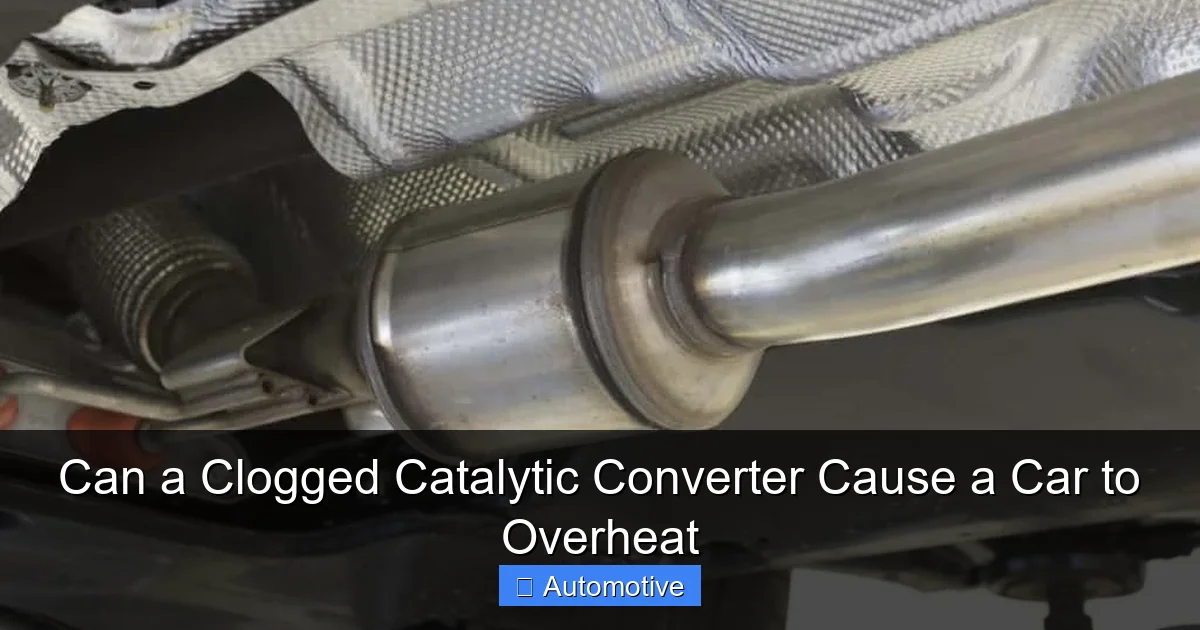
Visual guide about Can a Clogged Catalytic Converter Cause a Car to Overheat
Image source: themotorguy.com
Before we explore how a clogged catalytic converter can cause overheating, it’s important to understand what this component does and why it’s so essential to your vehicle’s operation.
The catalytic converter is a key part of your car’s exhaust system, typically located between the engine and the muffler. Its main job is to reduce harmful emissions by converting toxic gases like carbon monoxide, nitrogen oxides, and unburned hydrocarbons into less harmful substances such as carbon dioxide, nitrogen, and water vapor. This process happens through a series of chemical reactions that occur inside the converter, which contains a ceramic honeycomb structure coated with precious metals like platinum, palladium, and rhodium.
These metals act as catalysts—substances that speed up chemical reactions without being consumed in the process. As hot exhaust gases pass through the honeycomb, the catalysts trigger reactions that break down pollutants. For example, carbon monoxide is converted into carbon dioxide, and nitrogen oxides are split into nitrogen and oxygen.
The catalytic converter operates under high temperatures—typically between 600°F and 1,200°F (315°C to 650°C)—which is why it’s positioned close to the engine. This heat is necessary for the chemical reactions to occur efficiently. However, if the converter becomes clogged, it can trap heat and exhaust gases, disrupting the normal flow and putting stress on the engine.
Types of Catalytic Converters
There are two main types of catalytic converters used in modern vehicles: two-way and three-way converters.
Two-way converters, commonly found in older vehicles and diesel engines, primarily reduce carbon monoxide and unburned hydrocarbons. They do this through oxidation—adding oxygen to convert these pollutants into carbon dioxide and water.
Three-way converters, used in most gasoline-powered cars since the 1980s, handle three types of emissions: carbon monoxide, hydrocarbons, and nitrogen oxides. They perform both oxidation and reduction reactions, making them more efficient and environmentally friendly.
Some vehicles also use a four-way catalytic converter, which includes a particulate filter to capture soot in diesel engines. Regardless of the type, all catalytic converters rely on proper exhaust flow to function correctly. When that flow is blocked, problems begin to arise.
How Exhaust Flow Affects Engine Performance
Your engine is essentially an air pump. It draws in air and fuel, combusts the mixture, and then expels the exhaust gases. For this cycle to work efficiently, exhaust gases must exit the engine quickly and smoothly. The catalytic converter is part of that exit path.
When the catalytic converter becomes clogged—due to melted substrate, carbon buildup, or physical damage—it restricts the flow of exhaust gases. This creates backpressure, meaning the engine has to push harder to expel the gases. Think of it like trying to breathe through a straw that’s partially blocked. The harder you try, the more strain it puts on your lungs.
In your car, this backpressure forces the engine to work harder, which increases internal temperatures. The combustion process becomes less efficient, and more heat is generated. If the cooling system can’t dissipate this extra heat, the engine temperature rises—potentially leading to overheating.
How a Clogged Catalytic Converter Leads to Overheating

Visual guide about Can a Clogged Catalytic Converter Cause a Car to Overheat
Image source: noble6.com
Now that we understand the role of the catalytic converter and how it affects exhaust flow, let’s explore the direct link between a clogged converter and engine overheating.
When the catalytic converter becomes clogged, it acts like a bottleneck in the exhaust system. Exhaust gases can’t escape freely, so they build up pressure behind the blockage. This backpressure forces the engine to work harder during the exhaust stroke, increasing the load on internal components like pistons, valves, and the crankshaft.
This extra workload generates more heat than normal. Additionally, because exhaust gases aren’t being expelled efficiently, they can linger in the combustion chamber or exhaust manifold, raising the temperature of surrounding components. In severe cases, the trapped heat can cause the exhaust manifold to glow red-hot, further increasing under-hood temperatures.
But the problem doesn’t stop there. A clogged catalytic converter can also lead to incomplete combustion. When exhaust gases can’t exit properly, they can mix with the incoming air-fuel mixture, diluting it and causing the engine to run rich (too much fuel, not enough air). This rich mixture burns hotter and produces more soot and carbon deposits, which can further clog the converter and other engine parts.
Over time, this cycle of heat buildup and inefficient combustion can overwhelm the cooling system. The radiator, coolant, and water pump may not be able to keep up with the increased heat load, causing the engine temperature to rise steadily. If left unchecked, this can result in overheating—even if the cooling system itself is in good condition.
Real-World Example: The Case of the Overheating SUV
Consider a 2012 Ford Explorer that began experiencing intermittent overheating during highway driving. The owner initially suspected a coolant leak and replaced the radiator and thermostat. When the problem persisted, a mechanic performed a backpressure test and discovered excessive pressure in the exhaust system. Further inspection revealed a severely clogged catalytic converter with a melted ceramic substrate.
After replacing the converter, the overheating issue disappeared. The mechanic explained that the clogged converter had created so much backpressure that the engine was essentially “fighting” to expel exhaust gases, generating excessive heat. The cooling system, while functional, couldn’t keep up with the added thermal load.
This example illustrates how a clogged catalytic converter can indirectly cause overheating—even when the cooling system is working properly. It’s a reminder that engine temperature issues aren’t always about coolant or radiators. Sometimes, the root cause lies deeper in the exhaust system.
Why Overheating Is a Secondary Symptom
It’s important to note that overheating is not the most common symptom of a clogged catalytic converter. Most drivers first notice performance issues like reduced power, poor fuel economy, or a sulfur (rotten egg) smell from the exhaust. These signs appear earlier because they’re directly tied to restricted exhaust flow.
Overheating typically occurs only when the clog is severe and has been present for some time. By then, the engine has been under constant stress, and the cumulative heat buildup finally overwhelms the cooling system.
This is why diagnosing a clogged catalytic converter requires looking at the full picture. If your car is overheating and you’ve ruled out common causes like low coolant, a bad thermostat, or a failing water pump, it’s worth checking the exhaust system—especially the catalytic converter.
Common Symptoms of a Clogged Catalytic Converter
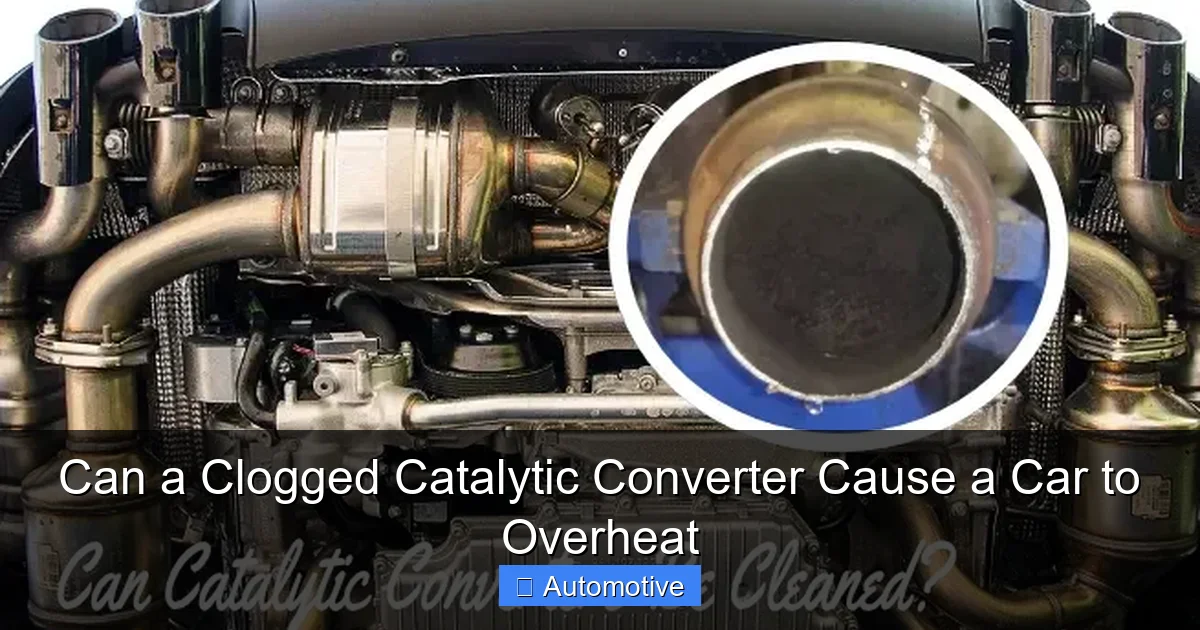
Visual guide about Can a Clogged Catalytic Converter Cause a Car to Overheat
Image source: youramazingcar.com
Recognizing the signs of a clogged catalytic converter early can prevent overheating and other serious issues. While overheating can be a symptom, it’s usually preceded by other, more noticeable warning signs.
1. Reduced Engine Power and Sluggish Acceleration
One of the earliest and most common symptoms is a noticeable loss of power, especially when accelerating. You might feel like your car is “dragging” or struggling to pick up speed. This happens because the engine can’t expel exhaust gases efficiently, so it can’t draw in fresh air and fuel for the next combustion cycle.
For example, if you’re trying to merge onto a highway and your car feels unusually slow, even with the gas pedal pressed down, a clogged catalytic converter could be the culprit.
2. Poor Fuel Economy
A clogged converter forces the engine to work harder, which burns more fuel. You might notice that you’re filling up the gas tank more often than usual, even if your driving habits haven’t changed. This drop in fuel efficiency is often subtle at first but becomes more pronounced as the clog worsens.
3. Sulfur or Rotten Egg Smell
The catalytic converter is designed to convert hydrogen sulfide (a byproduct of combustion) into odorless sulfur dioxide. But if the converter is clogged or failing, it can’t process these gases effectively, leading to a strong sulfur or “rotten egg” smell from the exhaust.
This smell is especially noticeable when the engine is cold or during idle. If you smell sulfur regularly, it’s a red flag that your catalytic converter may be compromised.
4. Check Engine Light
Modern vehicles are equipped with oxygen sensors before and after the catalytic converter. These sensors monitor the efficiency of the converter by comparing the levels of oxygen in the exhaust gases. If the converter isn’t working properly, the downstream sensor will detect higher-than-normal oxygen levels, triggering the check engine light.
Common trouble codes related to catalytic converter issues include P0420 and P0430, which indicate low converter efficiency. While these codes don’t always mean the converter is clogged, they’re a strong indicator that something is wrong.
5. Rattling Noise from Under the Car
Over time, the ceramic honeycomb inside the catalytic converter can break apart due to heat and vibration. This can cause a rattling sound, especially when the car is idling or accelerating. The noise usually comes from under the vehicle, near the center or rear.
While a rattling sound doesn’t always mean the converter is clogged, it’s a sign of internal damage that can lead to blockages.
6. Excessive Heat Under the Vehicle
A clogged catalytic converter can cause the exhaust system to run hotter than normal. You might notice that the area around the converter feels unusually hot to the touch, or you may see heat shimmering above the exhaust pipe.
This excess heat can also contribute to under-hood temperatures rising, increasing the risk of engine overheating.
Diagnosing a Clogged Catalytic Converter
If you suspect your catalytic converter is clogged, it’s important to get a proper diagnosis before jumping to conclusions. While some symptoms are easy to spot, confirming a clog requires specific tests.
Backpressure Test
A backpressure test is one of the most reliable ways to check for a clogged catalytic converter. A mechanic will remove the upstream oxygen sensor and install a pressure gauge in its place. With the engine running, the gauge measures the pressure in the exhaust system.
Normal backpressure should be less than 1.5 psi at idle and no more than 3 psi at 2,500 RPM. If the reading is significantly higher, it indicates a blockage—likely in the catalytic converter.
Temperature Test
Another diagnostic method involves measuring the temperature before and after the catalytic converter. A properly functioning converter should be hotter at the outlet than the inlet because of the exothermic (heat-releasing) chemical reactions inside.
Using an infrared thermometer, a mechanic can check the temperature at both ends. If the outlet temperature is not significantly higher than the inlet, it suggests the converter isn’t working efficiently—possibly due to a clog.
Scan Tool and OBD2 Codes
Modern vehicles store diagnostic trouble codes (DTCs) when emissions systems fail. A scan tool can read these codes and provide insight into converter performance. Codes like P0420 or P0430 indicate low catalytic efficiency, which could be due to a clog, contamination, or internal damage.
However, these codes alone don’t confirm a clog. They should be combined with physical tests like backpressure or temperature checks for an accurate diagnosis.
Visual Inspection
In some cases, a mechanic may remove the catalytic converter for a visual inspection. A clogged converter may show signs of melting, discoloration, or physical damage to the substrate. A damaged or collapsed honeycomb structure is a clear sign of a severe clog.
Can You Fix a Clogged Catalytic Converter?
Once a clogged catalytic converter is confirmed, the next question is: can it be fixed?
Cleaning vs. Replacement
Some people try to clean a clogged catalytic converter using fuel additives or specialized cleaning solutions. While these products can help with minor carbon buildup, they are rarely effective for severe clogs or melted substrates.
Cleaning is only a temporary fix at best and may not restore full performance. In most cases, especially when overheating is involved, replacement is the only reliable solution.
When to Replace the Catalytic Converter
Replacement is necessary if:
– The ceramic substrate is melted or collapsed.
– Backpressure tests confirm a severe blockage.
– The converter is physically damaged or rusted through.
– Cleaning attempts have failed to restore performance.
Replacing a catalytic converter can be expensive—ranging from $1,000 to $3,000 or more, depending on the vehicle and whether you use OEM or aftermarket parts. However, it’s often the only way to restore proper exhaust flow and prevent further engine damage.
Preventing Future Clogs
To avoid future issues, follow these preventive tips:
– Use high-quality fuel and avoid ethanol blends if your vehicle isn’t designed for them.
– Fix engine misfires promptly—unburned fuel can overheat and damage the converter.
– Avoid short trips, which don’t allow the converter to reach optimal operating temperature.
– Replace spark plugs and oxygen sensors as recommended.
– Keep up with regular maintenance to ensure efficient combustion.
Conclusion: Protect Your Engine from Overheating and Converter Damage
So, can a clogged catalytic converter cause a car to overheat? The answer is yes—especially in severe cases where exhaust flow is significantly restricted. While overheating is not the most common symptom, it can occur when backpressure forces the engine to work harder, generating excess heat that overwhelms the cooling system.
Recognizing the early warning signs—like reduced power, poor fuel economy, and a sulfur smell—can help you address the problem before it leads to overheating or engine damage. Regular maintenance, prompt repairs, and using quality fuel are key to keeping your catalytic converter and engine in top condition.
If you suspect a clogged converter, don’t ignore it. A professional diagnosis can confirm the issue and guide you toward the right solution—whether that’s cleaning, repair, or replacement. Taking action early not only prevents overheating but also protects your engine, improves performance, and keeps your vehicle running safely and efficiently for years to come.
Frequently Asked Questions
Can a clogged catalytic converter cause a car to overheat?
Yes, a severely clogged catalytic converter can cause a car to overheat by creating backpressure in the exhaust system. This forces the engine to work harder, generating excess heat that may overwhelm the cooling system.
What are the first signs of a clogged catalytic converter?
The first signs include reduced engine power, sluggish acceleration, poor fuel economy, and a sulfur or rotten egg smell from the exhaust. These symptoms usually appear before overheating occurs.
How do I test if my catalytic converter is clogged?
A mechanic can perform a backpressure test, temperature test, or use a scan tool to check for trouble codes like P0420 or P0430. These tests help confirm if the converter is restricting exhaust flow.
Can I clean a clogged catalytic converter?
Minor carbon buildup can sometimes be cleaned with fuel additives, but severe clogs or melted substrates usually require replacement. Cleaning is often only a temporary fix.
How much does it cost to replace a catalytic converter?
Replacement costs range from $1,000 to $3,000 or more, depending on the vehicle, location, and whether you use OEM or aftermarket parts. Labor and parts vary widely.
How can I prevent my catalytic converter from clogging?
Prevent clogs by using quality fuel, fixing engine misfires quickly, avoiding short trips, and maintaining your vehicle regularly. Proper combustion and exhaust flow are key to converter longevity.