Can a Bad Temperature Sensor Cause a Car to Overheat?

Contents


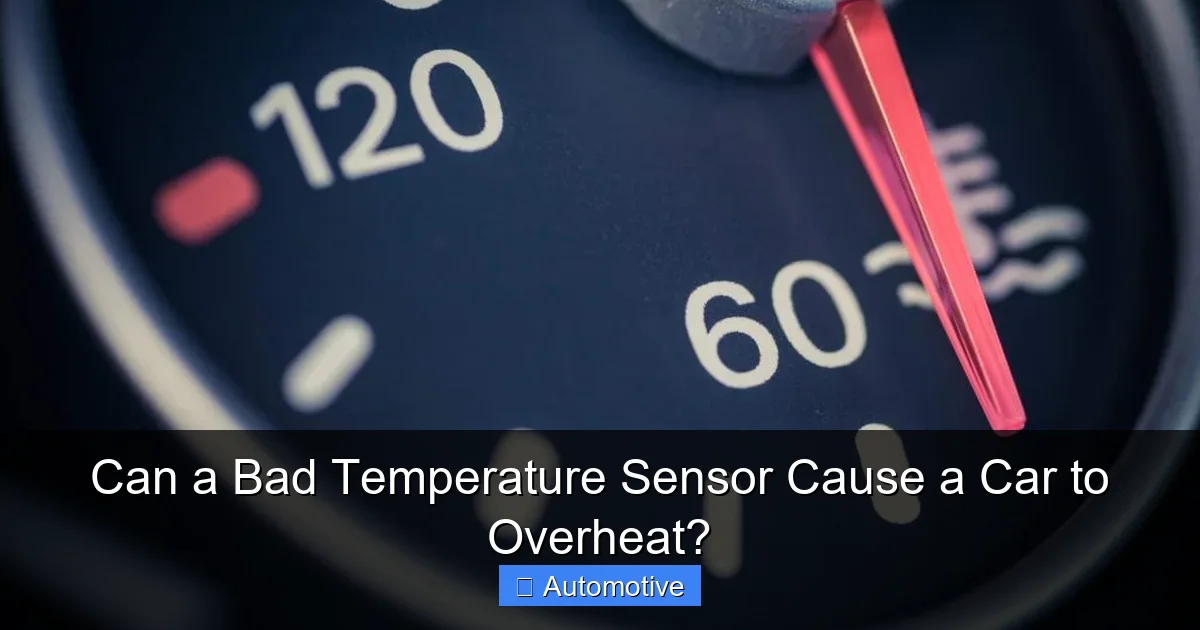
A bad temperature sensor can absolutely cause a car to overheat—even if the cooling system is working perfectly. It tricks the engine computer into thinking the engine is cold, leading to improper fuel mixture, delayed cooling fan activation, and poor performance. Understanding how this small part plays a big role can save you from expensive engine repairs.
This is a comprehensive guide about Can a Bad Temperature Sensor Cause a Car to Overheat?.
Key Takeaways
- A faulty temperature sensor can send incorrect signals to the engine control unit (ECU), causing the engine to run rich or lean. This imbalance affects combustion efficiency and can lead to overheating.
- The cooling fan may not turn on when needed if the temperature sensor fails. Since the ECU relies on sensor data to activate the fan, a bad sensor means no airflow over the radiator, especially at low speeds.
- Overheating due to a bad sensor often happens gradually. You might notice poor fuel economy, rough idling, or warning lights before the temperature gauge spikes.
- Modern cars use multiple temperature sensors. While the coolant temperature sensor (CTS) is most critical, intake air and oil temperature sensors also play supporting roles in engine management.
- Diagnosing a bad sensor requires more than just looking at the temperature gauge. Use an OBD2 scanner to check for trouble codes like P0115 or P0118, which point to sensor circuit issues.
- Replacing a temperature sensor is usually inexpensive and quick. Most cost between $20 and $100, and can be done in under an hour with basic tools.
- Ignoring a bad sensor can lead to severe engine damage. Prolonged overheating may warp cylinder heads, blow head gaskets, or even crack engine blocks.
[FEATURED_IMAGE_PLACEHOLDER]
Can a Bad Temperature Sensor Cause a Car to Overheat?
Imagine you’re driving down the highway on a hot summer day, windows down, music playing. Everything seems fine—until you glance at the dashboard and see the temperature gauge creeping into the red zone. Your heart skips a beat. Is it the radiator? The water pump? Or could it be something as small as a temperature sensor?
The truth is, yes—a bad temperature sensor can absolutely cause a car to overheat. And it’s more common than you might think. While most people assume overheating is always due to coolant leaks, broken fans, or failed water pumps, the root cause is sometimes much simpler: a faulty sensor sending the wrong signals to your car’s computer. This tiny component plays a huge role in how your engine operates, and when it fails, the consequences can be serious.
In this article, we’ll dive deep into how temperature sensors work, why they matter, and how a malfunctioning one can lead to overheating. We’ll also cover warning signs, diagnostic tips, and what you can do to prevent or fix the problem. Whether you’re a DIY mechanic or just want to understand your car better, this guide will give you the knowledge to stay cool—even when your engine is under pressure.
How Temperature Sensors Work in Your Car
Before we get into how a bad sensor can cause overheating, it’s important to understand what temperature sensors do and why they’re so essential. Think of them as your car’s internal thermometer—constantly monitoring engine temperature and feeding that data to the engine control unit (ECU), also known as the car’s brain.
The most critical sensor in this system is the coolant temperature sensor (CTS), also called the engine coolant temperature (ECT) sensor. It’s usually located near the thermostat housing or cylinder head, submerged in engine coolant. As the coolant heats up, the sensor measures the temperature and sends a voltage signal to the ECU. The ECU then uses this information to adjust fuel delivery, ignition timing, and cooling fan operation.
The Role of the Coolant Temperature Sensor
The coolant temperature sensor is like a thermostat for your engine’s electronics. When the engine is cold, the sensor tells the ECU to enrich the fuel mixture—this helps the engine warm up faster and run smoothly during startup. As the engine reaches operating temperature (usually around 195°F to 220°F), the sensor signals the ECU to switch to a leaner, more efficient fuel mixture.
But that’s not all. The CTS also controls when the cooling fan turns on. Most cars have an electric fan that kicks in when the engine gets too hot, especially when you’re idling or driving slowly. The ECU waits for the CTS to report a high temperature before activating the fan. If the sensor is faulty and doesn’t send the right signal, the fan might never turn on—even when the engine is overheating.
Other Temperature Sensors in Modern Vehicles
While the coolant temperature sensor is the star player, modern cars often have additional sensors that support engine management. These include:
- Intake Air Temperature (IAT) Sensor: Measures the temperature of air entering the engine. This helps the ECU adjust the air-fuel ratio for optimal combustion.
- Transmission Fluid Temperature Sensor: Monitors the temperature of automatic transmission fluid to prevent overheating and shifting issues.
- Oil Temperature Sensor: Found in some performance or luxury vehicles, it tracks engine oil temperature to protect against lubrication breakdown.
While these sensors don’t directly control cooling, they work together with the CTS to give the ECU a complete picture of the engine’s thermal state. A failure in any of them can indirectly contribute to overheating by disrupting engine efficiency.
How Sensor Signals Are Processed
Temperature sensors use a principle called thermistor resistance. A thermistor is a type of resistor whose resistance changes with temperature. In most car sensors, resistance decreases as temperature increases. The ECU sends a small voltage to the sensor and measures the return signal. Based on the resistance, it calculates the engine temperature.
For example, if the sensor reads high resistance, the ECU assumes the engine is cold and enriches the fuel mixture. If resistance is low, it assumes the engine is hot and leans out the mixture. If the sensor is stuck or sending erratic signals, the ECU gets confused—leading to poor engine performance and, in some cases, overheating.
Signs of a Bad Temperature Sensor
Now that you know how temperature sensors work, let’s talk about how to spot a bad one. The tricky part? The symptoms often mimic other engine problems, so it’s easy to misdiagnose. But with the right knowledge, you can identify a failing sensor before it causes serious damage.
Engine Overheating Without Obvious Cooling System Issues
One of the most telling signs is overheating when there’s no obvious cause. For example, you’ve checked the coolant level—it’s full. The radiator isn’t leaking. The water pump seems fine. The fan belt is intact. Yet, the temperature gauge keeps climbing. This could point to a faulty temperature sensor that’s not triggering the cooling fan or adjusting the fuel mixture correctly.
Let’s say you’re sitting in traffic on a 90°F day. The engine starts to overheat, but the cooling fan never kicks on. You pop the hood and notice the fan is completely still. That’s a red flag. The fan should activate when the engine reaches a certain temperature. If it doesn’t, the ECU might not be receiving the correct signal from the sensor.
Poor Fuel Economy and Rough Idling
A bad temperature sensor can cause the engine to run rich—meaning too much fuel is being injected. This happens when the sensor falsely reports a cold engine, even when it’s warm. The result? Wasted fuel, reduced mileage, and a rough idle. You might notice your car feels sluggish, or the exhaust smells like unburned fuel.
For instance, imagine your car normally gets 28 miles per gallon on the highway. Suddenly, you’re only getting 20. You check tire pressure, air filter, and spark plugs—all fine. But the engine still feels off. A diagnostic scan might reveal a faulty CTS sending a “cold engine” signal, causing the ECU to dump extra fuel unnecessarily.
Check Engine Light and Diagnostic Trouble Codes
The check engine light is your car’s way of saying, “Something’s wrong.” When a temperature sensor fails, it often triggers specific trouble codes that can be read with an OBD2 scanner. Common codes include:
- P0115: Engine Coolant Temperature (ECT) Circuit Malfunction
- P0116: ECT Circuit Range/Performance Problem
- P0117: ECT Circuit Low Input
- P0118: ECT Circuit High Input
- P0128: Coolant Thermostat (Coolant Temperature Below Thermostat Regulating Temperature)
These codes indicate that the sensor is sending signals outside the expected range. For example, P0117 means the sensor is reading abnormally low voltage (suggesting a very hot engine), while P0118 means high voltage (suggesting a very cold engine). Either way, the ECU can’t trust the data, leading to poor engine management.
Erratic Temperature Gauge Readings
Another sign is a temperature gauge that behaves strangely. It might fluctuate between cold and hot, get stuck on cold even after a long drive, or spike suddenly. This is often due to a sensor with a broken internal circuit or poor connection.
Picture this: You start your car in the morning, and the gauge shows normal. After 10 minutes of driving, it suddenly jumps to the red zone—even though the engine doesn’t feel hot. You pull over, let it cool, and the gauge drops back to normal. This erratic behavior is a classic symptom of a failing sensor.
Delayed or No Cooling Fan Activation
As mentioned earlier, the cooling fan relies on the temperature sensor to know when to turn on. If the fan doesn’t activate when the engine is hot—especially at idle or low speeds—it could be because the sensor isn’t sending the right signal.
Try this test: Let your car idle in a safe, cool area for 15–20 minutes. Watch the temperature gauge. When it reaches the upper half of the normal range, the fan should kick on. If it doesn’t, and the engine starts to overheat, suspect the sensor or the fan relay. But if the fan works when you rev the engine (which increases coolant flow), the issue is likely sensor-related.
How a Bad Sensor Leads to Overheating
So, how exactly does a small sensor cause an engine to overheat? It’s not that the sensor itself generates heat—it’s that it misleads the systems that prevent overheating. Let’s break it down step by step.
Incorrect Fuel Mixture and Combustion Issues
When the temperature sensor sends a false “cold engine” signal, the ECU responds by enriching the fuel mixture. This means more fuel is injected into the cylinders. While this is helpful during a cold start, it’s harmful when the engine is already warm.
Running rich can cause several problems:
- Increased Engine Temperature: Excess fuel doesn’t burn completely, leading to higher combustion chamber temperatures.
- Carbon Buildup: Unburned fuel leaves behind carbon deposits on spark plugs, valves, and pistons, reducing efficiency.
- Reduced Cooling Efficiency: A rich mixture can lower exhaust gas temperatures, but it increases heat in the combustion chamber, putting more stress on the cooling system.
Over time, this extra heat can overwhelm the radiator and coolant system, especially in hot weather or under heavy load.
Failure to Activate the Cooling Fan
The cooling fan is one of the most important defenses against overheating. It pulls air through the radiator when the car isn’t moving fast enough to generate natural airflow. But the fan only turns on when the ECU receives a signal from the temperature sensor.
If the sensor is stuck reading “cold,” the ECU won’t activate the fan—even if the engine is actually hot. This is especially dangerous in stop-and-go traffic or when idling. Without airflow, coolant can’t release heat, and the engine temperature climbs rapidly.
For example, imagine you’re stuck in traffic on a summer afternoon. The engine is working hard, but the fan never turns on. Within minutes, the temperature gauge spikes. You pull over, steam rising from under the hood. The radiator is fine, the coolant is full—but the fan never got the message to turn on. That’s a classic case of sensor failure.
Impact on Thermostat and Coolant Flow
The thermostat is a valve that regulates coolant flow based on engine temperature. It stays closed when the engine is cold, allowing it to warm up quickly. Once the engine reaches operating temperature, the thermostat opens, letting coolant circulate through the radiator.
But the thermostat relies on actual coolant temperature—not sensor data. So why does a bad sensor matter? Because if the ECU thinks the engine is cold, it may delay ignition timing or reduce fan speed, indirectly affecting how quickly the engine warms up or cools down.
In some cases, a faulty sensor can cause the ECU to keep the engine in “cold mode” too long, delaying thermostat opening and trapping heat. This can lead to localized overheating, even if the overall coolant level is fine.
Compounding Effects with Other Issues
A bad temperature sensor rarely works alone. It often teams up with other problems to create a perfect storm of overheating. For example:
- Low Coolant Level: If the coolant is low and the sensor fails to trigger the fan, overheating happens faster.
- Clogged Radiator: A blocked radiator reduces cooling efficiency. If the fan doesn’t turn on due to a bad sensor, the engine heats up even more.
- Faulty Water Pump: A failing pump reduces coolant circulation. Combined with no fan activation, the engine can overheat in minutes.
In these scenarios, the sensor isn’t the only problem—but it’s the one that prevents the car from responding correctly to the crisis.
Diagnosing and Fixing a Bad Temperature Sensor
Now that you understand the risks, let’s talk about how to diagnose and fix a bad temperature sensor. The good news? It’s usually a straightforward repair that doesn’t require major mechanical skills.
Step-by-Step Diagnosis
Start with a visual inspection. Locate the coolant temperature sensor—it’s usually a small, threaded component with a wiring harness, near the thermostat housing. Check for:
- Corrosion or damage to the connector
- Coolant leaks around the sensor
- Loose or frayed wires
Next, use an OBD2 scanner to check for trouble codes. Plug the scanner into the port under the dashboard (usually near the steering column) and read the codes. If you see P0115, P0117, or similar, the sensor is likely the culprit.
You can also test the sensor with a multimeter. Disconnect the sensor and measure its resistance at different temperatures. Compare the readings to the manufacturer’s specifications. If the resistance doesn’t change with temperature, the sensor is faulty.
Replacing the Sensor
Replacing a temperature sensor is typically a 30- to 60-minute job. Here’s how:
- Let the engine cool completely to avoid burns or coolant spray.
- Locate the sensor and disconnect the electrical connector.
- Use a sensor socket or wrench to unscrew the old sensor. Be careful—some coolant may drip out.
- Apply a small amount of thread sealant to the new sensor (if recommended).
- Screw in the new sensor by hand, then tighten it to the specified torque.
- Reconnect the electrical connector.
- Top off coolant if needed, then start the engine and check for leaks.
Most sensors cost between $20 and $100, depending on the make and model. OEM (original equipment manufacturer) parts are more reliable than cheap aftermarket ones, so invest in quality.
Preventive Maintenance Tips
To avoid future sensor failures:
- Use high-quality coolant and change it according to the manufacturer’s schedule.
- Inspect sensors and wiring during routine maintenance.
- Avoid overheating incidents—they can damage sensors over time.
- Keep the engine bay clean to prevent corrosion.
Regular maintenance goes a long way in preventing sensor issues and keeping your engine cool.
Conclusion
A bad temperature sensor might seem like a minor issue, but it can have major consequences—including engine overheating, poor fuel economy, and costly repairs. By sending incorrect signals to the ECU, a faulty sensor disrupts fuel delivery, delays fan activation, and misleads the entire engine management system.
The good news is that temperature sensors are easy to diagnose and replace. With the right tools and a little know-how, you can fix the problem quickly and avoid a breakdown. Pay attention to warning signs like erratic temperature readings, poor fuel economy, and a non-working cooling fan. And when in doubt, use an OBD2 scanner to check for trouble codes.
Remember: your car’s cooling system is only as smart as the sensors that guide it. Keep those sensors in good shape, and your engine will stay cool—no matter how hot it gets outside.
FAQs
Can a bad temperature sensor cause a car to overheat?
Yes, a bad temperature sensor can cause a car to overheat by sending incorrect signals to the engine control unit. This can prevent the cooling fan from turning on or cause the engine to run rich, increasing heat buildup.
How do I know if my temperature sensor is bad?
Look for symptoms like erratic temperature gauge readings, poor fuel economy, rough idling, or a check engine light with codes like P0115 or P0118. A diagnostic scan or multimeter test can confirm the issue.
Can I drive with a faulty temperature sensor?
It’s not recommended. Driving with a bad sensor can lead to overheating, engine damage, or stalling. Replace the sensor as soon as possible to avoid costly repairs.
How much does it cost to replace a temperature sensor?
Most temperature sensors cost between $20 and $100. Labor costs are low if you do it yourself, typically taking under an hour with basic tools.
Will a bad sensor always trigger a check engine light?
Not always, but most modern cars will trigger a code like P0115 or P0118 when the sensor fails. However, intermittent issues might not set a code immediately.
Can a temperature sensor cause the fan to run constantly?
Yes, if the sensor sends a false “hot engine” signal, the ECU may keep the cooling fan running even when it’s not needed. This can drain the battery and wear out the fan motor.
Frequently Asked Questions
What is Can a Bad Temperature Sensor Cause a Car to Overheat??
Can a Bad Temperature Sensor Cause a Car to Overheat? is an important topic with many practical applications.