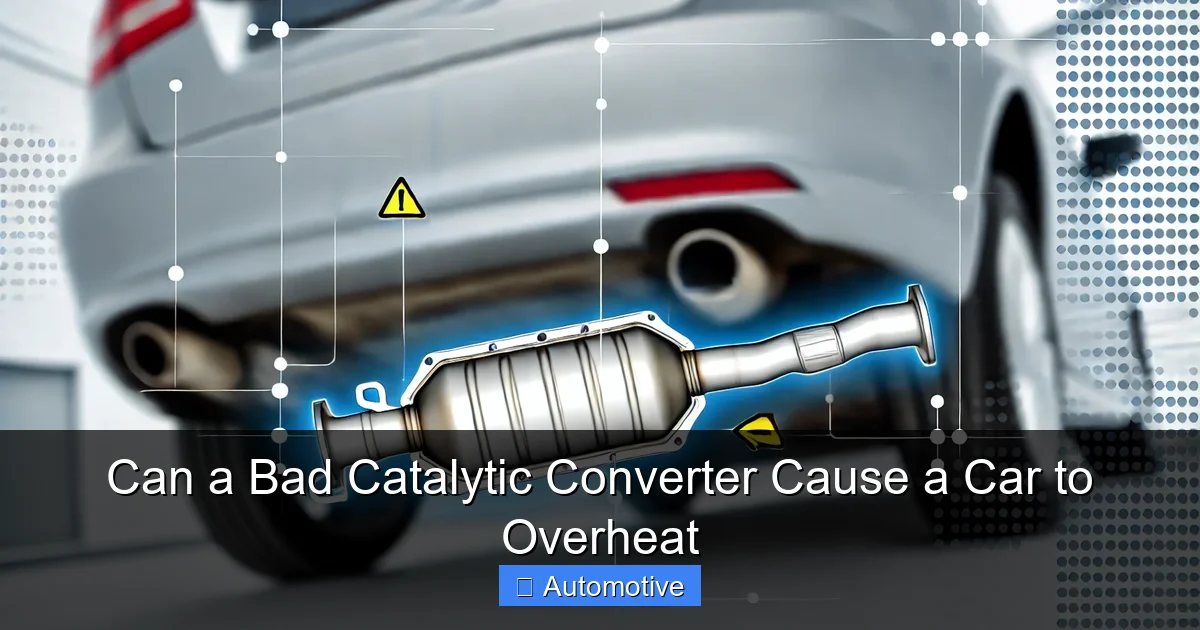
Can a Bad Catalytic Converter Cause a Car to Overheat

Contents
- 1 Key Takeaways
- 2 📑 Table of Contents
- 3 Can a Bad Catalytic Converter Cause a Car to Overheat?
- 4 How the Catalytic Converter Affects Engine Temperature
- 5 Symptoms of a Bad Catalytic Converter
- 6 The Link Between Catalytic Converter Failure and Overheating
- 7 Other Causes of Overheating to Rule Out
- 8 Diagnosing a Bad Catalytic Converter
- 9 Repair and Prevention
- 10 Conclusion
- 11 Frequently Asked Questions


A bad catalytic converter can indeed cause a car to overheat, especially when it becomes clogged and restricts exhaust flow. This blockage increases backpressure, forcing the engine to work harder and generating excess heat that the cooling system can’t manage.
Key Takeaways
- A clogged catalytic converter restricts exhaust flow: This increases backpressure in the engine, making it work harder and generate more heat.
- Overheating results from engine strain: When exhaust gases can’t escape efficiently, combustion temperatures rise, overwhelming the cooling system.
- Symptoms include reduced power and poor fuel economy: These signs often appear before overheating becomes severe.
- Ignoring the issue can damage the engine: Prolonged overheating may warp cylinder heads or blow head gaskets.
- Regular maintenance helps prevent problems: Routine inspections and timely replacements keep the exhaust system functioning properly.
- Diagnosis requires professional tools: Mechanics use scanners and backpressure tests to confirm catalytic converter issues.
- Replacement is often necessary: Once clogged, catalytic converters usually can’t be cleaned and must be replaced.
📑 Table of Contents
- Can a Bad Catalytic Converter Cause a Car to Overheat?
- How the Catalytic Converter Affects Engine Temperature
- Symptoms of a Bad Catalytic Converter
- The Link Between Catalytic Converter Failure and Overheating
- Other Causes of Overheating to Rule Out
- Diagnosing a Bad Catalytic Converter
- Repair and Prevention
- Conclusion
Can a Bad Catalytic Converter Cause a Car to Overheat?
If you’ve ever noticed your car running sluggishly, losing power on hills, or the temperature gauge creeping into the red zone, you might be dealing with more than just a simple overheating issue. One often-overlooked culprit behind engine overheating is a failing or clogged catalytic converter. While most drivers associate overheating with coolant leaks, radiator problems, or a faulty thermostat, the catalytic converter plays a surprisingly significant role in engine temperature regulation.
The catalytic converter is a key component of your vehicle’s exhaust system. Located between the engine and the muffler, its job is to reduce harmful emissions by converting toxic gases like carbon monoxide, nitrogen oxides, and unburned hydrocarbons into less harmful substances such as carbon dioxide and water vapor. It does this using precious metals like platinum, palladium, and rhodium as catalysts. But when this component fails—especially when it becomes clogged—it can disrupt the entire exhaust flow, leading to a cascade of problems, including engine overheating.
Many drivers don’t realize that the exhaust system and engine cooling are closely linked. When exhaust gases can’t exit the engine efficiently, pressure builds up inside the combustion chamber and exhaust manifold. This increased backpressure forces the engine to work harder to push out exhaust gases, which in turn generates more heat. Over time, this extra heat can overwhelm the cooling system, especially during stop-and-go traffic or extended idling. The result? Your engine temperature rises, and if left unchecked, you could face serious engine damage.
How the Catalytic Converter Affects Engine Temperature
Visual guide about Can a Bad Catalytic Converter Cause a Car to Overheat
Image source: badcatalytic.com
To understand how a bad catalytic converter can cause overheating, it helps to know how the exhaust and cooling systems interact. The engine produces heat during combustion—this is normal. But that heat must be managed carefully. The cooling system, including the radiator, water pump, thermostat, and coolant, is designed to absorb and dissipate this heat. Meanwhile, the exhaust system removes hot gases from the engine. When both systems work in harmony, your car runs smoothly and stays cool.
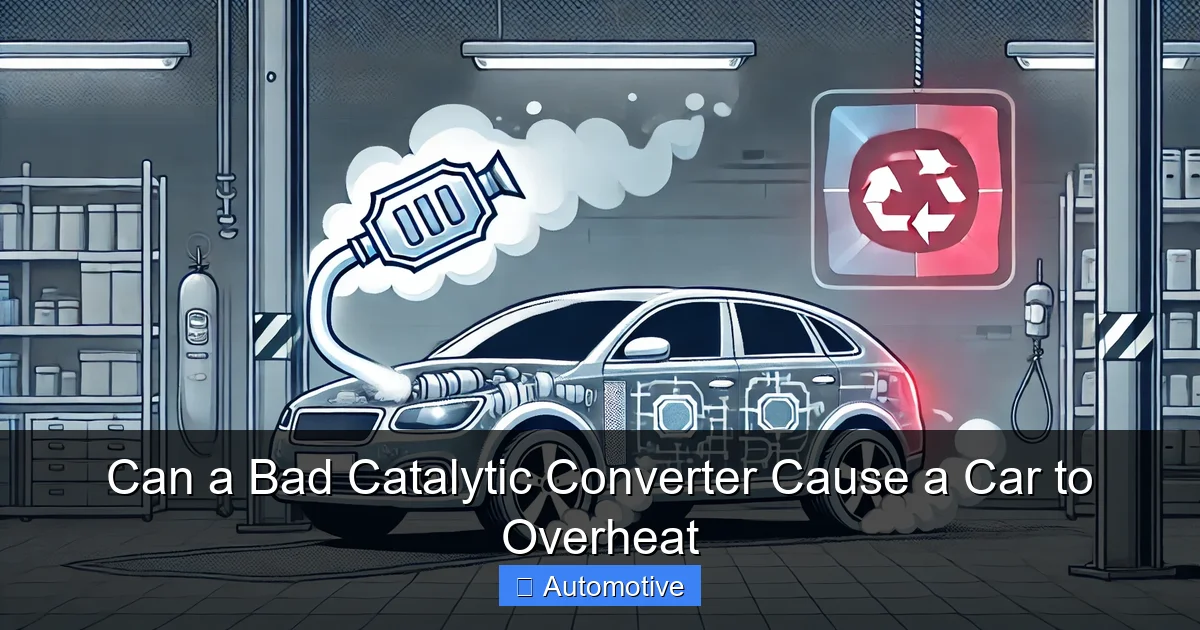
However, when the catalytic converter becomes clogged—often due to oil burning, coolant leakage into the combustion chamber, or accumulated carbon deposits—it acts like a bottleneck in the exhaust flow. Exhaust gases can’t escape quickly enough, so they build up pressure behind the blockage. This is known as backpressure. High backpressure forces the engine to work harder during the exhaust stroke, increasing internal temperatures.
Imagine trying to blow air through a straw that’s partially blocked. You have to blow harder, and your face gets hot. The engine experiences something similar. The increased effort to expel exhaust gases leads to higher combustion temperatures. These elevated temperatures don’t just affect the exhaust system—they radiate into the engine block and cylinder head, raising the overall engine temperature.
Additionally, a clogged converter can cause unburned fuel to enter the exhaust system. This fuel can ignite inside the catalytic converter, causing it to overheat internally. In extreme cases, the converter can glow red-hot, radiating intense heat toward nearby components, including the undercarriage and even the floor of the passenger cabin. This radiant heat can further stress the cooling system and contribute to overall engine overheating.
Symptoms of a Bad Catalytic Converter
Visual guide about Can a Bad Catalytic Converter Cause a Car to Overheat
Image source: badcatalytic.com
Recognizing the signs of a failing catalytic converter early can save you from costly repairs and prevent overheating. While some symptoms overlap with other issues, a combination of them often points to a clogged or damaged converter.
Reduced Engine Performance
One of the earliest and most common signs is a noticeable drop in power. You might find your car struggling to accelerate, especially when merging onto highways or climbing hills. This happens because the engine can’t expel exhaust gases efficiently, limiting its ability to draw in fresh air and fuel for the next combustion cycle. The result is a sluggish, unresponsive feel—often described as “running out of breath.”
Poor Fuel Economy
If you’re suddenly filling up the gas tank more often without changing your driving habits, a clogged catalytic converter could be to blame. The engine compensates for restricted exhaust flow by burning more fuel, leading to decreased miles per gallon. This inefficiency not only costs you money at the pump but also increases emissions and heat output.
Rotten Egg Smell
A sulfur-like or “rotten egg” odor coming from the exhaust is a classic sign of catalytic converter trouble. This smell occurs when the converter can’t properly process hydrogen sulfide, a byproduct of combustion. While a small amount of this gas is normal, a strong odor indicates the converter is no longer functioning effectively.
Check Engine Light
Modern vehicles are equipped with oxygen sensors before and after the catalytic converter. These sensors monitor the efficiency of the converter by comparing oxygen levels in the exhaust. If the downstream sensor detects little difference from the upstream sensor, the engine control unit (ECU) interprets this as a sign that the converter isn’t working. This triggers the check engine light and may store diagnostic trouble codes like P0420 or P0430.
Excessive Heat Under the Car
If you notice unusually high heat coming from under your vehicle—especially near the center of the car where the catalytic converter is located—it could be overheating internally. A clogged converter can reach temperatures over 1,000°F (538°C), causing the metal housing to glow red in extreme cases. This heat can radiate upward, affecting nearby components and contributing to engine overheating.
Rattling Noise
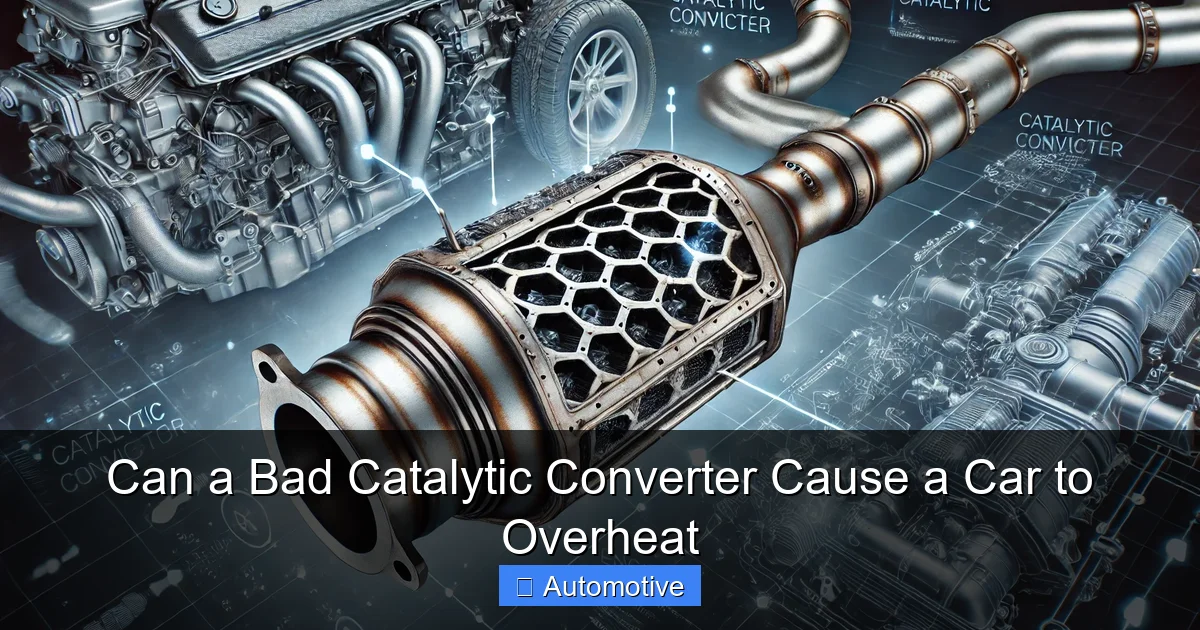
Over time, the ceramic honeycomb structure inside the converter can break apart due to heat and vibration. This creates a rattling sound, especially when the car is idling or accelerating. While this doesn’t directly cause overheating, it’s a clear sign the converter is failing and may soon become completely blocked.
The Link Between Catalytic Converter Failure and Overheating
Visual guide about Can a Bad Catalytic Converter Cause a Car to Overheat
Image source: badcatalytic.com
Now that we’ve covered the symptoms, let’s dive deeper into how a bad catalytic converter directly contributes to engine overheating. The connection lies in the physics of exhaust flow and engine thermodynamics.
When the catalytic converter is clogged, exhaust gases can’t flow freely out of the engine. This creates backpressure, which increases the workload on the engine during the exhaust stroke. The pistons have to push against this resistance, which requires more energy and generates additional heat. This heat isn’t just confined to the exhaust system—it spreads into the engine block, cylinder head, and surrounding components.
Moreover, restricted exhaust flow can lead to incomplete combustion. When exhaust gases linger in the combustion chamber, they displace fresh air and fuel, reducing the efficiency of the burn. This results in higher combustion temperatures and more heat being transferred to the engine components. The cooling system, designed to handle normal operating temperatures, may struggle to keep up with this extra thermal load.
Another factor is the potential for unburned fuel to enter the exhaust system. If the engine is running rich (too much fuel, not enough air), excess fuel can pass through the combustion chamber and ignite inside the catalytic converter. This secondary combustion can cause the converter to overheat dramatically, sometimes reaching temperatures high enough to melt internal components or even start a fire. The intense heat radiates outward, warming the surrounding areas and further stressing the engine’s cooling system.
In vehicles with turbocharged engines, the risk is even greater. Turbos rely on exhaust flow to spin the turbine and compress intake air. A clogged catalytic converter disrupts this flow, reducing turbo efficiency and increasing exhaust gas temperatures. This can lead to turbo overheating, which in turn raises overall engine temperatures.
Real-world example: Imagine driving in heavy city traffic with frequent stops and starts. Your engine is already under stress due to low-speed operation and repeated acceleration. If the catalytic converter is partially clogged, the exhaust system can’t keep up with the demand. Backpressure builds, combustion temperatures rise, and the cooling system becomes overwhelmed. Over time, the temperature gauge climbs, and you’re left wondering why your car is overheating—even though the coolant level is fine and the radiator isn’t leaking.
Other Causes of Overheating to Rule Out
While a bad catalytic converter can cause overheating, it’s important not to jump to conclusions. Many other issues can lead to high engine temperatures, and some are more common than catalytic converter failure. Before blaming the converter, it’s wise to rule out these other potential causes.
Coolant Leaks
Low coolant levels are one of the most frequent causes of overheating. Leaks can occur in the radiator, hoses, water pump, or heater core. Even a small leak can lead to a significant drop in coolant over time. Always check the coolant reservoir and look for puddles under the car.
Faulty Thermostat
The thermostat regulates coolant flow between the engine and radiator. If it gets stuck closed, coolant can’t circulate, causing the engine to overheat quickly. A stuck-open thermostat won’t cause overheating but can lead to poor engine performance and increased emissions.
Radiator Problems
A clogged or damaged radiator can’t dissipate heat effectively. Debris, rust, or mineral buildup can block the fins or internal tubes, reducing cooling efficiency. Similarly, a malfunctioning radiator fan can prevent airflow, especially at low speeds.
Water Pump Failure
The water pump circulates coolant through the engine and radiator. If it fails—due to a broken impeller, worn bearings, or a leaking seal—coolant won’t flow, leading to rapid overheating.
Head Gasket Failure
A blown head gasket can allow coolant to leak into the combustion chamber or oil passages. This not only reduces coolant levels but can also cause white smoke from the exhaust, milky oil, and overheating. Head gasket issues are serious and often require engine disassembly to repair.
Low Oil Levels
Engine oil helps lubricate moving parts and absorb heat. Low oil levels or degraded oil can increase friction and heat, contributing to overheating—especially in high-mileage engines.
By systematically checking these common causes, you can determine whether the catalytic converter is truly the culprit or if another issue is to blame.
Diagnosing a Bad Catalytic Converter
If you suspect your catalytic converter is causing overheating, proper diagnosis is essential. While some symptoms are obvious, confirming the issue requires more than just a visual inspection.
Scan for Diagnostic Trouble Codes
Use an OBD2 scanner to check for codes related to catalytic converter efficiency, such as P0420 (Catalyst System Efficiency Below Threshold Bank 1) or P0430 (Bank 2). These codes indicate the converter isn’t reducing emissions effectively, but they don’t always mean it’s clogged—sometimes it’s just degraded over time.
Perform a Backpressure Test
A mechanic can install a pressure gauge into the exhaust system, usually at the oxygen sensor port, to measure backpressure. With the engine running at 2,500 RPM, a healthy system should show less than 1.5 psi of backpressure. Readings above 3 psi suggest a blockage, likely in the catalytic converter.
Inspect for Physical Damage
Look under the car for signs of damage, such as dents, rust, or discoloration on the converter housing. A glowing red converter or rattling noise are strong indicators of internal failure.
Check Engine Performance
Take the car for a test drive and note any loss of power, hesitation, or poor acceleration. Compare it to how the car used to perform. If the issue worsens under load or at higher speeds, it could point to exhaust restriction.
Monitor Exhaust Smell and Sound
Pay attention to unusual smells or sounds from the exhaust. A sulfur odor or rattling noise, combined with performance issues, increases the likelihood of converter failure.
Repair and Prevention
If diagnosis confirms a bad catalytic converter, replacement is usually the only solution. Unlike some car parts, catalytic converters can’t be cleaned or repaired once they’re clogged or damaged. However, the good news is that modern converters are built to last 100,000 to 150,000 miles under normal conditions.
Replacement Options
You have three main choices: OEM (original equipment manufacturer), direct-fit aftermarket, or universal converters. OEM parts are the most reliable but also the most expensive. Direct-fit aftermarket converters are designed to match your vehicle’s specifications and are often more affordable. Universal converters require custom welding and are best left to professionals.
Cost Considerations
Replacing a catalytic converter can cost anywhere from $500 to $2,500, depending on the vehicle, location, and type of converter. Luxury and high-performance vehicles often have more complex systems and higher costs. Labor can add $100 to $300 to the total.
Preventive Maintenance
To avoid future problems, follow these tips:
– Fix engine issues promptly, such as misfires or rich fuel mixtures, which can damage the converter.
– Use high-quality fuel and avoid short trips that prevent the engine from reaching optimal operating temperature.
– Replace spark plugs and oxygen sensors as recommended.
– Avoid driving through deep water, which can cool the converter rapidly and cause cracking.
Legal and Environmental Notes
Catalytic converters are regulated by emissions laws. Tampering with or removing them is illegal in most states and can result in fines. Always ensure replacements meet EPA or CARB standards.
Conclusion
So, can a bad catalytic converter cause a car to overheat? The answer is a resounding yes—especially when it becomes clogged and restricts exhaust flow. The resulting backpressure forces the engine to work harder, increases combustion temperatures, and can overwhelm the cooling system. Symptoms like reduced power, poor fuel economy, and a check engine light should never be ignored, as they often precede more serious issues like overheating or engine damage.
While overheating can stem from many sources, the catalytic converter is a frequently overlooked yet critical component in maintaining engine health. By understanding how it works and recognizing the warning signs, you can take action before minor issues escalate into major repairs. Regular maintenance, prompt attention to engine problems, and professional diagnostics are your best defenses against catalytic converter failure and the overheating it can cause.
Remember, your car’s exhaust and cooling systems are interconnected. When one fails, the other often pays the price. Stay informed, stay proactive, and keep your engine running cool—mile after mile.
Frequently Asked Questions
Can a clogged catalytic converter cause overheating?
Yes, a clogged catalytic converter can cause overheating by restricting exhaust flow, increasing backpressure, and forcing the engine to work harder, which generates excess heat.
How do I know if my catalytic converter is bad?
Common signs include reduced engine power, poor fuel economy, a sulfur smell from the exhaust, a check engine light, and excessive heat under the car.
Can I drive with a bad catalytic converter?
You can drive short distances, but it’s not recommended. A clogged converter can lead to overheating, engine damage, and increased emissions.
Will a new catalytic converter improve performance?
Yes, replacing a clogged converter can restore engine power, improve fuel efficiency, and reduce emissions, making the car run smoother.
How long does a catalytic converter last?
Most catalytic converters last between 100,000 and 150,000 miles, but premature failure can occur due to engine problems or contamination.
Is it legal to remove a catalytic converter?
No, removing or tampering with a catalytic converter is illegal in most areas due to emissions regulations and can result in fines.