California Sell Car Without Smog

Contents
- 1 Key Takeaways
- 2 📑 Table of Contents
- 3 Understanding California’s Smog Check Requirements
- 4 When Can You Sell a Car in California Without a Smog Check?
- 5 The Risks of Selling Without a Smog Check (When Required)
- 6 How to Legally Sell a Car Without a Smog Check
- 7 Tips for a Smooth Car Sale in California
- 8 What to Do If Your Car Fails the Smog Check
- 9 Conclusion
- 10 Frequently Asked Questions

Car USB Charger

Portable Air Pump

Chain Lubricant Spray

Car LED Headlight Bulb
Selling a car in California without a smog certificate is possible under specific conditions, but it’s not as simple as skipping the test. This guide breaks down when you can legally sell without a smog check, the risks involved, and how to protect yourself and the buyer during the transaction.
Key Takeaways
- Smog checks are usually required: Most vehicles in California must pass a smog inspection before sale, especially if they’re more than four years old.
- Exceptions exist for newer cars: Vehicles less than four years old are exempt from smog checks at the time of sale.
- Transferring to family members may bypass smog: In some cases, transfers between immediate family members don’t require a smog certificate.
- Selling “as-is” doesn’t eliminate smog rules: Even if you sell a car in poor condition, the smog requirement still applies unless an exemption fits.
- Out-of-state buyers change the game: If the buyer is from another state and registers the car there, California smog rules may not apply.
- Failure to comply can lead to penalties: Selling without a required smog check can result in fines or registration denial for the buyer.
- Always document the sale properly: Use a Bill of Sale and release liability to protect yourself after the transaction.
📑 Table of Contents
- Understanding California’s Smog Check Requirements
- When Can You Sell a Car in California Without a Smog Check?
- The Risks of Selling Without a Smog Check (When Required)
- How to Legally Sell a Car Without a Smog Check
- Tips for a Smooth Car Sale in California
- What to Do If Your Car Fails the Smog Check
- Conclusion
Understanding California’s Smog Check Requirements
When it comes to selling a car in California, the smog check is one of the most misunderstood—and often dreaded—parts of the process. Many sellers assume they can just hand over the keys and walk away, but the reality is a bit more complicated. California has some of the strictest emissions standards in the country, and the smog check is a key part of that system. The goal is to reduce air pollution by ensuring vehicles on the road meet specific emissions standards.
But here’s the good news: there are situations where you can legally sell a car in California without a smog certificate. That doesn’t mean you can ignore the rules, though. You still need to understand when the exemption applies and how to handle the sale properly. Whether you’re selling a brand-new hybrid or a trusty old sedan, knowing your rights and responsibilities can save you time, money, and legal headaches.
The California Bureau of Automotive Repair (BAR) oversees the state’s smog check program. According to BAR, most vehicles must pass a smog inspection before they can be registered or sold. This includes cars, trucks, SUVs, and even some motorcycles. The inspection checks for harmful emissions like hydrocarbons, carbon monoxide, and nitrogen oxides. It also verifies that the vehicle’s emissions control systems are working correctly.
Who Needs a Smog Check When Selling?
In general, if you’re selling a vehicle that is more than four years old, a smog check is required. This applies to both private sales and dealer transactions. The seller is responsible for getting the smog inspection done and providing a valid certificate to the buyer. The certificate is valid for 90 days, so timing matters—don’t get it too early or it might expire before the sale is complete.
For example, if you’re selling a 2018 Honda Civic in 2024, it’s now six years old and definitely needs a smog check. But if you’re selling a 2023 Tesla Model 3, it’s only one year old and exempt from the requirement. That exemption lasts until the vehicle is four model years old. So a 2023 car would be exempt through 2026.
Why the Smog Check Matters
You might be wondering why California makes such a big deal about smog checks. The answer lies in the state’s geography and climate. California has some of the worst air pollution in the nation, especially in cities like Los Angeles and the Central Valley. Vehicles are a major source of that pollution, emitting gases that contribute to smog, respiratory problems, and climate change.
By requiring smog checks, California aims to keep high-emission vehicles off the road. The program has been largely successful—studies show that smog levels have dropped significantly since the 1970s, even as the number of vehicles has increased. But it’s not just about the environment. A failed smog check can also indicate mechanical problems that could affect the car’s performance, safety, and value.
When Can You Sell a Car in California Without a Smog Check?
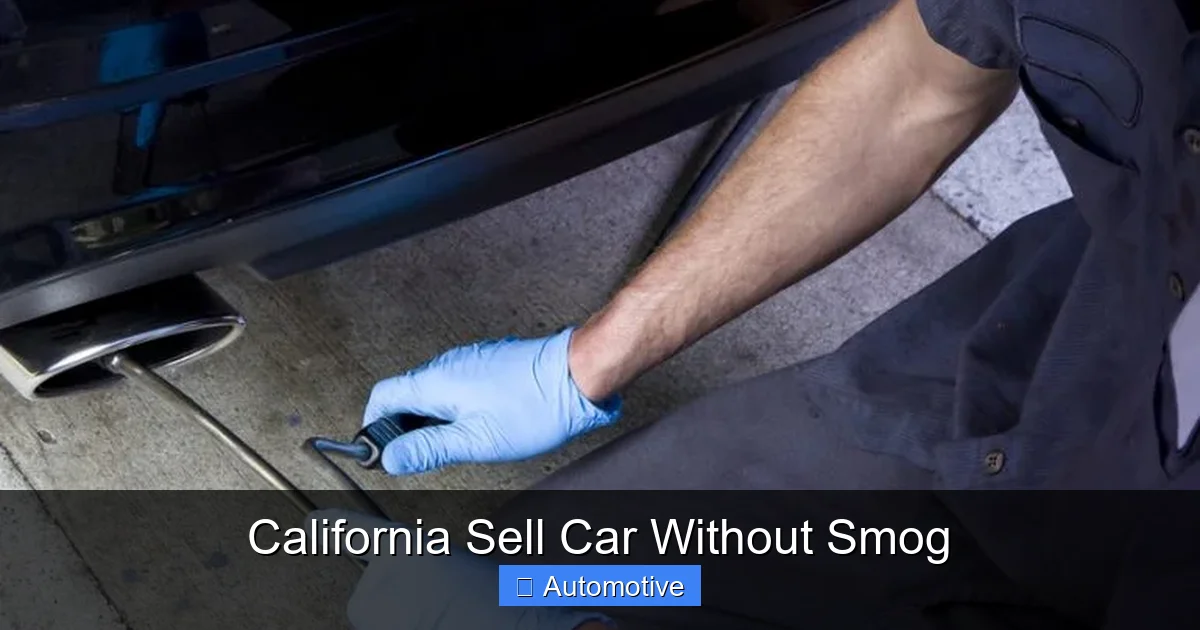
Visual guide about California Sell Car Without Smog
Image source: nerdwallet.com
Now for the million-dollar question: when can you actually sell a car in California without a smog certificate? The short answer is: only in specific, limited situations. These exemptions are designed to reduce unnecessary testing while still protecting air quality and consumer rights.
Let’s break down the most common scenarios where a smog check isn’t required.
Newer Vehicles (Less Than Four Years Old)
This is the most straightforward exemption. If the vehicle is less than four model years old, it doesn’t need a smog check at the time of sale. For example, a 2024 model year car sold in 2024, 2025, 2026, or early 2027 would be exempt. The clock starts on the model year, not the purchase date.
This rule applies to all vehicle types, including gasoline-powered cars, hybrids, and even some electric vehicles. However, note that diesel vehicles have different rules and may require a smog check sooner.
Why this exemption? Newer vehicles are built with advanced emissions control systems that are highly effective in the first few years. California assumes they’re clean enough to skip the test initially. After four years, wear and tear can reduce efficiency, so testing becomes necessary.
Transfer Between Immediate Family Members
Another common exemption is when a vehicle is transferred between immediate family members. This includes transfers between spouses, parents and children, grandparents and grandchildren, and siblings. In these cases, a smog check is not required.
For example, if a father wants to gift his 2015 Toyota Camry to his daughter, he can do so without getting a smog inspection. The same applies if a husband transfers his car to his wife. This exemption is meant to simplify family transfers and avoid unnecessary costs.
However, there are important caveats. The transfer must be a true gift or inheritance—not a disguised sale. If money changes hands, the DMV may treat it as a sale and require a smog check. Also, the vehicle must remain registered in California. If the family member moves out of state and registers the car elsewhere, different rules may apply.
Out-of-State Sales
If you’re selling your car to someone who lives in another state and plans to register it there, California’s smog check rules may not apply. In this case, the buyer’s state determines whether a smog inspection is needed.
For instance, if you sell your 2017 Ford F-150 to a buyer in Arizona, and they register it there, you don’t need to provide a California smog certificate. Arizona has its own emissions testing requirements, which may be less strict or nonexistent depending on the county.
This exemption is particularly useful for sellers in border areas like San Diego or El Centro, where many buyers come from neighboring states. Just make sure the buyer understands their state’s requirements and that the sale is legitimate.
Vehicles Exempt by Type
Certain types of vehicles are automatically exempt from smog checks, regardless of age. These include:
– Electric vehicles (EVs): Since they produce zero tailpipe emissions, EVs don’t need smog checks.
– Diesel-powered vehicles older than 1997: These are exempt due to outdated technology, but newer diesel vehicles may still require testing.
– Motorcycles: Most motorcycles are exempt from smog checks in California.
– Trailers and recreational vehicles (RVs): These are not subject to the same emissions standards.
Keep in mind that exemptions can change, so it’s always a good idea to check the latest rules on the California DMV or BAR website.
The Risks of Selling Without a Smog Check (When Required)
While there are valid reasons to sell a car without a smog check, doing so when it’s required can lead to serious consequences. It’s not just about breaking the rules—it’s about protecting yourself, the buyer, and the environment.
Legal and Financial Penalties
If you sell a vehicle that requires a smog check but don’t provide a valid certificate, you could face penalties. The California DMV may refuse to process the registration transfer, leaving the buyer unable to legally drive the car. In some cases, the buyer may demand a refund or take legal action.
Additionally, if the DMV discovers the violation during a later inspection or audit, you could be fined. While exact penalties vary, they can range from warnings to hundreds of dollars in fines. Repeat offenses may result in more severe consequences.
Buyer Dissatisfaction and Disputes
Even if the sale goes through, selling without a required smog check can damage your reputation and lead to disputes. The buyer may discover the issue when trying to register the car and feel misled. They might accuse you of hiding mechanical problems or trying to offload a “lemon.”
This can lead to negative reviews, social media complaints, or even small claims court. In one real-life example, a seller in Sacramento sold a 2016 Nissan Altima without a smog check, claiming it was “just sold as-is.” The buyer later found out the car failed emissions and demanded $1,200 for repairs. The seller ended up paying to avoid a lawsuit.
Environmental Impact
Selling a high-emission vehicle without a smog check undermines California’s efforts to improve air quality. Vehicles that fail smog tests often emit pollutants at levels far above the legal limit. These emissions contribute to smog, asthma, and other health problems, especially in vulnerable communities.
By skipping the test, you’re potentially putting a polluting vehicle back on the road. This not only harms public health but also contradicts California’s climate goals. The state aims to reduce greenhouse gas emissions by 40% below 1990 levels by 2030—every vehicle counts.
How to Legally Sell a Car Without a Smog Check
If you’ve determined that your sale qualifies for a smog check exemption, you still need to handle the transaction carefully. Here’s a step-by-step guide to selling your car legally and smoothly—without a smog certificate.
Step 1: Confirm the Exemption
Before listing your car, double-check that you qualify for an exemption. Use the California DMV’s online smog check lookup tool or call your local DMV office. Provide the vehicle’s make, model, year, and VIN to confirm its status.
For family transfers, make sure the relationship qualifies. The DMV defines “immediate family” strictly, so cousins, in-laws, and step-siblings may not be included.
Step 2: Prepare the Necessary Documents
Even without a smog check, you’ll need several documents to complete the sale:
– **Title**: Sign the title over to the buyer. Make sure all information is accurate, including the sale price and odometer reading.
– **Bill of Sale**: This document records the details of the transaction, including the date, price, and parties involved. You can download a free template from the DMV website.
– **Release of Liability**: File this form with the DMV within five days of the sale. It protects you from responsibility for the vehicle after the transfer.
– **Registration Card**: Provide the current registration, even if it’s expired.
Step 3: Communicate Clearly with the Buyer
Be upfront about the smog check exemption. Explain why it’s not required and provide documentation if possible. For example, if the car is less than four years old, mention the model year and exemption rule.
If selling to a family member, clarify that it’s a gift or inheritance, not a sale. Avoid exchanging money unless it’s a nominal amount (like $1) to maintain the exemption.
Step 4: Complete the Transfer
Once the buyer has the title and other documents, they can register the vehicle in their name. If the sale is to an out-of-state buyer, they’ll handle registration in their home state.
For in-state transfers, the buyer must visit the DMV within 20 days to complete the registration. They’ll need to pay use tax, registration fees, and possibly a smog check fee if the vehicle later requires one.
Step 5: Follow Up
After the sale, confirm that the DMV has processed the transfer. You can check the status online using the vehicle’s license plate or VIN. If the buyer hasn’t registered the car within a few weeks, follow up to avoid liability.
Tips for a Smooth Car Sale in California
Selling a car—smog check or not—can be stressful. But with the right preparation, you can make the process quick, legal, and hassle-free. Here are some practical tips to help you succeed.
Price It Right
Research the market value of your vehicle using tools like Kelley Blue Book, Edmunds, or NADA Guides. Consider factors like mileage, condition, and local demand. Pricing too high can scare off buyers; pricing too low leaves money on the table.
For example, a 2020 Honda CR-V with 40,000 miles might sell for $22,000 in Los Angeles but only $20,500 in Fresno. Adjust your price based on your location and the car’s features.
Clean and Detail the Car
First impressions matter. A clean, well-maintained car is more appealing and can justify a higher price. Wash the exterior, vacuum the interior, and remove personal items. Consider professional detailing if the car has stains or odors.
Don’t forget the engine bay—some buyers inspect it for leaks or wear. A clean engine shows you’ve taken care of the vehicle.
Be Honest About the Condition
Disclose any known issues, even if they don’t affect the smog check. Buyers appreciate transparency and are more likely to trust you. If the car has a check engine light or needs new tires, mention it upfront.
You can also provide maintenance records to prove the car has been well cared for. This builds confidence and can speed up the sale.
Choose the Right Platform
Decide where to list your car. Options include:
– **Online marketplaces**: Craigslist, Facebook Marketplace, Autotrader, and Cars.com are popular choices.
– **Local classifieds**: Newspapers and community boards still work in some areas.
– **Trade-in or sell to a dealer**: Convenient but usually offers less money.
Each platform has pros and cons. Online sites reach more buyers but may attract scammers. Dealers offer quick cash but lowball offers.
Stay Safe During the Sale
Meet in a public place, like a DMV office or police station parking lot. Bring a friend and avoid sharing personal information. For high-value cars, consider using an escrow service to protect both parties.
Never hand over the title or keys until payment is secure. Cash, cashier’s checks, or bank transfers are safest. Avoid personal checks, which can bounce.
What to Do If Your Car Fails the Smog Check
Even if you’re trying to sell without a smog check, there may be cases where the test is unavoidable—or where you want to fix the car to get a better price. If your vehicle fails the smog inspection, don’t panic. There are steps you can take.
Understand Why It Failed
Smog checks fail for many reasons, including:
– Faulty oxygen sensor
– Worn spark plugs
– Leaking vacuum hoses
– Malfunctioning catalytic converter
– Dirty air filter
The smog technician will provide a report explaining the issues. Use this to prioritize repairs.
Repair the Issues
Some problems are cheap and easy to fix. Replacing spark plugs or an air filter might cost under $100. Others, like a catalytic converter, can run into the thousands.
If the repair cost is high, weigh it against the car’s value. For an older car, it might be better to sell “as-is” to a junkyard or private buyer who can fix it themselves.
Retest the Vehicle
After repairs, return to the smog station for a retest. Many stations offer free retests within a certain period. If it passes, you’ll get a new certificate and can proceed with the sale.
Conclusion
Selling a car in California without a smog check is possible—but only under specific conditions. Newer vehicles, family transfers, out-of-state sales, and certain vehicle types may qualify for exemptions. However, skipping the test when it’s required can lead to legal trouble, financial loss, and environmental harm.
The key is to know the rules, prepare the right documents, and communicate clearly with the buyer. Whether you’re selling a brand-new EV or a classic truck, understanding California’s smog requirements will help you navigate the process with confidence.
Remember, the goal isn’t just to sell the car—it’s to do it legally, ethically, and smoothly. By following this guide, you can protect yourself, satisfy the buyer, and contribute to cleaner air for everyone.
Frequently Asked Questions
Can I sell my car in California without a smog check if it’s less than four years old?
Yes, vehicles less than four model years old are exempt from smog checks at the time of sale. For example, a 2023 car sold in 2026 would still be exempt.
Do I need a smog check if I’m giving my car to my daughter?
No, transfers between immediate family members—such as parents and children—do not require a smog check, as long as it’s a genuine gift and not a disguised sale.
What happens if I sell a car without a required smog check?
The buyer may be unable to register the vehicle, and you could face fines or legal action. The DMV may also deny the transfer until a valid smog certificate is provided.
Can I sell my car to someone in another state without a smog check?
Yes, if the buyer registers the car in another state, California’s smog requirements do not apply. The buyer’s state rules will determine if a smog test is needed.
Are electric vehicles exempt from smog checks when selling?
Yes, electric vehicles produce no tailpipe emissions and are exempt from smog checks in California, regardless of age.
How long is a smog certificate valid for a car sale?
A smog certificate is valid for 90 days from the inspection date. Make sure the sale is completed within this window to avoid needing a new test.