
Best Location for Car Seat: Expert Guide to Safest Placement and Installation

Choosing the safest spot for a car seat can cut the risk of injury in a crash and make every ride calmer for parents and kids. Car seats come in many types—rear-facing infant seats, convertible seats that switch to forward-facing, and booster seats for older children—each with different installation needs and space requirements. We focus on where those seats work best inside a vehicle and why location matters for both safety and daily use.
The most important thing to check is whether the seating position allows a secure installation with the vehicle’s seat belt or LATCH anchors and gives the correct angle and restraint for the child’s size and seat type. Pay attention to rear-facing placement for infants, clearance from airbags, seat belt routing, and how easy it is to buckle and load the child—these factors drive real-world safety and convenience. We tested common car seat locations and installations to find the spots that balance crash protection, ease of use, and fit in typical cars and SUVs.
Best Locations for a Car Seat
We tested and reviewed car seat placement to find the safest and most practical spots in a vehicle. Below is our full list of the best locations for car seats to help you pick the right spot for your child.
Ellaris 3-in-1 (Safety 1st)

We recommend this seat if you want a slim, travel-friendly convertible car seat that grows with your child.
Pros
- Slim design saves space in the back row.
- Easy LATCH installation and adjustable headrest feel practical.
- Machine-washable pad and removable cup holders make cleanup simple.
Cons
- Feels bulky in very old, small cars despite the slim label.
- Some users report side-to-side movement when not tightened perfectly.
- Higher weight makes moving it between cars a bit tiring.
We installed the Ellaris in our minivan and in a compact SUV to test fit and ease. The slim profile really freed up space between seats, so our middle passenger had more room. Installation with the hook-style LATCH was quick and straightforward; we appreciated the clear routing and the solid latch click.
We used the rear-facing and forward-facing modes over several weeks. The 5-position headrest and harness adjusted smoothly as our child grew, and the padding kept rides comfortable. On a short flight, the compact footprint made transitional travel easier than with bulkier seats we’ve used.
We found cleaning simple after a spilled snack. The seat pad washed well in the machine and the cup holders popped out into the dishwasher. If you need a lightweight seat you’ll move often, though, expect some strain carrying the 12-pound shell between cars.
Graco Extend2Fit
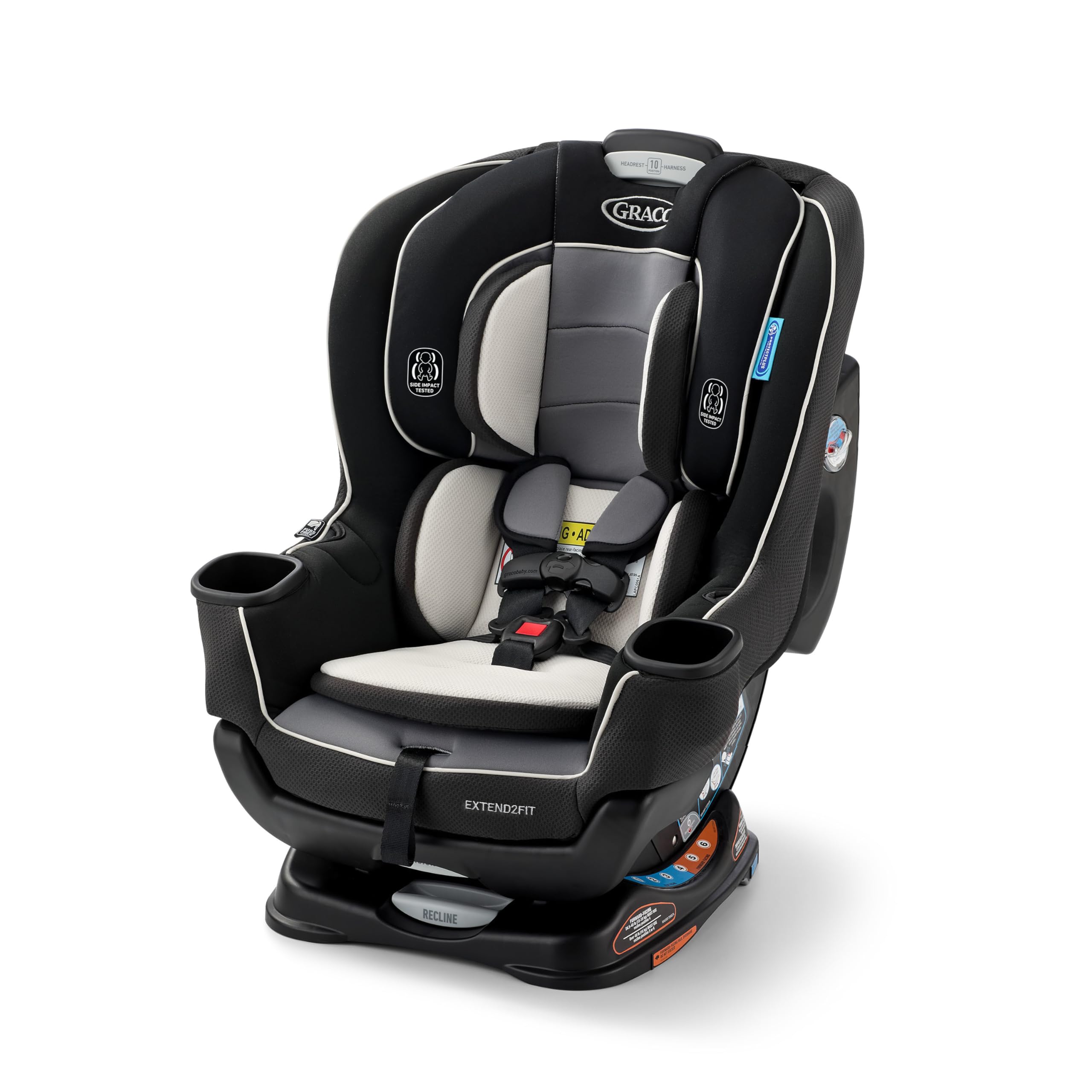
We recommend this seat if you want a sturdy, easy-to-use convertible car seat that lets kids ride rear-facing longer.
Pros
- Extra legroom keeps rear-facing kids more comfortable.
- One-motion headrest and harness make adjustments fast.
- Solid build and safety features give peace of mind.
Cons
- It is a bit heavy to move between cars.
- Bulky fit can be tight in smaller back seats.
- Padding can trap crumbs and needs regular cleaning.
We installed the Extend2Fit in our sedan and liked how the Extend panel actually gave noticeable rear-facing legroom. Our toddler relaxed more on longer drives and could stay rear-facing without kicking the shell.
Adjusting the headrest and harness together saved time during hectic mornings. The LATCH clip snapped in quickly and the harness pockets kept straps out of the way while buckling.
The seat feels solid and well-made, and the safety engineering is reassuring. Expect a heavier, wider seat than some models, so check fit if you have a compact car.
Buy it here: Graco Extend2Fit
Graco SlimFit3 LX

We recommend this seat when you need a slim, long-lasting option that fits three across without skimping on safety.
Pros
- Fits three car seats across, saving rear-seat space.
- Grows with the child from rear-facing to booster.
- Easy install with InRight LATCH and belt lock-off.
Cons
- Padding is thinner than bulkier models.
- Weighs about 19 lb, not the lightest for travel.
- Cup holders sit low and can be tight with three across.
We used this seat as our go-to when squeezing three kids into the back. It really does free up space while still feeling solid when installed. The push-button LATCH clicks in fast and gives us confidence the first time we test it.
Adjusting the headrest and harness with one motion made fitting different kids quick. Our toddler rode comfortable with the breathable mesh and the inserts kept an infant snug. Cleaning is low effort with the Rapid Remove cover—took less than a minute to pull off.
On long drives the thinner padding showed a bit, so we added a soft blanket for naps. Installation felt secure and the steel-reinforced frame gives us peace of mind. If you need a slim, versatile seat that lasts through several stages, this one works well for us.
Safety 1st Grow & Go
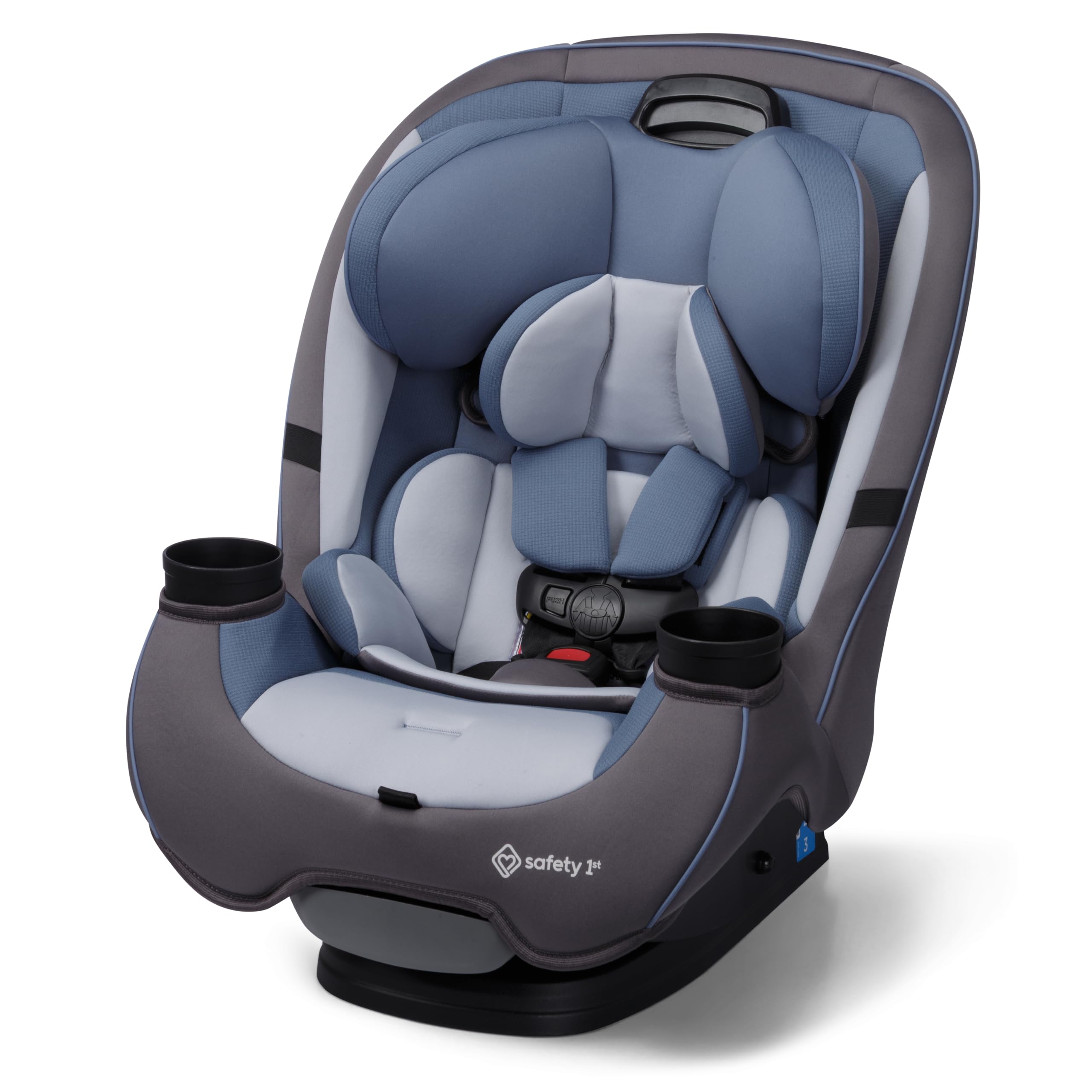
We recommend this seat if you want a long‑lasting, easy‑adjust car seat that grows with your child and stays simple to clean.
Pros
- Grows with kids through three stages.
- QuickFit harness makes height and harness changes fast.
- Slim design frees up back‑seat space.
Cons
- Bulky for very small cars.
- Padding can feel firm to some babies at first.
- Some users say installation takes patience to get tight.
We used this seat across months of daily drives and weekend trips. The QuickFit headrest and harness change in one move, which saved us time getting kids buckled during busy mornings.
The slim profile really helped when we needed to fit three across. It still felt sturdy and secure, and the LATCH and top tether gave a solid install once tightened properly.
Cleaning was easy—seat pad came off and went in the washer, and the cup holders popped into the dishwasher. We did notice it sits taller than an infant-only carrier, so check vehicle space if you have a compact car.
Graco TurboBooster 2.0 (Denton)

We recommend this booster if you want a light, easy-to-move seat that raises your child to the correct belt fit.
Pros
- Lightweight and simple to move between cars
- Comfortable for kids with hide-away cup holders
- Meets crash-test standards for added peace of mind
Cons
- No backrest for head or neck support on long trips
- Lacks LATCH anchors—depends on the vehicle seat belt
- May feel narrow for larger kids as they grow
We tried this booster in two vehicles and liked how fast it installs. Sliding it in and out of the car took seconds, which made carpooling and trips much less stressful for us.
Our child found the seat comfortable and used the cup holders every ride. The seat’s padding is soft but firm, so kids sit properly and the belt lines up better across the shoulder.
On a long highway drive the missing backrest showed its limits; our kid wanted a pillow for extra head support. Still, for everyday errands and short drives this booster does the job well and stays out of the way when not in use.
SCIREATH Mini Car Tracker
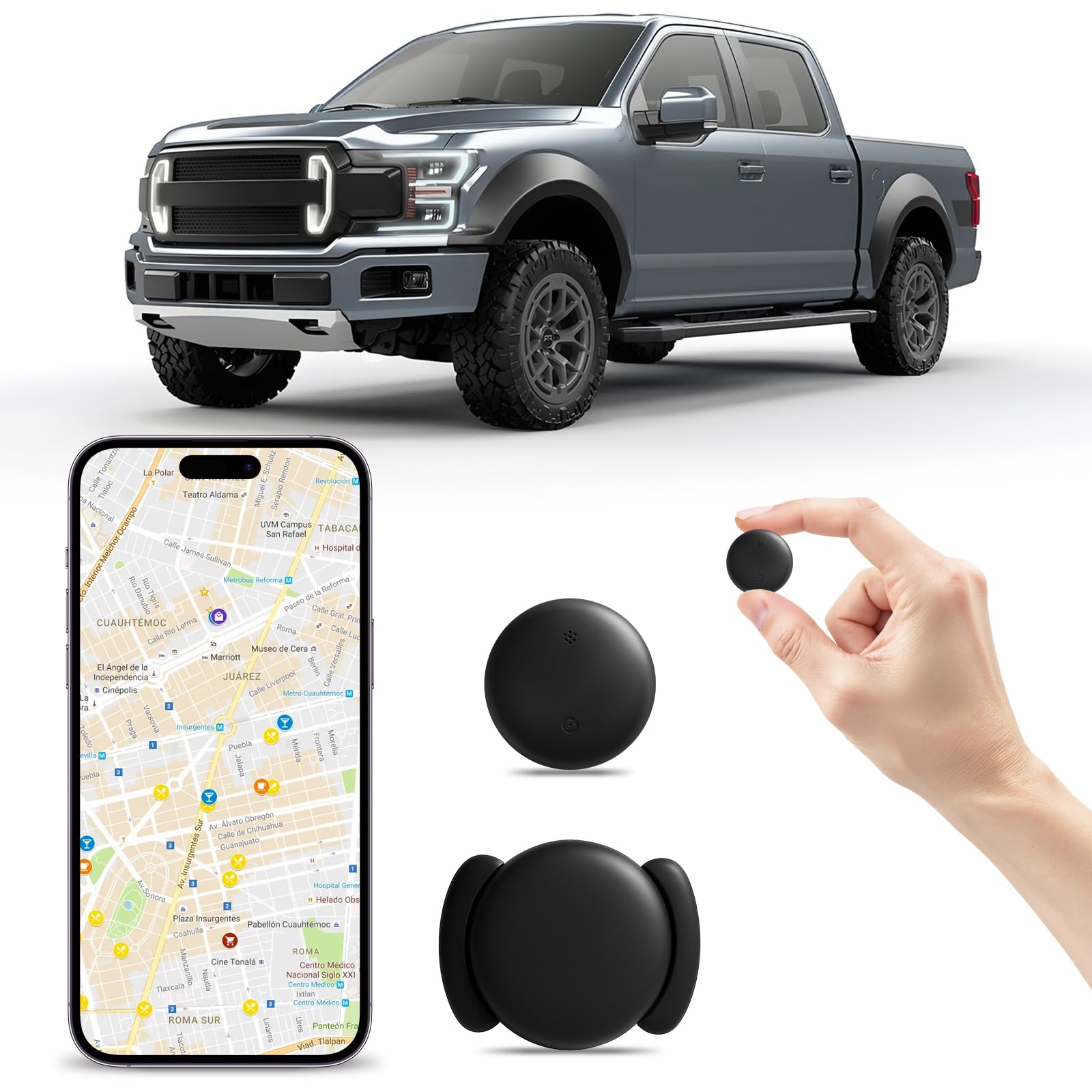
We would buy this only if we need a cheap, hidden tracker for short-range location updates and Android-only setups.
Pros
- Small, easy to hide and attach with the magnetic case
- No monthly fee or SIM card required
- Long battery life (CR2032 lasts many months)
Cons
- Works only with Android 9+ and Google Find Hub network
- Not a real-time GPS — updates depend on nearby Android devices
- Location can stay stale for days if no nearby Android device syncs
We tested the tracker by slipping it under a truck seat and behind a dashboard. It felt solid and the magnet held it in place on rough roads. Setting it up with the Google Find Hub was straightforward on our Android phone.
When the tracker was within Bluetooth range, the 90dB alarm woke us quickly and the app showed the last known spot. Farther away, the device only showed the last recorded location and did not stream live movement. That meant we could not follow a moving vehicle in real time.
For an affordable, covert tag that needs no subscription, this works well for short-range recovery and hiding in vehicles. We would not rely on it as a continuous live GPS tracker or for Apple users.
Bucklebee Buckle Release

We recommend this if you want an easy, safe way for kids or caregivers to unbuckle car seats without straining hands.
Pros
- Makes pushing the buckle button far easier for small hands or sore joints.
- Installs quickly and stays out of the way during rides.
- Helps kids gain independence with less help from adults.
Cons
- Takes practice to position for the best leverage.
- Can feel hard to push if not seated with back support.
- Fits mainly push-button buckles, not every style.
We used the Bucklebee for several weeks and found it cut the stress of unbuckling trips. Our child learned to do it alone, and our fingers stayed safe from the pinch points. The tool felt sturdy and held up to daily use.
Installation was fast—four simple steps like the package says—but we did have to tweak its position a few times to get the best push angle. Once set, it rarely moved and the car seat openings stayed neat.
On longer car rides the tool stayed put and did not pop off in our tests. The main downside came when our kid reached with a weird angle or we tried to push without leaning back; then it required extra force. Overall, it saved time and helped reduce joint strain for us.
Graco EasyTurn 360
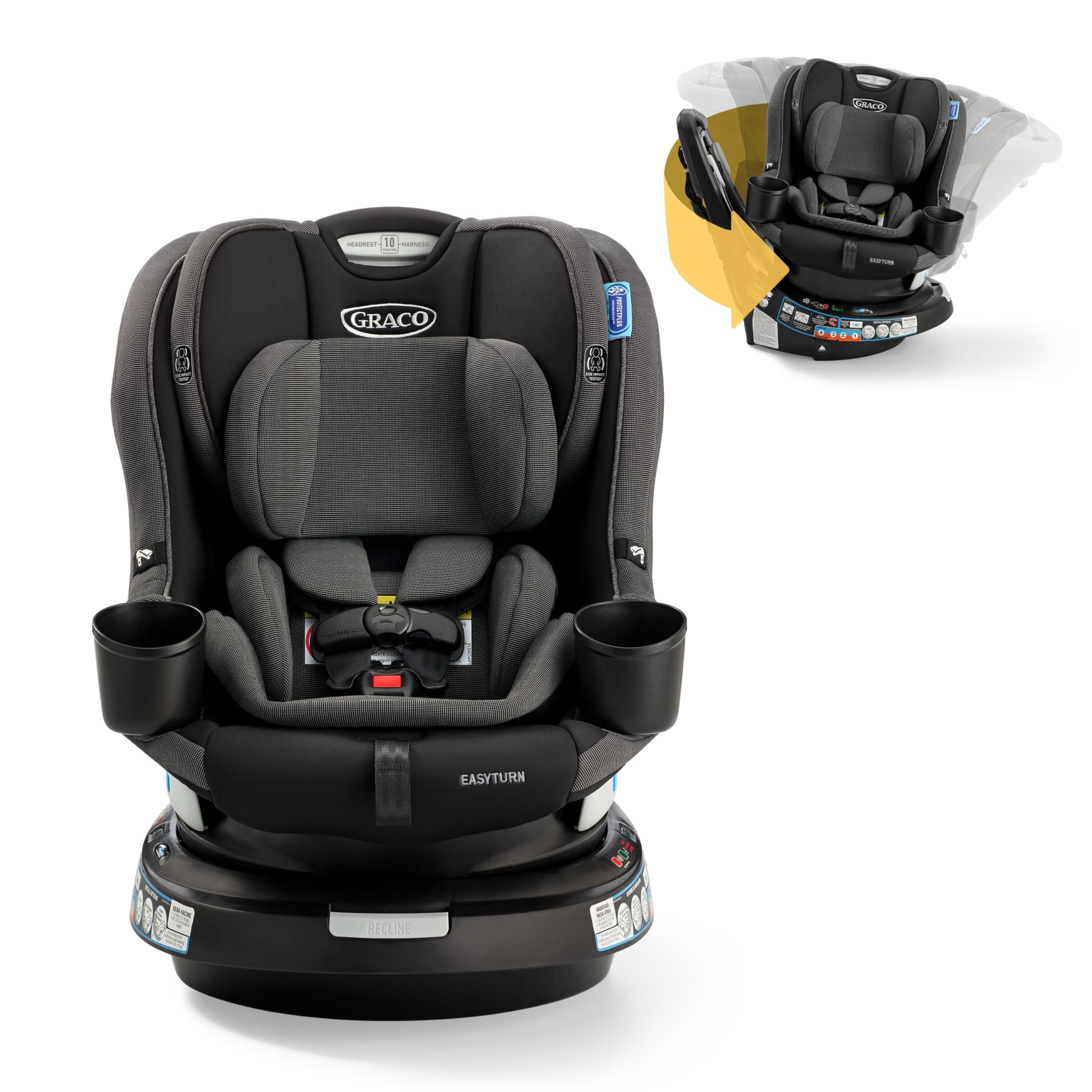
We recommend this seat if you want easy in-and-out access and a space-saving fit for a growing child.
Pros
- Smooth one-hand 360° rotation makes buckling simpler.
- Slim profile frees up back seat room.
- Quick install with SnugLock and InRight LATCH.
Cons
- Heavier than many infant-only seats to move between cars.
- Rotation can click or make noise when unoccupied.
- Takes up some room with forward-facing recline positions.
We installed and used this seat for several weeks and liked how the rotation cut down on twisting and straining when putting our child in. The one-hand turn and the audible click gave us confidence that the seat locked back into place.
The slim design helped fit a stroller and a booster in our back seat at the same time. Adjusting the headrest and harness with the no-rethread system saved time as our child grew.
Installation was quick with SnugLock and the push-button LATCH; we had the seat secure in under a minute. The unit is sturdy and felt solid in crashes tests, though it is on the bulky side if you plan to swap it between vehicles often.
We noticed a faint noise from the rotating mechanism when the child wasn’t seated, so expect some sound when the car is empty. Cup holders and plush inserts were handy, and cleaning the fabric was straightforward after snacks.
Overall, we found the Graco EasyTurn 360 to be a practical choice for parents who value easy access and long use from infant to toddler stages.
Graco Tranzitions 3-in-1 Booster
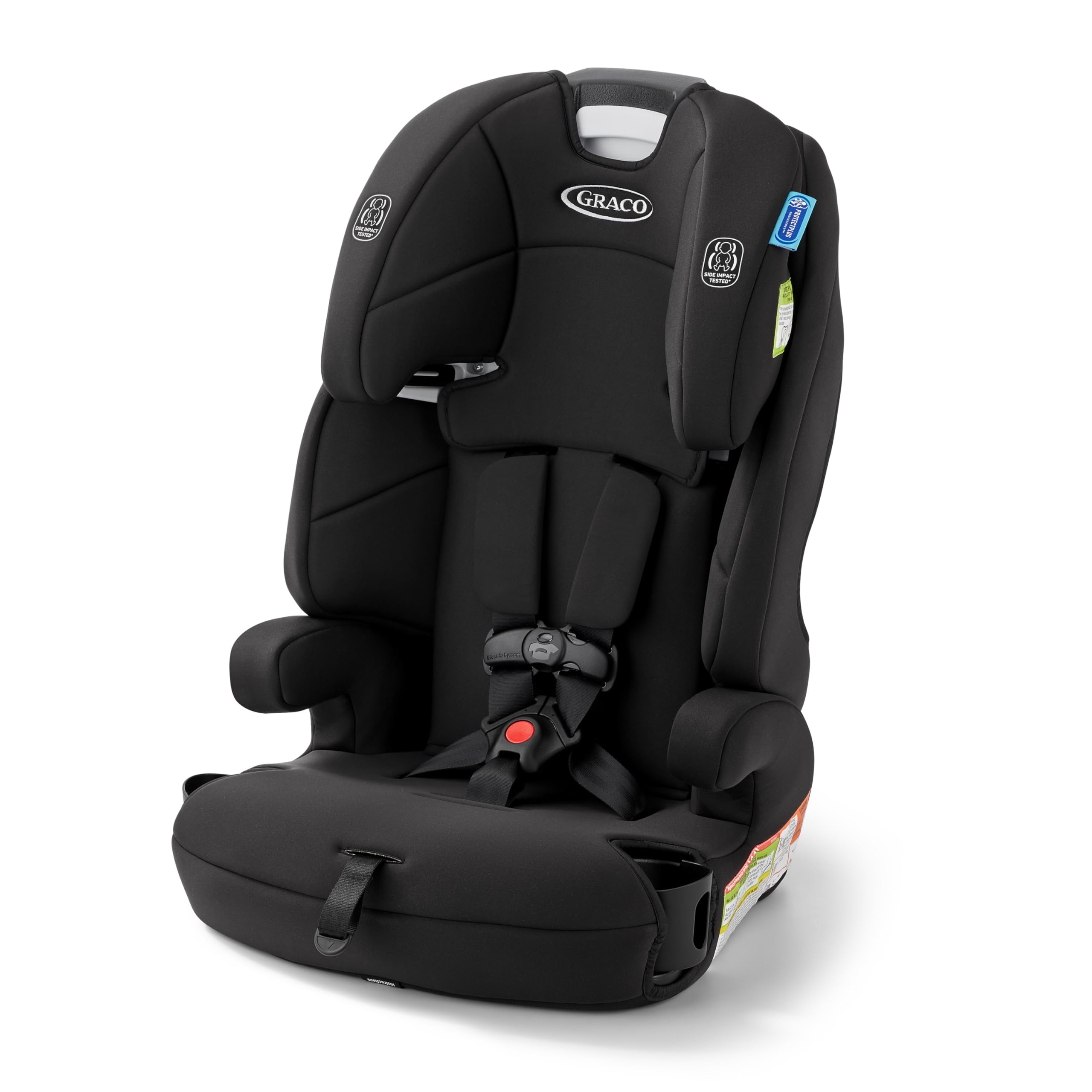
We recommend this seat if you want a lightweight, easy-to-adjust booster that can grow with your child through several stages.
Pros
- Grows from harnessed seat to highback and backless booster.
- One-hand headrest and harness adjustment is quick and simple.
- Light and easy to move between cars.
Cons
- Padding feels thinner than some pricier models.
- Less side support around legs and arms for picky sleepers.
- Cup holder design can be awkward for some bottles.
We used this seat for daily carpool runs and travel. Installing it was fast and moving it between vehicles felt effortless because it’s not heavy. The no-rethread harness made height changes simple when our child had a growth spurt.
The seat held up well during long drives. Kids liked the cup holders and said it felt comfortable enough for naps. We noticed the fabric is thin, so a thicker cushion might feel softer for sensitive kids.
For tight back seats, this booster’s slim profile helped fit three across on shorter trips. The belt guides made seatbelt routing easy with older kids. Overall, it’s a practical, budget-friendly choice that still meets safety expectations.
Graco Tranzitions 3-in-1 Booster
Graco TriRide 3-in-1
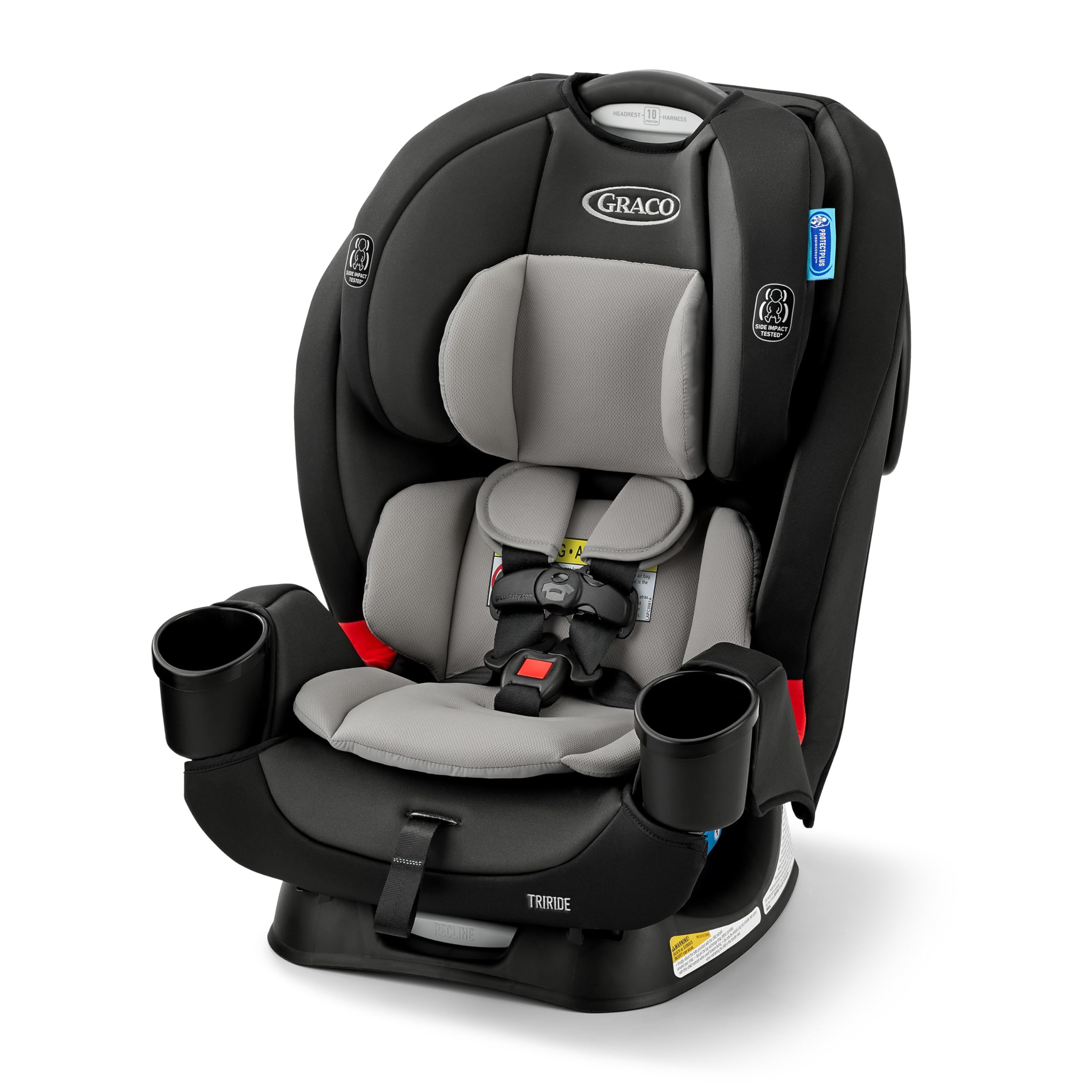
We recommend this seat if you want one that grows with your child and installs without a lot of fuss.
Pros
- Grows from rear-facing infant to highback booster.
- Easy headrest and harness adjustment in one motion.
- Sturdy feel and solid fit in our vehicle.
Cons
- Bulky depth makes it tight in smaller cars.
- Heavier than some other convertible seats.
- Some users notice a small rattling noise in the level indicator.
We installed this seat in both a sedan and an SUV and liked how the No‑Rethread Simply Safe Adjust makes height changes quick. Moving the headrest up as our child grew took one smooth motion, which saved time on busy mornings.
The recline options helped get a better angle for rear‑facing newborn rides and still felt comfortable when forward facing. The fabric cleaned up easily after snacks, and the cup holders kept drinks without spilling.
Strapping the seat in with LATCH felt secure, and the steel‑reinforced frame gave us confidence on long trips. Be aware it takes up more space than infant carriers, so fitting three across a bench may be tight.
Overall, we found the Graco TriRide reliable for daily use and long drives, especially if you want a single seat that lasts through several stages.
Buying Guide
We look for safety first. Check crash test ratings and whether the seat meets current safety standards.
We consider fit in our vehicle. Measure the seat space and test the car seat’s base or belt path to ensure a snug installation.
We weigh ease of installation. Look for clear instructions, lock-offs, or built-in levels. A seat that is easy to install correctly reduces user error.
We review harness and buckle features. Adjustable harness heights, a no-rethread system, and a simple buckle make daily use safer and quicker.
We check weight and height limits. Choose a seat that covers our child’s current size and allows room for growth. Confirm limits for both rear- and forward-facing use.
We prioritize comfort and fabric. Breathable materials and removable covers simplify cleaning. Padding should support the child without blocking harness straps.
We examine attachment systems. LATCH anchors and seatbelt routing should be straightforward and produce a tight fit. Verify compatibility with our car’s anchor locations.
We consider portability and vehicle changes. If we move the seat between cars often, look for a lightweight design and easy detachment features.
We evaluate additional safety technologies. Some seats include anti-rebound bars, load legs, or side-impact protection. Understand how each feature improves protection.
We compare cost versus longevity. A higher upfront cost can be worth it if the seat fits longer and offers better safety features.
We read instructions and inspect parts. Manuals, expiration dates, and clear labels help ensure proper use. Keep the manual and registration for safety updates.
Editor’s Choice
We pick the rear middle seat as our top choice for most cars. It gives the best protection in a side impact and keeps the child farthest from the doors. Many crash tests show the center seat often has the lowest risk of injury.
We prefer a rear-facing position for infants and toddlers when possible. Rear-facing supports the head, neck, and spine better during a crash. If the center seat cannot fit a rear-facing car seat, the rear passenger-side seat is our second choice.
We check for proper installation and fit first. A secured install with a tight seatbelt or LATCH system matters more than the exact spot. We also look for a good angle, clear belt path, and no excessive movement.
Quick checklist:
- Best spot: Rear middle seat
- Second best: Rear passenger-side seat
- Key checks: Tight install, correct angle, harness snug
We recommend following your car and car seat manuals for exact fit and limits. If you must use the front passenger seat, deactivate the airbag and move the seat as far back as possible.
Conclusion
We choose the back seat as the safest place for car seats in most cars. The center rear seat offers the best protection in side impacts when it fits correctly. If the center does not fit, either side rear seat is acceptable.
We always follow the car seat and vehicle manuals when installing. Proper installation, tight fit, and correct harness height matter more than exact seat location. We check for a secure lock and minimal movement at the belt path.
We use rear-facing as long as the child fits the seat limits. Rear-facing protects the head and neck better for infants and toddlers. Once the child outgrows rear-facing, we switch to forward-facing with a harness.
We keep children in a harness as long as possible before moving to a booster. Boosters only go in a seat that allows a proper lap and shoulder belt fit. We prefer the back row for boosters too.
We perform regular safety checks and register the seat for recalls. If we ever doubt the fit or installation, we consult a certified technician. Safety improves when we stay informed and follow clear instructions.
FAQS
Where should we place the car seat?
We recommend the back center seat when it fits the car and seat. It offers the best crash protection on average. If center installation isn’t possible, use a rear outboard seat.
Can we put a car seat in the front seat?
We should not place rear-facing seats in front of an active airbag. Front placement is only for forward-facing seats when there is no rear seat, and airbags are off or absent.
How do we know the seat is installed correctly?
Check for less than 1 inch of movement at the belt path. The car seat should not twist or slide. Follow both the car seat manual and the vehicle manual.
When should we switch from rear-facing to forward-facing?
Keep children rear-facing as long as possible, until they reach the car seat’s rear-facing height or weight limit. Many convertible seats allow rear-facing past age 2.
How long do we use a booster seat?
Use a booster until the vehicle seat belt fits properly, usually when a child is about 4’9” and 8–12 years old. The lap belt must lie low on the hips and the shoulder belt across the chest.
Who inspects car seat installation?
We can ask a certified Child Passenger Safety Technician (CPST) to check installation. Many police stations, fire departments, and hospitals offer free checks.
What should we read first?
Always read the car seat manual and the vehicle owner’s manual before installation. They give model-specific rules and limits.