
Best Leather Car Seat Conditioner: Top Picks and Buying Guide for Long-Lasting Leather Care

Leather car seats look great but need regular care to stay soft and last longer. A good leather car seat conditioner cleans, restores oils, and protects against drying, cracking, and UV damage. The right conditioner nourishes leather without leaving greasy residue or causing color change, so it feels supple and looks natural.
When choosing a conditioner, pay attention to ingredient type (natural oils vs. silicone or petroleum), pH balance, compatibility with your seat finish (aniline, semi-aniline, or protected), and ease of application. We tested a range of popular conditioners on different leather types and focused on how well they absorb, how they affect feel and color, and how long protection lasts to find the best options for real-world use.
Best Leather Car Seat Conditioners
Below is our full list of the best leather car seat conditioners. We picked products that clean, soften, and protect leather without leaving sticky residue. Our choices cover different budgets and include options for smooth and perforated leather.
Leather Honey Conditioner
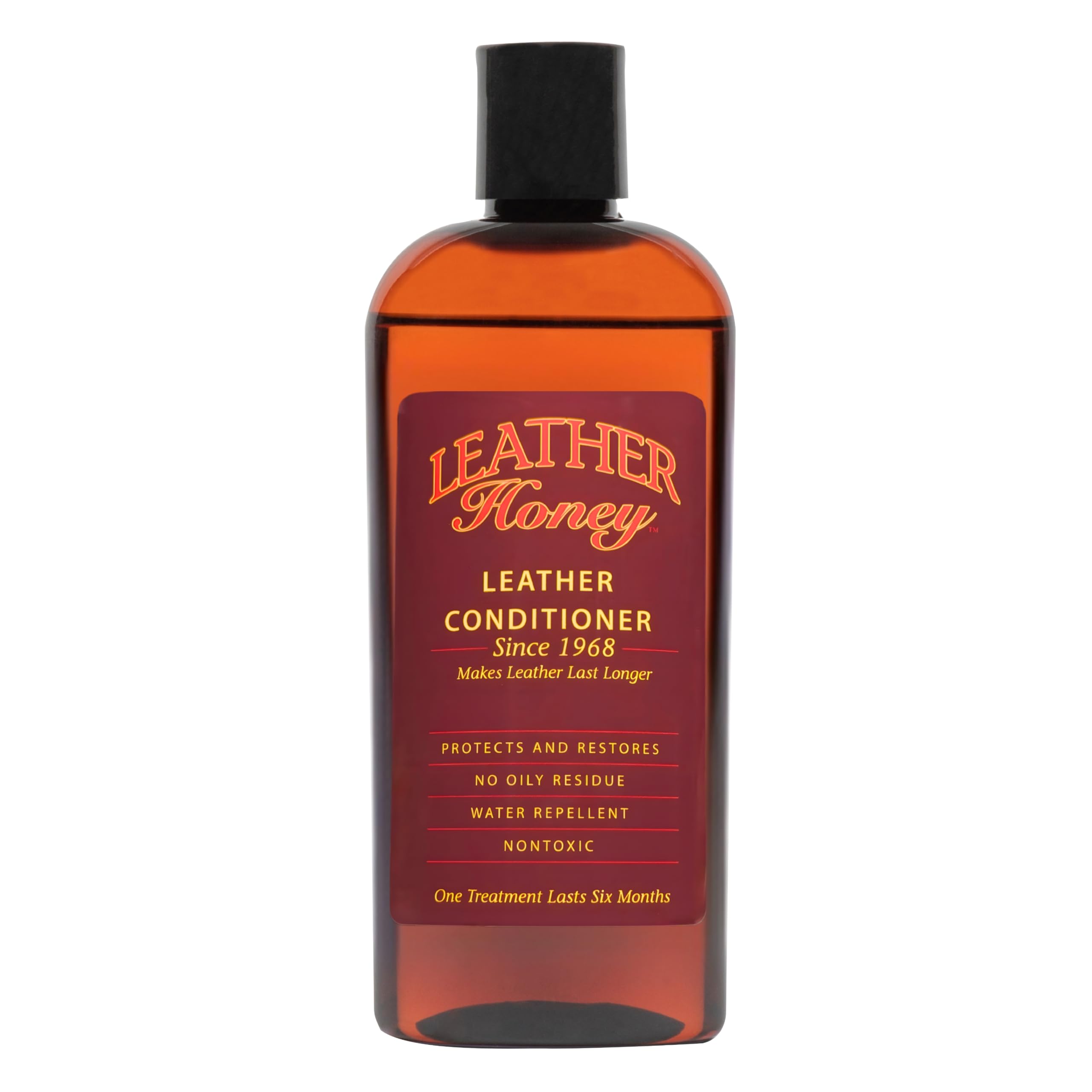
We recommend this if you want long-lasting, no-smell conditioning that soaks into real leather and protects it for months.
Pros
- Deep-penetrating formula that felt like it actually reached the leather.
- No fragrance or sticky finish — stayed dry to the touch.
- Long-lasting protection; we only needed one treatment for months.
Cons
- Thick texture takes extra elbow grease to spread evenly.
- Not for faux leather, suede, or vinyl — check your seats first.
- Bottle could use an easier applicator for small jobs.
We used this on older car seats that felt dry and a little faded. It sank in and the leather softened within a day. The color looked richer but not shiny, which we liked.
Application felt different from thin sprays. The product is heavy, so we worked small areas and rubbed it in until the leather accepted it. That took time, but it left the surface non-greasy.
After a few weeks the seats resisted light water and stains better. For real leather we found it provides solid protection and saves time compared with monthly treatments.
Chemical Guys Leather Kit

We recommend this kit if you want an easy two-step cleaner and conditioner that restores feel and protects everyday car leather.
Pros
- Cleans dirt and oils without harsh scrubbing.
- Conditioner soaks in and softens leather quickly.
- Safe for many leather types thanks to pH-balanced formula.
Cons
- Conditioner can leave a slight sheen on some finishes.
- Works best with a microfiber applicator and some elbow grease.
- Scent may be noticeable to sensitive users.
We used the cleaner first and it lifted grime from seat seams and creases without fading the color. It sprayed evenly and rinsed off with a soft towel, leaving the leather ready for the next step.
Applying the conditioner felt like it fed the leather right away. A small amount spread well and the seats softened within minutes; after rubbing it in, the surface looked less dry and more uniform.
We noticed small scuffs and surface creases improved but deep cracks need professional repair. Overall, the kit made daily-use seats feel refreshed and protected for regular maintenance.
Chemical Guys Leather Quick Detailer

We recommend this for routine leather touch-ups because it cleans, conditions, and leaves a light protective layer in one quick spray.
Pros
- Fast to use for quick cleanups.
- Leaves leather feeling soft without greasy residue.
- Safe on natural and synthetic leathers.
Cons
- Not strong enough for heavy stains.
- Scent may be odd to some people.
- Needs reapplication for long-term protection.
We sprayed a small section of our car seats and the product removed dust and light oils right away. The leather felt softer within minutes and kept a natural look instead of a glossy shine.
Application was simple: spray on a microfiber towel and wipe. We liked how it didn’t leave a slippery film, so seats felt normal after drying.
For deep grime or older stains, we found it less effective than a heavy-duty cleaner. Still, it works great for regular maintenance and keeping leather supple between full cleans.
Buy it on Amazon: Chemical Guys Leather Quick Detailer
Chemical Guys Vintage Leather Conditioner

We recommend this if you want a fast-absorbing conditioner that restores softness and a natural look without leaving a greasy feel.
Pros
- Absorbs quickly and doesn’t leave a slippery residue.
- Makes leather feel softer and restores a more natural finish.
- Works on many surfaces — car seats, furniture, jackets, bags.
Cons
- Very dry or cracked leather may need multiple applications.
- Fragrance may not appeal to everyone.
- Thick cream texture takes a little rubbing to spread evenly.
We used the 16 oz bottle on both car seats and a living room couch. It went on like a thick cream but soaked in fast, leaving a matte, natural finish rather than a shine. The seats felt noticeably softer after the first pass.
Applying with a microfiber pad kept the job tidy. A small amount spread farther than we expected, though older, very dry areas needed a second treatment to fully revive the leather.
Clean-up was easy and there was no slick residue to catch dirt. The scent is pleasant to some of us, but a few people found it a bit strong at first. Overall, it handled everyday interior care well and saved time compared with heavier, greasy products.
Weiman Leather Cleaner & Conditioner
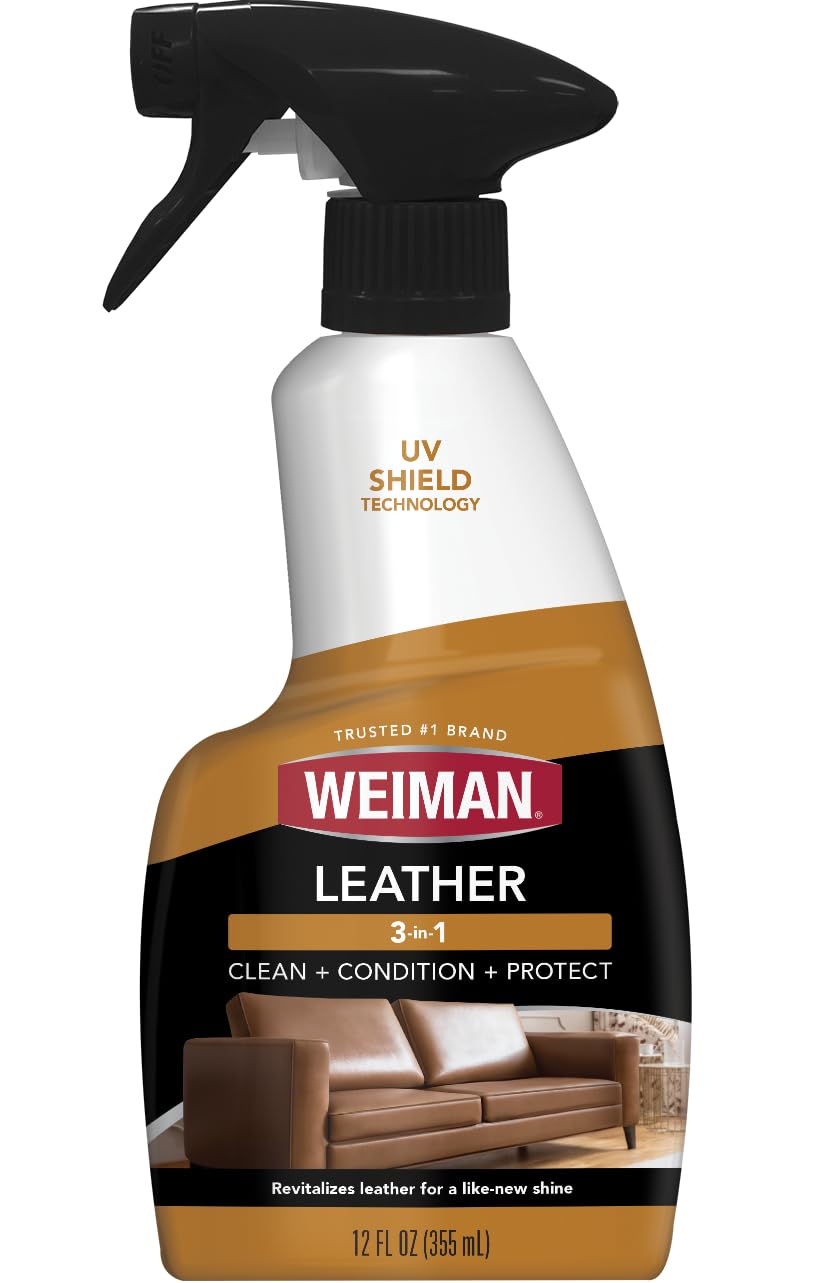
We recommend this if you want one easy spray that cleans, conditions, and protects finished leather without a greasy finish.
Pros
- Cleans and conditions in one step.
- Leaves leather soft and not sticky.
- Adds UV protection to slow fading and cracking.
Cons
- Small bottle for frequent use.
- Spray can be uneven if applied close up.
- Scent may bother very sensitive noses.
We used this on car seats and a tired office chair and liked how fast it worked. Dirt came off with a few wipes and the leather felt noticeably softer right away.
Application was simple—spray onto a cloth, wipe, then buff. The finish looked refreshed and not shiny or oily, which kept seats comfortable after use.
After a few weeks of spot treatments the leather held color better in direct sun than untreated areas. For regular upkeep, we’d buy the larger size, but the 12-oz bottle is handy for quick touch-ups.
Bick 4 Leather Conditioner (8 oz)
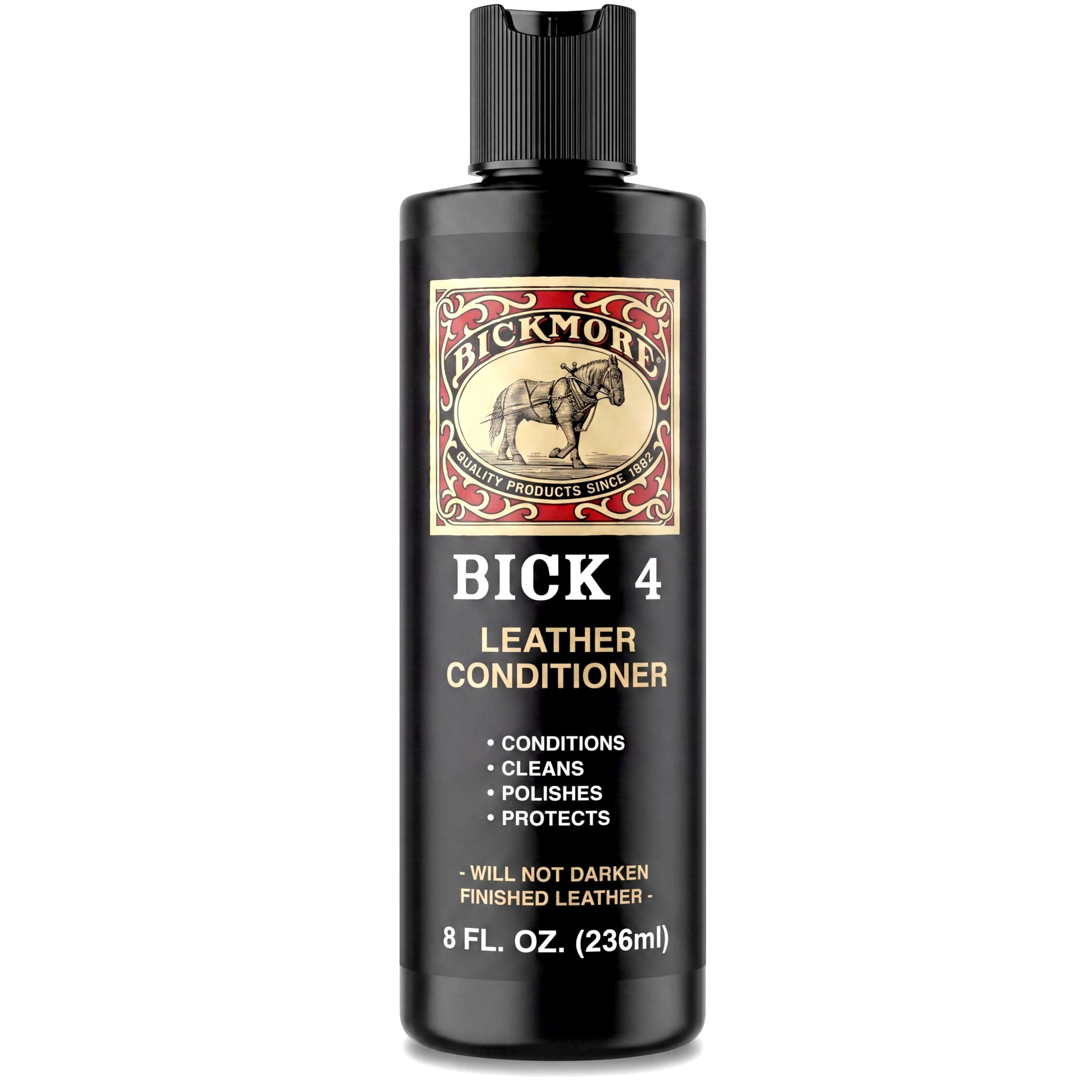
We recommend this if you want a simple, non-darkening conditioner that restores and softens finished leather without leaving waxy residue.
Pros
- Won’t darken leather or change the original shade.
- Absorbs quickly and leaves leather soft, not greasy.
- Works on many finished leather items—seats, bags, jackets.
Cons
- Not for suede, rough-out, or heavily distressed leather.
- Thinner consistency can feel watery to some users.
- May need repeat applications on very dry leather.
We used Bick 4 on our car seats and a light-colored jacket. It spread easily with a soft cloth and soaked in without leaving a shiny film. The seats felt noticeably softer after one treatment.
After a week of normal use the leather looked cleaner and stayed its original color. We liked that there was no sticky residue or wax build-up on seams and creases. Conditioning felt quick—no long wait time before getting back into the car.
For tougher grime we cleaned first, then applied Bick 4 a second time. It revived older areas without darkening them, though very cracked or badly dried leather may need more intensive repair products. Overall, it’s a reliable, everyday conditioner for finished leather.
Leather Honey Complete Kit
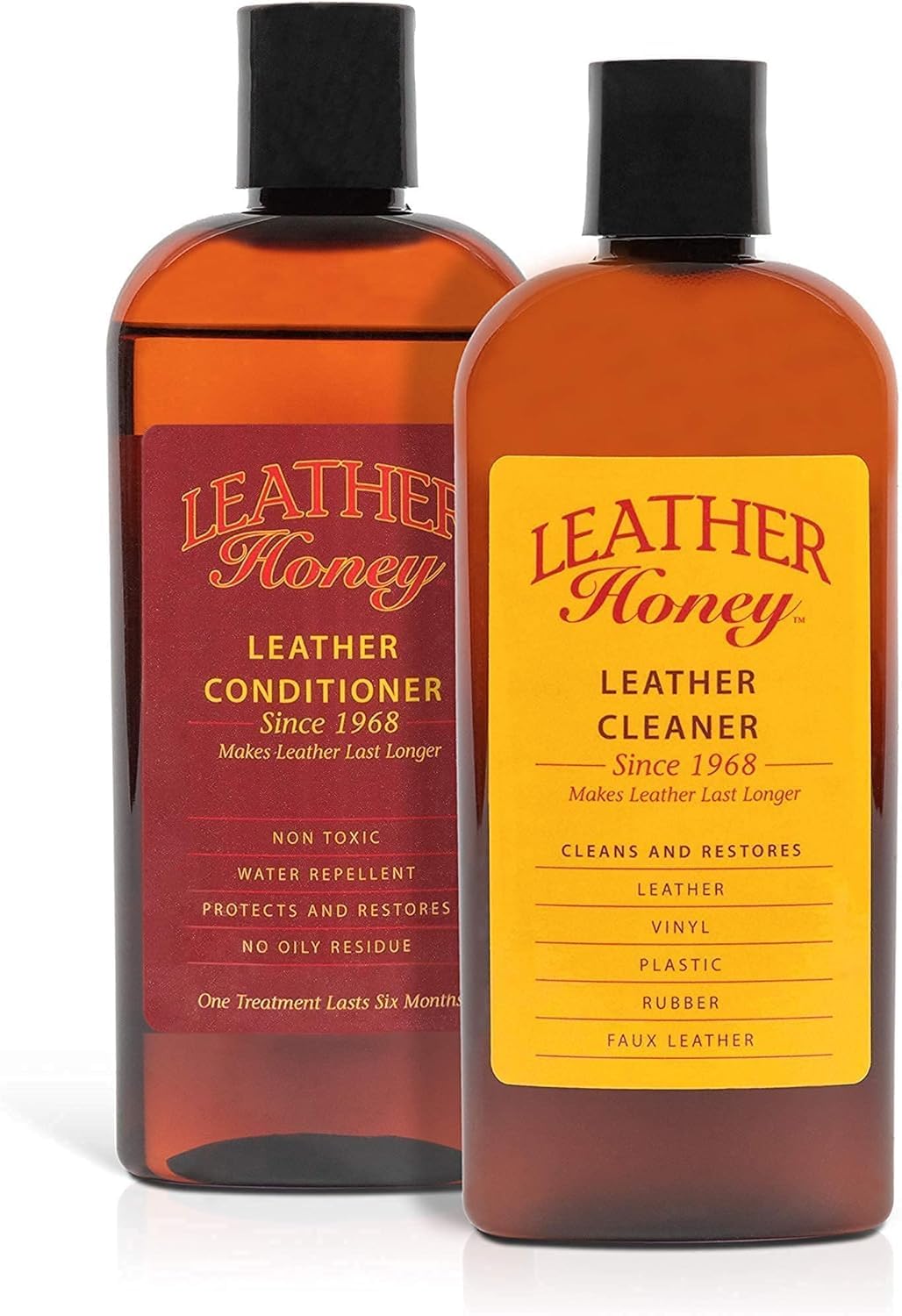
We recommend this kit if you want a strong cleaner plus a deep conditioner that really restores dry leather.
Pros
- Deep-penetrating conditioner that softens and protects.
- Concentrated cleaner stretches value and cleans without harsh chemicals.
- Odorless and non-toxic, safe on many leather types.
Cons
- Conditioner can be very thick and hard to spread at first.
- Takes effort to buff off excess for an even finish.
- Not ideal if you need a quick, light spray-on product.
We used this kit on our car seats and a few leather bags. The cleaner diluted easily and lifted surface dirt without leaving residue. It felt safe to use around stitching and color.
The conditioner sank into old, dry areas and made the leather feel flexible again. Application demanded more elbow grease than we expected; the texture is heavy, so small tools or a cloth help spread it evenly.
Results lasted through a few weeks of use and weather exposure. For serious restoration and long-term protection, this kit works very well despite the thicker conditioner.
Chemical Guys Sprayable Leather Cleaner & Conditioner
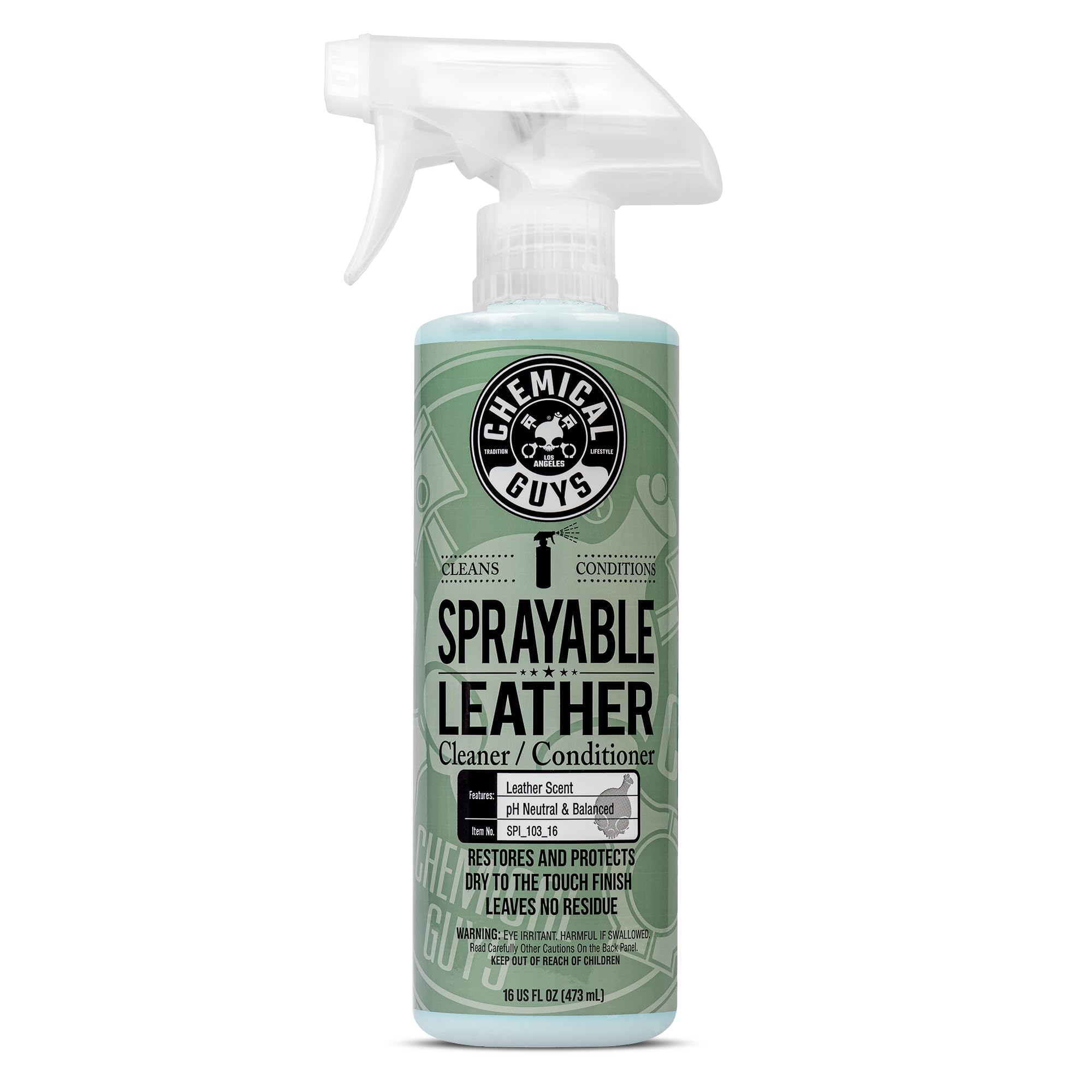
We recommend this if you want a quick, one-step spray that cleans and softens most leather and vinyl without a greasy finish.
Pros
- Cleans and conditions in one pass for fast upkeep
- Leaves leather feeling soft and not sticky
- Works on natural, faux, and coated leather
Cons
- Not a magic remover for heavy dye transfer or stains
- Spray bottle cap can arrive damaged sometimes
- Scent may be strong for sensitive noses
We used this on our car seats and a leather jacket. Spraying lightly and wiping with a microfiber towel removed surface dirt and body oils quickly. Seats looked refreshed and felt supple after letting it dry a few minutes.
Application felt easy and familiar. We sprayed onto the towel instead of directly on sensitive seams to avoid oversaturating. The finish stayed natural — no shiny, plasticky look — which we liked for daily drivers.
After a few uses the leather seemed more flexible, and dust buildup dropped. Heavy set stains and color transfers did not fully lift for us, so treat expectations for deep-clean jobs. Overall, it’s a useful product for routine leather care and quick touch-ups.
Chemical Guys Sprayable Leather Cleaner & Conditioner
Griot’s Garage Leather 3-in-1 Spray

We recommend this if you want a quick, all-in-one cleaner and conditioner that leaves leather soft with a natural finish.
Pros
- Cleans and conditions in one step, saving time.
- Leaves leather supple without a greasy shine.
- Pleasant, genuine leather scent.
Cons
- Not ideal for suede or delicate unfinished bits.
- Bottle can leak if packed with other liquids.
- Might not replace a dedicated deep cleaner for very worn leather.
We used the spray on our car seats and liked how fast it worked. A couple sprays and a wipe removed surface dirt and left seats feeling nourished. The leather smelled fresh but not strong.
Application felt simple. The product soaked in quickly and buffed to a low-sheen finish. After a week of daily drives the seats still looked natural and stayed soft.
On worn or heavily soiled leather, we found it helpful but not enough alone. For deep stains we’d start with a stronger cleaner first, then use this to condition and protect. Overall it’s a useful, time-saving product for regular maintenance.
Buy Griot’s Garage Leather 3-in-1 Spray
Leather Honey Cleaner & Conditioner Bundle
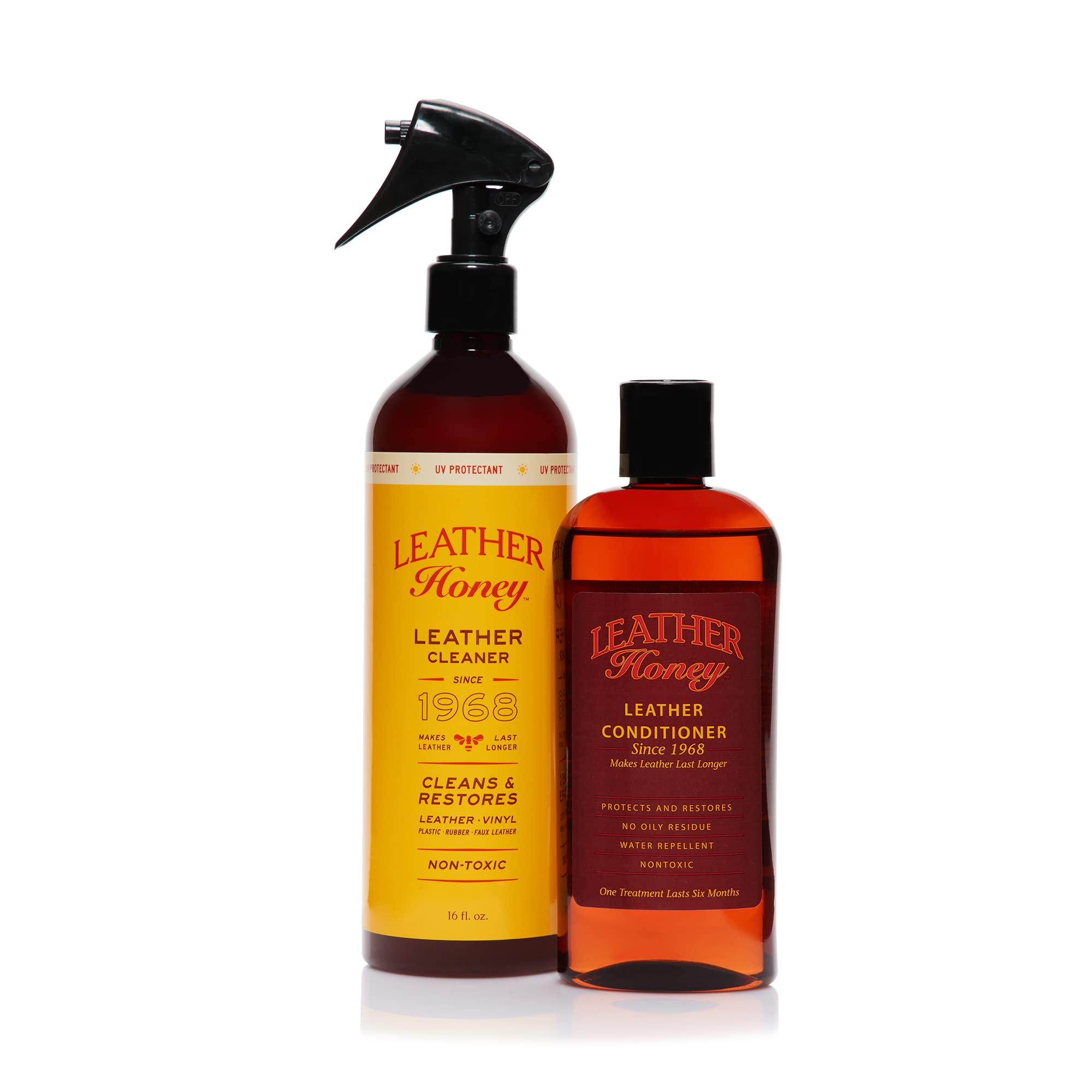
We recommend this bundle if you want a deep-cleaning spray plus a rich conditioner that protects leather from sun and wear.
Pros
- Cleans tough stains and grime without harsh smells.
- Conditioner soaks in and softens stiff, dry leather.
- UV protection helps prevent fading and cracking.
Cons
- Conditioner can darken lighter leather slightly.
- Thick conditioner needs time to absorb fully.
- Not for suede or some faux leathers.
We used the spray cleaner on a sun-baked driver seat and it removed built-up oils and a fake-tanner mark without scrubbing hard. The spray felt gentle and left no strong chemical odor.
The 8 oz conditioner goes on thick and sinks into cracks, and after a day the leather felt softer and looked healthier. It did darken the seat a little at first, but the finish evened out after a couple of hours.
Regular use made the leather more flexible and water beaded a bit after treatment, which reassured us about its protective claims. If you need a safe, non-toxic duo to clean and revive real leather, this bundle works well for everyday car seats.
Leather Honey Cleaner & Conditioner Bundle
Buying Guide
We look for a conditioner that protects, softens, and lasts. Prioritize formulas made for automotive leather and avoid products meant only for furniture or synthetic materials.
We check the ingredients list. Natural oils (like lanolin) and pH-balanced cleaners are good. Avoid heavy silicones and harsh solvents that can darken or dry out leather over time.
We consider ease of use. Creams and lotions spread easily and let us control shine. Sprays work fast but can be uneven. Choose the format that fits how often we will treat the seats.
We inspect claimed benefits and durability. Look for products that mention UV protection, water resistance, and long-lasting conditioning. Real-world durability matters more than marketing language.
We pay attention to safety and compatibility. Test any product on a hidden spot before full use. Make sure it won’t stain or change the color of our leather.
We assess value beyond price. A slightly more expensive product can save time and keep seats in better shape. Read directions and plan for follow-up treatments every few months.
We use this quick checklist when choosing:
| Feature | Why it matters |
|---|---|
| Leather-specific formula | Matches car leather needs |
| pH-balanced / mild ingredients | Prevents drying or damage |
| UV protection | Reduces cracking and fading |
| Application type (cream/spray) | Fits our routine and control |
| Ease of testing | Allows safe spot-check before full use |
Editor’s Choice
We picked a top leather conditioner that balances protection, softness, and ease of use. It works on most automotive leathers without leaving a greasy residue or changing the color.
We like products with natural oils plus UV inhibitors. Those ingredients help prevent drying and fading. The formula should absorb quickly and leave the leather supple.
Key reasons we chose this product:
- Safe for factory and aftermarket leather
- Non-greasy finish that won’t attract dust
- Simple application with a soft cloth or foam applicator
Application tips we recommend:
- Clean first with a mild leather cleaner and let it dry.
- Apply a thin, even layer and work it into seams.
- Wipe off excess after a few minutes and buff lightly.
We tested durability over several weeks and found fewer cracks and less stiffness. The scent is mild and fades quickly, which we prefer for daily use.
Conclusion
We chose conditioners that protect leather without changing its color or feel. Our picks balance cleaning, softening, and UV protection so seats last longer.
We recommend testing any product on a hidden spot first. That simple step prevents stains and helps us see how the leather reacts.
We focus on safe ingredients and easy application. That means fewer risks for older or delicate leather.
We suggest using a soft cloth, applying in small amounts, and buffing gently. Regular, light treatments work better than heavy, infrequent ones.
Our top choices cover different needs: deep conditioning, quick maintenance, and budget-friendly options. Each product earned its place for performance and value.
We aim to help you pick a conditioner that fits your routine and leather type. Use care, follow instructions, and inspect seats periodically to keep them in good shape.
FAQ
What type of leather needs a conditioner?
We treat smooth, finished leather most often. Suede and nubuck need special products, so we avoid using regular conditioners on them.
How often should we condition leather seats?
We recommend conditioning every 3–6 months for daily-use cars. For older or dry leather, we suggest every 2–3 months.
Can conditioners change seat color?
Some oil-rich conditioners can slightly darken leather. We test on a hidden spot first to check for color change.
How do we apply a conditioner?
We clean the seat with a mild leather cleaner first. Then we apply a small amount with a soft cloth and work it in using circular motions.
Is it safe for heated or ventilated seats?
Yes, most modern leather conditioners are safe for heated and ventilated seats. We check the product label and automaker guidance before use.
How much product do we need?
A little goes a long way. We start with a pea-sized amount per panel and add more only if the leather still looks dry.
Can conditioners repair cracks or tears?
Conditioners can soften and reduce the look of minor surface cracks. We do not expect them to fix deep cracks, rips, or structural damage.
Do conditioners protect against UV and spills?
Some conditioners include UV blockers and repel light spills. We still recommend quick cleaning after spills and using a sunshade for long exposure.
