
10 Best Car Seat to Travel With on Planes: Top Tested Options for Safe, Easy Air Travel

Car seats for air travel let families bring a familiar, safe place for kids on planes and make gate-to-gate travel easier. These seats range from lightweight, FAA-approved harnesses and inflatable boosters to full convertible seats that attach to airplane seats. We focus on seats that balance safety, size, and ease of use for flying.
The main things to watch for are FAA approval, weight and folded size, how easily the seat installs on an airplane, and whether it works for your child’s height and harness needs. FAA approval and correct sizing for your child are the most important factors when choosing a travel car seat. We tested and compared models that meet those needs to find the best seats for different kinds of trips and families.
Best Car Seats for Air Travel
We tested and reviewed car seats that work well on planes, focusing on safety, size, and ease of use. Below is our list of the best car seats to travel with on flights to help you choose the right one for your child and your trip.
WAYB Pico

We recommend the WAYB Pico if you want a truly lightweight, airline-friendly car seat that’s easy to carry and quick to stow.
Pros
- Very light and easy to lift through airports.
- Folds small enough for many overhead bins.
- Feels solid and meets FAA/NHTSA standards.
Cons
- Some kids sit lower and may feel less roomy.
- A bit pricey compared with basic travel seats.
- Returned/opened seats must be destroyed per policy.
We used the Pico on a cross-country flight and found it simple to carry from curb to gate. The folding action is quick and the included carry bag kept it tidy while we moved through terminals.
Installation on the airplane felt secure and straightforward. The seat’s aluminum frame gives confidence; the mesh fabric stayed breathable during a long day of travel.
On the downside, our child seemed lower in the seat and needed a bit more repositioning than usual. Still, the trade-off for the compactness and light weight made sense for trips where we wanted less bulk.
Overall, the Pico worked well for taxis, rideshares, and planes when we wanted a safe, portable option that didn’t weigh us down. Buy it on Amazon: WAYB Pico Travel Car Seat.
Graco Contender Slim

We recommend this seat if you need a lightweight, slim convertible car seat that fits well on planes and in tight back seats.
Pros
- Slim, lightweight design makes carrying and fitting easier.
- Converts from rear- to forward-facing as the child grows.
- FAA certified so you can use it on most airplanes.
Cons
- Recline adjustment is limited and can be hard to level in some vehicles.
- Tightening the straps can take extra effort to get a snug fit.
- Padding is good but may feel firm on longer flights.
We used this seat on a recent trip and liked how simple it was to move between car and gate. Carrying it through the airport felt easier than bulkier models, and installing it on the plane was straightforward because the seat is compact.
In the car, the slim profile saved room for other passengers. Adjusting the headrest and harness together with the Simply Safe Adjust system worked quickly, so we didn’t fuss with rethreading as our child grew.
On the downside, getting a perfect recline took patience. In one vehicle the level indicator showed slightly off, and we had to try different seat positions. Strapping in required a firm pull to remove slack, especially after a long day of travel.
Overall, we found the Graco Contender Slim reliable for flying and short road trips when you want something light and space-saving without losing basic safety features.
Ellaris 3-in-1 Slim Convertible

We recommend this seat if you want a versatile, travel-friendly convertible that grows with your child and installs easily.
Pros
- Slim design fits well in tight airplane and car spaces
- Lightweight and easy to move between vehicles
- Machine-washable pad and removable cup holders make trips simpler
Cons
- Top harness can be hard to tighten for a snug fit
- Slim profile may feel less padded than bulkier seats
- Some older cars may still struggle to fit it comfortably
We took this seat on a recent family trip and found it genuinely easy to carry through the airport. The light weight made it less tiring to handle, and getting it into the airplane cabin felt straightforward compared with heavier models we’ve used.
Installation with the hook-style LATCH was quick in our car and at the rental. The 5-position headrest and harness adjusted smoothly as our child grew, and the slim shape left room for other passengers in the back row.
On the downside, we noticed the shoulder straps need careful work to get very tight; we had to double-check tension before each drive. Padding around the head felt fine, but not as plush as some larger seats we own. Overall, it balanced travel convenience and long-term use well for our family.
mifold Hifold Booster — Slate Grey
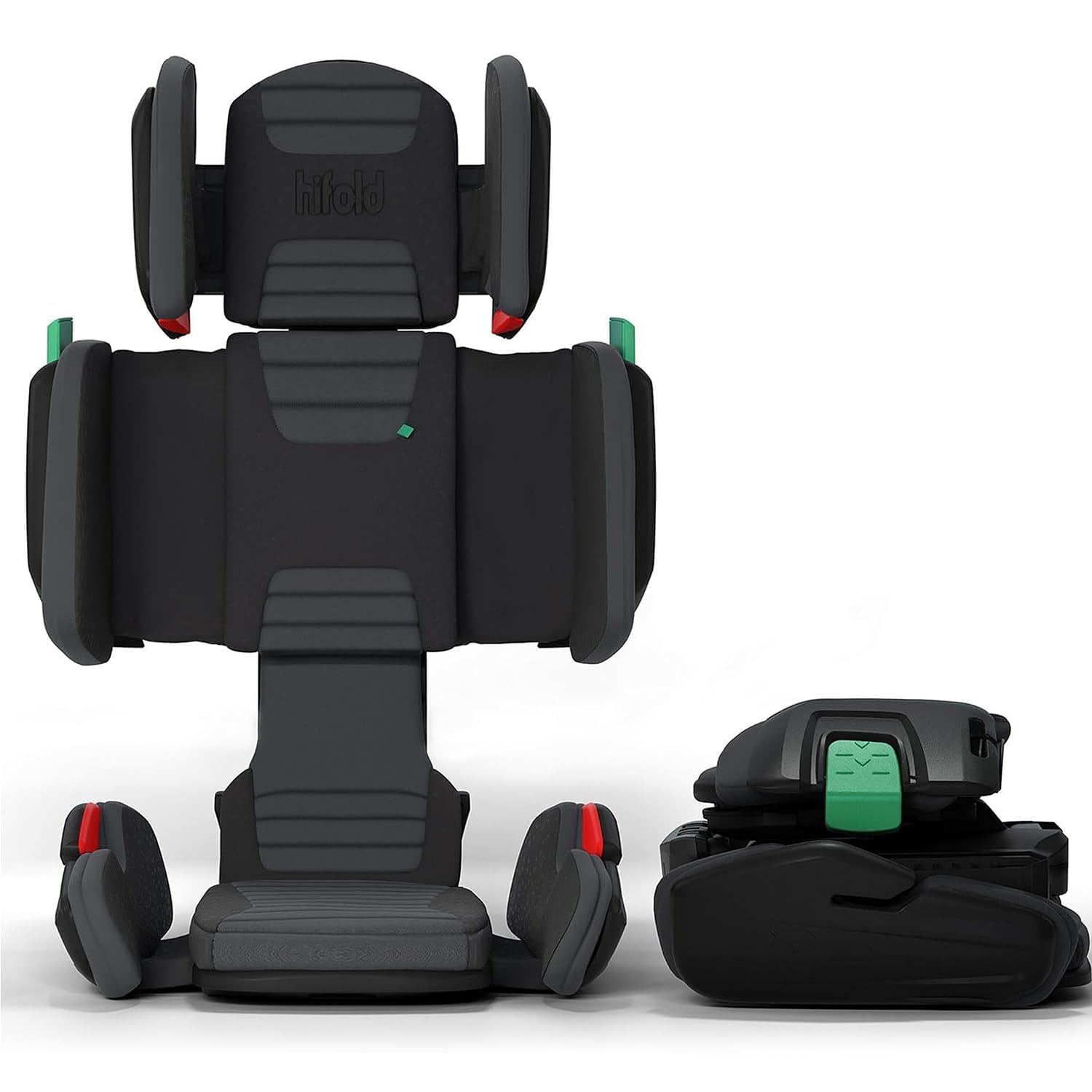
We recommend this if you need a very compact, adjustable booster for flying and quick car swaps because it folds small, fits many kids, and makes seatbelt fit better.
Pros
- Very compact and light for travel.
- Highly adjustable to fit different kids.
- Fast to move between cars or store in overhead bins.
Cons
- Not as cushioned as full-size boosters.
- Can feel narrow for some children.
- Folding parts need careful handling to avoid wear.
We used the mifold Hifold on several trips and found it saved space and hassle. Carrying it onto planes and into rental cars was easy, and it fit in overhead bins without trouble.
Adjusting the seat to match our kids took only a few clicks and felt secure once set. The seatbelt lined up much better than a simple backless booster, and that mattered on longer drives.
Comfort was okay for short to medium rides, but our older child preferred a padded booster for long trips. We also noticed the folding mechanism needs a little care when packing to avoid stressing the hinges.
zhtangrui Car Seat Dolly
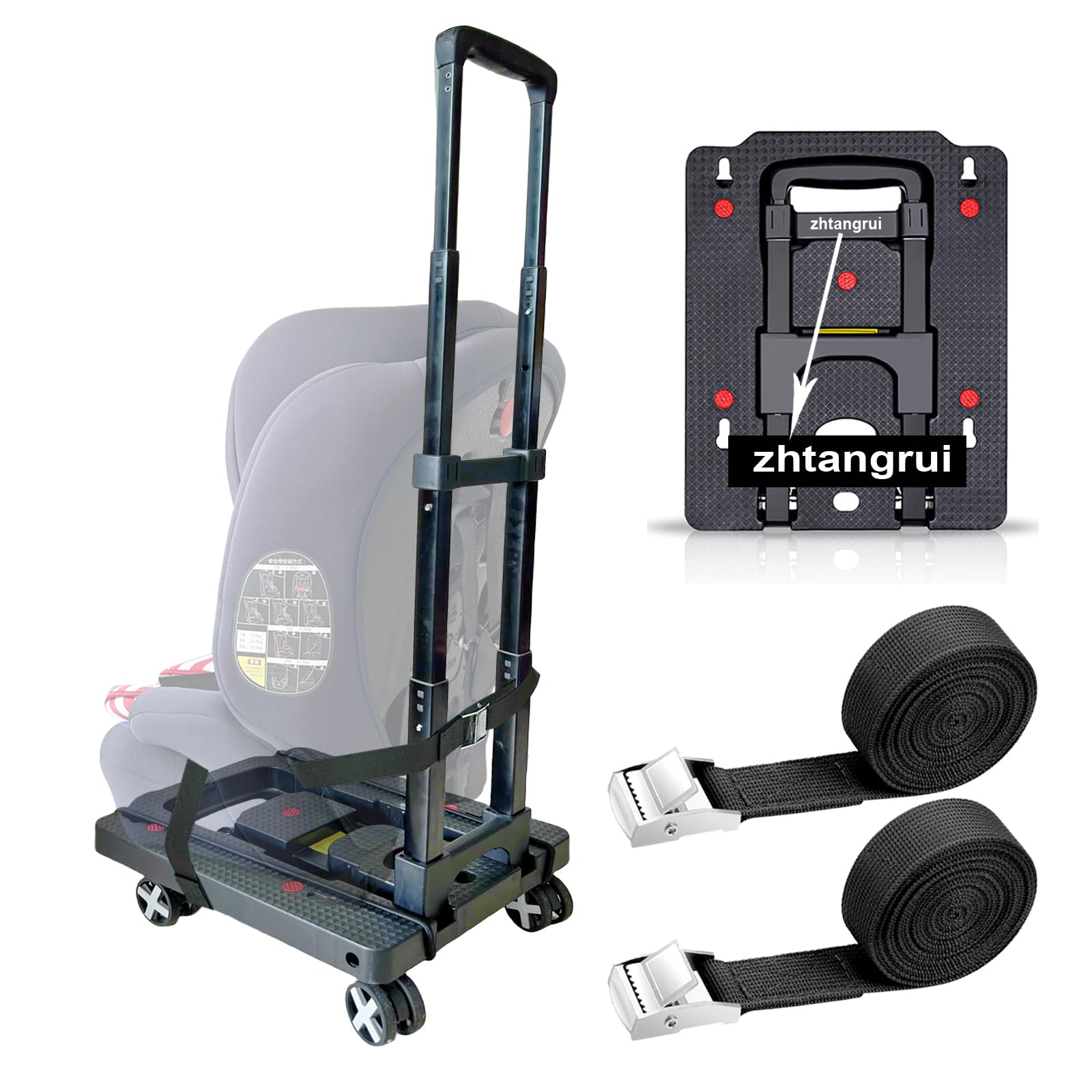
We recommend this dolly if you want to roll a car seat through airports instead of carrying it, as long as your seat has a flat bottom and fits the size limits.
Pros
- Makes solo travel with a car seat much easier.
- Folds small and tucks into luggage or a trunk.
- Lightweight but handles a stacked load well.
Cons
- Only fits car seats with a flat bottom and limited width.
- Requires using both ratchet straps every time for safety.
- Handle doesn’t lock fully vertical, so you must strap it in place.
We used this dolly on a multi-leg trip and it saved our shoulders. Attaching the car seat took a minute: we looped the ratchet straps around the base and backrest like the instructions said. Rolling through terminals felt smooth and stable, even with a backpack on top.
In crowded spots we detached the car seat before boarding to avoid aisle jams. The wheels gripped tile and carpet without fuss, and folding it down for storage was simple. It felt solid for its weight, and we liked that it doubles as a small hand truck for groceries or boxes.
Measure your car seat before buying; some booster-style bases won’t sit right. We also learned to always use both ratchet straps and to rotate the tow bar if the backrest is reclined. For parents who travel often and have a compatible seat, this dolly makes airport navigation less tiring.
Buy the zhtangrui Car Seat Dolly on Amazon
J.L. Childress Gate Check Bag (Red)
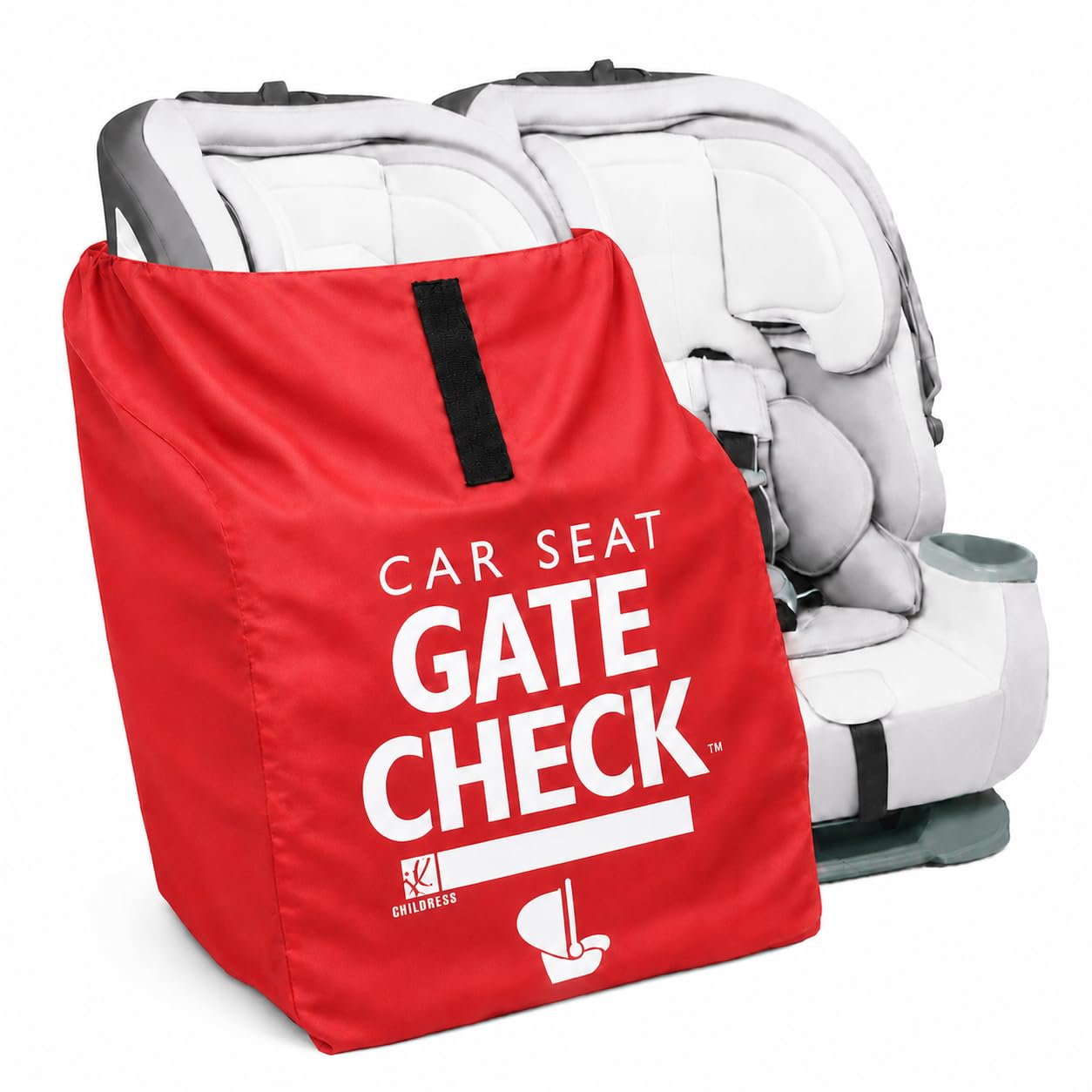
We recommend this if you want a simple, easy-to-spot gate check bag that protects your car seat from dirt and airline handling.
Pros
- Big enough to fit nearly any car seat.
- Bright color and ID box make it easy to find at the gate.
- Lightweight and stores in its own pouch for travel.
Cons
- Not padded, so it won’t stop hard impacts.
- Handles and seams can feel thin after repeated use.
- Fabric may wear after many flights.
We used this bag on a recent trip and found it fast to pack. The drawstring closes tight and the big white ID box helped us spot our seat on a crowded jetway. It saved the car seat from scuffs and dirt.
Carrying it through the airport felt light, and the built-in pouch made folding it small between trips simple. The bright red color drew attention, which made gate pickup smoother than loose gear would have.
After several flights the bag showed wear at stress points. It did its main job—keeping the seat clean—but it’s not a padded protector. For frequent flyers who want stronger protection, a sturdier travel case might suit better.
Buy it if you need a practical, affordable gate check cover that’s easy to use and easy to find: J.L. Childress Gate Check Bag (Red).
Guiseapue Travel Car Seat Bag
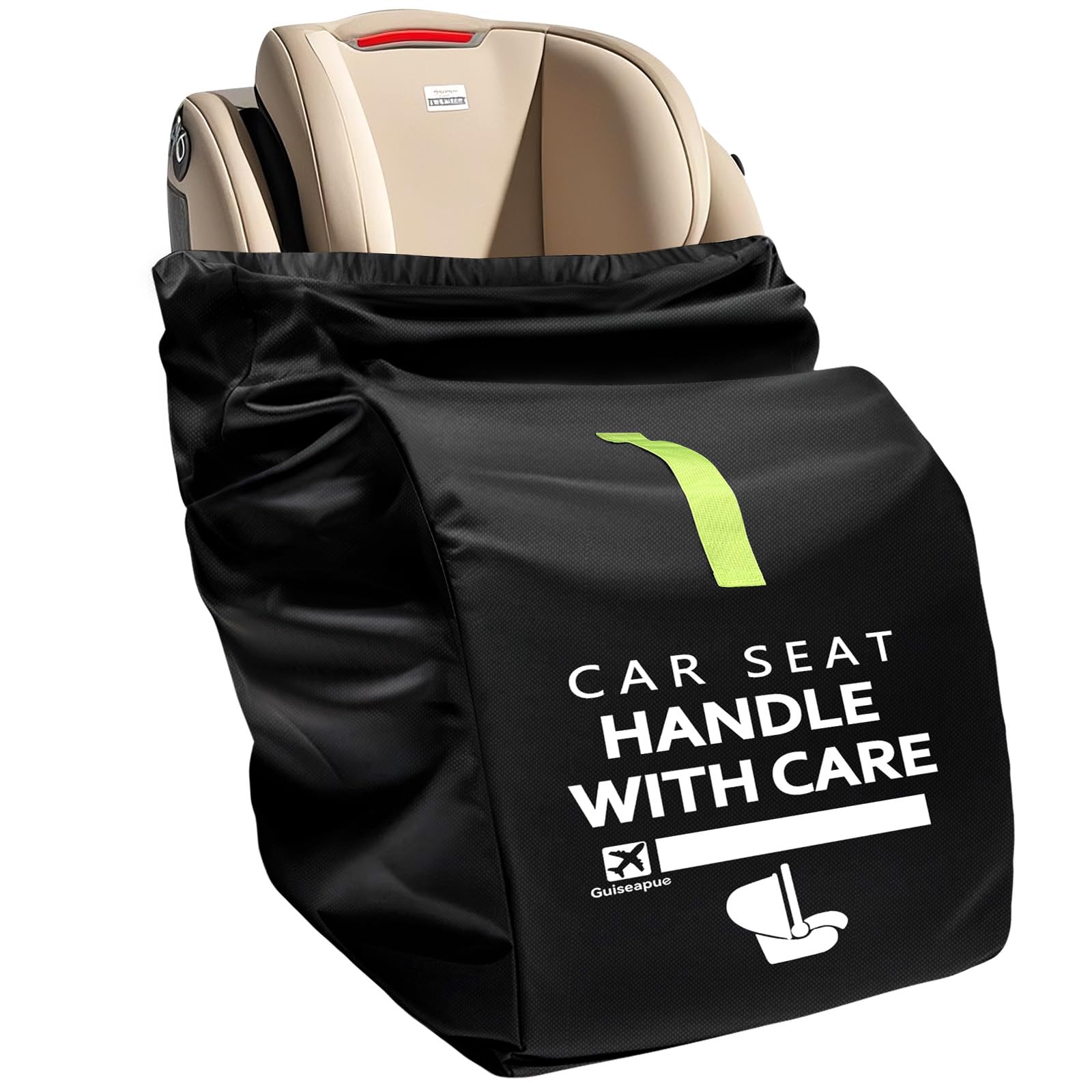
We recommend this bag if you want a lightweight, roomy cover that keeps a car seat clean while flying.
Pros
- Fits many infant and convertible seats, even bulkier models.
- Packs into its own pouch for easy storage.
- Handles and tag window make gate checks and carrying simpler.
Cons
- Material feels thin to the touch and can wear after repeated use.
- Drawstring closure can be bulky and slow to secure at busy gates.
- Oversized for small carriers; looks large when packed.
We used this bag on a recent trip with an infant carrier and found it very easy to handle. The shoulder strap and top handle let us shift the seat between stroller and gate without juggling other bags.
The fit surprised us — it swallowed our Doona-style seat with space to spare. That extra room made it simple to tuck straps and buckles inside so nothing snagged during handling.
Durability is a trade-off. The nylon keeps dirt and grease off the seat, but the fabric felt thin after one long haul. We saw other users report rips after heavy use, so plan to treat it as a protective cover rather than a lifetime solution.
Graco Tranzitions 3-in-1
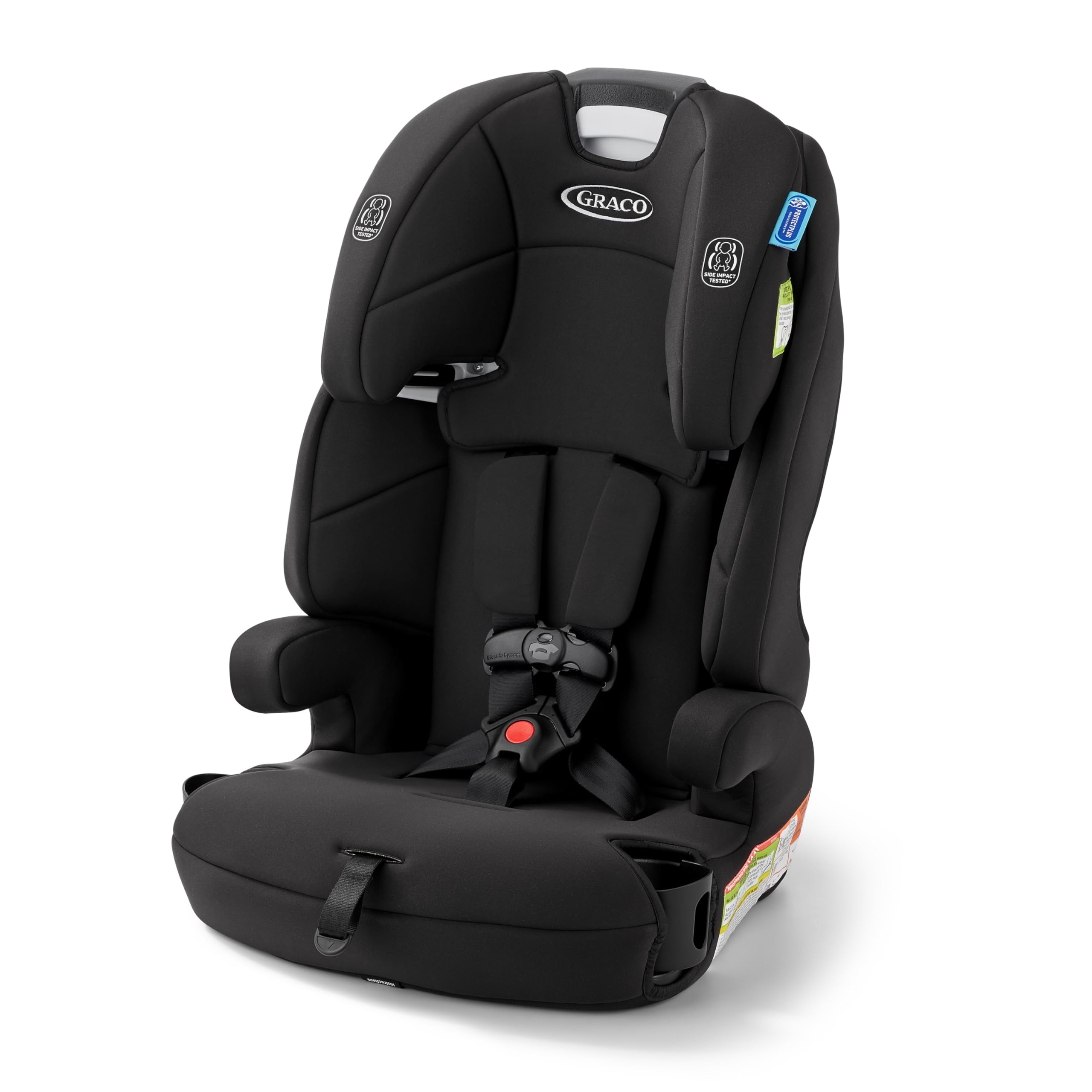
We recommend this seat for travelers who want a light, easy-to-move car seat that grows with a child and works well on planes and in cars.
Pros
- Lightweight and easy to carry between cars or through an airport
- Grows with your child from harnessed seat to backless booster
- Simple one-hand headrest and harness adjustment saves time
Cons
- Not as plushly padded as some higher-end seats
- Less lateral support around legs and hips compared with bulkier models
- Cup holders stick out, which can snag in tight airplane aisles
We used this seat on a short flight and several car trips. Carrying it through security felt easy because it’s fairly light and narrow. Installing it in a rental car took just a few minutes, and moving it between vehicles was straightforward.
On the plane, the seat fit in a standard window row without blocking much space. Our child settled quickly into the harness mode, and the no-rethread headrest let us raise it without fiddling. The cup holders were handy for snacks, though they did poke a bit when we stowed the seat in overhead bins.
For long-term use, switching to the highback and then backless booster worked as advertised. The material cleaned easily after a spill, and the machine-washable pad makes upkeep simple. If you want maximum padding or heavy side support, consider a larger model, but for air travel and everyday use, this seat balances convenience and safety well.
Maxi-Cosi Romi (Travel-Friendly)
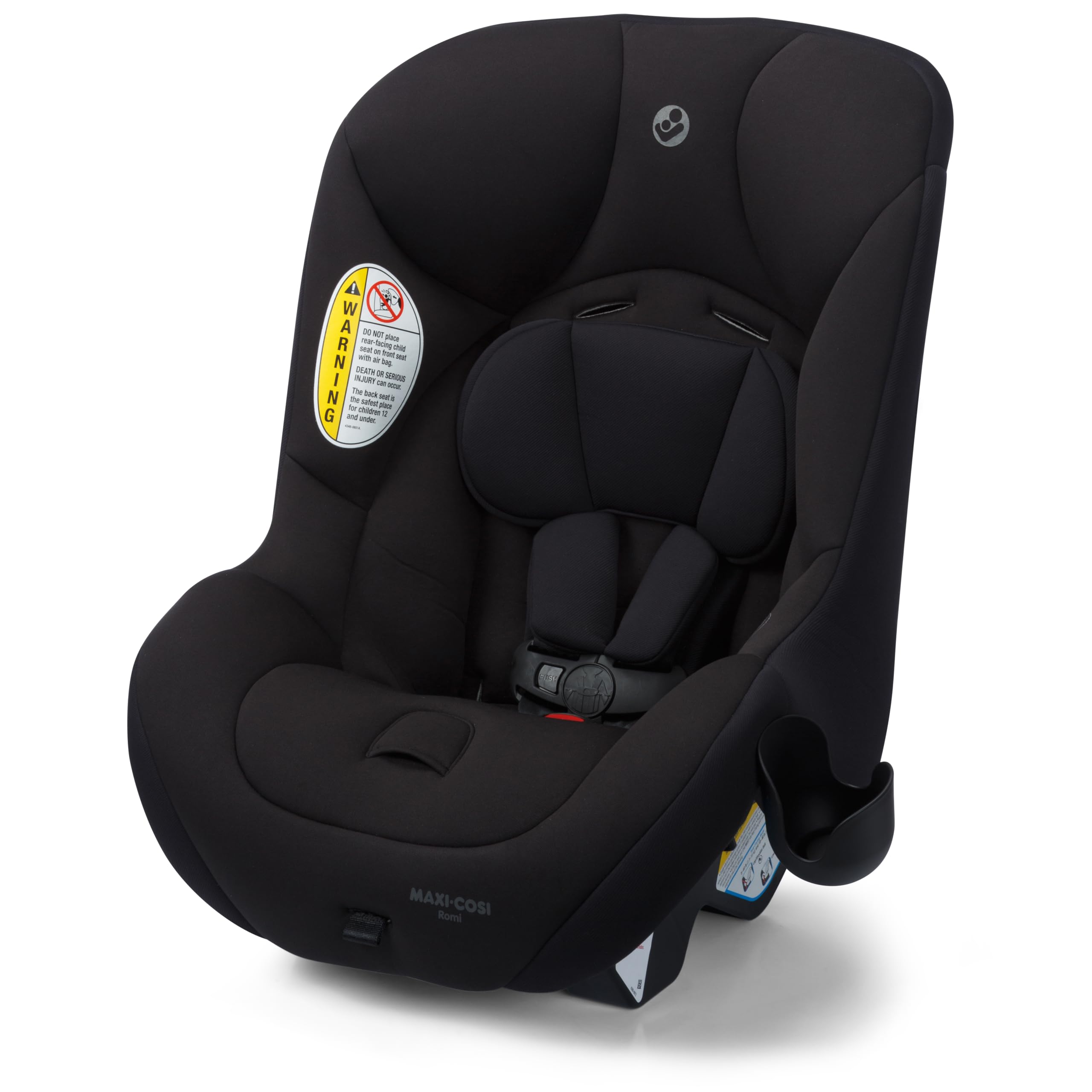
We recommend this seat if you need a very lightweight, airline-friendly convertible car seat for short trips and easy transfers.
Pros
- Extremely light — easy to carry between cars and through airports.
- Converts rear- to forward-facing as the child grows.
- Soft, machine-washable fabrics made from recycled materials.
Cons
- Tight harness can feel fiddly to adjust in real use.
- Bulky footprint despite low weight; may not fit small airplane seats well.
- Some reviewers reported missing parts or installation trouble.
We used the Romi on a week of mixed driving and a flight. Picking it up felt effortless and we liked slipping the tether over a shoulder like a tote. It made moving the child between taxi, terminal, and rental car much faster than our heavier seats.
Installing rear-facing took patience. Tightening the straps while the shell sat awkwardly in a small rental car was tricky. Forward-facing went smoother, but we still had to fuss with the harness more than with other seats we own.
The fabric and padding felt gentle against our child’s skin, and cleaning the cover in a hotel sink was simple. For families who prioritize low weight and eco-friendly materials, this works well — but measure your intended plane or car seat space first and expect a bit of extra installation time.
WAYB Pico (Golden Hour)
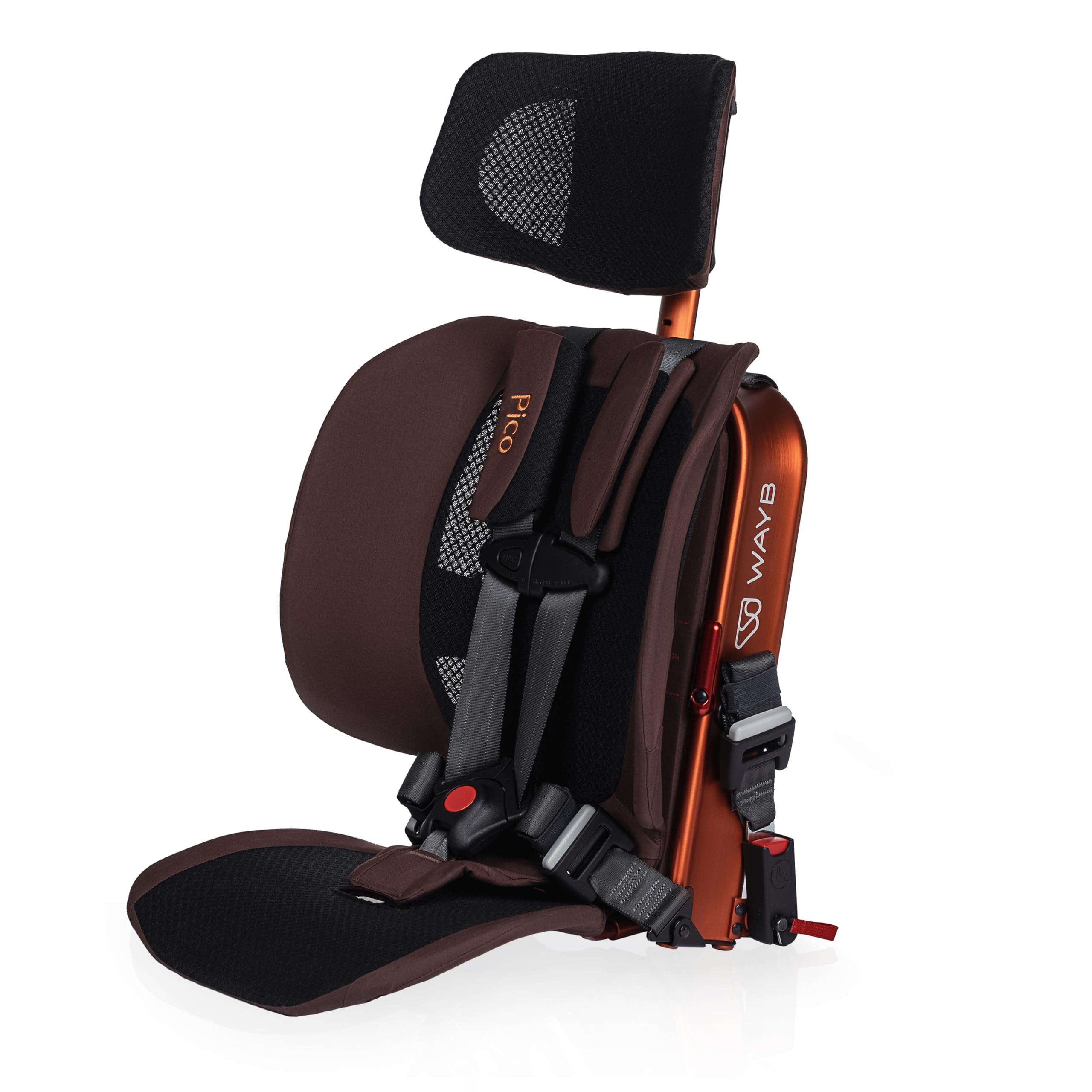
We recommend the Pico if you want the lightest, easiest car seat to travel with on planes and short rides.
Pros
- Extremely light and easy to carry
- Folds small to fit overhead bins
- Feels well-made and breathable for kids
Cons
- Not as supportive for long-term daily use
- Harness can be tricky to tighten at first
- Fit limits mean some kids outgrow it sooner
We used the Pico on a recent flight and found it saves a lot of hassle. Carrying it through the airport felt almost like carrying a small bag. Folding and fitting it into the overhead bin was quick and painless.
Installing in a rideshare was faster than our regular seat. The 5-point harness held steady, and the mesh cover kept our child cool during a hot wait. Tightening the straps took extra effort the first time, but got easier after a couple of uses.
The Pico is great for travel days and short trips, but we wouldn’t rely on it as the only daily car seat for a growing child. It’s best for families who need a compact, FAA-friendly option that still meets safety rules.
Buying Guide
We look for car seats that balance safety, weight, and ease of use when traveling by plane. Prioritize seats that are FAA-approved or listed for use on aircraft and check the airline’s rules before you pack.
We focus on weight and bulk. Lighter seats and those that fold or disassemble easily save us time and effort in airports. Consider travel-friendly carry options like a compact carry bag or built-in handle.
We check installation methods. Seats with clear, simple belt paths or LATCH-friendly guides make plane installation easier. We prefer seats with easy-to-read labels and few loose parts.
We inspect comfort and fit for our child. Adjustable harnesses, removable padding, and multiple recline positions help keep the child comfortable on long trips. Make sure the seat fits your child’s height and weight limits.
We value durable materials and easy cleaning. Removable, machine-washable covers and wipeable surfaces reduce stress from spills. Strong shell construction matters for everyday safety and repeated travel.
We compare features that matter most to us:
| Feature | Why it matters |
|---|---|
| FAA approval | Confirms allowed use on planes |
| Weight & size | Affects carry and gate handling |
| Installation clarity | Reduces setup errors onboard |
| Comfort adjustments | Keeps child settled during flights |
| Cleanability | Makes upkeep simple after travel |
We recommend testing fit at home and practicing installation before flying. This saves time and lowers stress at the airport.
Editor’s Choice
We picked the Clek Liing as our Editor’s Choice for air travel. It balances safety, light weight, and ease of use better than most seats we tested.
The Liing fits most airplane seats without a base and is FAA-approved. Its rigid shell and energy-absorbing foam give reliable protection, while the slim profile keeps it from blocking the seat beside you.
We liked how the harness is easy to tighten and adjust with one hand. Parents can install it quickly during boarding, which cuts stress and holds the child securely.
Key traits we value:
- FAA approval — legal for use on planes.
- Compact design — sits well on aircraft seats.
- Simple installation — fast checks during boarding.
- Durable materials — holds up to repeated travel.
The seat is pricier than some options, but we find the trade-off acceptable for frequent flyers. It folds into a travel bag for easier carrying and protects the shell during transport.
Conclusion
We choose a travel car seat by balancing safety, size, and ease of use. A FAA-approved, lightweight seat that fits your child and your airline rules gives the best mix of protection and practicality.
We favor seats that fold or come with a travel bag for easy transport. Seats that attach to the airplane seat with a lap belt or that are CAA/FAA certified work well for most trips.
We recommend testing the seat at home before travel. Install it and tighten the harness so you know timing and fit ahead of time.
We value clear labels and simple harness adjustments. They save time at the gate and reduce stress during boarding.
We keep a short checklist:
- Confirm airline rules.
- Check certification and height/weight limits.
- Practice installation at home.
- Use a lightweight travel bag.
We want you to feel confident choosing the right seat. With the right prep, travel becomes safer and easier for both you and your child.
FAQS
Do we need a car seat on a plane?
We recommend a car seat for children under 2 if you want a safer, more secure ride. FAA rules let infants sit on laps, but a certified car seat adds protection and comfort.
Which type of car seat fits airplane seats?
Look for FAA-approved seats with a label stating compliance. Convertible seats that are narrow and have a straight back usually fit best on most airplane seats.
How do we install a car seat on a plane?
Use the airplane seat belt to secure the car seat or the LATCH system if airline allows. We always follow the car seat manufacturer’s instructions and double-check that the seat is tight and doesn’t move more than an inch side-to-side.
Can we gate check a car seat?
Yes. Gate checking protects your seat from cargo handling but can expose it to damage. We use a padded bag and take photos of the seat before handing it over.
Will airlines charge extra to bring a car seat?
Most U.S. and many international airlines allow a car seat free of charge for a child ticketed in their own seat. We advise checking your airline’s policy before travel.
How do we choose a lightweight travel car seat?
Compare weight, folded size, and certified crash protection. We prefer seats under 15 pounds that are easy to carry and have clear FAA approval.