
Best Car Seat Position for Lower Back Pain: Expert Guide to Ergonomic Adjustments and Comfort

Lower back pain is a common complaint for drivers and passengers who spend long stretches in a car. How you sit and where your seat supports you can change pressure on your spine, hips, and muscles. A proper car seat position and the right seat type aim to reduce strain, improve posture, and make driving more comfortable.
Seats and accessories come in many designs: firm lumbar supports, contoured cushions, adjustable headrests, and seats with built-in tilt or height controls. The most important thing to look for is adjustable lumbar support that matches the curve of your lower back, because that directly reduces pressure on the spine and helps maintain a neutral posture. We tested several seat positions and support products to find options that ease lower back pain and fit different body types, so our picks focus on adjustability, comfort, and real-world fit.
Best Car Seat Positions for Lower Back Pain
We tested and reviewed seats and supports to find positions that reduce lower back strain while driving. Below is our list of the best car seat positions and related products to help keep your spine neutral and comfortable on short and long drives.
Lexeme X Large Seat Cushion

We recommend this cushion if you need extra tailbone support on long drives or long desk days because it eases pressure and helps improve posture.
Pros
- Wide, curved shape supports hips and tailbone.
- Dense memory foam holds shape over weeks of use.
- Large size fits car seats, office chairs, and wheelchairs.
Cons
- Thick profile can feel bulky on some car seats.
- Might be too soft for heavier users over long use.
- Cover feels basic compared with premium cushions.
We tested this cushion in our cars and at the office. The curve really cradled my hips and kept my lower back from slumping on long drives. I noticed less numbness after about an hour of sitting.
Putting it on felt simple and it stayed put on leather and fabric seats. The memory foam gave a plush, supportive feel without sinking completely. After several weeks it kept its shape better than cheaper gels we tried.
The lumbar pad added useful lower-back support when we drove long distances. It raised our posture just enough to feel less strain. If your car seat already has strong lumbar shaping, the cushion can feel a bit bulky.
Overall, this is a solid choice for people with sciatica or tailbone pain who need a portable, roomy cushion. It won’t replace a medical device for severe conditions, but for daily driving or long desk shifts it made a clear difference for us.
QUTOOL Lumbar Support Pillow
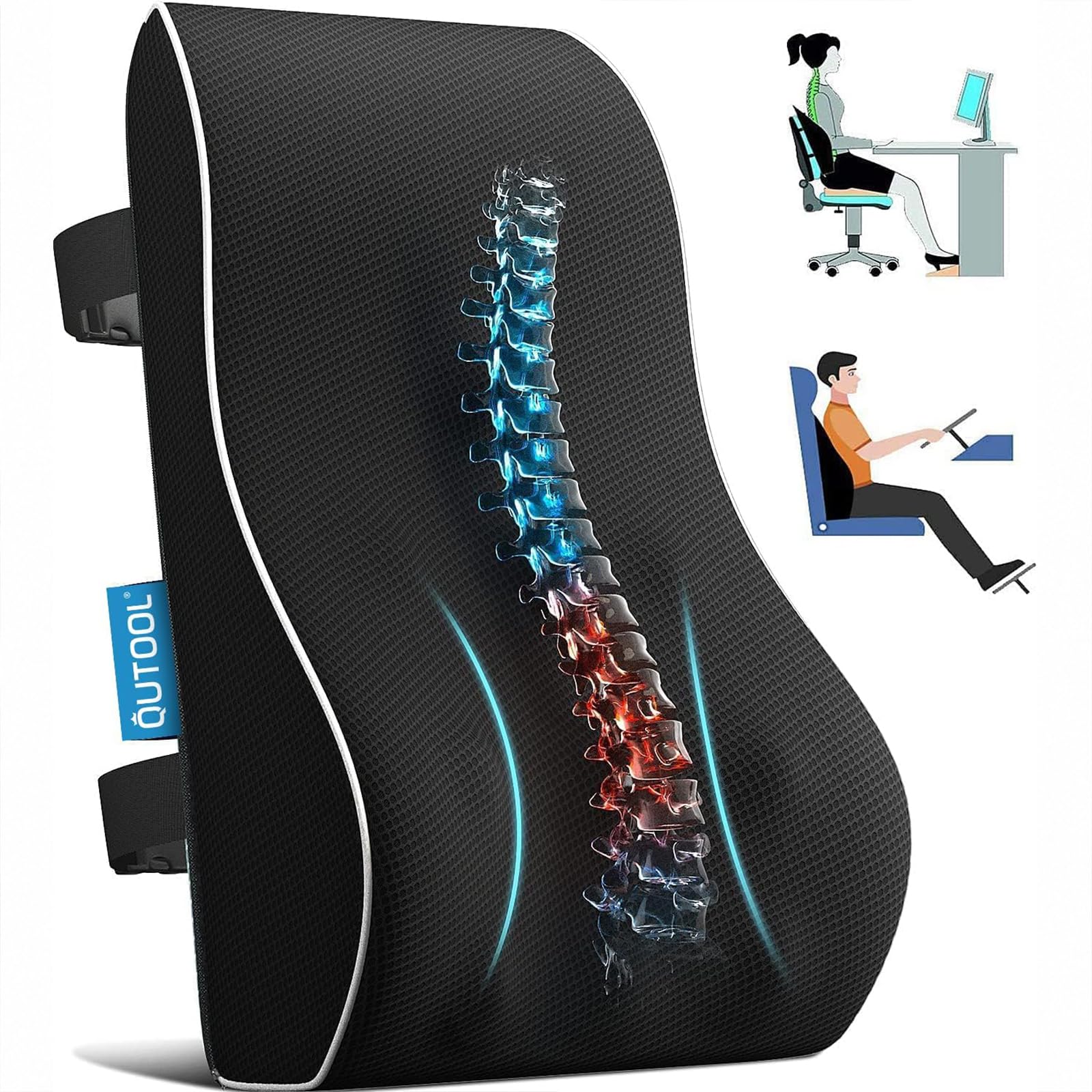
We recommend this if you want firm, reliable lumbar support in the car or office to ease lower back pain and keep a natural spine curve.
Pros
- Firm memory foam that keeps shape and gives steady support.
- Long adjustable straps hold the cushion in place on most car seats.
- Removable mesh cover breathes and is machine washable.
Cons
- Fit can be off for shorter drivers; position may need frequent tweaks.
- Too thick for some low-backed seats or sofas.
- Foam feels firm at first and may need a few uses to soften.
We used this cushion on long drives and daily commutes. It felt solid right away and kept its shape even after hours of sitting. The firm memory foam stopped that sinking feeling you get with thin rolls.
Strapping it to the car seat was easy thanks to the longer straps. Once tightened, it stayed put through turns and lane changes. We did have to try different heights to find the sweet spot for our lower back.
The mesh cover helps on warm days; sweat did not build up like with full foam covers. Shorter team members noted the lumbar bulge sat a bit high, so check placement if you are under 5’4″.
Samsonite Lumbar Support Pillow
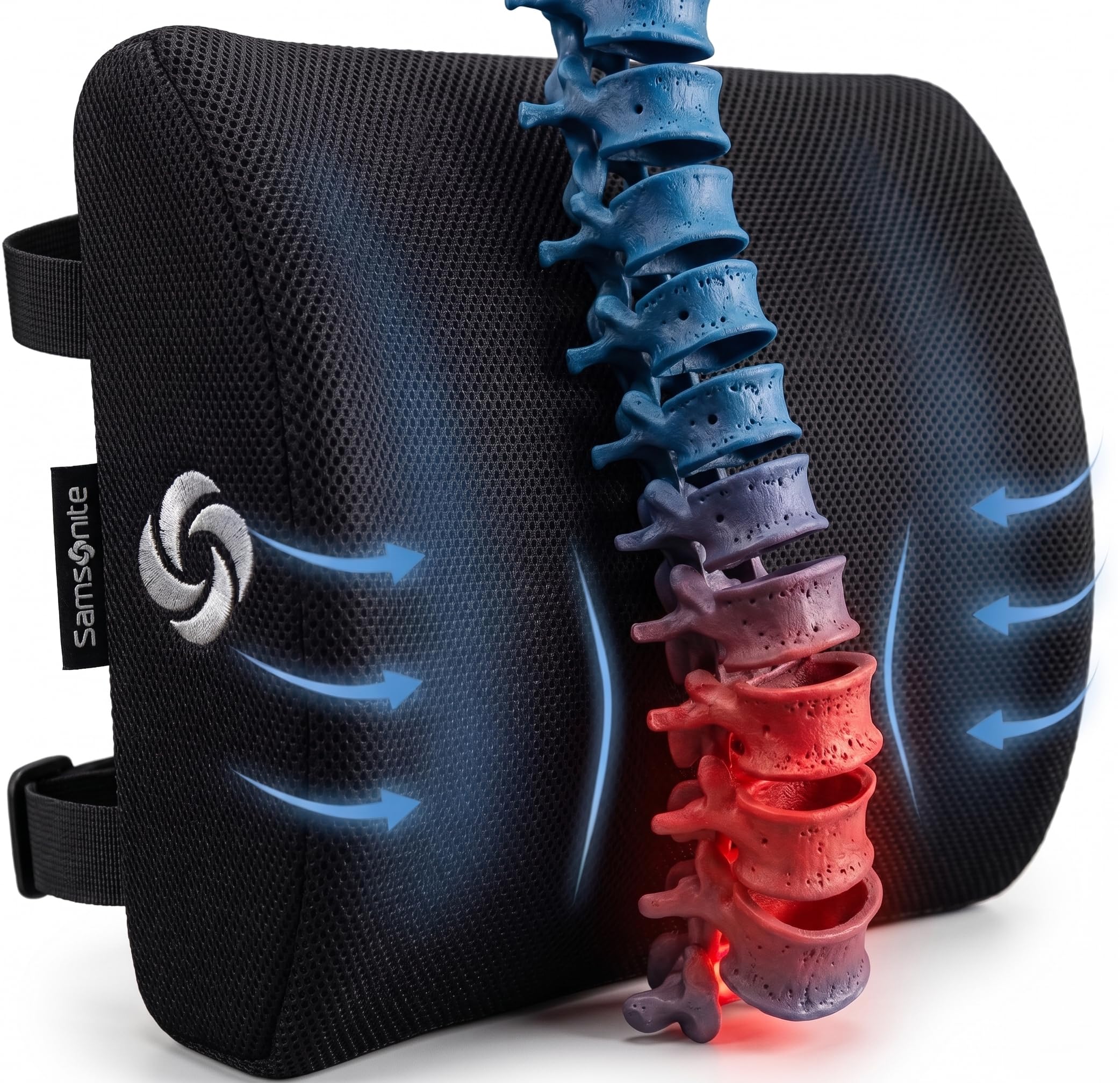
We recommend this pillow if you want firm, portable lumbar support that holds shape on long drives and office days.
Pros
- Firm memory foam that molds to your lower back.
- Lightweight and easy to strap to car or office seats.
- Breathable mesh cover stays cooler than plain foam.
Cons
- Feels too firm at first for some people.
- Strap can slip on very smooth seats.
- Not as plush as premium, higher-priced models.
We used this in city commutes and a long highway trip. It gave steady lower-back support and helped keep our posture more neutral. The first drive felt firm, but the foam softened and settled after a few uses.
We also tried it on different car seats and an office chair. The adjustable straps made fitting quick, though we had to re-tighten once on a vinyl seat. The compact shape kept it from crowding the seat or hitting the steering wheel.
Cleaning was easy. The mesh cover came off and washed without shrinking. After months of mixed use, the cushion kept its shape and still felt supportive on long shifts.
Everlasting Comfort Seat Cushion
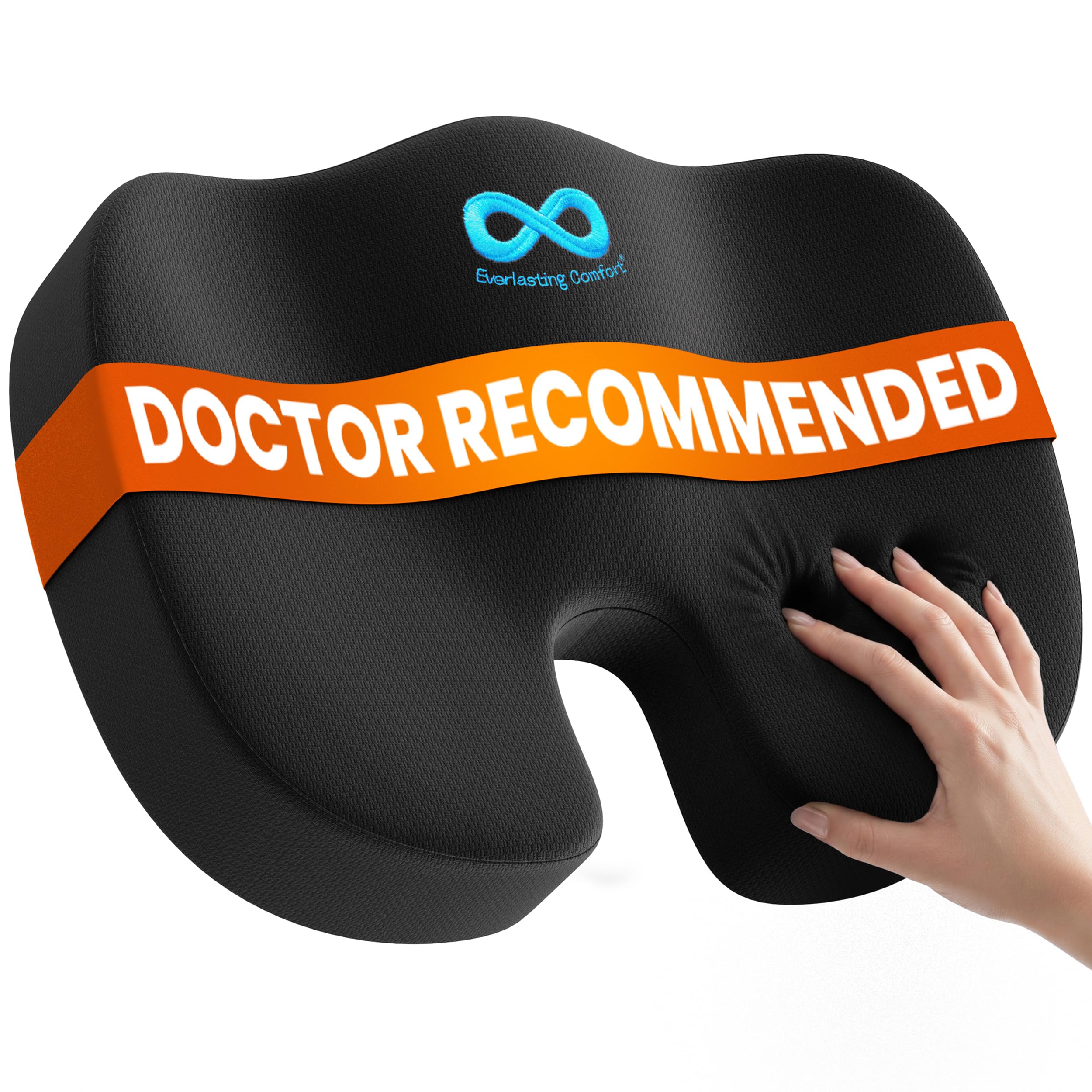
We recommend this cushion if you want firmer memory foam and a simple way to ease tailbone and lower back pressure in cars or at a desk.
Pros
- Feels supportive for long drives and desk work.
- Cover is breathable and easy to wash.
- Low profile fits most car seats and doesn’t change seat look.
Cons
- Foam is firmer than expected for some users.
- Shape may not align perfectly with all chair edges.
- Non-slip bottom can still shift on very smooth seats.
We used this cushion on a long road trip and at the office. The memory foam held its shape and relieved pressure on our tailbone after a few hours of sitting. It gave a modest boost in height and helped us sit more upright without adding bulk.
The cover breathes well in warm weather and pops off for a quick wash. The U-shaped cutout really helped reduce the direct pressure on the coccyx, though the firmer feel may take a day or two to get used to.
Installation was easy—just place it on the seat and sit. On some very smooth leather seats it slid a bit, so we recommend checking fit before a long drive. Overall, it’s a practical, durable option if you need reliable support without a large, bulky cushion.
kingphenix Memory Foam Car Cushion & Lumbar Pillow

We recommend this if you want firmer lower-back support and a softer seat for long drives.
Pros
- Feels supportive right away and keeps its shape.
- Easy to install and stays put on many seats.
- Breathable cover that helped reduce sweating on long drives.
Cons
- Seat pad can be thinner than advertised for very soft cushioning.
- May shift on some bucket-style seats without extra straps.
- Vacuum packing can leave wrinkles in the cover at first.
We used this cushion on city commutes and a few long trips. The memory foam cradles the lower back and gives a noticeable lift that helps us see over the dash. The lumbar pillow fits behind the small of our back and kept our posture more upright.
Installation took minutes. The cushion stayed in place on cloth seats, though on tight leather buckets it needed occasional adjustment. The cover felt breathable and machine-washed clean without losing shape.
On long drives it eased pressure under the tailbone and reduced the need to shift constantly. The seat area felt firmer than plush, so we added a thin pad once for extra softness. Overall it improved comfort and posture without changing driving position too much.
Livtribe Seat Wedge

We recommend this cushion if you need extra lumbar fill and a small lift to ease lower back pain on drives.
Pros
- Gives immediate lumbar support and helps fill the small gap behind our lower back.
- Raises our seating by about 3.5 inches so we see the road better and sit more upright.
- Breathable mesh and memory foam feel cool and mold to our shape.
Cons
- Cushion is fairly small and can shift on slick seats while we drive.
- Not thick enough for some taller or heavier drivers who need more padding.
- Front taper may not suit every car seat shape, so fit can vary.
We used this wedge on short commutes and a few long trips. The memory foam sprang back quickly from its compressed package and felt supportive right away. It filled the hollow behind our lower back and reduced that constant ache after an hour of driving.
The 3.5-inch lift changed our view of the road and made us sit more upright. That posture cut down on slouching and tired shoulders during longer drives. The cover stayed cool and felt breathable in hot weather.
A few times the cushion slid on smooth leather, so we added a non-slip pad underneath to keep it steady. People with larger frames may want something wider or thicker, but for shorter drivers or those who need a little lumbar fill, this is an easy, portable fix we’d pack for trips.
Nisuez Car Seat Cushion
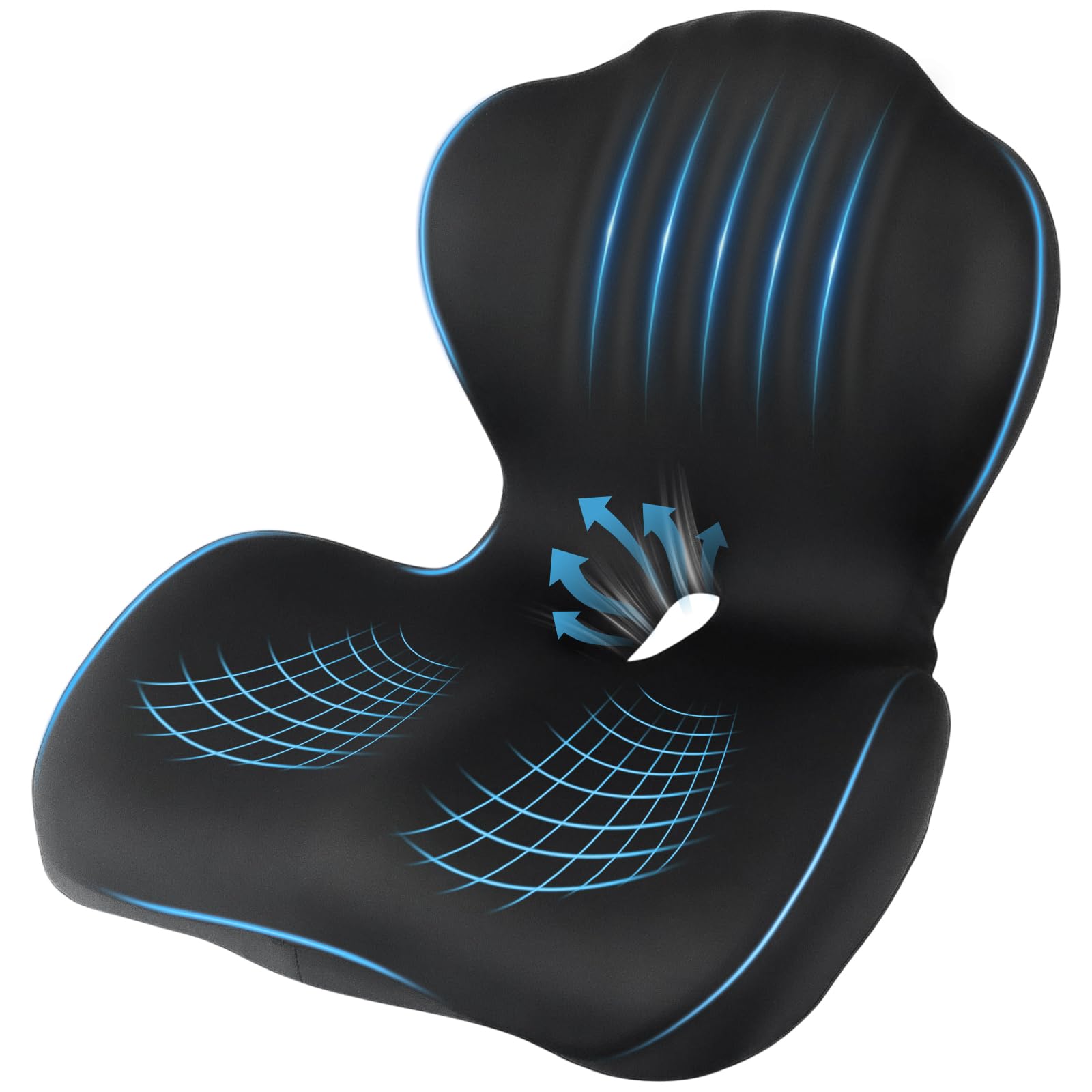
We recommend this if you want firmer lumbar support and a small height boost for driving visibility, but expect mixed comfort depending on your body and seat.
Pros
- Firm lumbar shape that holds the lower back.
- Adds a slight height lift for better road view.
- Portable and fits most car and office seats.
Cons
- Memory foam feels too soft for some users.
- Not ideal for mobility scooters or nonstandard seats.
- Mixed reviews mean fit and comfort vary.
We used this cushion on short and long drives. The L-shape matched our lumbar curve and kept our lower back from slumping on 90-minute trips.
The seat gave a noticeable lift, which helped shorter drivers see the road better. The foam compressed over time on longer drives for some of us, so firmness felt different after a few hours.
Installation was quick and it stayed put in regular car seats and office chairs. One of our team found it worsened butt pressure, so this won’t work for everyone.
Overall, the Nisuez cushion is worth trying if you need targeted lower-back support and a modest boost in height, but be ready for mixed comfort depending on your shape and seat type.
QUTOOL Lumbar Pillow
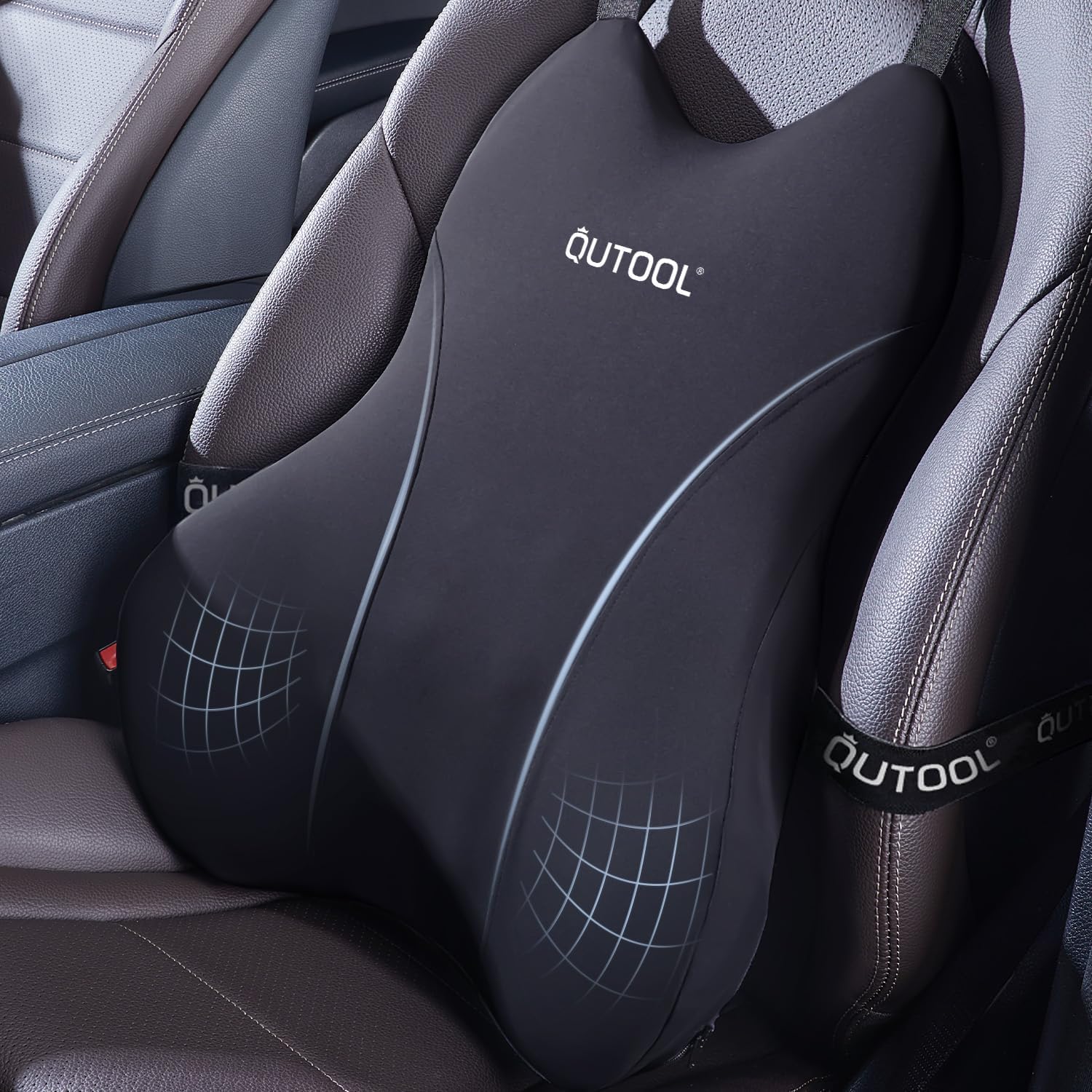
We recommend this if you want firm, low-profile lumbar support that stays put during drives.
Pros
- Feels supportive and molds to your lower back.
- Thin design fits most car seats without crowding.
- Removable cover cleans easily.
Cons
- Memory foam needs 24–48 hours to fully expand.
- Firmness may feel too stiff for very sensitive backs.
- Straps can slip on some seat materials.
We used this pillow on a week of commutes and short road trips. It gave steady support along the lumbar curve and reduced that slumping feeling after an hour behind the wheel.
The foam warmed and softened to our shape, so the contact felt personalized. The thin profile let us push the seat back farther without losing reach to the pedals or steering.
Attaching it was quick; the adjustable straps held well on cloth seats but required readjusting on smooth leather. The cover washed easily and kept the pillow looking fresh.
Overall, this is a practical choice for drivers who want firmer, space-saving lumbar support without a bulky cushion.
ComfiLife Gel Seat Cushion
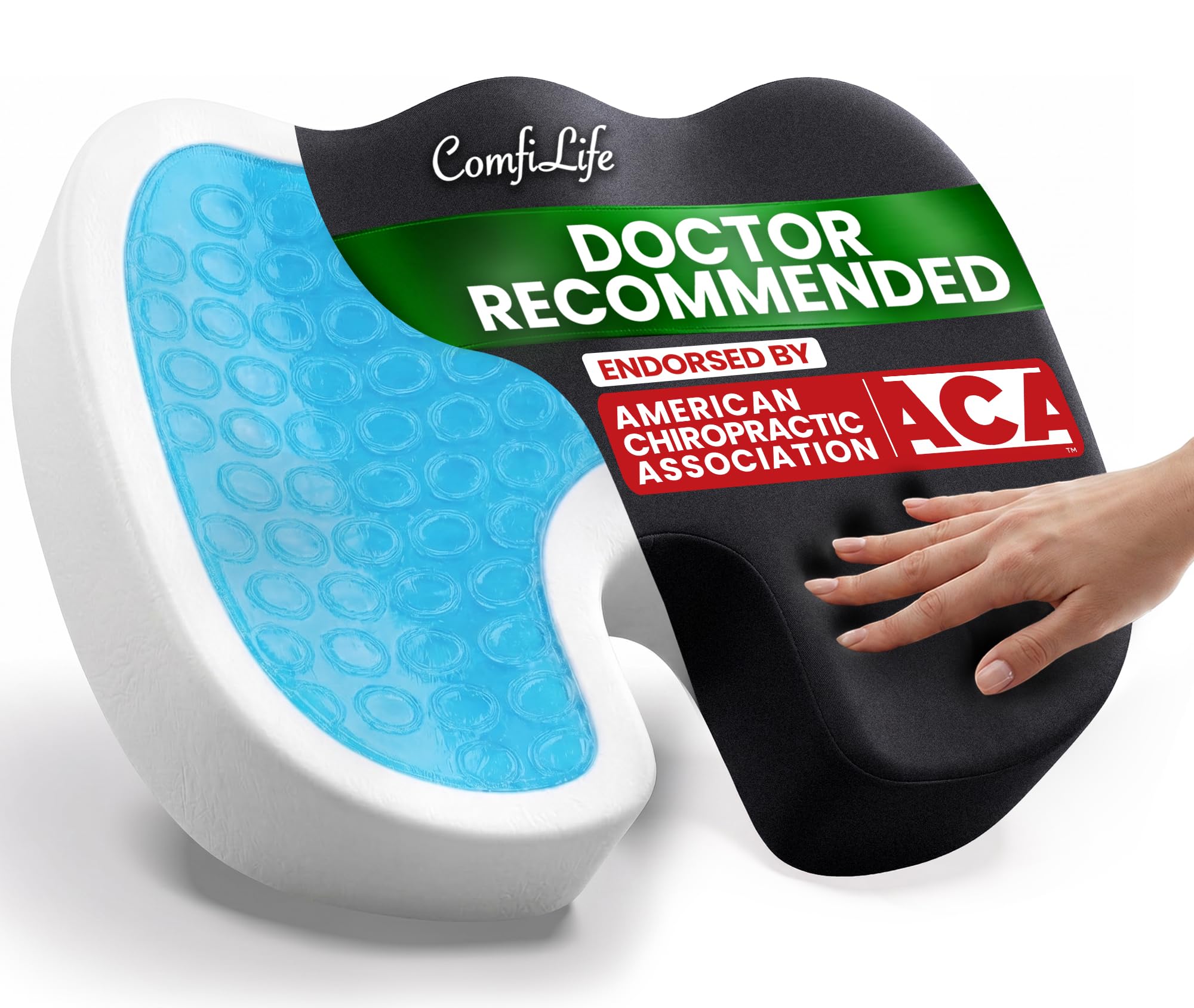
We recommend this cushion if you sit long hours and want firmer tailbone support with a cooling gel layer.
Pros
- Firm, cooling gel-memory foam that keeps shape over time
- U-shaped cutout helps reduce pressure on the tailbone
- Non-slip bottom and removable cover make it easy to use and clean
Cons
- Takes time to break in and conform to your shape
- Not a guaranteed fix for all sciatica or disc issues
- Larger size may shift on narrow car seats despite the rubber base
We used this cushion on long drives and daily office shifts. It felt supportive right away, with a cool top that helped on warm days.
I noticed the U-shaped cutout really kept pressure off my tailbone when I adjusted so the gap sat under it. Sitting for several hours felt less sharp in the low back compared to plain car seats.
The cover unzips and washes easily, which saved us on spills and sweat after road trips. The cushion stayed mostly put, though in a narrow bucket seat we had to reposition it once in a while.
Break-in mattered: after a week of regular use the foam softened to fit our shape better. It did not eliminate pain for every person we know, but it reduced pressure enough to make driving and desk work easier.
CushZone Seat + Lumbar Set

We recommend this set if you want softer support that eases lower back pressure during driving or long sits.
Pros
- Soft memory foam molds to your shape for quick relief.
- Non-slip base and straps keep cushions in place while we drive.
- Covers are removable and machine washable, easy to clean.
Cons
- Cushions are fairly thick and can raise seating height in smaller cars.
- Memory foam may feel warm on long summer drives.
- Fit can feel bulky in tight seats or vehicles with low headroom.
We used this set on daily commutes and road trips. The seat cushion eased pressure under our hips and the lumbar pillow filled the small gap behind our lower back. It felt noticeably gentler after a couple hours of driving.
Installing the pieces was fast. The strap on the lumbar support kept it from sliding, and the non-slip base mostly stopped shifting on leather seats. We did need to adjust seat height once because the combined thickness made our headroom snug in a compact car.
On hot days the foam held some heat, so we preferred short drives or open windows. Cleaning felt simple: unzip the covers and toss them in the washer. Overall, this set gave us reliable lower-back support for office chairs, cars, and travel when we wanted softer, form-fitting relief.
Buying Guide
We look for seats and accessories that support the natural curve of the lower back. Aim for firm lumbar support that fills the gap between your lower spine and the seat. Adjustable depth and height let us fit the support to our body.
We check seat angle and tilt controls next. A slight recline reduces pressure on discs, while a forward tilt can help some people. Look for seats that let us fine-tune these settings in small steps.
We want materials that balance comfort and firmness. Breathable fabric keeps us cool, and denser foam keeps support under pressure. Removable covers help with cleaning and longevity.
We consider adjustability features as essential. Height, lumbar height, lumbar firmness, and seat pan length should all be adjustable. The more custom fit we can achieve, the less strain we’ll place on the lower back.
We pay attention to build quality and warranty. Solid frames and durable adjustment mechanisms last longer. A clear warranty and good return policy protect us if the seat does not relieve pain as expected.
We use a simple checklist when choosing:
- Support type: lumbar pad, contoured cushion, or adjustable lumbar system
- Adjustability: height, depth, tilt, lumbar position
- Material: firm foam, breathable cover, washable
- Fit: matches our torso length and leg length
- Durability: strong frame, good warranty
We try items when possible and test them for at least 15–30 minutes in driving posture. Small differences in fit make big changes in comfort.
Editor’s Choice
We picked a seat setup that balances support, comfort, and ease of use for most drivers with lower back pain. This setup works well for short trips and longer drives when pain flare-ups are a risk.
We recommend a lumbar support set to medium firmness. Place it at the small of the back, where the spine naturally curves, so it fills the gap without pushing the pelvis forward.
Adjust the seat height so your hips sit slightly higher than your knees. That keeps pressure off the lower spine and helps your pelvis stay neutral.
Set the seatback recline between 100° and 110°. A slight recline reduces disc pressure while keeping you in control of the wheel.
Use a cushion only if needed. If you add one, choose a thin, firm cushion that doesn’t tilt your pelvis forward.
Quick checklist:
- Lumbar support: medium firmness, at small of back
- Seat height: hips slightly above knees
- Recline: 100°–110°
- Cushion: thin and firm if required
We tested this setup in common cars and found it reduced discomfort for most people during drives up to two hours. Adjustments should be small and gradual; stop if any change increases pain.
Conclusion
We can reduce lower back pain by setting the seat for good posture and comfort. Small changes to seat height, distance, and lumbar support make a big difference for many drivers.
We recommend placing the seat so knees are slightly lower than hips. That keeps the spine in a more neutral position and reduces strain on the lower back.
We suggest using firm lumbar support or a small cushion behind the lower back. It helps keep the natural curve of the spine and prevents slumping on long drives.
We advise tilting the seatback slightly backward (about 100–110 degrees). This spreads pressure along the spine and lowers stress on the lower discs.
We encourage taking breaks on long trips and doing simple stretches. Moving every hour and stretching the back and hips reduces stiffness and pain.
Quick checklist:
- Adjust seat height and distance for a slight knee bend.
- Use lumbar support or a small cushion.
- Tilt seatback 100–110 degrees.
- Keep steering wheel within easy reach.
- Take breaks and stretch often.
We believe these steps will help most drivers feel better while driving. If pain persists or worsens, we advise consulting a healthcare professional for a personalized plan.
FAQS
How should we set the seat to protect our lower back?
We sit with the seat back upright at about 100–110 degrees. We keep the seat close enough so our knees stay level with our hips and our wrists rest on the steering wheel.
Do we need lumbar support?
Yes. We use built-in lumbar support or a small cushion to fill the curve of our lower back. This keeps our spine aligned and reduces strain.
What about seat height and distance?
We raise the seat so we have a clear view and can press pedals without locking our knees. We move the seat forward until our hands reach the steering wheel with a slight bend in the elbows.
Should we recline for long drives?
A small recline helps for comfort, but too much recline can increase pressure on the lumbar discs. We keep recline moderate and take breaks every 60–90 minutes.
Can seat cushions or wedges help?
They can. We choose firm, supportive cushions that maintain natural spine curve. We avoid overly soft pads that let us sink.
How do we combine seat position with posture and breaks?
Good seat position helps, but we also sit tall and avoid slouching. We stop, stretch, and walk briefly on long trips to relieve tension.
What if pain persists?
We consult a healthcare professional for tailored advice. Persistent pain may need specific treatment or exercises.