
Best Car Seat for Airport Travel: Compact, Lightweight Options for Stress-Free Flying

Traveling with kids means extra gear, and a car seat is one of the most important pieces. For airport travel, families need seats that are safe and FAA-compliant, but also lightweight, easy to carry, and quick to install in rental cars or taxis. A good travel car seat balances protection with portability so you can move through terminals and onto planes without hassle.
When choosing a car seat for airport travel, pay attention to weight, size, ease of installation, FAA approval, and how it folds or breaks down for carry-on or checked use. We focused on seats that are light enough to carry, simple to install without tools, and certified for use on aircraft, because those features make travel smoother and safer. We tested a range of models to find seats that meet real travel needs and explain why each one stands out.
Best Car Seats for Airport Travel
We tested and researched top car seats that make airport travel easier and safer. Our list focuses on lightweight, easy-to-carry models that install quickly and protect children during flights and during taxi or rental car rides.
Zhtangrui Car Seat Dolly
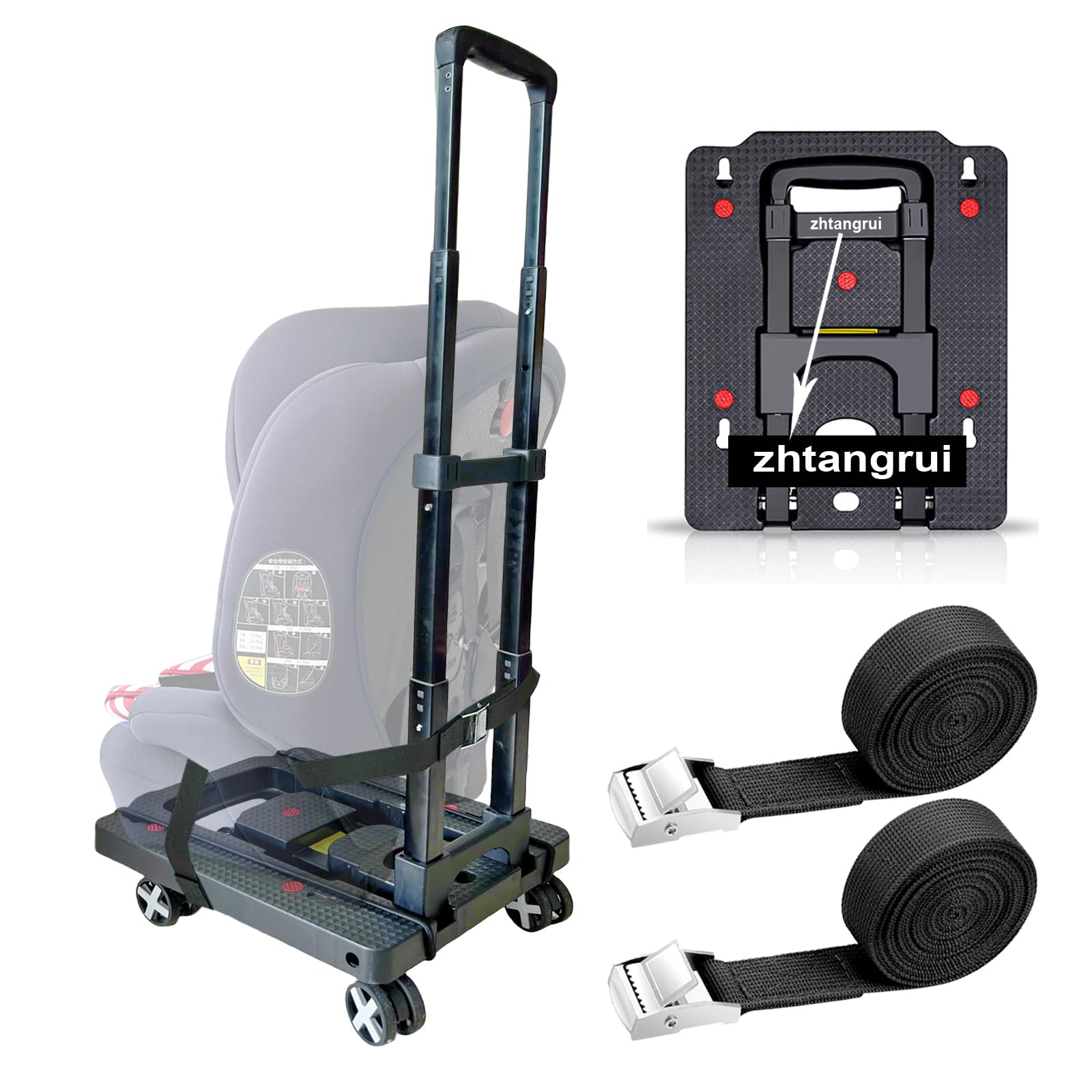
We recommend this dolly if you want to roll your car seat through airports instead of carrying it, because it’s light, folds small, and holds seats securely when strapped.
Pros
- Very lightweight and easy to fold for quick storage.
- Rolls smoothly and makes solo travel with a car seat much easier.
- Comes with straps and ratchets to secure the seat.
Cons
- Not all car seats fit — bottom must be flat and within size limits.
- Handle does not lock fully upright, so you must strap it to the seat.
- Requires careful strapping; one missed strap could make it unstable.
We used this on a recent trip with a toddler and the dolly paid for itself in convenience. Attaching the car seat took a minute once we learned to route the ratchet straps around the base and backrest. The wheels glide through terminals and through crowds better than lugging a heavy seat.
Our setup worked best on car seats with flat bottoms and enough clearance for the straps. We measured at home first and avoided the seats that sat too deep. Strapping the handle to the seat kept it steady since the tow bar doesn’t lock fully vertical.
Folding and unfolding took seconds and the whole unit fit under our stroller and in overhead bins on some flights. We removed the car seat before boarding to avoid blocking the aisle. For everyday use, the dolly doubled as a small hand truck for groceries and boxes, which felt like a useful bonus.
If you travel often and your car seat fits the required shape and width, this dolly makes airport travel much simpler and lighter. If your seat is an odd shape or wider than the allowed size, measure first or pick a different system.
Britax Travel Cart

We recommend this if you want a sturdy, compact way to wheel a harnessed car seat through airports without lifting it.
Pros
- Folds small enough to toss in many overhead bins.
- Solid steel frame and smooth wheels for easy rolling.
- Attaches with LATCH so the seat feels secure.
Cons
- Heavier than a stroller or soft carrier.
- Works best at walking pace, not for long hikes through terminals.
- Some non-Britax seats need fiddling to fit snugly.
We used the Britax travel cart on a recent trip and found it saved our arms and kept the car seat clean. It clipped onto our convertible seat quickly with the LATCH hooks and stayed steady as we walked through security lines.
The handle adjusted with one hand and felt stable at both heights. The wheels rolled well over tile and the raised platform kept the seat off the floor when we stopped to regroup or grab snacks.
Folding it for the plane was surprisingly easy and compact. It felt heavier than a fabric carrier, but having our child seated and harnessed meant we didn’t need to wrestle them or hold the seat the whole time.
YOREPEK Car Seat Travel Backpack

We recommend this if you want an affordable, hands-free car seat bag that protects seats during flights and is easy to carry.
Pros
- Easy to wear as a backpack so hands stay free.
- Water-resistant material shields against dirt and scrapes.
- Folds flat for simple storage between trips.
Cons
- Padding is light in places; extra foam may be needed for checked baggage.
- Not large enough for some bulky or unusual car seat models.
- No wheels, so pulling through terminals can be tiring.
We used this on several airport runs and liked the backpack straps. Carrying a Graco and a Chicco through busy gates felt much easier with the padded straps and waist belt securing the load.
The bag kept seats clean and dry after being gate-checked and banged around a bit. The material feels sturdy and the dual zippers made loading quick. Side mesh pockets held small items like wipes and a pacifier, which helped when juggling toddlers.
We noticed the front lacks heavy padding, so we added foam sheets for long checked flights. That fixed our worry about heavy handling by baggage crews. The fit was snug for most seats we tried, but it did not fit larger models like some UPPABABY or Evenflo 360 styles.
Overall, we found this to be a practical, budget-friendly option for parents who need a reliable travel bag that makes airport moves simpler and keeps a car seat clean between flights.
WAYB Pico Travel Car Seat

We recommend the WAYB Pico if you want a truly lightweight, foldable car seat that’s easy to carry through airports and toss into overhead bins.
Pros
- Extremely light and easy to carry
- Folds small to fit overhead bins
- Feels solid and well made in real use
Cons
- Forward-facing only, so not for infants
- Child sits lower, which some kids dislike
- Higher price than basic travel seats
We used the Pico on two flights and several rideshares. Carrying it through security felt effortless compared to bulky seats we’ve had before.
Installation in cars and taxis was quick. The frame felt sturdy and the fabric stayed cool on warm days.
On the airplane, it fit in the overhead bin when folded, but our child seemed a bit lower than usual and fussed at first. Overall, it saved time and stress when we traveled.
BubbleBum Inflatable Booster
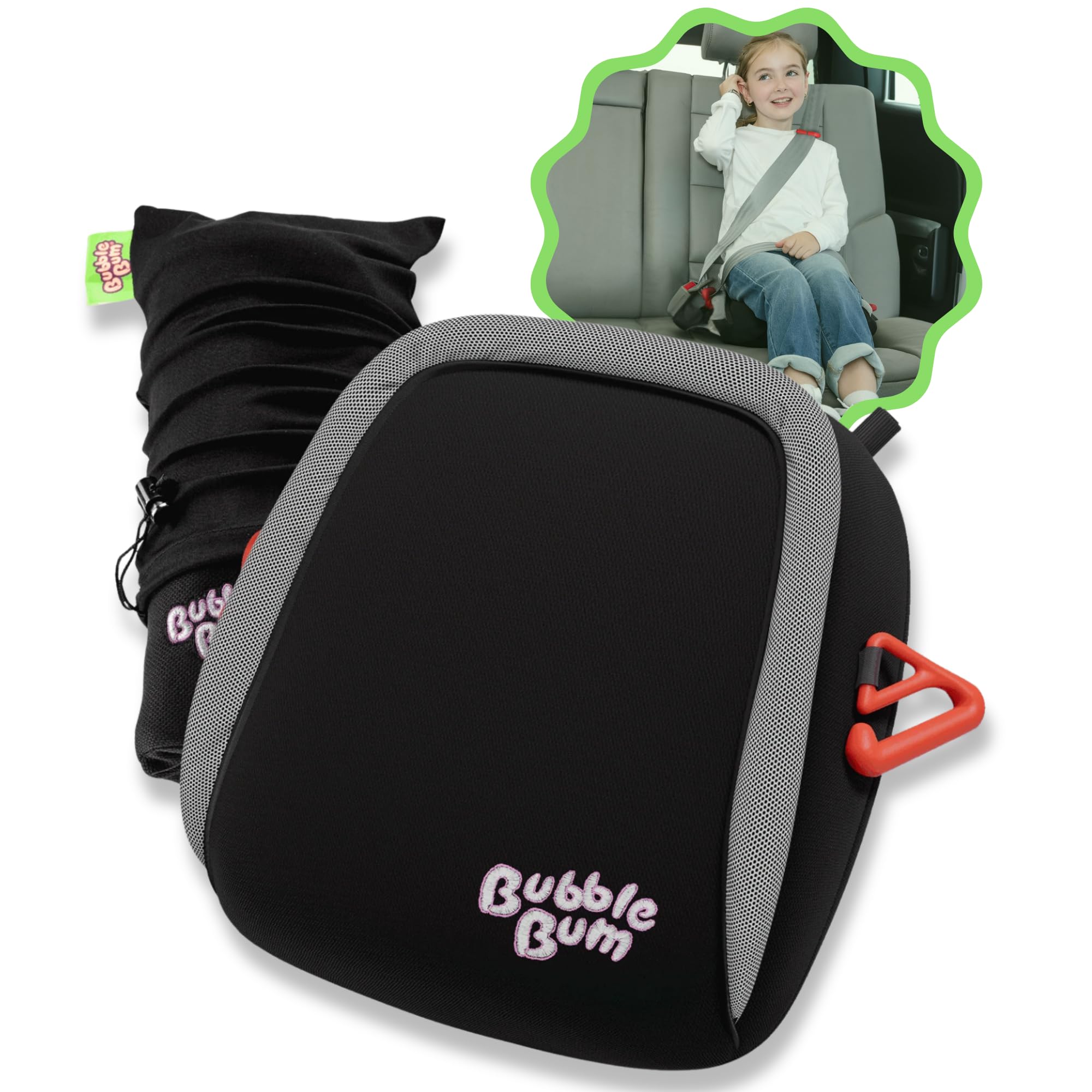
We recommend this if you need a truly portable booster that saves space and still meets safety standards.
Pros
- Packs down tiny for flights and rentals
- Soft, comfy ride for kids on long trips
- Fits three across in small back seats
Cons
- Needs inflation and occasional re-seating
- Not as sturdy-feeling as rigid boosters
- Best for short to medium trips, not full-time daily use
We used the BubbleBum on a recent trip and liked how it slipped into our carry-on. Pulling it out at curbside pickup was fast, and inflating took only a minute. Our kid stayed comfortable on a two-hour drive with less squirming than usual.
Installation felt straightforward in a rental car. We threaded the seat belt over the cushion and checked the fit; it rode well with the car’s belt. The light weight made it easy to move between vehicles and toss into a stroller basket when not in use.
One downside: we topped up the air once during a long day of travel. It never caused a major problem, but it reminded us this is not as rock-solid as a hard booster. For families who fly a lot or use rideshares, this is a handy, certified option that cuts the bulk without giving up basic safety.
J.L. Childress Gate Check Bag
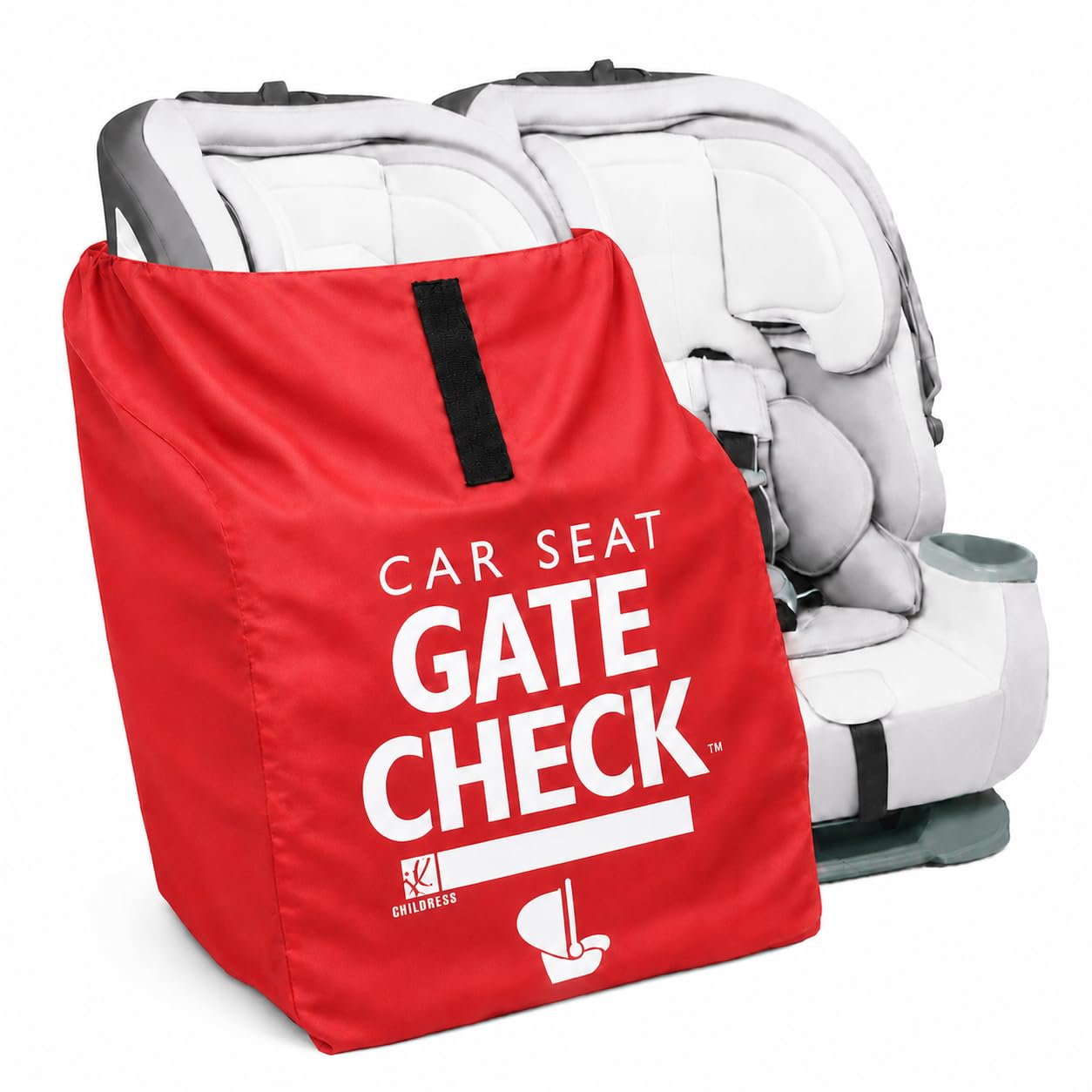
We recommend this bag if you want a simple, airline-friendly way to keep a car seat clean and easy to spot at the gate.
Pros
- Fits virtually any car seat and packs down small.
- Bright color and big ID box make it easy to find.
- Built-in pouch and handle speed packing and carrying.
Cons
- Material feels thin and can wear after many trips.
- Handles and straps can feel flimsy with heavy tugging.
- Not a hard-shell option—offers surface protection only.
We used this bag on several short flights and appreciated how quickly we could gate-check a car seat. The red fabric and large GATE CHECK letters made the seat easy to spot on the jetway, which saved time and stress when boarding or collecting it.
Unfolding and refolding took seconds thanks to the sewn-in pouch. The handle helped haul the seat through the airport, and the drawstring closure kept dirt off the seat. An added AirTag pocket gave us peace of mind tracking the bag during travel.
After a few trips the fabric showed wear where airport crews handled it most. The bag still protected the seat itself, but we noticed small tears and stretched handles on heavier use. For routine family travel this bag does the job; for repeated international trips we would consider a sturdier soft case or a reinforced option.
Graco Contender Slim

We recommend this seat if you need a lightweight, FAA-approved convertible car seat that saves space and is easy to move between cars and planes.
Pros
- Very light and easy to carry through airports and between vehicles.
- Slim profile fits better when we need two seats side-by-side.
- Simple harness/headrest adjustment grows with our child.
Cons
- Takes up more room than an infant-only shell in very small cars.
- Padding is good but not the plushest for long hauls.
- Only two recline positions can limit fit on uneven seats.
We used this seat on a recent trip and liked how small and light it felt at the gate. Carrying it through the airport was easy, and installing it in the rental car took just a few minutes.
Switching from rear- to forward-facing was smooth because the harness and headrest move together. That saved us time between legs of travel and kept our child comfortable.
On the plane, the certification gave us peace of mind. The seat fits a standard airplane seat without much fuss, though in very tight rows the slim design helps more than it fully solves space issues.
Overall, it balanced travel convenience and safety in real use. We found it fits most family travel needs when we want a convertible seat that’s simple to move and adjust.
Hiccapop UberBoost Inflatable Booster
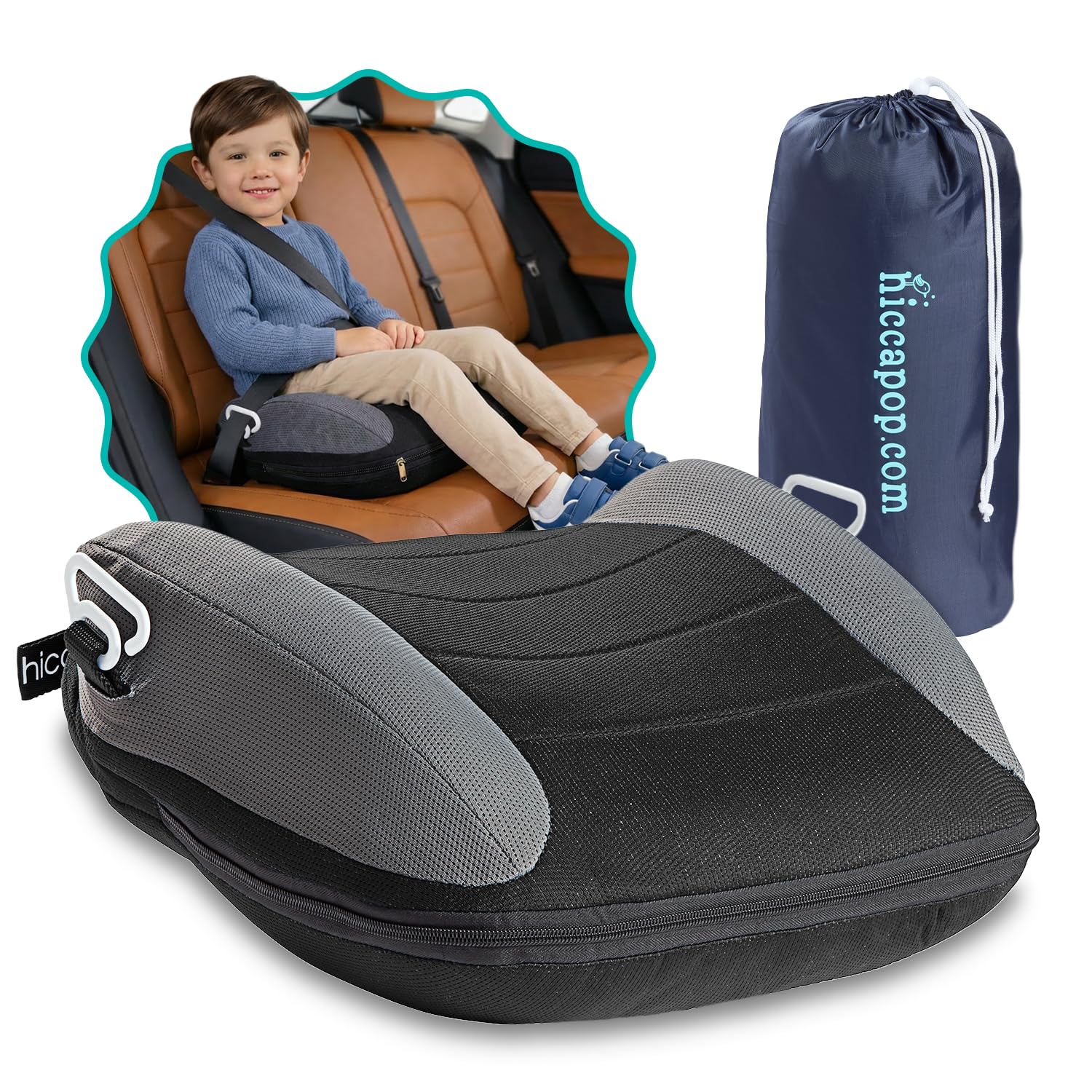
We recommend this if you need a very compact, light booster for rental cars, taxis, and airplane trips because it packs small and inflates fast.
Pros
- Very lightweight and fits in a carry-on.
- Inflates in under 20 seconds with a few breaths.
- Narrow design helps fit three across small back seats.
Cons
- Not as rigid as a full booster in a crash.
- Can slowly lose air after repeated use.
- No high back or head support for naps on flights.
We took the UberBoost on several trips and liked how little space it used in our luggage. It felt comfy for short rides and made seatbelt positioning simple with the clips. Carrying it between airports and rideshares was easy and low effort.
Setting it up was quick. A few breaths and the seat was ready; tucking it into its bag was just as fast. The non-skid base held steady on leather and cloth, and it kept our child sitting in the right spot without wrestling with straps.
We did notice some loss of firmness after a couple of days of constant use, so we topped it up before longer drives. For long highway trips or kids who fall asleep upright, a full booster with a high back still feels safer. Overall, this worked well for travel where light weight and packability matter most.
mifold Comfort Grab-and-Go Booster

We recommend this for travelers who need a tiny, packable booster that makes ride-share and airport transfers simple.
Pros
- Extremely compact and easy to stuff in a backpack or carry-on.
- Low weight makes it simple to lift through airports and into taxis.
- Good belt positioning for smaller kids without raising them in the seat.
Cons
- Not as comfortable for long drives despite the added cushion.
- Backless design gives less support than full boosters.
- Narrow size may feel tight for larger children.
We used the mifold on a recent trip and kept it in our daypack for airport pickups. It slipped into a small tote and weighed almost nothing when we carried kids, bags, and boarding passes through terminals.
Putting it on takes seconds — we pulled the seat belt down to the child and snapped the shoulder guide in place. The belt sat lower across the hip and shoulder the way it should for a short taxi ride or carpool.
On a longer drive our child complained after about 30–40 minutes. The compact cushion helps, but the seat is still firm and the lack of a back means less side support. For flights, tight cars, and quick hops it shines; for daily long trips we would pick a fuller booster.
The mifold fits in cars with normal 3-point belts and needs no installation tools. We liked how it freed up trunk space and cut the stress of finding car seats at our destination.
Pick this if you travel often and need a legal, portable booster that stashes easily. If you want extra padding or a high-back boost for long rides, consider a different seat.
Doona Car Seat & Stroller (Nitro Black)
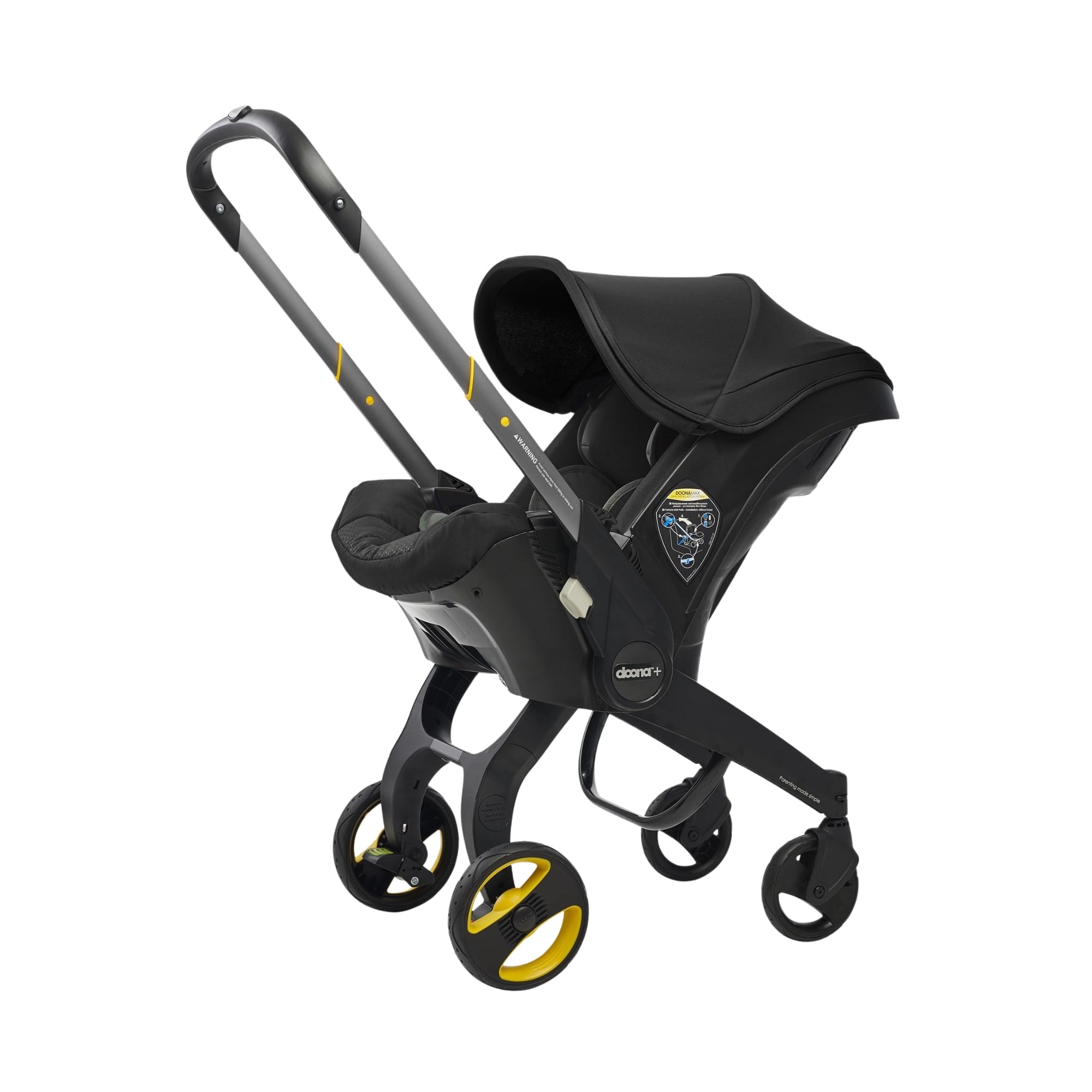
We recommend this if you want one compact item that turns from a car seat into a stroller quickly and works well for airport travel.
Pros
- Converts to stroller in seconds, so you move through gates fast.
- FAA approved and solid safety features for peace of mind.
- Easy to fold and carry; saves time hauling separate gear.
Cons
- Heavier than many infant-only car seats when carried long distances.
- Rear-facing only, so you outgrow it sooner than convertible seats.
- Price is higher than standard infant seats.
We used the Doona on a recent trip and appreciated not juggling a car seat plus a bulky stroller. Bringing our baby from curb to gate felt smoother because the wheels pop out instantly and the handle gives a secure grip.
Security felt reassuring. The anti-rebound bar and side protection felt solid, and installing it on a plane or car was straightforward. We liked that the material cleaned easily after a messy airport snack.
Carrying it through terminals was mixed. The folded package is tidy, but at about 17 pounds it becomes tiring for long walks. Still, swapping between car and stroller without waking our child made the weight worth it on short trips.
Buying Guide
We look for lightweight, compact car seats that fit plane seats and car seats easily. Weight under 15 pounds and a slim profile make carrying and storing simpler.
We check safety features first. Look for a five-point harness, side-impact protection, and clear crash-test information. Ease of installation is crucial; LATCH and simple belt routing save time.
We value comfort for long waits and flights. Padded cushions, breathable fabric, and adjustable recline help children stay calm. Removable, washable covers make cleanup quick.
We consider airport handling features. A built-in handle or folding design helps when we carry a child and luggage. A car-seat travel bag or cover protects fabric and makes security screening smoother.
We compare size and fit for airplane seats. Measure the seat base width and height before travel. Confirm that the seat can be installed on an airplane using the aircraft seat belt method.
We pay attention to age and weight limits. Match the seat to the child’s current size and choose one that can grow with them. Adjustable harness heights and multiple recline positions extend usable time.
We inspect build quality and materials. Durable plastics, solid buckles, and corrosion-resistant hardware last through frequent travel. Check for clear labels and simple user manuals.
We weigh portability against features. Sometimes a slightly heavier seat offers better safety or comfort, but we prioritize what matters most for our trips.
Editor’s Choice
We picked the Nuna PIPA 2024 as our top choice for airport travel. It balances light weight, fast install, and a compact footprint that fits tight airplane aisles and busy terminals.
We value easy carry. The PIPA weighs under 10 pounds and has a strong, comfortable handle so we can move through security and to the gate without extra strain.
Installation speed matters to us when time is tight. The PIPA clicks into its base in seconds and also installs with a seat belt when the base isn’t available. That gives us options at small regional airports or on last‑minute trips.
We also looked at safety and comfort. The PIPA uses high‑quality side impact protection and a removable infant insert so babies ride snugly and parents stay calm. Fabric cleans easily, which we appreciate after spilled snacks or travel messes.
Key features at a glance:
- Weight: ~9–10 lbs
- Carry: Ergonomic handle for single‑handed carry
- Install: LATCH base + belt install
- Extras: Removable insert, easy‑clean fabric
We recommend the PIPA when you need a reliable, portable car seat for flying and quick transitions. It saves time and reduces hassle, which makes travel smoother for both parents and infants.
Conclusion
We chose seats that balance safety, portability, and ease of use for airport travel. Our picks work for different budgets and travel styles, so you can find one that fits your needs.
We recommend checking weight, folding size, and installation steps before buying. These three details affect how easy the seat will be to carry and use in busy terminals.
We suggest practicing installation at home and timing how long it takes. That reduces stress at the gate and helps keep travel smooth.
We remind you to confirm airline rules and TSA procedures before travel. Rules change, and a quick check saves time and avoids surprises.
Key quick checklist:
- Weight and folded size
- Ease of installation
- Safety ratings and fit for your child
- Airline and TSA policies
We stand by picks that make moving through airports simpler while keeping children secure. Choose the seat that fits your routine, and test it before you leave.
FAQS
What type of car seat works best for airport travel?
We prefer lightweight, compact seats that are easy to carry and install. Convertible or booster seats with a travel bag also make moving through the airport simpler.
Can we check a car seat at the gate or should we carry it onboard?
We recommend bringing a car seat onboard for young children when possible. If gate checking, use a protective bag and check the airline’s rules ahead of time.
Are car seats allowed on airplanes?
Yes. Most airlines allow FAA-approved child restraint systems. We always look for the FAA approval label when buying a seat for flying.
How do we carry a car seat through the airport?
We suggest a wheeled travel bag, a shoulder strap, or a backpack-style carrier. These options free our hands and reduce strain.
Do we need to buy a special travel car seat?
Not always. Many regular seats work fine if they are lightweight and FAA-approved. Travel-specific seats add convenience but cost more.
How do we keep a car seat clean during travel?
We bring removable covers or protective liners and a small sanitizer spray. Wiping down surfaces after each use helps reduce germs.
Is rental of car seats at our destination safe?
We avoid rentals unless the provider is certified and the seat shows no damage. Used or unknown-history seats pose safety risks.