Battery Voltage to Start Car
Understanding the right battery voltage to start car engines is essential for reliable performance. Most cars need at least 12.6 volts when off and 9.6–10 volts while cranking. Low voltage can prevent starting, so regular checks help avoid breakdowns.
Starting your car might seem as simple as turning the key or pressing a button, but behind that smooth ignition lies a critical electrical process powered by your vehicle’s battery. At the heart of this process is **battery voltage to start car** engines—a factor that many drivers overlook until they’re stranded in a parking lot with a silent engine. Whether you’re a daily commuter or a weekend road-tripper, understanding how voltage impacts your car’s ability to start can save you time, money, and stress.
Your car battery isn’t just a power source; it’s the spark that brings your engine to life. When you turn the ignition, the battery sends a surge of electricity to the starter motor, which cranks the engine. This momentary demand requires a specific voltage range to function properly. If the voltage is too low, the starter won’t get enough power, and the engine won’t turn over. That’s why knowing the ideal voltage levels—both at rest and during cranking—is essential for maintaining reliable vehicle performance.
In this guide, we’ll break down everything you need to know about battery voltage and car starting. From understanding what numbers mean on your multimeter to recognizing warning signs of a weak battery, you’ll gain practical knowledge to keep your car running smoothly. We’ll also cover how temperature, age, and charging systems affect voltage, plus tips for testing and maintaining your battery. Whether you’re troubleshooting a no-start issue or just want to stay ahead of problems, this article will equip you with the insights you need.
In This Article
- 1 Key Takeaways
- 2 📑 Table of Contents
- 3 What Is Battery Voltage and Why Does It Matter?
- 4 Ideal Battery Voltage Levels for Starting a Car
- 5 Factors That Affect Battery Voltage and Starting Performance
- 6 How to Test Battery Voltage at Home
- 7 When to Replace Your Car Battery
- 8 Conclusion
- 9 Frequently Asked Questions
Key Takeaways
- Minimum Voltage to Start: A car typically needs at least 9.6 to 10 volts while cranking to start successfully. Below this, the engine may fail to turn over.
- Resting Voltage Matters: A fully charged battery reads around 12.6 volts when the car is off. Anything below 12.4 volts suggests a partial charge or potential issues.
- Cranking Voltage Drops: During startup, voltage can dip to 9.6–11 volts. If it falls below 9 volts, the battery may be weak or failing.
- Temperature Affects Performance: Cold weather reduces battery efficiency, requiring higher voltage to start. In freezing temps, a battery with 12.4 volts may struggle.
- Regular Testing Prevents Failures: Use a multimeter or voltmeter monthly to check voltage. Early detection of low voltage helps avoid being stranded.
- Charging Systems Play a Role: Even with good voltage, a faulty alternator or loose connections can prevent proper charging and starting.
- Replace Before It Fails: Batteries last 3–5 years. Monitor voltage trends and replace proactively to avoid sudden failure.
📑 Table of Contents
What Is Battery Voltage and Why Does It Matter?
Battery voltage refers to the electrical potential difference between the positive and negative terminals of a car battery. It’s measured in volts (V) and indicates how much energy the battery can deliver. In automotive terms, most passenger vehicles use a 12-volt electrical system, meaning the battery is designed to operate around that level. However, the actual voltage can vary depending on the battery’s state of charge, age, temperature, and whether the engine is running.
Why does this matter? Because every electrical component in your car—from the starter motor to the headlights—relies on consistent voltage to function. When you attempt to start your car, the starter motor demands a significant amount of power in a very short time. This surge can cause voltage to drop temporarily, and if the battery can’t maintain a sufficient level, the engine won’t crank. Think of it like trying to run a marathon on an empty stomach—your body (or battery) just doesn’t have the energy to perform at peak levels.
For example, imagine you’re heading out early on a cold winter morning. You get in the car, turn the key, and hear a slow, labored clicking sound. The engine turns over weakly, if at all. This is often a sign that the battery voltage has dropped too low to deliver the necessary power. In such cases, the battery might read 12.2 volts at rest—technically not dead—but under load, it can’t sustain the voltage needed for starting. That’s why understanding not just resting voltage but also cranking voltage is crucial.
How Voltage Powers the Starting System
The starting system in your car is a coordinated effort between several components: the battery, starter motor, ignition switch, and solenoid. When you turn the key, the ignition switch sends a signal to the solenoid, which then connects the battery directly to the starter motor. This creates a high-current circuit that spins the starter gear, which engages with the engine’s flywheel to turn the crankshaft.
This entire process happens in seconds, but it requires a burst of electricity that can draw up to 300–600 amps from the battery. To deliver that kind of power, the battery must maintain a minimum voltage threshold. If the voltage drops too low during this surge, the starter motor won’t spin fast enough to ignite the engine. That’s why even a slightly undercharged battery can cause starting problems, especially in cold weather when chemical reactions in the battery slow down.
The Role of Voltage in Modern Vehicles
Modern cars come equipped with advanced electronics—infotainment systems, sensors, climate control, and more—that place additional demands on the battery. Even when the engine is off, these systems can slowly drain the battery over time. This parasitic drain can reduce resting voltage, making it harder to start the car after it’s been sitting for a few days.
Additionally, many newer vehicles use start-stop technology, which automatically shuts off the engine at red lights to save fuel. This means the battery must restart the engine frequently, placing repeated stress on the electrical system. In such cases, maintaining optimal voltage is even more critical. A battery that struggles to hold voltage may not perform well in these conditions, leading to premature failure.
Ideal Battery Voltage Levels for Starting a Car
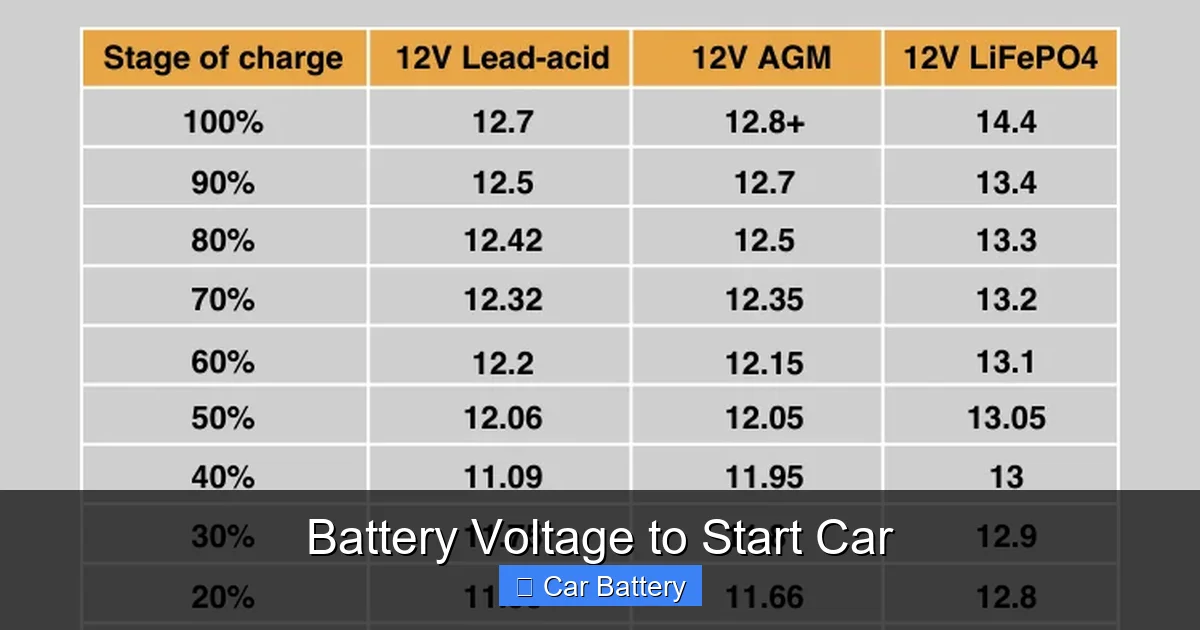
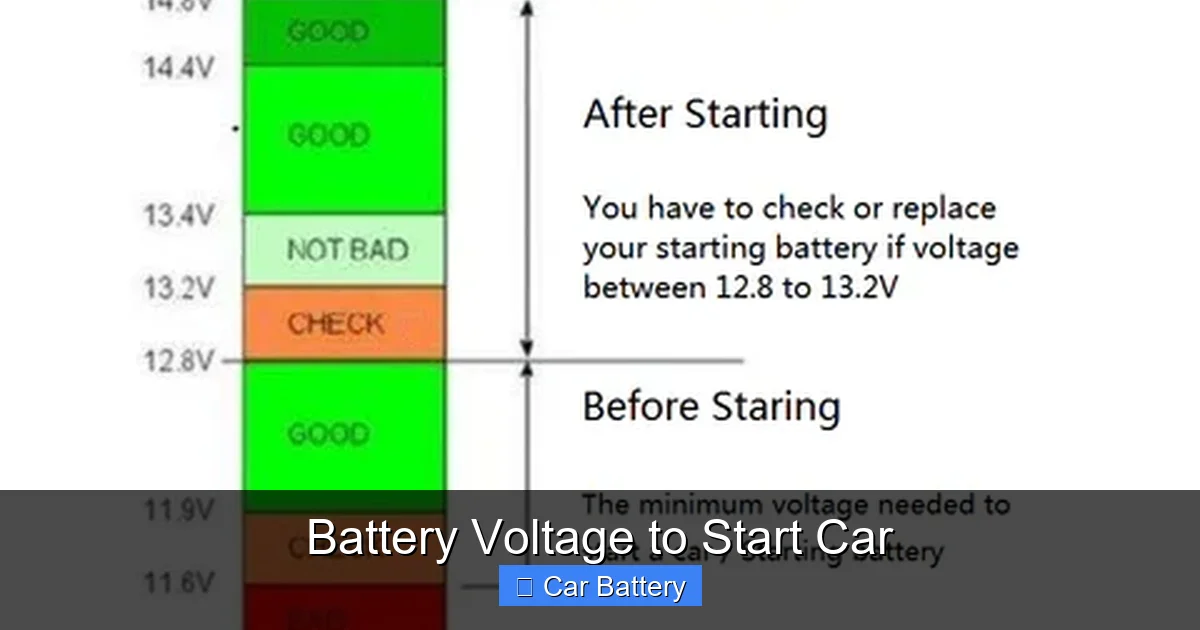
Visual guide about Battery Voltage to Start Car
Image source: batteryglobe.com
Knowing the ideal voltage levels for your car battery can help you assess its health and starting capability. These levels vary depending on whether the engine is off, cranking, or running. Let’s break down what each voltage reading means and how it relates to your car’s ability to start.
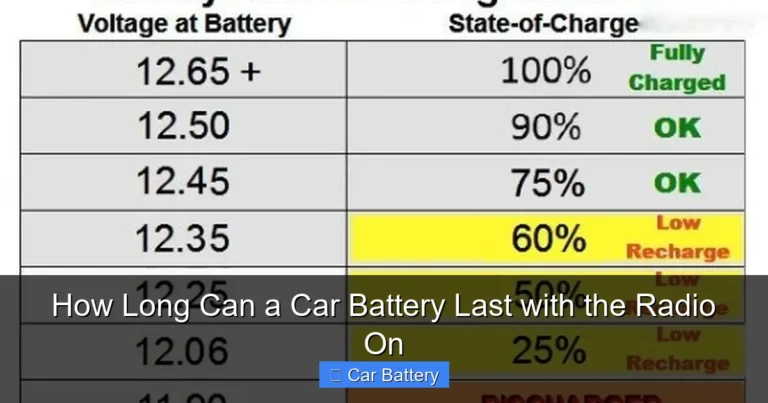
When the engine is off and the battery has had time to rest (at least an hour), a healthy, fully charged battery should read around 12.6 volts. This is the baseline for a good battery. If your multimeter shows 12.4 volts, the battery is about 75% charged. At 12.2 volts, it’s around 50% charged—still usable but not ideal. Anything below 12.0 volts indicates a significantly discharged battery, which may struggle to start the car.
Resting Voltage: The Starting Point
Resting voltage is the most reliable indicator of your battery’s overall charge. It’s measured when the car has been off for several hours and no accessories are drawing power. This gives the battery time to stabilize after any surface charge has dissipated. A reading of 12.6 volts means the battery is fully charged and ready to deliver peak performance. If you see 12.4 volts, the battery is still in decent shape but may benefit from a recharge, especially before a long trip or in cold weather.
For example, if you check your battery after leaving your car parked overnight and it reads 12.3 volts, it’s not a cause for panic—but it’s a signal to keep an eye on it. Over time, repeated low resting voltage can shorten the battery’s lifespan. It may also indicate a problem with the charging system, such as a failing alternator or a parasitic drain.
Cranking Voltage: The Real Test
While resting voltage is important, cranking voltage tells the real story of whether your battery can start the car. When you turn the ignition, the voltage will drop as the starter motor draws power. A healthy battery should maintain at least 9.6 to 10 volts during cranking. If the voltage drops below 9 volts, the battery is likely weak or failing.
Imagine this scenario: You turn the key, and the engine cranks slowly. You grab your multimeter and check the voltage while it’s cranking—it reads 8.7 volts. That’s a red flag. Even if the engine eventually starts, the low cranking voltage suggests the battery is struggling to deliver enough power. This can lead to repeated starting issues, especially in cold weather.
Running Voltage: Confirming the Charging System
Once the engine is running, the alternator takes over to recharge the battery and power the electrical system. At this point, the voltage should rise to between 13.7 and 14.7 volts. This range indicates that the alternator is working properly and the battery is being recharged. If the voltage is below 13.7 volts, the alternator may not be charging the battery effectively. If it’s above 14.7 volts, the battery could be overcharged, which can damage it over time.
For instance, if your car starts fine but the battery dies after a short drive, a low running voltage could be the culprit. The alternator isn’t replenishing the charge, so the battery slowly drains. This is common in older vehicles or those with electrical issues.
Factors That Affect Battery Voltage and Starting Performance
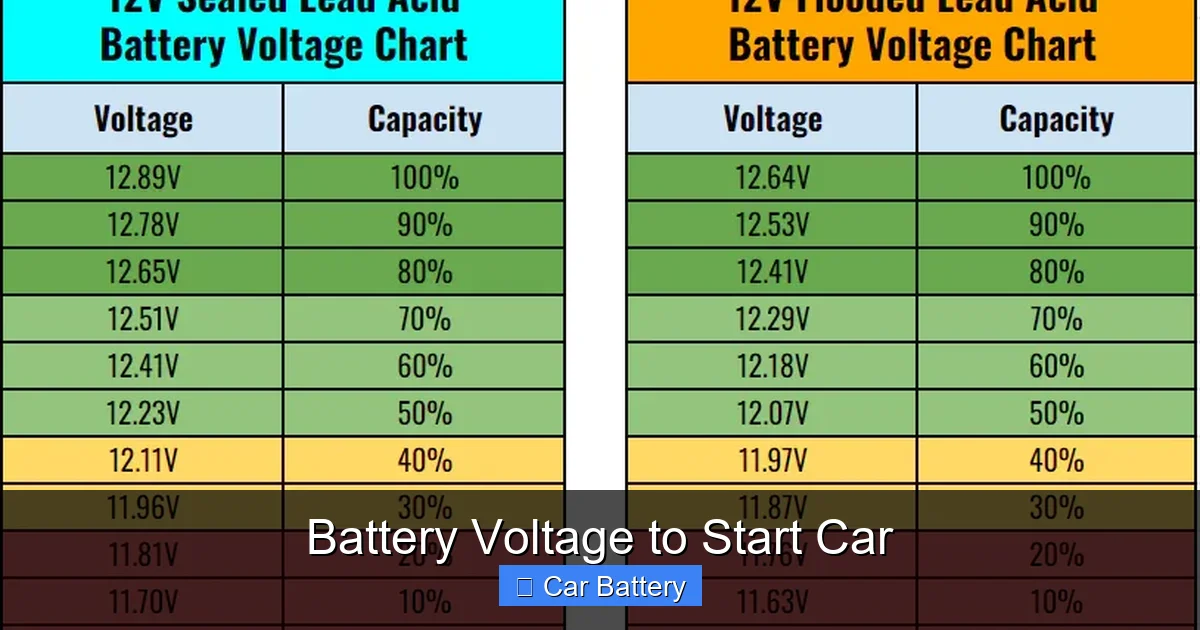
Visual guide about Battery Voltage to Start Car
Image source: cdn.shopify.com
Several factors can influence your battery’s voltage and its ability to start your car. Understanding these can help you prevent problems before they happen.
Temperature and Climate
Cold weather is one of the biggest enemies of battery performance. At temperatures below freezing, the chemical reactions inside the battery slow down, reducing its ability to deliver power. A battery that reads 12.4 volts at 70°F might only deliver the equivalent of 11.8 volts at 32°F. This is why many cars struggle to start on cold winter mornings.
In extreme cold, even a fully charged battery may not provide enough voltage to crank the engine. That’s why many drivers use battery blankets or park in garages during winter. Conversely, hot weather can accelerate battery degradation, causing plates to corrode and electrolyte to evaporate. Over time, this reduces the battery’s capacity and voltage output.
Battery Age and Condition
Car batteries typically last 3 to 5 years, depending on usage, climate, and maintenance. As a battery ages, its internal components wear out, reducing its ability to hold a charge. Sulfation—the buildup of lead sulfate crystals on the plates—can also occur, especially if the battery is frequently undercharged. This buildup reduces surface area and increases internal resistance, lowering voltage output.
For example, a 4-year-old battery might still show 12.5 volts at rest, but under load, it could drop to 8.5 volts—well below the threshold needed to start the car. Regular voltage checks can help you spot this decline early.
Electrical Load and Parasitic Drain
Modern cars have more electronics than ever, and many of them draw power even when the engine is off. Things like alarm systems, infotainment units, and onboard computers can create a parasitic drain. Over time, this can slowly deplete the battery, reducing resting voltage.
If you notice your car won’t start after sitting for a few days, even though it was fine when you parked it, parasitic drain could be the issue. A multimeter can help you measure the current draw when the car is off. A normal draw is usually less than 50 milliamps. Anything higher may indicate a problem.
Corroded or Loose Connections
Even with a fully charged battery, poor connections can prevent voltage from reaching the starter. Corrosion on the terminals—often appearing as a white or green powder—can act as an insulator, blocking the flow of electricity. Loose cables can also cause intermittent contact, leading to voltage drops.
Regularly inspecting and cleaning the battery terminals can prevent these issues. Use a wire brush and a mixture of baking soda and water to remove corrosion, then tighten the connections securely.
How to Test Battery Voltage at Home
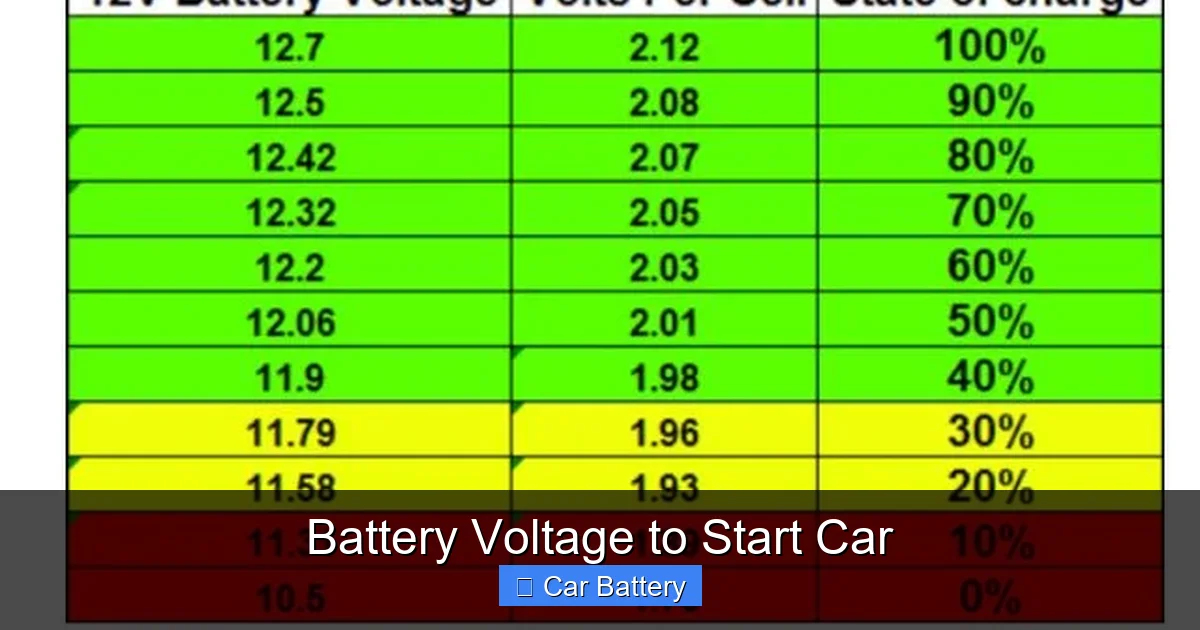
Visual guide about Battery Voltage to Start Car
Image source: i.pinimg.com
Testing your car battery’s voltage is simple and only requires a few tools. A digital multimeter is the most common and affordable option, available at most auto parts stores for under $20. Here’s how to do it safely and accurately.
Step-by-Step Voltage Testing
1. **Turn off the engine and all accessories.** Make sure the car is off, the key is removed, and no lights, radio, or other electronics are running.
2. **Wait at least one hour.** This allows the battery to rest and surface charge to dissipate, giving you an accurate resting voltage reading.
3. **Set your multimeter to DC voltage (20V range).** Most car batteries are 12-volt systems, so the 20V setting is ideal.
4. **Connect the probes.** Touch the red probe to the positive terminal (+) and the black probe to the negative terminal (–). Make sure the connections are secure.
5. **Read the display.** A healthy battery should read between 12.4 and 12.6 volts. Anything below 12.0 volts indicates a low charge.
Testing Cranking Voltage
To test voltage while cranking, you’ll need a helper. With the multimeter connected as above, have someone turn the ignition while you watch the display. The voltage will drop during cranking—this is normal. But if it falls below 9.6 volts, the battery may be weak.
Interpreting the Results
– **12.6V or higher:** Fully charged and in good condition.
– **12.4V:** About 75% charged—still usable but consider recharging.
– **12.2V:** Around 50% charged—monitor closely.
– **12.0V or lower:** Significantly discharged—recharge or replace soon.
– **Below 9.6V during cranking:** Likely a weak or failing battery.
When to Replace Your Car Battery
Even with regular voltage checks, batteries eventually wear out. Knowing when to replace yours can prevent unexpected breakdowns.
Signs of a Failing Battery
– Slow engine cranking
– Dim headlights or interior lights
– Clicking sound when turning the key
– Battery warning light on the dashboard
– Swollen or bloated battery case
– Age over 3–5 years
Proactive Replacement Tips
Don’t wait for a no-start situation. If your battery is over 3 years old and showing signs of weakness, consider replacing it before winter or a long trip. Many auto shops offer free battery testing, which can give you peace of mind.
Conclusion
Understanding **battery voltage to start car** engines is a simple yet powerful way to maintain your vehicle’s reliability. From knowing the ideal resting and cranking voltages to recognizing the impact of temperature and age, this knowledge empowers you to take control of your car’s health. Regular testing, proper maintenance, and timely replacement can save you from the frustration of a dead battery and the cost of emergency repairs.
By keeping an eye on your battery’s voltage, you’re not just preventing breakdowns—you’re ensuring that every drive starts smoothly, no matter the weather or distance. So grab a multimeter, check your battery today, and drive with confidence.
Frequently Asked Questions
What voltage is too low to start a car?
A battery voltage below 9.6 volts during cranking is generally too low to start most cars. If the voltage drops below 9 volts, the starter motor likely won’t receive enough power to turn the engine over.
Can a car start with 11 volts?
Yes, a car can start with 11 volts if that’s the resting voltage, as it indicates a partial charge. However, if the voltage drops below 9.6 volts while cranking, the battery may not provide enough power to start the engine reliably.
How often should I check my car battery voltage?
It’s a good idea to check your battery voltage monthly, especially during extreme temperatures or if your car sits unused for long periods. Regular checks help catch issues early.
Does cold weather affect battery voltage?
Yes, cold weather reduces battery efficiency by slowing chemical reactions. A battery that reads 12.4 volts at room temperature may perform like a weaker battery in freezing conditions.
Can a bad alternator cause low battery voltage?
Yes, a faulty alternator won’t recharge the battery while driving, leading to gradually decreasing voltage. If your battery voltage is low even after driving, the alternator may be the problem.
Is 12.2 volts OK for a car battery?
12.2 volts indicates the battery is about 50% charged. It may still start the car in mild conditions, but it’s a sign the battery needs recharging or may be nearing the end of its life.