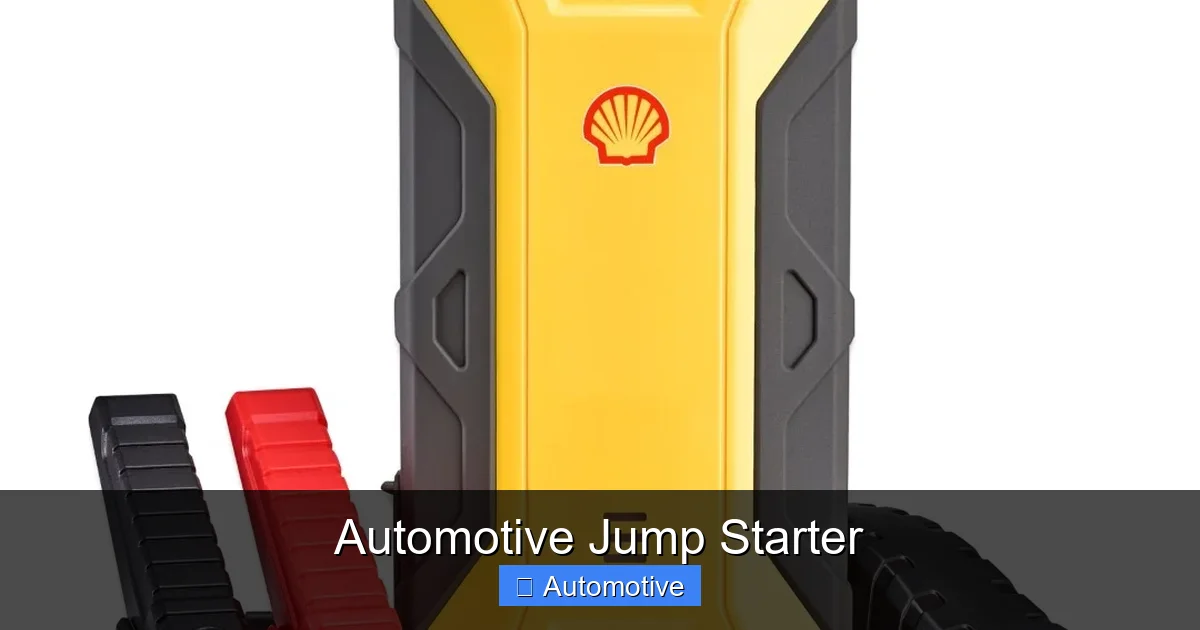
Automotive Jump Starter

Contents

Car Body Cover

Tire Pressure Monitoring System (TPMS)

Car Floor Mats (Universal)
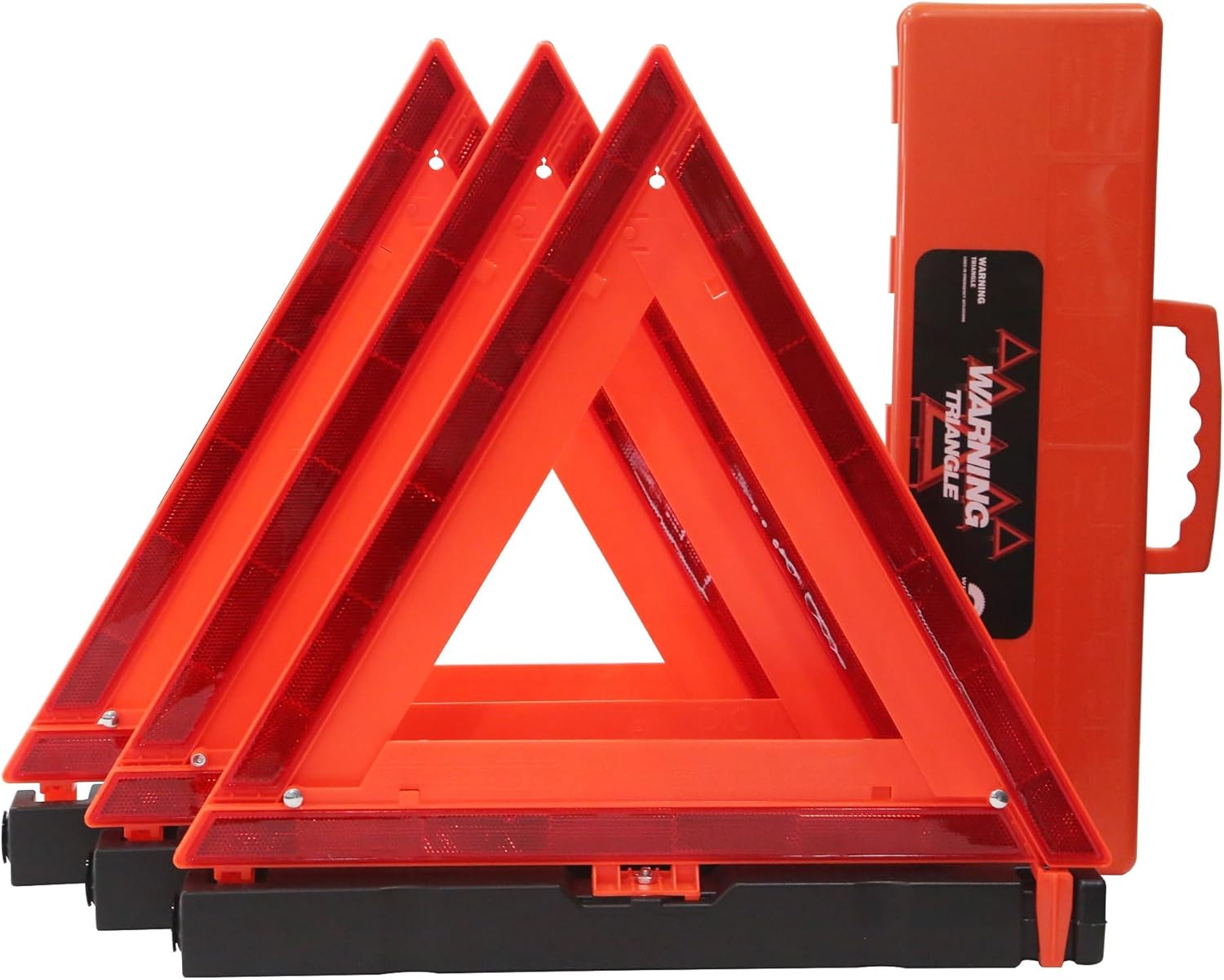
Reflective Safety Triangle
An automotive jump starter is a portable device that revives a dead car battery without needing another vehicle. It’s a must-have tool for emergencies, offering safety, convenience, and peace of mind on the road.
Imagine this: It’s a cold winter morning, you’re running late for work, and your car won’t start. The engine clicks, but nothing happens. You pop the hood, look at the battery, and realize—you’re stuck. Now picture this: You reach into your glove box, pull out a small, sleek device, connect the clamps, press a button, and your car roars to life. No waiting for help. No calling a tow truck. Just quick, quiet, and confident action.
That’s the power of an automotive jump starter.
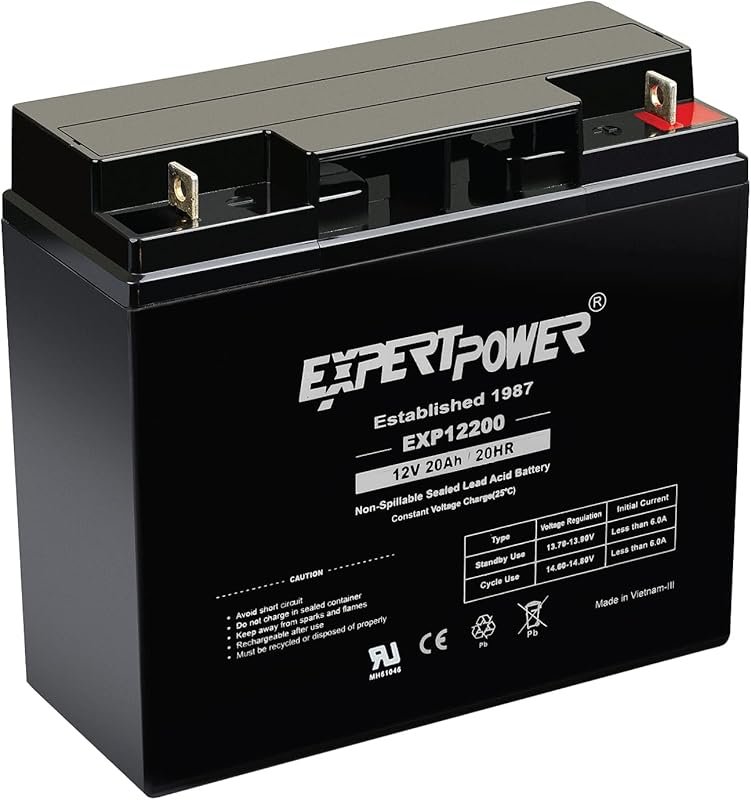
An automotive jump starter is a portable battery-powered device designed to jump-start a vehicle with a dead or weak battery. Unlike traditional jumper cables that require another running vehicle, a jump starter works on its own. It stores electrical energy and delivers it directly to your car’s battery through heavy-duty clamps. Think of it as a personal roadside rescue kit—compact, reliable, and always ready.
These devices have come a long way from the bulky, unreliable units of the past. Today’s jump starters are lightweight, smart, and packed with features. They’re built for everyday drivers, road-trippers, and even commercial fleets. Whether you drive a compact sedan, a rugged pickup truck, or a hybrid SUV, there’s a jump starter made for you.
Key Takeaways
- Portable and self-contained: Unlike traditional jumper cables, an automotive jump starter works independently—no second car required.
- Safe for modern vehicles: Advanced models feature smart technology to prevent reverse polarity, short circuits, and overcharging.
- Multi-functional: Many jump starters double as power banks, flashlights, and tire inflators, making them versatile roadside companions.
- Compact and lightweight: Modern designs are small enough to store in your glove box or trunk without taking up much space.
- Fast and reliable: High-quality jump starters can deliver enough power to start most cars, trucks, and SUVs in seconds.
- Easy to use: Most units come with clear instructions and intuitive interfaces—perfect for beginners.
- Long shelf life: With proper care, lithium-ion jump starters can hold a charge for months and last several years.
📑 Table of Contents
How an Automotive Jump Starter Works
At its core, an automotive jump starter is a rechargeable battery—usually lithium-ion—that stores electrical energy. When your car battery dies, the jump starter acts as a temporary power source. It sends a surge of electricity through the jumper cables to your vehicle’s battery, giving it enough juice to crank the engine and start the car.
The process is simple:
1. Turn off the car and all electrical accessories (lights, radio, etc.).
2. Connect the red (positive) clamp to the positive terminal of the dead battery.
3. Connect the black (negative) clamp to a grounded metal part of the engine block (not the battery).
4. Turn on the jump starter and wait a few seconds.
5. Try starting the car.
6. Once the engine runs, disconnect the clamps in reverse order.
Modern jump starters use smart technology to make this process safer and more efficient. Many include built-in microprocessors that detect the correct polarity, prevent reverse connections, and shut off automatically if something goes wrong. This means you don’t need to be a mechanic to use one—just follow the instructions.
Types of Jump Starters
Not all jump starters are created equal. They come in different types based on battery chemistry and power output.
Lithium-ion jump starters are the most popular today. They’re lightweight, compact, and hold a charge well. Most consumer models use lithium-ion or lithium-polymer batteries. They’re ideal for cars, motorcycles, and small trucks.
Lead-acid jump starters are older technology. They’re heavier and bulkier but often cheaper. These are better suited for large vehicles like RVs or commercial trucks, where high cranking power is needed.
Ultra-capacitor jump starters are a newer innovation. They charge quickly and can deliver massive bursts of power, even in extreme cold. However, they require a small amount of residual charge in the dead battery to work, so they’re not ideal for completely dead batteries.
Power Ratings: What You Need to Know
Jump starters are rated by their peak amps and cranking amps (CA) or cold cranking amps (CCA). These numbers tell you how much power the device can deliver.
– Peak amps refer to the maximum current the jump starter can produce for a very short time (a few seconds). This is the burst needed to start an engine.
– Cranking amps (CA) measure the current delivered at 32°F (0°C).
– Cold cranking amps (CCA) measure performance at 0°F (-18°C), which is more relevant for winter conditions.
For most compact cars, a jump starter with 400–600 peak amps is sufficient. Mid-size sedans and SUVs may need 600–1000 peak amps. Large trucks, diesel engines, or vehicles in cold climates might require 1000+ peak amps.
Always check your vehicle’s manual or battery label to see the recommended CCA. Then choose a jump starter with at least that rating—or higher for safety.
Why You Need an Automotive Jump Starter
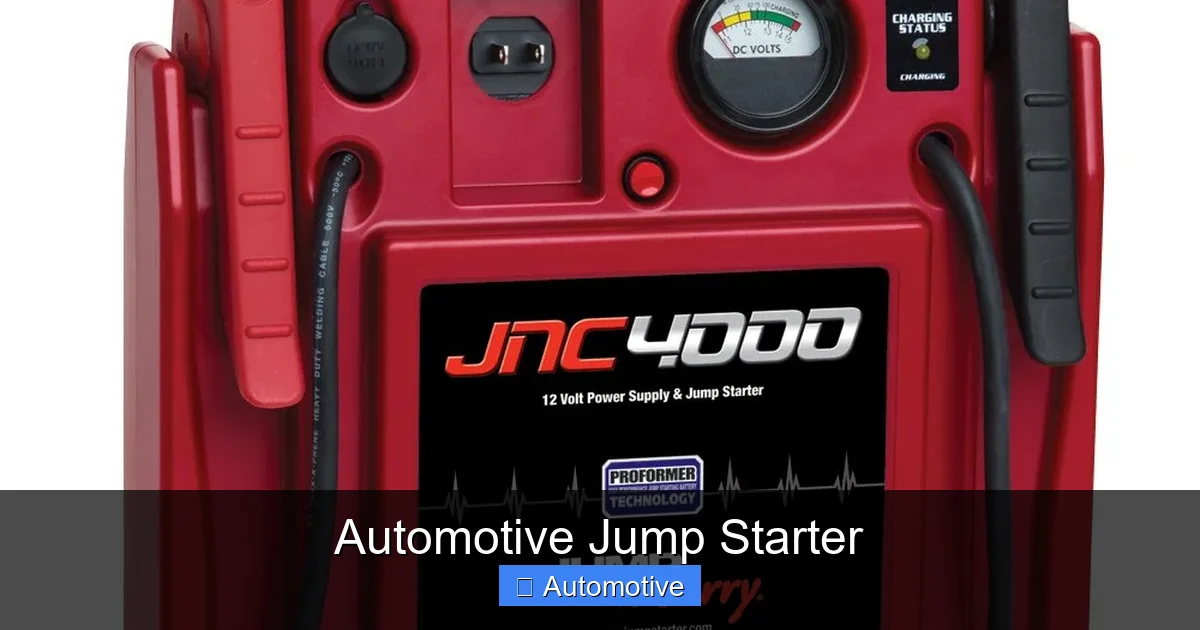
Visual guide about Automotive Jump Starter
Image source: images-na.ssl-images-amazon.com
Let’s be honest: No one plans to have a dead battery. But it happens—more often than you’d think. According to the American Automobile Association (AAA), dead batteries are one of the top reasons for roadside assistance calls, especially during extreme temperatures.
An automotive jump starter gives you independence. You don’t have to wait for a friend, a tow truck, or a stranger with jumper cables. You don’t have to worry about damaging your car’s electronics from improper connections. And you don’t have to rely on luck.
Safety First
Using jumper cables with another vehicle can be risky. If the cables are connected incorrectly, you could cause a spark near the battery, which may lead to an explosion. Modern cars also have sensitive electronics that can be damaged by power surges.
Jump starters with smart technology eliminate these risks. They include features like:
– Reverse polarity protection (alarms or shuts off if clamps are reversed)
– Over-current protection
– Short-circuit protection
– Spark-proof clamps
– Automatic shut-off
These safety features make jump starters much safer than traditional methods—especially for inexperienced users.
Convenience and Portability
Carrying jumper cables in your trunk is fine—until you need them. Then you have to find someone with a running car, hope their battery is compatible, and hope they’re willing to help. That can take 20 minutes or more.
A jump starter takes seconds. It’s small enough to fit in a glove box, under a seat, or in a backpack. Some models are even smaller than a paperback book. And because they’re self-contained, you can use them anywhere—on a remote highway, in a parking garage, or during a camping trip.
Peace of Mind
Knowing you have a jump starter in your car is like having a safety net. Whether you’re commuting daily or taking a long road trip, you can drive with confidence. You’re prepared for the unexpected.
And it’s not just for dead batteries. Many jump starters include USB ports, 12V outlets, and LED flashlights. Some even have built-in air compressors for inflating tires. This makes them useful year-round—not just in emergencies.
Features to Look for in a Jump Starter
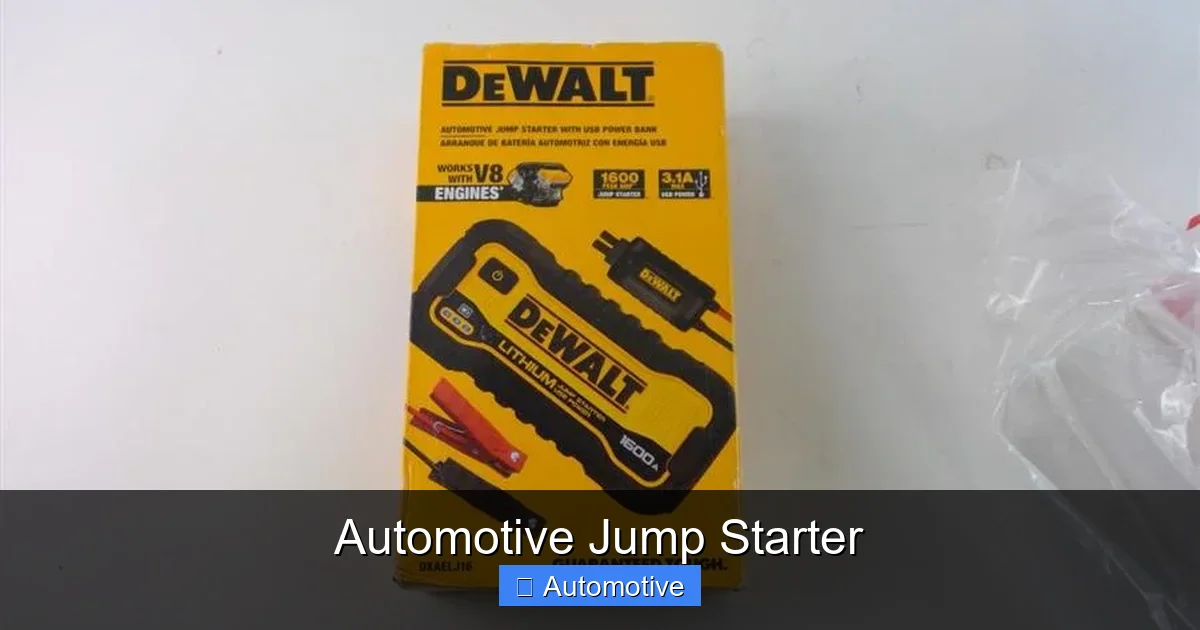
Visual guide about Automotive Jump Starter
Image source: content.propertyroom.com
With so many options on the market, how do you pick the right one? Here are the key features to consider.
Battery Capacity and Power Output
As mentioned earlier, look at the peak amps and CCA rating. But also check the battery capacity, measured in milliampere-hours (mAh). A higher mAh means the jump starter can hold more charge and potentially jump-start a vehicle multiple times before needing a recharge.
For example, a 10,000 mAh jump starter might be able to start a small car 3–5 times on a full charge. A 20,000 mAh model could do it 8–10 times.
Smart Safety Features
Always choose a jump starter with built-in protection. Look for:
– Reverse polarity alert (audio or visual)
– Overcharge protection
– Temperature control
– Spark-proof technology
These features prevent accidents and protect both the device and your vehicle.
Additional Functions
Many jump starters are more than just battery boosters. Consider models with:
– USB ports: Charge your phone, tablet, or GPS.
– 12V DC outlet: Power small appliances or inflate tires.
– LED flashlight: Useful for nighttime emergencies or roadside repairs.
– Digital display: Shows battery level, voltage, or error codes.
– Air compressor: Some high-end models include a built-in pump for flat tires.
These extras add value and make the device more useful in everyday situations.
Size and Weight
If you drive a small car or have limited trunk space, opt for a compact model. Most lithium-ion jump starters weigh between 1 and 3 pounds. Some are even lighter.
But don’t sacrifice power for size. Make sure the unit can handle your vehicle’s engine size.
Battery Type and Charging
Lithium-ion batteries are preferred for their energy density and long life. They charge faster and hold their charge longer than lead-acid batteries.
Check how the jump starter recharges. Most use a standard wall outlet, but some also support car chargers or solar panels. A full charge typically takes 3–6 hours.
Brand and Warranty
Stick with reputable brands like NOCO, Jump-N-Carry, DBPOWER, or Tacklife. These companies offer reliable products and good customer support.
Also, look for a warranty—ideally 1–2 years. This shows the manufacturer stands behind their product.
How to Use an Automotive Jump Starter
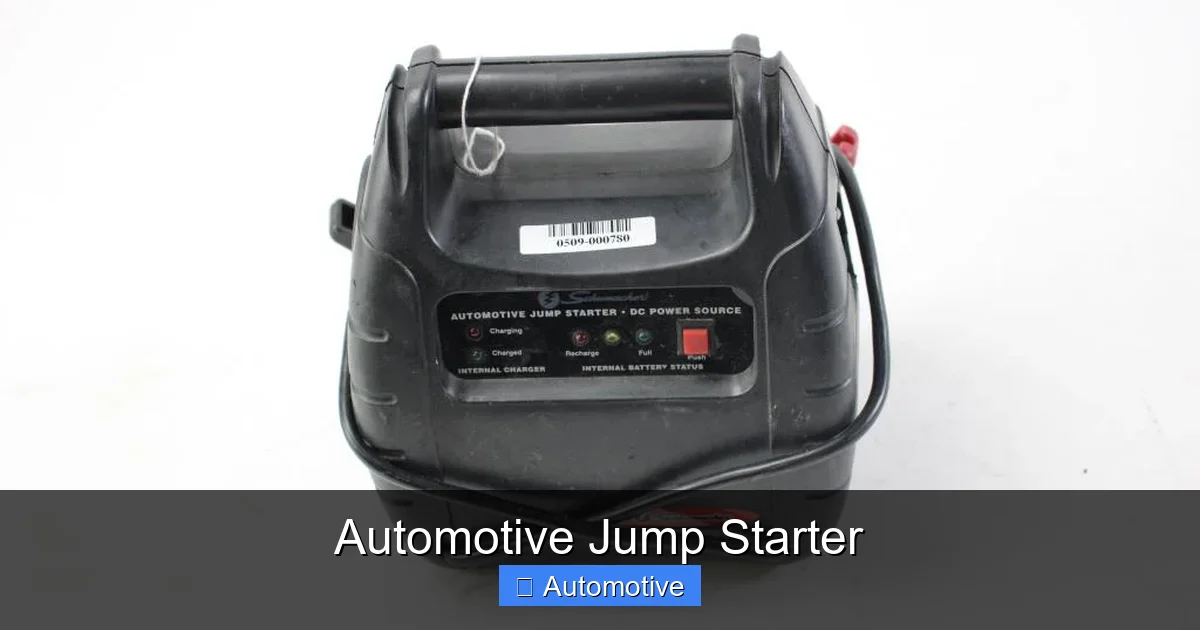
Visual guide about Automotive Jump Starter
Image source: content.propertyroom.com
Using a jump starter is simple, but it’s important to follow the steps correctly to avoid damage or injury.
Step-by-Step Guide
1. Turn off the vehicle: Make sure the ignition, lights, radio, and all accessories are off.
2. Locate the battery: Open the hood and find the battery. Identify the positive (+) and negative (-) terminals.
3. Connect the clamps: Attach the red clamp to the positive terminal. Attach the black clamp to a grounded metal part of the engine block—never to the negative terminal or a painted surface.
4. Power on the jump starter: Press the power button. Some models will display a green light or beep when ready.
5. Start the engine: Turn the key and try to start the car. If it doesn’t start immediately, wait 30–60 seconds and try again.
6. Disconnect safely: Once the engine is running, turn off the jump starter and remove the clamps in reverse order: black first, then red.
7. Let the engine run: Drive the car for at least 15–20 minutes to allow the alternator to recharge the battery.
Tips for Best Results
– Warm up the jump starter: In cold weather, keep the device in your car’s cabin overnight so it stays warm and performs better.
– Check the charge: Test your jump starter every few months to ensure it’s holding a charge.
– Don’t overuse: Avoid using the jump starter more than 3–4 times in a row. Let it cool down between uses.
– Store properly: Keep the device in a cool, dry place. Avoid extreme temperatures.
Maintaining Your Jump Starter
Like any electronic device, a jump starter needs care to last.
Regular Charging
Even if you don’t use it, recharge your jump starter every 3–6 months. Lithium-ion batteries slowly lose charge over time. A fully charged unit should hold its charge for 6–12 months, but topping it off ensures it’s ready when needed.
Clean the Clamps
Dirt, grease, or corrosion on the clamps can reduce conductivity. Wipe them clean with a dry cloth after each use. Avoid using water or solvents.
Inspect for Damage
Check the cables, clamps, and housing for cracks, fraying, or wear. If you notice any damage, stop using the device and contact the manufacturer.
Update Firmware (if applicable)
Some high-end jump starters have updatable firmware. Check the manufacturer’s website for updates that improve performance or safety.
Top Uses Beyond Jump-Starting
An automotive jump starter is more than an emergency tool. Here are other ways to use it:
Power Bank for Devices
Most jump starters have USB ports. Use them to charge your phone, tablet, or camera during long drives or outdoor adventures.
Emergency Light
The built-in LED flashlight can be a lifesaver at night. Some models have strobe or SOS modes for signaling help.
Tire Inflation
If your model includes an air compressor, you can inflate flat tires, sports balls, or air mattresses. Just make sure the tire isn’t severely damaged.
Camping and Outdoor Use
Take your jump starter on camping trips to power small devices or jump-start a generator. It’s a great backup power source.
Boat and ATV Use
Many jump starters are compatible with marine batteries and all-terrain vehicles. Just confirm the voltage and polarity before use.
Common Mistakes to Avoid
Even with smart technology, users can make mistakes. Here’s what to avoid:
Connecting to the Wrong Terminal
Always double-check: red to positive (+), black to ground. Reversing the clamps can damage the jump starter or your car’s electronics.
Using on a Swollen or Leaking Battery
If the battery is cracked, leaking, or swollen, do not attempt to jump-start it. This could cause a fire or explosion. Call a professional.
Ignoring the Manual
Every jump starter is different. Read the instructions before using it. Pay attention to warnings and safety tips.
Overestimating Power Needs
Don’t assume a high-amp jump starter is always better. Using too much power on a small engine can cause damage. Match the device to your vehicle.
Storing in Extreme Temperatures
Avoid leaving your jump starter in a hot car or freezing trunk for long periods. Extreme heat can degrade the battery; extreme cold can reduce performance.
Conclusion
An automotive jump starter is one of the smartest investments you can make for your vehicle. It’s not just a tool for emergencies—it’s a symbol of preparedness, independence, and safety.
With the right model, you can start your car in minutes, charge your devices on the go, and handle unexpected situations with confidence. Modern jump starters are safe, easy to use, and packed with features that go beyond basic battery boosting.
Whether you’re a daily commuter, a weekend adventurer, or a fleet manager, having a reliable jump starter in your car is like carrying a personal roadside assistant. It’s peace of mind in a compact package.
So next time you’re shopping for car accessories, don’t overlook the jump starter. It might just be the device that saves your day.
Frequently Asked Questions
Can a jump starter damage my car?
No, if used correctly. Modern jump starters have safety features like reverse polarity protection and spark-proof clamps that prevent damage. Always follow the manufacturer’s instructions.
How long does a jump starter last on a single charge?
Most lithium-ion jump starters can hold a charge for 6–12 months. Recharge every 3–6 months to ensure it’s ready when needed.
Can I use a jump starter on a diesel engine?
Yes, but you’ll need a high-power model with at least 1000 peak amps. Diesel engines require more cranking power than gasoline engines.
What if my jump starter doesn’t work?
First, check that it’s fully charged and the clamps are connected properly. If it still doesn’t work, the battery may be too dead or the jump starter could be faulty. Contact the manufacturer.
Can I use a jump starter in the rain?
Yes, but avoid direct exposure to heavy rain. Most jump starters are water-resistant, not waterproof. Keep the device and connections dry for safety.
Do I still need jumper cables if I have a jump starter?
It’s not necessary, but keeping a set of jumper cables as a backup is a good idea. They can be useful if your jump starter fails or if you need to help another driver.