Are 2005 Ford F-150s Reliable?

Contents
- 1 Key Takeaways
- 2 📑 Table of Contents
- 3 Introduction: The Legend and the Question
- 4 Engine & Powertrain: A Durable Heart with a Flawed Circulatory System
- 5 Transmission & Drivetrain: The Ticking Time Bomb
- 6 Body, Frame & Interior: Rust and Rattles Dominate
- 7 Electrical & Electronics: The “Modular” Mayhem
- 8 Maintenance, Longevity & The Ownership Experience
- 9 Final Verdict: Who Is the 2005 F-150 For?
- 10 Frequently Asked Questions



The 2005 Ford F-150 offers a mixed reliability picture. Its robust 5.4L V8 engine is generally durable but has known spark plug issues. The 4-speed automatic transmission, particularly the 4R75E, is a significant weak point prone to failure. Severe frame rust and modular electrical gremlins are other common, costly problems. With meticulous maintenance and a thorough pre-purchase inspection, a well-kept example can be a capable workhorse, but it’s a high-risk, high-reward used truck purchase.
Key Takeaways
- Engine (5.4L Triton V8): The engine itself is stout, but the aluminum cylinder heads are notorious for spark plug breakage during replacement (a $1,500+ job if done incorrectly). Other issues include cam phaser wear and timing chain problems.
- Transmission is the #1 Concern: The 4R75E 4-speed automatic is the truck’s Achilles’ heel. Failure often occurs between 100k-150k miles, with rebuilds costing $3,000-$4,500. Towing or hard use accelerates wear dramatically.
- Frame Rust is Severe & Structural: The 2004-2008 frames are infamous for catastrophic rust-through, especially in the cab mounts and rear sections. This is not just cosmetic; it compromises structural integrity and safety.
- Electrical “Modular” Gremlins: The instrument cluster (speedometer/tachometer failure) and various body control modules are prone to failure, leading to multiple dash lights, gauge outages, and intermittent electrical issues.
- Maintenance is Non-Negotiable: A complete service history with transmission fluid/filter changes every 30k-50k miles, premium spark plugs installed correctly, and rust-proofing treatments is critical for longevity.
- Not All Trims Are Equal: XL and STX models often have fewer complex features (reducing electrical failure points) and may have been used less as “luxury” trucks, potentially leading to better overall condition if maintained.
- Parts Availability is Excellent: As one of the best-selling vehicles ever, aftermarket and OEM parts are plentiful and relatively affordable, which helps keep repair costs manageable for DIYers.
📑 Table of Contents
- Introduction: The Legend and the Question
- Engine & Powertrain: A Durable Heart with a Flawed Circulatory System
- Transmission & Drivetrain: The Ticking Time Bomb
- Body, Frame & Interior: Rust and Rattles Dominate
- Electrical & Electronics: The “Modular” Mayhem
- Maintenance, Longevity & The Ownership Experience
- Final Verdict: Who Is the 2005 F-150 For?
Introduction: The Legend and the Question
Ford’s F-150 is an American icon. For decades, it’s been the go-to full-size pickup for work, family, and adventure. The 2005 model year sits in the middle of the eleventh generation (2004-2008), a period of massive sales and cultural dominance. But when you’re looking at a truck that’s nearly 20 years old, the big question isn’t about style or power—it’s about reliability. Can a 2005 Ford F-150 still be a dependable daily driver or workhorse? Or is it a rolling time bomb of expensive repairs?
The honest answer is complicated. This truck embodies the best and worst of early-2000s American truck design. It has a reputation for being tough as nails in some areas and frustratingly fragile in others. Your experience will depend almost entirely on its specific history, how it was used, and—most critically—how well it has been maintained. Let’s pop the hood, crawl under the frame, and diagnose the real-world reliability of the 2005 Ford F-150.
Engine & Powertrain: A Durable Heart with a Flawed Circulatory System
Under the hood of a 2005 F-150, you’ll most likely find one of two gas engines: the 4.6L Triton V8 or the 5.4L Triton V8 (often with 3-valve cylinder heads). The diesel option, the 6.0L Power Stroke, is a whole other can of worms we’ll touch on briefly. For the vast majority of buyers, the gas V8s are the focus.

Visual guide about Are 2005 Ford F-150s Reliable?
Image source: blog.autobidmaster.com
The 5.4L “3-Valve” V8: Power Meets a Problematic Design
The 5.4L 3-valve (often called the “5.4 3V”) is the engine you want if you need power for towing or hauling. It makes 300 horsepower and 365 lb-ft of torque, which was impressive for its time. The core of the engine—the block and rotating assembly—is very robust. However, its fatal flaw lies in the aluminum cylinder heads.
The Spark Plug Debacle: The design uses a two-piece spark plug with a separate ceramic portion that threads into the head. Over time, the steel threads in the aluminum head can strip, or worse, the plug’s ceramic insulator can break off inside the hole. This is not a simple “change the plugs” job. If a plug breaks, it often requires a special extraction tool and can mean replacing the entire cylinder head if the threads are damaged. A professional, correct spark plug replacement on this engine can easily cost $1,000-$1,500 at a shop. Using the correct Motorcraft SP-518 plugs and a proper torque wrench is absolutely essential. Many owners simply dread this service.
Cam Phaser & Timing Chain Issues: As these engines age, the hydraulic cam phasers (which adjust valve timing) can wear out, causing a characteristic rattling noise on cold start (“death rattle”). While not immediately destructive, it indicates internal wear. The timing chains and tensioners are also known to wear, potentially leading to expensive repairs. Regular oil changes with high-quality oil are the best preventative medicine here.
The 4.6L V8: The “Boring But Reliable” Workhorse
The 4.6L 2-valve V8 is less powerful (231 hp, 293 lb-ft) but significantly simpler. It uses traditional iron cylinder heads and one-piece spark plugs, eliminating the catastrophic breakage issue of its bigger brother. It’s a proven, torquey, and long-lived engine when cared for. Its main vulnerabilities are the same as any high-mileage V8: intake manifold gaskets (plastic manifolds can crack), water pumps, and oil pump pickup issues if oil changes were neglected. For a buyer seeking maximum simplicity and lower risk, a well-maintained 4.6L is the smarter, if less powerful, choice.
The 6.0L Power Stroke Diesel: A Specialized Warning
If you’re looking at a diesel, you’re likely aware of the 6.0L’s infamous reputation. While it can be made reliable with extensive (and expensive) upgrades—like head studs, an EGR delete, and a new oil cooler—the factory configuration is plagued by head gasket failure, turbo issues, and injector problems. A stock, unmodified 6.0L from 2005 is a major project, not a reliable purchase, unless it has a complete, documented history of these critical repairs. For most used truck shoppers, we strongly advise avoiding the 6.0L unless you are a diesel mechanic or have a huge budget for its known flaws.
Transmission & Drivetrain: The Ticking Time Bomb
If the engine is the heart, the transmission is the circulatory system—and for the 2005 F-150, it’s the system most likely to fail catastrophically. This is the single biggest red flag and the primary reason many mechanics and long-time owners will warn you away from this generation.
Visual guide about Are 2005 Ford F-150s Reliable?
Image source: blog.autobidmaster.com
The 4R75E 4-Speed Automatic: Weak Link Identified
Ford paired the 2005 F-150’s engines with the 4R75E four-speed automatic. It’s an evolution of a long-used design, but by the mid-2000s, it was showing its age. The design has a known weakness in the forward clutch pack and various solenoid and valve body components. The symptoms are progressive: harsh shifts, slippage between 2nd and 3rd gear, delayed engagement, and finally, a complete loss of drive or reverse.
Failure Mileage: There is no set number, but failure is common between 100,000 and 150,000 miles, especially if the truck was used for towing, hauling, or had neglected fluid changes. A transmission that shifts perfectly today can fail in 10,000 miles. A rebuild or replacement from a reputable shop costs $3,000 to $4,500.
What to Look For & Mitigation Strategies
During a test drive, listen and feel for any abnormal shift points, shuddering, or slipping. Check the transmission fluid: it should be bright red and smell slightly sweet, not burnt or dark brown/black. A fluid and filter change every 30,000-50,000 miles is critical for extending its life, but it won’t fix a worn-out clutch pack.
For owners who plan to keep the truck, some opt for an auxiliary transmission cooler and a high-quality aftermarket valve body. However, these are band-aids on a fundamentally overstressed design. The most reliable fix is a complete, quality rebuild with upgraded internal components. If you’re buying, assume the transmission is on borrowed time and budget for a rebuild immediately, or walk away if the price doesn’t reflect this major liability.
Transfer Case & Differentials
The rest of the drivetrain—transfer case (in 4×4 models), front and rear differentials—is generally robust. The 8.8-inch rear axle is a workhorse. Look for leaks around the pinion seal and axle seals. The front differential in 4×4 models can have axle seal leaks. These are minor, inexpensive repairs compared to the transmission. The constant-velocity (CV) joints in the front axle shafts on 4×4 models are a wear item; listen for clicking during tight turns.
Body, Frame & Interior: Rust and Rattles Dominate
While the powertrain has its flaws, the body and frame of the 2005 F-150 present some of the most expensive and dangerous problems you’ll encounter.
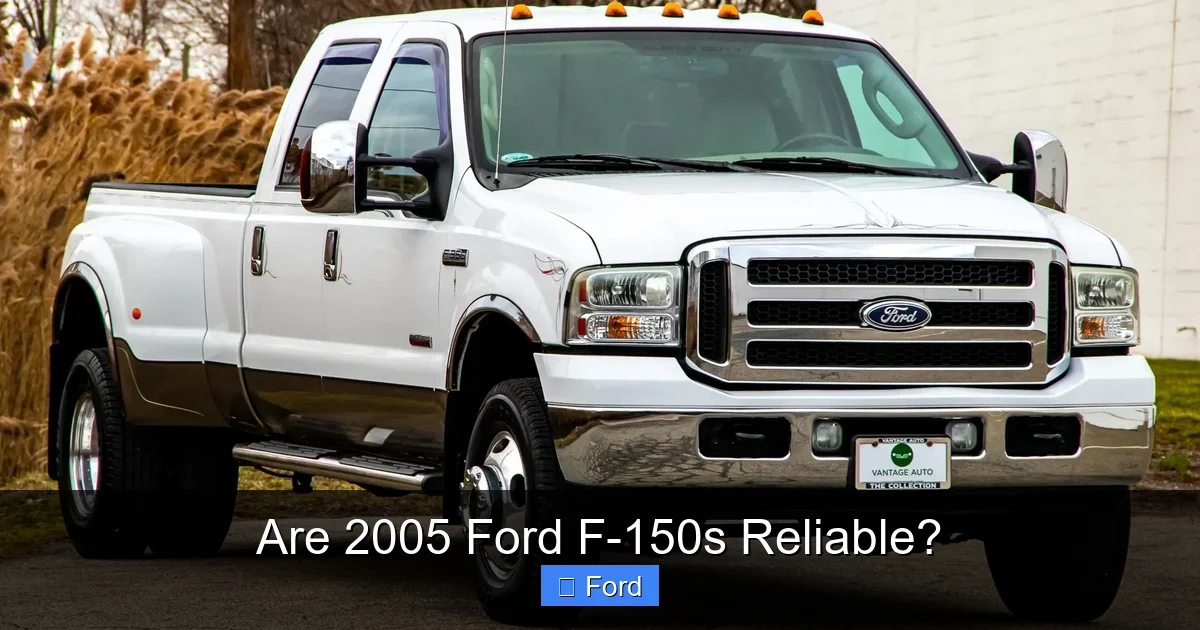
Visual guide about Are 2005 Ford F-150s Reliable?
Image source: bringatrailer.com
Frame Rot: The Silent Killer
This cannot be stressed enough. The 2004-2008 Ford F-150 frames are made of a thinner-gauge steel and are notoriously prone to rust. The problem is worst in the “salt belt” states (Northeast, Midwest) and areas that use road de-icing chemicals. Rust forms inside the frame rails, where you can’t see it, and eats through the metal. The most critical areas are the cab mount brackets and the rear section of the frame behind the rear axle.
A rusted-through frame is a total loss for safety and often for insurance. It compromises the entire structural integrity of the vehicle. When inspecting a truck, get underneath with a flashlight and a pick. Probe the frame rails, especially at the bends behind the cab and the rear kick-up. Any soft, flaky, or holed metal is a deal-breaker. Some owners have had frames welded or replaced, but it’s a $5,000+ job. This is the single most common reason these trucks are retired.
Bed & Tailgate Issues
The composite (plastic) bed liner can crack and trap moisture, accelerating bed rust from the inside out. Check for rust bubbles under the liner. The tailgate hinges and latches are also common failure points. The iconic “Ford” tailgate emblem often fades or peels. While cosmetic, these issues add up. For a truck used for work, a rust-free, solid bed is a huge plus.
Interior Wear and Electrical Modules
The interior of a 2005 F-150 is a study in durable, hard-plastic ergonomics. It won’t feel luxurious, but it’s functional. Common wear points are the driver’s seat bolster (especially on Lariat and King Ranch models with leather), the steering wheel grip, and the rubber floor mats (if equipped).
The bigger interior issue is the instrument cluster. The speedometer and tachometer needles, and sometimes the entire LCD display, can fail or become intermittent. This is usually a faulty solder joint on the cluster’s circuit board. Repair costs range from $100 for a DIY solder fix to $300+ for a rebuilt cluster. Other body control modules (BCMs) can fail, causing issues with locks, lights, and chimes.
Practical Tip: Consider aftermarket seat covers for your 2005 F-150 to protect worn seats and refresh the interior’s look affordably.
Electrical & Electronics: The “Modular” Mayhem
Ford’s move to a more computerized “modular” electrical system in the 2000s introduced complexity and new failure points. The 2005 F-150 is full of these modules.
The Infamous Instrument Cluster
As mentioned, this is the poster child for 2004-2008 F-150 electrical problems. The failure is so common that many repair shops and online vendors specialize in rebuilding or replacing them. Symptoms include dead gauges, flickering lights, or the entire cluster going dark while driving. It’s a major safety distraction.
Other Module Failures
The Body Control Module (BCM) controls things like power windows, locks, and exterior lights. Failure can mean one or more of these systems stop working. The Rear Window Defroster grid often fails in patches. The 4×4 Control Module in 4WD models can fail, preventing engagement of 4Hi or 4Lo.
Diagnosing these issues can be tricky and requires a good scan tool that can read module-specific codes. Replacing modules often requires dealer programming, adding to the cost.
Simple Wiring & Ground Issues
Don’t overlook the basics. Corroded battery terminals and poor engine/chassis grounds can cause a host of intermittent electrical gremlins, from no-start conditions to weird gauge behavior. A thorough cleaning of all major ground straps (engine to chassis, battery to engine) is a cheap and effective first step in troubleshooting any electrical oddity.
Maintenance, Longevity & The Ownership Experience
So, can you have a good experience with a 2005 F-150? Yes, but it requires a specific approach and mindset. This is not a “set it and forget it” truck.
The Non-Negotiable Service History
You must see a complete, detailed service history. The golden tickets are:
- Transmission: Fluid and filter changes every 30k-50k miles. Proof of this is huge.
- Spark Plugs: Documentation that they were changed with the correct parts and correct torque. A note saying “spark plugs replaced” is not enough; you need to know it was done right.
- Oil Changes: Consistent every 5,000 miles. Neglect here leads to cam phaser rattle and timing chain wear.
- Frame: Any history of rust treatment, undercoating, or frame repairs.
A truck with one owner and a stack of receipts is worth a premium over a cheap, mystery-mileage truck.
Common Problems Checklist (What to Inspect)
Before buying, you or a mechanic must check:
- Transmission: Test drive on varying loads. Check fluid condition. Ask for service history.
- Frame: Physical inspection underneath with a pry bar. Look for bubbling paint, rust, soft spots.
- Engine: Cold start. Listen for timing chain rattle (sounds like a diesel for 1-2 seconds). Check for exhaust leaks (ticking).
- Spark Plugs: If possible, have a mechanic remove one plug to inspect the threads and electrode. If they look ancient or damaged, budget for a full, correct replacement.
- Electrical: Cycle all windows, locks, 4×4 switch. Check all gauges at start-up and while driving. Test the rear window defroster.
- Rust: Check rocker panels, cab corners, and rear wheel wells for bubble rust.
Cost of Ownership Realities
Budget $2,000-$3,000 immediately after purchase for deferred maintenance: transmission service (if not done), spark plug job (if needed), brake fluid flush, coolant flush, and any minor repairs. A major repair like a transmission rebuild or frame issue can double or triple your investment overnight. Fuel economy is poor (12-15 mpg typical). These trucks are cheap to buy but expensive to maintain if neglected.
Final Verdict: Who Is the 2005 F-150 For?
The 2005 Ford F-150 is a high-risk, high-reward proposition. It is not a reliable, trouble-free used truck by any modern standard. However, it is a simple, powerful, and parts-rich vehicle that can provide excellent service if you go in with your eyes wide open.
The “Buy” Scenario
Consider buying a 2005 F-150 if:
- You are a mechanically inclined DIYer with tools and a garage.
- You find a single-owner truck with a perfect frame (no rust) and a full service history.
- The price reflects the transmission’s condition (e.g., a truck with a freshly rebuilt trans and a clean frame is worth more).
- You need a capable, simple truck for moderate use and are prepared to spend money on preventative maintenance.
- You want the 4.6L V8 for its simplicity over the 5.4L’s power.
The “Walk Away” Scenario
Avoid the 2005 F-150 if:
- The frame shows any sign of rust. Period.
- There is no service history, especially for the transmission.
- The transmission shifts strangely or slips.
- You are not prepared for a $3,000-$5,000 repair bill within the first year of ownership.
- You need a daily driver with zero surprises.
If your priority is maximum reliability with minimal fuss, newer model years (2013+) are far superior. You can research the 10 most reliable Ford F-150 model years to find better options.
The Bottom Line
The 2005 Ford F-150 is a classic American truck with a loyal following. Its body style is iconic, its cabin is spacious, and its V8 engines have the power to get the job done. But it is a truck of compromises. Its reliability is directly tied to its maintenance history and geographic history (rust belt vs. dry state). It is a project, a hobby, and a potential money pit. For the right buyer—the enthusiast, the tinkerer, the pragmatist with a budget and a plan—it can be a fantastic truck. For the buyer seeking a simple, reliable appliance, it is a gamble you will likely lose. You must inspect relentlessly, budget for the known weak points (transmission, spark plugs, frame), and never assume anything about its condition based on appearance alone.
Frequently Asked Questions
Is the 2005 Ford F-150 a good truck?
It’s a capable and powerful truck with excellent parts availability, but it has significant, well-known reliability issues (transmission, frame rust, spark plugs). It’s only a “good” truck if it has a spotless maintenance history and a rust-free frame.
What is the most common problem with a 2005 F-150?
The most common and costly problem is failure of the 4R75E 4-speed automatic transmission. Severe frame rust is the second most common, and often terminal, issue. Spark plug breakage in the 5.4L V8 is also a very frequent and expensive repair.
How long do 2005 Ford F-150s last?
With meticulous maintenance, a 2005 F-150 can mechanically last 200,000+ miles. However, the vast majority will be taken out of service by transmission failure or structural frame rust long before reaching that mileage, often between 120,000 and 180,000 miles.
Should I buy a 2005 Ford F-150 with over 150,000 miles?
Extreme caution is advised. At this mileage, the transmission is almost certainly on its last legs unless it was recently and properly rebuilt. The frame rust must be pristine. Only consider it if the price is very low and you have a confirmed, recent transmission rebuild and a perfect frame inspection.
Is the 5.4L or 4.6L engine better in the 2005 F-150?
The 4.6L is the more reliable choice due to its simpler, one-piece spark plugs and generally lower stress. The 5.4L makes significantly more power and torque but comes with the high-risk, high-cost aluminum head spark plug issue. For most used buyers, the 4.6L is the smarter, less risky pick.
What should I look for when buying a used 2005 Ford F-150?
First and foremost, inspect the frame for rust. Second, get a complete transmission service history. Third, verify spark plug replacement was done correctly on a 5.4L. Fourth, check all electrical gauges and modules. Finally, ensure there is a comprehensive maintenance log. A pre-purchase inspection by a trusted Ford specialist is highly recommended.