Am I Responsible for a Car After I Sell It
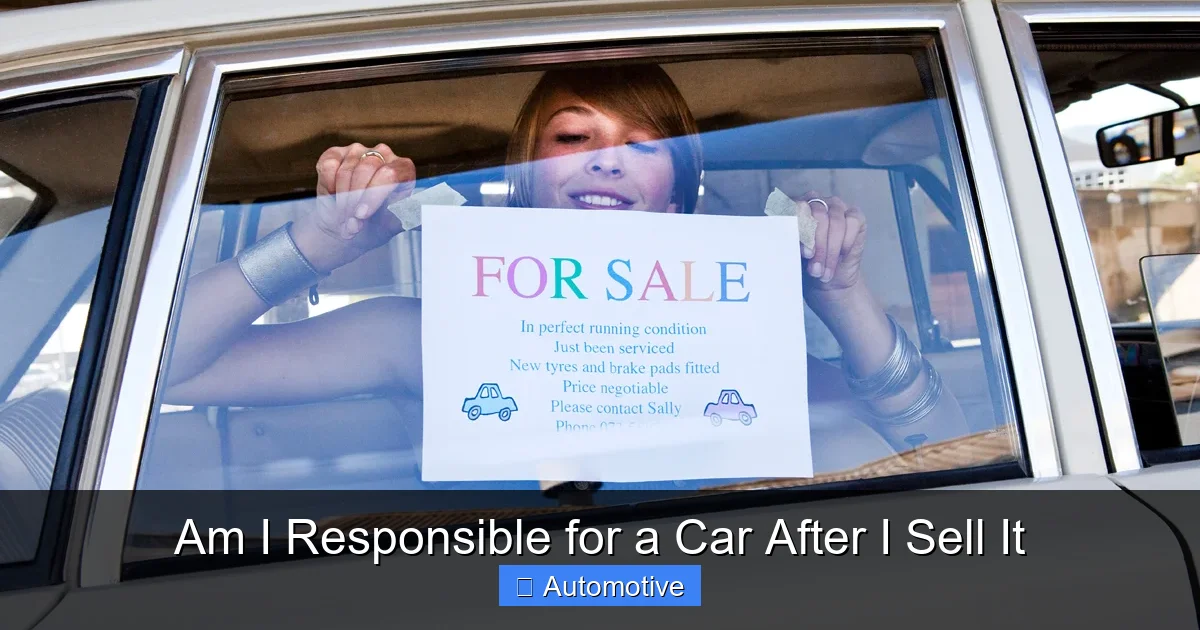
Selling a car doesn’t automatically cut all ties—especially if you skip key steps. Without proper documentation and reporting, you could still be held responsible for tickets, accidents, or fines after the sale. Learn how to legally transfer ownership and protect yourself.
So, you’ve finally sold your old car. Congratulations! You got a fair price, handed over the keys, and walked away feeling pretty good about the deal. But here’s a question that might keep you up at night: *Am I still responsible for that car after I sell it?*
It’s a smart question—and one many sellers overlook. The short answer? Maybe. Just because you’ve handed over the keys doesn’t mean you’re completely off the hook. If you don’t take the right steps, you could still be legally liable for things like parking tickets, toll violations, or even accidents that happen after the sale. That’s why it’s crucial to understand your responsibilities and protect yourself with the proper paperwork and procedures.
In this guide, we’ll walk you through everything you need to know about selling a car and avoiding unwanted liability. Whether you’re selling privately or trading in at a dealership, we’ll cover the legal steps, common pitfalls, and state-specific rules so you can sell with confidence—and peace of mind.
In This Article
- 1 Key Takeaways
- 2 📑 Table of Contents
- 3 Understanding Liability After a Car Sale
- 4 Steps to Protect Yourself When Selling a Car
- 5 State-by-State Variations: Know Your Local Laws
- 6 Selling to a Dealership vs. Private Buyer
- 7 Common Mistakes Sellers Make (And How to Avoid Them)
- 8 What to Do If You’re Held Liable After a Sale
- 9 Conclusion: Sell Smart, Stay Protected
- 10 Frequently Asked Questions
- 10.1 Can I still be sued if the new owner causes an accident?
- 10.2 How long do I have to report a car sale to the DMV?
- 10.3 Do I need to cancel my insurance immediately after selling?
- 10.4 What if the buyer doesn’t register the car?
- 10.5 Can I sell a car without a title?
- 10.6 Is a bill of sale legally binding?
Key Takeaways
- You may still be liable if you don’t report the sale: Failing to notify your state’s DMV can leave you on the hook for future violations or accidents involving the vehicle.
- Proper documentation is essential: A bill of sale, signed title, and release of liability form create a legal paper trail that proves you no longer own the car.
- Timing matters: Some states require you to report the sale within a few days—delaying can increase your risk of liability.
- Private sales vs. dealerships differ: Selling to a dealer often transfers liability immediately, but private sales require more proactive steps from the seller.
- Insurance doesn’t automatically cancel: You must cancel or adjust your policy once the car is sold to avoid paying for coverage you don’t need.
- Check your state’s specific rules: Laws vary widely—what works in Texas might not apply in New York. Always verify local requirements.
- Keep records for at least a year: Hold onto all sale documents in case questions arise later about the transfer of ownership.
📑 Table of Contents
- Understanding Liability After a Car Sale
- Steps to Protect Yourself When Selling a Car
- State-by-State Variations: Know Your Local Laws
- Selling to a Dealership vs. Private Buyer
- Common Mistakes Sellers Make (And How to Avoid Them)
- What to Do If You’re Held Liable After a Sale
- Conclusion: Sell Smart, Stay Protected
Understanding Liability After a Car Sale
When you sell a car, your goal is simple: transfer ownership and walk away clean. But liability doesn’t always end the moment the buyer drives off. In fact, in many cases, the seller remains legally tied to the vehicle until certain steps are completed.
Liability can come in many forms. For example, if the new owner gets a speeding ticket, runs a red light, or causes an accident, and the car is still registered in your name, law enforcement or insurance companies might come looking for you. Even if you’re not driving, you could be held financially or legally responsible—especially if the new owner is uninsured or underinsured.
This is why understanding the difference between *physical possession* and *legal ownership* is so important. Just because someone else is driving the car doesn’t mean you’re no longer the registered owner. Until the title is officially transferred and the sale is reported to the DMV, you’re still on the hook in the eyes of the law.
Why Sellers Stay Liable
One of the biggest reasons sellers remain liable is because they fail to notify the Department of Motor Vehicles (DMV) about the sale. Every state has its own process for reporting a vehicle sale, and skipping this step is a common mistake.
For instance, in California, sellers must file a Notice of Transfer and Release of Liability (NRL) within five days of the sale. If you don’t, and the car gets a ticket six months later, the ticket could still be sent to you. The same goes for toll violations, parking fines, or even emissions testing failures.
Another reason liability lingers is incomplete or incorrect paperwork. If the title isn’t signed properly, or the bill of sale is missing key details, the transfer may not be legally recognized. This can delay the buyer’s registration and leave you as the official owner in the system.
Real-Life Example: The Parking Ticket Nightmare
Imagine this: You sell your 2012 Honda Civic to a neighbor for $3,000. You hand over the keys, sign the title, and shake hands. Two weeks later, you get a $75 parking ticket in the mail—for a violation that happened three days after the sale. The car was parked illegally in a no-parking zone, and since it’s still registered to you, *you* get the ticket.
Sound unfair? It is. But it happens more often than you’d think. The new owner didn’t register the car yet, and the DMV has no record of the sale. Until they do, you’re legally responsible.
This scenario could have been avoided with a simple online form. In most states, you can submit a release of liability form electronically or by mail. Once processed, the DMV updates its records, and you’re no longer liable for future violations.
Steps to Protect Yourself When Selling a Car
Visual guide about Am I Responsible for a Car After I Sell It
Image source: pdffiller.com
Now that you know the risks, let’s talk about how to avoid them. Protecting yourself after a car sale isn’t complicated—it just requires attention to detail and timely action. Follow these steps to ensure a clean break from your former vehicle.
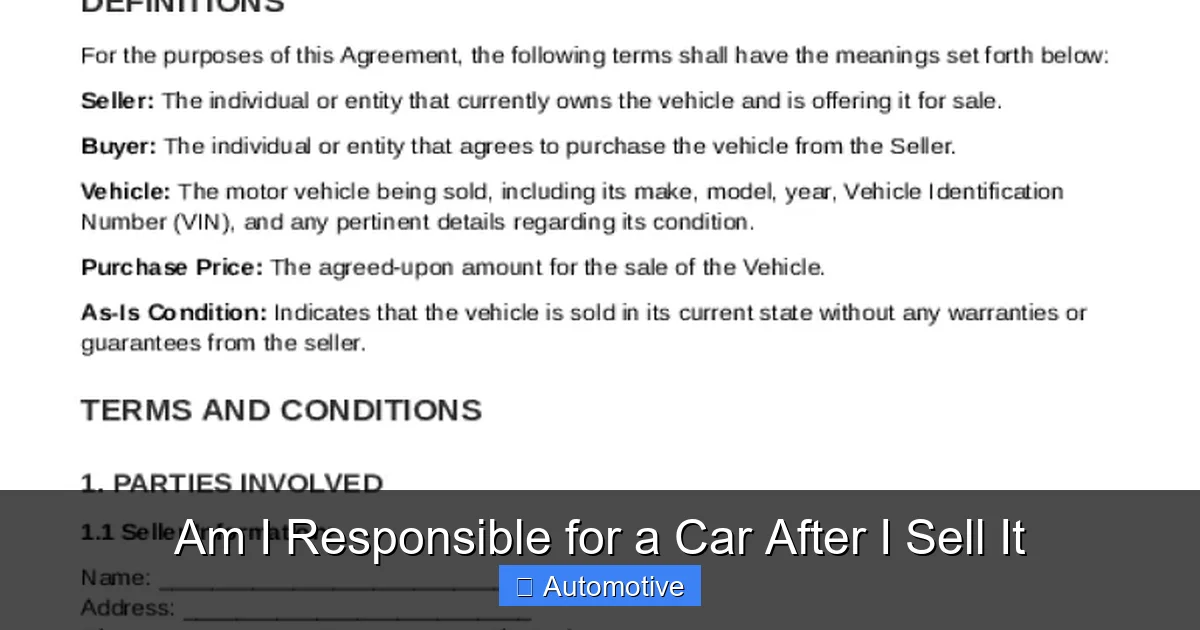
1. Complete a Bill of Sale
A bill of sale is a legal document that records the transaction between you and the buyer. It should include:
– The vehicle’s make, model, year, and VIN
– Sale price
– Date of sale
– Names and addresses of both buyer and seller
– Odometer reading (required by federal law)
This document serves as proof that the sale took place. While not always required by law, it’s a smart practice that can protect you in case of disputes.
You can find free bill of sale templates online, or your state’s DMV website may offer an official form. Make sure both you and the buyer sign it—preferably in front of a notary if your state recommends it.
2. Sign the Title Correctly
The title is the most important document in any car sale. It proves ownership and must be transferred to the buyer for the sale to be legal.
When signing the title:
– Fill out all required fields (buyer’s name, address, sale price, etc.)
– Sign in the designated seller section
– Don’t leave any sections blank—use “N/A” if needed
– Avoid erasures or corrections; if you make a mistake, get a new title
Some states require the buyer to sign as well. Check your state’s rules to avoid delays.
3. Submit a Release of Liability Form
This is the single most important step to avoid post-sale liability. A release of liability form (sometimes called a Notice of Transfer) tells the DMV that you’ve sold the car and are no longer responsible for it.
Most states allow you to submit this form online, by mail, or in person. You’ll typically need:
– Your name and address
– The vehicle’s VIN
– The buyer’s name and address
– The date of sale
Once submitted, the DMV updates its records. From that point on, any violations or issues are the buyer’s responsibility.
4. Cancel or Adjust Your Insurance
You don’t need to keep insuring a car you no longer own. In fact, continuing to pay for coverage on a sold vehicle is a waste of money.
Contact your insurance company as soon as the sale is complete. Let them know the car has been sold and request to cancel the policy or remove the vehicle from your plan. Be prepared to provide the sale date and buyer’s information.
Keep in mind: if you’re buying a new car, you can often transfer your policy to the new vehicle. But if you’re not replacing it, make sure the old policy is fully canceled to avoid unnecessary charges.
5. Remove License Plates (If Required)
In some states, sellers must remove the license plates before handing over the car. This prevents the buyer from using your plates illegally or racking up tolls under your name.
Check your state’s rules. In California, for example, sellers must remove plates unless the buyer is a family member. In New York, plates stay with the car unless the seller is keeping them for a future vehicle.
If you’re required to remove the plates, store them safely. You may be able to reuse them on a new car or return them to the DMV for a refund of registration fees.
State-by-State Variations: Know Your Local Laws
Visual guide about Am I Responsible for a Car After I Sell It
Image source: aa.org.nz
Car sale laws aren’t one-size-fits-all. What’s required in Florida might not apply in Oregon. That’s why it’s essential to check your state’s specific rules before and after the sale.
States with Strict Reporting Deadlines
Some states require sellers to report the sale within a short window:
– **California:** 5 days to file a Notice of Transfer and Release of Liability
– **Texas:** 30 days to submit a Vehicle Transfer Notification
– **New York:** No formal release form, but sellers should keep a bill of sale and notify the DMV if the buyer doesn’t register the car within 10 days
Missing these deadlines can leave you liable for future violations.
States That Require Plate Removal
In states like California, Illinois, and Washington, sellers must remove license plates before transferring the vehicle. Failure to do so could result in fines or liability for toll violations.
States with Online Reporting Systems
Many states now offer online portals for reporting car sales:
– **Florida:** Use the HSMV’s online Vehicle Sale Notification system
– **Arizona:** Submit a Notice of Sale form online or by mail
– **Pennsylvania:** File a Vehicle Sale Report through the PennDOT website
These systems make it easy to protect yourself quickly and securely.
What If Your State Doesn’t Have a Release Form?
Not all states have a formal release of liability form. In places like New York or Massachusetts, the responsibility falls on the seller to keep thorough records and ensure the buyer registers the car.
In these cases, your best defense is documentation. Keep copies of:
– The signed title
– Bill of sale
– Any communication with the buyer
– Proof of insurance cancellation
If a problem arises, these records can prove you sold the car and aren’t responsible.
Selling to a Dealership vs. Private Buyer

Visual guide about Am I Responsible for a Car After I Sell It
Image source: quotefancy.com
The process of selling a car differs significantly depending on who you’re selling to. Understanding these differences can help you avoid liability.
Selling to a Dealership
When you trade in or sell your car to a dealership, the process is usually simpler and safer. Dealerships handle most of the paperwork, including:
– Transferring the title
– Registering the vehicle in the buyer’s name
– Canceling your registration (in some cases)
Because dealerships are licensed and regulated, they’re less likely to skip steps. Once the sale is complete, liability typically transfers immediately.
However, it’s still a good idea to:
– Get a receipt confirming the sale
– Confirm that your name has been removed from the registration
– Cancel your insurance promptly
Selling Privately
Private sales offer higher profits but come with more responsibility. Since there’s no middleman, *you* must ensure all legal steps are completed.
Risks of private sales include:
– Buyer delays in registering the car
– Incomplete or fraudulent paperwork
– Buyer using the car illegally before registration
To protect yourself:
– Meet in a safe, public location
– Verify the buyer’s ID
– Use a secure payment method (cash, cashier’s check)
– Complete all paperwork on the spot
– Submit your release of liability form immediately
Example: The $200 Toll Violation
A seller in Virginia sold his truck to a private buyer but forgot to remove the E-ZPass transponder. The buyer used it to rack up $200 in tolls over two months. Because the transponder was registered to the seller, *he* was billed.
The lesson? Remove all electronic devices and accessories that could link you to the vehicle. And always cancel or transfer toll accounts.
Common Mistakes Sellers Make (And How to Avoid Them)
Even careful sellers can make mistakes that lead to liability. Here are the most common pitfalls—and how to avoid them.
Forgetting to Report the Sale
This is the #1 mistake. Many sellers assume that signing the title is enough. But without reporting the sale, you’re still legally tied to the car.
**Fix:** Submit your release of liability form the same day you sell the car. Set a reminder if needed.
Not Keeping Copies of Documents
Losing your bill of sale or title copy can make it hard to prove the sale later.
**Fix:** Scan or photograph all documents and store them digitally. Keep physical copies in a safe place for at least one year.
Assuming Insurance Cancels Automatically
Your insurance doesn’t know you sold the car unless you tell them.
**Fix:** Call your insurer the day of the sale and confirm the policy is canceled or adjusted.
Leaving Personal Items in the Car
Old registration cards, insurance papers, or garage door openers can link you to the vehicle.
**Fix:** Do a full cleanup before handing over the keys. Remove all personal items and documents.
Selling to Someone You Don’t Trust
Selling to a friend or family member can feel safe, but it’s still a legal transaction.
**Fix:** Treat private sales with the same care as any other. Get everything in writing and follow all legal steps.
What to Do If You’re Held Liable After a Sale
Despite your best efforts, you might still receive a ticket, fine, or legal notice related to a sold car. Don’t panic—there are steps you can take.
Gather Your Documentation
Collect all proof of the sale:
– Bill of sale
– Signed title
– Release of liability confirmation
– Insurance cancellation notice
These documents are your best defense.
Contact the Issuing Agency
If you get a ticket, contact the court, DMV, or toll authority. Explain that you sold the car and provide your documentation. In most cases, they’ll dismiss the charge once they verify the sale.
File a Dispute or Appeal
If the agency refuses to help, you may need to file a formal dispute. Some states allow online appeals for traffic violations. Include copies of your sale documents and a written explanation.
Consult an Attorney (If Necessary)
In rare cases—like being sued for an accident caused by the new owner—you may need legal help. An attorney can help prove you’re not liable and protect your rights.
Conclusion: Sell Smart, Stay Protected
Selling a car should be a positive experience—not a source of stress or unexpected bills. The key to avoiding liability is simple: follow the rules, document everything, and act quickly.
Remember, just because you’ve handed over the keys doesn’t mean you’re off the hook. Until you’ve submitted a release of liability form, canceled your insurance, and kept solid records, you could still be held responsible for what happens to that car.
Take the time to do it right. A few minutes of paperwork today can save you hundreds—or thousands—in fines, legal fees, or insurance claims down the road. Whether you’re selling to a dealer or a private buyer, protect yourself with knowledge and preparation.
So the next time someone asks, “Am I responsible for a car after I sell it?” you can answer with confidence: *Not if I do it the right way.*
Frequently Asked Questions
Can I still be sued if the new owner causes an accident?
In most cases, no—especially if you’ve properly transferred the title and reported the sale. However, if the car is still registered in your name, you could be named in a lawsuit. That’s why submitting a release of liability form is so important.
How long do I have to report a car sale to the DMV?
It depends on your state. Some require reporting within 5 days (like California), while others allow up to 30 days. Check your local DMV website for exact deadlines.
Do I need to cancel my insurance immediately after selling?
Yes. You should contact your insurer the same day to cancel or adjust your policy. Continuing to pay for coverage on a sold car is unnecessary and costly.
What if the buyer doesn’t register the car?
If the buyer fails to register the vehicle, you could still be liable for violations. Keep your sale documents and consider following up with the DMV if you suspect the car hasn’t been transferred.
Can I sell a car without a title?
In most states, no. The title is required to legally transfer ownership. If you’ve lost your title, contact your DMV to request a duplicate before selling.
Is a bill of sale legally binding?
Yes, a properly completed bill of sale is a legal document that proves the transaction occurred. It’s not a substitute for the title, but it strengthens your case if disputes arise.