
Are 2004 Ford F-150s Reliable?

The 2004 Ford F-150 has a mixed reliability reputation. Its solid frame and powerful engine options are praised, but transmission issues and rust are significant concerns. With meticulous maintenance and a thorough pre-purchase inspection, a well-kept example can be a dependable workhorse for budget-conscious buyers.
Key Takeaways
- Engine Durability: The 4.6L V8 and 5.4L V8 (especially the 2-valve) are generally robust and long-lasting if oil changes are kept up, but the 3-valve 5.4L has known cam phaser and spark plug issues.
- Transmission is Key: The 4R75E 4-speed automatic is the truck’s most common failure point. Rebuilds are frequent and costly, so a detailed service history is non-negotiable.
- Rust is a Major Enemy: Frame and cab mount corrosion is rampant, especially in northern states. A rust-free frame is rare and dramatically increases value and longevity.
- Maintenance is Everything: Neglected maintenance on the 2004 F-150 leads to rapid deterioration. Critical services include transmission fluid/filter changes, spark plug replacement on the 5.4L 3V, and timing chain inspections.
- Parts are Readily Available: As one of the best-selling vehicles ever, aftermarket and OEM parts are plentiful and relatively affordable, which helps keep repair costs manageable.
- Simple Interior, Proven Design: The interior is basic but functional. The solid axle front suspension is durable and cheaper to repair than independent setups, favoring longevity over ride comfort.
- Verdict: Buyer Beware, But Don’t Ignore: It’s not a “walk-away” reliable truck like some later models, but a clean, well-maintained 2004 F-150 can offer tremendous value. The single most important factor is the truck’s documented history.
📑 Table of Contents
Introduction: The Legend and the Reality
When you think of a classic American pickup, the Ford F-150 is likely the first truck that comes to mind. It’s an icon, a cultural symbol of capability and toughness. The 2004 model year sits in the middle of the groundbreaking tenth generation (2004-2008), a redesign that brought a more modern, aerodynamic look and a crew cab (SuperCrew) option to the masses. But for a potential used truck buyer in 2024, the burning question isn’t about style—it’s about substance. Are 2004 Ford F-150s reliable? The honest answer isn’t a simple yes or no. It’s a nuanced “it depends,” heavily weighted on which engine it has, if the transmission has been cared for, and how much rust has eaten away at its skeleton. This truck is a prime example of the used truck market’s golden rule: a vehicle’s reliability is 90% about its maintenance history and 10% about its inherent design. Let’s dive deep under the hood and under the truck to separate the myth from the metal.
Engine Options: The Heart of the Matter
The 2004 F-150 came with a few different gas engine choices, and your reliability story changes dramatically based on which one is under the hood. There was no diesel option this year. Understanding the strengths and fatal flaws of each is the first step in your evaluation.
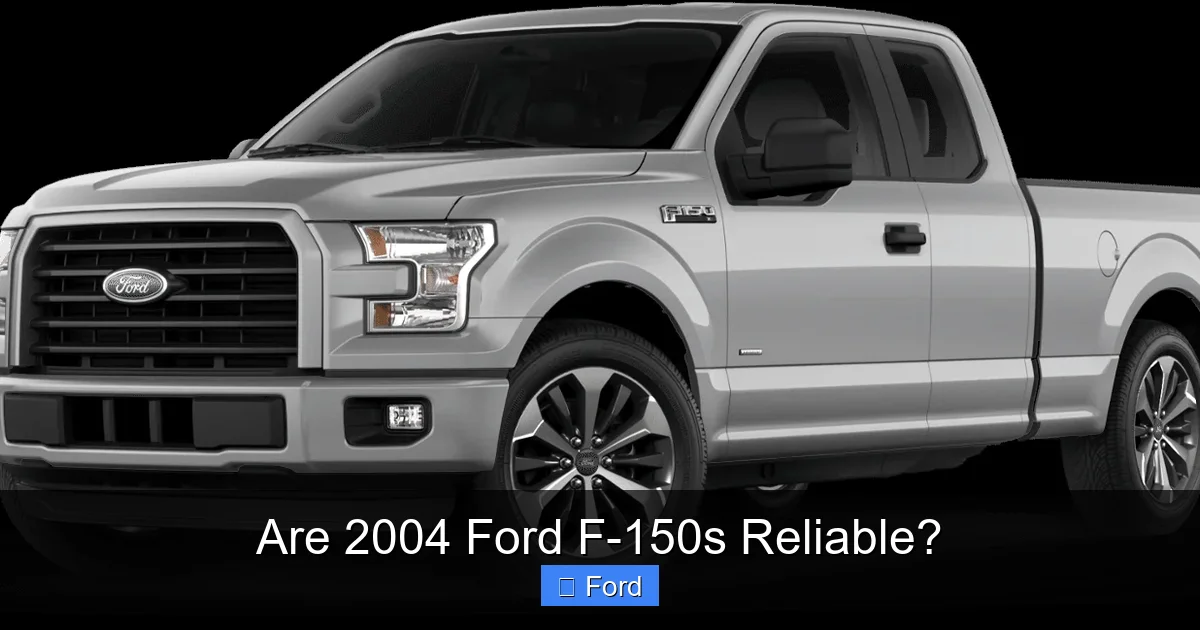
Visual guide about Are 2004 Ford F-150s Reliable?
Image source: pngmart.com
The Stalwart 4.6L Triton V8
The base and mid-level workhorse was the 4.6L two-valve (or 2V) V8, producing around 234 horsepower and 330 lb-ft of torque. This engine, and its larger 5.4L sibling in 2V form, is arguably the most reliable powerplant Ford offered in this generation. Its overhead cam design is simpler than the later 3-valve setups. With regular oil changes using the correct weight (Ford often recommended 5W-20, but many owners use 5W-30 for older engines), these engines can easily surpass 250,000 miles. Common issues are minor: oil pump o-ring leaks, plastic intake manifold cracks (a common issue across many Ford Modular engines of this era), and occasional exhaust manifold bolts breaking. These are nuisances, not show-stoppers. If you find a 2004 F-150 with the 4.6L and a clean title, you’ve already cleared a major hurdle.
The Powerful but Problematic 5.4L 3-Valve Triton V8
The top engine for the 2004 was the 5.4L three-valve (3V) V8, churning out a healthy 300 horsepower and 365 lb-ft of torque. This engine is a different story. Its variable camshaft timing (VCT) system, specifically the cam phasers, is its Achilles’ heel. These phasers can wear prematurely, causing a loud, distinct rattling noise on cold starts that lasts for 1-3 seconds—often called the “cam phaser rattle.” While it doesn’t mean the engine is dying immediately, it’s a sign of wear and a costly repair (often $2,000+). Furthermore, the 3V engine’s spark plugs are notoriously difficult to replace. They are seated with a special metal shell that can break off in the cylinder head if not removed with extreme care, turning a $50 job into a $1,500+ disaster. You must ask the seller: “Have the spark plugs ever been changed, and was it done by a professional with the proper tools?” Also, these engines are known to consume oil. Checking for blue smoke on startup or acceleration is a must. A well-maintained 5.4L 3V can be strong, but the risk and potential cost are significantly higher than the 4.6L.
The Forgotten 4.2L V6
There was also a 4.2L V6 option, primarily in XL and STX trims. It’s a capable, fuel-efficient (for the time) workhorse with no major, widespread mechanical failures. It’s underpowered for towing compared to the V8s, but if your needs are light-duty hauling and commuting, it’s a very reliable and cheap-to-maintain choice. Its simplicity is its main virtue.
The Transmission: The $4,000 Question
Let’s be brutally clear: the automatic transmission in the 2004 Ford F-150 is its single biggest weak point. All engines were paired with the 4R75E 4-speed automatic. This transmission is known for a specific and catastrophic failure mode. The internal seal for the direct clutch can wear and allow fluid pressure to leak. This causes the transmission to slip severely, burn fluid, and eventually destroy itself. The tell-tale sign is a harsh, delayed engagement from 1st to 2nd gear, especially when cold, and a distinct burnt smell. A rebuild or replacement from a reputable shop costs $3,000 to $4,500. A used junkyard transmission is a gamble.
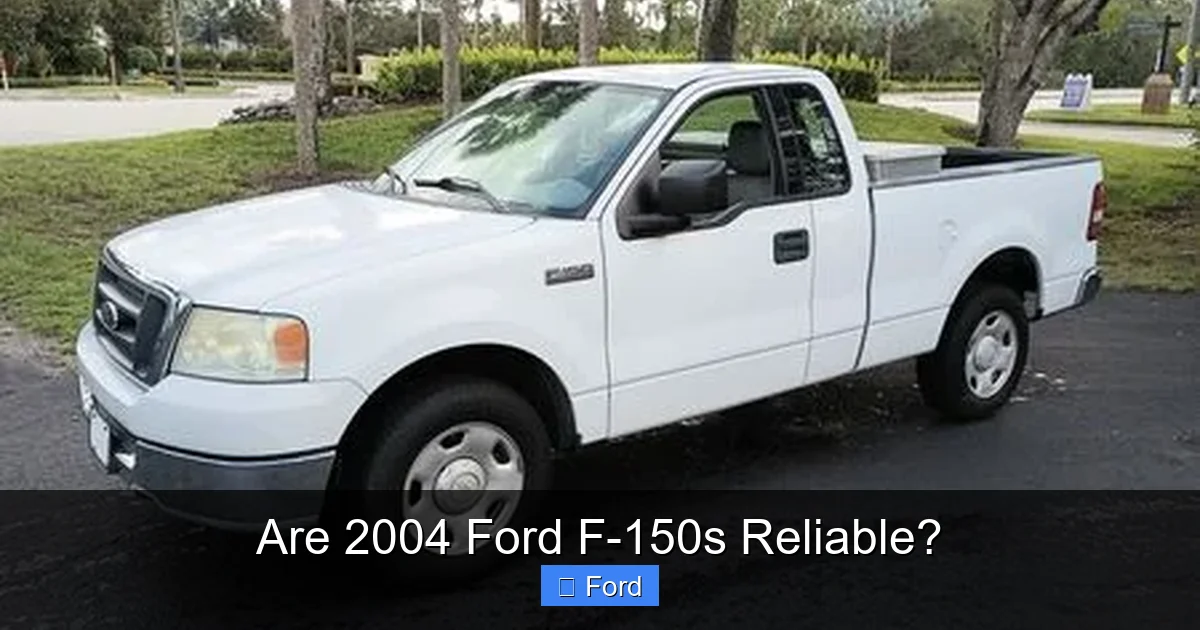
Visual guide about Are 2004 Ford F-150s Reliable?
Image source: image.hmn.com
So, what does a smart buyer do? You must verify transmission service history. Ask for receipts for a transmission fluid and filter change. A complete flush and fill with the correct Mercon SP fluid is a good sign. Better yet, ask if the internal seals were ever replaced—a known preventative modification some transmission shops perform. If the seller says “it shifts fine,” that’s not enough. A transmission that is on its last legs can shift perfectly one day and fail the next. A pre-purchase inspection by a trusted mechanic MUST include a road test listening for slipping and a check of the transmission fluid for a burnt odor or dark, contaminated appearance. Investing $150 in an inspection could save you $4,000.
Common Problems & Rust: The Hidden Costs
Even with a good engine and transmission, a 2004 F-150 has other common ailments that prospective owners must budget for.
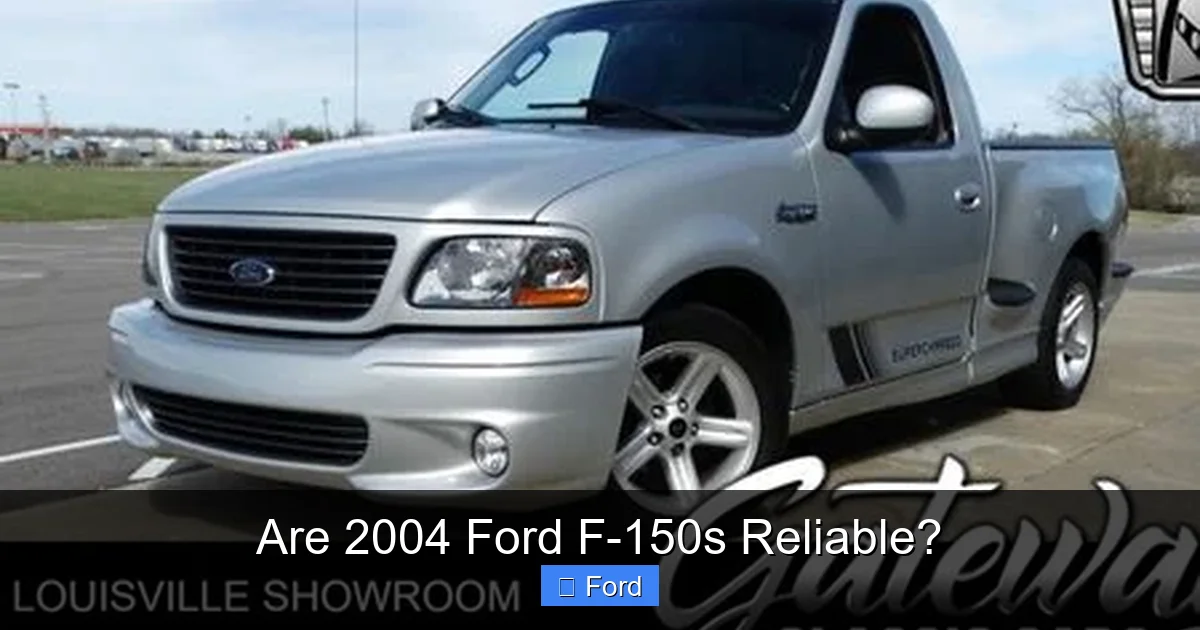
Visual guide about Are 2004 Ford F-150s Reliable?
Image source: image.hmn.com
Suspension and Steering Wear
As a heavy-duty truck, suspension components wear out. Ball joints, tie rod ends, and wheel bearings are wear items you should expect to replace, especially on a truck with over 150,000 miles. Listen for clunks over bumps and feel for play in the steering. The solid front axle is durable, but the surrounding components are not. Also, the rear leaf springs can sag or break, affecting ride height and handling. These are normal repairs for a vehicle of this age and use, but they add up.
Electrical Gremlins
The 2004 introduced more complex electronics. Common complaints include faulty window regulators, dash cluster failures (especially the speedometer and odometer), and issues with the passive keyless entry system. These are annoying but usually not dangerous or extremely expensive.
The Rust Apocalypse
This cannot be overstated. Rust is the number one reason 2004 F-150s are scrapped. The frame, particularly around the front cab mounts and rear axle, is notorious for severe corrosion. You must physically get underneath the truck with a flashlight and a pry bar. Tap the frame rails. If metal flakes off or you see large holes, walk away. Surface rust is one thing; structural rust is a death sentence for the truck and a safety hazard. Also, check the cab corners behind the rear wheels, the rocker panels, and the rear bumper mounts. A rust-free 2004 F-150 in the Midwest or Northeast is a unicorn and will command a premium. In the Southwest, rust is less of an issue, but dry heat can crack hoses and belts.
Exhaust Manifold Cracks
Especially on the 5.4L engines (both 2V and 3V), the cast iron exhaust manifolds are prone to cracking at the collector where they meet the Y-pipe. This causes a very loud ticking or popping noise that gets louder as the engine warms. The fix requires new manifolds and gaskets, costing $800-$1,500 per side. It’s a classic, expensive Ford headache of this era.
Maintenance: The Key to Longevity
If you buy a 2004 F-150, you are buying a project. Even a perfect one needs work. A proactive maintenance schedule is what separates a reliable truck from a money pit.
- Fluids are Priority #1: Engine oil every 5,000 miles. Differential fluid every 30,000-50,000 miles. Transfer case fluid (if 4×4) every 50,000 miles. Transmission fluid is the most critical. If there is no record of a change, assume it’s never been done and budget for it immediately.
- Spark Plugs on 5.4L 3V: If you buy a 5.4L, budget for spark plug replacement. Do not cheap out on this job. Find a mechanic who has done it before and knows how to extract them without breaking them off.
- Inspect the Timing Chain: The 4.6L and 5.4L use timing chains, not belts. They are designed to last the life of the engine, but tensioners and guides can wear. Listen for a rattling from the front of the engine on cold starts—this could indicate a worn tensioner.
- Cooling System: Replace the water pump, thermostat, and radiator cap as a set around 100,000 miles. The plastic coolant reservoirs also crack with age.
- Brakes: These trucks are heavy. Expect to do brakes more often than a car. Use quality pads and rotors.
Following a strict maintenance regimen, you can absolutely get 200,000+ miles out of a 2004 F-150’s engine and drivetrain. The transmission, however, remains the wild card.
Ownership Costs and Final Verdict
Let’s talk money. A running, driving 2004 F-150 with decent body can be found for $3,000 to $8,000 depending on engine, trim (Lariat, King Ranch, Platinum are more valuable), mileage, and region. That’s the cheap part. The expensive part is what comes next.
A typical “get it roadworthy” checklist for a neglected example might include: transmission service ($300), tune-up with spark plugs ($400 for 4.6L, $800+ for 5.4L 3V), brake job ($800), four new tires (check out our guide on best tires for Ford F-150 for options, roughly $600-$1,000), and suspension bushings/ball joints ($500). That’s $2,500+ before you even address rust or a failing transmission.
So, are they reliable? In the grand scheme of 20-year-old trucks, they are average to below-average. They are not as robust as the 1990s F-150s or the later 2009-2014 models with the more reliable 4-speed and 6-speed transmissions. Their reputation is marred by the transmission flaw and rust. However, their parts availability is a huge plus. If you find a one-owner, garage-kept truck with a 4.6L engine, a documented transmission service, and a solid frame, you have found a gem. It will need repairs, but they will be predictable and affordable. If you find a cheap 5.4L 3V with no history and a rusty frame, you are buying a $5,000 problem.
For a family needing a spacious, capable, and cheap-to-insure truck for occasional hauling and camping, a good 2004 F-150 can be perfect. For someone who needs a daily driver they can trust without a second thought to tow a heavy trailer across the country, look at a later model year. Always, always, get a pre-purchase inspection from a mechanic who knows these trucks. Their expertise is worth every penny.
Conclusion: A Diamond in the Rough
The 2004 Ford F-150 is a truck of extremes. It can be a beautifully simple, rugged, and repairable workhorse. It can also be a rusty, transmission-junking money pit. The difference lies entirely in the specific truck’s history and condition. The 4.6L V8 is your safest engine bet. A clean, solid frame is your most valuable asset. A verified transmission service history is your only insurance policy. If you approach buying a 2004 F-150 with the mindset of a careful inspector and a willing tinkerer, you can own a piece of American truck legend that provides years of honest service. If you want a worry-free, turn-key daily driver, your money is better spent on a newer, more reliable model year. But for the savvy buyer on a budget, the 2004 F-150 remains a compelling, if risky, proposition.
Frequently Asked Questions
Is the 2004 Ford F-150 a good first truck?
It can be, with major caveats. It’s cheap to buy and insure, and parts are everywhere. However, the potential for costly transmission and rust repairs means a first-time buyer must be extra diligent with a pre-purchase inspection and have a financial cushion for repairs.
What is the most reliable engine in the 2004 F-150?
The 4.6L V8 is widely considered the most reliable. It’s simpler, has fewer known catastrophic issues than the 5.4L 3V, and is proven to last for hundreds of thousands of miles with basic upkeep.
How much does it cost to rebuild the transmission in a 2004 F-150?
A proper rebuild from a reputable transmission shop typically costs between $3,000 and $4,500. A remanufactured unit installed can run $4,000 to $5,500. This is the single largest potential repair cost for this truck.
What should I look for when buying a used 2004 Ford F-150?
Beyond a standard test drive, you must: 1) Check the frame for structural rust, 2) Verify transmission service history and check fluid condition, 3) Identify the engine (4.6L vs. 5.4L 3V) and ask about spark plug history, 4) Listen for cam phaser rattle on cold start if it’s a 5.4L 3V, and 5) Get a full mechanical inspection by a trusted mechanic.
How many miles can a 2004 Ford F-150 last?
With exceptional maintenance, a 4.6L or 5.4L 2V engine can reach 250,000-300,000 miles. The transmission, however, is the limiting factor. Many original transmissions fail between 150,000 and 200,000 miles. A replaced or rebuilt transmission can then allow the engine to keep going.
Is it worth fixing a 2004 Ford F-150 with transmission problems?
It depends on the truck’s overall condition and value. If the frame is solid, the body is good, and the engine is sound, a $3,500 transmission rebuild can be a worthwhile investment to keep a truck you like. If the truck has severe rust or a problematic 5.4L 3V engine, the cost may exceed the truck’s post-repair value.
