
Where Is the Jeep Tool Kit Located

The location of your Jeep’s factory tool kit is not one-size-fits-all; it varies significantly by model, model year, and even trim level. While many Wranglers store it behind the passenger seat or in a cargo bin, Grand Cherokees and Cherokees often use the rear cargo area, and the Gladiator keeps it in the truck bed. Always consult your owner’s manual first, as the definitive source, and be prepared to check multiple common hiding spots like under floor mats, behind panels, or in dedicated storage bins.
Key Takeaways
- Understanding Where Is the Jeep Tool Kit Located: Provides essential knowledge
📑 Table of Contents
- Introduction: The Great Jeep Treasure Hunt
- Understanding the “Why”: Why Locations Change by Model
- The Wrangler Family: TJ, JK, JL, and JT Gladiator
- Cherokee and Grand Cherokee: The SUV Approach
- Renegade and Other Models
- Aftermarket Kits, Modifications, and What to Do If It’s Missing
- Best Practices for Tool Kit Storage and Maintenance
- Conclusion: Knowledge is Your Most Important Tool
Introduction: The Great Jeep Treasure Hunt
So, you’re staring at a flat tire on your trailside adventure, or you need to tighten a loose bolt after a bumpy ride. You reach for the trusty Jeep tool kit, only to realize… you have no idea where it actually is. Sound familiar? You’re not alone. One of the most common—and frustrating—questions for Jeep owners is, “Where is the Jeep tool kit located?” The answer, frustratingly, is: “It depends.”
Jeep, in its wisdom (or perhaps to keep things interesting), has not standardized the tool kit location across its lineup. What holds true for a 2020 Wrangler JL will be different from a 2015 Grand Cherokee or a 2023 Gladiator. This isn’t a design flaw; it’s a legacy of platform sharing and model-specific engineering. The good news is, once you understand the logic and common hiding spots for your particular Jeep family member, you’ll never be caught off guard again. This guide will be your map to solving this universal mystery.
Understanding the “Why”: Why Locations Change by Model
Before we dive into specific models, it helps to understand the philosophy behind Jeep’s storage decisions. The primary goal is to maximize usable interior and cargo space without compromising safety or convenience. A heavy metal jack and tools take up room, so engineers tuck them away in spaces that are otherwise dead air— cavities created by wheel wells, under floors, or in panels.
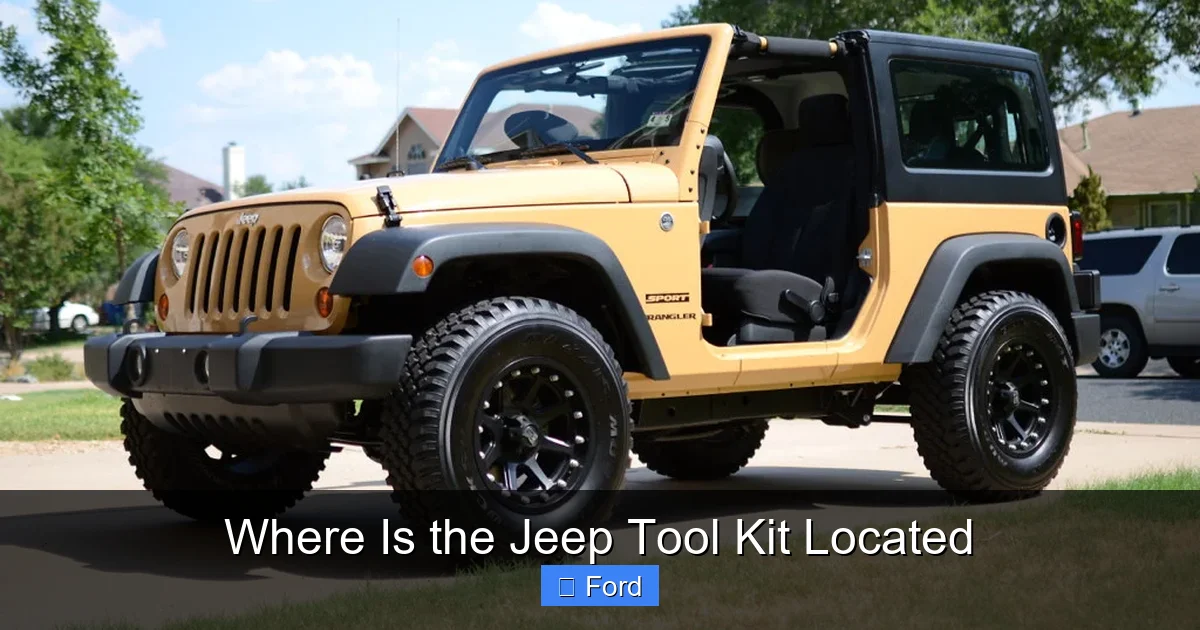
Visual guide about Where Is the Jeep Tool Kit Located
Image source: travelguide4you.com
The Platform Dictates the Spot
Jeep builds vehicles on different platforms. The Wrangler ( JL/JT) and Gladiator share a platform but have different body styles (SUV vs. pickup), leading to different storage logic. The unibody Cherokee and Grand Cherokee use entirely different architectures. The tool kit location is a byproduct of these underlying structures. For instance, the space behind a Wrangler’s front passenger seat is a large, unused cavity in 4-door models, but that space doesn’t exist in the same way in a Grand Cherokee.
Evolution Over Generations
Even within the same model line, locations can shift. The legendary TJ Wrangler (1997-2006) famously stored its jack and tools in the rear wheel well liners—a spot that disappeared with the JK’s redesigned interior. Always consider your Jeep’s generation when searching. A great resource for model-specific details, beyond this article, is the dedicated owner’s forum for your specific Jeep year and trim.
The Wrangler Family: TJ, JK, JL, and JT Gladiator
The Wrangler is the heart of Jeep, and its tool kit location is the most commonly asked about. Here’s the breakdown by generation.
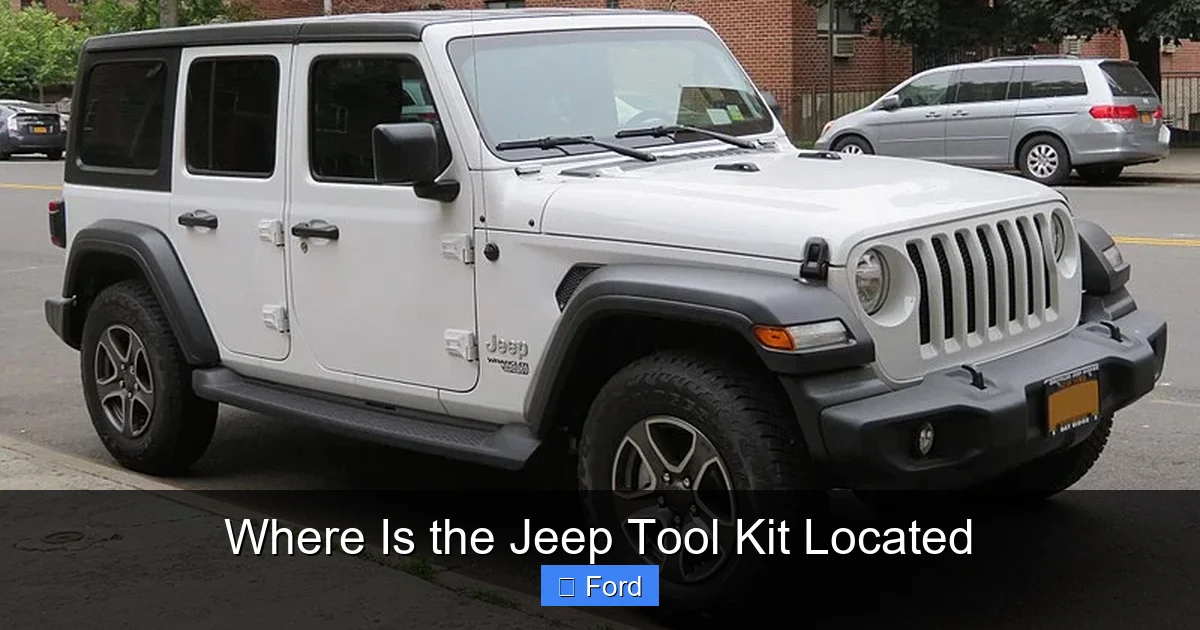
Visual guide about Where Is the Jeep Tool Kit Located
Image source: travelguide4you.com
For TJ Wranglers (1997-2006)
If you own a classic TJ, look to the rear. The factory jack and lug wrench are typically stored in fabric pouches or holders attached to the inside of the rear wheel well liners. You’ll need to remove the plastic liner (usually clipped in place) to access it. This was a clever use of space but made the kit vulnerable to mud and water, which is why later designs moved it inside the cabin.
For JK & JL Wranglers (2007-Present) & 4-Door Models
This is the most consistent location for modern Wranglers. For all 4-door JK and JL models, the tool kit is stored in a dedicated bin located behind the front passenger seat.
- To access it, simply flip the front passenger seat forward. You’ll see a rectangular, lidded plastic bin on the floor.
- Open the lid to find the jack, lug wrench, and often a screwdriver or two.
- This location is brilliant: it’s out of the way of cargo, protected from the elements, and easily accessible from either side of the vehicle.
For 2-Door JK & JL Wranglers
Two-door models lack the rear seat cavity of their 4-door siblings. Their kit is stored under the rear cargo floor.
- Lift the rear cargo mat. You’ll find a rigid, molded plastic tray covering the spare tire.
- Lift this entire tray. The tool kit is usually secured in a corner or a specific cutout underneath.
- Some owners report it being in a small bin on the side of the tire well. Be prepared to move the spare tire if you have a large one.
For the Jeep Gladiator (JT)
The Gladiator, being a pickup, uses the bed for its factory tool storage. The kit is housed in a locked, weatherproof compartment integrated into the tailgate.
- Open the tailgate. On the inside, you’ll see a panel that looks like part of the tailgate structure.
- This panel has a lock (often keyed the same as your ignition) and a handle. Unlock and pull it open.
- Inside is a sealed bin containing the jack and tools. This keeps them secure, dry, and out of the cab.
Pro Tip: If you’ve added a best lift kit for Jeep Gladiator that includes larger tires, your factory jack may not have enough reach. Consider an aftermarket high-lift jack stored separately in the bed.
Cherokee and Grand Cherokee: The SUV Approach
The unibody Cherokee and Grand Cherokee follow a more traditional SUV storage pattern: the rear cargo area. However, the exact spot has varied.
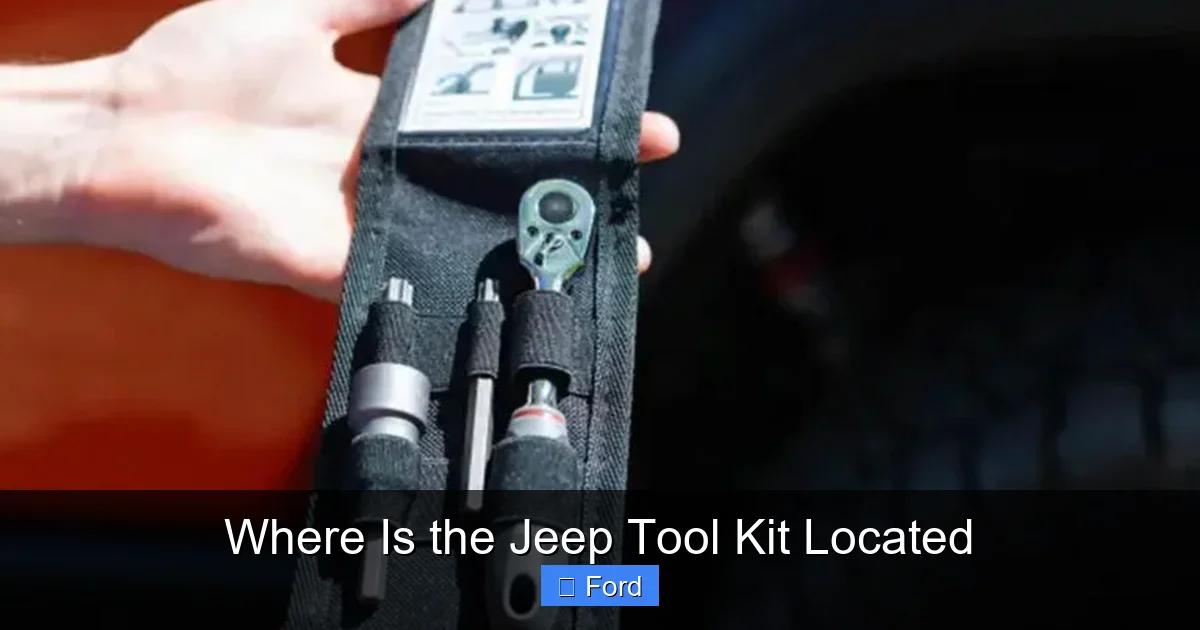
Visual guide about Where Is the Jeep Tool Kit Located
Image source: travelguide4you.com
Grand Cherokee (WK, WL Generations)
For most recent Grand Cherokees (2011-present), the tool kit is found under the rear cargo floor mat.
- Fold the rear seats if needed for access.
- Lift the cargo area’s rubber or carpeted mat. Beneath it, you’ll find a flat, rigid plastic tray covering the spare tire (if equipped) or just the floor.
- Lift this tray. The jack and tools are typically stored in a cutout on one side, often secured with a strap or Velcro.
- In some models, there’s a smaller, lidded bin built into the side wall of the cargo area—check there if the tray is empty.
Cherokee (KL Generation)
The compact Cherokee (2014-2023) follows a similar pattern. The primary location is beneath the rear cargo floor.
- Remove the rear cargo mat.
- Look for a full-width plastic tray. It may lift off completely or hinge open.
- The tool kit is usually tucked into a corner, sometimes in a fabric pouch inside the tray.
- If you have the “Trailhawk” trim, note that it may have a different storage scheme due to its off-road focus.
Important Note: If your Cherokee or Grand Cherokee does not have a spare tire (run-flat tires or tire sealant kit), the tool kit might be stored in a different compartment, like the sidewall of the trunk or even under the hood. The owner’s manual is crucial here.
Renegade and Other Models
The smaller, subcompact Renegade and older models like the Compass have their own logic.
Jeep Renegade (BU Generation)
The Renegade, sharing a platform with the Fiat 500X, stores its kit in the rear cargo area, often in a sidewall compartment.
- With the rear seats up, check the plastic trim on the left or right side of the cargo bay.
- You should find a small, lidded door or panel that opens to reveal a bin holding the jack and tools.
- It’s a compact kit suited for the Renegade’s smaller size.
Classic Jeep Models (Pre-2000)
For older Jeeps like the Cherokee XJ (1984-2001) or Grand Wagoneer, locations are even more varied and often less refined. The XJ, for instance, might store the jack mounted on the rear bumper or inside the cargo area against the tailgate. Searching for a specific year online via enthusiast forums is your best bet for these classics.
Aftermarket Kits, Modifications, and What to Do If It’s Missing
What if you’ve checked all the common spots and found… nothing? Several scenarios could explain this.
The Aftermarket Lift Kit & Tire Situation
If your Jeep has a significant lift and very large tires, the factory jack may have been removed or replaced by a previous owner because it no longer fit or functioned properly. The added height can make the stock jack unsafe or ineffective. In this case, you may only find the lug wrench, or the entire compartment might be empty. This is common on heavily modified Wranglers and Gladiators. You may want to invest in a high-quality aftermarket floor jack and a separate tool set stored in a secure lockbox. Researching the best 3-inch lift kit for Jeep JK or similar modifications often comes with community advice on jack solutions.
Previous Owner Removal
It’s not uncommon for owners to remove the factory kit to free up space, especially if they carry dedicated recovery gear (shackles, tow straps, a dedicated high-lift jack). They might have stashed it in a different location or discarded it. If you bought the Jeep used, the previous owner’s notes or a chat with them can solve the mystery.
Vehicle Without a Spare Tire
Many modern Jeeps, especially higher-trim models, come with tire sealant and an air compressor instead of a spare tire. In these cases, the tool kit location might be repurposed to store the sealant can and compressor, or the tools might be stored elsewhere entirely. Again, the manual is key.
What to Do If It’s Truly Missing
If you’ve confirmed the kit is gone, don’t panic. You need to replace it for safety.
- Get the OEM Part Number: Use your VIN and a call to a Jeep dealership parts department to get the exact factory tool kit part number for your model/year.
- Consider an Aftermarket Upgrade: For better quality and longevity, purchase a standalone scissor jack or bottle jack rated for your vehicle’s weight, along with a robust lug wrench (a 4-way is preferred). Store them in the original bin or a new lockable cargo box.
- Check Your Tire Changing Skills: While you have the car up, practice changing a tire with your new tools. Ensure the jack point is correct (consult manual—usually a reinforced pinch weld or designated pad). This is a critical skill for any Jeep owner.
Best Practices for Tool Kit Storage and Maintenance
Once you’ve located (or replaced) your kit, proper care ensures it’s ready when you need it most.
Keep It Clean and Dry
Your factory storage bin is designed to be weather-resistant, but not waterproof. Over time, mud, water, and road salt can corrode the jack’s components. Periodically remove the tools, wipe them down with a clean rag, and apply a light coat of lubricant to the jack’s screw mechanism. Check the bin for debris and water, and dry it out.
Secure It Properly
Most kits are designed to be held in place by the bin’s shape or a simple strap. Ensure everything fits snugly so it doesn’t become a dangerous projectile during sudden stops or off-road maneuvers. If your kit is loose, use Velcro straps or a small cargo net to secure it.
Know the Weight and Lift Capacity
Your factory scissor jack is designed for emergency use only—changing a tire, not for performing maintenance under the vehicle. Know its maximum lift height and weight rating. For any work requiring you to get under the Jeep, you must use proper jack stands on solid ground. Never rely on the scissor jack for this.
Custom Storage Solutions
Many Jeep owners augment or replace the factory bin. Popular options include:
- Lockable Under-Seat Drawers: For Wranglers, these replace the factory bin with a secure, sliding drawer.
- Tailgate Organizers (Gladiator): The Gladiator’s tailgate compartment is perfect, but adding a small tool roll inside keeps everything tidy.
- Cargo Boxes: A small, waterproof lockbox bolted to the cargo area floor provides ultimate security for tools and recovery gear.
When adding storage, ensure it doesn’t interfere with seat movement, airbag sensors, or spare tire clearance.
Conclusion: Knowledge is Your Most Important Tool
Finally knowing where your Jeep’s tool kit is located transforms a moment of panic into a routine task. The key takeaway is this: your owner’s manual is the ultimate authority. Use it. If the manual is MIA, use the model-specific guide above as your starting point. Remember the core logic: Wranglers (4-door) hide it behind the passenger seat; 2-doors hide it under the cargo floor; Grand Cherokee/Cherokee hide it under the cargo mat; Gladiator hides it in the tailgate. Check these spots methodically.
Beyond location, ensure the kit is complete, functional, and that you know how to use it. A flat tire in the middle of nowhere is no time to discover your jack is broken or you don’t know where the lug nuts are. Take 15 minutes today to find that kit, check its condition, and practice getting it out. That small investment of time is the difference between a minor inconvenience and a major ordeal on your next adventure. Your Jeep is built for capability; make sure you are too.
Frequently Asked Questions
Is the Jeep tool kit the same for all Wrangler models?
No, it is not. The location differs between 2-door and 4-door models, and the contents can vary slightly by year and trim. The 4-door JK/JL stores it behind the passenger seat, while the 2-door stores it under the rear cargo floor.
My Gladiator’s tailgate tool compartment is locked and I don’t have the key. What do I do?
First, check if the key is on your key fob or main keyring—it’s often a small, separate silver key. If it’s truly lost, a locksmith or a Jeep dealership can make a new key using your VIN. You can also carefully drill out the lock cylinder as a last resort, but this will require replacing the lock assembly.
Can I replace my factory Jeep tool kit with a better one?
Absolutely, and it’s a great idea. Factory kits are minimal. You can purchase a higher-quality, higher-capacity scissor jack or a compact bottle jack, along with a 4-way lug wrench. Store these upgraded tools in the original bin or a custom storage box. Just ensure the jack is rated for your Jeep’s weight.
What if my Jeep didn’t come with a spare tire? Where are the tools then?
If your Jeep has a tire sealant canister and compressor instead of a spare, the tools are often stored in the same location as if there were a spare (e.g., under the cargo mat). Sometimes, the sealant kit takes the place of the jack. Your owner’s manual will specify the exact storage for your no-spare-tire configuration.
My Jeep has a lift kit and big tires. Will the factory jack still work?
Probably not, or it will be extremely unsafe. A significant lift increases the distance to the ground, and the factory jack may not extend far enough to lift the tire off the ground. More importantly, the jack’s lifting points may no longer align with your Jeep’s reinforced pinch welds. You must purchase an aftermarket high-lift jack or a bottle jack with sufficient stroke and capacity for your modified vehicle.
Should I keep my Jeep tool kit locked away?
It depends on your risk. The factory bins are not lockable. In a convertible Wrangler or if you frequently leave valuables in the vehicle, consider moving the kit to a lockable under-seat drawer or a small lockbox bolted to the floor. This deters theft of the tools themselves and prevents someone from using your jack to steal your Jeep.
