
What Is the Most Common Problem with the Toyota Yaris?

The most common problem with the Toyota Yaris, particularly the 2007-2011 models, is a failing intake manifold gasket. This can cause rough idling, poor fuel economy, and check engine lights. While concerning, Toyota addressed it with technical service bulletins and replacements. Overall, the Yaris remains an extremely reliable and cost-effective vehicle when properly maintained.
So, you’re thinking about a Toyota Yaris. Or maybe you already own one and have heard a whisper, a rumor, a nagging question: “What’s the most common problem with this thing?” It’s a smart question. The Toyota Yaris has built a legendary reputation as a cheap-to-run, bulletproof little commuter car. It’s the automotive equivalent of a trusty pocketknife—simple, functional, and incredibly hard to break. But even the most reliable tools have their known quirks, their Achilles’ heels. For the Toyota Yaris, that Achilles’ heel has a name: the intake manifold gasket.
Let’s be clear upfront. Calling this the “most common problem” does not mean the Yaris is an unreliable car. In the grand hierarchy of automotive woes, this is a minor, well-understood, and fixable issue. It’s more of a known personality trait than a fatal flaw. When stacked against the transmission failures, electrical gremlins, or turbocharger disasters that plague some competitors, the Yaris’s issue is a manageable papercut. But for an owner, a papercut can still be annoying and painful. This article will dive deep into that papercut. We’ll explore exactly what this gasket is, why it fails, how to spot it, what the fix entails, and crucially, what it means for you as a current or prospective Yaris owner. We’ll also touch on the Yaris’s other, far less common, quirks to give you the complete picture.
Key Takeaways
- The intake manifold gasket failure is the Yaris’s signature issue. This seal between the intake manifold and cylinder head can degrade, causing vacuum leaks and performance problems.
- It primarily affects the 2007-2011 model years with the 1.5L 1NZ-FE engine. Later models and the Yaris Hatchback (2012+) saw design improvements that largely resolved this.
- Symptoms are often subtle at first. Listen for hissing sounds, watch for erratic idle speeds, decreased MPG, and a illuminated check engine light with codes P0171/P0174.
- Toyota acknowledged the problem. Dealerships often performed the repair under goodwill or extended warranty considerations in the past, but coverage has since expired.
- The repair is moderate in cost and complexity. It’s not a trivial DIY for most, but not a catastrophic engine rebuild either, typically costing $500-$1000 at a shop.
- Despite this flaw, the Yaris’s core reliability shines through. Its simple, proven mechanical design and lack of other major systemic issues keep it highly recommended for budget-conscious drivers.
- A pre-purchase inspection is non-negotiable. For used Yaris buyers, having a mechanic specifically check for this leak and overall engine health is the most critical step.
📑 Table of Contents
- The Usual Suspect: The Intake Manifold Gasket Failure
- Diagnosis: Is It Really the Gasket?
- Toyota’s Response: Technical Service Bulletins and the Fix
- Other Potential (But Much Less Common) Yaris Issues
- Ownership Perspective: Is the Yaris Still a Smart Buy?
- Conclusion: A Flawed Gem, But a Gem Nonetheless
The Usual Suspect: The Intake Manifold Gasket Failure
If you were to gather a hundred Toyota Yaris owners in a room and ask about their mechanical woes, a significant portion would point to one specific part: the intake manifold gasket. This isn’t a random part failing; it’s a known design vulnerability in a specific generation of the car. Understanding why requires a quick dip under the hood.
What Is the Intake Manifold Gasket and Why Does It Matter?
Think of your engine as a series of controlled explosions. It needs a precise mix of air and fuel. The intake manifold is the plumbing that delivers that air. It’s a series of tubes, one for each cylinder, that bolts directly to the top of the engine—the cylinder head. The gasket is the thin, crushable seal sandwiched between these two metal components. Its job is airtight sealing. It must keep the high-pressure, oxygen-rich intake air from escaping (a “vacuum leak”) and also prevent hot exhaust gases from the cylinder head ports from sneaking into the intake stream. When this seal fails, the engine’s delicate air-fuel ratio calculation goes out the window. The engine control unit (ECU) sees lean conditions (too much air) and tries to compensate by adding more fuel, leading to a host of problems.
The Perfect Storm: Design, Material, and Heat
The failure is most prevalent in the 2007 through 2011 Toyota Yaris models sold in North America. These cars are powered by the 1.5-liter 1NZ-FE engine, a workhorse of a motor known for its fuel efficiency and durability. The problem stems from the original gasket material and its exposure to heat cycling. The intake manifold on these models is made of plastic (a composite, really). Plastic expands and contracts at a different rate than the aluminum cylinder head. Over thousands of heat cycles—from a cold start to operating temperature and back again—this differential movement stresses the gasket. Furthermore, the design placed the gasket in a high-heat zone near the exhaust ports. The original paper-like composite gasket could eventually dry out, crack, and lose its sealing ability. It’s not a matter of if for some, but when.
Spotting the Symptoms: Your Yaris Is Trying to Tell You Something
The genius of this failure is its subtle onset. It doesn’t typically lead to a sudden, dramatic breakdown that leaves you stranded. Instead, it whispers its complaints. Here are the key symptoms, in order of typical appearance:
- The Check Engine Light (CEL): This is often the first and most consistent sign. The ECU detects the lean air-fuel condition and throws codes. The most common are P0171 (System Too Lean – Bank 1) and P0174 (System Too Lean – Bank 2). A P0300 (random misfire detected) may also appear as the lean condition makes combustion unstable.
- Rough or Erratic Idle: The engine may idle higher or lower than normal, or the RPMs may fluctuate noticeably when stopped at a light. It might feel like it’s about to stall. This is the lean condition causing incomplete combustion.
- Hissing or Whistling Sound: This is the classic tell-tale sign of a vacuum leak. You might hear a distinct hissing noise from the engine bay, often louder when the engine is under load (accelerating). Sometimes, placing a hand near the intake manifold while the engine runs can reveal a palpable draft.
- Decreased Fuel Economy (MPG): Since the ECU is adding extra fuel to compensate for the unmetered air, you’re literally burning more gas to go the same distance. A drop of 2-4 MPG is common and a major red flag.
- Loss of Power or Hesitation: Especially under acceleration, the engine may feel flat, unresponsive, or have a “flat spot.” The incorrect air-fuel mix can’t produce optimal power.
- Failed Emissions Test: The lean condition often leads to higher hydrocarbon (HC) and carbon monoxide (CO) emissions, causing an immediate failure on a smog check.
It’s critical to note that these symptoms can also be caused by other, simpler issues like a cracked vacuum hose, a faulty mass airflow sensor (MAF), or dirty fuel injectors. That’s why diagnosis is key.
Diagnosis: Is It Really the Gasket?
Before you part with any money, a proper diagnosis is essential. A good mechanic won’t just replace the gasket based on a P0171 code alone. They will perform a systematic process to isolate the leak.

Visual guide about What Is the Most Common Problem with the Toyota Yaris?
Image source: motorbiscuit.com
The Professional Diagnostic Path
First, they’ll check for any obvious, external vacuum leaks—cracked hoses, disconnected PCV valves, or a leaking brake booster hose. These are quick, cheap fixes. If nothing is found externally, the intake manifold gasket becomes the prime suspect. The most definitive test is a smoke machine test. This tool forces non-toxic, visible smoke into the intake system while the engine is off. If there’s a leak, smoke will billow out from the faulty gasket area. It’s visual, conclusive, and relatively quick. Another method is using a propane enrichment test (done with extreme caution) or monitoring fuel trim data with a scan tool—consistently high long-term fuel trim values strongly indicate a vacuum leak.
What About a DIY Diagnosis?
For the mechanically inclined, you can do some basic checks. With the engine running, carefully spray a little starter fluid or brake cleaner around the perimeter of the intake manifold where it meets the cylinder head. If the engine RPMs change or smooth out momentarily when you spray a particular spot, you’ve likely found your leak. Warning: Be extremely careful around moving belts and hot engine parts. This is a preliminary check, not a substitute for a smoke test.
Toyota’s Response: Technical Service Bulletins and the Fix
This isn’t a secret that Toyota kept from its dealers. The company was well aware of the issue. They issued multiple Technical Service Bulletins (TSBs) to their dealership networks. TSBs are not recalls; they are internal service communications that outline known problems and recommended fixes. Key TSBs for the Yaris 1NZ-FE engine (like TSB 09-012) detailed the symptoms, diagnostic procedures, and the updated repair method.

Visual guide about What Is the Most Common Problem with the Toyota Yaris?
Image source: autozonic.com
The Updated Gasket and Repair Procedure
The fix wasn’t just about slapping in a new gasket. Toyota developed an updated, multi-layer steel (MLS) intake manifold gasket. MLS gaskets are more robust, better handling heat cycling and differential movement between the plastic manifold and aluminum head. The repair procedure is labor-intensive. It involves:
- Removing the entire intake manifold assembly (throttle body, fuel rail, sensors, etc.).
- Thoroughly cleaning the cylinder head and manifold sealing surfaces.
- Installing the new MLS gasket with a specific torque sequence.
- Reassembling everything and ensuring all electrical connections are secure.
Because of the labor hours involved (often 4-6 hours), the cost is primarily in shop time, not the part itself. In the past, especially during the warranty period or shortly after, some dealers performed this repair as a goodwill gesture. However, for a 2024 owner of a 2009 Yaris, this is a fully out-of-pocket repair. The good news is that once this updated gasket is installed, the problem is effectively solved for the life of the car. There are almost no reports of the MLS gasket failing.
Other Potential (But Much Less Common) Yaris Issues
To be fair and comprehensive, we must acknowledge that the intake manifold gasket is the standout. However, no car is perfect. Here are other minor, sporadic issues reported by some Yaris owners, which pale in comparison to the gasket’s prevalence:
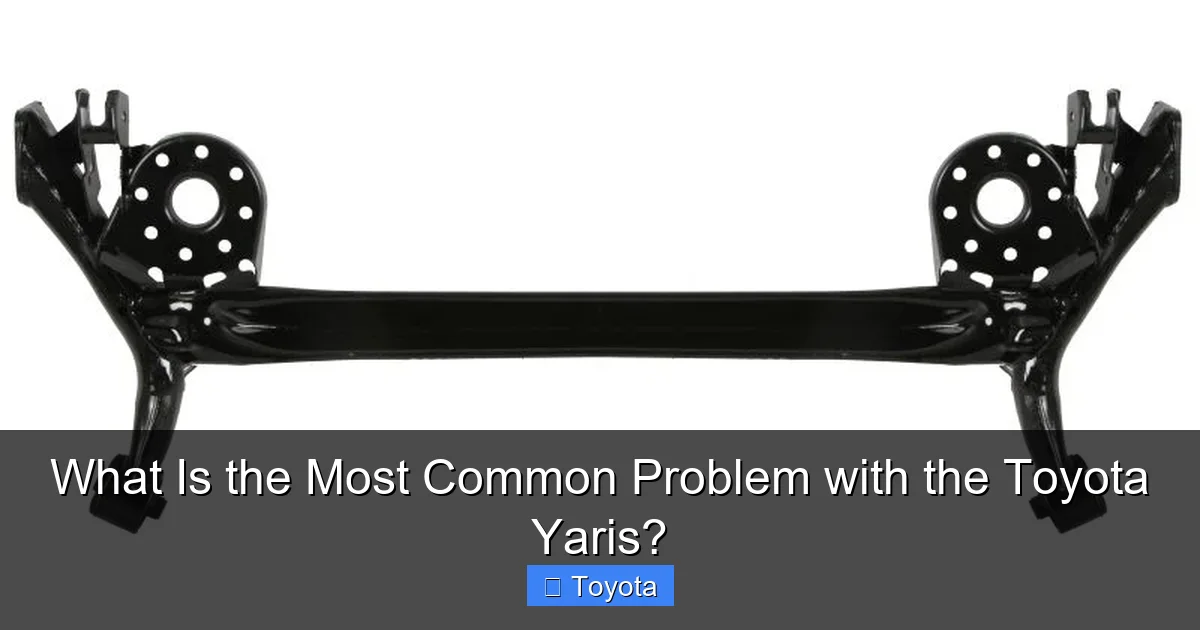
Visual guide about What Is the Most Common Problem with the Toyota Yaris?
Image source: trgovina.kruno.si
- Exhaust Manifold Bolt Breakage: On some early models, the studs holding the exhaust manifold can shear off due to heat and corrosion. This causes a loud exhaust leak. It’s a costly fix requiring specialized tools but is not widespread.
- Minor Electrical Gremlins: Things like intermittent issues with power windows, door locks, or the radio. These are typically simple connector or switch failures, common to any economy car.
- Clutch Wear (Manual Transmission): A non-issue for automatics. For manuals, aggressive driving can lead to premature clutch wear, but this is driver-dependent, not a design flaw.
- Suspension Bushings: Over very high mileage (150k+ miles), control arm bushings and sway bar links can wear out, leading to clunks over bumps. This is normal wear and tear for any vehicle.
- Air Conditioning Compressor: Like any car’s A/C, the compressor can fail. It’s not disproportionately common in the Yaris.
The takeaway here is that there is no second “common” problem. The Yaris’s engineering is fundamentally sound. Its issues are almost exclusively wear-and-tear items or the one specific, now-solved gasket defect.
Ownership Perspective: Is the Yaris Still a Smart Buy?
Armed with this knowledge, how should it inform your decision? For a used Yaris buyer, knowledge is power and savings.
Buying a Used Yaris: Your Action Plan
1. Target the Right Model Year: If you want to avoid the gasket issue entirely, focus on 2012 and later models. The Yaris underwent a refresh and the engine architecture was improved. For budget reasons, if you’re looking at a 2007-2011 model, proceed to step 2 with extra vigilance.
2. Pre-Purchase Inspection (PPI) is MANDATORY: Never buy a used Yaris (or any used car) without a thorough pre-purchase inspection by a trusted, independent mechanic. Specifically instruct them: “Please perform a smoke test on the intake system to check for vacuum leaks and check for any stored or pending lean condition codes.” This $150-$200 inspection could save you $800.
3. Ask for Service History: Has the intake manifold gasket ever been replaced? If yes, with what part? If they have a receipt showing the updated MLS gasket was installed, that’s a huge plus. It’s a “set it and forget it” repair.
4. Listen and Test Drive: On the test drive, pay attention to idle quality in a parking lot. Listen for hissing. Does the CEL light come on during the drive? Does the fuel economy seem abnormally low for the driving conditions?
5. Factor in the Fix: If you find a great deal on a 2009 Yaris with 100k miles but the gasket is original, budget $750-$1000 for the repair in your total cost of ownership. If the price reflects this, it’s still a fantastic buy. If the price is top-dollar and the gasket hasn’t been touched, walk away or negotiate hard.
The Irresistible Yaris Value Proposition
Even with the gasket issue looming, the math often still works. The Toyota Yaris offers:
- Exceptional Fuel Economy: Consistently 35-40 MPG highway, even on older models. It’s a hybrid-like experience without the hybrid price.
- Low Cost of Ownership: Cheap insurance, inexpensive parts, and simple mechanics mean repairs are always affordable. Oil changes are quick and use little oil.
- Proven Reliability: Outside of the gasket, these cars are known to easily surpass 250,000 miles with basic maintenance. The transmissions (both manual and automatic) are robust.
- Surprising Practicality: For its size, the hatchback (if equipped) is very usable. The sedan’s trunk is also generous.
When you compare a well-maintained Yaris to a similarly priced used car from another brand, you’re often comparing a known, fixable issue to a history of potentially unknown, more expensive problems. The Yaris’s transparency is its strength. You know what you’re dealing with.
Conclusion: A Flawed Gem, But a Gem Nonetheless
So, what is the most common problem with the Toyota Yaris? It’s the intake manifold gasket on the 1NZ-FE engines from 2007-2011. It’s a fact. It’s a design limitation that Toyota corrected. It creates a specific set of symptoms that, with a proper diagnostic, leads to a single, definitive repair. Once that repair is done with the proper updated parts, the Yaris reverts to its true nature: an incredibly dependable, frugal, and honest little car.
The story of the Yaris’s gasket is not a tale of unreliability. It’s a story of predictability. In the used car market, predictability is gold. You’d rather deal with a known, common issue than be blindsided by a rare, catastrophic one. The Yaris gives you that. It allows you to be an informed buyer, to budget for a specific repair, and then enjoy years of trouble-free driving. Its other strengths—amazing fuel economy, low running costs, and Toyota’s overall build quality—so completely overshadow this one flaw that the Yaris remains one of the best used car values on the market for anyone prioritizing low cost and high reliability. Do your homework, get that PPI, and you’ll likely end up with a car that will faithfully serve you for a decade or more with minimal fuss.
Frequently Asked Questions
What are the first signs my Toyota Yaris has an intake manifold gasket leak?
The earliest signs are usually a persistent check engine light (often with codes P0171/P0174) and a slightly rough or high idle at stoplights. You may also notice a slight hissing sound from the engine bay and a gradual drop in your fuel economy.
How much does it cost to fix the intake manifold gasket on a Yaris?
The repair typically costs between $500 and $1,000 at an independent repair shop. The majority of this cost is labor, as the intake manifold must be completely removed. The updated gasket part itself is relatively inexpensive.
Which Toyota Yaris model years are affected by this problem?
The issue is most common and well-documented in the 2007, 2008, 2009, 2010, and 2011 model years equipped with the 1.5-liter 1NZ-FE engine. The 2012 and later models (and the Yaris Hatchback from 2012+) used an improved design and gasket that largely eliminated this concern.
Can I fix the intake manifold gasket myself on my Yaris?
It’s a complex, intermediate-to-advanced DIY job. It requires numerous tools, careful torque sequencing, and a methodical approach to disconnect all sensors, fuel lines, and the throttle body. For most home mechanics, having a professional perform the 4-6 hour job is advisable to ensure a correct, lasting seal.
Is it safe to keep driving my Yaris with a bad intake manifold gasket?
While it won’t cause immediate catastrophic engine failure, you should address it promptly. Driving with a significant vacuum leak can lead to poor performance, further fouling of spark plugs, and over time, can cause the catalytic converter to overheat and fail due to running excessively lean, which is a much more expensive repair.
Will this problem affect the resale value of my Toyota Yaris?
Not if the repair has been properly documented. A Yaris with a history of having the gasket replaced by a shop using the updated MLS gasket is often seen as a “sorted” example and may command a similar price to one that never had the problem. An unrepaired car with symptoms will be worth significantly less and harder to sell.
