
Does My Ford F-150 Have a Recall?

Checking for recalls on your Ford F-150 is a quick, free, and crucial step for your safety. You can easily verify your truck’s status using its unique Vehicle Identification Number (VIN) through official government and manufacturer websites. If a recall is found, Ford is obligated to perform the necessary repairs at no cost to you, regardless of whether you are the original owner. Proactively staying on top of recalls ensures your F-150 remains reliable and protected on the road.
The Ford F-150 isn’t just a truck; it’s a trusted partner for work, family adventures, and everything in between. With millions on the road, its reliability is paramount. But what happens when a design or parts issue surfaces? That’s where recalls come in. A recall is a formal notification from the manufacturer that a specific model or batch of vehicles has a defect that could affect safety or emissions. The big question for any F-150 owner is simple: Does my Ford F-150 have a recall? The answer is easy to find, and taking action is straightforward. This guide will walk you through everything you need to know, from how to check to what to do next, ensuring your truck stays as safe and capable as the day you bought it.
Think of a recall as a free, mandatory upgrade from Ford. It’s not a sign your truck is a lemon; it’s the manufacturer taking responsibility. Many recalls are preventative, fixing a small issue before it becomes a big problem. Ignoring one, however, can be risky. So, let’s demystify the process. We’ll break it down into simple steps, use real F-150 examples, and give you the tools to be your own best advocate. By the end, you’ll know exactly how to check, what the results mean, and how to get your truck fixed with zero hassle.
Key Takeaways
- Always verify with your VIN: Your Ford F-150’s 17-digit VIN is the only surefire way to get an accurate, model-specific recall list.
- Recalls are free repairs: Ford must fix all safety-related recall defects at no charge, even for second or third owners.
- Check multiple sources: Use both the NHTSA website and Ford’s official owner portal for the most comprehensive information.
- Not all recalls are urgent: Some address safety immediately, while others are for preventive maintenance; understand the severity.
- You will be notified: Ford mails notices to registered owners, but these can be lost—proactive online checks are essential.
- Address recalls before buying/selling: Unfixed recalls can affect a vehicle’s value and should be resolved prior to a sale.
- Stay informed for life: Recalls can be issued years after a model’s release; make checking a regular habit.
📑 Table of Contents
How to Check for Recalls on Your Ford F-150
This is the most important section. Checking is free, takes less than five minutes, and requires only one thing: your Vehicle Identification Number (VIN). The VIN is a unique 17-character code for your specific truck. You can find it on the driver’s side dashboard (visible through the windshield), on your insurance card, or on your registration and title. Once you have it, you have three primary, official ways to check.
Using the NHTSA Recall Lookup Tool
The National Highway Traffic Safety Administration (NHTSA) is the U.S. government agency that oversees recalls. Their website hosts a powerful, unbiased recall database. Go to nhtsa.gov/recalls and enter your VIN. The tool will instantly tell you if your specific F-150 has any open recalls—meaning repairs that haven’t been completed yet. It’s a fantastic first stop because it’s official, easy, and doesn’t require creating an account. The results are clear, listing any recall numbers, the issue date, and a brief description of the problem. This method is perfect for a quick, one-time check.
Ford’s Official Owner Portal: FordPass or Ford.com
Ford provides its own detailed owner services. You can use the FordPass app (if you’re already a user) or visit the “Owners” section on Ford’s website. Here, you’ll typically need to register your vehicle by creating an account and adding your VIN. The advantage of Ford’s portal is that it may show more detailed information, such as recall status, warranty details, and service history. It also allows you to schedule a recall repair appointment directly with a dealer. Some owners find this more convenient as it’s all within the Ford ecosystem.
Calling Your Dealer or Checking a Recent Notice
Don’t underestimate the old-fashioned method. If you received a recall notice letter in the mail, it will have your VIN printed on it and instructions. You can call the Ford dealer where you bought the truck or any certified Ford dealer’s service department. Give them your VIN, and they can look up any open recalls in their system. This is a good backup if you’re having trouble online. However, remember that online tools are available 24/7 and give you immediate, personal records to keep.
Understanding Recall Classifications and What They Mean
Finding a recall on your F-150 isn’t cause for panic, but it does require understanding. Not all recalls are created equal. The NHTSA and Ford classify them based on risk.
Visual guide about Does My Ford F-150 Have a Recall?
Image source: lemonlawfirm.com
Safety vs. Non-Safety Recalls
Safety recalls are the most serious. They involve defects that could cause a crash, injury, or death. Examples include faulty airbags, brake failures, steering issues, or fuel leaks. These must be repaired immediately. Do not drive the vehicle if the recall notice advises against it. Non-safety recalls might involve emissions equipment, minor software glitches, or non-critical components. While still important to fix (and free), they often don’t require you to stop driving immediately. The recall notice or the online description will specify if it’s a safety issue.
Urgency: “Do Not Drive” vs. “Repair at Your Convenience”
Within safety recalls, there are levels of urgency. A “Do Not Drive” order is rare but severe. It means the defect poses an immediate, serious risk. Ford will often arrange and pay for towing to the dealer. More common is a “Repair Before Driving” or simply an instruction to have the repair done “as soon as possible.” Read the language carefully. If it says “do not drive,” follow that instruction without exception. If it says “please schedule an appointment,” you can usually drive cautiously to the dealer, but don’t delay.
Remedies: What the Fix Actually Involves
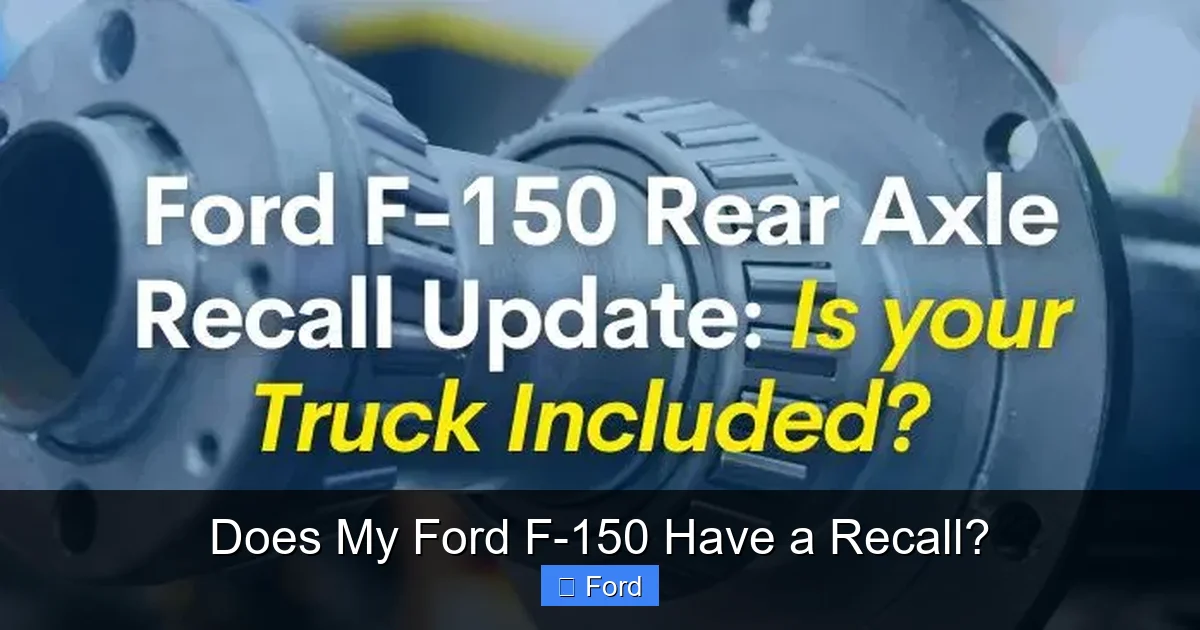
The remedy is the specific action Ford will take. It could be a simple software update to your truck’s computer, the replacement of a single faulty part (like a sensor or a bolt), or a major component swap (like an entire transmission or axle assembly). The recall details will state the “remedy.” For example, a past F-150 recall involved replacing a faulty transmission shift lever. Knowing the remedy helps you understand what to expect when you drop off your truck—will it be a 30-minute software flash or a multi-day major repair?
Common Recall Issues in Ford F-150 Models
The F-150, like any complex machine with millions of units produced, has had its share of recalls over the years. While every model year is different, certain patterns emerge. Understanding these common categories helps you recognize why a recall might exist for your truck and reinforces the importance of getting it fixed.
Visual guide about Does My Ford F-150 Have a Recall?
Image source: lemonlawfirm.com
Airbag and Restraint System Recalls
The most infamous recall in automotive history involved Takata airbag inflators, which affected millions of vehicles across many brands, including the F-150. These faulty inflators could explode, shooting metal fragments. While the massive Takata recall is largely resolved, it’s a prime example of a critical safety recall. Other airbag-related recalls might involve faulty seat belt pretensioners or sensors. If your F-150 has ever had a recall in this category, it was absolutely vital to complete it.
Brake and Steering System Concerns
Your F-150’s ability to stop and steer is non-negotiable. Recalls in this area have included issues like vacuum pump failures (affecting brake assist on some diesel models), faulty brake light switches, or steering gear assembly defects. A loss of power brake assist or steering control is a major hazard. If your online check shows a recall here, prioritize scheduling the repair.
Electrical and Battery Problems
Modern trucks are rolling computers. Recalls have involved battery cable issues (where a cable could rub and cause a fire), faulty alternators, or software glitches in the engine control module that could cause stalling. Electrical fires are a serious risk, so these are often safety recalls. When you get a recall repaired in this category, it’s a good idea to have your mechanic do a full electrical system check. While not directly related, ensuring you have a healthy battery is part of this ecosystem. For owners of specific years, like the popular 2018 model, knowing the best battery for a 2018 Ford F-150 can be valuable information for long-term reliability after a major electrical recall is addressed.
Fuel, Emission, and Powertrain Recalls
These can range from leaking fuel lines (a fire risk) to defective emission control components that cause excessive pollution. Some recalls involve the transmission, such as a shift lever that doesn’t properly indicate the selected gear (a major safety issue). Others might involve crankcase ventilation valves that can cause stalling. While some emission recalls seem less urgent, they are still mandatory and often indicate a part that could fail completely later.
What to Do If Your F-150 Has an Open Recall
So, you’ve checked, and there’s an open recall. Now what? The process is designed to be owner-friendly, but knowing the steps reduces stress.
Visual guide about Does My Ford F-150 Have a Recall?
Image source: ecoiscfmf9a.exactdn.com
Step 1: Read the Notice Carefully
If you have a mailed notice, read it cover to cover. It will explain the defect, the risks, the remedy, and any special instructions (like “do not drive”). If you found it online, the details are on the NHTSA or Ford site. Note the recall number and the estimated repair time. This information is key when you call the dealer.
Step 2: Contact Your Ford Dealer’s Service Department
Call the service department, not the sales desk. Have your VIN, recall number, and mileage ready. Say, “I’m calling about an open recall, [Recall Number], on my F-150, VIN [Your VIN]. I’d like to schedule a repair appointment.” The dealer will check their parts inventory and schedule you. For complex recalls with high volumes, there might be a wait for parts. Ask about loaner vehicles if you need transportation; Ford often provides them for safety-related recalls requiring extended repairs.
Step 3: The Repair Process
On your appointment day, drop the truck off. The dealer will perform the recall repair per Ford’s official bulletin. This work is 100% free for the vehicle owner, regardless of age or ownership history. You will not be charged for parts or labor related to the recall. The dealer should provide a receipt stating the recall was completed. Keep this with your service records. If they try to charge you for the recall work itself, politely but firmly remind them that recall repairs are a manufacturer obligation and must be free. You can reference the recall notice if needed.
The Dealership’s Role and Manufacturer’s Responsibility
It’s helpful to understand the ecosystem. Ford Motor Company designs the vehicles and issues the recalls. They are responsible for funding the repairs, providing the correct parts and technical service bulletins (the repair instructions) to dealers, and notifying owners. The dealership is the service provider. They are paid by Ford for performing recall labor. Their role is to execute the repair correctly and efficiently. If a dealer is uncooperative, unresponsive, or tries to charge you for the recall repair, you have recourse. You can contact Ford Customer Relations directly. Their contact information is on your owner’s manual or Ford’s website. Document all conversations. The system is built to protect you, the consumer.
Staying Proactive: Maintenance and Recall Prevention
While you can’t prevent a manufacturer from issuing a recall, you can be the most prepared owner on your block. Beyond checking recalls, a holistic approach to your F-150’s upkeep is your best defense against unexpected problems.
Make Recall Checks a Habit
Don’t just check when you buy a used truck. Set a calendar reminder to check your VIN on the NHTSA site every six months. It takes two minutes. Recalls can be issued years after a truck rolls off the line. Being the first to know gives you the first appointment slot when parts become available.
Complement Recall Repairs with Smart Upkeep
When your truck is in the shop for a recall, it’s a great time to address other maintenance items. While the dealer’s technicians are under the hood, you might ask about the health of your battery, brakes, or tires. A major electrical recall repair is the perfect moment to consider if your original battery is still strong. For owners of specific models, like the robust 2018 F-150, researching the best battery for a 2018 Ford F-150 could mean the difference between a smooth start and a stranded morning. Similarly, if a recall involved braking or suspension components, a thorough tire inspection for uneven wear is wise. Ensuring you have the right tires, like the best tires for Ford F-150 Lariat models if you own a higher-trim truck, complements the safety work done by the recall.
Protect Your Interior and Tech
Recalls fix factory defects. Protecting your investment from daily wear is up to you. Quality accessories make a huge difference. After a recall involving seats or door components, you might think about protecting those very areas. Upgrading to durable, easy-to-clean seat covers for your Ford F-150 can shield fabrics from spills, UV damage, and general wear, keeping your interior fresh for years. For the tech-savvy owner, a secure phone mount is essential for safe navigation. Exploring options like the best phone mount for Ford F-150 ensures your device stays put on bumpy roads, adding a layer of convenience and safety that complements your well-maintained, recall-free truck.
In the end, the question “Does my Ford F-150 have a recall?” is one you now have the power to answer definitively and act upon. It’s a simple routine that pays massive dividends in peace of mind and safety. Your F-150 is built tough, and by staying informed, you’re making sure it stays that way for every mile ahead.
Frequently Asked Questions
How do I check if my Ford F-150 has a recall?
You can check for free using your 17-digit VIN on the NHTSA website (nhtsa.gov/recalls) or through Ford’s official owner portal. You can also call any Ford dealer’s service department with your VIN.
Are recall repairs really free?
Yes. Federal law requires manufacturers to repair all safety-related recall defects at no cost to the vehicle owner, regardless of whether you are the original owner or how old the vehicle is.
How long does a typical F-150 recall repair take?
It varies widely. A simple software update might take 30-60 minutes. Replacing a major component like a steering gear or transmission could take several days, especially if parts are on backorder. The recall notice or your dealer can give an estimate.
What if I bought my F-150 used and there’s an open recall?
You are still entitled to the free repair. The obligation follows the vehicle, not the owner. Always check for recalls when buying a used vehicle and insist the seller completes them before purchase, or factor the repair into your decision.
Can I ignore a recall if it seems minor?
It’s not advisable. Even a “minor” recall addresses a known defect that the manufacturer has deemed significant enough to fix for free. Ignoring it could lead to a more expensive repair later if the part fails completely, or it could void certain warranty claims.
Will Ford contact me about a recall?
Yes, Ford is required to send a first-class mail notice to the registered owner(s) of record. However, these can be lost, thrown away, or arrive late if you’ve moved. Therefore, proactive online checks using your VIN are the most reliable method.
