
Who Makes Mazda Oil?

Mazda does not manufacture its own motor oil. Instead, the company partners with major global oil companies, primarily Idemitsu Kosan Co., Ltd., to formulate and produce its branded oils to strict specifications. This OEM (Original Equipment Manufacturer) partnership model is standard in the auto industry. The oil you buy with the Mazda label is meticulously engineered to meet Mazda’s exact requirements for its Skyactiv engines, ensuring optimal performance, fuel efficiency, and emissions control. Understanding this helps you make informed choices about maintenance, whether you use genuine Mazda oil or a high-quality aftermarket alternative that meets the same specs.
Have you ever stood in the auto parts aisle, bottle of oil in hand, and wondered, “Who actually makes Mazda oil?” It’s a fantastic question that gets to the heart of how modern car manufacturing works. You see the Mazda logo on the bottle, but does that mean a Mazda factory somewhere is filled with giant vats of crude oil and refining machinery? The answer is a clear and resounding no. Understanding who is behind your Mazda’s lubricant reveals a fascinating story of global partnerships, stringent engineering, and what it truly means to have “genuine” parts and fluids for your vehicle. This is especially crucial as we look at the 2026 model year, where Mazda’s Skyactiv technology continues to evolve.
The simple truth is that Mazda is an exceptional automaker, not an oil company. Their genius lies in designing and building responsive, fuel-efficient engines like the Skyactiv-G, Skyactiv-X, and Skyactiv-D. To make these engines perform at their peak and last for hundreds of thousands of miles, they need a very specific liquid: motor oil. But refining crude oil into high-performance lubricant is a completely different, highly specialized science. Instead of building billion-dollar refineries, Mazda, like virtually every other carmaker, uses the OEM (Original Equipment Manufacturer) partnership model. They define the “recipe” and the performance standards, and a trusted oil company does the actual cooking, bottling, and distribution. It’s a system built on trust and technical collaboration.
Key Takeaways
- Mazda is an automaker, not an oil refiner. They design engines and define precise lubricant requirements but outsource physical oil production to specialized partners.
- Idemitsu is Mazda’s primary and historic OEM oil partner. This long-term relationship means much of the “Mazda” branded oil is manufactured by Idemitsu in their facilities.
- The oil is formulated to Mazda’s exact specifications. Whether made by Idemitsu or another approved supplier, the final product must pass Mazda’s rigorous testing for viscosity, additives, and performance.
- This OEM model is the industry standard. Brands like Toyota, Honda, and Subaru follow the same practice, as detailed in our articles on who makes Toyota oil and who makes Subaru oil filters.
- You have options beyond the Mazda brand. Any oil meeting the specific API and ILSAC standards (like 0W-20) and Mazda’s own specifications (e.g., Mazda Original Oil) is perfectly suitable for your engine.
- Using the correct specification is more important than the brand label. Focusing on the viscosity grade and approval certifications (e.g., API SP, ILSAC GF-6) ensures engine protection and warranty compliance.
- The partnership ensures seamless integration. This collaboration allows Mazda to guarantee that the lubricant is perfectly matched to the engine’s tolerances, turbochargers (in Skyactiv-X and -D), and advanced emissions systems.
📑 Table of Contents
The Heart of the Partnership: Idemitsu Kosan Co., Ltd.
If you’re asking who makes Mazda oil, the primary name you need to know is Idemitsu Kosan Co., Ltd., a massive Japanese petroleum and petrochemical company. This isn’t a recent casual arrangement; it’s a deep, strategic partnership with roots stretching back decades. Idemitsu is not just a supplier; they are Mazda’s official global technical partner for lubricants.
Why Idemitsu? A Legacy of Technical Synergy
The Mazda-Idemitsu alliance makes perfect sense. Both are iconic Japanese companies with a shared philosophy of engineering excellence and attention to detail. Idemitsu’s research and development teams work directly with Mazda’s engine engineers. When Mazda designs a new engine with tighter clearances for improved efficiency or a unique combustion process like Spark Controlled Compression Ignition (SPCCI) in the Skyactiv-X, they don’t just hand the specs to any oil company. They collaborate with Idemitsu to formulate a lubricant that can handle the immense pressures, temperatures, and unique demands of that specific engine. This co-development ensures the oil protects the engine from the very first start.
From Lab to Bottle: The Formulation Process
The process begins with Mazda issuing a detailed specification document. This isn’t just “make a 0W-20 oil.” It outlines required viscosity indices, shear stability, Total Base Number (TBN) for diesel variants, additive package requirements (detergents, dispersants, anti-wear agents, friction modifiers), and performance under extreme conditions. Idemitsu’s chemists then blend base oils—often a mix of high-quality Group III, IV (PAO), and sometimes V (ester) stocks—with a precise cocktail of additives. This blend undergoes a battery of tests, both in Idemitsu’s labs and, critically, in Mazda’s own validation facilities. Only when the oil passes every single Mazda-specific test—which can include engine bench tests, emissions system compatibility checks, and real-world durability trials—is it approved to carry the Mazda name or be sold as a Mazda Original Oil.
Does Mazda Have Its Own Oil Brand?
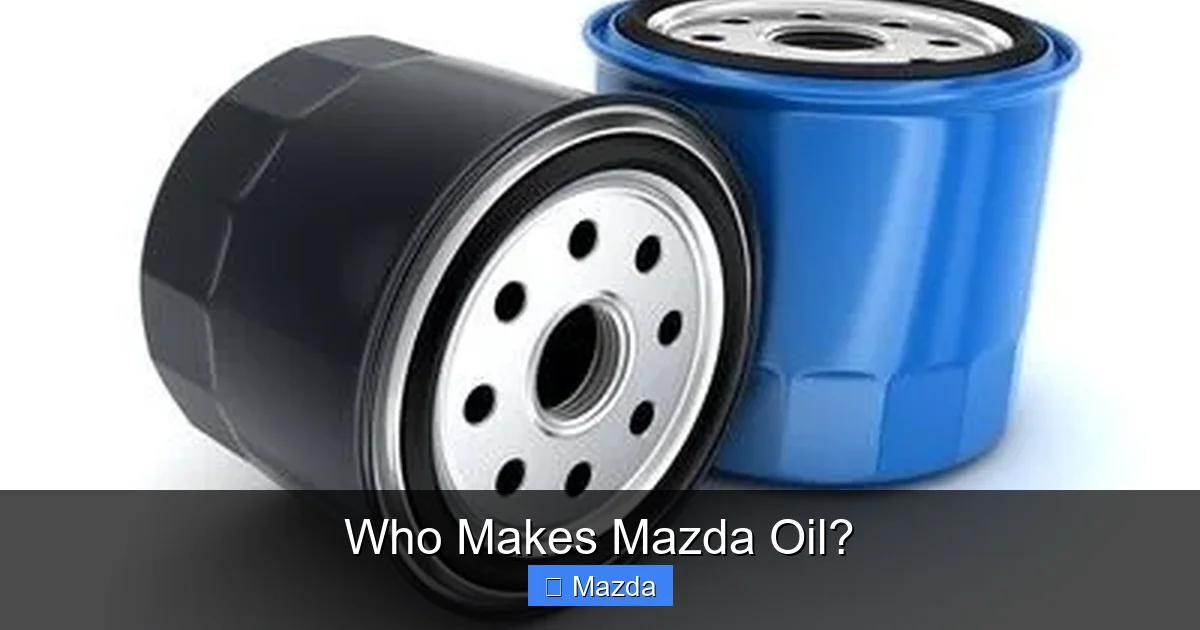
Yes, but with a crucial clarification. You can find bottles labeled “Mazda Genuine Oil” or “Mazda Original Oil” at Mazda dealerships and authorized parts counters. However, the fine print on the bottle or the associated Material Safety Data Sheet (MSDS) will almost always list the manufacturer as Idemitsu Kosan Co., Ltd. or one of its subsidiaries or contracted blending plants. The branding is a mark of specification compliance and dealership channel distribution, not manufacturing origin. Think of it like this: Apple designs the iPhone, but Foxconn assembles it. Mazda designs the oil specification; Idemitsu manufactures it to those specs and bottles it under the Mazda brand for exclusive sale through their network.
Visual guide about Who Makes Mazda Oil?
Image source: rparts-sites.s3.amazonaws.com
This branded oil is the safest, most straightforward choice for a Mazda owner who wants to follow the manufacturer’s recommendation to the letter. It eliminates any guesswork about specification conformance. For the 2026 Mazda3, CX-5, or MX-5, if the owner’s manual calls for “Mazda Original Oil 0W-20,” that bottle is Idemitsu-made product. This direct partnership is a key reason why Mazda can confidently warranty its powertrains.
The Aftermarket Reality: Other Brands, Same Specs
Here’s where it gets interesting for the practical car owner. The oil you buy at a big-box store or a quick-lube shop that meets the same specification as Mazda’s branded oil is often just as good—or sometimes even better—for your engine. How can that be? Because the OEM specification is the ultimate goal.
Visual guide about Who Makes Mazda Oil?
Image source: rerev.com
Understanding Oil Specifications: API, ILSAC, and Mazda
When you see “0W-20” on an oil bottle, that’s the viscosity grade. But you also need to look for the performance certifications. For 2026 Mazda gasoline engines, you’ll typically need an oil that meets:
- API SP: The latest American Petroleum Institute standard for gasoline engines, crucial for preventing Low-Speed Pre-Ignition (LSPI) in turbocharged engines (like the Skyactiv-X).
- ILSAC GF-6: The International Lubricant Standardization and Approval Committee standard, which includes the API SP requirements plus fuel economy grants.
Many high-quality aftermarket oils from brands like Mobil 1, Pennzoil, Castrol, and Valvoline meet or exceed these standards. Some are even formulated to be “dexos1 approved” (a GM spec that is very stringent and overlaps with GF-6) or have their own OEM approvals. If an aftermarket oil meets API SP and ILSAC GF-6, and is the correct viscosity (0W-20 or 5W-30 for some older models), it is fundamentally capable of protecting your 2026 Mazda engine. The key difference is in the exact additive package, which can affect things like long-term sludge prevention or turbocharger cleanliness, but meeting the base spec is the legal and technical minimum.
Who Makes *Those* Oils?
This is the mirror image of the Mazda-Idemitsu story. Shell makes Pennzoil and Shell-branded oils. ExxonMobil makes Mobil 1. BP makes Castrol. These companies have their own massive R&D facilities and formulate oils to meet a wide array of OEM specifications. They will often seek formal approvals from carmakers (e.g., “BMW LL-04 approved,” “Mercedes-Benz 229.5 approved”) but for a brand like Mazda, which doesn’t have a unique, proprietary oil spec beyond the general GF-6, they simply ensure their product meets the published industry standards that Mazda also references. So, when you buy a jug of Mobil 1 0W-20, it’s made by ExxonMobil to a formula that satisfies Mazda’s requirements.
What About Mazda Diesel Engines and Specialty Fluids?
The conversation gets more specific with Mazda’s diesel engines, like the Skyactiv-D, which were available in certain markets (though not the US for 2026). Diesel engines have fundamentally different demands—handling soot, higher compression ratios, and different emission systems (like DPF and SCR).
Visual guide about Who Makes Mazda Oil?
Image source: engineoiljournal.com
Mazda Diesel Oil: A Higher Spec
For diesel-powered Mazdas, the oil specification is more specialized. You’ll often see requirements like API CK-4 or FA-4 and specific OEM approvals. The Mazda-branded diesel oil is again, almost certainly an Idemitsu formulation, but tailored for diesel oxidation, soot handling, and compatibility with diesel particulate filters (DPF). Using a gasoline oil in a diesel engine is a catastrophic mistake. The aftermarket diesel oil brands (like Rotella T6, Shell Rotella, Mobil Delvac) are manufactured by their respective companies to meet those same diesel specs. The “who makes it” question applies equally: Shell makes Shell Rotella, and it’s formulated for diesel engines, including those with DPFs.
Beyond engine oil, Mazda also specifies other fluids: transmission fluid (for Skyactiv-Drive automatic and manual transmissions), differential fluid, and coolant. The same OEM principle applies. Mazda defines the spec (e.g., “Mazda Genuine Transmission Fluid”), and a supplier like Idemitsu or another specialized fluid manufacturer produces it. For these, aftermarket equivalents that explicitly state they meet the Mazda specification (e.g., “Meets Mazda M5 ATF specification”) are safe and often more cost-effective.
Practical Tips for the 2026 Mazda Owner
So, knowing who makes Mazda oil doesn’t change the most important question: What oil should I put in my car? Here is your actionable guide.
1. Your Owner’s Manual is the Bible
Open it. Find the “Lubricants” section. For your 2026 Mazda, it will state the exact viscosity (e.g., 0W-20) and the required performance standard (e.g., API SP/ILSAC GF-6). It may also mention “Mazda Original Oil” or list an equivalent specification. Follow this without exception. This is non-negotiable for warranty and engine health.
2. “Mazda Branded” = Peace of Mind, Not Exclusivity
Buying Mazda Genuine Oil from the dealership guarantees 100% specification match. It’s the path of least resistance. However, you are paying for the branding and dealership markup. A high-quality aftermarket oil that meets the same API/ILSAC specs is a perfectly valid, and often cheaper, alternative. Don’t overpay for the label if the specs are identical.
3. Don’t Be Fooled by “Better” Marketing
An oil bottle claiming “extra detergents” or “superior wear protection” is not automatically “better” for your Mazda if it doesn’t carry the core API SP/GF-6 certification. The certification is the baseline. Marketing claims are supplementary. Stick to the certified specs first.
4. Consider Your Driving Conditions
All oils meeting the 2026 spec are excellent. If you do a lot of short trips in cold weather, a full synthetic 0W-20 is essential for cold-start flow. If you tow a trailer or drive in consistently extreme heat, you might consider an oil with a higher High Temperature High Shear (HTHS) viscosity, but only if it’s still within the manufacturer’s approved range (rare for modern cars—stick to the recommended 0W-20). For most drivers, the standard spec is perfect.
5. The Filter Matters Just as Much
Oil is only half the battle. A cheap, inefficient oil filter can allow contaminants to circulate, negating the benefits of good oil. Whether you choose a Mazda-branded filter (likely made by a supplier like Denso or Fram) or a reputable aftermarket brand (Mann, Wix, Bosch), ensure it’s a quality filter designed for your specific engine. The “who makes” question applies here too—many OEM filters are made by large, respected third-party manufacturers.
Conclusion: Trust the Spec, Not Just the Logo
So, who makes Mazda oil? The definitive answer is Idemitsu Kosan Co., Ltd. under strict license and specification from Mazda. This partnership is a cornerstone of Mazda’s engineering philosophy, ensuring that the liquid heart of their Skyactiv engines is perfectly tuned for performance and longevity. But for you, the driver, the lesson is simpler and more powerful: the brand on the bottle matters far less than the specifications printed on it. Your 2026 Mazda needs an oil that meets the API SP and ILSAC GF-6 standards and the correct viscosity. Whether that oil comes in a Mazda-branded bottle from Idemitsu or a jug from another top-tier manufacturer that meets those same specs, you are providing your engine with exactly what it requires. Focus on the technical requirements, not the marketing. By understanding this OEM partnership model, you become a more knowledgeable, empowered, and cost-effective vehicle owner, free to make the best choice for your car and your wallet.
Frequently Asked Questions
Does Mazda actually refine its own crude oil into motor oil?
No. Mazda is an automobile manufacturer and does not own or operate oil refineries. They design engines and define lubricant requirements but partner with specialized oil companies like Idemitsu to manufacture the oil that carries their brand.
Is Mazda Genuine Oil better than other brands?
“Better” is subjective. Mazda Genuine Oil is guaranteed to meet Mazda’s exact specifications. High-quality aftermarket oils from brands like Mobil 1 or Pennzoil that meet the same API SP and ILSAC GF-6 standards are also excellent and may offer different benefits. The key is specification conformance, not the brand label alone.
Will using non-Mazda oil void my warranty?
No, as long as the oil you use meets the viscosity grade and performance specifications (API SP, ILSAC GF-6) listed in your owner’s manual for your specific engine. Mazda cannot require the use of their branded oil as a condition for warranty coverage.
Why is Mazda’s partnership with Idemitsu important?
This long-term partnership allows for deep technical collaboration. Idemitsu’s chemists work directly with Mazda’s engine designers to formulate oils that are perfectly tailored to the unique demands of Skyactiv engines, especially technologies like high-compression gasoline (Skyactiv-X).
Is the oil for my Mazda CX-5 the same as for a Toyota RAV4?
For modern 2026 models, both will very likely require 0W-20 oil meeting API SP and ILSAC GF-6 standards. While the base specifications are identical, the exact additive packages may differ slightly as each automaker may have subtle preferences. However, any oil meeting the universal GF-6 standard is safe and effective for either vehicle.
Where can I find out who actually manufactures my specific bottle of Mazda oil?
Check the bottle’s label or the cap for a “Manufactured for” or “Distributed by” line. It will almost always list “Idemitsu Kosan Co., Ltd.” or a subsidiary. You can also search the bottle’s part number on the Idemitsu or Mazda parts website for confirmation.
