
What Is the Vsc Warning Light on a 2011 Toyota Corolla?

The VSC (Vehicle Stability Control) warning light on your 2011 Toyota Corolla indicates a problem with the system designed to help keep your car stable during sudden maneuvers or on slippery surfaces. It’s a critical safety feature that may be disabled when the light is on. Common triggers include faulty wheel speed sensors, steering angle sensor issues, or temporary system deactivation. While you can often drive carefully with it illuminated, diagnosing and repairing the underlying cause is essential for restoring full safety functionality.
That little icon of a car with squiggly lines underneath has suddenly appeared on your dashboard. Your heart might skip a beat. What does it mean? Is your car safe to drive? If you own a 2011 Toyota Corolla, seeing the VSC warning light illuminated can be concerning, but it doesn’t have to be a mystery. This guide will walk you through everything you need to know about that light, from what the system actually does to what you should do when it comes on. Think of this as your friendly, expert conversation about your Corolla’s stability control.
First, let’s clear up the acronym. VSC stands for Vehicle Stability Control. It’s one of the most important active safety systems in your car, working behind the scenes every time you drive. In your 2011 Corolla, VSC is seamlessly integrated with the Traction Control system (TRAC). Together, they form a sophisticated electronic net designed to detect and help prevent skids and spins before you even realize they’re happening. When that light stays on, it’s the car’s way of saying, “Hey, I can’t do my job properly right now.” Let’s break down what that means for you.
Key Takeaways
- VSC is a vital safety system: It helps prevent skidding and loss of control by automatically adjusting engine power and braking to individual wheels.
- The light means a fault is detected: It illuminates when the car’s computer (ECU) finds a problem with any component of the VSC/TRAC system.
- Common causes are often sensor-related: Faulty wheel speed sensors, a bad steering angle sensor, or damaged wiring are frequent culprits.
- Driving with the light on requires caution: Your car will lack VSC and may also have Traction Control (TRAC) disabled, so drive more carefully, especially in bad weather.
- A simple reset may work temporarily: Sometimes the system can be reset by turning the car off and on, or by performing a specific procedure, but this is not a repair.
- Professional diagnosis is usually required: A mechanic needs to read the specific trouble code from the ECU to pinpoint the exact faulty component.
- Don’t ignore it for safety: While not an immediate emergency like a flashing oil light, a persistent VSC light means a key safety net is offline.
📑 Table of Contents
What Exactly is VSC and How Does It Work?
To understand the warning, you need to understand the system. Imagine you’re driving your trusty Corolla around a corner a bit too fast on a wet road. The back end starts to slide out (oversteer). Or maybe you swerve sharply to avoid a pothole and the front wheels lose grip (understeer). In both cases, you’re losing control. VSC is there to intervene.
The Teamwork of Sensors and Computers
Your 2011 Corolla is constantly talking to itself. A network of sensors feeds real-time data to the car’s main computer, the ECU (Engine Control Unit). Key players include:
- Wheel Speed Sensors: These monitor how fast each wheel is spinning. If one wheel is spinning much faster than the others (like on ice), that’s a sign of lost traction.
- Steering Angle Sensor: This tells the computer which direction you’re turning the steering wheel and how sharply.
- Yaw Rate Sensor: This measures the car’s actual rotation around its vertical axis—is it turning more or less than you intended?
- Lateral G-Force Sensor: It detects side-to-side forces, like when you’re cornering.
The ECU compares all this data. If it senses a mismatch—for example, you’re turning the wheel left but the car is sliding right—it knows you’re beginning to lose stability. At that precise moment, VSC leaps into action.
The Intervention: Engine and Brakes
VSC’s correction is swift and automatic. It can do two things, often simultaneously:
- Reduce Engine Power: It signals the engine to momentarily cut fuel or spark, reducing the power going to the wheels that are slipping.
- Apply Braking to Individual Wheels: This is the clever part. Using the ABS (Anti-lock Braking System) modulators, it can brake the outer front wheel (in an understeer situation) or the inner rear wheel (in an oversteer situation). This creates a stabilizing force that helps “pull” the car back in line with your intended path.
The whole process happens in milliseconds, far faster than any human could react. You might just feel a slight pulsation in the accelerator pedal or hear the ABS pump motor faintly. It’s a silent guardian. When the VSC light is on, this entire network of protection is offline.
Why is the VSC Light On? Common Causes for a 2011 Corolla
The light itself is just a messenger. The real story is the trouble code stored in your car’s computer. That code points to the specific fault. While a professional scan is needed for the exact code, several issues are notoriously common in 2011 Corollas and similar-era Toyotas.
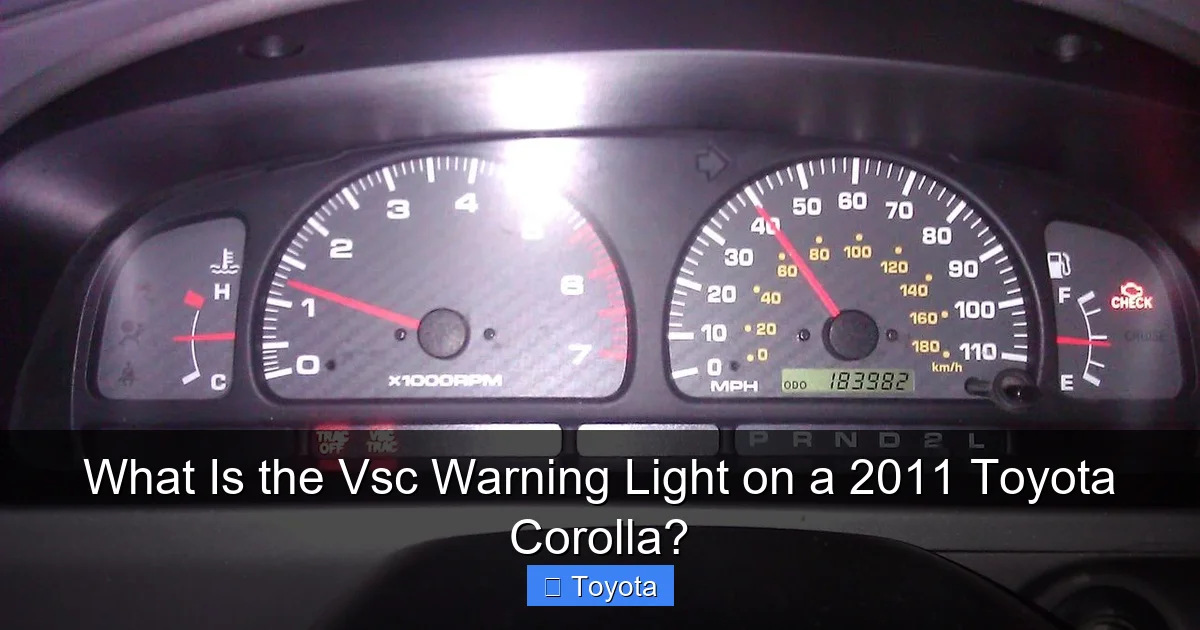
Visual guide about What Is the Vsc Warning Light on a 2011 Toyota Corolla?
Image source: i2.wp.com
1. Faulty Wheel Speed Sensors
This is the #1 suspect. These sensors are exposed to the elements, road salt, and grime. They can become dirty, damaged, or fail completely. If one sensor sends a bad signal (e.g., says a wheel is spinning at 50 mph when it’s not moving), the ECU gets confused and disables VSC/TRAC to prevent erroneous commands. A bad sensor will also often trigger the ABS warning light, as they share the same sensors.
2. Steering Angle Sensor Issues
The steering angle sensor needs to be calibrated correctly. It can get out of alignment after a steering wheel alignment, after replacing a steering component, or simply from wear. If the ECU gets a steering angle reading that doesn’t match the yaw rate and wheel speed data, it throws a VSC code. This is a very common cause for the light to come on after work has been done on the front end.
3. Bad or Corroded Wiring Harnesses
The wires that run to the wheel speed sensors, especially at the front wheels where they flex with steering, are prone to chafing, corrosion, and broken connections. A simple break in the circuit is enough to set a code. Check the connectors near the wheel hubs for green/white corrosion.
4. Low System Voltage or a Weak Battery
VSC and ABS are power-hungry systems. If your car’s battery is weak, failing, or you have a poor charging system (alternator), the voltage can drop below the threshold these systems need to operate reliably. The ECU will then disable them as a safety precaution and illuminate the VSC light. This is why you should always check the basics first.
5. Temporarily Disabled by Other Systems
Sometimes, the VSC light comes on not because of a fault, but because another system has priority. For example, if your Check Engine Light is on due to a major engine misfire, the ECU may disable VSC to manage engine load. In this case, fixing the primary engine issue will often turn the VSC light off after a few drive cycles.
What Should You Do When the VSC Light Comes On?
Seeing that light pop up can be jarring. Don’t panic, but do take it seriously. Here’s your step-by-step action plan.
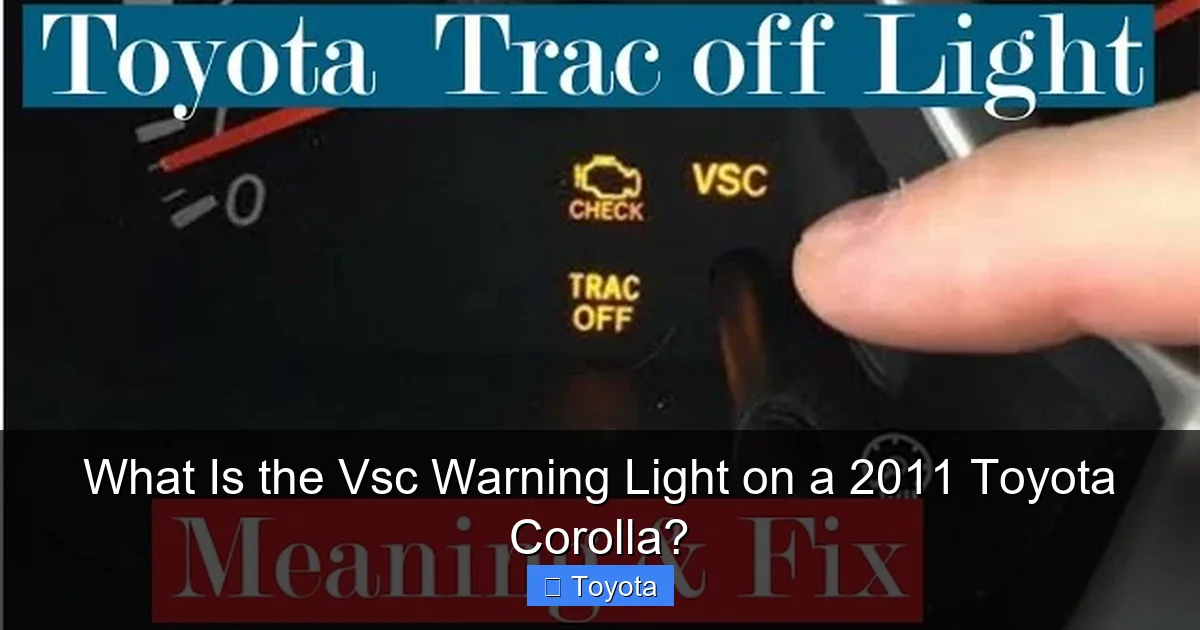
Visual guide about What Is the Vsc Warning Light on a 2011 Toyota Corolla?
Image source: i.ytimg.com
Immediate Safe Driving Practices
Your car is still fully operational for basic driving—steering, braking, and accelerating will work normally. However, you have lost two key electronic aids:
- No Vehicle Stability Control: The car will not help correct a skid or spin.
- No Traction Control (TRAC): If you accelerate on a slippery surface, your drive wheels will spin freely without the system intervening to cut power.
Therefore, you must drive more cautiously: Reduce speed, increase following distance, avoid sudden steering inputs, and be extra gentle on the accelerator in rain, snow, or on gravel. Treat every drive as if you’re on a slick surface until the problem is fixed.
Step 1: The Simple Power Cycle
Before assuming the worst, try the easiest fix. Park safely, turn the engine off, and open the hood. Disconnect the negative (-) battery terminal for about 10 minutes. This clears the ECU’s temporary memory. Reconnect the terminal, close the hood, and start the car. The VSC light (and any other warning lights) may illuminate for a few seconds as the system performs a self-check, then should go out if the fault was a transient glitch. If the light comes back on immediately or after a short drive, there is a persistent fault.
Step 2: Basic Visual Inspection
With the car off and cool, take a look. Check your tire pressure on all four tires. A significantly under-inflated tire can cause wheel speed discrepancies. Also, inspect the tires for uneven wear, which might point to an alignment or suspension issue that also affects sensors. Finally, give the wheel speed sensor areas a quick glance for obvious damage or massive corrosion.
Step 3: Professional Diagnosis is Key
At this point, you need a professional. Take your Corolla to a trusted mechanic or a Toyota dealership. They will plug a diagnostic scanner (an OBD-II tool, but with Toyota-specific software is best) into the port under your dash. This tool will read the specific Trouble Code (e.g., C0200, C0201, etc.) stored in the VSC/ABS module. This code is the roadmap to the problem. It might say “Right Front Wheel Speed Sensor Circuit Malfunction” or “Steering Angle Sensor Initialization Incomplete.” This tells the technician exactly where to start looking, saving hours of guesswork and unnecessary part replacements.
How to Reset the VSC Light (And Why It Might Not Last)
Resetting the light is different from fixing the problem. You can clear the code with a scanner, but if the underlying fault remains, the light will return within a few drive cycles (usually after 3-5 starts). There is no official “button sequence” reset for the VSC light on a 2011 Corolla like there is for the maintenance light. The reset is performed via the diagnostic scanner after the repair is complete.
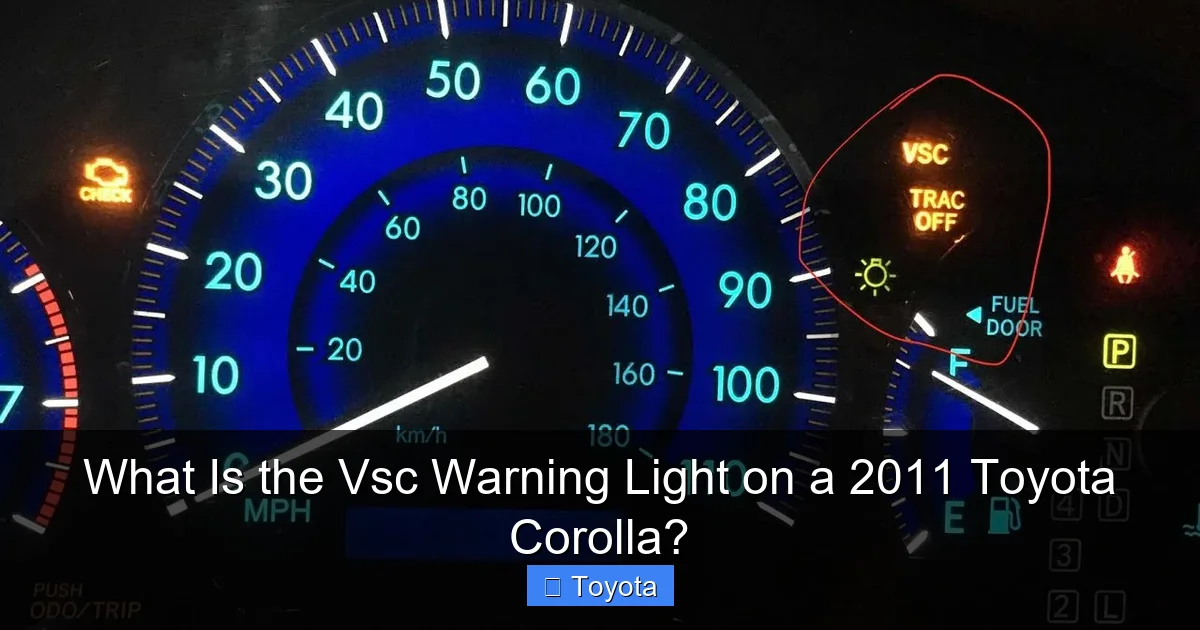
Visual guide about What Is the Vsc Warning Light on a 2011 Toyota Corolla?
Image source: i.ytimg.com
The Reset Procedure After a Repair
Once the faulty component (e.g., a wheel speed sensor) is replaced, the technician will use their scan tool to not only clear the code but often to perform a system initialization or calibration. For a steering angle sensor, this usually involves turning the steering wheel lock-to-lock a few times with the ignition on but engine off, then having the scanner “relearn” the center position. This step is critical; skipping it will cause the VSC light to return immediately.
Why a DIY Code Clear is Usually Pointless
If you buy a generic OBD-II code reader and simply “erase codes,” you might turn the light off temporarily. But without addressing the root cause, the system will detect the same fault again and relight the VSC warning. It’s like turning off a fire alarm without putting out the fire. The only time a simple reset works is if the light was triggered by a one-time anomaly, like hitting a massive pothole that jolted a sensor momentarily. Even then, it’s a gamble.
Costs and Repairs: What to Expect
Costs vary wildly based on the diagnosed problem. Here’s a general breakdown for a 2011 Toyota Corolla:
Wheel Speed Sensor Replacement
This is the most common and often most affordable fix. A sensor for a Corolla typically costs between $50 and $120 for the part. Labor is relatively simple, usually 0.5 to 1 hour. Total estimate: $150 – $250 per sensor. It’s wise to inspect all four, as they wear similarly.
Steering Angle Sensor Service
This can be more involved. Sometimes the sensor itself needs replacement ($150-$300 part). Often, the issue is just that it needs calibration after a steering component replacement or alignment. A simple calibration might be a 0.5-hour labor charge. If the sensor is inside the steering column assembly, replacement becomes a bigger job. Total for calibration: $80 – $150. Total for replacement: $300 – $600+.
Wiring Harness Repair
If the issue is damaged wiring, the cost depends on the extent. Repairing a single broken wire might be 1-2 hours of labor plus minimal parts. If a whole harness section needs replacing, it can get expensive. Estimate: $100 – $400.
Battery/Charging System
If a weak battery is the culprit, a new battery is $150-$250 installed. An alternator replacement is more, around $500-$800.
Always get a specific diagnosis and quote before authorizing work. A reputable shop will show you the code and explain why the repair is needed.
Is It Safe to Drive With the VSC Light On? A Final Verdict
This is the most pressing question for any Corolla owner. The short answer is: Yes, but with significant caveats and only for a limited time.
Your fundamental brakes, steering, and tires are unaffected. You are not driving a deathtrap. However, you have deliberately disabled a major crash-avoidance technology. You are now solely responsible for maintaining control of the vehicle in emergency situations. That task is much harder without VSC’s electronic assistance.
The “When” and “How” of Driving with the Light On
It is conditionally safe to:
- Drive directly to a trusted repair shop for diagnosis.
- Drive short distances on dry, clear roads at moderate speeds.
- Complete an urgent trip if absolutely necessary, but drive with extreme defensiveness.
It is not safe to:
- Ignore the light for weeks or months and continue normal driving.
- Drive in heavy rain, snow, ice, or on winding roads.
- Carry a full load of passengers or cargo, which increases momentum and makes recovery from a skid harder.
- Engage in any spirited or aggressive driving.
Think of the VSC light as a “systems offline” indicator for your safety net. You can walk on a tightrope without a net, but it’s incredibly risky and should only be done to get to a place where you can get the net repaired. The net in your Corolla is very good, so getting it fixed should be a priority. For other dashboard concerns in your Corolla, you might wonder what Eco Heat/Cool does, or how to handle other indicators like the oil light on related models. But for stability, VSC is non-negotiable for modern safe driving.
Frequently Asked Questions
Will the VSC light turn off by itself?
No. The light will stay illuminated as long as the fault is present. It will only turn off after the underlying problem is repaired and the trouble code is cleared by a technician using a scan tool. Sometimes, after a repair, you may need to drive the car for a few cycles for the system to re-check and confirm the fault is gone.
Can I just remove the VSC fuse to turn the light off?
Technically, yes, but this is a very bad idea. Removing the fuse will disable the VSC and TRAC systems entirely, which is already what the light indicates. However, it will also likely cause other systems to malfunction or set more codes. The light is a symptom, not the disease. Removing the fuse is like taking the battery out of a smoke detector instead of finding the fire.
What’s the difference between the VSC light and the Check Engine light?
The Check Engine light (MIL) monitors your engine and emissions systems. The VSC light specifically monitors the Vehicle Stability Control and Traction Control systems (which share sensors with the ABS system). They are separate modules, though a major engine fault can sometimes cause the VSC to disable itself, lighting both lights.
My VSC light is flashing. Is that worse?
A flashing VSC light is actually normal! It means the system is actively intervening to help stabilize the car. You’ll see it flash briefly when you drive on a slippery patch or take a sharp turn quickly. It’s a sign the system is working. A solid, constantly-on VSC light is the warning that the system is disabled due to a fault.
Will an alignment fix the VSC light?
Possibly, but not always. A proper alignment ensures your wheels are pointed correctly. If the steering angle sensor is calibrated to a misaligned position, an alignment can throw it off. In that case, a post-alignment sensor recalibration is needed. However, an alignment will not fix a bad wheel speed sensor or broken wiring. The diagnosis will tell you if an alignment/calibration is part of the solution.
Can I reset the VSC light without a scanner?
For a 2011 Corolla, there is no known driver-activated button sequence to reset the VSC/ABS system. Disconnecting the battery can clear temporary codes, but it will not fix a hard fault. The only reliable way to reset the light after a repair is with a professional-grade scan tool that can access the ABS/VSC module and clear its specific codes. Generic OBD-II readers often cannot access these safety system modules.
