
Can I Tint a Leased Car?

Yes, you can often tint a leased car, but you must follow strict rules. Your lease agreement almost certainly contains clauses prohibiting unauthorized modifications. Tinting is typically considered an alteration. The key steps are: 1) Review your contract for specific tinting policies, 2) Understand your state’s legal tint limits, and 3) Obtain written permission from the leasing company before any work is done. Failing to do so can result in hefty fees at lease-end or even a breach of contract. Always get approval in writing to protect yourself.
So, you just signed the dotted line for that shiny new car. The monthly payments feel manageable, and you’re loving the new car smell. But then you look at the windows. They’re clear. And in the summer sun, or just for privacy’s sake, you dream of a sleek, darker look. The question immediately pops into your head: Can I tint a leased car?
It’s a common dilemma. You want to personalize your ride, but you don’t own it. That “leased” badge means it’s technically the finance company’s asset until you make the final payment or buy it out. The urge to tint is strong—it blocks harmful UV rays, reduces glare, keeps the interior cooler, and adds a touch of style and privacy. But before you head to the tint shop, you need to understand the complex rules governing alterations on a vehicle you don’t own. The short answer is: maybe, but only if you follow the rules exactly. The long answer is what this guide is all about. We’ll break down the lease agreement fine print, decode state window tint laws, and walk you through the safe, approved process to get the look you want without a costly penalty at turn-in time.
Key Takeaways
- Check Your Lease Agreement First: Your contract is the ultimate authority. It will explicitly state whether modifications like tinting are allowed, prohibited, or require prior written approval from the lessor.
- Know Your State’s Tint Laws: Even with lessor approval, your tint must comply with your state’s regulations for Visible Light Transmission (VLT) percentages on front, rear, and side windows.
- Get Written Permission: Never assume. If your lease is silent or allows modifications with approval, you must obtain a formal, written letter or email from the leasing company authorizing the specific tint percentage and installer.
- Consider the Financial Risk: Unauthorized tint can lead to end-of-lease charges for removal and re-tinting to a “normal” state, plus potential wear-and-tear fees for damaged windows or defroster lines.
- Professional Installation is Non-Negotiable: A poor-quality tint job with bubbles, peeling, or scratches will be charged as excess wear. Use a reputable, insured shop that offers a warranty on their work.
- Plan for Lease-End: The standard expectation is that the vehicle is returned in its original condition, minus normal wear. You will likely be responsible for removing the tint at your own expense before the lease inspection, unless the lessor waives this requirement in writing.
- Document Everything: Keep copies of your lease agreement, all correspondence with the lessor, the tint installer’s receipt, and the warranty. Take timestamped photos of the car after tinting.
📑 Table of Contents
- Understanding Your Lease Agreement: The Rulebook is King
- State Window Tint Laws: The Non-Negotiable Legal Floor
- The Approval Process: How to Get a Yes (and Avoid a No)
- Practical Execution: Choosing the Right Tint and Installer
- The Financials: Costs, Fees, and Potential Pitfalls
- Lease-End Reality: What Truly Happens at Turn-In
- Conclusion: A Clear Path to Tinted Leased Windows
Understanding Your Lease Agreement: The Rulebook is King
Your lease agreement isn’t just a stack of papers you initialed at the dealership. It’s a legally binding contract between you (the lessee) and the leasing company (the lessor). Within its pages lies the definitive answer to your tinting question. You must locate and understand the sections on “Vehicle Condition,” “Maintenance,” “Alterations,” or “Use of Vehicle.”
The Standard Clause: No Unauthorized Modifications
Virtually every standard consumer auto lease includes a clause that reads something like this: “Lessee shall not make any additions, alterations, or modifications to the Vehicle without the prior written consent of Lessor.” This is the catch-all. Tinting windows is unequivocally an “alteration.” It changes the vehicle from its original, as-delivered manufacturer specification. The leasing company’s goal is to get the car back at the end of the lease in a condition that allows them to easily remarket it to the next buyer. A non-standard tint color or percentage can be a red flag for a future buyer and complicates that process.
Some leases are more specific, stating that “permanent” modifications are prohibited, while others might have a list of prohibited items (spoilers, stereo upgrades, paint, etc.). Window tint is rarely exempt. The key takeaway: assume tinting is prohibited unless you find specific language that says otherwise or you obtain explicit, written waiver.
What If the Agreement is Silent?
What if you combed through your 20-page contract and there’s no explicit mention of “window tint”? Does that mean you’re home free? Not quite. The broad “no alterations” clause still applies. Tinting would fall under that umbrella. In contract law, silence is not permission. You are still obligated to seek approval. Relying on a technicality is a risky strategy that leasing companies do not appreciate and will challenge at turn-in.
Your action plan is clear: never proceed without documented consent. If your lease is ambiguous, you must contact the leasing company’s customer service or the dealership’s finance department to request clarification and, more importantly, written permission. A verbal “sure, go ahead” is worthless in a dispute. You need an email or a letter on company letterhead that states: “Permission is granted for [Your Name, VIN] to have aftermarket window tint installed, with a VLT of no less than [X]% on all windows, by a professional installer. This modification is approved for the term of the lease and [lessee/lessor] will be responsible for removal at lease-end.” Get it in writing.
State Window Tint Laws: The Non-Negotiable Legal Floor
Even if your leasing company gives you the green light, you are still bound by the laws of your state (and any states you travel to). Each state sets its own limits on how dark window tint can be, measured by Visible Light Transmission (VLT). This is the percentage of visible light that can pass through the window. A 35% VLT tint means 35% of light gets through, making it darker than a 70% VLT tint.
Visual guide about Can I Tint a Leased Car?
Image source: autogos.com
Key Variations by State
The rules are not uniform. For example:
- California: Front side windows must allow at least 70% of light in (70% VLT). Rear side and rear windows can be any darkness (often 5% or “limo” tint).
- New York: Front and rear side windows must allow at least 70% of light in. Rear window can be any darkness if the car has outside mirrors on both sides.
- Texas: Front side windows must allow at least 25% of light in. Rear side and rear windows can be any darkness.
- Florida: Front side windows must allow at least 28% of light in. Rear side and rear windows can be any darkness if the vehicle has a rearview mirror.
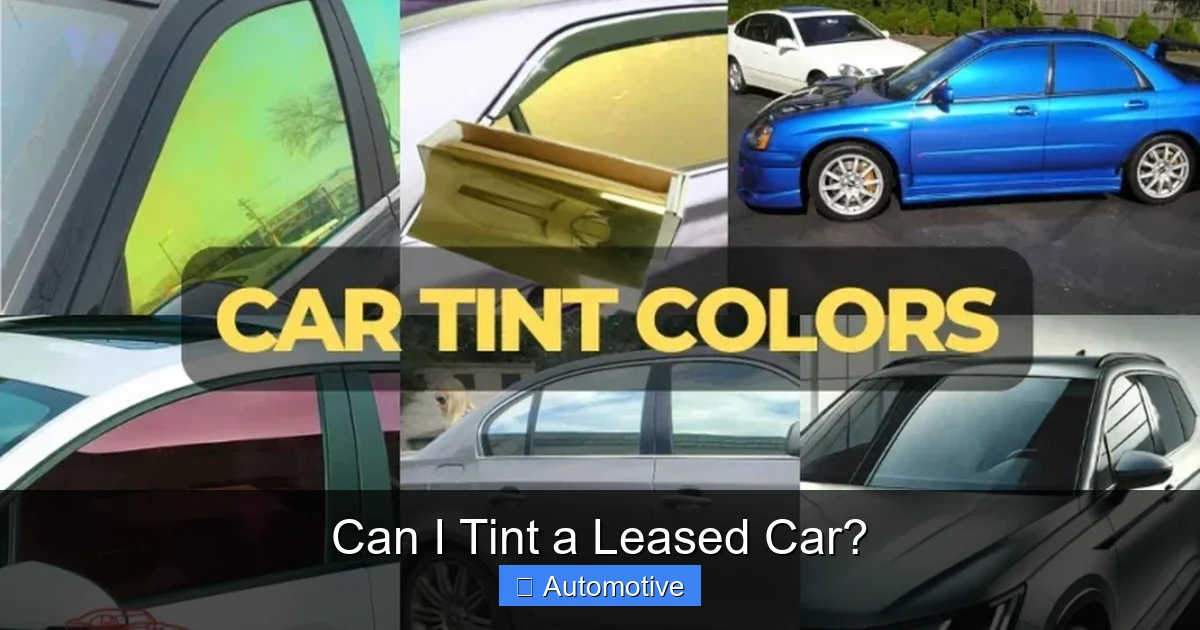
Many states also have rules about reflective or mirrored tint, and some prohibit certain colors (like red or blue). You can find your state’s exact regulations through your state’s Department of Motor Vehicles (DMV) or a reputable automotive tinting association website. This is your legal baseline. You cannot legally tint darker than your state’s minimum VLT requirement, regardless of what your lessor says. If your lessor approves 20% front tint but your state requires 70%, you must follow the state law. The more restrictive rule wins.
Multi-State Considerations
If you live in a border state or plan to travel frequently, this gets trickier. You must comply with the laws of any state you are driving in. A tint legal in your home state could get you a fix-it ticket in a neighboring state with stricter laws. For a leased car, this creates a potential headache. If you get pulled over and cited for illegal tint, you are responsible for the ticket and the correction. Your leasing company will not be sympathetic. Always err on the side of the strictest law you might encounter to avoid legal hassle.
The Approval Process: How to Get a Yes (and Avoid a No)
You’ve read your lease. You’ve looked up your state’s laws. Now it’s time to seek permission. This is a critical step that separates responsible lessees from those facing surprise fees.
Visual guide about Can I Tint a Leased Car?
Image source: autogos.com
Who to Contact and What to Ask
Do not call the random 1-800 number on your billing statement. You need to reach the “lease-end” or “contract administration” department, or speak directly with the manager at the dealership where you signed the lease. They are most familiar with their own policies and can often provide written authorization. When you contact them, be prepared and professional:
- Have your full name, lease agreement number, vehicle VIN, and vehicle year/make/model ready.
- State clearly: “I am seeking written permission to have professional aftermarket window tint installed on my leased vehicle. I understand my state’s legal limit is [X]% VLT for front windows and [Y]% for rear windows. I propose to use a reputable, insured installer and will ensure the tint meets or exceeds all state laws.”
- Ask specifically: “Will this modification be approved? Will I be held responsible for its removal at lease-end? Is there any fee associated with this approval?”
Phrasing it this way shows you’ve done your homework and respect the process. It shifts the burden back to them to say no based on their internal policy, not your ignorance.
What Written Approval Should Look Like
An acceptable approval is not a text message. It is a formal communication. It should include:
- Your name and vehicle identification.
- The specific tint specifications (e.g., “35% VLT on all side and rear windows, 70% VLT on front windows to comply with [State] law”).
- The name of the tint shop (optional but good to include).
- A statement that the lessor grants permission for this modification for the term of the lease.
- A clear statement on who is responsible for removal at lease-end. The ideal scenario is a waiver: “Lessor waives the requirement to remove said tint at lease-end.” The more common, less ideal scenario is: “Lessee shall be responsible for all costs associated with removal of the tint prior to vehicle return.”
- A signature (digital or physical) and date from an authorized representative of the leasing company.
If they refuse, you have your answer. If they say yes but require you to pay for removal, that’s a cost you must factor into your decision. If they waive removal, you’ve hit the jackpot and can proceed with confidence. For more complex lease-end scenarios, such as an early return, understanding your options is crucial. You can review our detailed guide on how to return a leased car early to see how modifications factor into those calculations.
Practical Execution: Choosing the Right Tint and Installer
Assuming you’ve gotten your written approval (and you have it in your hand/email folder), now you focus on execution. A bad tint job is worse than no tint at all. It looks terrible and will be charged as excess wear and tear.
Visual guide about Can I Tint a Leased Car?
Image source: caramaze.com
Quality Over Price: Why Your Installer Matters
Do not shop solely on price. A cheap tint often uses inferior dye that fades to purple or brown within a year. It may have poor adhesive that bubbles and peels. It might be cut poorly, leaving gaps or overlapping the defroster lines on the rear window. All of these are red flags during a lease-end inspection. The leasing company’s third-party inspector will note “aftermarket window tint” and assess its condition. If it’s peeling, has bubbles, or has cut into the defroster grid (which can cause the lines to fail), you will be charged for a full re-tint of that window plus labor.
Seek out installers with strong local reviews, specifically mentioning their work on newer vehicles. Ask if they use a computer-cut plotter for precision. This ensures the tint is cut to the exact shape of your window without touching the glass, eliminating the risk of scratching the glass or cutting defroster lines. They should also use a high-quality film from a reputable brand (like 3M, LLumar, SunTek) that offers a lifetime warranty against fading, bubbling, and peeling. Get that warranty in writing from the installer.
Specifying Your Tint for the Lease
When you get your quote, be explicit with the shop. Show them your state’s legal limits and your written lessor approval. Say: “I need a tint that complies with [State] law: front sides at 70% VLT, rear at 35% VLT,” or whatever your approved percentages are. A good shop will know the laws and recommend a film that meets those specs. They should also provide you with a detailed receipt that includes the exact film product name, VLT percentage, total cost, and their business information. This receipt is part of your documentation package.
After installation, do a thorough inspection in good light. Look for any bubbles, debris under the film, uneven edges, or cuts too close to the defroster lines. Do not sign off or pay in full until you are 100% satisfied. A reputable shop will fix any issues before you leave. Take high-quality photos of each window from the inside and out as soon as the job is complete. This is your evidence of its condition at the time of installation.
The Financials: Costs, Fees, and Potential Pitfalls
Tinting a leased car isn’t free, and the costs extend beyond the initial shop bill. You must consider the full financial landscape.
Upfront and Ongoing Costs
The cost for a full-car tint on a sedan using quality film ranges from $200 to $500, depending on your region and the film brand. For an SUV or crossover with more glass, it could be $300-$600. This is your out-of-pocket expense. Then there’s the potential “approval fee.” Some leasing companies, though rare, may charge a nominal administrative fee (e.g., $50-$100) for processing the modification request. This should be disclosed upfront.
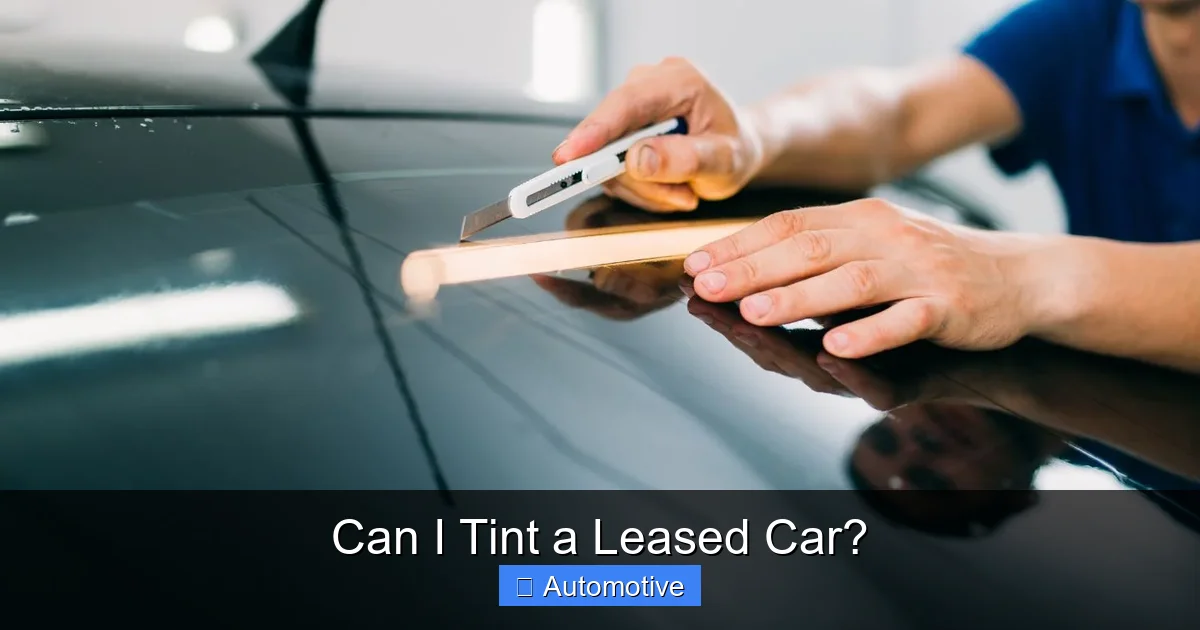
Then there’s the big unknown: lease-end removal cost. If your approval does not waive removal, you must budget for this. Professional removal is not trivial. It requires skill to avoid damaging the glass, defroster lines, or window mechanisms. The adhesive must be carefully scraped and cleaned, often with a razor blade and solvent. This can take 1-3 hours per window. Labor rates vary, but you could be looking at $300-$800+ to have a shop remove the tint and clean the windows back to a “normal” state. This is a classic “gotcha” fee that surprises many lessees at turn-in.
Disposition Fees and Wear & Tear Charges
At the end of your lease, you will pay a “disposition fee” (often $300-$500) if you don’t buy the car. This fee covers the lessor’s cost to process the return and re-sell the vehicle. Unauthorized or poorly executed modifications can trigger additional, significant wear-and-tear charges. The inspector will note the tint as an “unapproved modification” or “aftermarket accessory.” If it’s in perfect condition and you have proof of approval, they may simply note it and charge you for removal. If it’s damaged, you’ll be charged for a full replacement of the tint on that window, plus a labor fee. These charges can easily exceed the original cost of the tint. In extreme cases of breach of contract (e.g., you tinted darker than state law without approval), the lessor could, in theory, pursue more serious penalties, though this is uncommon for tinting alone. For understanding the full spectrum of potential fees when ending a lease, our article on early lease returns covers many of these financial implications.
Lease-End Reality: What Truly Happens at Turn-In
The moment of truth arrives. You’ve enjoyed your tinted windows for two or three years. Now it’s time to return the car. What should you expect?
The Inspection Process
You will schedule a pre-inspection with the leasing company’s third-party agent (often a company like Allegiant or ARI). They will walk around the car with a checklist. They will look at the windows. They will note the presence of aftermarket tint. If you have your written approval, present it at this inspection. Say, “This modification was pre-approved by [Leasing Company Name] on [Date].” This is crucial. It shifts the conversation from “unauthorized alteration” to “approved modification pending removal assessment.” The inspector will still note it, but they have a record that it was permitted.
The inspector will also assess the tint’s condition. No bubbles? No peeling edges? No scratches? Good. If it’s in perfect shape and your approval waives removal, you may face no additional charge for the tint itself. If your approval requires removal, the inspector will likely include an estimated cost for “window tint removal” in your final bill.
The Final Bill and Your Options
You will receive a final invoice after the vehicle is processed. It will list any excess wear-and-tear charges, mileage overages, and the disposition fee. If tint removal is required, it will be a line item. At this point, you can:
- Pay the fee. This is the simplest path if the cost is reasonable.
- Remove the tint yourself. If you are handy and the tint is in good condition, you might attempt removal. This is risky. If you damage the glass, defroster, or window regulator during removal, you will be charged for those repairs, which will be far more than the removal fee. Only attempt this if you are confident and the windows are simple (e.g., no complex antennas or sensors in the glass).
- Buy the car. If you’ve fallen in love with the car and the tint, this is your ultimate out. If you decide to purchase the leased vehicle at the end of the term (the “residual value” is set in your contract), the car becomes your property. All modifications, including tint, become yours. You do not need to remove it. The leasing company’s concerns about remarketing vanish. This is a major reason some lessees choose to tint—they know they’ll buy the car. If this is your plan, get it in writing during your approval request that the tint will not need removal if the vehicle is purchased by the lessee.
If you are considering buying out your lease, it’s wise to understand the full financial commitment. Our piece on selling a leased car to Carmax or other retailers can help you compare your buyout value to the car’s actual market worth.
Conclusion: A Clear Path to Tinted Leased Windows
So, can you tint a leased car? The answer is a qualified yes, but it’s a path paved with paperwork and prudence. The journey has three non-negotiable stops:
First, your lease agreement. It is your primary contract. Find the alteration clause. If it forbids modifications, you likely cannot tint unless you get a written waiver. If it allows modifications with approval, you must get that approval in writing, specifying the tint percentage and responsibility for removal.
Second, your state’s law. This is your legal ceiling. Your tint must be legal where you are registered. A leasing company cannot legally approve something that violates state statute. Use the stricter of the two standards (lease policy or state law).
Third, flawless execution. Hire a top-tier professional. Use quality film. Get a detailed receipt and warranty. Document the pristine condition with photos. A perfect tint job that meets all rules will likely only cost you the initial installation fee (and maybe an admin fee). A bad, unauthorized tint will cost you thousands in fees and a major headache.
Tinting a leased car is a calculated risk, but with meticulous attention to your contract, your state’s regulations, and getting everything in writing, you can enjoy the benefits of tint without the fear of a financial penalty. The golden rule remains: when in doubt, get it in writing from the lessor before any adhesive touches your glass. Your future self, holding a fair final invoice, will thank you.
Frequently Asked Questions
Does window tint void my car lease?
Not automatically, but it is almost always considered an unauthorized modification unless you have explicit written permission from the leasing company. Doing it without approval is a breach of contract and will likely result in financial penalties at lease-end.
Can the leasing company make me remove the tint?
Yes. Unless your written approval specifically waives the requirement, the leasing company can—and typically will—require you to remove the tint at your own expense before returning the vehicle, so they can return it to a “normal,” marketable condition.
What if my tint is darker than state law?
This is the worst-case scenario. You are violating state law, which can result in traffic tickets. The leasing company will also see it as an unapproved, illegal modification. You will be charged for removal and could face additional penalties. Always tint to the legal limit of your state.
How much does it cost to remove tint from a leased car?
Professional removal can range from $300 to over $800 for a full vehicle, depending on the car’s size and the tint’s condition. This is a common and often surprising end-of-lease charge for lessees who tinted without a removal waiver.
Will a dealership install tint on a leased car?
Some dealerships’ service departments may offer tinting, but they will still require you to get written permission from the leasing company first. They are unlikely to install it without that approval, as they are aware of the lease terms. Always get the approval yourself before any work begins.
If I buy my leased car, do I have to remove the tint?
No. If you exercise your option to purchase the leased vehicle at the end of the term (for the predetermined residual value), the car becomes your personal property. Any modifications, including tint, become yours, and the leasing company has no say in the matter. This is a key benefit of planning to buy out a lease.
