
What Is Toyota Smart Key System with Push Button Start?

The Toyota Smart Key System with Push Button Start is a keyless entry and ignition technology that allows you to lock, unlock, and start your vehicle without ever removing the key fob from your pocket or bag. It uses advanced radio frequency communication between the key and the car for seamless, convenient, and secure operation. This system enhances daily usability with features like proximity unlocking and engine start/stop at the push of a button, while also incorporating multiple security layers to prevent theft.
Have you ever found yourself juggling groceries, a briefcase, and a crying toddler, only to fumble with your car keys at the door? Or maybe you’ve experienced the distinct frustration of a traditional key that’s worn down and no longer turns smoothly in the ignition. If these scenarios sound familiar, then you’ve likely already encountered, or at least wish you had, the solution: Toyota’s Smart Key System with Push Button Start. This isn’t just a fancy gadget; it’s a fundamental shift in how we interact with our vehicles, blending seamless convenience with sophisticated security. In this complete guide, we’ll peel back the layers of this technology. We’ll explore exactly how it works from a radio signal to an engine roar, dive into its everyday benefits, address common questions and hiccups, and see how it compares to the keys of yesteryear. Whether you’re a new Toyota owner curious about your car’s capabilities or someone considering their next vehicle, understanding this system is key to unlocking a smoother, more modern driving experience.
Key Takeaways
- Proximity-Based Access: The system detects the authorized smart key fob within a specific range (typically 3-5 feet), allowing you to touch the door handle to lock or unlock it without pressing any buttons.
- Push-Button Ignition: With the key fob inside the vehicle, you simply press the brake pedal and the engine start/stop button to ignite the engine, and press it again to turn it off.
- Enhanced Security: It employs encrypted, rolling-code technology that changes with every use, making it extremely difficult for thieves to clone or intercept the signal.
- Multiple Practical Benefits: Offers hands-free convenience when your hands are full, eliminates worn-out traditional keys, and integrates with other vehicle systems like the Smart Key System for personalized settings.
- Backup Manual Key: Most models include a hidden, physical emergency key inside the fob for situations when the smart key battery is dead or the system malfunctions.
- System Awareness: Understanding features like the Smart Key deactivation switch is important for specific scenarios, such as when washing the vehicle or to prevent accidental engine starts.
[FEATURED_IMAGE_PLACEHOLDER]
📑 Table of Contents
How Does the Toyota Smart Key System Actually Work?
At its heart, the Toyota Smart Key System is a symphony of low-energy radio waves and constant, silent communication. It’s not magic, but it can feel like it. Let’s break down the tech into simple steps.
The Smart Key Fob: Your Silent Communicator
Your key fob is no longer just a plastic shell with buttons. Inside, it houses a small but powerful transponder chip and a battery. This chip continuously emits a unique, encrypted low-frequency radio signal. Think of it as your fob whispering a secret code into the air around you. This signal has a limited range, usually about 3 to 5 feet from the vehicle’s door handles or the ignition area. The car is always listening, with multiple antennas discreetly placed around its body—in the door handles, the center console, and near the ignition button.
The Dance of Detection and Authentication
When you approach your Toyota with the fob in your pocket or bag, the car’s antennas detect its unique signal. This triggers a series of checks. First, the vehicle’s computer verifies that the signal’s encrypted code matches one of the codes it has been programmed to recognize. This isn’t a static code; it’s a “rolling code” that changes with every single use, a critical security feature that makes signal cloning virtually impossible. Once the code is authenticated, the system is “armed” and ready for your physical interaction.
Touch to Unlock, Press to Start
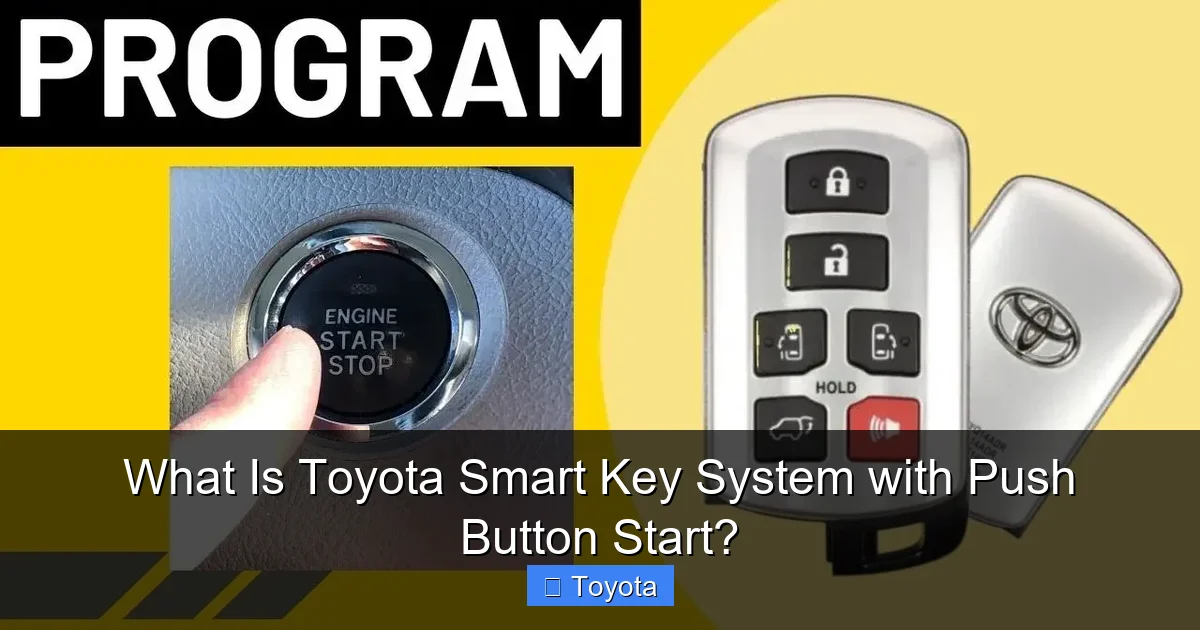
With the system armed, you simply touch the outer surface of the driver’s door handle. A sensor in the handle detects your hand’s presence and confirms the authenticated fob is nearby. It then sends a command to unlock that door. You can repeat this for the other doors or the trunk. To start the engine, you get in, ensure the fob is inside (the car will usually display a warning if it’s not), press the brake pedal, and then press the engine start/stop button. The button press sends a signal to the car’s computer, which again checks for the fob’s presence before engaging the starter motor. Pressing the button again, with the vehicle in park, shuts the engine off. It’s a fluid, one-motion process that replaces the insertion and turning of a physical key.
The Role of the Smart Key Deactivation Switch
There’s a small but important feature often overlooked: the Smart Key deactivation switch. This is typically located on the side of the steering column or the dashboard. Flipping this switch turns off the smart key system’s detection ability. Why would you do this? Primarily for two reasons: first, to prevent accidental engine starts when performing maintenance or washing the car. Second, in very rare cases of extreme electromagnetic interference, disabling and re-enabling the system can sometimes reset it. Knowing where this switch is and how to use it is a simple yet powerful piece of ownership knowledge.
The Tangible Benefits: Why You’ll Love This System
Knowing the mechanics is one thing, but the real value is felt in the daily grind. The benefits of the Smart Key System extend far beyond mere novelty.
Visual guide about What Is Toyota Smart Key System with Push Button Start?
Image source: diycarexpert.com
Unmatched Convenience in Everyday Life
This is the most obvious and celebrated advantage. Picture yourself returning to your car after a long day, arms full of shopping bags. You don’t need to dig into your pocket or purse, fish out the key, and manually unlock the door. You simply walk up, touch the handle, and the door swings open. You place the bags inside, get in, press brake, push start. The entire process is streamlined and can be done without ever setting your items down. It’s also a game-changer in bad weather. No more standing in the rain or snow trying to find the keyhole. The system is equally useful when you’re wearing gloves or have your hands occupied with tools, sports equipment, or children.
Enhanced Security and Theft Deterrence
Contrary to what some might assume, keyless systems are often more secure than traditional keys. The rolling code encryption is a formidable barrier. Each time you use the system, it generates a new, unique code that the car expects. A thief using a code-scanning device would only capture a code that is instantly useless, as the system has already moved on to the next one in the sequence. Furthermore, the system is designed to only work within its very short proximity range. Someone standing across the parking lot cannot unlock or start your car. Many models also incorporate an immobilizer that physically prevents the engine from starting without the correct authenticated key signal, even if someone were to somehow hot-wire the ignition.
Integration and Personalization
This system doesn’t operate in a vacuum. It’s often the gateway to a suite of personalized features. When the authenticated fob is detected, the car can automatically adjust settings based on that specific key. This can include moving the driver’s seat and mirrors to the saved position for that driver, recalling preferred radio stations, and adjusting climate control settings. It creates a seamless transition from the sidewalk to your personalized cockpit. For families with multiple drivers, this personalization is a huge quality-of-life improvement. You can also link it to the Toyota SmartPath system for additional connected services.
What to Do When Things Go Wrong: Troubleshooting Basics
For all its reliability, no electronic system is infallible. Knowing the common hiccups and their fixes can save you a lot of stress.
Visual guide about What Is Toyota Smart Key System with Push Button Start?
Image source: i.ytimg.com
The Most Common Issue: A Dead Key Fob Battery
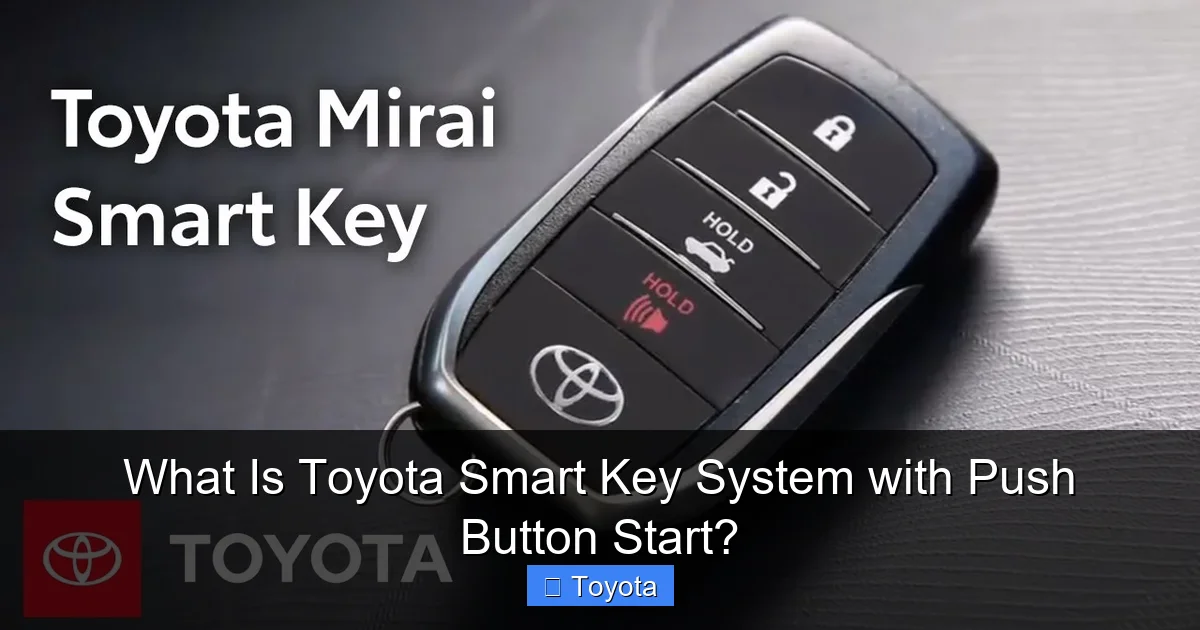
The #1 reason a Smart Key System fails is a dead battery in the fob itself. The low-energy signal simply isn’t strong enough. The symptoms are classic: the door handles no longer unlock the car when touched, and the push-button start indicator may flash or the car may display a “Key Not Detected” message on the dash. The solution is straightforward: replace the battery. Most key fobs use a standard coin-cell battery (like a CR2032). Your owner’s manual will have the exact type and instructions for replacement, which usually involves prying open the fob with a small flathead screwdriver.
Using the Hidden Emergency Key
If you’ve replaced the fob battery and it still doesn’t work, or if you’ve lost the fob entirely, your Toyota has a backup plan. Inside every smart key fob is a small, physical metal key. To access it, you typically press a small button or slide a cover on the fob to release it. This manual key can unlock the driver’s door in the traditional way by inserting it into the lock cylinder (which is often hidden behind a trim cap on the door handle). Once inside, for many models, you can still start the car. The process varies by model and year but often involves holding the dead fob against the start button or a specific area on the steering column while pressing the brake and start button. The car’s system can sometimes “read” the fob’s chip through this physical proximity. Always consult your owner’s manual for your specific model’s emergency start procedure. For a visual guide on using a physical key with a modern Toyota, you might find resources on starting a Toyota Camry with a manual key helpful, as the principles are similar across many models.
Signal Interference and Environmental Factors
Strong electromagnetic fields can temporarily disrupt the signal between the fob and the car. This can happen near large radio transmitters, certain industrial equipment, or even a powerful phone charger placed directly on the fob. If the system acts erratically, try moving away from potential sources of interference. Also, extreme cold can sometimes affect battery performance and electronic components. If your system acts up only in very cold weather, a battery replacement might be in order sooner than later.
Smart Key vs. Traditional Key: A Clear Comparison
To truly appreciate the Smart Key System, it’s helpful to contrast it directly with the traditional metal key and remote fob combo.
Visual guide about What Is Toyota Smart Key System with Push Button Start?
Image source: i.ytimg.com
The Traditional Remote Key Experience
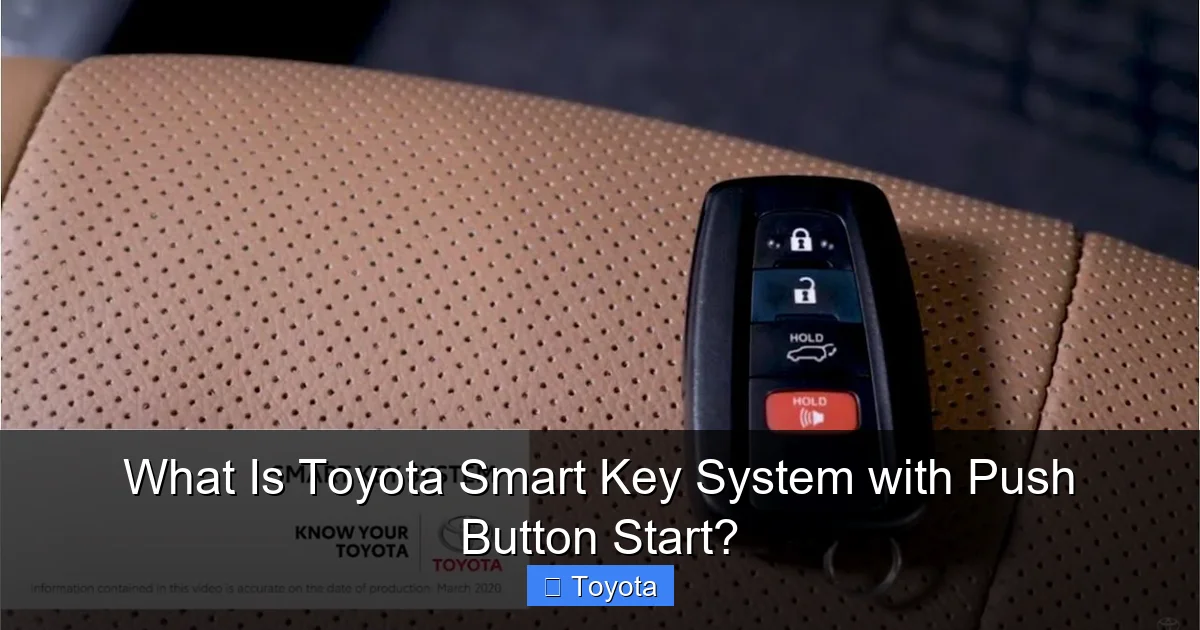
With a traditional setup, you must actively press a button on the fob to lock or unlock the doors. You still need to physically remove the key from your pocket and insert it into the door lock if the remote fails. To start the car, you must insert the key into the ignition and turn it. This process involves multiple discrete steps: locate fob, press button, locate key slot, insert key, turn. While functional, it’s a sequence of actions that the Smart Key System condenses into one or two intuitive gestures.
Advantages of the Push-Button Smart Key System
The smart key system’s primary advantage is its proactive nature. The car is waiting for you, authenticated and ready, the moment you approach. The action of touching the handle is the unlock command. There is no “point and click” with a remote. The start process is also simpler, requiring only a brake pedal press and a button push. This reduces physical wear on both the key (no more turning in a lock) and the vehicle’s ignition cylinder. It also eliminates the risk of locking your keys inside the car, as the fob must be with you to lock the doors via the handle touch or the lock buttons inside.
When a Traditional Key Might Still Be Preferred
Some drivers prefer the tactile, definitive feedback of inserting and turning a key. There’s a psychological sense of control and a clear mechanical action. For them, the push-button start can feel abstract. Additionally, in the extremely rare case of a complete electrical system failure where the car’s computers are dead, a traditional key in a mechanical lock is the only way in. However, modern Toyotas with the Smart Key System are designed with multiple redundancies, including the hidden manual key slot, to mitigate this last scenario.
The Future of Keyless Entry and What’s Next
The Smart Key System is a mature and reliable technology, but innovation doesn’t stop. The evolution is moving toward even more seamless and integrated solutions.
Digital Keys and Smartphone Integration
The next frontier is the complete elimination of the physical key fob. Using ultra-wideband (UWB) technology and Bluetooth, automakers are developing systems that allow your smartphone to act as the digital key. You could simply walk up to your car, and it would unlock automatically when you reach for the handle, and start with the same button press. The digital key could be shared digitally with family members or rental services via an app, with specific permissions set (e.g., a valet key that only allows driving for 2 hours). Toyota is actively developing and rolling out these connected digital key solutions in partnership with smartphone platforms.
Biometric Authentication
Looking even further ahead, biometrics like fingerprint scanners or facial recognition could provide an additional layer of security and personalization. Your car would recognize you individually, not just your key fob, and automatically configure all settings. This could also prevent unauthorized use even if your fob or phone is stolen.
Enhanced Cybersecurity
As systems become more digital and connected, cybersecurity becomes paramount. Future iterations of keyless entry will feature even more sophisticated encryption, continuous signal authentication, and potentially blockchain-based security protocols to guard against increasingly complex relay-theft attacks where criminals amplify the key fob’s signal to trick the car.
Frequently Asked Questions
What happens if my smart key fob battery dies?
If the battery dies, the proximity functions (touch-to-unlock) will stop working. However, you can still use the hidden physical emergency key inside the fob to unlock the driver’s door. To start the car, you’ll need to hold the dead fob against the engine start button or a designated area on the steering column as you press the brake and the start button. The car’s antenna can often read the fob’s chip through this direct contact.
Can someone steal my Toyota using a signal relay attack?
While no system is 100% foolproof, Toyota’s Smart Key System uses rolling-code encryption with a very short operational range, making relay attacks significantly more difficult than with older systems. The signal must be within a few feet of the car or fob to work. For added peace of mind, you can store your key fob in a signal-blocking pouch or box when not in use, or consider using the deactivation switch if the car will be stationary for a long period.
Does the push-button start system work if I’m not pressing the brake pedal?
No. For safety, the system requires you to firmly press the brake pedal (or in some manual transmission models, press the clutch pedal) before it will allow the engine to start. This prevents the car from lurching forward unexpectedly if the start button is accidentally pressed while in gear. This is a critical safety feature, not a malfunction.
Can I program a new smart key fob myself?
>In most cases, no. Programming a new smart key fob to your Toyota’s immobilizer system requires specialized diagnostic equipment and access to the vehicle’s security computer. This is a dealer-only or professional locksmith/automotive technician procedure to ensure security and prevent unauthorized key duplication.
What if I lose my only smart key fob?
If you lose your only fob, you will need to purchase a replacement from a Toyota dealer. They will provide a new fob and program it to your vehicle’s specific VIN. You will also need to have the lost fob removed from the car’s memory to prevent it from being used if found. Always keep a spare key fob in a safe place.
Is the smart key system compatible with all Toyota models and years?
No. The Toyota Smart Key System with Push Button Start was introduced gradually across the lineup. It became widely available in the mid-to-late 2000s and is now standard or optional on most new models. Some trims of popular models like the Camry, RAV4, Highlander, and Tacoma offer it. You can check your specific model year and trim’s specifications in your owner’s manual or on Toyota’s official website. For older models, you might find information on how to start a Toyota Venza with a key, which predates widespread smart key adoption.
