
Can I Use Windex on My Car?

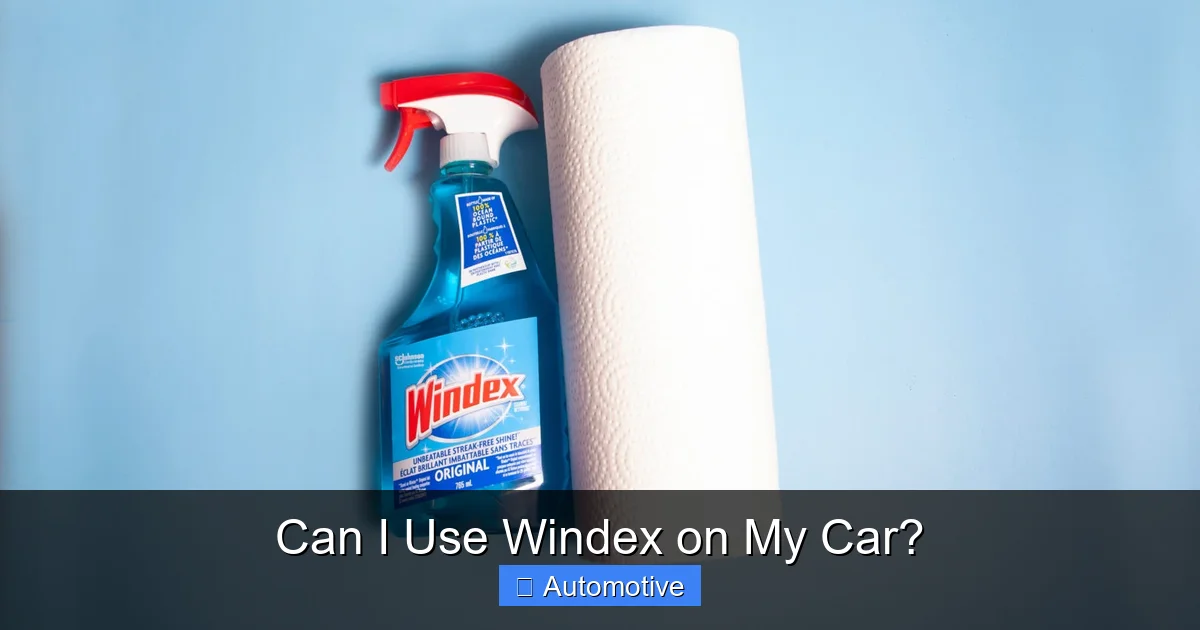
No, you should not use standard Windex or any household ammonia-based glass cleaner on your car. The ammonia and other harsh chemicals can permanently damage your vehicle’s paint, protective coatings, rubber trim, and aftermarket tinted windows. For a crystal-clear, safe shine, always use products specifically designed for automotive glass and surfaces. This guide explains the exact risks and provides the best practices and products to keep your car looking its best without causing harm.
It’s a question that pops up for almost every car owner at some point: you’re staring at a smudged windshield or a grimy rear window, and the blue bottle of Windex is right there in your cupboard. It’s the ultimate glass cleaner, right? Why wouldn’t it work on your car? The short, critical answer is: you really, really shouldn’t. Using Windex on your car is one of the most common cleaning mistakes people make, and it can lead to costly, permanent damage. Let’s break down exactly why, what it can harm, and what you should use instead to get a perfect, damage-free shine.
Key Takeaways
- Ammonia is the Primary Culprit: Household cleaners like Windex contain ammonia, which strips protective waxes and sealants from paint and causes fading, discoloration, and drying of rubber and plastics.
- It’s Not Just About Glass: While safe for home windows, the formulation can degrade the special coatings on automotive glass and is guaranteed to damage aftermarket window tint.
- Automotive-Specific Products Are Essential: Always choose cleaners labeled for automotive use. They are pH-balanced, ammonia-free, and safe for all car surfaces, including paint, glass, and trim.
- Technique Matters As Much As Product: Using the wrong cloth (like paper towels) or cleaning in direct sunlight can cause scratches and swirls, regardless of the cleaner used.
- The Risk Outweighs Any Benefit: The potential for irreversible damage to your car’s finish—a multi-thousand dollar asset—far outweighs the minor cost savings of using a household cleaner.
📑 Table of Contents
- Why Your Gut Instinct Is Wrong: The Allure of the Household Cleaner
- What Windex Actually Damages on Your Car (It’s More Than You Think)
- The Right Tools for the Job: Safe, Automotive-Grade Alternatives
- The Proper Technique: How to Clean Your Car’s Glass Without a Scratch
- Special Cases: Tinted Windows, Hard Water Spots, and More
- The Bottom Line: Protect Your Investment
Why Your Gut Instinct Is Wrong: The Allure of the Household Cleaner
It’s easy to see the logic. Windex is famously effective on the stubborn hard water spots and film that build up on bathroom mirrors and kitchen windows. Your car’s windshield faces the same elements—bug guts, bird droppings, road grime, and mineral deposits from rain and car washes. So, why not employ the heavy-hitter?
The problem isn’t about cleaning power. It’s about chemistry and context. The surfaces in your home and the surfaces on your car are built to completely different standards and are protected in different ways. What works perfectly on inert, non-porous home glass can be actively corrosive to the complex, coated systems of your automobile. Before we dive into the specific damages, it’s important to understand what’s actually in that iconic blue bottle.
The Dangerous Ingredients in Standard Windex
Original formula Windex (and most generic “ammonia-based” glass cleaners) contains a few key ingredients that are red flags for automotive surfaces:
- Ammonia ( Ammonium Hydroxide): This is the star player for cutting through grease and grime on glass. However, it is highly alkaline and a powerful solvent. On a car, it doesn’t discriminate between dirt and your paint’s protective layers.
- Isopropyl Alcohol: A drying solvent that can strip away waxes and sealants and accelerate the evaporation of water, leading to faster drying and potential water spots if not wiped immediately.
- Detergents/Surfactants: These help the solution spread and lift dirt. When used on car paint, they can remove the microscopic layer of wax that shields the paint from UV rays and environmental contaminants.
- Dyes and Fragrances: These are unnecessary for cleaning and can leave residues that attract more dust.
In short, you’re introducing a potent, multi-purpose solvent to a surface that needs gentle, pH-neutral care. Now, let’s see exactly where that causes trouble.
What Windex Actually Damages on Your Car (It’s More Than You Think)
Most people assume the only risk is to the paint if overspray lands on it. The reality is far more widespread and insidious. Using Windex intentionally on any part of your car’s exterior or interior is a gamble with several high-value components.
Visual guide about Can I Use Windex on My Car?
Image source: autoglassandtintshop.com
1. The Paint and Protective Coatings: Your Car’s First Line of Defense
Modern automotive paint is a complex system. Beneath the clear coat—a hard, transparent layer of urethane or acrylic—is the color coat, and beneath that, primer and metal. That clear coat is what gives your car its depth, gloss, and, most importantly, its protection from UV rays, oxidation, and minor scratches. It is often topped with a layer of wax or a longer-lasting paint sealant or ceramic coating that you (or a detailer) have applied.
Ammonia is a wax-stripper. When you spray Windex on your windshield and it inevitably drips onto the hood or fender, the ammonia begins to dissolve that sacrificial protective layer. Even if you wipe it off quickly, you are removing your shield. Without wax or sealant, the clear coat is directly exposed. The sun’s UV rays will attack it, leading to rapid oxidation (that chalky, faded look), and the paint becomes far more susceptible to swirl marks, scratches, and etching from bird droppings and tree sap. One careless cleaning can undo months of protective layering. For advice on maintaining your car’s finish, understanding proper product selection is as important as knowing what oil to use in your engine.
2. Rubber, Plastic, and Vinyl Trim: The “Dry Rot” Accelerator
Look around your car. The door and window seals, the windshield wiper blades, the trim pieces around the windows and bumpers—most of these are made from rubber or various plastics (like ABS or polycarbonate). These materials contain plasticizers and conditioners that keep them flexible and prevent cracking. Ammonia is a solvent that aggressively leaches these essential chemicals out of the material.
The result? Dry, brittle, cracked trim. Your window seals will shrink and harden, leading to wind noise and potential water leaks. Wiper blades will become stiff and ineffective, leaving streaks. Black plastic trim will fade to an ugly, chalky gray. This damage is irreversible. You can’t “re-condition” plastic that has had its plasticizers evaporated by ammonia. It’s a slow death sentence for all the flexible parts of your car’s exterior.
3. Aftermarket Window Tint: A Guaranteed Disaster
If your car has any aftermarket window tint (the film applied to the inside of the glass), using Windex or any ammonia-based cleaner on the *interior* of the glass is a guaranteed way to ruin it. The ammonia will attack the adhesive that bonds the film to the glass. You’ll start to see bubbles, peeling edges, and discoloration (often a purple or brown hue). The tint will fail prematurely, costing you hundreds of dollars to replace. Even on the *exterior* side, overspray can run down and get behind the film at the top edge. The rule is simple: never use ammonia-based cleaners on tinted windows. This is such a critical point that we have a dedicated guide on can you use Windex on car windows that details the specific risks to tint.
4. The Glass Itself: Coatings and Contaminants
Wait, isn’t Windex *for* glass? Yes, but automotive glass is different. Many modern cars have hydrophobic or oleophobic coatings on the windshield and front windows. These are factory-applied nano-coatings designed to make water bead up and slide off (improving wiper performance) and to resist fingerprint smudges. Ammonia-based cleaners can degrade and strip away these valuable coatings over time, reducing their effectiveness and leaving the glass more susceptible to water spots.
Furthermore, if you have hard water spots (mineral deposits) that have etched into the glass, Windex won’t remove them. It will just clean around them. Using an abrasive on the glass to remove them is a separate issue, but Windex itself is ineffective against true etching.
The Right Tools for the Job: Safe, Automotive-Grade Alternatives
So, if Windex is off the table, what should you use? The good news is that there are dozens of excellent, affordable products made specifically for cars that will do a better job with zero risk. The key is to look for two phrases: “Ammonia-Free” and “For Automotive Use” or “Safe for Paint & Tint.”
Visual guide about Can I Use Windex on My Car?
Image source: m.media-amazon.com
Dedicated Automotive Glass Cleaners
These are your primary weapon. They are formulated to be safe on all automotive surfaces, including tint, and are often designed to lift grime without stripping wax. They typically use alcohols, glycol ethers, or other mild solvents instead of ammonia.
- Spray-on, Wipe-off Types: Brands like Sprayway, Stoner, and Chemical Guys offer excellent ammonia-free glass cleaners. They often come in larger, economical bottles. Spray directly on the glass or on your microfiber towel.
- Water-Based & “No-Drip” Formulas: Some cleaners, like those from Griot’s Garage or Adam’s Polishes, are water-based and less messy, reducing the risk of drips onto painted surfaces.
- Hybrid Ceramic Glass Coatings: For the ultimate in protection and ease of cleaning, consider a dedicated ceramic coating spray for glass (e.g., from Meguiar’s or Gyeon). You apply it periodically (every few months), and it creates a super-slick, hydrophobic layer that makes bug guts and water slide right off, drastically reducing cleaning frequency.
The Microfiber Cloth: Your Most Important Tool
You can have the perfect cleaner, but with the wrong cloth, you’ll still scratch your glass. Never use paper towels, regular household rags, or terry cloth towels on your car’s glass or paint. They are simply too abrasive.
Invest in high-quality, plush microfiber towels dedicated solely to your car’s glass. Look for towels with a GSM (grams per square meter) rating of 300-500. They should feel soft and thick. Use one towel for applying cleaner and a second, dry, clean towel for the final “buffing” pass to remove any haze or streaks. This two-towel method is the secret to a flawless, streak-free finish. You can find these at any auto detailing supply store or online.
DIY Alternative (In a Pinch)
If you’re in a pinch and have no automotive cleaner, a very safe and effective DIY solution is simply a 50/50 mix of distilled water and isopropyl alcohol (70% or 91%). Distilled water is critical—never use tap water, as its minerals will cause water spots. Add a drop of baby shampoo (a mild, pH-neutral detergent) if you need a bit more cleaning power for sticky residues. This mixture is ammonia-free, evaporates quickly, and is safe for all surfaces. However, it lacks the specialized surfactants and protective agents of a commercial product.
The Proper Technique: How to Clean Your Car’s Glass Without a Scratch
Even with the right products, technique is everything. A bad technique with a good product can still cause damage. Here is the step-by-step process for perfect automotive glass cleaning.
Visual guide about Can I Use Windex on My Car?
Image source: m.media-amazon.com
Step 1: The Pre-Rinse (If Possible)
If you’re washing your whole car, always start with the glass. Give the windshield and windows a thorough rinse with your hose or pressure washer (on a gentle setting) to remove loose dirt, sand, and grit. This prevents you from grinding abrasive particles into the glass surface when you wipe.
Step 2: Shade and Cool Surfaces
Never clean glass (or any part of your car) in direct sunlight or on a hot surface. The sun will cause the cleaning solution to dry too quickly, leading to spotting and streaking. Work on a cool car in the shade or in your garage. This is a non-negotiable rule for all car cleaning.
Step 3: Apply Cleaner to the Towel, Not Directly (Usually)
For most spray cleaners, it’s better to spray the solution onto your microfiber towel rather than directly onto the glass. Why? This gives you more control, prevents overspray onto the dash, door panels, and paint, and allows you to use less product. The exception is if you’re dealing with a very dirty spot; you can spray directly on the bug splatter to let it soak.
Step 4: Wipe in a Pattern, Then Buff
Using your damp microfiber towel, wipe the glass in a consistent pattern—either up-and-down or side-to-side. This helps you see streaks later. Don’t scrub hard; let the cleaner do the work. For the exterior windshield, pay extra attention to the edges where the wipers rest, as grit and debris accumulate there. Once the entire surface is wet-cleaned, take your second, perfectly dry microfiber towel and buff the glass using the opposite pattern (if you wiped vertically, buff horizontally). This cross-hatch method ensures you catch any remaining haze or streaks. Use light pressure and a clean section of the towel frequently.
Step 5: Interior Glass: The Forgotten Challenge
The inside of your windshield and windows is often dirtier than the outside! It’s coated with a film of tobacco smoke residue (if applicable), cooking grease, off-gassed plastics from the dash, and finger smudges. Use a separate set of microfiber towels for the interior to avoid transferring grease to your exterior cleaning tools. You may need to make two passes: a first pass with a towel dampened with your cleaner to remove the greasy film, and a second dry pass to buff. For thick haze, an interior-specific glass cleaner or the DIY alcohol/water mix works wonders.
Special Cases: Tinted Windows, Hard Water Spots, and More
Certain situations require extra care and specific products.
Cleaning Tinted Windows (Interior and Exterior)
As established, ammonia is the enemy. You must use an ammonia-free cleaner. For the interior, spray the cleaner onto your towel and wipe gently. Do not saturate the edges of the tint, as getting cleaner behind the film can cause it to delaminate. If you see bubbles or peeling starting at the top edge, stop cleaning that area immediately. For the exterior, the same ammonia-free rule applies to protect the film’s edges. Always check your tint manufacturer’s care instructions, as some have specific recommendations or warranties tied to using certain products.
Tackling Hard Water Spots and Mineral Deposits
These are the white, crusty spots left by minerals in water that have baked onto the glass (and sometimes paint) in the sun. Windex will not remove these; they are etched into the surface. You need an acid-based cleaner specifically designed for mineral deposit removal. Products like Gyeon Quartz or CarPro IronX (for iron particles) are safe for glass and coatings when used correctly. The process involves applying the product, letting it react (it may change color), and then rinsing thoroughly. Always follow the product instructions precisely and test on a small area first. This is a more advanced detailing task.
Dealing with Sticky Residues (Tar, Bug Splatter, Tree Sap)
For these tough contaminants, a dedicated bug and tar remover or a citrus-based adhesive remover is your best bet. Spray it on the affected spot, let it dwell for 30-60 seconds to soften the goo, and then wipe it away with your microfiber towel. You can then follow up with your regular glass cleaner for a final shine. Never try to scrape or rub these off aggressively with a dry cloth; you will scratch the glass.
The Bottom Line: Protect Your Investment
Your car is likely the second most expensive asset you own, after your home. The paint and trim are not just about looks; they are a critical barrier against rust and structural decay. Using a $3 bottle of Windex—a product never intended for automotive use—to save a few dollars on proper cleaner is a spectacularly false economy. The cost of repairing faded paint, replacing cracked trim, or re-tinting windows runs into the hundreds or thousands of dollars.
The solution is simple and effective: create a small kit. Keep a bottle of ammonia-free automotive glass cleaner and a stack of dedicated, clean microfiber towels in your garage. When you see a smudge, use the right tool for the job. This small habit is a powerful form of preventative maintenance that will keep your car looking newer for longer and protect its resale value. It’s about respecting the engineering and materials of your vehicle. For a comprehensive approach to car care, from the products you use inside to the oil that runs the engine, consistent, correct maintenance is key. Think of it this way: you wouldn’t use dish soap to wash your expensive wool suit, and you shouldn’t use a bathroom cleaner on your car.
In the end, the answer to “Can I use Windex on my car?” is a definitive and loud NO. Stick to the automotive-specific products designed for the unique environment of your vehicle. Your car’s finish—and your future wallet—will thank you.
Frequently Asked Questions
Can I use Windex on my car’s windshield if I wipe it off immediately?
No. Even with immediate wiping, ammonia can still strip protective waxes and sealants from the surrounding paint and rubber trim through drips and overspray. The risk of damage is too high for any perceived benefit.
What is the safest homemade alternative to Windex for car windows?
A 50/50 solution of distilled water and 70% isopropyl alcohol is safe, effective, and ammonia-free. Use a clean, plush microfiber cloth for application and buffing to avoid scratches.
Will Windex damage factory-tinted windows?
Yes. Factory-tinted glass has the tinting material laminated within the glass itself, so ammonia won’t damage the tint color. However, it can still degrade the hydrophobic/oleophobic coatings on the glass surface and will damage the adhesive on any aftermarket film if it seeps to the edges.
Can I use Windex on my car’s interior plastic or dashboard?
Absolutely not. Ammonia and other solvents in Windex will dry out, crack, and fade interior plastics, vinyl, and leather. Always use interior-specific cleaners that are pH-balanced and non-drying.
My car has hard water spots. Can Windex remove them?
No. Hard water spots are mineral deposits that have etched into the glass. Windex only cleans surface dirt. You need an acid-based mineral deposit remover specifically designed for automotive glass or paint.
Is there any part of my car where Windex is safe to use?
The only arguably safe use would be on the *exterior* of a *plain, uncoated, non-tinted* glass mirror, applied carefully with no overspray. However, given the availability of superior, equally affordable automotive alternatives, there is no reason to ever use it on any part of your vehicle.
