
What Is the Service Interval for a 2010 Toyota Camry?

Maintaining your 2010 Toyota Camry on a proper schedule is crucial for its renowned reliability and longevity. The standard service interval typically revolves around every 5,000 miles or 6 months, but this varies based on your driving conditions. Following Toyota’s official maintenance schedule, which includes oil changes, tire rotations, and multi-point inspections, is the best way to protect your investment and avoid costly repairs down the road. Always consult your owner’s manual for the definitive plan tailored to your specific vehicle.
Key Takeaways
- The baseline interval is every 5,000 miles/6 months: This is the standard for oil changes and tire rotations under normal driving conditions, forming the core of your Camry’s maintenance.
- “Normal” vs. “Severe” driving drastically changes your schedule: Most drivers actually fall into the “severe” category, requiring more frequent service, sometimes every 3,500 miles.
- Follow the official Toyota Maintenance Schedule: Your owner’s manual provides a detailed, mileage-based checklist for items like spark plugs, cabin air filters, and fluid changes specific to the 2010 model year.
- Critical maintenance items are non-negotiable: Regular oil changes, tire rotations, brake inspections, and fluid level checks are essential for safety and preventing engine wear.
- DIY is possible for basics, but trust pros for major services: You can handle oil/fluid checks and tire rotations, but complex tasks like transmission service or timing belt replacement (if applicable) are best left to certified technicians.
- Keep meticulous records: Document every service performed, regardless of who does it. This history is invaluable for your car’s long-term health and resale value.
- Listen to your car and your manual: The maintenance minder system is a helpful guide, but it should complement—not replace—the knowledge in your owner’s manual and awareness of your driving habits.
📑 Table of Contents
Understanding Service Intervals: More Than Just a Number
So, you own a 2010 Toyota Camry. Excellent choice. This model year represents the solid, dependable heart of the Camry lineage—a car known for going the distance with proper care. But here’s the thing: that legendary reliability isn’t magic. It’s earned through consistent, timely maintenance. When someone asks, “What is the service interval for a 2010 Toyota Camry?” they’re usually looking for a simple mileage number. While that number is a crucial starting point, truly understanding service intervals means peeling back a few layers. It’s about the *why* behind the schedule, the difference between normal and severe driving, and how your specific driving habits dictate a personalized plan for your sedan.
Think of your Camry’s service interval as its dietary and exercise plan. A generic plan is a good baseline, but if you’re a competitive athlete (severe driving), you need more calories and recovery time (more frequent service). If you’re a weekend walker (normal driving), the baseline plan works perfectly. Ignoring the plan leads to problems—just like poor diet and exercise lead to health issues for us. For your Camry, skipping services can mean sludge in the engine, uneven tire wear, brake failure, or a transmission that doesn’t shift smoothly. The goal of this guide is to move you from asking for a number to understanding a system, empowering you to make the best decisions for your car.
The Foundation: What “Service Interval” Actually Means
At its core, a service interval is the prescribed distance (miles or kilometers) or time (months) between recommended maintenance tasks. It’s not a one-size-fits-all “change the oil every 3,000 miles” rule from decades past. Modern engineering, like the synthetic oils used in your 2010 Camry and its efficient engine, allows for longer intervals. For the 2010 Camry, Toyota’s official baseline for oil changes and tire rotations under normal driving is every 5,000 miles or every 6 months, whichever comes first. This is your fundamental heartbeat of maintenance.
However, “service interval” is an umbrella term. It encompasses a sequence of tasks that change as your car ages. A service at 5,000 miles is mostly oil, filter, and a check. A service at 30,000 miles adds air filter, cabin filter, and spark plug inspection. A service at 60,000 miles might include a major timing belt inspection (on certain 4-cylinder models) and transmission fluid service. The interval is the trigger, but the content is the script. Missing a 5,000-mile service doesn’t just mean dirty oil; it means missing the technician’s opportunity to spot a small leak, check your brake pad thickness, or inspect your suspension components before they become a safety hazard.
The Official Toyota Maintenance Schedule for Your 2010 Camry
Let’s cut to the chase. Where do you find the *real* answer? Not in a generic online article, but in the sacred text of your car: the Owner’s Manual. Buried in the glove compartment (hopefully still there!) is a detailed maintenance schedule, often with two columns: one for “Normal” driving and one for “Severe” driving. This schedule is the law for your specific vehicle, accounting for its 2.5L 4-cylinder or 3.5L V6 engine, automatic transmission, and all its systems.

Visual guide about What Is the Service Interval for a 2010 Toyota Camry?
Image source: cstatic-images.com
For the 2010 Camry, the schedule typically breaks down into key mileage markers: 5,000, 10,000, 15,000, 20,000, 30,000, 40,000, 50,000, 60,000, and so on. At each interval, a list of required and recommended items appears. For example:
- Every 5,000 miles: Oil & filter change, tire rotation, multi-point inspection.
- Every 10,000 miles: Inspect wiper blades, check all fluid levels.
- Every 30,000 miles: Replace engine air filter, inspect cabin air filter, inspect spark plugs, inspect drive belts.
- Every 60,000 miles: Replace spark plugs (4-cylinder), inspect timing belt (4-cylinder, if equipped—note: many 2010 V6 models have a timing chain, not a belt), replace transmission fluid (for severe service), replace engine coolant.
This is a simplified view. The manual will have precise details. The critical takeaway is that the interval for *each specific item* can be different. Your tire rotation is every 5K, but your cabin air filter might be every 15K or 30K. You must follow the cumulative schedule.
Decoding “Normal” vs. “Severe” Service
This is the most commonly misunderstood part of the schedule. Toyota’s definition of “Normal” driving is quite restrictive. It essentially means: mostly highway driving, in moderate temperatures, with minimal load, and without frequent short trips (under 5 miles in freezing temps). If this doesn’t describe you—and for most people, it doesn’t—you are in the “Severe” driving category.
Severe driving conditions include:
- Frequent short trips (the engine never fully warms up, leading to fuel dilution and moisture in the oil).
- Driving in extremely hot (above 90°F) or cold (below 10°F) temperatures.
- Extensive idling or stop-and-go traffic (like daily city commuting).
- Driving on dusty, sandy, or muddy roads.
- Towing a trailer or carrying heavy cargo regularly.
- Driving on hilly or mountainous terrain frequently.
If you check even one of these boxes, you should follow the severe service schedule. For your 2010 Camry, this often means oil and filter changes every 3,500 to 5,000 miles instead of the 5,000-mile normal interval. It may also accelerate other services like transmission fluid changes. The severe schedule isn’t a suggestion; it’s the realistic plan for how most people actually use their cars. When in doubt, default to the severe schedule. Your engine will thank you with cleaner oil and longer life.
Essential Maintenance Tasks and Their Specific Intervals
Now, let’s walk through the most critical components of your Camry’s health and their typical service intervals. Remember, these are general guidelines for a 2010 model. Your owner’s manual is the final authority.

Visual guide about What Is the Service Interval for a 2010 Toyota Camry?
Image source: motorbiscuit.com
Engine Oil & Filter: The Lifeblood of Your Camry
This is the single most important regular maintenance item. The 2010 Camry requires 0W-20 synthetic oil (for most models; verify your engine type). Under normal conditions, Toyota recommended an oil change every 5,000 miles. Under severe conditions, as established, this shortens to every 3,500-5,000 miles. The oil filter should be changed with every oil change. Using the correct oil viscosity is not optional; it ensures proper lubrication from a cold start and optimal fuel economy. If you’re unsure about the exact type, the best engine oil for a Toyota Camry 2010 guide can provide specific brand and type recommendations that meet Toyota’s standards.
Tire Rotation: Ensuring Even Wear and Longevity
Tire rotations are typically paired with oil changes. The standard interval is every 5,000 miles. This is because front tires on a front-wheel-drive Camry wear out much faster than rears due to the forces of steering, acceleration, and braking. Rotating them (usually front-to-back in a cross pattern) promotes even wear, extends the life of your tire investment, and maintains optimal handling and safety. When you get your tires rotated, this is the perfect time to have a technician check your correct tire pressure and inspect for any signs of uneven wear that could indicate an alignment or suspension issue.
Brake System Inspection
Brakes are a safety-critical system. Toyota recommends inspecting the brake pads/shoes, discs/drums, and brake fluid at every service interval (the 5,000-mile oil change visit is perfect for this). There is no fixed mileage replacement interval for brake pads because wear depends entirely on driving style. City drivers who ride the brakes will wear them out faster than highway cruisers. A typical pad might last 30,000-70,000 miles. The inspection will tell you the remaining thickness. Brake fluid is hygroscopic (absorbs water from the air), which lowers its boiling point and can lead to brake failure under hard use. Toyota often recommends replacing brake fluid every 2 years or 30,000 miles, but check your manual.
Fluids: The Other Lifelines
Beyond oil and coolant, your Camry has several critical fluids:
- Transmission Fluid: For the 2010 Camry’s automatic transmission, Toyota’s “lifetime” fluid claim is controversial. Many experts and severe-service schedules recommend a fluid and filter change every 60,000-100,000 miles to ensure long-term shift quality and transmission life. If you tow or drive severely, lean toward the 60,000-mile mark. You might need to know where the transmission dipstick is on a 2010 Toyota Camry to check its level and condition yourself.
- Engine Coolant (Antifreeze): Typically replaced every 100,000 miles or 10 years under normal service, but every 5 years/60,000 miles under severe service. It prevents freezing, overheating, and corrosion inside the engine.
- Power Steering Fluid: Check level at every service. Replace per manual schedule, often around 60,000-100,000 miles.
- Windshield Washer Fluid: Top off as needed, especially before winter.
Air Filters: Breathing Easy
Your Camry has two main air filters:
- Engine Air Filter: Replaced every 15,000-30,000 miles under normal conditions, but every 15,000 miles under severe conditions (dusty roads). A clogged filter reduces fuel economy and power.
- Cabin Air Filter: Replaced every 15,000-30,000 miles. This filters the air you breathe inside the car. If you have allergies or drive in polluted areas, change it more often. It’s usually accessible behind the glovebox.
DIY vs. Professional Service: What’s Right for You?
The service interval question often leads to the next: “Should I do this myself?” There’s a great sense of satisfaction and potential cost savings in DIY car care. For your 2010 Camry, some tasks are perfectly suited for a handy owner with basic tools.
Visual guide about What Is the Service Interval for a 2010 Toyota Camry?
Image source: motorbiscuit.com
Perfect for DIY
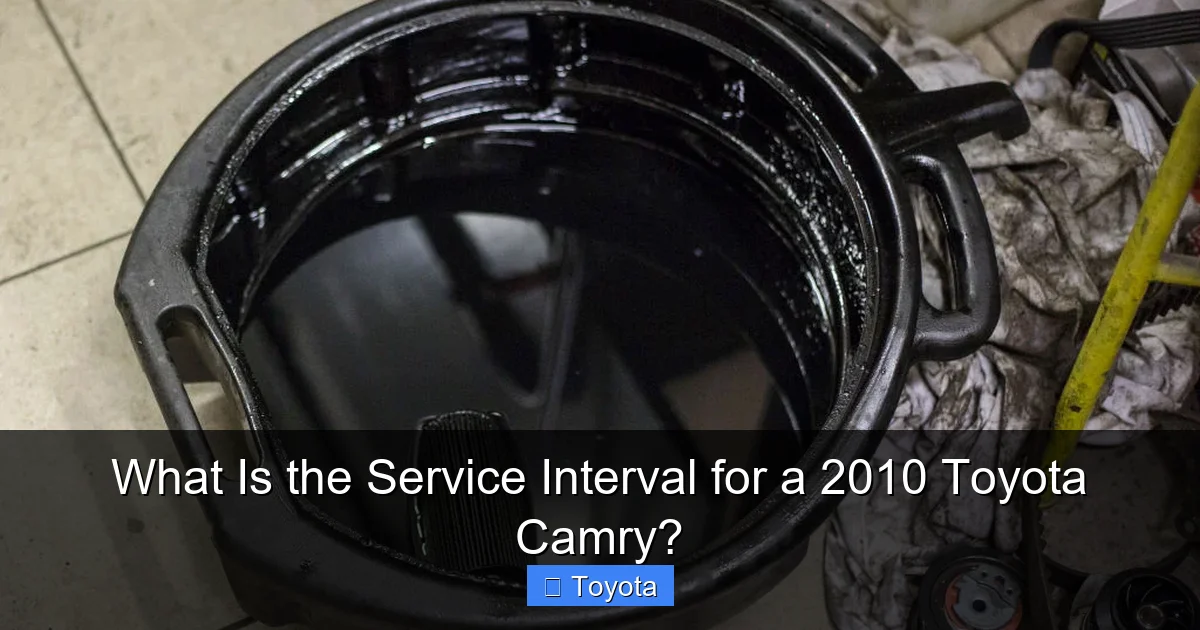
- Oil & Filter Change: If you have a safe, level place to work, this is the quintessential DIY task. You’ll need a socket set, oil filter wrench, drain pan, funnel, and the correct oil/filter. It takes about 30 minutes and saves significant money over the life of the car. Just be meticulous about properly disposing of the old oil and filter.
- Air Filter Replacement: Both engine and cabin filters are usually simple clip-on or screw-off jobs requiring no tools or just a screwdriver. The cabin filter might require removing a few trim panels, but tutorials are plentiful online.
- Wiper Blade Replacement: A quick, foolproof task. Just match the connector type on your old blades.
- Fluid Top-Offs: Regularly checking and adding washer fluid, coolant (when the engine is cold), and oil is a fundamental skill every car owner should have.
Best Left to the Professionals
- Transmission Service: While you can check the level via the dipstick, a full fluid and filter change requires special equipment and knowledge to avoid damaging the transmission or overfilling. A mistake here can lead to a catastrophic and expensive failure.
- Timing Belt/Chain Inspection & Replacement: This is an engine-critical, labor-intensive job. On the 4-cylinder 2AZ-FE engine in many 2010 Camrys, a timing belt is used and must be replaced around 60,000-90,000 miles to prevent it from snapping and destroying the engine. The V6 uses a timing chain, which is generally “lifetime” but still requires expert inspection. This is not a DIY job for 99% of people.
- Brake System Service: While you can replace pads yourself if you’re experienced, the system involves safety-critical components. Professional installation ensures proper bedding, caliper slide pin lubrication, and a thorough inspection of rotors, hoses, and the master cylinder.
- Major Suspension/Steering Work: Ball joints, tie rods, struts—these require special press tools and alignment expertise.
- Diagnostics: Check Engine lights or complex electrical issues need a professional’s scan tools and knowledge.
A hybrid approach works for many: DIY the simple, frequent checks and fluid top-offs, but build a relationship with a trusted independent mechanic or Toyota dealer for the scheduled major services. They have the factory manuals, technical service bulletins, and diagnostic tools specific to your Camry.
Long-Term Care: Beyond the Mileage Checklist
Service intervals are your roadmap, but long-term care is about developing habits that keep your Camry running smoothly between the checklist items.
Driving Habits That Extend Service Life
How you drive directly impacts your service intervals. To potentially extend them and reduce wear:
- Warm it up gently: After starting, drive moderately for the first few minutes until the engine reaches normal operating temperature. This allows oil to circulate fully. No need for extended idling.
- Avoid aggressive driving: Hard acceleration, speeding, and abrupt braking increase wear on engine components, transmission, brakes, and tires.
- Combine short trips: When possible, run errands in a single, longer trip rather than multiple short ones. This allows the engine and exhaust system to fully warm up, burning off condensation and fuel dilution.
- Don’t ignore warning lights: The Check Engine light, oil pressure light, or temperature gauge warning are your car’s cry for help. Address them immediately, not at the next scheduled service.
The Importance of Record-Keeping
Whether you service at a dealer, an independent shop, or in your own driveway, keep every receipt and invoice. Create a physical or digital folder for your Camry. Note the date, mileage, service performed, and who performed it. This history is a goldmine. It proves to future buyers that the car was well-maintained, potentially increasing its resale value. For you, it helps track when items were last done, preventing accidental double-service or missed services. A well-documented service history is often the difference between a car that runs to 300,000 miles and one that gives up at 150,000.
Using the Maintenance Minder System Wisely
Your 2010 Camry is equipped with Toyota’s Maintenance Required system, which displays “MAINT REQD” on the dash after a set interval (typically 5,000 miles after the last reset). This is a helpful *reminder*, not a comprehensive diagnostic. It’s primarily triggered by the ECU based on engine runtime and speed calculations for oil life. It’s a great nudge to get your oil changed, but it does not account for your driving conditions (normal vs. severe) or tell you about other due services like tire rotation, air filter, or spark plugs. Think of it as a monthly calendar alert for oil changes, but you must still consult your paper schedule (or a digital version) for the full list of tasks due at that mileage. Never reset the light without actually performing the service.
Frequently Asked Questions
What is the absolute minimum service interval for a 2010 Toyota Camry?
Under ideal “normal” driving conditions, the minimum interval is every 5,000 miles or 6 months for an oil change and tire rotation. However, most drivers should use the more frequent “severe” service schedule, which can shorten the oil change interval to 3,500-5,000 miles.
Does the 2010 Camry have a timing belt or chain that needs regular replacement?
It depends on the engine. The 2.5L 4-cylinder (2AZ-FE) uses a timing belt that should be inspected regularly and replaced around 60,000-90,000 miles as per the severe service schedule. The 3.5L V6 (2GR-FE) uses a timing chain, which is designed to last the life of the engine but still requires periodic inspection during major services.
How often should I rotate the tires on my 2010 Camry?
Tire rotations should be performed with every oil change, which is every 5,000 miles under normal driving and every 3,500-5,000 miles under severe driving conditions. Consistent rotation is key to even tire wear and maximizing tire life.
Is the “lifetime” transmission fluid in my 2010 Camry really lifetime?
While Toyota specifies “lifetime” fluid for many models, this typically means the designed life of the transmission (often 100,000+ miles). For long-term reliability, especially if you drive in severe conditions or tow, many mechanics and the severe service schedule recommend a transmission fluid and filter change every 60,000-100,000 miles.
What is the most important service I should not skip on my 2010 Camry?
The most critical service is regular oil and filter changes. Clean oil is essential for lubricating the engine, preventing sludge, and ensuring longevity. Skipping this leads to accelerated engine wear and potential catastrophic failure. Following it with a tire rotation and multi-point inspection creates a comprehensive check-up.
Where can I find the complete, official maintenance schedule for my car?
The definitive source is your vehicle’s Owner’s Manual. It contains the detailed, mileage-based maintenance schedule for both normal and severe driving conditions, specific to your 2010 Camry’s engine and configuration. If you don’t have it, you can often find a digital copy on the Toyota owner’s website.
