
How to Open a Toyota Door with a Dead Key Fob Battery

Don’t panic if your Toyota key fob dies! You can typically unlock the driver’s door using a hidden mechanical key stored inside the fob. Locate the key, find the small physical lock on the door handle, and insert/turn it. If your model lacks an external lock, use the backup start button or a smartphone app. Always carry a spare and replace the fob battery promptly to avoid future lockouts.
It’s a moment of pure frustration. You’re standing by your Toyota, groceries in hand, rain starting to fall. You press the unlock button on your key fob… nothing. You press it again, frantically. The little LED light that usually blinks is dark and silent. Your heart sinks. The key fob battery is dead. But before you imagine a costly locksmith or a smashed window, take a deep breath. Toyota, like most modern automakers, anticipated this exact scenario. Your vehicle is designed with a backup entry system. This guide will walk you through every method to open a Toyota door with a dead key fob battery, turning a potential crisis into a minor inconvenience.
The reliance on keyless entry is so complete that many drivers never even think about the “old school” way. That’s by design. The convenience is fantastic—until it isn’t. Understanding your Toyota’s fail-safe mechanisms is crucial for every owner. We’ll break down the process for various Toyota models and key fob styles, from the latest RAV4 with a push-button start to a older Camry with a traditional key blade. By the end, you’ll be prepared for any dead battery situation.
Key Takeaways
- Your key fob has a hidden mechanical key: Almost all Toyota key fobs contain a traditional metal key that can be manually extracted to unlock the door.
- Locate the physical door lock: The driver’s door handle will have a small, often covered, keyhole for the emergency key. It’s usually on the back or underside of the handle.
- The process is simple but specific: Insert the key, turn it to unlock, and then pull the handle. The door may need a slight lift on the handle while turning.
- Some newer models use a backup start button: If there’s no keyhole, hold the dead fob against the engine start/stop button to start the car, but unlocking may require a separate method.
- Smartphone apps can be a modern solution: If your Toyota is equipped with connected services, you may unlock doors via the Toyota app on your phone.
- Always address the root cause: Once inside, replace the key fob battery immediately. A CR2032 battery is most common and easy to swap.
- Prevention is key: Keep a spare mechanical key in your wallet or a magnetic box under the car, and monitor fob battery life with a yearly check.
📑 Table of Contents
- Understanding Your Toyota Key Fob and Its Backup Systems
- Step 1: Locating and Extracting the Hidden Mechanical Key
- Step 2: Using the Mechanical Key to Unlock the Driver’s Door
- Step 3: What If There’s No Visible Keyhole? Alternative Methods
- Step 4: After You’re Inside – Trunk Access and Next Steps
- Step 5: Long-Term Prevention and Preparedness
- Conclusion: Knowledge is Your Best Tool
Understanding Your Toyota Key Fob and Its Backup Systems
First, let’s demystify the device in your pocket. A modern Toyota key fob is a sophisticated radio transmitter. It sends a coded signal to your car’s receiver to lock, unlock, or start the engine. This signal requires power, supplied by a small coin-cell battery, most commonly a CR2032. When that battery weakens, the fob’s range diminishes until it fails completely. The good news is that Toyota engineers built redundancy into the system.
The Two Primary Backup Methods
There are essentially two paths to gaining entry when the fob is dead:
- The Mechanical Key Method: This is the most universal and reliable. Your fob contains a physical, metal key that can be manually inserted into a lock cylinder on the driver’s door.
- The Proximity/Backup Start Button Method: For models with push-button start (often called “Smart Key” systems), the car has a secondary antenna. When you place the dead fob directly against the start button, the car can still detect its unique code via a very short-range field, allowing you to start the engine. However, this method does not always unlock the doors; it’s primarily for ignition. Unlocking still usually requires the mechanical key or another method.
Which method applies to you? It depends entirely on your Toyota model year and trim. Let’s identify your situation.
Step 1: Locating and Extracting the Hidden Mechanical Key
This is the critical first step for the vast majority of Toyotas. The key is cleverly hidden inside the fob to maintain the sleek, keyless design. The extraction mechanism varies slightly.
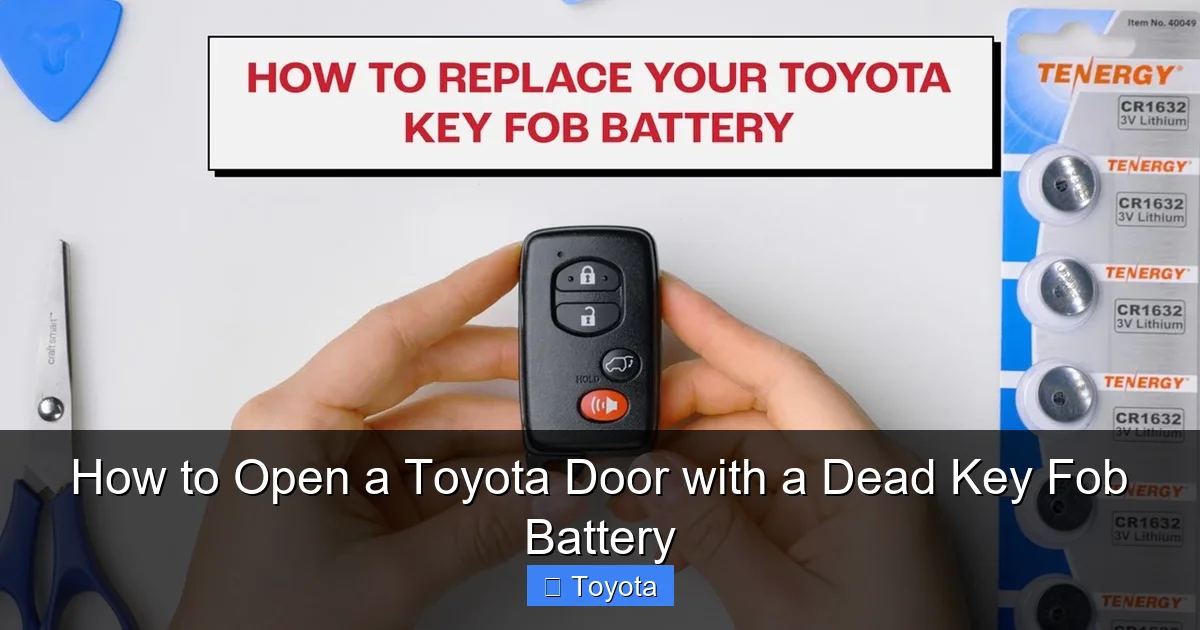
Visual guide about How to Open a Toyota Door with a Dead Key Fob Battery
Image source: i.ytimg.com
For Standard “Flip” Key Fobs (e.g., many Camry, Corolla, RAV4 models)
These fobs have a metal key blade that folds out like a pocket knife. Look for a small button or slider on the fob’s side or back. Pressing this button releases the key blade, which will spring out. You can then pull it fully extended. To retract it, simply push the blade back into the fob until it clicks. To access the battery later, you’ll need to split the fob casing, often by inserting a small flathead screwdriver into a seam near the key ring loop.
For “Smart Key” or “Push-Button Start” Fobs (e.g., newer Highlander, Venza, some RAV4)
These are solid, rectangular fobs with no visible key blade. The emergency key is a small, separate metal piece stored inside. Look for a tiny slot or cover on the fob, often on the side opposite the key ring. It might have a small icon of a key. Carefully pry open this cover with a fingernail or a flat tool. Inside, you’ll find a small metal key. Pull it out. This key is usually not a “blade” but a simple, flat, toothed key designed solely for the door lock.
Pro Tip: Practice When the Fob is Working
Don’t wait for an emergency! While your fob battery is good, locate the emergency key and practice extracting it. Then, go to your driver’s door and locate the lock cylinder. This familiarity will save you stress and fumbling when you’re actually stranded.
Step 2: Using the Mechanical Key to Unlock the Driver’s Door
Now you have the key. Next, find the lock. On almost all Toyota models, the physical lock cylinder is on the driver’s door handle. It’s designed to be discreet.
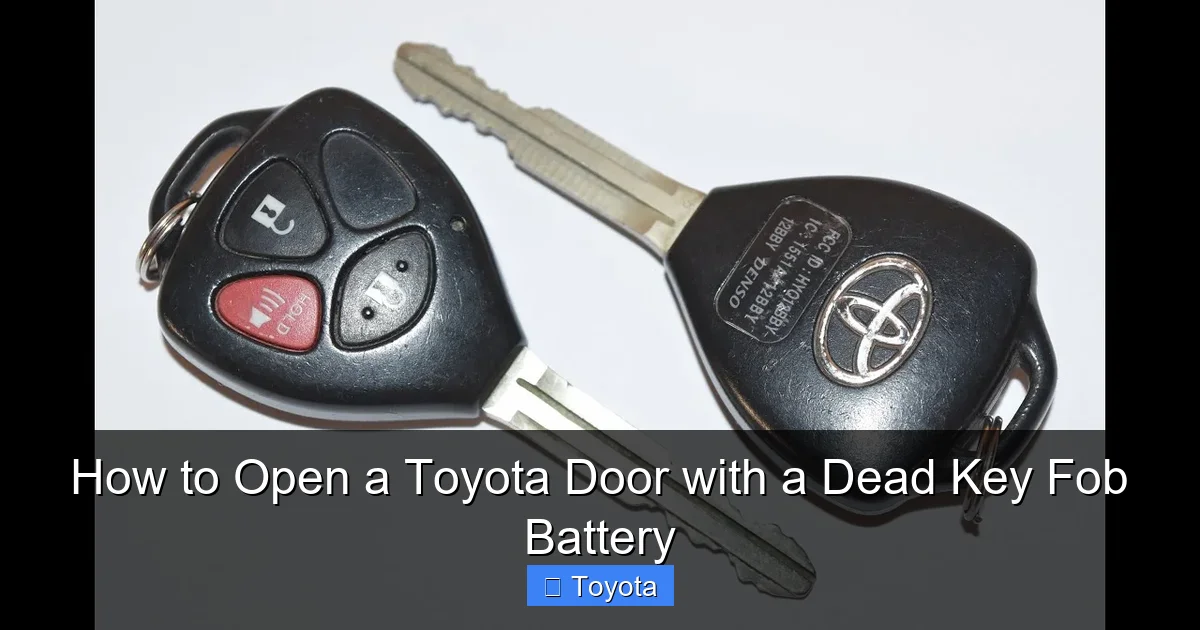
Visual guide about How to Open a Toyota Door with a Dead Key Fob Battery
Image source: i.ytimg.com
Finding the Often-Hidden Keyhole
Look carefully at the back or underside of the driver’s door handle (the part you pull to open). You’re searching for a small, round hole, about the size of a pencil eraser. It may have a rubber or plastic cover that blends in with the handle’s color. Gently pry this cover off with your fingernail or the extracted key itself. Underneath is the keyhole.
The Unlocking Motion: A Specific Technique
This is where many people get confused. Insert the key fully into the cylinder. Now, here’s the trick: you must turn the key while simultaneously pulling up on the door handle. The lock mechanism is connected to the handle’s latch. The upward pull on the handle releases the latch, allowing the key to turn the lock. You’ll feel a distinct “clunk” as the lock disengages. At that point, you can pull the handle fully to open the door.
- For older models with a thumb button: You might need to insert the key, turn it to unlock, and then manually press the interior door lock button (which will now be accessible) before pulling the handle.
If the door doesn’t open, ensure you are pulling the handle firmly upward as you turn. The motion is a combination, not a sequential turn-then-pull.
Step 3: What If There’s No Visible Keyhole? Alternative Methods
A small but growing number of newer Toyota models, particularly some hybrids and luxury trims, have done away with the external keyhole entirely for aesthetic reasons. If you’ve searched the driver’s door handle and found nothing, don’t panic. You have other options.
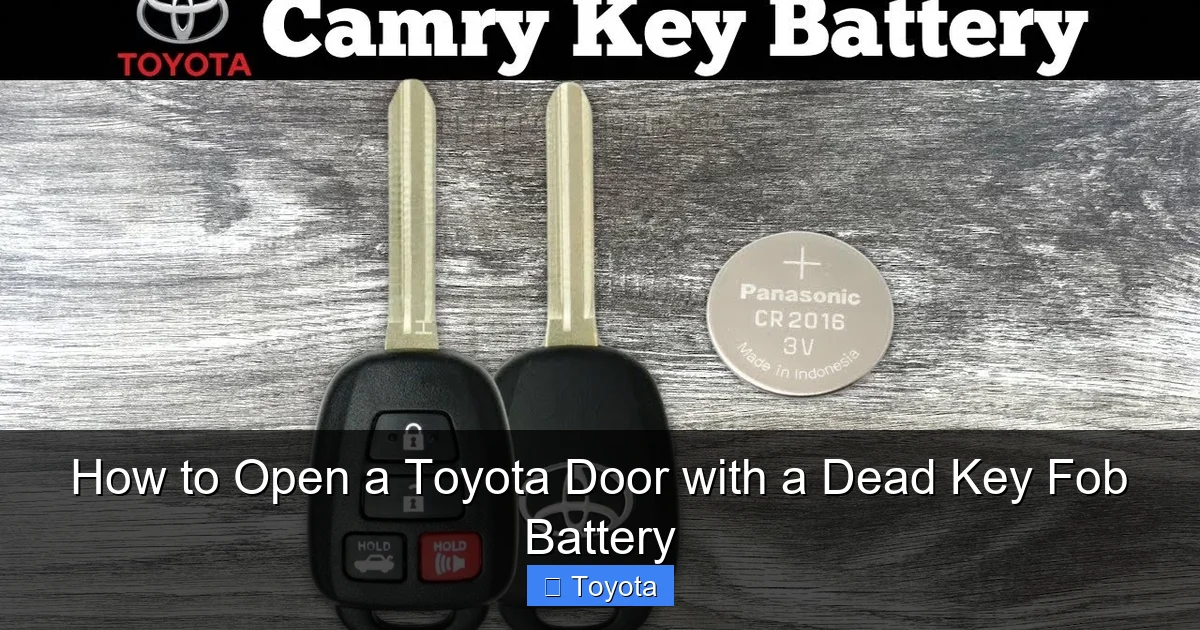
Visual guide about How to Open a Toyota Door with a Dead Key Fob Battery
Image source: i.ytimg.com
The Hidden Trunk Method (For Some Models)
On certain models without a door keyhole, Toyota may provide a way to access the interior through the trunk. Once inside the trunk, there is almost always a manual release lever or handle to fold down the rear seats and escape into the cabin. However, this requires you first get into the trunk. How? Sometimes the trunk lid itself has a hidden mechanical keyhole. Check the Toyota emblem on the trunk lid—it may pop off to reveal a keyhole. If your trunk has a separate keyhole, use the emergency key there to open the lid. Once inside the trunk, locate the emergency trunk release handle (it’s glow-in-the-dark). This is a critical safety feature for children but works perfectly in this scenario. From the trunk, fold down the seats and climb into the car. You can then unlock the doors from the inside. For specific models like the Toyota Sienna, this trunk access method is a well-known backup plan.
Utilizing the Backup Start Button (For Push-Button Start Models)
As mentioned, placing the dead fob directly against the engine start/stop button often allows the car to recognize it and start the engine. But can it unlock the doors? Usually, no. The unlock signal requires a stronger, longer-range transmission. However, once the car is running, you can use the interior door lock buttons or power window switches to unlock the doors from the inside. This method gets you mobile but doesn’t solve the “stuck outside” problem directly. It’s a plan B after you’ve already gained entry via the mechanical key or another way.
Smartphone App & Connected Services
If your Toyota is equipped with Safety Connect or a similar subscription-based connected service (like the Toyota app), you may have a digital key function. Log into the Toyota app on your smartphone. If your vehicle is compatible and the service is active, you should see a “Lock/Unlock” button. This uses the car’s built-in cellular or Bluetooth module to send the command, completely bypassing the key fob. This is an excellent modern solution, but it requires prior setup and an active subscription. It’s worth checking your app now, before you need it.
Step 4: After You’re Inside – Trunk Access and Next Steps
Congratulations, you’re in! Your immediate needs are met. Now, let’s address other potential lockouts and the permanent fix.
Getting into the Trunk
You might have groceries in the trunk, or a pet, or simply need to access your spare tire. The trunk lock is often separate. Many Toyota trunks have a physical keyhole, typically hidden behind the logo on the trunk lid (which you can pry off). Use your emergency key there. If your trunk has a button or proximity sensor only, and the fob is dead, you may be out of luck unless you have the mechanical key for it. Some models allow you to fold down the rear seats from inside the cabin to access the trunk. The release levers for the seats are usually on the top edge of the trunk opening or on the side panels. For detailed, model-specific trunk entry instructions, resources like our guide on opening a Toyota Sienna trunk with a dead battery provide excellent visual references that often apply to other Toyota SUVs and sedans.
The Essential Fix: Replacing the Key Fob Battery
Do not delay. A dead fob battery is an inconvenience that will recur. Replacing it is incredibly easy and cheap. You need a CR2032 3V lithium coin battery (available at any pharmacy, grocery store, or online for under $5). To open the fob, find the seam (usually near the key ring loop) and gently pry it apart with a plastic tool or coin. Remove the old battery, note its orientation (+ side usually faces up), insert the new one, and snap the fob back together. Test all buttons before you’re done. This simple 2-minute task saves you from future lockouts.
Step 5: Long-Term Prevention and Preparedness
The goal is to never be in this situation again. A little preparation goes a long way.
1. Carry a Spare Mechanical Key
This is the single best advice. Have a duplicate of your emergency key made. Keep it in your wallet, on a keychain you always carry, or in a magnetic hide-a-key box secured to your car’s undercarriage (in a discreet, non-corrosive spot). This key will open your door even if the main fob battery is dead and the spare fob battery is also dead. It’s pure mechanical reliability.
2. Monitor Battery Life Proactively
Key fob batteries typically last 1-3 years. Don’t wait for failure. When you get your annual oil change, have the technician check the fob battery voltage, or just replace it every 2 years as preventative maintenance. A weak battery will cause reduced range—if you find yourself having to be very close to the car for it to work, that’s your sign.
3. Understand Your Model’s Specifics
Spend 5 minutes now. Get your owner’s manual (digital copies are online). Look up the sections “Opening Doors in an Emergency” or “Key Fob Battery Replacement.” Knowing exactly where your hidden key is and how the door lock works under stress is invaluable. For example, some models require you to turn the key and then pull the handle in a specific sequence. Knowing this beforehand is half the battle.
4. Explore Full-Spare Key Fobs
Consider purchasing a second, fully programmed key fob from the dealership or a reputable locksmith/online service. Keep it stored safely at home. If you lose or damage your primary fob, you have a ready-to-use backup. Programming it may require a dealer visit for some models, but it’s a worthwhile investment for peace of mind. The process for programming a Toyota Camry key fob is similar for many Toyota vehicles and involves a sequence of ignition on/off cycles and button presses.
Conclusion: Knowledge is Your Best Tool
A dead key fob battery is one of the most common automotive inconveniences, but it’s almost never a true emergency that requires breaking a window or calling a costly locksmith. Toyota builds fail-safes into every vehicle. The key—literally—is knowing where the emergency key is and how to use the physical lock. By familiarizing yourself with the location of the hidden keyhole on your driver’s door and practicing the unlock motion, you transform a moment of panic into a routine procedure. Remember the hierarchy: use the mechanical key first. If that’s not an option, check for trunk access or a smartphone app. Once inside, replace the battery immediately and create a spare key strategy. A few minutes of learning and preparation now will save you from hours of stress and expense later. You’ve got this!
Frequently Asked Questions
What if my Toyota doesn’t have a visible keyhole on the driver’s door?
First, confirm you’ve checked the back and underside of the handle thoroughly. If none exists, your model likely uses a trunk-entry escape method. Check if the trunk lid has a keyhole behind the logo. If not, you may need to use the backup start button to power the car and unlock from inside, or call roadside assistance if you cannot gain entry at all.
Can I use my smartphone to unlock my Toyota if the key fob battery is dead?
Only if your vehicle is equipped with a connected services subscription (like Safety Connect) and you have the Toyota app set up with remote commands enabled. The app uses the car’s built-in modem or Bluetooth to send an unlock signal, independent of the key fob. If you haven’t set this up beforehand, it won’t work in an emergency.
How do I get into the trunk if my key fob is dead and there’s no trunk keyhole?
If you can get inside the cabin via the driver’s door, you can usually access the trunk by folding down the rear seats. Look for release levers or cords on the top of the trunk opening or on the rear seat backs. If you are completely locked out of the car and trunk, your only option may be a locksmith or roadside assistance.
What type of battery does a Toyota key fob use, and how hard is it to replace?
Almost all Toyota key fobs use a standard CR2032 3V coin battery. Replacement is extremely easy: pry open the fob casing (usually along a seam near the key ring), remove the old battery, insert the new one with the positive (+) side facing up, and snap the case closed. It takes less than 2 minutes and requires no tools beyond a small flathead screwdriver or your fingernail.
Will a dead key fob battery prevent me from starting my Toyota even if I unlock the door?
It depends on your system. For models with a traditional key ignition, you can insert the mechanical key and start normally. For push-button start models, you must place the dead fob directly against the start/stop button. The car’s proximity antenna will detect the fob’s chip and allow the engine to start. You must have the fob physically present inside the car for this to work.
My key fob got wet and stopped working. Is it the battery or the fob itself?
Water damage can short out the fob’s internal circuitry, not just drain the battery. First, try replacing the battery. If that doesn’t work, the fob may be damaged. You can try drying it completely in a bowl of uncooked rice or silica gel packets for 24-48 hours, but water damage is often permanent. A replacement fob will need to be programmed to your vehicle.
