
Which Is Bigger Mazda Cx-5 or Cx-50

The 2026 Mazda CX-50 is the larger and more rugged SUV compared to the 2026 Mazda CX-5. While the CX-5 remains the more efficient and slightly more affordable urban-focused crossover, the CX-50 offers more overall length, greater cargo capacity, and a higher towing rating, making it the choice for those needing maximum space and capability.
Key Takeaways
- The CX-50 is physically longer: The CX-50’s body is several inches longer than the CX-5, primarily benefiting cargo space and rear legroom.
- CX-50 has more cargo room: With all seats up, the CX-50 provides significantly more cubic feet of cargo space than the CX-5.
- CX-5 may feel more nimble: Its slightly smaller footprint and lighter weight make the CX-5 feel more agile in tight city streets and parking lots.
- Towing favors the CX-50: The CX-50 has a higher maximum towing capacity, a key factor if you plan to haul a trailer.
- Interior passenger space is close: Both offer excellent headroom and legroom, but the CX-50’s extra length translates to a bit more rear legroom.
- CX-5 often has a lower starting price: Expect a slightly higher MSRP for the CX-50’s added size and standard features.
- Your choice depends on priority: Choose the CX-5 for city efficiency and value; choose the CX-50 for maximum space, cargo, and light-duty adventure capability.
📑 Table of Contents
Introduction: The Size Question in Mazda’s SUV Lineup
So, you’re looking at Mazda’s fantastic duo of compact SUVs, the ever-popular CX-5 and the adventure-ready CX-50. It’s a great problem to have, as both are top-tier choices in their segment. But the first question many shoppers ask is a simple one: “Which is bigger?” In 2026, the answer is clear-cut, but the implications of that size difference are what really matter for your daily life. This isn’t just about which number is larger on a spec sheet; it’s about which vehicle’s shape and space best fit your needs—whether that’s squeezing into a downtown parking spot, packing for a family road trip, or towing a small trailer to the lake.
We’re going to break down the 2026 model year dimensions, interior volumes, and real-world usability to give you a crystal-clear picture. We’ll compare them side-by-side, talk about how that size feels on the road, and help you decide which Mazda SUV’s proportions are the right fit for you. Forget the guesswork; let’s look at the numbers and what they mean for you.
Exterior Dimensions: Measuring the Footprint
When we talk about which SUV is “bigger,” we start with the exterior measurements. These numbers determine how the vehicle fits in your garage, how it parks, and its overall road presence. For 2026, the differentiation between the CX-5 and CX-50 is intentional and reflects their different design philosophies.
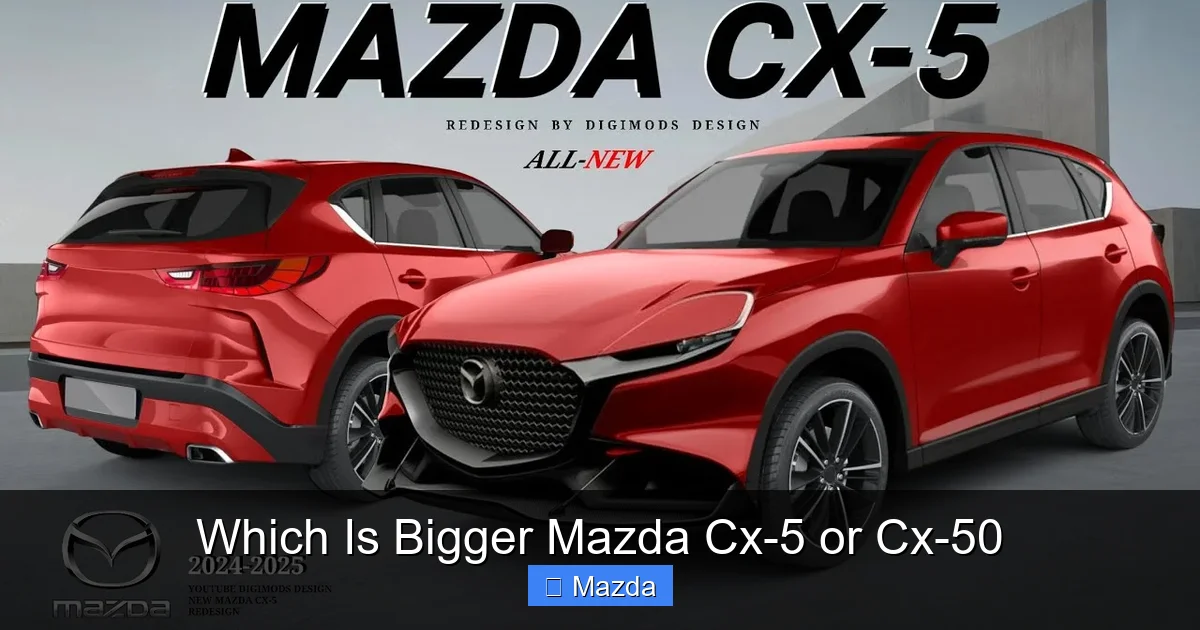
Visual guide about Which Is Bigger Mazda Cx-5 or Cx-50
Image source: img.youtube.com
Length, Width, and Height: The Raw Numbers
The most significant dimension where the CX-50 pulls ahead is overall length. The CX-50 is built on a slightly modified version of the same platform as the CX-5, but its bodywork is extended, particularly in the rear overhang. This adds valuable inches for cargo and rear passenger space. Here’s a typical comparison for the 2026 models:
- Mazda CX-5 Length: Approximately 180 inches
- Mazda CX-50 Length: Approximately 185-187 inches (varies by trim)
That 5-7 inch difference is substantial. You’ll notice it when parking nose-in or judging distance to the car behind you. In terms of width, they are very similar, often within an inch of each other, meaning they occupy nearly the same lane space. Height is also comparable, though the CX-50’s standard roof rails and more upright rear hatch give it a slightly taller, boxier silhouette that enhances its outdoorsy vibe.
Wheelbase and Ground Clearance
The wheelbase (the distance between the front and rear axles) is nearly identical between the two models. This means the core passenger space in the front seats and the fundamental driving feel are quite similar. The key difference is in the overhang—the CX-50 has a longer rear overhang, which is where that extra cargo length comes from. For ground clearance, the CX-50 typically starts with a slight advantage (around 8.3 inches vs. the CX-5’s 7.5-8.0 inches), contributing to its more capable off-pavement image and making it better suited for rough roads or light trails.
Interior Passenger Space: Where You Sit
Exterior size doesn’t always translate directly to interior room. Thanks to efficient packaging, both the CX-5 and CX-50 offer class-leading passenger space for a compact SUV. The differences here are subtle but meaningful for families or taller rear-seat passengers.
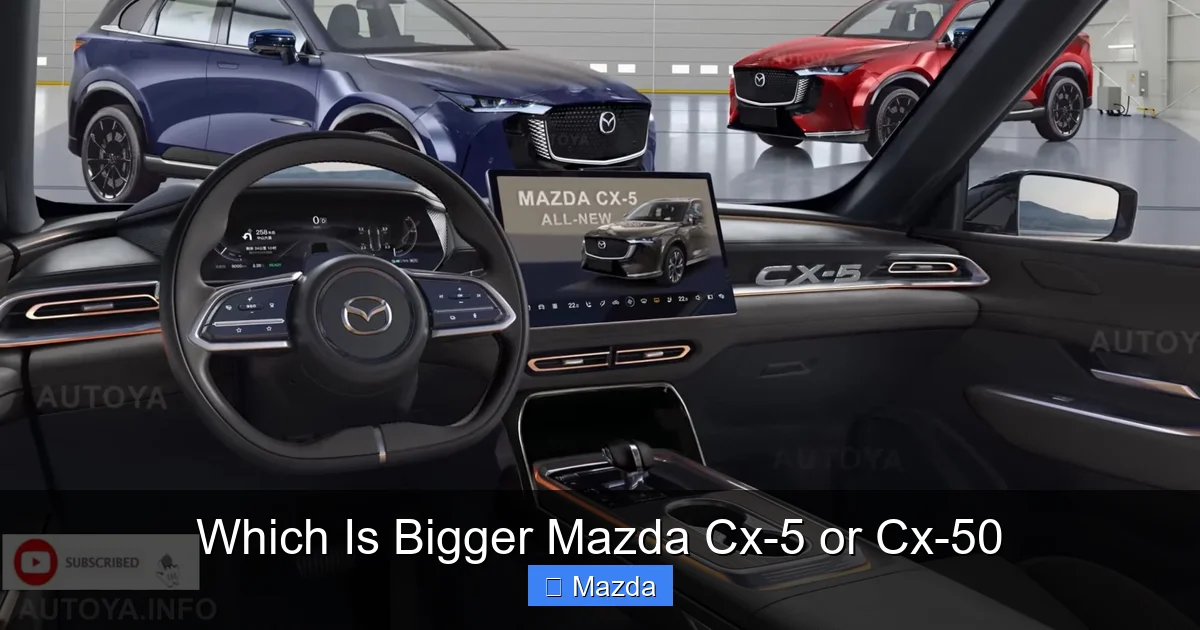
Visual guide about Which Is Bigger Mazda Cx-5 or Cx-50
Image source: s1.cdn.autoevolution.com
Front Seat Comfort and Space
Up front, you’d be hard-pressed to tell the difference. Both provide excellent headroom, shoulder room, and a comfortable driving position. The CX-5’s dashboard design is slightly more driver-oriented, while the CX-50’s is a touch more horizontal and utilitarian, but the actual space for your legs and torso is virtually identical thanks to that shared wheelbase. Storage pockets, cupholders, and small-item storage are plentiful and well-placed in both.
Rear Seat Legroom and Headroom
This is where the CX-50’s extra length begins to show. With its longer body, the CX-50 ekes out a small but noticeable advantage in rear legroom. For a 6-foot passenger, the CX-50 might offer an extra half-inch to an inch of knee room, which can be the difference between comfort and feeling cramped on a longer drive. Headroom is excellent in both, but the CX-50’s more upright rear window can make the space feel a bit more open and less claustrophobic for taller riders. The CX-5’s rear seat is still very good by class standards, but the CX-50’s design prioritizes that extra bit of breathing room.
Cargo Capacity & Towing: The Practical Big Difference
This is where the “bigger” question has its most practical answer. If you’re comparing these SUVs for their ability to haul stuff—strollers, luggage, sports gear, or a small trailer—the cargo and towing specs are critical.
Trunk Space with Seats Up and Down
The CX-50’s extended rear end is all about cargo. With the rear seats upright, the CX-50 typically offers around 25-26 cubic feet of cargo space. The CX-5, while still respectable, usually provides about 21-22 cubic feet. That’s a difference of 4-5 cubic feet—enough to comfortably fit two extra medium suitcases or a large dog crate. When you fold the rear seats down, the gap widens further. The CX-50’s total cargo volume often exceeds 50 cubic feet, while the CX-5 is generally in the 45 cubic foot range. The CX-50’s lower load floor and more boxy rear hatch also make it easier to load bulky items like a mountain bike without removing the front wheel.
Towing Capacity and Capability
For anyone considering a small camper, jet ski, or utility trailer, towing capacity is a deal-breaker. Here, the CX-50 decisively wins. With the proper factory-installed towing package, the 2026 Mazda CX-50 is rated to tow up to 3,500 pounds. The CX-5, even with its available towing package, is typically rated for a maximum of 2,000 pounds. That 1,500-pound difference is huge. It means the CX-50 can handle a wider variety of small to medium trailers. You can read more about the specific capabilities and requirements in our detailed guides on how much a Mazda CX-50 can tow and how much a Mazda CX-5 can tow. If towing is on your list, the CX-50 is the only viable choice between these two.
Driving Experience & Efficiency: The Trade-Offs of Size
Size affects more than just space; it influences how a car drives and sips fuel. Here’s how the two models diverge.
On-Road Handling and Maneuverability
The CX-5, with its slightly shorter length and lighter curb weight, feels a tad more nimble. Its turning circle is marginally tighter, and it can feel easier to hustle through twisty roads or navigate a crowded parking garage. It has a slightly lower center of gravity, which some drivers perceive as a sportier, more planted feel. The CX-50, while still a handler thanks to Mazda’s brilliant suspension tuning, has a more substantial, planted feel at highway speeds. Its longer wheelbase contributes to a slightly smoother ride over longer bumps, but you’ll be more conscious of its length in tight maneuvers. Think of the CX-5 as a sporty sedan in SUV clothing and the CX-50 as a light-duty crossover with a more purposeful, steady gait.
Fuel Economy Considerations
Added size and weight generally come with a fuel economy penalty. The CX-5, being the lighter and slightly more aerodynamic of the two, consistently earns slightly higher EPA ratings. For the 2026 models with the standard 2.5L engine, you can expect the CX-5 to lead by 1-2 MPG in combined driving. The difference isn’t massive—maybe one extra fill-up per year for the average driver—but it’s a consistent advantage for the smaller CX-5. The CX-50’s additional mass and its more rugged, off-pavement-oriented tire options (on some trims) contribute to this small but real efficiency gap.
Pricing, Value, and Which One Should You Choose?
You generally pay for what you get. The CX-50’s larger size, higher towing capacity, and more standard rugged features (like a more robust all-wheel drive system and standard roof rails) come at a premium. The CX-5 remains Mazda’s value leader in the compact segment.
Starting MSRP and Feature Comparison
For the 2026 model year, expect the CX-50’s base trim to start several thousand dollars higher than the CX-5’s base model. However, the CX-50 often comes with more standard equipment at each trim level, such as all-weather floor mats, a more advanced all-wheel drive system, and standard roof rails. You need to compare the specific trims you’re interested in. Sometimes, a well-equipped CX-5 can approach the price of a base CX-50, making the value comparison very personal based on your must-have features.
The Final Verdict: Matching Vehicle to Lifestyle
So, which is bigger? The Mazda CX-50 is unequivocally the larger vehicle in key metrics: overall length, cargo space behind the rear seats, and towing capacity. But “bigger” doesn’t always mean “better for you.” Here’s the simple rule:
- Choose the 2026 Mazda CX-5 if: Your priority is maximum fuel efficiency, the easiest city maneuverability, a slightly lower entry price, and you rarely need more than 22 cubic feet of cargo or plan to tow anything over 1,000 lbs. It’s the perfect urban and suburban family hauler.
- Choose the 2026 Mazda CX-50 if: You regularly carry adults in the back, need the absolute maximum cargo space for gear, plan to tow a small trailer or camper (up to 3,500 lbs), or simply prefer the more rugged, upright, and spacious aesthetic. It’s the choice for active families and light adventure seekers.
Both are exceptional SUVs. Your decision comes down to whether your lifestyle demands the CX-50’s extra inches and capability, or if the CX-5’s efficient packaging perfectly suits your needs. We recommend test-driving both back-to-back to feel the size difference yourself. And while you’re researching, don’t forget to consider long-term ownership costs; for example, a windshield replacement for a CX-5 might be a slightly different figure than for a CX-50 due to parts availability.
Frequently Asked Questions
Is the Mazda CX-50 bigger than the CX-5 in every dimension?
No, the CX-50 is significantly longer and has more cargo space, but their widths and wheelbases are nearly identical. The CX-50’s extra length is primarily in the rear overhang.
Which Mazda has more room for rear passengers?
The CX-50 offers slightly more rear legroom due to its longer body. The difference is small but noticeable for taller passengers on longer journeys.
Can a Mazda CX-5 tow as much as a CX-50?
No. The CX-50 has a maximum towing capacity of 3,500 lbs with the proper package, while the CX-5 is maxed out at 2,000 lbs. The CX-50 is the clear choice for towing.
Is the CX-50 more expensive than the CX-5?
Yes, the CX-50 typically has a higher starting MSRP and its trims are priced higher on average, reflecting its larger size, higher towing capacity, and more standard adventure-oriented features.
Does the bigger size of the CX-50 hurt its fuel economy?
Yes, slightly. The CX-5 is generally 1-2 MPG more efficient across the board due to its lower weight and slightly better aerodynamics. The difference is minor but consistent.
Which Mazda SUV is better for a city driver?
The CX-5 is slightly better for pure city driving. Its shorter length makes it easier to park and maneuver in tight spaces, and its better fuel economy reduces urban commuting costs.
