
Can You Get Electrocuted in a Car?

While the risk of electrocution inside a modern car is extremely low during normal driving, specific scenarios involving extreme weather, severe accidents, or faulty electrical work can create dangerous situations. The car’s metal body acts as a Faraday cage, protecting occupants from lightning strikes. However, risks increase if you exit the vehicle during a storm, touch live components after an accident, or handle damaged electrical systems. Understanding these nuances is key to staying safe.
It’s a question that flickers through the mind during a summer thunderstorm or when you see a downed power line: “Can you get electrocuted in a car?” The image of a car acting as a safe metal cocoon is iconic, but is it based in reality? The answer isn’t a simple yes or no—it’s a nuanced “it depends.” For the everyday driver cruising down a dry highway, the risk is virtually zero. But under extraordinary circumstances, the metal box that is your car can transition from a sanctuary to a conductor. Let’s pop the hood on automotive electricity and separate the Hollywood myths from the hard science of staying safe.
Key Takeaways
- Understanding Can You Get Electrocuted in a Car?: Provides essential knowledge
📑 Table of Contents
- The Science of Safety: Your Car as a Faraday Cage
- Lightning Strikes: Myth vs. Reality
- Accidents and Power Lines: The Ground Zero Scenario
- The 12V System: Why Your Car Battery Won’t Electrocute You
- Hybrid and Electric Vehicles: A New Layer of Complexity
- Practical Safety Tips: Your Electrocution Prevention Checklist
The Science of Safety: Your Car as a Faraday Cage
The principle that makes your car potentially safe during a lightning storm is called the Faraday cage effect, named after scientist Michael Faraday. A continuous conductive enclosure (like your car’s steel or aluminum unibody) distributes electrical charges from an external source (like a lightning bolt) around the outside surface, leaving the interior space essentially field-free. The current, seeking the path of least resistance, travels through the metal body and tires (which, despite being rubber, have enough conductive graphite and moisture to help) to ground.
Why You Should Never “Feel the Car” During a Storm
Here’s the critical caveat: this protection only holds if you remain completely inside and do not create a “bridge” between the car’s exterior and the ground. If you are touching the metal door handle, the metal roof, or the gear shift (in a mostly metal car) while your feet are on the ground, you could become part of that conductive path. This is why the universal safety advice during a storm is to keep your hands in your lap and wait it out. The risk isn’t from the lightning hitting the car—it’s from the current potentially arcing through you to reach the ground if you provide a better path.
The Modern Car’s Complication: Plastics and Composites
Today’s cars use extensive plastics, carbon fiber, and other non-conductive materials in their bodies. Does this ruin the Faraday cage? Not entirely. Most modern vehicles still have a substantial metal safety cage (the frame) and conductive wiring harnesses that create a sufficient network to channel a massive current like lightning. However, a vehicle with a primarily plastic body (some older Land Rovers, certain modern SUVs with plastic panels) may offer slightly less predictable shielding. The core principle remains: staying inside is far safer than leaving.
Lightning Strikes: Myth vs. Reality
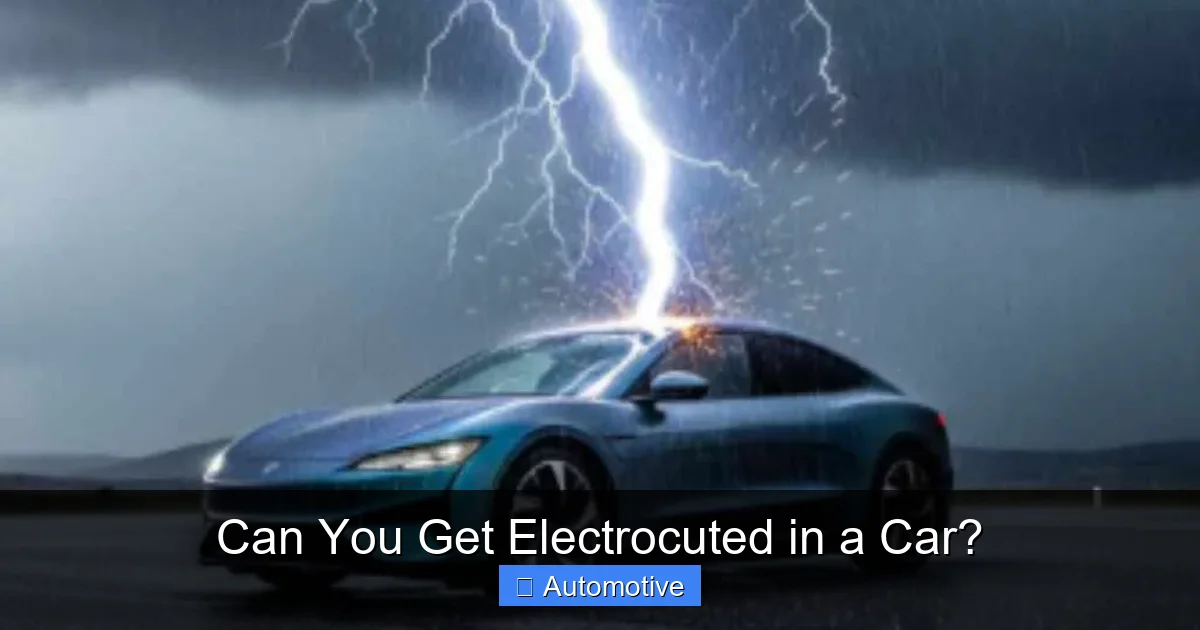
The cinematic trope of a car exploding after being struck by lightning is mostly false. A direct strike is a colossal, instantaneous event—think 100 million volts. The car’s exterior will likely suffer damage: melted antennae, scorched paint, blown tires, and fried electronics. But the occupants, if following the “stay inside” rule, have an excellent chance of walking away unharmed. There are documented cases of people surviving lightning strikes inside cars with only minor injuries. The real danger emerges after the strike.
Visual guide about Can You Get Electrocuted in a Car?
Image source: cdn.thedailyautomotive.com
The Aftermath: When “Safe” Becomes Risky
Once the lightning has passed, the car may be immobilized, smoking, or on fire. The battery could be damaged and leak acid. More insidiously, the high-voltage surge can compromise the insulation on wiring throughout the vehicle. If you then open a door and touch a metal part that is now electrically “live” due to damaged insulation, while your feet are on the wet ground, you could receive a severe shock. This post-strike period is when caution is paramount. Wait for emergency services to declare the vehicle safe before exiting.
What About Convertibles and Motorcycles?
This is where the Faraday cage principle breaks down. A convertible with the top up still has a metal frame, but the extensive glass and fabric offer less conductive enclosure. The risk, while still low, is higher than in a hardtop. A motorcycle or bicycle offers no enclosure at all, making the rider the highest point and most likely target. The safest action is to get off the bike, crouch low away from it, and avoid touching any metal parts. This relates directly to car safety: the enclosed metal structure is your primary defense.
Accidents and Power Lines: The Ground Zero Scenario
One of the most dangerous real-world situations is a car accident that brings down a power line or leaves a live wire resting on the vehicle. This is a scenario where your car is no longer a Faraday cage but a grounded conductor. The metal body is now in direct contact with a source of continuous, high-voltage alternating current (AC), unlike the brief, direct current (DC) pulse of lightning.
Visual guide about Can You Get Electrocuted in a Car?
Image source: autoveteran.tech
The Golden Rule: Stay Inside, Call 911
If a power line falls on your car or you crash into a pole and wires are down, your immediate instinct might be to jump out. This is the most dangerous thing you can do. The car’s tires, while not perfect insulators, provide significant resistance to the current flowing from the line, through the car, and into the ground. As long as you remain inside and don’t touch any part of the car that connects to the outside (like the metal door handle), you are likely safe. The moment you open the door and place a foot on the ground, you create a circuit. Your body becomes the conduit between the energized car and the earth, resulting in electrocution. The correct procedure is to stay put, warn others to stay away, and call emergency services. They will coordinate with the utility company to de-energize the line before anyone exits.
What If the Car is on Fire?
This is a terrible dilemma. If the car is actively on fire, staying inside is not an option. In this rare case, the procedure is to make a clean exit without simultaneously touching the car and the ground. The recommended technique is to open the door and jump clear, landing with both feet together and shuffling away in small steps without lifting your feet, to avoid creating a voltage differential across your body. This is a last-resort maneuver when the alternative is burning alive. It underscores why preventing such scenarios through safe driving is so critical.
Relevance to Towing
This knowledge is directly relevant if you’re ever in a situation where a vehicle needs to be moved after an accident involving infrastructure. Can you tow a car with someone in it? The answer is almost always no for safety and legal reasons, but the electrical hazard adds another layer. If a car is damaged and resting on live wires, attempting to hook it up for a tow without utility clearance could turn the tow truck and operator into additional victims. Professional towing services in accident scenes always wait for the scene to be made safe by the appropriate authorities.
The 12V System: Why Your Car Battery Won’t Electrocute You
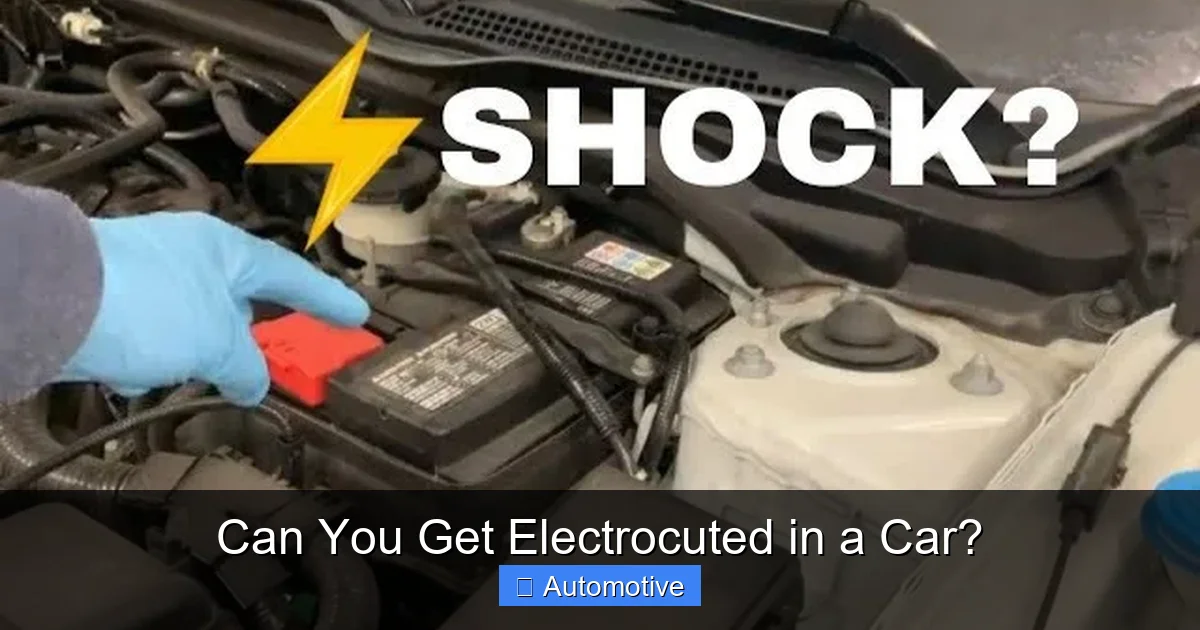
Let’s address the heart of the question for the vast majority of drivers: the car’s own electrical system. Your car operates on a 12-volt direct current (DC) system. To cause electrocution (a fatal current passing through the heart or nervous system), you generally need a voltage high enough to overcome the skin’s resistance. Residential AC power (120V/240V) is more than sufficient. 12V DC is not. You can safely touch both terminals of a car battery with your bare hands. The sensation, if any, will be a mild tingle at worst. The real dangers from a car battery are different.
Visual guide about Can You Get Electrocuted in a Car?
Image source: worsemovies.files.wordpress.com
Real Dangers of the 12V System: Sparks, Burns, and Acid
The primary hazard from a 12V system is a short circuit. If you accidentally drop a metal tool (like a wrench) across the positive and negative battery terminals, it will create a massive, instantaneous current flow. This can cause:
- Severe Burns: The tool will heat up to thousands of degrees in seconds, melting metal and causing serious burns.
- Battery Explosion: The rapid current draw can cause the battery to overheat, vent explosive hydrogen gas, and potentially rupture or explode, spraying sulfuric acid.
- Fire: Sparks can ignite flammable materials under the hood, like engine oil or coolant residue.
So, while you won’t be electrocuted by the 12V system, you can be badly injured by its energy if you create a short circuit. Always disconnect the negative terminal first when working on the battery or electrical system.
Aftermarket Accessories: The Weak Link
This is where 12V systems become a more plausible electrocution risk, albeit still very rare. Poorly installed aftermarket stereos, alarms, remote starters, or lighting kits often involve splicing into the vehicle’s wiring harness. If done incorrectly, an installer might leave a wire’s insulation nicked or strip it too far back. This creates a “live” wire that is normally insulated by the car’s interior panels. If that wire chafes against metal and its live core makes contact with the car’s chassis (which is grounded to the battery negative), the chassis can become energized at 12V. While 12V is still low, in a scenario where you are wet (from rain, sweat, or a fluid leak) and making good contact with the ground through your shoes or the road, a shock is possible. It would likely be painful and startling, but not fatal. The bigger risk is a short circuit causing a fire, as described above. Ensuring all electrical work is done by a reputable professional is the best mitigation.
Hybrid and Electric Vehicles: A New Layer of Complexity
With the rise of hybrids (like the Toyota Prius) and full electric vehicles (EVs like Tesla or Nissan Leaf), a new electrical architecture is present. These vehicles use high-voltage (HV) battery packs, typically 200-400 volts DC, to power the electric motor(s). This voltage is absolutely in the range that can cause severe injury or death.
Inherent Safety Design
Manufacturers design these systems with multiple layers of safety. The HV battery is isolated from the 12V system and the metal chassis. High-voltage cables are brightly colored (usually orange) and heavily insulated. The system is designed to automatically disconnect and become safe in the event of a crash. In normal operation, there is zero risk of electrocution from touching any part of the car’s interior or exterior.
Crash Scenarios and Emergency Response
The risk only materializes in a severe crash that breaches the battery pack’s casing or severs an orange high-voltage cable. In such an event, the high-voltage system could become exposed. This is why emergency responders receive specific training on how to handle hybrid and EV accidents. They use insulated tools, look for the orange disconnects, and know to assume the system is live until verified otherwise. For the average occupant, the risk in a crash is from trauma, fire, or toxic fumes—not electrocution—because the safety systems are designed to fail-safe. However, if you are in a severe accident involving a hybrid or EV, it is crucial to inform first responders that it is a high-voltage vehicle so they can take appropriate precautions.
Practical Safety Tips: Your Electrocution Prevention Checklist
Knowledge is your best tool. Here is a actionable checklist to minimize any theoretical risk to virtually zero.
During Severe Weather
- If driving: Stay inside the vehicle. Pull over safely if visibility is poor, turn on hazard lights, and wait out the storm. Avoid contact with any conductive parts connected to the outside (door handles, radio antenna).
- If parked: The car is a safe place to be. Do not go outside to “secure” the vehicle.
- Never try to outrun a storm by driving under trees or near power lines that may fall.
At the Scene of an Accident
- If you see downed power lines on or near a car: Do not approach. Warn others to stay at least 35 feet away (the distance electricity can arc). Call 911 immediately and tell them “power lines are down.”
- If you are in the car with a line on it: STAY INSIDE. Do not touch any metal parts. Call for help and wait.
- If the car is on fire: As a last resort, make a jump exit without touching the car and ground simultaneously. Shuffle away with feet together.
When Working on Your Car
- Disconnect the battery: Always remove the negative (-) terminal first when performing electrical work. Reconnect it last.
- Use insulated tools.
- Inspect aftermarket accessories: Look for any signs of wear, fraying, or poor installation on wires. Have a professional check them if unsure.
- Never work on the electrical system while the car is running or the key is in the “on” position.
- For hybrid/EV owners: Familiarize yourself with the location of the high-voltage service disconnect (usually in the owner’s manual). Do not attempt to open the high-voltage battery compartment.
General Vigilance
- Pay attention to electrical warning lights on your dashboard. Have any issues diagnosed promptly.
- Be mindful of where you place phone chargers or other adapters. Cheap, damaged adapters can overheat and cause fires.
- Ensure your vehicle’s routine maintenance includes checks of the charging system and wiring.
- Remember that the greatest electrical danger in a car is not electrocution, but fire from a short circuit. Treat all electrical components with respect.
Frequently Asked Questions
Can you be electrocuted if you touch the car door during a lightning storm?
Yes, this is a risk. While the car’s metal body channels the lightning around you, touching an exterior conductive part (like the metal door handle) with your hand while your feet are on the ground outside the car could create a path for current to flow through your body. The safest action is to keep your hands in your lap and wait inside.
Are electric cars more dangerous for electrocution in an accident?
Not in normal operation. Hybrid and electric vehicles have extensive safety systems that isolate the high-voltage battery. The risk only exists in a severe crash that breaches the battery pack or high-voltage cables. Emergency responders are trained to handle these vehicles, and for occupants, the primary risks in a crash remain trauma and fire, not electrocution, due to the fail-safe designs.
Can a car battery kill you?
No, a standard 12-volt car battery cannot electrocute you. The voltage is far too low to overcome your skin’s resistance. However, it can cause severe burns or an explosion if you create a short circuit with a metal tool, or it can leak corrosive acid. The danger is from the energy released as heat or chemical splash, not from electrocution.
What should you do if a power line falls on your car?
The single most important rule is to STAY INSIDE. Do not touch any metal parts of the car. Call 911 immediately and warn others to stay at least 35 feet away. Wait for utility crews to de-energize the line before anyone exits. Exiting the vehicle creates a path for electricity to travel from the line, through the car, through your body, and into the ground.
Can you get shocked by a phone charger left in the car?
Not from the 12V socket itself. However, a cheap, damaged, or faulty charger can malfunction, overheat, and potentially cause a fire. There is no risk of electrocution from the low-voltage socket, but there is a fire risk from defective electronics. Use reputable chargers and avoid using them while the car is off for extended periods.
Is it safe to pump gas with the car running or while getting in/out?
This is a different but related electrical safety issue. It is not about electrocution from your own car, but from static electricity. You should always turn off your engine while refueling. Getting in and out of the car can generate static charge on your body, which could potentially spark when you touch the metal nozzle. To prevent this, touch a metal part of your car (away from the filler hole) to discharge static before handling the gas pump. Understanding vehicle safety extends to all operational contexts, including refueling.
