
Which Is Bigger: Mazda Cx-5 or Cx-50?

The Mazda CX-50 is longer and offers more cargo space, while the Mazda CX-5 is wider and provides slightly more front passenger room. For maximum passenger volume, the CX-5 wins; for extended gear hauling, the CX-50 leads. Your best choice depends on whether you prioritize passenger comfort or cargo capacity.
If you’re shopping for a Mazda SUV in 2026, you’ve almost certainly cross-shopped the CX-5 and CX-50. They sit at the heart of Mazda’s lineup, both offering premium feel and engaging driving dynamics. But when the salesperson asks, “Which is bigger?” the answer isn’t as simple as pointing to one vehicle. The truth is, each is bigger in different ways. One maximizes passenger space, the other prioritizes cargo and a more adventurous stance. Let’s break down the numbers, the design intentions, and what “bigger” really means for your lifestyle.
Key Takeaways
- The CX-50 is longer: The CX-50’s body is about 3.5 inches longer, primarily benefiting cargo space and rear legroom perception.
- The CX-5 is wider: The CX-5 has a nearly 2-inch wider track, which can enhance stability and interior shoulder room.
- CX-5 has more total passenger volume: Mazda rates the CX-5 with about 2-3 extra cubic feet of passenger space, mainly in the front.
- CX-50 has more cargo capacity: Behind the rear seats, the CX-50 offers about 2-3 extra cubic feet, a noticeable advantage for trips.
- Design philosophy differs: The CX-5 is a refined on-road family hauler; the CX-50 is a rugged, adventure-focused crossover with a taller stance.
- Both are closely sized: Despite differences, they occupy a very similar size class and feel comparable in most real-world scenarios.
- Test drive both: The subtle differences in seating position, sightlines, and cabin feel are best judged in person.
📑 Table of Contents
- Understanding the Mazda SUV Lineup: CX-5 vs. CX-50
- Exterior Dimensions: The Tape Measure Truth
- Interior Space: Where You and Your Passengers Live
- Cargo Capacity: The Practical Difference
- Design Philosophy and Intended Use: Bigger in Spirit
- Which Is Bigger For You? The Decision Framework
- Ownership and Practical Considerations
- The Final Verdict: Redefining “Bigger”
Understanding the Mazda SUV Lineup: CX-5 vs. CX-50
Before diving into tape measures, it’s crucial to understand why Mazda makes two such similar SUVs. The CX-5 is the established, long-running leader. It’s the quintessential compact crossover, perfected over a decade to be a smooth, comfortable, and stylish family vehicle. The CX-50, introduced more recently, is Mazda’s answer to the “outdoor lifestyle” trend. It’s built on the same platform but is tuned for a more rugged aesthetic, with a higher ground clearance, standard all-wheel drive on all trims, and a design that screams “adventure.” This fundamental difference in target audience is the key to understanding their size variations.
Platform Siblings with Different Priorities
Think of them as siblings raised in the same house but with different personalities. Both use Mazda’s Skyactiv platform, meaning their core architecture and mechanicals are shared. However, Mazda’s engineers made specific changes to the CX-50’s suspension for more off-pavement capability and modified the body structure to accommodate a more vertical rear tailgate and a more squared-off rear end. These changes, while subtle on paper, create a vehicle that feels taller, shorter in length overhang, and more purposeful. The CX-5, in contrast, has a longer, sleeker roofline and a more traditional SUV profile optimized for aerodynamics and on-road refinement. When comparing size, we must look at the raw dimensions and then interpret what those numbers mean for you and your passengers.
Exterior Dimensions: The Tape Measure Truth
This is where the “which is bigger” question gets its most straightforward answers. Let’s look at the official 2026 model year specifications.
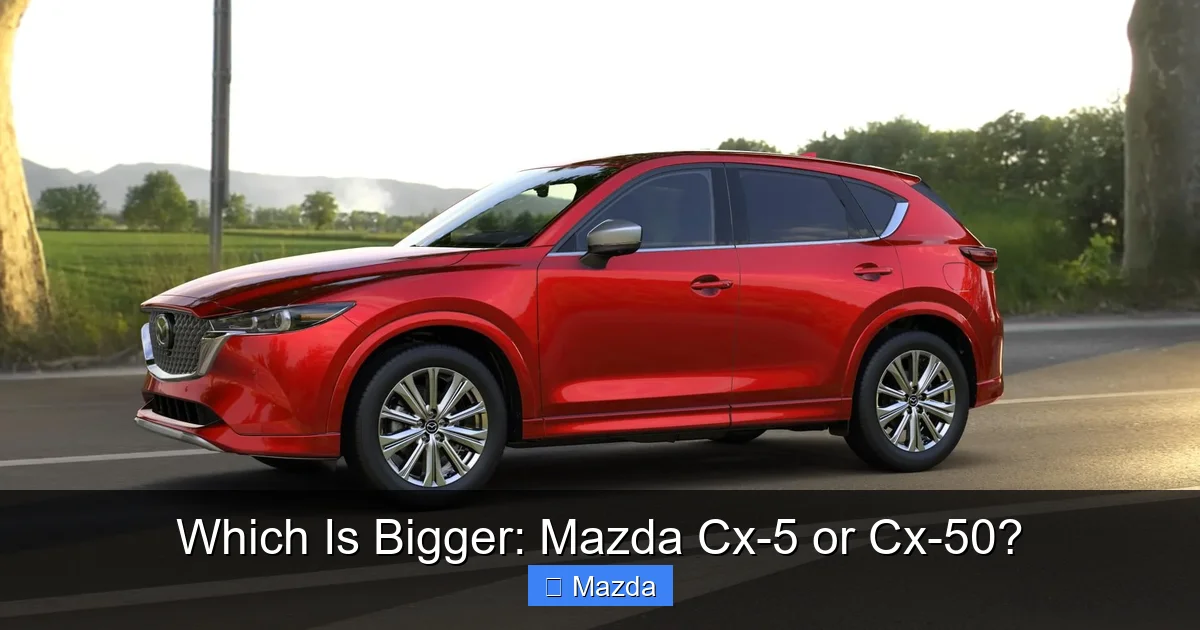
Visual guide about Which Is Bigger: Mazda Cx-5 or Cx-50?
Image source: mazda.ca
Length, Width, and Height
The CX-50 takes the crown in overall length. At approximately 185.8 inches long, it stands about 3.5 inches longer than the CX-5, which measures around 182.3 inches. This extra length is mostly behind the rear wheels, giving the CX-50 a more substantial rear overhang. This directly translates to its larger cargo hold. In terms of width, the CX-5 reclaims the lead. Excluding mirrors, the CX-5 is about 72.5 inches wide, while the CX-50 is roughly 70.7 inches. That nearly 2-inch difference is significant—it makes the CX-5 feel a bit more substantial on the road and can mean a touch more shoulder room inside. Height is very close, with the CX-50 being slightly taller by about 0.4 inches due to its adventure-oriented suspension and roof rails, standing at roughly 63.5 inches vs. the CX-5’s 63.1 inches. For those concerned about garage fit or low-clearance parking, they are virtually identical.
Wheelbase and Stance
The wheelbase—the distance between the front and rear axles—is identical at 105.3 inches. This is the magic number that determines interior cabin length and rear legroom potential. Since they share a wheelbase, the difference in passenger space comes from how the body is shaped around that identical frame. The CX-50’s taller, more upright rear hatch design sacrifices a bit of rear headroom for that boxier, more usable cargo shape. The CX-5’s sloping roofline preserves a sleek profile but creates a slightly smaller cargo aperture and less vertical space. The CX-50 also has a slightly wider front and rear track (the distance between tires on the same axle), contributing to its planted, stable feel on winding roads.
Interior Space: Where You and Your Passengers Live
Dimensions are one thing, but usable space is another. Here, the CX-5 surprisingly pulls ahead in the key metric of total passenger volume.
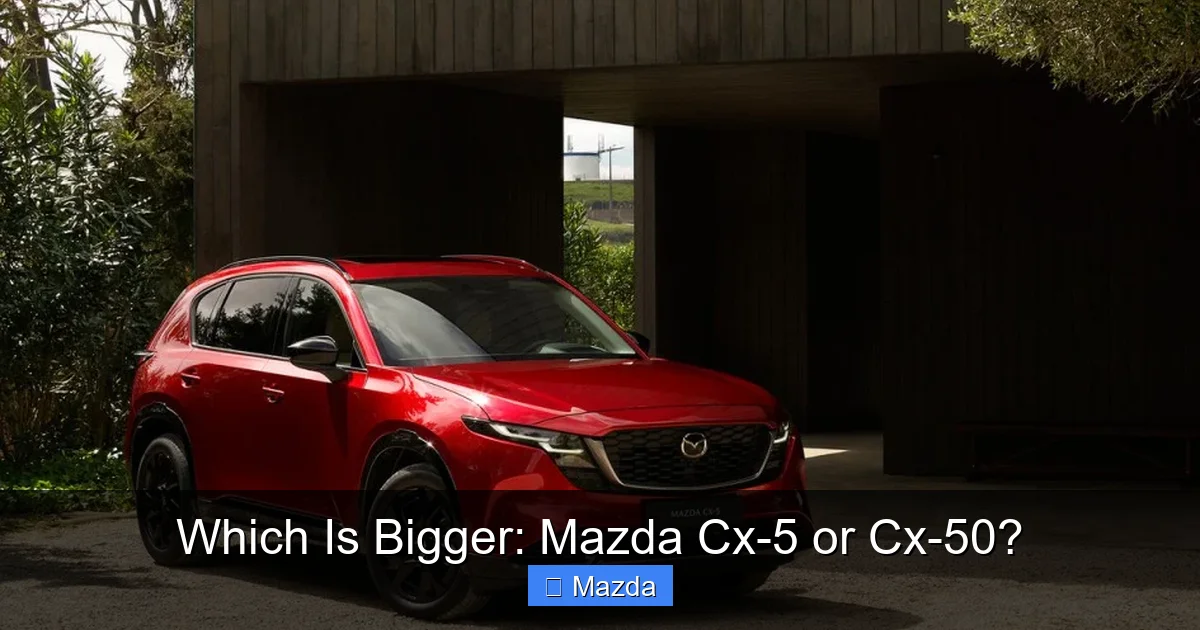
Visual guide about Which Is Bigger: Mazda Cx-5 or Cx-50?
Image source: cdn.autoflotte.de
Front Row: A Toss-Up
Up front, the differences are minimal. The CX-5’s extra width translates to a feeling of slightly more elbow room for the driver and front passenger. The CX-50’s seating position is a bit higher and more commanding, which some drivers prefer for visibility. Both offer excellent headroom and legroom for average-sized adults. The CX-50’s dashboard design is more upright and oriented toward the driver, while the CX-5’s flows more elegantly across the dash. If you’re a very broad-shouldered person, the CX-5’s extra width might be noticeable. For most, both are supremely comfortable.
Rear Seat Legroom and Headroom
With the identical wheelbase, you’d expect similar rear legroom, and you’d be mostly right. Measurements are within a fraction of an inch. The story is in headroom and perceived space. The CX-5’s sloping roofline can make the rear seat feel a bit more claustrophobic for taller passengers, especially if they are sitting directly under the sunroof (if equipped). The CX-50’s taller, flatter roofline creates a more open, airy feeling in the back. However, Mazda’s official passenger volume ratings give the CX-5 a slight edge, typically listing it at around 101 cubic feet total versus the CX-50’s 98-99 cubic feet. This small discrepancy usually comes from the front row, where the CX-5’s wider body adds up.
The Verdict on Passenger Space
If your primary metric is carrying four or five adults on a road trip, the CX-5 holds a microscopic advantage in total volume. But many real-world drivers and passengers will prefer the CX-50’s more spacious-feeling rear headroom and upright seating position. The difference is so small that your personal seating preference and the specific body types of your frequent passengers will be the deciding factor, not the spec sheet.
Cargo Capacity: The Practical Difference
This is where the CX-50’s extended length and boxier shape deliver a clear, tangible benefit. Cargo space is often the true measure of “bigger” for families and adventurers.

Visual guide about Which Is Bigger: Mazda Cx-5 or Cx-50?
Image source: m.media-amazon.com
Behind the Rear Seats
The CX-50 consistently offers more usable cargo volume with the rear seats up. Expect to find around 25.4 cubic feet in the CX-50 compared to the CX-5’s 22.2 cubic feet. That’s a difference of over 3 cubic feet, or enough to fit several more grocery bags, a medium-sized dog crate, or a full set of carry-on luggage. The CX-50’s wider and taller tailgate opening also makes loading and unloading bulkier items like strollers, coolers, or camping gear significantly easier. You’re not just getting more space; you’re getting more usable space.
With the Rear Seats Folded
The gap widens when you fold the rear seats. The CX-50’s maximum cargo capacity jumps to approximately 56.3 cubic feet. The CX-5, while still generous, offers about 53.6 cubic feet. Again, a difference of nearly 3 cubic feet. For anyone who regularly transports large items—from IKEA furniture to sports equipment to luggage for a family vacation—that extra space is a major practical advantage. The CX-50’s more vertical rear hatch and less tapered roofline mean you can fit taller items that would otherwise need to be angled in the CX-5.
Real-World Implications
Think about your typical weekend. Are you hauling kids’ sports gear, a week’s worth of groceries, and a couple of duffel bags? The CX-50’s extra cargo room might mean everything fits neatly without stacking. Are you mostly commuting with a briefcase and a few shopping bags? The CX-5’s capacity is still excellent and likely sufficient. This is the single most significant “bigger” advantage the CX-50 holds.
Design Philosophy and Intended Use: Bigger in Spirit
Numbers tell part of the story, but the vehicles’ design tells the rest. The CX-50 is physically bigger in the ways that matter for adventure, while the CX-5 is bigger in the ways that matter for premium refinement.
The CX-5: The Refined Road Companion
The CX-5 is designed to excel on pavement. Its lower, wider stance, longer front overhang, and sleek profile are tuned for stability at high speeds and a quiet, composed ride. Its size is optimized for the suburban driveway, the school drop-off line, and the highway cruise. The interior feels more like a luxury sedan’s cockpit—wrapping around the driver with high-quality materials and a focus on a serene, car-like experience. It’s the bigger choice for those who see their SUV as an extension of their comfortable, on-road life. Its towing capacity is also slightly higher, making it a capable hauler for a small trailer or jet ski, a point you can explore in our detailed guide on how much a Mazda CX-5 can tow.
The CX-50: The Adventure-Ready Outfitter
The CX-50 is bigger in its ambition. Its shorter front overhang, higher ground clearance (standard 8.3″ vs. CX-5’s 7.5″), and more robust cladding announce its off-pavement readiness. The interior features standard all-weather floor mats, a more durable cargo area, and an available raised rail system for mounting accessories like a roof tent or bike rack. The rear seatback is standardly covered in a harder-wearing material. It’s bigger in its willingness to get dirty. The driving position is higher and more SUV-like, and the standard all-wheel drive system is tuned for more aggressive slip. Its design sacrifices a fraction of on-road quietness and sleekness for this capability. For those who prioritize weekend trails over weekend mall trips, the CX-50’s size and shape are purpose-built. Its own towing capacity is robust, and you can read the specifics on how much a Mazda CX-50 can tow.
Which Is Bigger For You? The Decision Framework
So, we’ve seen the CX-50 wins on cargo and has a more spacious-feeling rear headroom. The CX-5 wins on total passenger volume and on-road width. How do you choose?
Ask Yourself These Questions
- What’s my primary cargo need? If you frequently carry large, bulky, or numerous items, the CX-50’s extra 3+ cubic feet and superior hatch opening are a decisive advantage.
- How tall are my rear passengers? If you regularly transport teens or adults over 5’10” in the back, the CX-50’s more upright rear seat will likely be more comfortable.
- Do I value on-road width/stability? The CX-5’s extra width provides a marginally more planted feel on the highway and a touch more shoulder room.
- What’s my driving environment? 90% paved roads? The CX-5’s tuning is superior. Regular gravel, snow, or mild trails? The CX-50’s higher clearance and standard AWD are better suited.
- Which aesthetic speaks to me? The CX-50’s rugged, muscular look is bigger in presence. The CX-5’s elegant, flowing lines are bigger in sophistication.
A Note on Competitors
While comparing these two Mazdas, it’s also wise to look at the broader compact SUV segment. The CX-5 and CX-50 compete directly with vehicles like the Honda CR-V, Subaru Forester, and Toyota RAV4. If you’re comparing sizes across brands, our article on which is better, Honda CR-V or Subaru Outback, provides a great cross-shop comparison that highlights how different brands prioritize space and design. Similarly, if you’re considering other popular models like the Nissan Rogue, you might wonder which is bigger between the Nissan Rogue and Chevy Equinox, which can help you benchmark the Mazdas against the competition’s largest offerings.
Ownership and Practical Considerations
Size isn’t just about space; it’s about cost, maintenance, and daily usability.
Fuel Economy and Costs
The CX-50’s slightly heavier weight and more rugged tires (on some trims) can lead to a minor penalty in fuel economy compared to the CX-5. For the 2026 models, expect the CX-5 to have a 1-2 MPG advantage in combined driving with the standard engine. Over years of ownership, this difference is small but measurable. Insurance costs are typically very similar. One practical cost to consider is windshield replacement. Due to its more upright windshield and potentially more common placement of advanced safety sensors, a Mazda CX-5 windshield replacement can vary in price based on calibration needs. The CX-50’s design might have similar considerations.
Parking and Maneuverability
The CX-5’s slightly shorter length and lower profile make it marginally easier to park in tight urban spaces and garages with low doors. The CX-50’s extra 3.5 inches is noticeable when squeezing into a compact spot. Both have excellent turning circles for their class. The CX-5’s lower hoodline also provides a slightly better view of the road directly ahead. For city dwellers, the CX-5’s size might be the more practical “bigger.”
Resale Value and Long-Term Outlook
Both Mazdas have historically held excellent resale value due to their quality, reliability, and strong brand perception. The CX-5 has a longer track record, but the CX-50 has been a massive success since launch. In terms of long-term durability, both are built to similar standards. The CX-50’s more rugged appointments might appeal to future buyers looking for a used adventure vehicle. Ultimately, the “bigger” in long-term satisfaction will come down to how well the vehicle’s size and character matched your needs from day one.
The Final Verdict: Redefining “Bigger”
So, which is bigger? The answer is a definitive “it depends.”
The Mazda CX-50 is bigger in the ways that matter for cargo and adventure-capable space. Its longer body and boxier rear end deliver more usable volume for gear, a more open-feeling rear seat for tall passengers, and a posture that’s ready for dirt roads. If your definition of “bigger” is “can it hold more stuff for my active lifestyle?” the CX-50 is your answer.
The Mazda CX-5 is bigger in the ways that matter for on-road refinement and total passenger comfort. Its wider track and sleekly optimized interior provide a slightly more spacious cabin overall and a more planted, stable feel on the highway. If your definition of “bigger” is “is there more room for my family to stretch out during a long, comfortable drive?” the CX-5 holds a very slight edge.
For the vast majority of shoppers, the difference is so nuanced that the decision will come down to which vehicle’s overall character and design philosophy aligns with your life. Do you want a premium, road-focused family hauler (CX-5) or a capable, adventure-ready crossover (CX-50)? Drive them back-to-back. Sit in the back seats. Pack a week’s worth of luggage. You’ll quickly feel which “bigger” matters more to you. In the end, you can’t go wrong. Both are exceptional, class-leading SUVs that just happen to measure their “bigness” in different ways.
Frequently Asked Questions
Is the Mazda CX-50 longer than the CX-5?
Yes. The CX-50 is approximately 3.5 inches longer than the CX-5, which is the primary reason it has more cargo space.
Which Mazda SUV has more interior room for passengers?
The Mazda CX-5 has a slight advantage in total passenger volume (about 2-3 cubic feet more), but the CX-50 often feels more spacious in the rear seat due to its taller, more upright roofline.
Does the CX-50 have more cargo space than the CX-5?
Yes, significantly. The CX-50 offers about 2-3 more cubic feet of cargo space behind the rear seats and with them folded, thanks to its longer and boxier body design.
Which is better for a family with kids and lots of gear?
If gear-hauling is the priority, the CX-50’s superior cargo space and easier-loading hatch make it the better choice. If maximum passenger comfort on long drives is the top concern, the CX-5’s slight edge in total passenger volume and on-road refinement may appeal more.
Is the CX-50 considered an off-road vehicle compared to the CX-5?
The CX-50 is not a hardcore off-roader, but it is significantly more adventure-oriented than the CX-5. It has higher ground clearance, more robust styling, standard all-wheel drive on all trims, and a more rugged interior, making it better suited for gravel roads, snow, and mild trails.
Are they the same price, and does the bigger one cost more?
For comparable trims, the CX-50 typically starts at a slightly higher MSRP than the CX-5 due to its standard all-wheel drive and additional adventure-focused features. The price difference is usually a few thousand dollars, so you must weigh if its specific size and capability advantages are worth the premium.
