
Where Can I Charge My Electric Car?

Charging your electric car is simpler than you think. Most charging happens at home overnight using a dedicated wall connector or standard outlet. A growing network of public chargers at stores, parking garages, and highways provides flexibility for longer trips. Smart planning with apps and understanding your car’s connector type ensures you can charge your electric car confidently anywhere.
So, you’ve made the brilliant decision to join the electric vehicle revolution. The quiet torque is addictive, the “fuel” costs are low, and you’re doing your part for the planet. But then it hits you: the big, new-EV-owner question. Where can I charge my electric car? It’s the most common concern, and honestly, the answer is more straightforward and accessible than most people imagine. Gone are the days of hunting for a rare, mythical charging post. Today, options abound, and with a little know-how, charging becomes an invisible, background part of your routine, just like plugging in your phone. This guide will walk you through every single location, from your own garage to cross-country adventures, so you can drive with absolute confidence.
Key Takeaways
- Home charging is your primary fuel station: Over 80% of EV charging occurs at home. Installing a Level 2 charger is the fastest, most convenient method for daily use.
- Public networks are everywhere and expanding: Major networks like Electrify America, EVgo, and ChargePoint operate thousands of stations at supermarkets, malls, and rest stops.
- Know your charging levels and connector: Level 1 (120V) is slow, Level 2 (240V) is standard for home/public, and DC Fast Charging (DCFC) is for road trips. Your car uses either J1772 (Tesla adapter available) or CCS/CHAdeMO for fast charging.
- Apps are your best friend: Use apps like PlugShare, ChargePoint, or your car’s built-in navigation to find stations, check real-time availability, and pay seamlessly.
- Workplace and destination charging is a huge perk: Many employers and hotels offer free or discounted charging. Always ask and factor it into your travel and daily planning.
- Road trips require strategic DC Fast Charging planning: Identify DCFC stations along your route, typically every 50-100 miles on major highways, and expect 20-45 minutes for an 80% charge.
- The future is bright and getting brighter: Charging infrastructure is rapidly growing, with new networks, higher-power chargers, and emerging tech like wireless charging on the horizon.
📑 Table of Contents
- Your Home: The #1 Charging Sanctuary
- The Public Charging Network: Your On-The-Go Power Grid
- Workplace & Destination Charging: The Hidden Perks
- Charging on Road Trips: Mastering the DC Fast Charge
- Understanding Charging Levels & Connectors: No More Confusion
- The Future of EV Charging: What’s Next?
- Practical Tips for Stress-Free Charging Anywhere
Your Home: The #1 Charging Sanctuary
Let’s start with the most important and frequent answer to “where can I charge my electric car?” Right in your own driveway or garage. Home charging isn’t just convenient; it’s the economic and practical heart of EV ownership. Waking up to a “full tank” every morning is a game-changer.
Level 1: The Simple, Slow, But Reliable Start
Every electric car comes with a portable cord-set that plugs into a standard 120-volt household outlet (Level 1 charging). This is your immediate, zero-installation solution.
- Speed: It’s slow, adding about 3-5 miles of range per hour. For a typical 60 kWh battery, a full charge from empty takes 40-50 hours.
- Best for: Plug-in hybrid owners (PHEVs) with smaller batteries, or full EV drivers with very low daily mileage (under 30 miles) who can charge overnight.
- The reality: While it works in a pinch, relying solely on Level 1 for a modern long-range EV will quickly become frustrating. It’s the baseline, not the ideal.
Level 2: The Gold Standard for Daily Life
This is what you want. A Level 2 charger uses a 240-volt circuit (the same as your dryer or oven) and is the standard for public stations, workplaces, and dedicated home units.
- Speed: Adds 20-35 miles of range per hour. A full charge for most EVs takes 6-10 hours—perfect for an overnight top-up.
- Installation: You’ll need a licensed electrician to install a 240V outlet (NEMA 14-50 is common) or a hardwired charging station. Cost varies ($300-$1,500+ for hardware + labor), but many utilities offer rebates. Always have an electrician assess your home’s panel capacity first; this is a great time to also schedule a general car service check for your other vehicles to ensure all your automotive systems are in sync.
- Hardware: Popular brands include ChargePoint Home Flex, Grizzl-E, and JuiceBox. Many are “smart” chargers, controllable via app, and can schedule charging for off-peak utility rates to save money.
The Public Charging Network: Your On-The-Go Power Grid
This is the answer when you’re away from home or need a faster top-up. The public infrastructure has exploded in recent years and is now a reliable, extensive system. Think of it as a patchwork quilt of networks and locations.
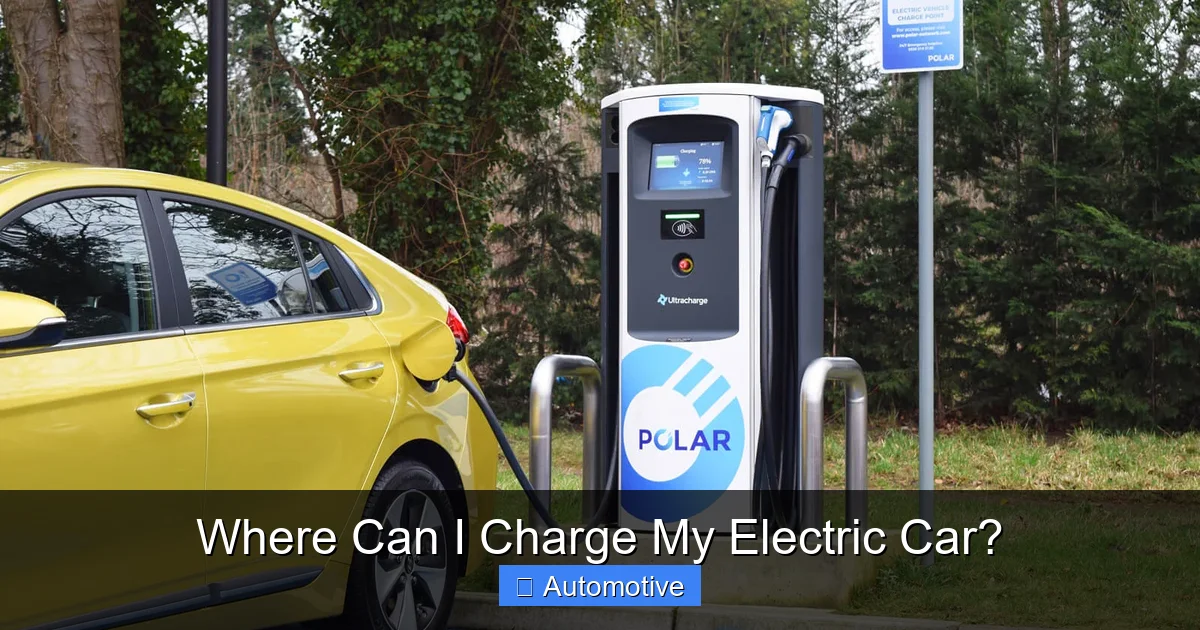
Visual guide about Where Can I Charge My Electric Car?
Image source: electriccarhome.co.uk
Major Charging Networks and How They Work
You won’t find one universal “gas station” for EVs. Instead, you’ll use apps from different networks. The biggest players in North America are:
- Electrify America: Focused on highway corridors, offering only DC Fast Charging (DCFC). Often located at Walmart, Target, or standalone highway sites. Payment via app or credit card at the charger.
- EVgo: A massive network with both Level 2 and DCFC, heavily present in cities and at retail locations. Uses an app-based system with membership options.
- ChargePoint: Operates a huge mix of Level 2 stations (at workplaces, apartments, parking garages) and DCFC. Their app is excellent for finding and paying for all types of chargers, even those from other networks.
- Tesla Supercharger: The gold standard for speed and reliability, but historically exclusive to Teslas. With new NACS (Tesla) connector adoption by Ford, GM, Rivian, and others, this is rapidly changing. Non-Tesla EVs can now use Superchargers with an adapter (and eventually, native NACS ports).
Pro Tip: Don’t download 20 apps. Start with PlugShare (a community-driven map of *all* chargers, showing network, status, and reviews) and the app for your car manufacturer (e.g., FordPass, myChevrolet). These often aggregate payment across multiple networks.
Where You’ll Actually Find These Chargers
Public chargers are embedded in everyday places:
- Retail & Grocery: Whole Foods, Target, Walmart, Kroger, Safeway. Often free or low-cost while you shop. A great way to charge my electric car during a 30-60 minute errand.
- Municipal Parking: City garages and street parking spots often have Level 2 chargers. Check your local parking authority’s app or website.
- Hotels & Tourism: Many mid-to-high-end hotels offer Level 2 charging as an amenity. Always call ahead and ask about fees. This is a key part of planning a vacation—you can often park and charge overnight at your destination.
- Workplaces: An increasingly common employee benefit. If your employer doesn’t offer it, ask HR about the possibility. It’s a huge perk for retention.
- Parks & Recreation: National and state parks are adding chargers, making EV road trips to nature easier than ever.
Workplace & Destination Charging: The Hidden Perks
Beyond home and public stations, there’s a third, often underutilized category: destination charging. These are Level 2 (sometimes DCFC) stations provided as an amenity to attract and retain customers or employees.
Visual guide about Where Can I Charge My Electric Car?
Image source: media.notiondesk.so
- Workplace: As mentioned, this is huge. An 8-hour workday on a Level 2 charger can add 150-200 miles—more than enough for most daily commutes. It effectively extends your usable range for free or at a low cost.
- Hotels & Resorts: A must-ask when booking. Many now list “EV charging” as an amenity. It allows for a full overnight charge, eliminating range anxiety for the next day’s drive.
- Restaurants & Malls: While you dine or shop, a Level 2 charger can add meaningful range. It’s a value-add for businesses, so they’re becoming common.
- Apartment Complexes: This is a growing challenge for renters. Newer complexes are increasingly required to include EVSE (Electric Vehicle Supply Equipment) in some parking spots. If you’re apartment hunting, ask about charging availability. It’s a critical factor for EV living.
Key Insight: Always have your charging apps ready. When you arrive at a destination, check PlugShare or the network’s app to see if chargers are present, operational, and if there’s a fee. Sometimes, a “destination” charger might be reserved for tenants or guests only.
Charging on Road Trips: Mastering the DC Fast Charge
This is where new EV drivers get nervous. But with modern cars and improving infrastructure, cross-country EV travel is not only possible; it can be smoother than gas station stops if you plan. The secret is DC Fast Charging (DCFC).
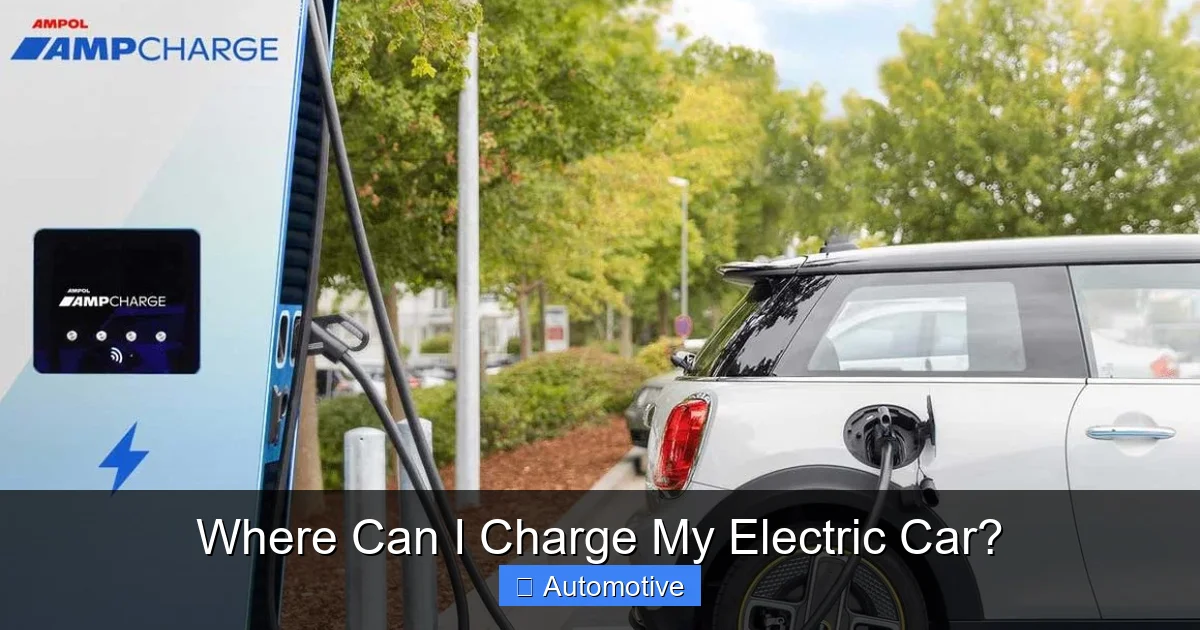
Visual guide about Where Can I Charge My Electric Car?
Image source: b2232832.smushcdn.com
What is DC Fast Charging?
DCFC bypasses your car’s onboard charger, delivering direct current (DC) power directly to the battery. This is incredibly powerful.
- Speed: Can add 200+ miles of range in 20-45 minutes, typically to 80% (the last 20% charges much slower to protect battery health).
- Connectors: CCS (Combo) is standard for most non-Tesla US EVs. CHAdeMO is used by Nissan (Leaf) and some others. Tesla uses its proprietary connector (now being standardized as NACS). Adapters exist but are clunky and slower.
- Cost: Significantly more expensive than Level 2, often $0.40-$0.80 per kWh. A 15-minute stop for 100 miles might cost $7-$12. Still usually cheaper than gas.
How to Plan Your Route
You don’t wing it. You plan it digitally.
- Use Your Car’s Navigation: Modern EVs (Tesla, Ford, Hyundai, Kia, GM, Rivian) have excellent built-in trip planners that automatically add necessary DCFC stops, estimate charging time, and precondition the battery for optimal charging speed. This is your primary tool.
- Cross-Check with Apps: Use ABRP (A Better Routeplanner) or PlugShare to verify station existence and recent user reviews about functionality (a broken DCFC station can ruin a trip).
- Identify Networks: On major interstates, Electrify America and Tesla Superchargers dominate. On secondary routes, EVgo is strong. Know which network your car has best access to.
- The 80% Rule: Plan to charge to 80% for efficiency. The time saved by not charging that last 20% is better spent driving.
- Buffer Time: Add 10-15 minutes to your estimated charging time. You might arrive at a station with one functional port out of four, or the car in front might be taking longer.
Real-World Example: Driving from Los Angeles to Phoenix? Your car’s nav will likely route you through a DCFC cluster in a town like Barstow or Kingman. You’ll stop for 25 minutes, grab a snack, use the restroom, and be on your way with a full battery for the final stretch. It’s a rhythm you quickly get used to.
Understanding Charging Levels & Connectors: No More Confusion
To truly understand where you can charge, you need to speak the language. It’s simple once broken down.
The Three Levels, Simplified
- Level 1 (120V AC): “Trickle charge.” Household outlet. 3-5 mph. Emergency use only for most full EVs.
- Level 2 (240V AC): “Standard charge.” Home, workplace, public stations. 20-35 mph. The workhorse for daily charging.
- Level 3 / DC Fast Charging (DCFC): “Road trip charge.” 50-350+ kW. Adds hundreds of miles in under an hour. Only at dedicated public stations.
Connector Types: The Physical Key
This is the plug that goes into your car. It’s region and vehicle-specific.
- J1772: The standard “pistol grip” plug for all non-Tesla EVs in North America for Level 1 and 2 charging. Every public Level 2 station has one.
- CCS (Combined Charging System): The “combo” plug for DCFC. It adds two large DC pins below the J1772 base. Used by GM, Ford, Rivian, BMW, VW, etc. The dominant standard for non-Tesla fast charging in the US.
- CHAdeMO: A separate, round DCFC plug used primarily by Nissan (Leaf, Ariya) and some Mitsubishi. Less common now.
- Tesla Connector (NACS): Tesla’s sleek, proprietary plug for all its charging. It is becoming the new North American standard. By 2025, most new non-Tesla EVs will have native NACS ports. For now, Tesla owners can use an adapter for J1772/CCS stations, and non-Tesla owners can use an adapter (like the one from Tesla) for Superchargers where allowed.
Bottom Line: Your car’s charge port dictates your options. A Ford Mustang Mach-E (CCS) can’t plug into a CHAdeMO station without a rare adapter. A Tesla (NACS) can use most stations with the right adapter. Always know your port type.
The Future of EV Charging: What’s Next?
The landscape is evolving fast. Here’s what’s coming that will make “where can I charge?” an even easier question.
- Massive Network Expansion: Federal funding (NEVI program) is mandating DCFC stations every 50 miles along the Interstate Highway System. This will fill the current gaps.
- Sky-High Power: 350 kW and even 500 kW chargers are being deployed. These can add 200 miles in 10-15 minutes for next-gen vehicles that can accept that power.
- Plug & Charge: A seamless standard where you plug in, and your car/account is automatically identified and billed (like Tesla Supercharging). No app tapping required. It’s rolling out now on networks like Electrify America.
- Wireless Charging: No plug. Park over a pad. Still in early commercial stages for fleets, but promises ultimate convenience for home and public parking spots.
- Vehicle-to-Grid (V2G): Your car’s battery becomes a power source for your home during outages or to sell energy back to the grid. The Nissan Leaf has this capability today in some markets.
Practical Tips for Stress-Free Charging Anywhere
Let’s turn knowledge into action with a checklist.
- Get the Apps: Download PlugShare, your car’s app, and the apps for the major networks in your region (Electrify America, EVgo, ChargePoint). Create accounts and add a payment method.
- Master Your Home: If possible, install a Level 2 charger. If you rent, talk to your landlord about the benefits and potential grants. Explore utility rebates.
- Know Your Numbers: What’s your car’s EPA range? What’s its typical real-world range in your climate? What’s your battery capacity (kWh)? This helps you calculate charging needs.
- Plan for Weather: Cold weather reduces battery range by 20-40%. It also slows charging speed. In winter, you’ll need to charge more frequently and may spend 10-15% longer at DCFC stations. Precondition your battery (use your car’s climate control while still plugged in) before a fast charge.
- Check Before You Park: At a public station, check the app for real-time status. Is it working? Is there a wait? Don’t assume.
- Be a Good Charging Citizen: Don’t hog a fast charger once you’re done. Move your car promptly. At Level 2 stations, be mindful of others. If you’re just running into a store for 5 minutes, maybe don’t take a spot if someone is clearly waiting.
- Have a Backup Plan: Always identify a second DCFC station on your route in case your primary choice is out of service. The PlugShare community notes are invaluable for this.
Frequently Asked Questions
How long does it take to charge an electric car?
It depends entirely on the charger. A Level 1 outlet adds 3-5 miles per hour. A Level 2 home charger adds 20-35 miles per hour (full charge in 6-10 hours). A DC Fast Charger can add 200+ miles in 20-45 minutes. Your car’s battery size and the charger’s power output are the determining factors.
Is it expensive to charge an electric car in public?
It’s almost always cheaper than gasoline. Level 2 charging often costs $0.15-$0.30 per kWh or a flat hourly rate. DC Fast Charging is more expensive, typically $0.40-$0.80 per kWh. A typical road-trip fast-charge session for 100 miles might cost $7-$12, while the same distance in a 30 MPG gas car would cost $10-$15 at $4/gallon.
How do I find charging stations near me?
Use dedicated apps like PlugShare, ChargePoint, or Electrify America. Your car’s built-in navigation system (e.g., FordPass, myChevrolet) is also excellent, as it integrates station locations directly into your route planning with real-time availability.
Should I rely on public charging or install a home charger?
Install a home Level 2 charger if at all possible. It’s vastly more convenient, cheaper per mile, and better for your battery’s long-term health. Public charging is essential for road trips and for those without home charging (e.g., apartment dwellers), but it should be a supplement, not your primary source.
Does cold weather affect EV charging?
Yes, significantly. Cold temperatures reduce battery range and slow down charging speed, especially for DC Fast Charging. The battery needs to be warmed up for optimal fast charging. Modern EVs precondition the battery automatically when you navigate to a fast charger. Always expect 15-30% less range and 10-20% longer charging times in freezing conditions.
What’s the etiquette for using public chargers?
Key rules: 1) Only use a fast charger for the time needed (typically to 80%), then move your car to free it for others. 2) Don’t park in a charging spot if you’re not charging. 3) Report any broken stations via the network’s app to help the community. 4) Be mindful of time limits if posted. 5) At shared Level 2 stations, be courteous and consider if others may need the spot more.
