
Can You Hotwire a Push-to-start Car?

No, you absolutely cannot hotwire a modern push-to-start car in the traditional sense. The method of connecting wires under the steering column to bypass the ignition is a relic of the past. Push-button start systems rely on sophisticated, encrypted communication between your key fob and the car’s engine control unit (ECU). Without the correct, authenticated signal from the paired key fob, the car’s security system will simply not allow the engine to start, making old-school hotwiring completely ineffective against these vehicles.
You’ve seen it in the movies. A character, perhaps in a tense heist or a desperate getaway, pops the steering column cover off a classic car. They grab two exposed wires, touch them together, and the engine roars to life. It’s the iconic Hollywood hotwire. But what about your sleek, modern car with the push-button start? Can you hotwire a push-to-start car using that same, dramatic technique?
The short, definitive answer is no. That cinematic magic trick is a fossil from a bygone automotive era. If you own a vehicle with a keyless entry and push-button ignition system, the old rules of hotwiring simply do not apply. The entire architecture of how a car starts and authorizes the driver has been fundamentally redesigned for the 21st century, prioritizing electronic security over mechanical simplicity.
Let’s pop the hood on this modern technology. We’ll explore exactly how push-start systems work, why the classic hotwire method fails spectacularly, and what methods—if any—are actually used by thieves today. This isn’t just about satisfying curiosity; understanding this technology helps you appreciate the layers of security protecting your vehicle and what to do if you face a genuine starting problem, like a dead key fob battery.
Key Takeaways
- Traditional hotwiring is obsolete: The method of twisting wires together to start a car does not work on any vehicle built after approximately the mid-2000s, especially push-to-start models.
- Push-start systems are cryptographic: They use rolling code encryption, meaning the signal from your key fob changes with every use, preventing replay or cloning attacks.
- The Engine Control Unit (ECU) is the gatekeeper: The car’s computer must receive a valid, authenticated signal from a paired key fob before it will enable the starter motor and fuel system.
- Physical security is layered: Even if someone accessed the steering column wiring, the ignition switch is now a low-power button that sends a signal to the ECU, not a direct mechanical connection to the starter.
- Modern theft uses relay attacks or reprogramming: Criminals now use relay boxes to amplify a key fob’s signal from inside a house, or they use diagnostic tools to reprogram a blank key fob directly to the car’s ECU.
- Your key fob battery matters: A dead or low key fob battery can prevent a push-start car from starting, but this is a simple fix, not a security flaw. Many systems have a backup procedure, like placing the fob against the start button. If your key fob battery dies, you should know the backup method for your specific vehicle.
- This is a security feature, not a bug: The complexity of these systems is precisely designed to make theft incredibly difficult for casual thieves, protecting your investment.
📑 Table of Contents
- How Push-Button Start Systems Actually Work
- Why the Classic Hotwire Method Fails on Push-Start Cars
- What Do Car Thieves Actually Do Today?
- What Happens If Your Push-Start Car Won’t Start? (Real Problems)
- Security Features & Design Choices That Prevent Hotwiring
- The Bottom Line: Can You Hotwire a Push-Start Car?
How Push-Button Start Systems Actually Work
To understand why you can’t hotwire it, you first need to grasp what you’re trying to bypass. A push-to-start system isn’t just a fancy button that replaces a key turn. It’s the user interface for a complex, multi-layered electronic security network.
The Key Fob: A Rolling Code Transmitter
Your key fob is not a simple radio remote. It’s a low-power, encrypted transponder. When you press the start button (while having the fob with you), the car’s antenna in the button emits a small radio frequency (RF) field. Your key fob, if within range, wakes up and engages in a digital handshake with the vehicle.
This handshake uses a technology called rolling code encryption. Every single time you start the car, your key fob and the car’s immobilizer system generate a unique, one-time-use code. The car’s computer (the ECU) knows the algorithm to generate the correct next code. If the code from the fob matches what the ECU expects, the green light is given. This code is never reused, which means a thief cannot simply record a signal and replay it later—it would be an old, invalid code.
The Engine Control Unit (ECU): The Security Boss
The ECU is the brain of your car’s engine. In a modern push-start vehicle, it is also the head of security. The start button you press is not a direct switch to the starter motor. It’s a signal switch. When you press it:
- It first checks for the presence of a valid, paired key fob via the antenna ring.
- It confirms the brake pedal is depressed (a major safety interlock).
- It checks the transmission is in Park or Neutral.
- If all conditions are met, the ECU then sends a separate, authorized signal to the starter relay, allowing the engine to crank.
If any part of this chain—especially the key fob authentication—fails, the ECU withholds power from the starter and fuel pump. The engine will not turn over. There are no wires to cross under the column to trick this system. The decision is made in silicon, not copper.
The Immobilizer: The Built-In Thief Deterrent
Integrated into the ECU is the immobilizer system. This is the core anti-theft component. It’s designed to prevent the engine from running unless it receives the correct cryptographic “key.” Even if someone could somehow mechanically crank the engine without the ECU’s permission, the immobilizer would cut fuel injection and spark almost immediately, stalling the car within seconds. The immobilizer makes the hotwire method useless because it attacks the problem at the wrong layer. You’re trying to solve a software/authentication problem with a hardware hack.
Why the Classic Hotwire Method Fails on Push-Start Cars
Let’s walk through the classic Hollywood hotwire and see where it breaks down on a 2020s vehicle.
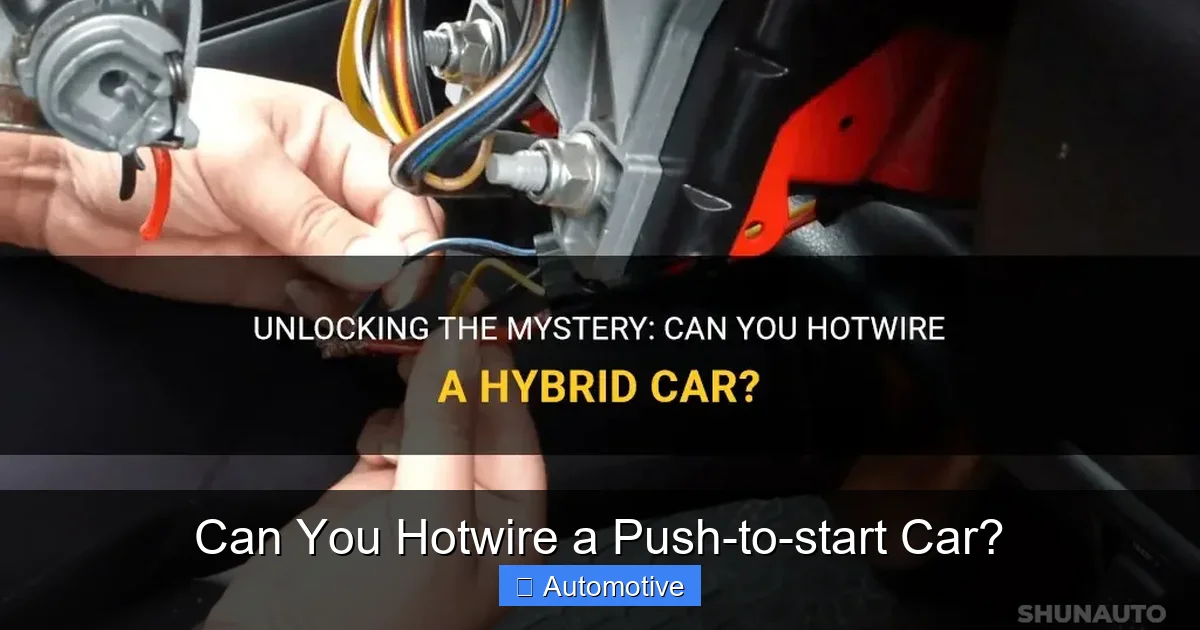
Visual guide about Can You Hotwire a Push-to-start Car?
Image source: shunauto.com
The Illusion of the Steering Column
In older cars (pre-2000s), the ignition lock cylinder was a mechanical switch. Turning the key physically connected contacts that sent battery power directly to the starter solenoid. Hotwiring involved finding those power and starter wires and connecting them. In modern cars, even those with a traditional key slot, the ignition switch is almost always a low-amperage signal switch that talks to the ECU. The high-current path to the starter is controlled by a relay inside a fuse box, not accessible from the steering column. The steering column itself is now often a sealed, plastic-covered unit with no exposed wiring harnesses to tamper with.
The Missing Mechanical Link
Push-button start removes the physical key slot entirely. There is no lock cylinder to drill out, no switch to bypass. The entire starting process is initiated by a button that sends a request to the ECU. There is no direct, always-live power wire to the starter that you can tap into. The starter relay is only energized by the ECU after a successful security handshake. Short of ripping open the ECU housing and attempting to solder directly to its outputs—a task requiring specific knowledge, tools, and causing immediate, obvious damage—there is no way to manually trigger the starter circuit.
Signal Authentication is the Unbreakable Wall
This is the ultimate barrier. Let’s say, hypothetically, a thief found the starter relay and could manually close it. The engine might crank, but the ECU would not allow the fuel pump to pressurize or the ignition coils to fire because the immobilizer is active. The car would simply crank and crank without starting. To disable the immobilizer, you would need to either: 1) Have the exact, paired key fob present to complete the cryptographic handshake, or 2) Completely defeat the ECU’s security software, which requires proprietary manufacturer diagnostic tools and codes. This is not something done with stripped wires.
What Do Car Thieves Actually Do Today?
If hotwiring is dead, how are cars still stolen? Thieves have adapted, using technology that matches the technology in the cars. The methods are more sophisticated and often less violent.
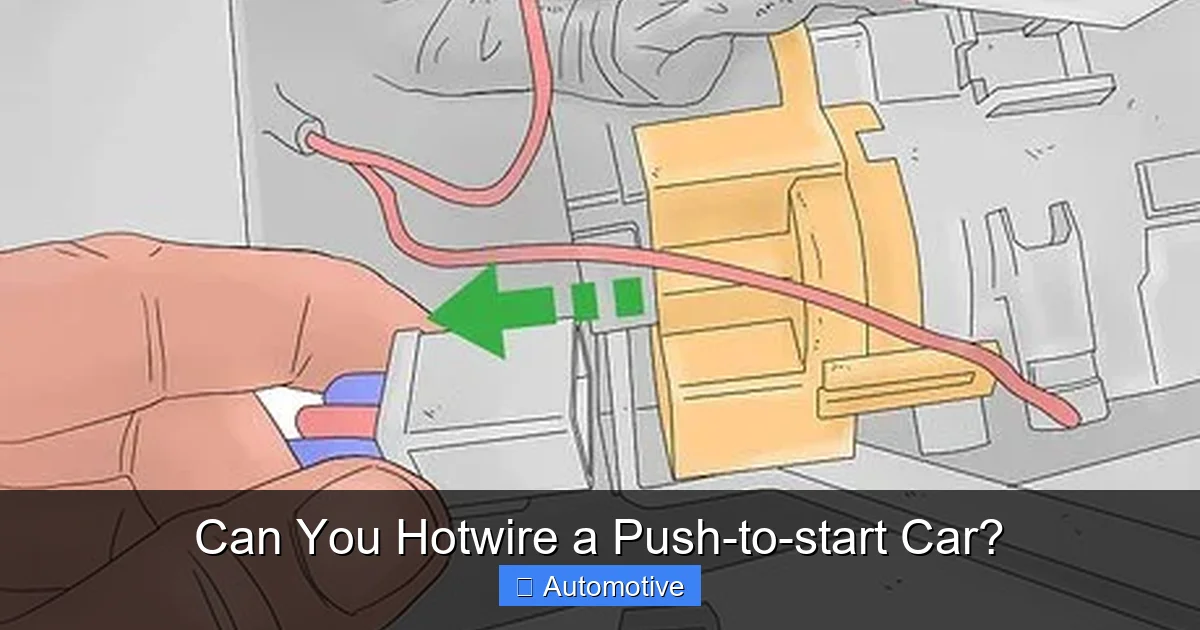
Visual guide about Can You Hotwire a Push-to-start Car?
Image source: wikihow.com
The Relay Attack: Amplifying Your Key’s Signal
This is the most common method against keyless entry and start systems. Thieves use two relay boxes. One is placed near the victim’s house (or car) to pick up the weak RF signal from the key fob inside. The second is held near the car. The boxes act as a long-range radio, effectively tricking the car into thinking the key fob is right next to it when it’s actually inside the house. The car’s antenna sees a valid signal, the ECU authorizes start, and the thieves can simply drive away. This is why storing your key fob in a signal-blocking pouch (Faraday bag) or metal container at night is a recommended security practice.
Key Cloning/Re-programming via Diagnostic Ports
This is a more aggressive, technical theft. Thieves gain physical access to the car’s interior (often by breaking a window). They then connect a device, often a laptop or a specialized tool like a “key programmer,” to the OBD-II port (usually under the dash). Using software that exploits vulnerabilities or uses manufacturer-level diagnostic access, they can erase the existing key profile from the car’s ECU and program a blank, new key fob to be the “new” valid key. Once programmed, they can start the car normally with the new key. This method leaves no hotwire marks but does leave signs of forced entry.
The “Slim Jim” and Other Mechanical Bypasses
Tools like the “Slim Jim” (a thin strip of metal) are used to manipulate the door lock mechanism from outside the car. This gets the thief inside the vehicle. From there, they still face the push-start obstacle. They would then need to use one of the electronic methods above (relay or OBD reprogramming) to actually start the engine. The Slim Jim is just the first step to get past the physical door lock, not the ignition.
What Happens If Your Push-Start Car Won’t Start? (Real Problems)
When your push-button car refuses to start, it’s almost always an electronic or power issue, not a hotwire opportunity. Here are the common, legitimate reasons:
Visual guide about Can You Hotwire a Push-to-start Car?
Image source: wikihow.com
Dead or Low Key Fob Battery
This is the #1 cause. The key fob’s battery is dead, so it cannot transmit the encrypted signal. The car’s antenna doesn’t detect it. The solution is usually a simple battery replacement (typically a CR2032 coin cell). Most vehicles have a backup procedure for this exact scenario. This often involves placing the key fob directly against the start button (where a secondary, stronger antenna is located) and pressing the button with the fob in place. The physical proximity allows a stronger, direct signal to be read. You should consult your owner’s manual for your specific vehicle’s dead fob start procedure. If you’ve lost your manual, you can often find this information online for your make and model.
Weak or Dead 12-Volt Car Battery
A severely discharged 12V battery can’t provide enough power to run the car’s computers (including the ECU and immobilizer) or the starter motor, even if you have the key fob. The car might show no lights, or the lights may be very dim. The push-button may do nothing or make a rapid clicking sound. The solution is a jump start or a new battery. It’s important to know how to safely jump-start a modern car, as improper jumping can damage sensitive electronics. Many manufacturers recommend connecting the negative jumper cable to a grounded metal point on the engine, not directly to the negative battery terminal, to avoid sparks near the battery. Always follow your owner’s manual’s jump-start procedure.
Faulty Start Button or Ignition Switch
While less common, the physical button itself can fail. It may be mechanically stuck or have an internal electrical fault. It may fail to send the “start request” signal to the ECU. Diagnosis requires a professional with a scan tool to check for communication between the button and the ECU.
Immobilizer/ECU Issues
If the ECU itself is faulty, or if there’s a problem with the antenna ring around the start button, the car won’t recognize the key. You might see a security light (often a car with a key icon) illuminated on the dashboard. This requires dealer-level diagnostic equipment to troubleshoot and reprogram, as the system needs to be reset to recognize your existing key fobs again.
Security Features & Design Choices That Prevent Hotwiring
Car manufacturers have built multiple, redundant layers of defense into modern vehicles. It’s a security-in-depth approach.
Encryption & Rolling Codes
As discussed, the dynamic, changing code system means there is no static “key” to copy or replay. The communication is a live, encrypted conversation.
Controller Area Network (CAN Bus) Isolation
Modern cars use a network (CAN bus) where different computers (ECU, BCM, etc.) communicate. Critical security commands, like “enable starter,” are not sent over simple, accessible wires. They are encrypted messages on this network. A thief tapping into a wire under the dash might see data, but without the decryption keys, it’s meaningless noise. They cannot simply “inject” a command to start the engine.
Steering Wheel Lock & Gear Shift Interlocks
Even if an engine were running, many cars have electronic steering wheel locks that engage until the proper key is authenticated. Additionally, the car will not allow the engine to start unless the brake is pressed and the transmission is in Park/Neutral. These are software interlocks controlled by the ECU, not mechanical safeties that can be bypassed with a wire.
The Bottom Line: Can You Hotwire a Push-Start Car?
The final, unequivocal answer is no. The technique is 100% ineffective. The era of the hotwire died with the widespread adoption of electronic immobilizers and keyless entry/start systems. You cannot find and connect two wires to start a push-button car because the starter circuit is not directly accessible and is gated by an unbypassable electronic authentication system.
If you are locked out of your own car with the keys inside, you need a locksmith or a dealer with the proper tools to create a new, programmed key. If the car won’t start, your troubleshooting path is: 1) Check key fob battery (replace/use backup procedure), 2) Check 12V car battery (jump if needed), 3) Look for security warning lights, 4) Call for professional help. Do not waste time looking for wires under the dashboard; they won’t help you.
The systems in your car are designed to be user-friendly for you and a fortress against unauthorized use. While no system is 100% impervious to a determined, well-equipped criminal syndicate, the classic, opportunistic car thief is completely stymied by the push-button start’s electronic defenses. Your best practices are simple: keep your key fob’s battery fresh, store it in a signal-blocking pouch at home to prevent relay attacks, and always be mindful of where you leave your keys. Understanding that hotwiring is a myth for your car is the first step in appreciating the sophisticated security that comes standard with your vehicle.
Frequently Asked Questions
Can I manually start a push-to-start car by touching wires if the key fob is dead?
No. A dead key fob simply means the car cannot receive its encrypted authentication signal. There are no wires to touch that will bypass the ECU and immobilizer. You must use the manufacturer’s backup method, which is typically placing the dead fob against the start button to use a secondary antenna.
What’s the difference between hotwiring and a relay attack?
Hotwiring is a physical, mechanical hack that tries to directly connect power to the starter, bypassing the ignition lock. It doesn’t work on modern cars. A relay attack is an electronic hack that tricks the car into thinking a valid key fob is present by wirelessly amplifying its signal from a distance. It exploits the keyless entry system, not the starter wiring.
Can a locksmith hotwire my car if I lose my keys?
No reputable locksmith will attempt to hotwire a modern car because it doesn’t work. Instead, they use specialized tools to cut a new key blade for the door locks and, more importantly, use an electronic programmer to create a new, authenticated key fob by communicating with the car’s ECU via the OBD-II port.
Is it illegal to try to hotwire a car, even if it’s your own?
Yes. In most jurisdictions, possessing tools or attempting to bypass a vehicle’s ignition system is a crime (often “possession of burglary tools” or “tampering with a vehicle”). Even if it’s your car, law enforcement may interpret the act as intent to commit theft, especially if done outside your property. Always use legal, manufacturer-approved methods.
Can I disable the push-button start system to make it “hotwire-proof”?
The system is already inherently hotwire-proof. Disabling it would require physically removing or disabling critical components like the ECU or start button, which would render the car inoperable. This is not a recommended or practical modification. The factory-installed system is your best defense.
If a thief breaks in, can they just press the start button without the key?
No. The start button will do nothing without a paired key fob within the antenna’s range. The car’s ECU will not send power to the starter. The thief would still need to use a relay attack (if the key is nearby) or an OBD port programmer to add a new key to the system before the button would work.
