
What Is the Difference Between Xle and Le Toyota Sienna?

Choosing between the Toyota Sienna LE and XLE comes down to your budget and desired comfort features. The LE is the value-focused base model, offering essential family space and Toyota’s standard safety suite. The XLE adds a significant step up in luxury and convenience with leather-trimmed seats, a premium audio system, advanced driver aids, and more creature comforts. While both share the same efficient hybrid powertrain, the XLE’s additional amenities justify its higher price for those seeking a more upscale experience.
So, you’re in the market for a Toyota Sienna—the legendary, ultra-reliable, and now hybrid-only minivan that has been hauling families with style and efficiency for decades. Great choice! But as you start browsing, you quickly hit the classic trim-level conundrum: what’s the real difference between the LE and the XLE? It’s more than just a couple of letters and a price jump. It’s the difference between a fantastic, no-frills people-mover and a genuinely luxurious, tech-packed family command center.
Let’s be honest, shopping for a minivan can feel overwhelming. You’re not just buying a car; you’re investing in a mobile living room, a cargo truck, and a road-trip fortress all in one. Understanding where your money goes with each trim is crucial. We’re going to rip the roof off this comparison—figuratively, of course—and lay out every single meaningful distinction between the Toyota Sienna LE and XLE. By the end, you’ll know exactly which one is calling your name, and you can walk into the dealership with the confidence of a seasoned minivan connoisseur.
Key Takeaways
- Price Point: The LE is the most affordable Sienna, while the XLE commands a noticeable premium for its added luxury and tech features.
- Seating Materials: LE features durable fabric seats; XLE upgrades to SofTex synthetic leather with heated front seats.
- Infotainment & Tech: Both have a large touchscreen, but XLE includes a premium JBL audio system and a wireless phone charger.
- Driver-Assistance: XLE adds a digital driver display and a comprehensive suite of active safety features like Blind Spot Monitor.
- Wheels & Exterior: LE rides on 18-inch steel wheels; XLE boasts 20-inch alloy wheels for a more refined look.
- Convenience Features: XLE includes a power liftgate, sliding door sunshades, and ambient interior lighting.
- Target Buyer: LE is for budget-conscious families needing space; XLE is for those wanting a near-luxury minivan experience.
📑 Table of Contents
- The Big Picture: Positioning the LE and XLE
- Price & Value: Where Your Dollars Go
- Interior Comfort & Materials: Fabric vs. Luxury
- Technology & Infotainment: Sound and Charging
- Safety & Driver-Assistance: A Critical Look
- Exterior Styling & Wheels: Steel vs. Alloy
- Who Should Choose Which Trim? A Practical Guide
- The Final Verdict: It’s About Your Priorities
The Big Picture: Positioning the LE and XLE
First, let’s put these two trims into the broader Sienna lineup context. The Sienna is now in its fourth generation (since 2021) and is exclusively a hybrid, a bold move that paid off. The trim ladder, from base to top, generally looks like this: LE, XLE, XSE, Limited, and Platinum. This means the LE is the entry point, and the XLE is the first major step up the luxury ladder. It’s the most popular “sweet spot” trim for a reason—it bundles a ton of desirable features without jumping all the way to the near-luxury Limited.
It All Starts With the Same Hybrid Heart
Here’s the most important thing to know upfront: under the skin, the LE and XLE are identical. They both use the same 2.5-liter 4-cylinder hybrid powertrain, producing a combined 245 horsepower. This means you get the same stellar fuel economy (an EPA-estimated 36 MPG combined), the same smooth and quiet acceleration, and the same capable towing capacity (up to 3,500 lbs). Whether you choose LE or XLE, you’re getting one of the most efficient and reliable powertrains in the minivan segment. The difference is entirely in the packaging—the interior appointments, the tech, and the comfort features.
Price & Value: Where Your Dollars Go
This is the most straightforward difference and the starting point for most buyers. The Manufacturer’s Suggested Retail Price (MSRP) gap between the LE and XLE is significant, typically ranging from $5,000 to $7,000 depending on the model year and any option packages. For the 2024 model year, the LE starts around $40,000, while the XLE begins closer to $47,000 before destination fees.

Visual guide about What Is the Difference Between Xle and Le Toyota Sienna?
Image source: s3.amazonaws.com
Is that premium worth it? That depends entirely on what you value. The LE offers exceptional value for a brand-new, fuel-efficient, 8-passenger minivan with Toyota’s full Safety Sense suite standard. The XLE’s extra cost buys you a transformation in daily comfort and perceived quality. Think of it this way: the LE gets the job done brilliantly. The XLE makes every trip, whether it’s a school run or a cross-country adventure, feel more special and less like a chore. To understand how this pricing strategy fits into the wider automotive market, it’s helpful to look at how other brands structure their lineups, much like the differences between the Dodge Charger and Challenger, where trim levels define the vehicle’s character and purpose.
Interior Comfort & Materials: Fabric vs. Luxury
Step inside, and the divergence becomes immediately apparent. This is where the XLE truly justifies its price tag for many buyers.
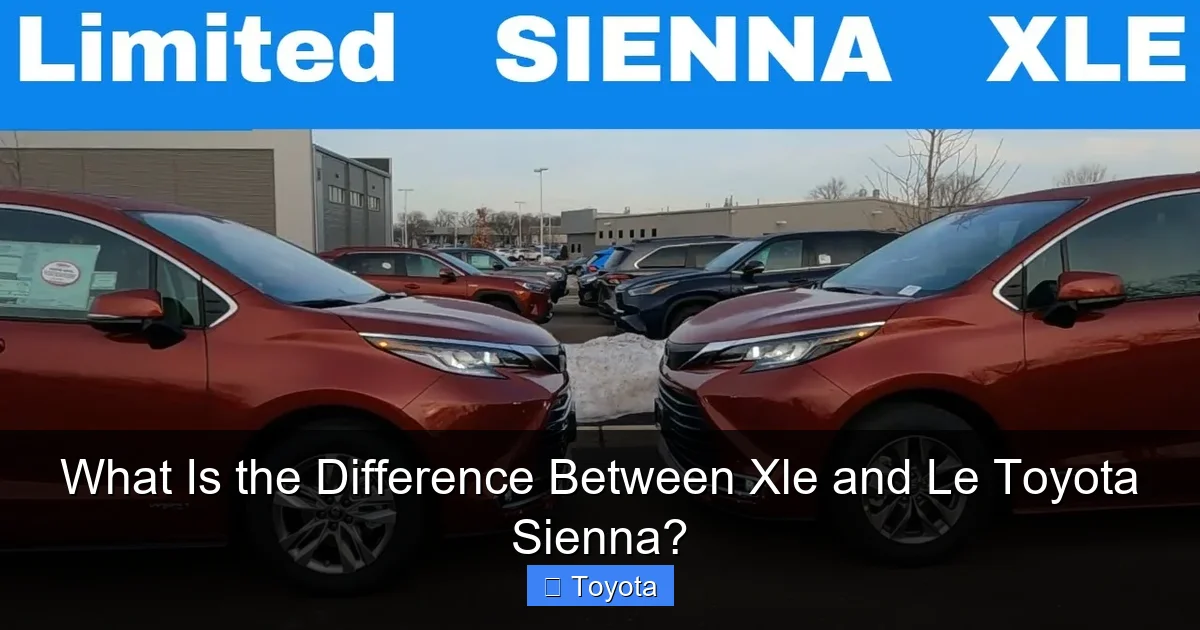
Visual guide about What Is the Difference Between Xle and Le Toyota Sienna?
Image source: i.ytimg.com
The Functional, Durable LE Cabin
The Sienna LE’s interior is built for a family. The seats are covered in a sturdy, easy-to-clean fabric. It’s practical, comfortable for long periods, and won’t show stains as easily as some lighter materials. The dashboard and door panels are hard-touch plastics, which is standard for base models in this class. The LE comes standard with second-row captain’s chairs that slide and recline, providing excellent access to the third row. It’s a spacious, bright, and highly functional space, but it feels very much like a workhorse.
The Refined, Upscale XLE Experience
The moment you slide into the XLE’s driver’s seat, you feel the upgrade. The seats are wrapped in Toyota’s SofTex synthetic leather—a material that looks and feels much more premium than fabric, is easier to wipe clean than real leather, and resists wear and tear. The front seats are heated, a godsend in winter. The steering wheel is also leather-wrapped.
The interior trim features soft-touch materials on the dashboard and door arms, with attractive metallic or woodgrain accents. Ambient interior lighting casts a gentle glow at night, adding a touch of elegance. The XLE also includes sliding door sunshades, a small but hugely valuable feature for keeping the back seats cool and shielding kids from the sun on long trips. The overall ambiance shifts from “reliable family hauler” to “premium lounge on wheels.”
Technology & Infotainment: Sound and Charging
Both trims feature a large 12.3-inch touchscreen running Toyota’s latest software, with standard wireless Apple CarPlay and Android Auto. Navigation is available as an option on both. So where’s the tech split?

Visual guide about What Is the Difference Between Xle and Le Toyota Sienna?
Image source: i.ytimg.com
Sound Systems: Standard vs. Premium
The LE comes with a perfectly adequate 6-speaker audio system. It’s clear and gets the job done. The XLE, however, steps up to a 12-speaker JBL premium audio system. If you enjoy music, podcasts, or audiobooks, this is a massive upgrade. The soundstage is wider, bass is deeper, and clarity is significantly better, transforming the cabin into a concert hall. For road trip warriors, this alone can be a deciding factor.
Convenience Charging
Another key XLE-exclusive is the wireless phone charger in the center console. While both have multiple USB ports, the ability to simply drop your compatible phone on a pad and have it charge without any cables is a modern convenience that quickly becomes indispensable. It’s these little daily-use features that add up to a more seamless ownership experience.
Safety & Driver-Assistance: A Critical Look
This is a critical category for any family vehicle, and Toyota leads with its Toyota Safety Sense (TSS) 3.0 suite. The good news is that the core suite is standard on both LE and XLE. This includes:
- Pre-Collision System with Pedestrian Detection
- Full-Speed Range Dynamic Radar Cruise Control
- Lane Departure Alert with Steering Assist
- Road Sign Assist
- Proactive Driving Assist (new for 2024)
So, what does the XLE add? Two key enhancements:
Digital Driver Display & Advanced Features
The XLE upgrades from a conventional analog speedometer to a 7-inch digital multi-information display behind the steering wheel. This screen can show navigation prompts, safety system statuses, and vehicle data in a cleaner, more modern way. More importantly, the XLE adds two crucial active safety features that are not available on the LE:
- Blind Spot Monitor (BSM): Alerts you to vehicles in your blind spots when changing lanes. This is a huge safety and convenience boon on busy highways.
- Rear Cross-Traffic Alert (RCTA): Warns you of traffic crossing behind you when backing up, invaluable in crowded parking lots.
These features are often bundled in a “Premium Package” on other brands and represent a significant safety upgrade. For a deeper dive into Toyota’s suite of driver-assist technologies and what each button does, resources like our article on the DAC button in a Toyota 4Runner explain the philosophy behind these systems, even if the implementation differs.
Exterior Styling & Wheels: Steel vs. Alloy
The exterior differences are subtle but telling. Both trims share the same sleek, aerodynamic minivan body. The LE rides on functional 18-inch steel wheels with full plastic wheel covers. They’re durable and practical, but they look the part of a base model. The XLE upgrades to 20-inch machined-finish alloy wheels. This is a huge visual change. The larger wheels fill the wheel wells better, giving the Sienna a more substantial, premium, and sporty stance. It’s one of the first things people notice, and it dramatically upgrades the van’s curb appeal without any aftermarket modifications.
Who Should Choose Which Trim? A Practical Guide
Now, let’s get down to the real question: which one is for you?
Choose the LE If…
You are a value-focused buyer. Your primary needs are maximum passenger/cargo space, outstanding fuel economy, and rock-solid Toyota reliability. You don’t mind a fabric interior and are happy with a standard sound system. You want all the essential safety tech (which is mostly there) but may not feel the absolute need for blind-spot monitoring. The LE is the smart choice for large families on a budget, fleet vehicles, or anyone who sees a minivan as a pure utility tool. It’s an outstanding vehicle. To maintain that reliability, understanding basic upkeep like correct tire pressure for a Toyota Sienna is crucial for both LE and XLE owners.
Choose the XLE If…
You spend a lot of time in your vehicle and want that time to be comfortable and enjoyable. You appreciate leather-like materials, heated seats, and a superior audio system. The convenience of a power liftgate (standard on XLE) for when your hands are full of groceries or kids is a daily game-changer. You want the extra peace of mind from blind-spot monitoring and a digital dash. The XLE is for the family that takes frequent road trips, values a quieter and more luxurious cabin, and wants their minivan to feel like a first-class experience rather than just a means of transportation. It’s the trim that turns a chore into a pleasure.
The Final Verdict: It’s About Your Priorities
There is no universally “better” trim. There is only the better trim for you. The Toyota Sienna LE is a phenomenal, no-compromise minivan that delivers on every core promise: space, efficiency, reliability, and base safety. It represents incredible value. The Sienna XLE builds on that flawless foundation by injecting a dose of luxury, convenience, and advanced technology that elevates every single drive.
If your budget is the absolute primary constraint, the LE will not disappoint. But if your budget has a little more flexibility and you find yourself dreaming of heated seats on cold mornings, a thumping JBL soundtrack on the highway, or the simple luxury of not having to manually open the rear hatch, then the XLE’s premium is not just justified—it’s an investment in daily happiness. The best advice? Test drive both back-to-back. Sit in the drivers’ seats, play with the infotainment, and imagine your life in each one. The answer will become crystal clear.
Frequently Asked Questions
Is the Toyota Sienna XLE worth the extra money over the LE?
For most buyers, yes. The XLE’s price premium buys significant upgrades in comfort (leather seats, heated fronts), convenience (power liftgate, wireless charger), tech (JBL audio, digital dash), and safety (Blind Spot Monitor). If you value these daily-use features, the XLE offers excellent value for the upgrade.
Do the LE and XLE have the same engine and fuel economy?
Absolutely. Both trims share the identical 2.5-liter hybrid powertrain, producing 245 horsepower and achieving the same EPA-estimated 36 MPG combined. Performance and efficiency are exactly the same regardless of trim.
Can you get captain’s chairs in the LE?
Yes. Both the LE and XLE come standard with second-row captain’s chairs that slide and recline, providing easy access to the third row. This is a standard feature across most Sienna trims.
What is the main safety feature missing from the LE that the XLE has?
The two most notable missing active safety features on the LE are Blind Spot Monitor (BSM) and Rear Cross-Traffic Alert (RCTA). These are standard on the XLE and greatly enhance highway and parking lot safety.
Does the XLE have a higher towing capacity than the LE?
No. Towing capacity is determined by the vehicle’s powertrain and chassis, not the trim level. Both the LE and XLE are rated to tow up to 3,500 pounds when properly equipped.
Is the wait time for a new Sienna different between LE and XLE trims?
Is the wait time for a new Sienna different between LE and XLE trims?
Historically, lower-trim models like the LE can sometimes have slightly longer factory allocation times due to higher demand from fleet and budget-conscious buyers. However, availability varies greatly by region and dealership. The XLE, being a popular consumer choice, may also face significant demand. Your local Toyota dealer is the best source for current inventory and estimated delivery times for any specific configuration. For context on current market delays, you can read about how long the wait for a new Toyota Sienna typically is.
