
Why Is the Tpms Light Blinking on My 2013 Toyota Corolla

A blinking TPMS light on your 2013 Toyota Corolla is a serious warning, not just an annoyance. It typically signals a faulty tire pressure sensor, a dead sensor battery, or a system communication error, not just low tire pressure. Ignoring it can lead to unsafe driving conditions and potential damage to your tires. The fix usually involves diagnosing the specific sensor, replacing it if needed, and then performing a manual system reset. This guide breaks down exactly why it’s happening and what you must do about it.
That little yellow exclamation point on your dashboard, shaped like a tire with an exclamation mark inside, is your Tire Pressure Monitoring System (TPMS) trying to get your attention. But when it’s not just lit up—it’s blinking—it’s speaking a different, more urgent language. For owners of a 2013 Toyota Corolla, this blinking light is a common but often misunderstood issue. It’s easy to panic or, worse, ignore it. My goal here is to be your friendly guide. We’ll cut through the confusion, explain exactly what that blinking light means for your specific Corolla, why it’s happening now, and walk you through what you need to do to fix it, step by step. Let’s get into it.
Key Takeaways
- Blinking vs. Solid Light: A solid TPMS light means one or more tires are significantly under-inflated. A blinking light (for more than a few seconds after startup) indicates a system fault, most often a bad sensor or its battery.
- Sensor Batteries Die: TPMS sensors in your 2013 Corolla have internal, non-serviceable batteries that typically last 7-10 years. Your 2013 model is now at or beyond that typical lifespan, making battery failure a prime suspect.
- Diagnosis is Key: You must use a TPMS scan tool to identify which sensor is failing or if there’s a communication issue with the vehicle’s computer. Guessing and replacing sensors blindly is costly and ineffective.
- Reset is Manual: After fixing the fault (e.g., replacing a sensor), the TPMS system will not automatically turn off the light. You must perform a specific manual reset procedure using the vehicle’s button.
- Safety First: A malfunctioning TPMS means you lose a critical safety net. You must manually check your tire pressures weekly and address the underlying fault promptly to ensure safe handling, tire wear, and fuel economy.
- Professional Help Recommended: While resetting the light is a DIY task, diagnosing the exact failed component often requires specialized tools. A tire shop or mechanic can pinpoint the problem quickly.
- Weather Plays a Role: Major temperature drops (30°F/17°C or more) can cause a temporary, solid low-pressure light. However, this should not cause a blinking light, which remains a system fault indicator.
📑 Table of Contents
- What the TPMS Light Is *Really* Telling You (It’s Not Just Low Pressure)
- Why Is It Blinking on My 2013 Corolla? The Top 5 Culprits
- How to Diagnose the Problem: You Can’t Guess, You Must Test
- How to Fix It: From Diagnosis to Solution
- How to Reset the TPMS Light on Your 2013 Toyota Corolla
- Prevention and Long-Term Care for Your TPMS
- Conclusion: Don’t Ignore the Blink
What the TPMS Light Is *Really* Telling You (It’s Not Just Low Pressure)
First, let’s establish the basics. Your 2013 Corolla is equipped with a direct TPMS. This means each wheel has a small, sophisticated sensor valve stem mounted inside it. These sensors constantly monitor the air pressure in each tire and transmit that data wirelessly to your car’s computer. When the pressure in any tire drops 25% below the recommended level, the system triggers a solid warning light on your dash. This is your cue to add air.
Now, here’s the crucial distinction: a blinking TPMS light is a completely different animal. If the light blinks for about 30-90 seconds when you start your car and then stays solid, that’s a normal system check. But if it continues to blink while you’re driving or blinks periodically after that initial startup sequence, it’s screaming, “Hey! I have a problem with my own hardware!” This is a system fault code, not a tire pressure reading.
The Two Main TPMS Warning Scenarios
Understanding this difference is half the battle. Think of it like this:
- Solid Light: “Your tire air is low. Please inflate.” This is often caused by a nail, a slow leak, or seasonal temperature changes.
- Blinking Light: “I, the TPMS system, am broken.” This points to a failed sensor, a dead sensor battery, damaged wiring (less common on Corollas), or a problem with the vehicle’s TPMS control module. For a 2013 model, the number one culprit is almost always a sensor with a dead internal battery.
Why Is It Blinking on My 2013 Corolla? The Top 5 Culprits
Your Corolla is a reliable workhorse, but its TPMS sensors are consumable parts. Here are the most likely reasons that light is flashing at you, ranked from most to least probable for an 11-year-old vehicle.
Visual guide about Why Is the Tpms Light Blinking on My 2013 Toyota Corolla
Image source: i.ytimg.com
1. Dead TPMS Sensor Battery (The #1 Suspect)
This is the heavyweight champion of TPMS failures for your year Corolla. The sensor is powered by a tiny, sealed lithium-ion battery soldered inside the unit. These batteries are designed to last 7-10 years and 100,000+ miles. Your 2013 Corolla is now well into that window. When the battery voltage drops too low, the sensor can no longer transmit a reliable signal, and the system logs a fault, triggering the blinking light. There is no way to replace just the battery; you must replace the entire sensor.
2. Physical Damage to a Sensor
Sensors are mounted on the inside of the wheel rim, behind the valve stem. They are vulnerable. A minor curb hit, a pothole impact, or even over-torquing the lug nuts during a tire rotation can crack the sensor’s housing or damage its antenna. This physical trauma disrupts its ability to communicate. If you recently had work done on your wheels or tires, this is a strong possibility.
3. Corrosion or Rust on the Sensor Valve Stem
Over time, especially in regions that use road salt in winter, the metal valve stem can corrode where it meets the sensor body or the wheel rim. This corrosion can create an poor electrical connection or even cause the sensor to become stuck in the rim, making future removal difficult and potentially damaging the sensor during a tire change.
4. Faulty TPMS Control Module or Wiring
Less common, but possible. The TPMS control module is the computer that receives all the sensor signals. If it fails or if there’s damaged wiring between the module and the antenna (which receives the signals), the whole system goes down, causing a blink. This is more likely after an accident or major electrical work.
5. Aftermarket Sensor Programming/ID Mismatch
If you recently replaced a sensor with an aftermarket or “generic” unit, it must be programmed with a unique ID and matched to your Corolla’s TPMS system using a scan tool. If this step was skipped or done incorrectly, the vehicle’s computer won’t recognize the new sensor and will flag a fault, causing the light to blink.
How to Diagnose the Problem: You Can’t Guess, You Must Test
Here’s the most important rule: you cannot diagnose a blinking TPMS light by just looking at the tires or guessing. You need data. The system has stored a specific fault code, like “Sensor ID 2 – No Signal” or “Sensor Battery Low.” To read this code, you need a TPMS scan tool. This is a specialized tool that plugs into your car’s OBD-II port (under the dashboard) and communicates with the TPMS module.
Visual guide about Why Is the Tpms Light Blinking on My 2013 Toyota Corolla
Image source: i.ytimg.com
Many auto parts stores (like AutoZone, Advance Auto Parts) will scan your TPMS system for free. A professional tire shop or mechanic will have more advanced tools that can also test the sensor’s signal strength and battery life. This diagnostic step is non-negotiable for an efficient and cost-effective repair. It tells you exactly which wheel is the problem or if the issue is elsewhere.
While you wait for a scan, you should still manually check all four tire pressures with a reliable handheld gauge. Inflate them to the pressure listed on the sticker inside your driver’s door jamb (not the number on the tire sidewall). If the light goes solid after this, you had a low-pressure issue that resolved. If it continues to blink, the fault is electronic.
What the Scan Will Tell You
A proper TPMS scan will reveal:
- Which specific sensor (Front Left, Front Right, Rear Left, Rear Right) is failing or not communicating.
- The nature of the fault: “Battery Low,” “No Data,” “Lost Communication,” or “Sensor Failure.”
- The current battery life of each sensor (on more advanced tools).
How to Fix It: From Diagnosis to Solution
Once your scan identifies the bad sensor (let’s say it’s the Front Left sensor with a dead battery), the repair path is clear. For a 2013 Corolla, the standard fix is to replace the faulty sensor with a new one.
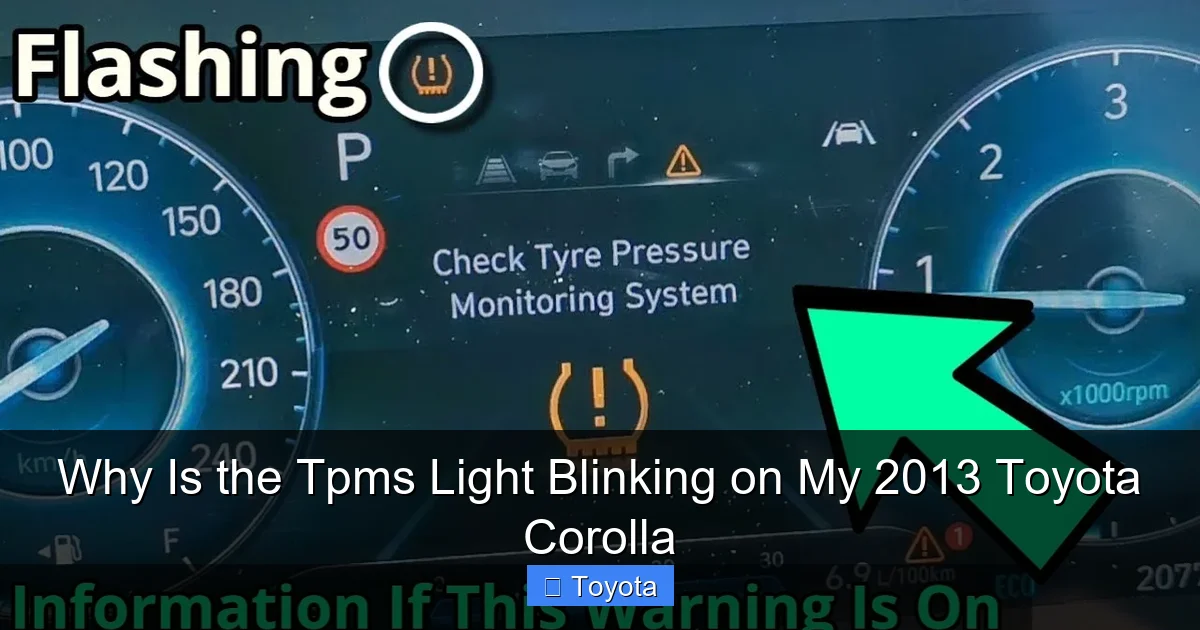
Visual guide about Why Is the Tpms Light Blinking on My 2013 Toyota Corolla
Image source: i.ytimg.com
Important: You have two main choices for the replacement sensor:
- OEM (Original Equipment Manufacturer): A sensor made by Toyota or their supplier (often Pacific, Schrader, or TRW). It’s guaranteed to be 100% compatible and is the simplest “plug-and-play” option. It will program itself to your car’s system once installed and the reset is done.
- Aftermarket/Universal Sensor: A less expensive sensor from a brand like Autel, Launch, or Orange. These often require additional programming with a special tool before installation to assign them a new ID that your Corolla will learn. If your shop uses these, confirm they have the programming capability.
The replacement itself involves:
- Demounting the tire from the wheel.
- Removing the old sensor from the valve stem hole. This often requires special tools to avoid damaging the sensor or wheel.
- Installing the new sensor with a new, high-quality valve core and seal.
- Re-mounting and balancing the tire.
- Performing the manual TPMS reset procedure (more on this below).
If the scan reveals a fault with the control module or wiring, that’s a more complex and expensive electrical repair. But again, for a 2013 Corolla with a blinking light, a dead sensor battery is by far the most likely fix.
How to Reset the TPMS Light on Your 2013 Toyota Corolla
This is the step everyone forgets. After you’ve diagnosed and replaced the faulty sensor, the TPMS warning light will not turn off by itself. You must manually initiate a “relearn” or reset procedure so the car’s computer acknowledges the new sensor’s ID. Here is the official procedure for a 2013 Corolla.
Step-by-Step Reset Procedure
- Inflate all tires to the correct pressure (see driver’s door jamb sticker).
- Turn the ignition ON (do not start the engine). Press the “TPMS” button on the dash (it’s usually near the steering wheel, labeled “SET” or with the TPMS icon). Hold it until the TPMS light blinks slowly three times, then release.
- Start the engine. The TPMS light should blink for a few seconds, then turn OFF. This indicates the system has successfully learned the new sensor ID(s).
- Drive the car at a steady speed above 25 mph for about 10-15 minutes. This allows the system to confirm communication with all sensors.
If the light comes back on after this procedure, the reset failed. This could mean the new sensor wasn’t installed correctly, it’s defective, or there’s still a fault with another sensor. You’ll need to re-scan the system.
Where is the TPMS Reset Button?
On your 2013 Corolla, it’s typically located on the lower dashboard, to the left of the steering column, near the headlight switch. It’s a small, black button, often labeled “SET.” If you have trouble finding it, your owner’s manual will have a diagram. For reference, the location is similar to the TPMS reset button on a Toyota Camry.
Prevention and Long-Term Care for Your TPMS
While you can’t prevent a sensor battery from dying of old age, you can maximize the life and reliability of your TPMS system.
Practice Good Tire Maintenance
Always keep your tires properly inflated. Under-inflated tires wear unevenly and generate more heat, which can stress the sensors. Check pressures monthly with a gauge, not just when the light comes on. This habit also helps you spot a slow leak early, before it damages a tire.
Be Mindful During Tire Service
Whenever you have tires rotated, balanced, or replaced, remind the technician that your car has TPMS sensors. They should use proper sensor-safe tools to avoid damage. After any wheel work, it’s a good idea to have the TPMS system re-checked to ensure all sensors are still communicating.
Consider Sensor Replacement at Time of Tire Purchase
If you’re buying a new set of tires and your sensors are original from 2013, it’s a smart, cost-effective move to replace all four sensors at once. You pay for the parts and labor once, and you get a fresh 7-10 year battery life on all wheels, preventing future blinking lights and multiple shop visits. It’s a classic “pay now or pay more later” situation.
Conclusion: Don’t Ignore the Blink
A blinking TPMS light on your trusty 2013 Toyota Corolla is not a minor quirk. It’s your car telling you that a key safety component—the system designed to warn you of dangerous tire conditions—has itself become unreliable. For a vehicle of this age, the diagnosis almost certainly points to one or more aging sensors with dead batteries. The solution is straightforward: get a professional scan to confirm the failed unit, replace that sensor with a quality part (OEM is recommended for simplicity), and perform the manual reset procedure.
While you address the TPMS fault, remember that you are now responsible for manually checking your tire pressures regularly. Once the system is fixed, you’ll regain that valuable electronic safety net. Taking care of this issue promptly ensures your Corolla continues to deliver the safe, reliable, and efficient driving experience it’s known for. Don’t let a blinking light keep you in the dark—get it diagnosed and fixed, and get back on the road with confidence.
Frequently Asked Questions
Can I drive with a blinking TPMS light?
You can drive short distances to a repair shop, but it is not safe to ignore long-term. A blinking light means your TPMS is disabled, so you have no electronic warning if a tire goes dangerously low. You must manually check your pressures before every trip until the system is repaired.
How much does it cost to fix a blinking TPMS light on a 2013 Corolla?
Cost depends on the fault. If it’s a single dead sensor, expect to pay $80-$150 per sensor for parts and labor at a tire shop. Replacing all four sensors preemptively with new tires often costs less per sensor. Diagnostic scanning may be free or a small fee.
Will disconnecting the battery reset the blinking TPMS light?
No. Disconnecting the battery will clear other codes, but the TPMS light is controlled by the TPMS module itself. The fault will remain stored until you perform the specific manual reset procedure after the underlying problem (like a bad sensor) is fixed.
How long do TPMS sensors last in a 2013 Toyota Corolla?
They are designed to last 7-10 years or 100,000 miles. Since your 2013 model is now 11+ years old, it has exceeded its typical lifespan. Battery failure is extremely common at this age, making sensor replacement a likely upcoming maintenance item.
Can extreme cold cause a blinking TPMS light?
Extreme cold (a drop of 30°F/17°C or more) can cause a solid low-pressure warning as the air in your tires contracts. However, it does not cause a blinking light. A blinking light in cold weather still points to a failed sensor or system fault, not just the temperature change.
Is a blinking TPMS light related to other dashboard warnings like the check engine light?
They are separate systems, but both can be scanned with a diagnostic tool. A severe electrical issue could theoretically trigger both, but it’s rare. A blinking TPMS is almost always isolated to the tire pressure system. If your check engine light is also on, you need two separate diagnoses.
