
How Do I Know If My Toyota Camry Catalytic Converter Is Bad

A bad catalytic converter in your Toyota Camry causes specific symptoms like a persistent check engine light, poor acceleration, rotten egg smells, and failed emissions tests. Diagnosis requires scanning for diagnostic trouble codes (often P0420) and sometimes physical inspection. Ignoring it leads to expensive repairs and can leave you stranded. Prompt diagnosis and repair are crucial for your Camry’s health and your wallet.
Key Takeaways
- The catalytic converter is your Camry’s emissions hero: It’s a critical component that converts harmful exhaust gases into less toxic substances. When it fails, your car pollutes more and runs poorly.
- The check engine light is your first and biggest clue: A constantly illuminated check engine light, especially with a P0420 or similar code, is the most common indicator of catalytic converter trouble.
- Performance drops are a dead giveaway: Symptoms like sluggish acceleration, poor fuel economy, and engine misfires often point to a clogged or failing converter.
- Diagnosis goes beyond a code scan: While OBD2 codes are a start, mechanics often use exhaust backpressure tests and temperature checks to confirm a bad converter versus a bad oxygen sensor.
- Replacement is expensive but necessary: Catalytic converters contain precious metals, making them costly to replace. Ignoring the problem can damage other parts like the oxygen sensors or even the engine.
- Prevention is possible: Using the correct fuel, fixing engine misfires immediately, and avoiding short trips can significantly extend your catalytic converter’s life.
- Don’t ignore the “rotten egg” smell: A strong sulfur or rotten egg odor from the exhaust is a classic sign of a converter that’s not processing sulfur properly, indicating imminent failure.
📑 Table of Contents
- Understanding Your Toyota Camry’s Catalytic Converter
- Top Warning Signs Your Catalytic Converter Is Failing
- How to Diagnose a Suspected Bad Catalytic Converter
- Common Causes of Catalytic Converter Failure in a Camry
- Replacement Considerations: Cost and Process
- Proactive Maintenance to Extend Converter Life
Understanding Your Toyota Camry’s Catalytic Converter
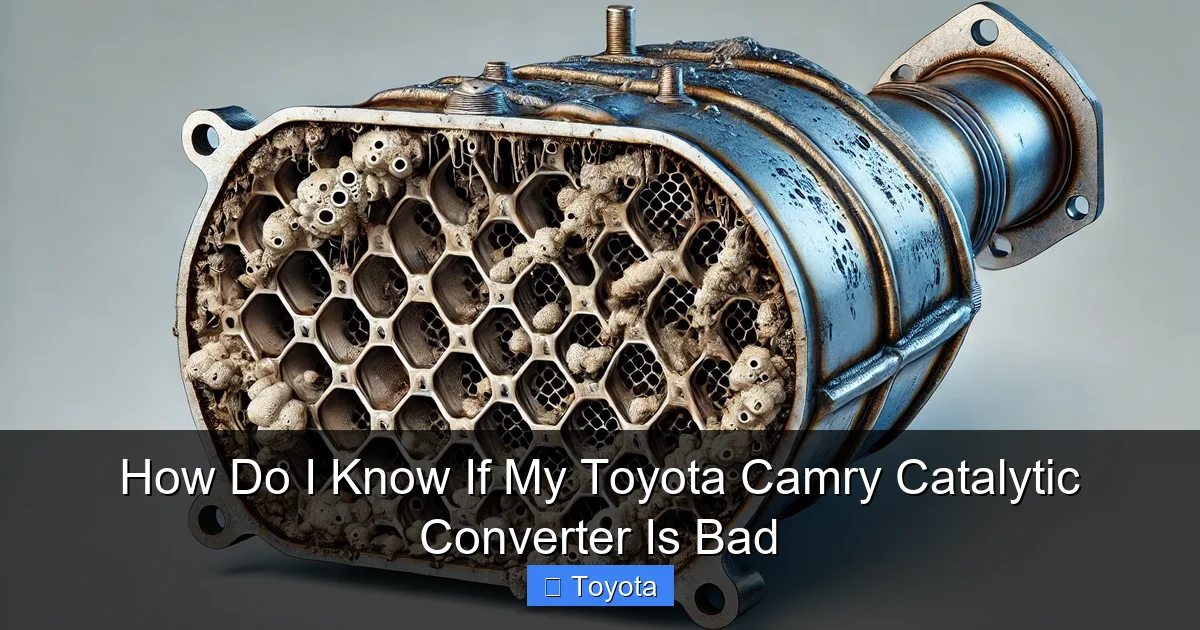
Think of your Toyota Camry’s catalytic converter as the environmental guardian of your exhaust system. It’s a metal canister, packed with a honeycomb structure coated in precious metals like platinum, palladium, and rhodium. Its job is to perform a chemical magic trick: it takes the nasty byproducts of combustion—carbon monoxide, hydrocarbons, and nitrogen oxides—and transforms them into far less harmful carbon dioxide, nitrogen, and water vapor. It’s a non-negotiable component for passing emissions tests and for being a responsible vehicle owner. But like all parts, it wears out. When your Toyota Camry catalytic converter goes bad, it stops doing its job efficiently, leading to a cascade of problems. Knowing the signs is the first step to preventing a minor issue from becoming a major, wallet-draining repair.
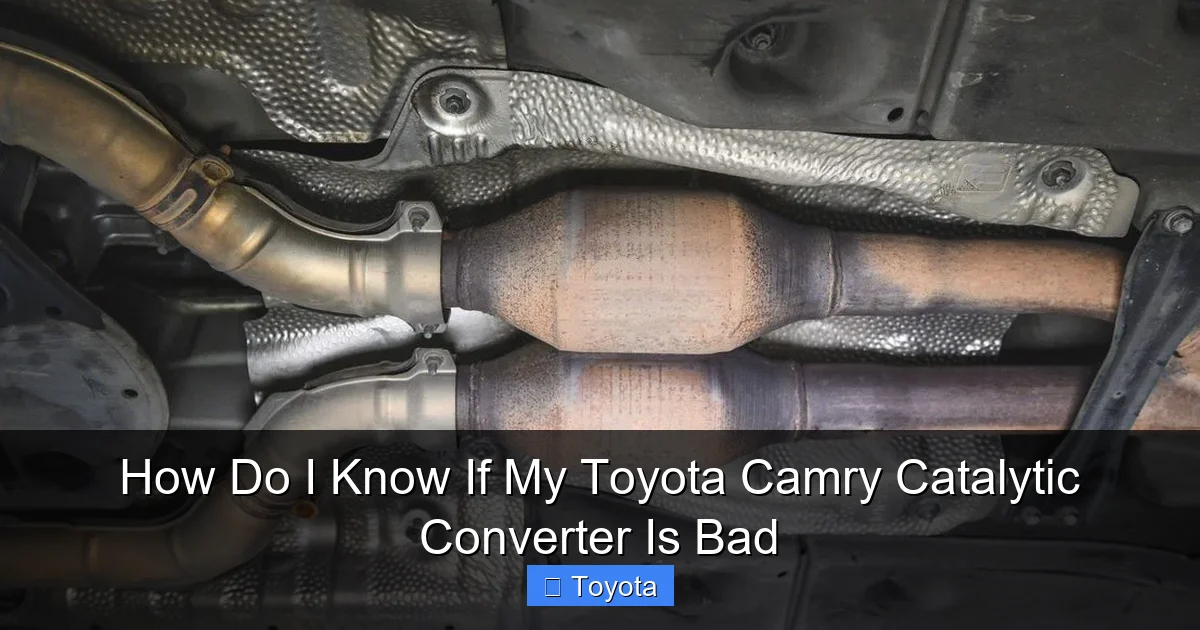
This component is built to last a long time—often 10 years or 100,000 miles—but it’s not indestructible. Its lifespan can be cut short by engine problems, poor fuel quality, or physical damage. Because it’s located under your car, between the engine and the muffler, it’s exposed to extreme heat and potential road debris. A failing converter doesn’t just affect the environment; it directly impacts your Camry’s performance, fuel efficiency, and overall drivability. Let’s dive into exactly how you can know if yours is on its last legs.
Top Warning Signs Your Catalytic Converter Is Failing
Your Camry will give you several clues when the catalytic converter is struggling. Paying attention to these symptoms can save you from a catastrophic failure. Here are the most common and noticeable red flags.
Visual guide about How Do I Know If My Toyota Camry Catalytic Converter Is Bad
Image source: badcatalytic.com
The Illuminated Check Engine Light
This is the most frequent and obvious symptom. Modern vehicles like the Toyota Camry are equipped with oxygen sensors before and after the catalytic converter. These sensors constantly monitor its efficiency. If the converter isn’t cleaning the exhaust properly, the post-converter sensor will detect it and trigger the check engine light. The most common diagnostic trouble code (DTC) for this is P0420: Catalyst System Efficiency Below Threshold. While other issues like a bad oxygen sensor or exhaust leak can also throw this code, it’s the primary starting point for investigation. If your check engine light is on solid (not flashing), it’s a serious issue that needs immediate attention. A flashing light indicates a severe misfire that can quickly overheat and destroy the converter.
Poor Acceleration and Engine Performance
A catalytic converter that is clogged or internally breaking apart acts like a blockage in your exhaust. Exhaust gases can’t escape the engine efficiently. This creates backpressure, which chokes the engine. You’ll notice this as:
- Sluggish acceleration: Pressing the gas pedal feels unresponsive, as if the car is struggling to pick up speed.
- Loss of power, especially at higher RPMs: The car may feel like it’s “redlining” too early or can’t reach its normal highway speeds.
- Difficulty starting or stalling: In severe cases, the backpressure is so great the engine can’t start or dies unexpectedly.
This symptom often gets worse over time as the clog becomes more severe.
Failed Emissions Test
In many states, annual or biennial emissions tests are mandatory. A failing catalytic converter will almost certainly cause your Camry to fail this test. The test measures the exact pollutants coming out of your tailpipe. If the converter isn’t working, levels of hydrocarbons (HC) and carbon monoxide (CO) will be far above the legal limit. If your car is due for an inspection and you have an active check engine light, it will automatically fail in most jurisdictions.
Unusual Exhaust Smells and Noises
Your senses can be powerful diagnostic tools:
- Rotten egg smell: A strong sulfur or rotten egg odor is classic. It means the converter isn’t processing sulfur in the fuel correctly, and hydrogen sulfide is escaping. This is a clear sign of imminent converter failure.
- Sulfur or burnt oil smell: Other unusual, acrid smells can also indicate the converter is overheating or processing contaminants.
- Loud exhaust noise or rattling: If the internal honeycomb structure collapses or breaks apart, you might hear a loud rattle coming from under the car, especially when starting the engine or accelerating. This is a sign of catastrophic internal failure.
Decreased Fuel Economy
The engine’s computer (ECU) tries to compensate for a clogged exhaust by injecting more fuel. This inefficient combustion leads to noticeably worse miles per gallon. If you’re filling up more often without a change in driving habits, a clogged catalytic converter could be the silent culprit, alongside other issues like underinflated tires. Checking your tire pressure and alignment is a good first step for MPG issues, but if those are fine, the exhaust system is the next suspect.
Engine Misfires and Rough Idling
Backpressure from a clogged converter can disrupt the precise timing of the exhaust stroke, causing cylinders to misfire. You’ll feel this as a shaking or vibrating car at a stoplight, a rough idle, and a general lack of smoothness. Misfires are dangerous because unburned fuel can enter the exhaust and ignite inside the converter, causing it to overheat and melt its internal components. This turns a repairable clog into a destroyed converter that needs replacement.
How to Diagnose a Suspected Bad Catalytic Converter
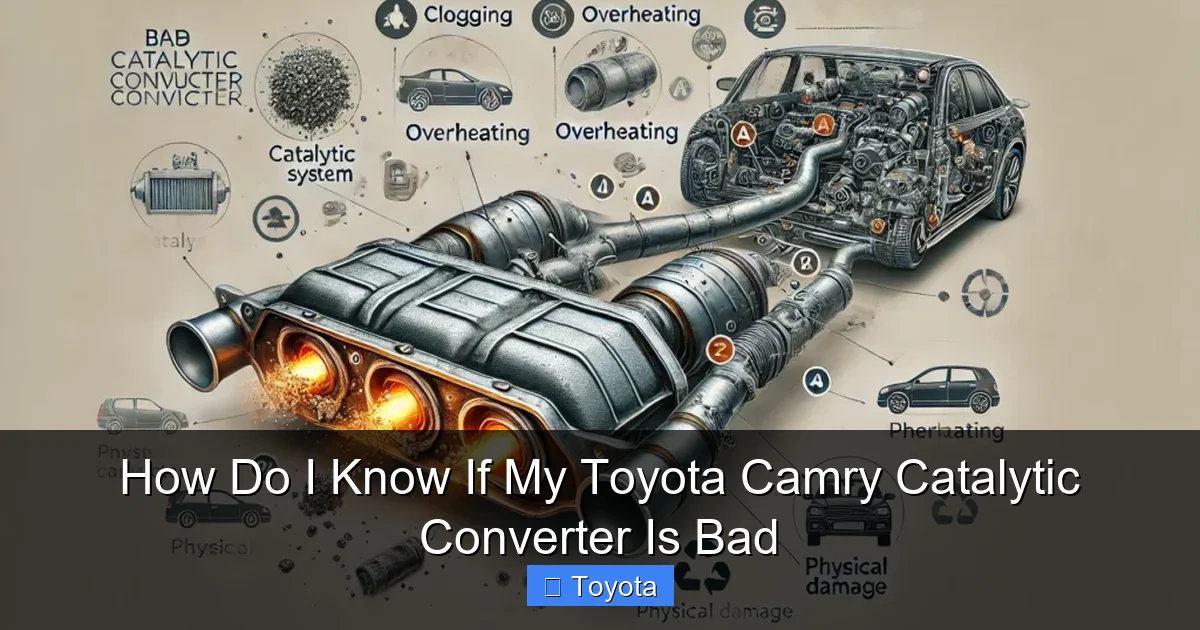
Noticing symptoms is one thing; confirming the problem is another. A proper diagnosis rules out other, cheaper issues like a faulty oxygen sensor or an exhaust leak. Here’s a step-by-step approach to knowing for sure.
Visual guide about How Do I Know If My Toyota Camry Catalytic Converter Is Bad
Image source: badcatalytic.com
Step 1: Scan for Diagnostic Trouble Codes (DTCs)
This is the essential first step. You or a mechanic will use an OBD2 scanner (available at any auto parts store for loan or purchase) to plug into your Camry’s port, usually under the dashboard. Look for codes related to catalyst efficiency, most notably P0420. Other related codes include P0430 (similar, but for bank 2) and codes for oxygen sensor activity (P0130-P0167 series). A P0420 code tells you the ECU believes the converter is below its efficiency threshold. However, this code can also be triggered by:
- A failing oxygen sensor (especially the one after the converter)
- An exhaust leak before the post-cat sensor, allowing fresh air to skew sensor readings
- Engine misfires that have already damaged the converter
- Using the wrong type of fuel or extremely contaminated oil
So, a code is a strong indicator but not a final verdict.
Step 2: Perform a Visual and Physical Inspection
Get under your Camry (ensure it’s safely supported on level ground). Look at the catalytic converter housing. Is it:
- Discolored? Blue or purple hues indicate extreme, prolonged overheating.
- Damaged? Dents, dents, or signs of impact can crush the internal substrate.
- Leaking? Look for soot or carbon deposits around the seams or welds.
- Rattling? Firmly but carefully tap the converter with a rubber mallet. A healthy one will sound solid. A rattling sound means the internal ceramic honeycomb has broken apart.
Also, inspect the entire exhaust system for leaks, rust, or damaged hangers.
Step 3: Advanced Diagnostic Tests (For Confirmation)
If codes and visual inspection point to the converter but don’t 100% confirm it, a mechanic will use more advanced tools:
- Exhaust Backpressure Test: A gauge is inserted before the converter. High backpressure readings confirm a clog. This is the most definitive test for a clogged converter.
- Temperature Test: Using an infrared thermometer, a technician measures the temperature at the inlet and outlet of the converter. A healthy converter will have a significantly hotter outlet (by 100-300°F) because the chemical reaction generates heat. If the temperatures are similar, the converter isn’t functioning.
- Oxygen Sensor Storage Test: Monitoring the switching activity of the post-cat oxygen sensor on a scan tool. A healthy converter will dampen the sensor’s rapid oscillations, making its signal smoother. Rapid, engine-like oscillations indicate the converter isn’t storing and releasing oxygen properly.
Step 4: Rule Out Other Culprits
Before committing to an expensive replacement, ensure other issues are fixed:
- Fix all engine misfires: A misfiring cylinder dumps raw fuel into the exhaust, which ignites and melts the converter’s substrate. Replacing a converter while a misfire exists will destroy the new one quickly.
- Address exhaust leaks: A leak before the post-cat sensor will cause a false P0420. Fix the leak first and see if the code returns.
- Check oxygen sensors: A lazy or faulty upstream (pre-cat) sensor can provide bad data to the ECU, causing incorrect fuel mixture and potentially overheating the converter. Replacing sensors is cheaper than a converter.
- Ensure a healthy battery and charging system: A weak battery or failing alternator can cause voltage drops that affect sensor readings and ECU decisions. It’s good practice to verify your car battery’s health during any electrical diagnostic process.
Common Causes of Catalytic Converter Failure in a Camry
Understanding why your catalytic converter failed can help prevent a repeat occurrence. It rarely just wears out on its own; it’s usually murdered by something else.
Visual guide about How Do I Know If My Toyota Camry Catalytic Converter Is Bad
Image source: cloningertoyota.com
Engine Misfires (The #1 Killer)
As mentioned, unburned fuel entering the exhaust is like pouring gasoline on a fire—inside your converter. The super-hot combustion of that raw fuel can melt the ceramic honeycomb, causing it to break apart and create a complete blockage. Misfires are caused by bad spark plugs, ignition coils, fuel injectors, or low compression. Always diagnose and fix the source of the misfire first.
Poor Fuel Quality or Contaminated Oil
Using low-quality fuel with high sulfur content accelerates the converter’s work and can lead to the rotten egg smell and eventual poisoning of the catalyst coating. Similarly, burning oil (from worn valve seals, piston rings, or a faulty PCV valve) introduces additives and contaminants that coat the catalyst, rendering it ineffective. If you notice blue smoke from your tailpipe, get that fixed immediately.
Short Trips and Cold Engines
The catalytic converter needs to reach a very high operating temperature (typically 400-600°F) to work efficiently. If you only drive very short distances, the converter never gets hot enough to burn off carbon deposits and moisture. Over time, these deposits can accumulate and clog the converter. This is why a mix of short and long trips is ideal.
Physical Damage
Hitting a deep pothole, running over debris, or an impact from an accident can crush the converter’s outer shell and internal substrate. This instantly creates a blockage or disrupts the flow of gases.
Using the Wrong Fuel
While rare, putting diesel in a gasoline Camry (or vice versa) will quickly and catastrophically destroy the catalytic converter and the entire fuel system.
Replacement Considerations: Cost and Process
If diagnosis confirms a bad catalytic converter, replacement is the only permanent fix. It’s not a job for the average DIYer due to the part’s cost and installation complexity.
The Staggering Cost
Replacing a catalytic converter on a Toyota Camry is expensive. Costs typically range from $1,500 to $3,000 or more for the part and labor. The price is high because of the precious metals inside and the complex manufacturing process. For older Camrys, you might have the option of a “universal” converter, which is cheaper but may require welding and doesn’t come with the same emissions warranty. A direct-fit OEM or OEM-spec converter is the best but most expensive route. The high cost is why some people consider the scrap value of catalytic converters, but selling yours before replacement isn’t an option—you need it to pass emissions and run your car.
The Replacement Process
A professional mechanic will:
- Lift the vehicle and remove the undercarriage shields for access.
- Apply penetrating oil to the old converter’s bolts (which are often rusted and seized).
- Cut or unbolt the old converter from the exhaust system. On many Camrys, it’s welded in place, requiring cutting.
- Install the new converter, often with new gaskets and hardware.
- Weld or clamp the new unit in place.
- Clear all diagnostic codes and perform a road test, then re-scan to ensure the check engine light stays off and the new converter is functioning.
Given the rust, heat, and precision required, this is almost always a professional job.
Aftermarket vs. OEM
You’ll face a choice:
- OEM (Original Equipment Manufacturer): The exact part Toyota used. Guaranteed to fit and meet all emissions standards. Most expensive but best for reliability and peace of mind.
- Aftermarket: From companies like MagnaFlow, Bosal, or AP. Often cheaper. Quality varies wildly. Some are excellent (CARB-compliant), while others are cheap “test pipes” that are illegal in states with emissions inspections. Research thoroughly. Ensure any aftermarket part is certified for use in your state.
Proactive Maintenance to Extend Converter Life
You can’t prevent eventual wear, but you can avoid premature failure. Here’s how to be kind to your Camry’s catalytic converter.
Use the Correct Fuel and Oil
Always use the octane rating specified in your owner’s manual (usually regular unleaded for most Camrys). Use high-quality fuel from top-tier stations, which have better detergent additives that keep the combustion chamber clean. Use the correct viscosity and type of oil (conventional vs. synthetic). Knowing if your car requires synthetic oil is important, as it burns cleaner and is less likely to cause oil consumption that fouls the converter.
Address Engine Problems Immediately
That rough idle, misfire code, or illuminated check engine light isn’t going to fix itself. The moment you notice a performance issue, scan for codes or take it to a mechanic. The cost of a $200 spark plug fix is nothing compared to a $2,500 catalytic converter replacement that it will cause.
Avoid Frequent Short Trips
If your driving pattern consists mostly of trips under 5-10 minutes, try to combine errands or take a longer highway drive once a week. This helps burn off carbon deposits and keeps the converter at its optimal operating temperature.
Protect It From Physical Damage
Be mindful of speed bumps, deep potholes, and road debris. The converter is one of the lowest and most exposed parts of your car’s underbody. Consider a skid plate if you frequently drive on rough roads.
Regular Tune-Ups and Maintenance
Following your scheduled maintenance—spark plugs, air filter, fuel filter—keeps the engine running cleanly and efficiently, reducing the strain on the exhaust system. A clean air filter ensures the correct air-fuel ratio, preventing overly rich mixtures that can overload the converter.
Frequently Asked Questions
Can I drive my Toyota Camry with a bad catalytic converter?
You can drive it for a short time if it’s just clogged and not rattling, but you risk severe engine damage from backpressure and a complete blockage. If it’s broken internally and rattling, debris can enter and damage the engine. It’s unsafe and will worsen rapidly. Get it diagnosed and fixed immediately.
How much does it cost to replace a catalytic converter on a Toyota Camry?
Total replacement cost, including parts and labor, typically ranges from $1,500 to $3,000+ for a Camry. The part itself is expensive due to precious metals. Costs are higher for newer models and if the converter is welded in, requiring cutting and welding.
What is the most common error code for a bad catalytic converter?
The most common code is P0420: Catalyst System Efficiency Below Threshold (Bank 1). This indicates the post-catalytic converter oxygen sensor is detecting that the converter is not cleaning the exhaust as effectively as it should.
Can I clean a clogged catalytic converter?
No. Catalytic converters are not like fuel injectors or throttle bodies. Once the internal substrate is clogged with carbon or melted, no chemical cleaner can restore it. Some products claim to clean them, but they are largely ineffective for a truly bad converter. Replacement is the only solution.
How long does a catalytic converter usually last in a Toyota Camry?
They are designed to last 10 years or 100,000 miles, often the lifespan of the vehicle. However, they can fail prematurely due to engine misfires, poor maintenance, or contaminated fuel. With good care, many last well beyond 150,000 miles.
Will a bad catalytic converter cause my Camry to fail an emissions test?
Absolutely yes. A functioning catalytic converter is essential for passing an emissions test. A failed converter will result in high hydrocarbon (HC) and carbon monoxide (CO) readings, guaranteeing a fail. In many areas, a vehicle with an illuminated check engine light will automatically fail the test.
