
Are There Any Known Manufacturer Problems with the 2011 Toyota Camry

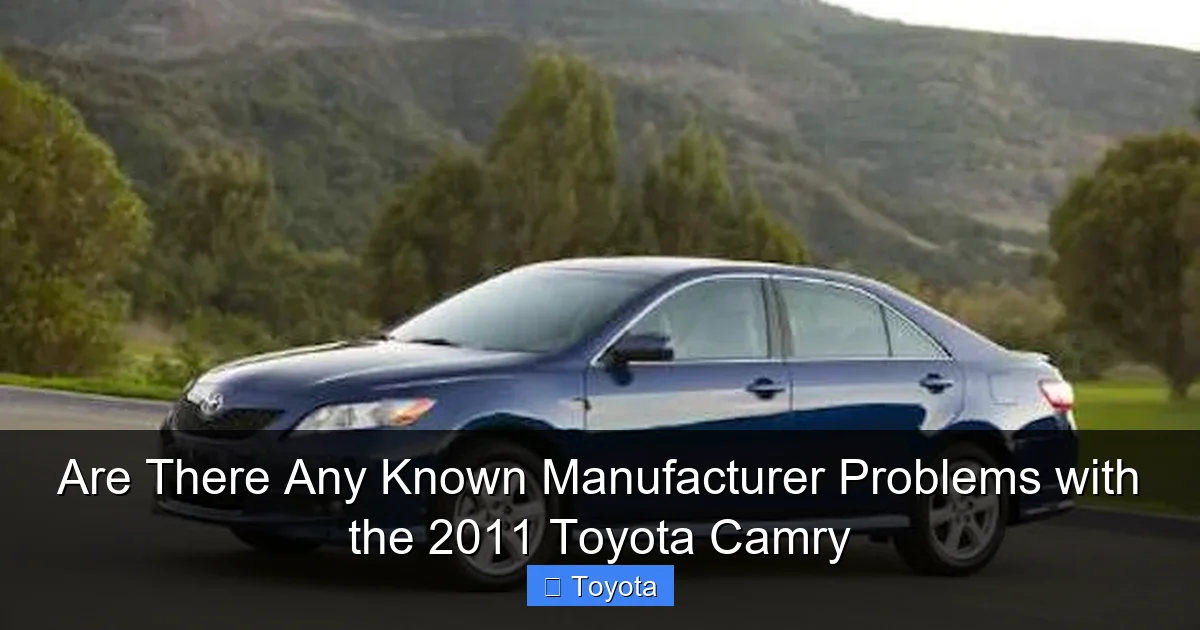
The 2011 Toyota Camry is generally a reliable midsize sedan, but it has several known manufacturer-specific problems that prospective buyers and current owners should be aware of. The most significant and widespread issue is excessive oil consumption in certain 2AR-FE engines, which can lead to engine damage if not monitored. Other reported problems include premature water pump failure, occasional transmission hesitation, and various electrical gremlins. While not every 2011 Camry will experience these issues, a thorough pre-purchase inspection and vigilant maintenance are crucial for avoiding costly repairs.
Key Takeaways
- Excessive oil consumption is the #1 known issue: A design flaw in some 2.5L 4-cylinder engines (code 2AR-FE) causes them to burn oil at an alarming rate, requiring frequent top-offs between changes and risking severe engine damage.
- Water pump failures are common: The internal water pump, driven by the timing chain, is prone to premature failure. When it goes, it can contaminate the engine oil with coolant, leading to catastrophic failure.
- Transmission hesitation is notable but often minor: Some automatic transmission models exhibit a brief “shift flare” or hesitation when cold, typically due to software. It’s more an annoyance than a major failure point for this generation.
- Electrical system quirks appear with age: Issues like malfunctioning door locks, faulty key fobs, and dimming dashboard lights are frequently reported as the cars age past 10 years, often related to simple switch or battery failures.
- Recalls addressed critical safety issues: Important recalls for faulty airbag inflators (Takata) and potential fuel pump problems were issued. Always verify all recalls have been completed on any used 2011 Camry.
- Overall reliability remains above average: Despite these known problems, the 2011 Camry still ranks well for long-term reliability when properly maintained. Its problems are often predictable and fixable.
- Pre-purchase inspection is non-negotiable: A mechanic must check for oil consumption history, coolant in oil, transmission fluid condition, and verify recall status before purchasing a used 2011 model.
📑 Table of Contents
- Introduction: The Reputation and the Reality
- The Engine’s Dirty Little Secret: Excessive Oil Consumption
- The Silent Time Bomb: Water Pump and Timing System
- Transmission Behavior: Hesitation and “Shift Flare”
- Electrical Gremlins and Aging Components
- Recalls and Safety-Related Campaigns
- Maintenance, Ownership, and the Bottom Line
- Conclusion: Knowledge is Power (and Savings)
Introduction: The Reputation and the Reality
When you think of a reliable, no-nonsense family sedan, the Toyota Camry almost always comes to mind. For decades, it has built a fortress-like reputation for durability and low cost of ownership. The 2011 model year, part of the XV50 generation that ran from 2012-2017 (with 2011 being a carryover/first year), sits in a fascinating spot. It’s old enough now to be a affordable, high-mileage used car, yet new enough that many examples are still on the road with their original powertrains. This combination makes understanding its potential pitfalls critically important.
So, are there any known manufacturer problems with the 2011 Toyota Camry? The honest answer is yes, but with crucial context. Toyota’s overall engineering for this era was sound, and the Camry consistently scores above average in long-term reliability surveys. However, specific component failures and design choices have created well-documented trouble spots. Ignoring these is like buying a house knowing the roof needs replacing—it might be fine for years, or it might leak on your first rainy day. Our goal here is to give you the complete, unvarnished picture. We’ll dive deep into the engine’s oil-burning secret, the time bomb under the timing cover, the transmission’s quirky behavior, and the electrical aging process. Armed with this knowledge, you can be a smart buyer, a prepared owner, or simply someone who understands what makes their trusted Camry tick (and sometimes, sputter).
The Engine’s Dirty Little Secret: Excessive Oil Consumption
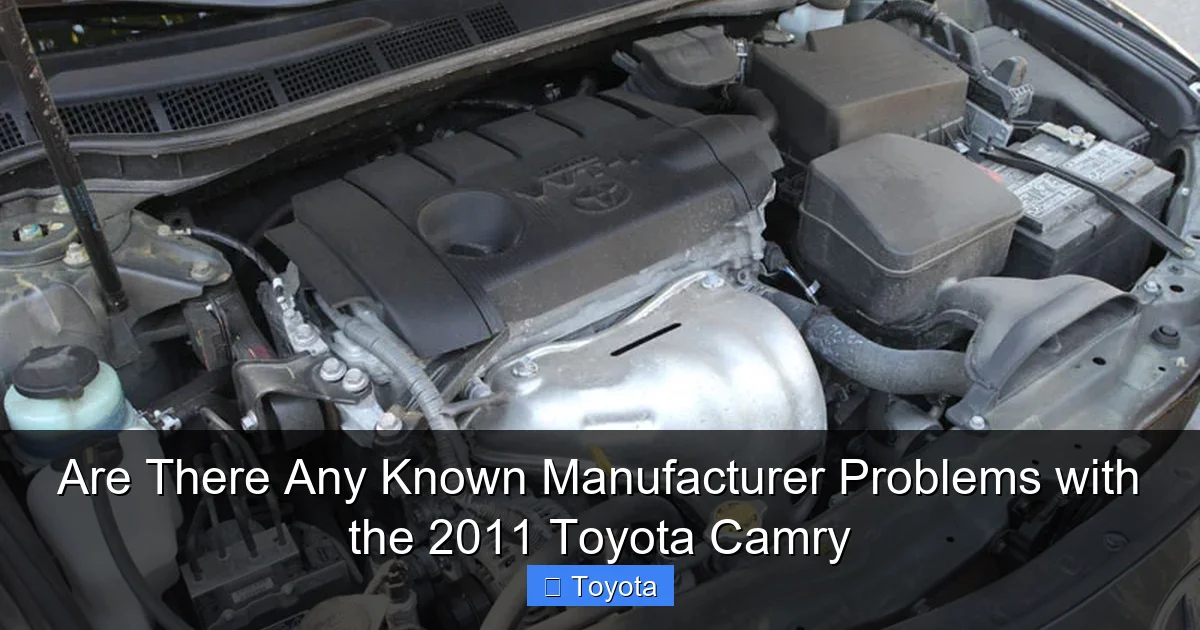
Let’s address the elephant in the engine bay first. The most significant and widely acknowledged manufacturer problem for the 2011 Toyota Camry, particularly those with the base 2.5-liter 4-cylinder engine (model code 2AR-FE), is excessive oil consumption. This isn’t just a few cars using a quart between changes; we’re talking about engines that can burn a full quart every 1,000 miles or less. This issue was so severe it led to class-action lawsuits and extended warranty coverage from Toyota for certain VIN ranges.
Visual guide about Are There Any Known Manufacturer Problems with the 2011 Toyota Camry
Image source: samarins.com
What’s Actually Happening Inside?
The root cause is believed to be a combination of piston ring design and manufacturing tolerances. The piston rings, which seal the combustion chamber, do not maintain proper contact with the cylinder walls. This allows a small but significant amount of engine oil to be drawn into the combustion chamber and burned along with the gasoline. You won’t typically see massive clouds of blue smoke from the exhaust, especially at startup. The consumption is often a steady, invisible drip into the engine’s own cylinders. The first sign is usually a low oil level warning on the dashboard or, worse, a mechanic’s discovery during an oil change that the dipstick is bone dry.
Who is Affected and How to Check?
Not every 2AR-FE engine is a guaranteed oil burner, but the failure rate is high enough to be a major red flag. Models with the 3.5-liter V6 (2GR-FE) are largely immune to this specific issue. To check a used car, you must:
- Review maintenance records meticulously: Look for repeated oil additions between changes. A pattern of “added 1 quart” notes is a huge warning.
- Perform a cold compression test and leak-down test: A professional mechanic can do this. Low compression or high leakage on the rings points directly to this problem.
- Check for TSB and warranty extensions: Toyota issued Technical Service Bulletins (TSBs) and, in some cases, extended the warranty on specific components related to oil consumption for certain VINs. Verify the vehicle’s history on the NHTSA recall lookup and with a Toyota dealer using the VIN.
If you own a 2011 Camry with the 2.5L engine, the single most important thing you can do is check the oil level every 1,000 miles without fail. Letting it run low is the fast track to a seized engine, a repair that can exceed the car’s value. In severe cases, the only fix is an engine rebuild or replacement, which is expensive. Some owners have had partial success with different spark plugs or oil consumption additives, but these are often temporary band-aids.
The Silent Time Bomb: Water Pump and Timing System
Moving from the pistons to the front of the engine, we encounter another design-related weakness. The 2011 Camry’s 2AR-FE and 2GR-FE engines use a timing chain (not a belt) to drive the camshafts. Good news? It’s theoretically “lifetime” and never needs scheduled replacement. Bad news? The chain is lubricated by engine oil and tensioned by a hydraulic tensioner. More critically, the water pump is driven by this same timing chain and is located inside the engine, behind a cover.
Visual guide about Are There Any Known Manufacturer Problems with the 2011 Toyota Camry
Image source: jdmofohio.com
Why an Internal Water Pump is a Problem
When a traditional external water pump fails, it leaks coolant onto the ground. You see the puddle and get a warning. When an internal water pump fails, the coolant leaks into the engine oil. You don’t see a leak. Instead, you get a milkshake-like sludge under the oil cap or on the dipstick—a condition known as “coolant in oil.” This sludge destroys the engine’s lubrication properties, causing rapid bearing wear and catastrophic failure. The failure often happens with little warning between 80,000 and 120,000 miles. Replacing this water pump is not a simple DIY job; it’s a major engine teardown that can cost $1,500-$3,000+ because the timing cover must be removed.
Prevention and Detection
There is no scheduled maintenance to prevent this. It’s a component that can simply fail. Your defenses are vigilance and awareness:
- Regular oil changes with high-quality oil: Clean oil helps mitigate sludge formation if a small leak starts.
- Check the oil cap and dipstick monthly: Look for any creamy, frothy residue. This is the #1 visual clue.
- Monitor for subtle overheating: A failing pump can cause minor temperature fluctuations before total failure.
- Listen for new noises: A failing bearing or chain tensioner might produce a rattling sound from the timing cover area, especially on cold starts.
For high-mileage 2011 Camrys approaching or past 100k miles, some proactive owners and mechanics suggest budgeting for this repair as a precaution, especially if the car will be kept long-term. It’s the single most expensive potential failure point for these engines.
Transmission Behavior: Hesitation and “Shift Flare”
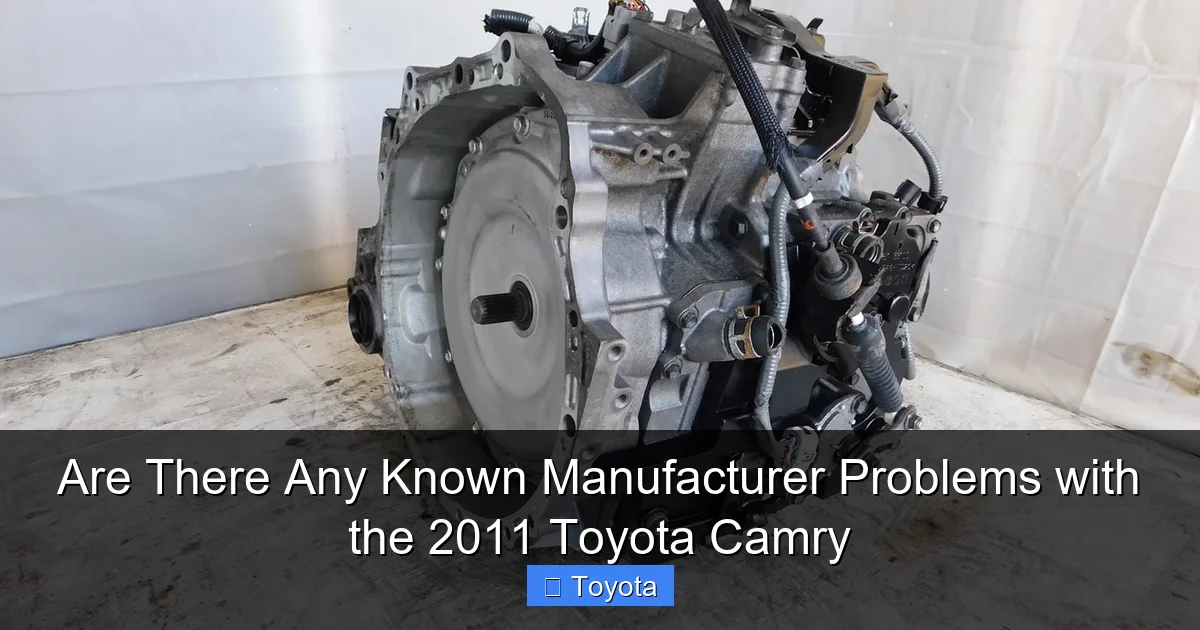
The 6-speed automatic transmission (U660E) in the 2011 Camry is generally robust. It’s not known for the catastrophic failures that plagued some earlier Toyota automatics. However, a common complaint, especially in the 4-cylinder models, is a specific type of poor shift quality. Owners describe a “shift flare,” “hesitation,” or a “slip” between 1st and 2nd gear, or sometimes 2nd and 3rd, particularly when the engine and transmission are cold.
Visual guide about Are There Any Known Manufacturer Problems with the 2011 Toyota Camry
Image source: s3.amazonaws.com
Is It a Mechanical Failure or a Software Glitch?
For the vast majority of cases, this is not a sign of a transmission on its last legs. It’s a characteristic of the transmission’s software logic and the torque converter clutch (TCC) engagement. When cold, the transmission fluid is thicker. The computer may command a shift, but the clutch packs take a split second longer to fully engage, causing a momentary RPM flare before the next gear bites. It’s most noticeable when gently accelerating from a stop. As the transmission warms up, the behavior usually diminishes or disappears completely.
What Can Be Done?
Because it’s often a software and hydraulic issue, there are a few potential remedies:
- Transmission fluid service: A simple drain-and-fill (not a flush) of the factory-specified WS fluid can sometimes improve matters if the fluid is degraded. This is a cheap first step.
- Software reflash: A Toyota dealer can check for any applicable technical service bulletins (TSBs) that might include a transmission control module (TCM) update to alter shift points and TCC engagement logic. This was a known fix for some model years.
- Adaptive learning reset: Disconnecting the battery for a period can reset the transmission’s adaptive memory, forcing it to relearn your driving style. Sometimes this smooths out shifts.
If the hesitation is severe, accompanied by harsh clunks, slipping under load, or error codes, then a deeper mechanical investigation is needed. But for the typical cold-weather hiccup, it’s more of an annoying trait than a true “manufacturer problem.” It’s something to be aware of during a test drive, but not necessarily a deal-breaker.
Electrical Gremlins and Aging Components
As a 2011 model approaches its 13th+ birthday on the road, the most common issues shift from core powertrain flaws to the natural aging of electrical components and switches. These aren’t unique to Toyota, but they are frequently reported by Camry owners.
Common Complaints
- Power Door Lock Failures: The lock actuators inside the doors, particularly the front passenger and rear doors, can fail. You’ll hear a faint click but the lock won’t move. Sometimes it works intermittently. Replacement is the fix.
- Key Fob and Ignition Issues: The key fob battery dies more often. The ignition switch can become worn, causing the key to feel loose or the car to have difficulty recognizing the key (if equipped with a smart key). Sometimes the car will start but the steering wheel lock doesn’t release properly.
- Dashboard and Interior Light Dimming: The dimmer switch for the instrument cluster and infotainment screen can fail, leaving the display at a single, often too bright or too dim, level. The ambient lighting LEDs can also fail in spots.
- Aftermarket Radio/Camera Interference: Many owners add backup cameras or aftermarket stereos. Poorly installed systems can cause parasitic battery drain or interfere with the factory radio’s operation.
Diagnosis and Cost
These issues are usually straightforward to diagnose. A good mechanic can test door lock circuits, check key fob battery and signal strength, and inspect the ignition switch. Parts are generally inexpensive (a door lock actuator might be $50-$150), but labor can add up if multiple doors are affected. For the ignition switch, using the manual key as a backup is a temporary workaround. Many of these problems are simply the price of admission for a 12-year-old car, regardless of brand.
Recalls and Safety-Related Campaigns
No discussion of manufacturer problems is complete without addressing official recalls. The 2011 Toyota Camry was subject to several important safety recalls that must be addressed. A reputable dealer will typically complete these before selling a certified pre-owned vehicle, but private sellers often overlook them.
The Big One: Takata Airbag Inflators
This is the most serious. The 2011 Camry was equipped with front passenger airbag inflators made by Takata. These inflators can explode with excessive force, shooting sharp metal fragments into the cabin. The recall is a “Do Not Drive” order for some vehicles, while others have a “Repair Now” priority. The fix is a free airbag replacement at any Toyota dealer. You must check the status by VIN immediately. This is non-negotiable for safety.
Other Recalls to Verify
- Fuel Pump: Some 2011 Camrys were recalled for a potential issue with the electric fuel pump motor, which could cause the engine to stall. The repair involves replacing the fuel pump assembly.
- Power Window Switch: A recall for the driver’s door power window master switch due to a fire risk from overheating. The switch is replaced.
- Steering Column: A limited recall for possible improper tightening of the steering column intermediate shaft coupling.
Always use the official NHTSA recall lookup tool or call a Toyota dealer with the full 17-digit VIN to get a complete, authoritative recall history for any specific vehicle.
Maintenance, Ownership, and the Bottom Line
So, with these known issues, is a 2011 Toyota Camry a smart buy? The answer is a qualified yes, but it hinges entirely on one word: maintenance. A well-maintained 2011 Camry with a clean history and addressed recalls can be an incredibly economical and reliable vehicle for years to come. A neglected one with hidden oil consumption and a failing internal water pump is a money pit waiting to happen.
The Essential Checklist for Buyers
If you’re considering a 2011 Camry, your pre-purchase inspection (PPI) must include:
- Oil Level & Condition: Check dipstick for level and any signs of coolant (milky sludge). Ask for records of oil additions.
- Coolant System Pressure Test: To check for internal leaks into the oil.
- Transmission Fluid: Check level, smell (for burnt odor), and color (should be red/clear, not brown/black).
- Scan for Codes: Have the OBD-II port scanned for any stored or pending trouble codes, even if the check engine light is off.
- Recall Verification: Get written proof from a dealer that all open recalls, especially the airbag, have been completed.
- Test Drive: Drive it when cold. Listen for transmission flare, watch for temperature gauge movement, and feel for any odd vibrations or noises.
For Current Owners: A Proactive Plan
If you already own a 2011 Camry, your action plan is clear:
- Become obsessed with your oil level. Check it every 1,000 miles. If it’s using more than 1 quart per 1,000 miles, start budgeting for a potential engine repair and discuss options with a trusted mechanic immediately.
- At the next oil change, have the mechanic inspect the oil cap and dipstick for any sign of coolant contamination.
- Address all recalls without delay.
- Use high-quality oil and filters. While not a cure, it’s the best possible environment for an engine that might be stressed.
- Consider a preemptive transmission fluid service if you haven’t had one in the last 30,000 miles.
Finally, understand that some of the “problems” are just the car aging. Replacing door lock actuators, key fob batteries, and wiper motors is normal car ownership. The true “manufacturer problems” are the systemic engine issues. If your car has been meticulously maintained and shows no signs of oil consumption or coolant in oil, you likely have one of the good ones and can expect many more years of faithful service from a car that still gets excellent fuel economy for its size.
Conclusion: Knowledge is Power (and Savings)
The 2011 Toyota Camry sits at an interesting crossroads. It represents the peak of Toyota’s “everything just works” philosophy before the industry-wide shift to more complex, turbocharged, and direct-injection engines. Its core architecture is sound, and its reputation for longevity isn’t unfounded. However, that reputation was built on the assumption of proper maintenance, and for this specific model year, two significant engine-related issues—oil consumption and the internal water pump—loom large as known manufacturer problems.
The takeaway isn’t to avoid the 2011 Camry at all costs. The takeaway is to go in with your eyes wide open. A pristine, well-documented example that has had its recalls completed, shows no oil consumption, and has clean coolant-free oil can be a fantastic value. A cheap, high-mileage example with missing service records is a gamble with a potentially very high stakes. By understanding these specific vulnerabilities, you empower yourself as a buyer to ask the right questions and demand the right inspections. As an owner, this knowledge turns vague anxiety into a concrete maintenance plan. Ultimately, the 2011 Camry’s story is a testament to the fact that even the most reliable brands have their model-year quirks. Your success with one depends entirely on how well you understand its history and how diligently you care for its future.
Frequently Asked Questions
Is the 2011 Toyota Camry a reliable car overall?
Yes, the 2011 Camry is generally considered reliable, especially compared to many competitors. Its core drivetrain is durable. However, it has specific, known issues (primarily oil consumption and water pump) that require proactive monitoring. With proper maintenance and if it avoids these major faults, it can be a very dependable high-mileage vehicle.
How much does it cost to fix the oil consumption problem on a 2011 Camry?
Costs vary wildly. A simple ring job (if attempted) might be $2,000-$3,000 but often doesn’t fully solve the problem. A full engine rebuild or replacement from a dealer can range from $4,000 to over $7,000. Some owners have had limited success with aftermarket solutions or warranty claims if the VIN is covered by an extension, but many face a major repair bill.
What are the signs of a failing internal water pump?
The primary sign is finding a creamy, milky substance (coolant mixed with oil) under the oil cap or on the dipstick. You might also notice the oil level rising inexplicably (as coolant adds volume) or a sweet smell from the exhaust. An overheating gauge or low coolant level with no visible external leak is another red flag. This is a serious issue requiring immediate attention.
Should I avoid buying a 2011 Toyota Camry with over 150,000 miles?
Not necessarily, but the inspection becomes even more critical. You must verify the oil consumption history is clean and that there is no coolant in the oil. A transmission fluid service should be documented. If the car has a full service history and passes a rigorous PPI with flying colors, high miles aren’t an automatic disqualifier for a well-built car like the Camry.
Are the transmission problems in the 2011 Camry serious?
For the most part, no. The common “shift flare” or cold-weather hesitation is an annoyance and a trait of the transmission’s design, not an impending failure. It can often be improved with a fluid change or software update. True transmission failures (slipping, no gear engagement) are relatively rare for this generation. If you experience harsh, repeated slipping, get it diagnosed immediately.
What is the most important thing to check before buying a used 2011 Camry?
Beyond the standard used car checks, the single most critical item is the oil consumption history and current condition of the oil/coolant. You must know if the engine has been burning excessive oil. Second is verifying all recalls, especially the Takata airbag recall, are completed. A PPI by a trusted mechanic that specifically checks for these two items is absolutely essential.
