
How Many Miles Can a Toyota Corolla Go on One Tank of Gas?

A Toyota Corolla typically travels between 400 and 450 miles on a full tank of gas. This range is based on its combined fuel economy of 30-35 MPG and a fuel tank capacity of 13.2 gallons. However, your actual mileage can vary significantly based on driving conditions, your vehicle’s specific model year, and your personal driving habits. Understanding these variables is key to maximizing your Corolla’s efficiency and planning your trips effectively.
Key Takeaways
- Tank Capacity: Most modern Toyota Corollas have a fuel tank that holds approximately 13.2 gallons, which is the primary factor in determining total range.
- EPA MPG Ratings: Official EPA estimates for the Corolla range from 30 MPG city / 38 MPG highway to 31 MPG city / 40 MPG highway, depending on the model year and trim.
- Real-World Range: Expect a practical, real-world range of 400-450 miles per tank under mixed driving conditions, with highway-heavy trips pushing toward the higher end.
- Reserve Fuel: The gas light typically illuminates with 1-2 gallons remaining, giving you a warning buffer of roughly 30-70 miles before you run completely empty.
- Major Range Factors: Your actual miles per tank are heavily influenced by driving style (aggressive vs. gentle), terrain (hilly vs. flat), weather (extreme cold/heat), and vehicle maintenance.
- Maximizing Efficiency: Simple habits like maintaining proper tire pressure, using recommended motor oil, and reducing excess weight can noticeably improve your Corolla’s fuel economy and extend your range.
- Model Year Variations: While the core range is consistent, always check your specific owner’s manual or door jamb sticker for the precise tank capacity and official MPG ratings for your Corolla’s model year.
📑 Table of Contents
- How Many Miles Can a Toyota Corolla Go on One Tank of Gas?
- Real-World Factors That Change Your Corolla’s Range
- Maximizing Your Miles Per Tank: Practical Tips for the Corolla Owner
- Comparing to Other Toyota Models: Is the Corolla’s Range Impressive?
- Conclusion: Your Corolla’s Range is What You Make of It
How Many Miles Can a Toyota Corolla Go on One Tank of Gas?
It’s a simple question with a not-so-simple answer: “How many miles can a Toyota Corolla go on one tank of gas?” If you’re a Corolla owner or shopper, you’re likely asking this for a few key reasons. Maybe you’re planning a road trip and want to know how often you’ll need to stop. Perhaps you’re comparing it to other sedans for daily commuting costs. Or, you’re just that proactive driver who likes to understand their vehicle’s capabilities inside and out. Whatever your reason, you’ve come to the right place. We’re going to break down the science, the specs, and the real-world variables to give you a clear, confident answer.
The short, most common answer is that a Toyota Corolla will reliably take you between 400 and 450 miles on a single, full tank of regular unleaded gasoline. But that number is a general estimate. To truly understand your car’s range, we need to look at the two core ingredients: the size of the tank (the container) and the car’s fuel efficiency (the sipper). Then, we’ll mix in all the real-life conditions that can make your actual mileage dance above or below that 400-mile mark. By the end, you won’t just have a number; you’ll have the knowledge to maximize every drop of fuel in your Corolla.
The Core Formula: Tank Size x Efficiency = Range
At its heart, calculating maximum range is a simple math problem: Total Miles = Gallons in Tank x Miles Per Gallon (MPG). Let’s plug in the Toyota Corolla’s numbers.
Understanding Your Corolla’s Fuel Tank Capacity
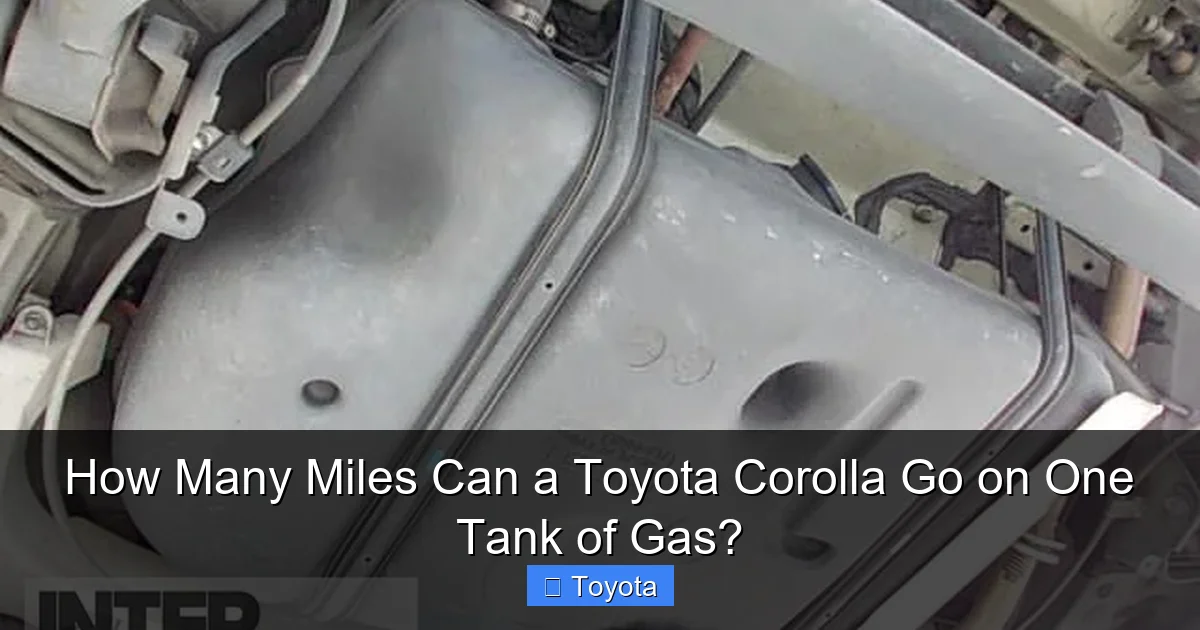
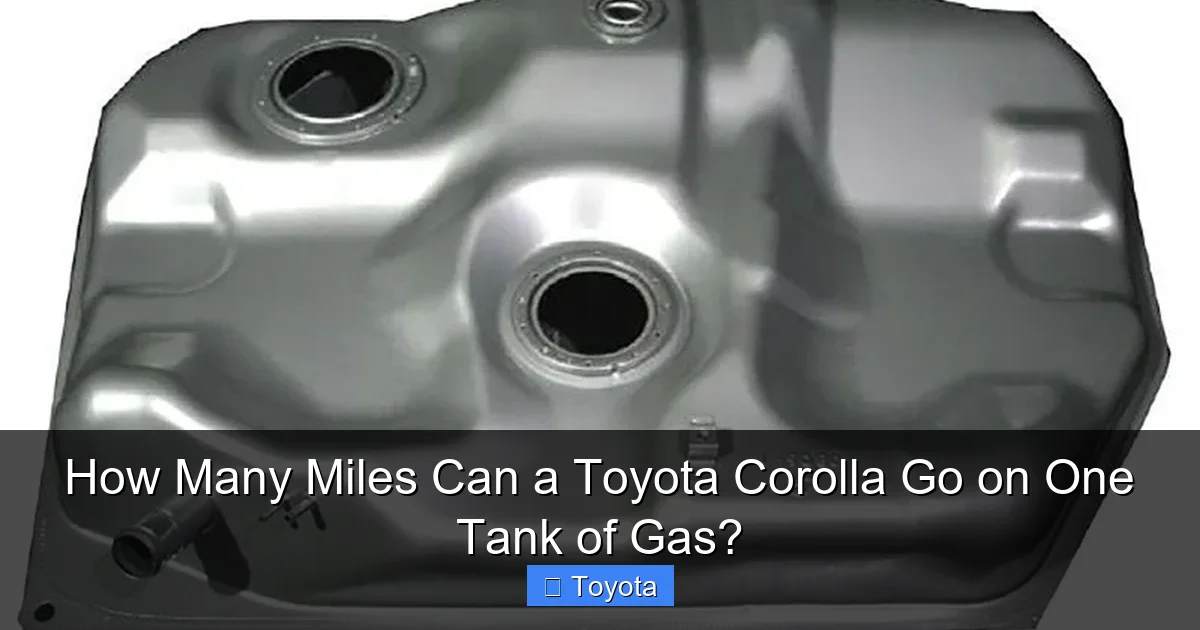
The first variable is how much gas your Corolla can hold. For the vast majority of recent model years (from the late 1990s to the present), the Toyota Corolla is equipped with a fuel tank that holds 13.2 gallons. This is a standard size for the class and has remained consistent through many generations. You can always verify this for your specific vehicle by checking the owner’s manual or looking for a sticker inside the driver’s side door jamb that lists the tank capacity. Some older or very specific international models might have slight variations, but 13.2 gallons is your reliable baseline. This means your “full” at the pump is about 13.2 gallons of gasoline.
Decoding EPA Fuel Economy Ratings
The second variable is efficiency: how many miles your Corolla can travel on one gallon of gas. The Environmental Protection Agency (EPA) tests vehicles and provides official MPG ratings. These are great for comparing cars but are achieved in controlled lab conditions. For the current generation and recent past models, the EPA ratings typically fall into this range:
- City Driving: 30-31 MPG
- Highway Driving: 38-40 MPG
- Combined (Mixed) Driving: 33-34 MPG
So, using the formula with the “combined” number and the 13.2-gallon tank: 13.2 gallons x 33.5 MPG (average) = approximately 442 miles. That’s where our 400-450 mile estimate comes from. If you drive exclusively on the highway at a steady speed, you might see closer to 13.2 x 40 = 528 miles. In heavy, stop-and-go city traffic, you might see 13.2 x 30 = 396 miles. This highlights why the “real-world” number is a range, not a single figure.
Real-World Factors That Change Your Corolla’s Range
The EPA numbers are a useful benchmark, but they are not a promise. Your actual miles per tank are a direct result of a complex interplay between your car, your environment, and your right foot. Let’s explore the biggest factors that can add or subtract miles from your tank.
Visual guide about How Many Miles Can a Toyota Corolla Go on One Tank of Gas?
Image source: intersectionmagazine.net
1. Driving Style: The Lead Foot vs. The Zen Master
This is the single most impactful variable you control. Aggressive acceleration, hard braking, and speeding are the holy trinity of fuel waste. Rapid acceleration from a stop can use up to 50% more fuel than a smooth, gradual press on the pedal. Speeding is a major factor; aerodynamic drag increases exponentially with speed. Driving 75 mph vs. 65 mph can reduce your fuel economy by 10-15%. Conversely, practicing “hypermiling” techniques—like gentle acceleration, anticipating traffic flow to brake less, and using cruise control on flat highways—can easily push your real-world MPG 3-5 points above the EPA estimate. Your driving style can swing your effective range by 50 miles or more per tank.
2. Environment & Terrain: Hills, Wind, and Weather
You can’t control the weather, but you can understand its impact. Cold weather is a double whammy. Your engine works harder to warm up, and the air is denser, creating more drag. Winter gasoline blends are also less energy-dense. Hot weather means your air conditioner is running, placing a significant load on the engine. Hilly or mountainous terrain forces your engine to work against gravity, drastically reducing MPG on inclines (though you regain some energy on descents via engine braking). Strong headwinds increase aerodynamic drag, while tailwinds can provide a helpful boost. If your commute involves a mountain pass or you live in a consistently windy area, factor in a lower expected range.
3. Vehicle Condition & Maintenance
A well-maintained Corolla is a fuel-efficient Corolla. Neglected maintenance is a silent range-killer. Key items include:
- Tire Pressure: Under-inflated tires increase rolling resistance. A drop of just 5 PSI below the recommended pressure (found on your door jamb sticker) can lower fuel economy by 3-4%. Check them monthly.
- Motor Oil: Using the correct viscosity grade of oil as specified in your manual is critical. Thicker oil (like 10W-40 instead of recommended 0W-20) creates more internal friction, hurting efficiency.
- Air Filter: A clogged air filter chokes your engine, forcing it to work harder and burn more fuel. It’s an easy, cheap fix during an oil change.
- Spark Plugs & Fuel System: Worn spark plugs or dirty fuel injectors lead to incomplete combustion, wasting fuel and reducing power.
- Wheel Alignment: Misaligned wheels cause drag, similar to under-inflated tires. If your car pulls to one side, get it checked.
4. Cargo & Accessories: The Weight of Your Stuff
Your Corolla is a lightweight efficiency champion. Adding weight has a direct, negative impact. Every extra 100 pounds in the car can reduce fuel economy by about 1-2%. This isn’t just about passengers; it’s about the 50 lbs of golf clubs you leave in the trunk, the roof rack you never remove, or the heavy cargo box on top. Roof racks and cargo carriers are particularly notorious for destroying aerodynamic efficiency, even when empty. At highway speeds, they can reduce MPG by 5% or more. If you’re not using it, take it off.
5. Fuel Quality & Blend
While modern engines are designed for today’s fuel standards, there can be minor differences. Top-tier detergents in some brands can help keep your engine clean over the long term. The seasonal fuel blend (winter vs. summer) also has a slight energy content difference. In general, stick to reputable stations and use the octane rating your manual calls for (regular unleaded for the Corolla). Using higher octane than required provides zero benefit and is a waste of money.
Maximizing Your Miles Per Tank: Practical Tips for the Corolla Owner
Now that we know what hurts our range, let’s focus on actionable strategies to maximize it. These are habits you can start today.
Visual guide about How Many Miles Can a Toyota Corolla Go on One Tank of Gas?
Image source: automotivian.com
Drive with a Light Touch and a Plan
Look far ahead on the road. See that red light? Start easing off the gas now instead of slamming it at the last second. Maintain a consistent speed. Use your cruise control on long, flat highway stretches. On highways with variable speed limits, driving 65 mph instead of 75 mph is the single most effective speed-related efficiency hack. It’s safer and saves significant fuel.
Stay on Top of Basic Maintenance
Create a simple checklist. Check tire pressure at least once a month and before long trips. Change your oil and filter on schedule using the correct oil weight. Replace your engine air filter with every other oil change (or as your manual suggests). These are inexpensive tasks that pay for themselves in fuel savings and engine longevity. For specific maintenance intervals, your owner’s manual is the ultimate guide. You can also find helpful guides for your specific model, like how to check tire pressure on a 2021 Toyota Corolla, which is a quick and vital task.
Lighten the Load and Streamline
Do a trunk clean-out. Remove unnecessary items. If you have a roof rack or cargo carrier that you only use seasonally, store it in the garage when not in use. It’s not just about weight; it’s about clean aerodynamics. Your Corolla’s sleek shape is designed to slice through air. A big, boxy rack on top disrupts that flow.
Know Your “Reserve” and the Gas Light
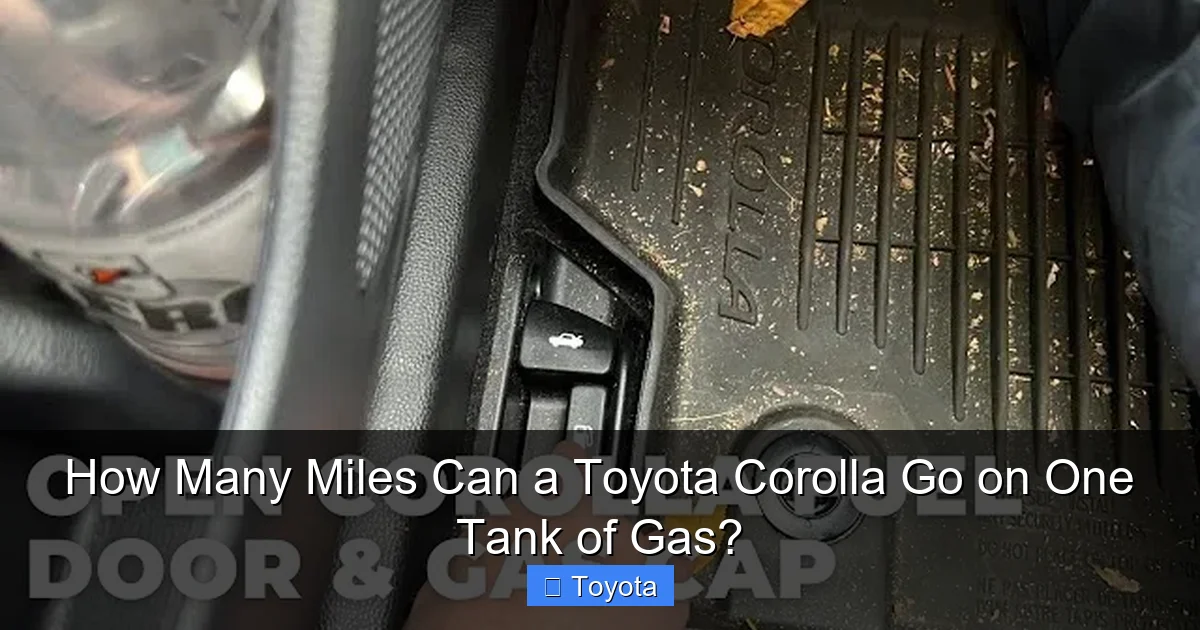
Your gas light is a warning, not a countdown to zero. When it illuminates, you typically have a “reserve” of fuel left—usually between 1 and 2 gallons. This is a safety margin designed by Toyota. So, how many miles can you drive after the gas light comes on in a Toyota Corolla? A safe estimate is 30 to 70 miles, based on that 1-2 gallon reserve and your current MPG. However, this is a “get to a station” range, not a “test your luck” range. Consistently driving on fumes can overheat your fuel pump (which is cooled by gasoline) and suck sediment from the bottom of the tank into your fuel system. For peace of mind and vehicle health, start looking for a gas station as soon as the light comes on. You can learn more about the specifics of your Corolla’s reserve range in this detailed guide.
Comparing to Other Toyota Models: Is the Corolla’s Range Impressive?
To put the Corolla’s 400-450 mile range in context, let’s compare it to a few other popular Toyotas. The midsize Toyota Camry has a larger 15.8-gallon tank and similar combined MPG (~32 MPG), giving it a theoretical range of over 500 miles. The compact crossover Toyota Corolla Cross has a slightly smaller tank (around 12.4 gallons) and lower MPG (~29 MPG), resulting in a similar real-world range of about 360 miles. The hybrid Toyota Corolla is a different beast entirely—it uses a small gas tank (around 11.4 gallons) but achieves 50+ MPG, easily exceeding 500 miles. So, the standard gas Corolla offers excellent, class-leading efficiency and a very practical, no-anxiety range for daily driving and most road trips. Its range is perfectly competitive with rivals like the Honda Civic and Nissan Sentra.
Visual guide about How Many Miles Can a Toyota Corolla Go on One Tank of Gas?
Image source: s.turbifycdn.com
Conclusion: Your Corolla’s Range is What You Make of It
So, back to the original question: how many miles can a Toyota Corolla go on one tank of gas? Plan for 400 to 450 miles. Start with the proven formula of its 13.2-gallon tank and 30-35 MPG real-world efficiency. Then, empower yourself by understanding the factors that influence that number. Your driving habits are the most powerful lever you have. By driving smoothly, maintaining your car meticulously, and keeping it light, you can consistently hit the top end of that range—or even surprise yourself with a 460-mile tank. Conversely, a lead foot, under-inflated tires, and a roof rack will pull you toward the lower end.
The Toyota Corolla’s reputation for reliability and low cost of ownership is built on this kind of predictable, efficient performance. It’s a car that asks very little from you in return for excellent, worry-free transportation. Respect its need for proper maintenance, drive it with a little consideration, and it will reward you with thousands of miles of dependable service and a solid, predictable range at the pump. It’s not just a number on a spec sheet; it’s a reflection of the partnership between you and your car.
Frequently Asked Questions
How far can a Toyota Corolla go on a full tank?
A Toyota Corolla with a 13.2-gallon tank and an average real-world fuel economy of 33 MPG can travel approximately 400 to 450 miles on a single tank of gas under normal mixed driving conditions.
How many miles can you drive after the gas light comes on in a Toyota Corolla?
Once the low fuel light illuminates, you typically have a reserve of 1 to 2 gallons remaining. This provides a safe driving range of roughly 30 to 70 miles, depending on your current fuel efficiency and driving conditions, to find a gas station.
Does the Toyota Corolla have a reserve fuel tank?
No, the Corolla does not have a separate reserve tank. The “reserve” is simply the small amount of fuel (1-2 gallons) left in the main tank after the gas light comes on, which is not included in the tank’s rated capacity.
How big is the gas tank on a Toyota Corolla?
The fuel tank capacity for nearly all recent model year Toyota Corollas is 13.2 gallons. You can confirm this for your specific vehicle by checking the owner’s manual or the fuel filler door jamb sticker.
Does highway or city driving give better mileage in a Corolla?
Highway driving provides significantly better mileage. The Corolla’s EPA ratings show about 30-31 MPG for city driving and 38-40 MPG for highway driving due to reduced stop-and-go and more consistent speeds.
Can I improve my Corolla’s miles per tank?
Yes, significantly. The most effective methods are: driving gently with smooth acceleration, maintaining proper tire pressure, using the recommended motor oil, removing unnecessary weight and roof racks, and staying current on routine maintenance like air filter and spark plug replacement.
