
How Can I Reduce the Fuel Consumption of My Toyota Sienna?

Reducing fuel consumption in your Toyota Sienna is achievable through simple changes in driving habits, regular maintenance, and smart vehicle management. By adopting smoother acceleration, maintaining proper tire pressure, and removing unnecessary weight, you can significantly improve MPG. These strategies not only save money at the pump but also extend your vehicle’s lifespan and reduce environmental impact.
Key Takeaways
- Drive Smoothly: Aggressive acceleration and braking can lower your Sienna’s MPG by up to 33% in city driving. Gentle throttle control and anticipating traffic flow are key.
- Maintain Optimal Tire Pressure: Under-inflated tires increase rolling resistance, reducing fuel efficiency. Check pressures monthly and inflate to the manufacturer’s PSI listed on your door jamb sticker.
- Stay on Top of Scheduled Maintenance: Regular oil changes, clean air filters, and properly functioning spark plugs ensure your engine runs efficiently. A clogged air filter alone can reduce MPG by 10%.
- Lighten the Load: Remove unnecessary items from your Sienna. Extra weight forces the engine to work harder. Also, remove roof racks when not in use to improve aerodynamics.
- Use the Right Fuel and Check Your Gas Cap: Use the octane recommended in your owner’s manual (typically regular). A loose or damaged gas cap can cause fuel evaporation and trigger the check engine light.
- Utilize Cruise Control on Highways: Maintaining a steady speed on highways improves fuel economy. However, avoid using it on hilly terrain where the engine works harder to maintain speed.
- Consider Your AC Usage: At low speeds, open windows. At high speeds, use AC. The drag from open windows at highway speeds can reduce MPG more than running the AC.
📑 Table of Contents
- Understanding Your Toyota Sienna’s Fuel Economy
- Master Your Driving Habits for Maximum Efficiency
- Vehicle Maintenance: The Foundation of Fuel Savings
- Smart Weight Management and Aerodynamics
- Fuel Choices and Quality: What Really Matters?
- Leveraging Technology and Smart Features
- Conclusion: A Holistic Approach to Saving Fuel
Understanding Your Toyota Sienna’s Fuel Economy
Your Toyota Sienna is a fantastic family hauler—spacious, reliable, and comfortable. But let’s be honest, its size means it’s not exactly a fuel-sipping economy car. Whether you have the hybrid model or the traditional gas engine, you’ve probably glanced at the pump with a sigh, wondering how you can stretch that tank further. The good news? You have more control over your Sienna’s fuel consumption than you might think. Reducing fuel consumption isn’t about one magic fix; it’s a combination of mindful driving, consistent maintenance, and smart vehicle management. This guide will walk you through practical, actionable steps to improve your miles per gallon (MPG), putting more money back in your wallet and less carbon into the atmosphere.
First, let’s set realistic expectations. The EPA provides estimated MPG ratings, but real-world driving often differs. Factors like your driving environment (stop-and-go city vs. open highway), vehicle age, and even the weather play a role. A new Sienna hybrid might achieve an impressive 36 MPG combined, while an older V6 model might see 18-22 MPG. Your goal isn’t necessarily to hit the EPA number, but to maximize whatever efficiency your specific vehicle is capable of. Every percentage point of improvement counts when you’re fueling a large vehicle regularly.
Why Focus on Fuel Efficiency?
Beyond the obvious benefit of saving money, improving your Sienna’s fuel economy has other perks. It reduces wear and tear on engine components, potentially lowering long-term maintenance costs. It also decreases your carbon footprint. For a vehicle that often logs high mileage on family trips and daily commutes, these small gains add up to significant savings and environmental benefits over the life of the vehicle. Think of it as a holistic approach to car ownership—taking care of your Sienna means it takes better care of you.
Master Your Driving Habits for Maximum Efficiency
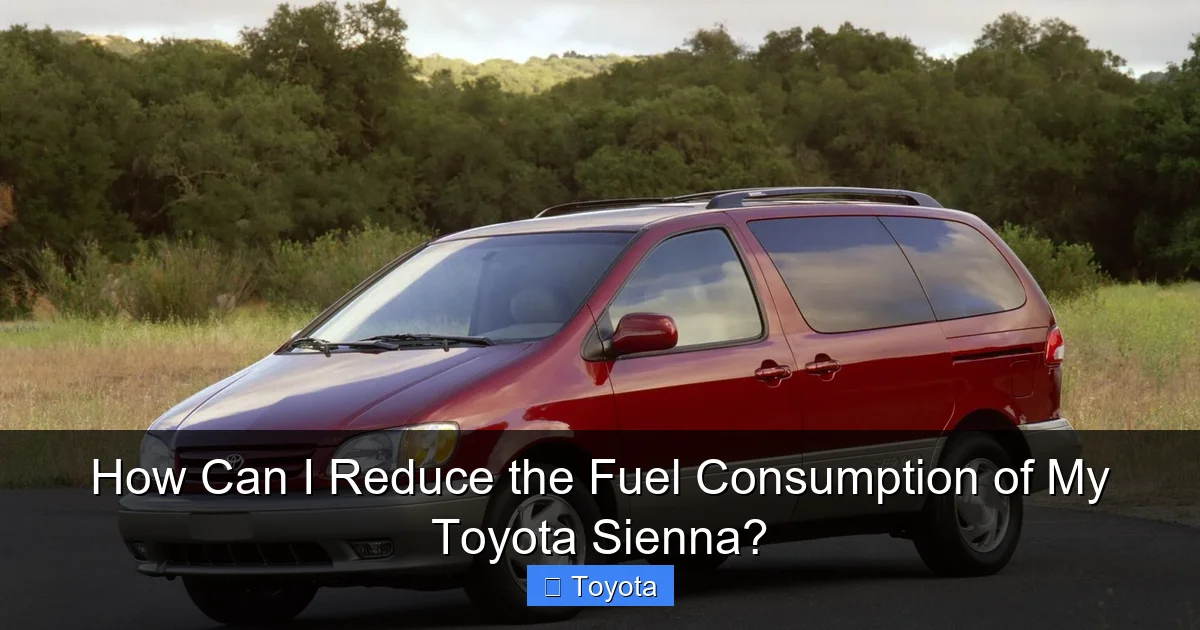
Your right foot is the single biggest factor influencing fuel consumption. How you drive has a more dramatic impact on MPG than almost any other variable. Aggressive driving—speeding, rapid acceleration, and hard braking—not only wears out your brakes and tires faster but also burns fuel inefficiently. The U.S. Department of Energy estimates that such driving habits can lower your MPG by 15% to 30% at highway speeds and by 10% to 40% in stop-and-go traffic. That’s a massive hit. Transforming your driving style is the most immediate and cost-free way to save fuel.
Visual guide about How Can I Reduce the Fuel Consumption of My Toyota Sienna?
Image source: cars-directory.net
Embrace the “Look Ahead” Technique
The cornerstone of efficient driving is anticipation. Instead of tailgating or rushing to a red light, scan the road far ahead. If you see traffic slowing or a light turning red, ease off the accelerator early and let your Sienna’s momentum carry you. This gentle deceleration avoids wasteful braking and often means you won’t have to come to a complete stop. In city driving, maintaining a larger following distance gives you the space to coast more often. It’s smoother, safer, and far kinder to your fuel gauge.
The Throttle is Not a Prize
Think of your gas pedal as a精密 instrument, not an on/off switch. Pressing it firmly to the floor tells the engine to suck down as much fuel as possible. Instead, apply steady, moderate pressure. Your Toyota Sienna has enough power to merge and pass without flooring it. When accelerating from a stop, take about 5-7 seconds to reach your desired speed. This gentle acceleration keeps your engine RPMs in a more efficient range. You’ll feel the difference, and so will your fuel tank.
Speed Matters: Find Your Sweet Spot
Every vehicle has an optimal speed for fuel efficiency, usually between 45 and 60 mph. Aerodynamic drag increases exponentially with speed. Driving 75 mph instead of 65 mph can increase fuel consumption by 10-15%. For your Sienna, with its boxy shape, this effect is pronounced. On the highway, use your cruise control to maintain a steady, moderate speed. Not only does this save fuel, but it also helps you avoid costly speeding tickets. If your Sienna is a hybrid, be especially mindful of speed, as higher speeds reduce the electric motor’s ability to assist the gasoline engine.
Vehicle Maintenance: The Foundation of Fuel Savings
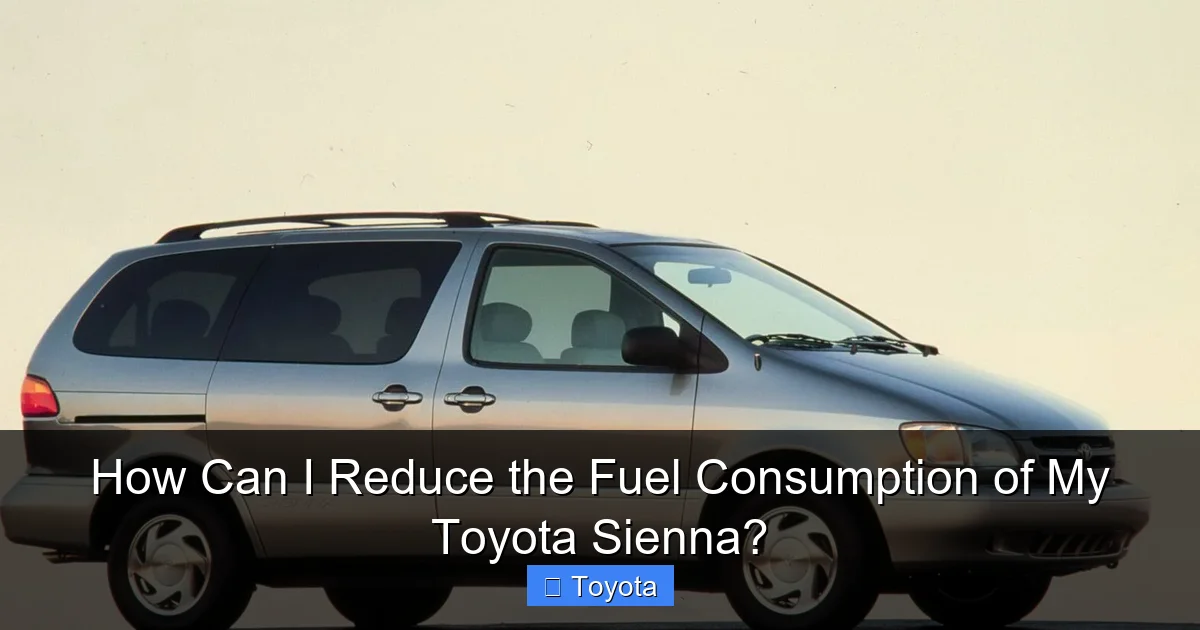
A well-maintained engine is an efficient engine. Neglecting basic maintenance is like trying to run a marathon with a stuffy nose—it’s possible, but you’re working much harder than necessary. Regular service keeps all systems operating as designed, ensuring optimal combustion and minimal friction. Skipping an oil change or ignoring a check engine light might save you time and money today, but it costs you dearly at the pump tomorrow.
Visual guide about How Can I Reduce the Fuel Consumption of My Toyota Sienna?
Image source: cars-directory.net
Engine Oil: The Lifeblood of Efficiency
Using the correct grade and type of motor oil is critical. Your owner’s manual specifies the recommended viscosity, like 0W-20. Thicker oils create more internal friction, making the engine work harder. For modern Siennas, especially hybrids, synthetic oil is often recommended because it flows better at cold starts and maintains viscosity at high temperatures, reducing drag. Stick to the manufacturer’s schedule for oil and filter changes. Dirty oil loses its lubricating properties, increasing engine wear and fuel consumption.
Air Filter: Your Engine’s Breathing Apparatus
Your engine needs a precise mix of air and fuel to burn efficiently. A clogged engine air filter chokes that airflow, forcing the engine to work harder and burn more fuel to produce the same power. It’s a simple, inexpensive part with a big impact. Check your air filter at every oil change; if it’s dirty, replace it. You can often do this yourself—just learn how to open the hood on your Toyota Sienna to access the filter box. A clean air filter can improve MPG by up to 10% and is one of the easiest DIY maintenance wins.
Spark Plugs and Fuel System Cleanliness
Worn-out spark plugs misfire, wasting fuel. Similarly, clogged fuel injectors or a dirty throttle body disrupt the precise fuel-air mixture. Follow your maintenance schedule for spark plug replacement (often around 100,000 miles for modern iridium plugs). If you notice rough idling, poor acceleration, or decreased fuel economy, have a mechanic check the fuel system. Periodic fuel system cleaning can restore efficiency, especially if you often drive in stop-and-go traffic or use lower-tier gasoline.
Smart Weight Management and Aerodynamics
Your Toyota Sienna is designed to carry people and cargo, but every extra pound you haul requires extra energy to move. This principle is physics 101: more mass equals more force needed to accelerate. While you can’t always avoid passengers and essentials, you have significant control over unnecessary weight and drag-inducing accessories.
Visual guide about How Can I Reduce the Fuel Consumption of My Toyota Sienna?
Image source: bestcarmods.com
Declutter Your Minivan
Take a look inside your Sienna. Are there sports equipment, old bags, tools, or children’s toys that don’t need to be there? Get rid of them. An extra 100 pounds can reduce your MPG by about 1-2%. That might not sound like much, but over thousands of miles, it adds up. Make a habit of unloading items after trips instead of letting them become permanent cargo. Don’t forget the trunk! A spare tire and jack are essential, but old manuals, emergency supplies you no longer need, and other flotsam can go.
Rooftop Carriers: A Hidden Fuel Drain
That roof rack or cargo carrier is a major aerodynamic disruptor. Even when empty, a fixed roof rack creates turbulent air, increasing drag. When loaded, the effect is even worse. Studies show a roof rack can reduce highway fuel economy by 2-8%. The solution is simple: remove the rack when you’re not using it. If you frequently need extra storage, consider a rear-mounted cargo box or hitch-mounted carrier, which are generally more aerodynamic than rooftop options. When you do use a roof carrier, pack it tightly and streamline the load as much as possible.
Towing and Payload: Know Your Limits
Using your Sienna to tow a trailer or carry a heavy payload? It’s a great capability, but it comes with a fuel cost. Exceeding your vehicle’s Gross Vehicle Weight Rating (GVWR) or towing capacity strains the engine and transmission, drastically lowering MPG. It’s also unsafe. Always stay within the manufacturer’s limits. You can find your specific Sienna’s towing capacity in the owner’s manual or on a sticker in the driver’s door jamb. For a detailed breakdown of your model’s capabilities, consult a comprehensive guide on how much can a Toyota Sienna tow. Planning your load and distributing weight properly can also help mitigate the efficiency loss.
Fuel Choices and Quality: What Really Matters?
Not all gasoline is created equal, but for most Toyota Sienna owners, the choice is straightforward. Your owner’s manual will specify the minimum octane rating required. Using a higher octane than recommended is almost always a waste of money, as the engine isn’t designed to take advantage of it. However, using a lower octane than specified can cause engine knock, damage over time, and potentially trigger the check engine light, all of which hurt performance and efficiency.
Stick to the Recommended Octane
The vast majority of Toyota Sienna models, including hybrids, are designed to run on regular unleaded gasoline (87 octane). There is no performance or efficiency benefit to using premium (91 octane) unless your specific model year or trim explicitly requires it (rare for the Sienna). Premium gas costs significantly more per gallon. Putting it in an engine that doesn’t need it is simply throwing money away. Save the premium for high-performance vehicles that require it. Your wallet will thank you for following the manual.
Top Tier Gasoline: Is It Worth It?
You may have heard of “Top Tier” gasoline. This is a fuel standard developed by automakers, including Toyota, that specifies higher levels of detergent additives than the EPA minimum. These detergents help keep fuel injectors and intake valves clean, preventing deposits that can reduce efficiency and performance over time. While not strictly required, using Top Tier gas can be a good proactive measure, especially if you often buy gas from stations with questionable quality. Major brands like Shell, Chevron, and Mobil typically meet Top Tier standards. The small price difference is often worth the long-term engine cleanliness and maintained fuel economy.
The Simple Power of a Tight Gas Cap
This sounds too simple to be true, but a loose, damaged, or missing gas cap is a common cause of poor fuel economy. A faulty cap allows fuel vapors to escape from your tank, which not only wastes fuel but also triggers your vehicle’s evaporative emission system (EVAP). This will illuminate your check engine light. A diagnostic scan might reveal a “loose gas cap” code. Always ensure your cap is clicked tightly after refueling. If the cap’s seal is cracked or worn, replace it. It’s a $10-$20 fix that can save you gallons of evaporated fuel and prevent a frustrating check engine light.
Leveraging Technology and Smart Features
Your modern Toyota Sienna is packed with technology designed to help you drive more efficiently. Knowing how to use these features correctly can unlock hidden MPG gains. From hybrid-specific systems to driver-assist tools, your vehicle is smarter than you might realize.
Hybrid-Specific Driving Tips (If Applicable)
If you own a Sienna Hybrid, your driving style can significantly influence how often the vehicle uses its electric motors. The goal is to maximize electric-only driving for low-speed situations like parking lots and city streets. Smooth, gentle acceleration from a stop is key to keeping the engine off. Use the “EV Mode” button (if equipped) to force electric-only operation for short distances, like in a school zone. Regenerative braking is your friend; anticipate stops and brake gently to recapture more energy. Understanding your hybrid’s power flow display—often shown on the multi-information screen—can teach you how to drive in a way that keeps the gas engine off as much as possible.
Eco Mode: Your Built-in Efficiency Assistant
Almost all Sienna models feature an “Eco Mode” button. When activated, this mode adjusts the throttle response to be less sensitive, making it harder to accelerate aggressively. It may also modify the HVAC system’s behavior and tweak shift points in the transmission (for non-hybrids) to keep RPMs lower. The result is a driving experience that naturally encourages more efficient habits. It’s not a magic button that doubles your MPG, but it provides a helpful reminder to drive gently and can smooth out your driving pattern. Make it a habit to engage Eco Mode for daily commuting.
Use Cruise Control Strategically
As mentioned earlier, cruise control is your ally on flat, open highways. It maintains a constant speed, eliminating the minor speed fluctuations that come from manual throttle control and saving fuel. However, it’s not always the best choice. On hilly or mountainous roads, a cruise control system will try to maintain speed by aggressively accelerating uphill and braking downhill, which is inefficient. In these situations, it’s better to manually control your speed, allowing the vehicle to slow slightly uphill and gain momentum downhill. For maximum efficiency, use cruise control on long, flat stretches and drive manually in varied terrain.
Conclusion: A Holistic Approach to Saving Fuel
Reducing the fuel consumption of your Toyota Sienna is not about a single dramatic change but about a series of small, consistent improvements. Think of it as a lifestyle for your vehicle. Start with the easiest, no-cost steps: adjust your driving habits to be smoother and more anticipatory. Then, tackle the maintenance items—proper tire pressure, timely oil changes, and a clean air filter are your low-hanging fruit. Next, audit your vehicle’s weight and aerodynamics, removing what you don’t need and taking off that roof rack. Finally, use your Sienna’s built-in technology, like Eco Mode and cruise control, to your advantage.
Implementing these strategies will not only lead to more miles per gallon and fewer trips to the gas station but will also contribute to the long-term health and reliability of your minivan. A well-maintained, efficiently driven Sienna will serve you and your family better for years to come. Remember, every gallon saved is a win for your budget and the environment. Start with one or two changes this week, build from there, and watch the savings add up. Your Toyota Sienna is a capable and versatile vehicle—help it perform at its most efficient by giving it the care and driving style it deserves.
Frequently Asked Questions
Will using the air conditioner significantly reduce my Sienna’s fuel economy?
Yes, the air conditioning system puts an extra load on the engine, reducing MPG. The impact is more noticeable at low speeds in city driving (up to a 5-10% drop). At highway speeds, the aerodynamic drag from open windows can cause a similar or greater loss, so using AC is often more efficient than rolling down windows.
How often should I check my Sienna’s tire pressure for optimal fuel efficiency?
You should check your tire pressure at least once a month and before long trips. Tire pressure naturally decreases over time and with temperature changes. Under-inflated tires increase rolling resistance, which directly lowers fuel economy. The correct PSI is found on a sticker inside your driver’s door jamb, not on the tire sidewall.
Does the type of gasoline I use affect my Sienna’s performance and MPG?
Always use the minimum octane fuel specified in your owner’s manual, which for most Siennas is regular unleaded (87 octane). Using higher octane offers no benefit and is a waste of money. Using lower octane can cause engine knock and damage. For best long-term results, choose Top Tier gasoline, which has superior detergent additives to keep your engine clean.
How much does my driving style really affect fuel consumption?
It has a massive impact. Aggressive driving with fast starts, hard braking, and speeding can lower your MPG by 15-40%. Adopting smooth, anticipatory driving habits—gentle acceleration, coasting to stops, and maintaining steady speeds—is the single most effective way to improve real-world fuel economy without spending any money.
Can I improve my Sienna’s aerodynamics to save fuel?
Yes. The most effective step is to remove roof racks or cargo carriers when not in use. They create significant aerodynamic drag. Also, keep windows closed at highway speeds. While these changes offer modest gains (2-8% on highways), they are free and easy. For frequent cargo needs, consider more aerodynamic rear-mounted carriers instead of rooftop options.
Is it worth paying for a fuel system cleaning service to improve MPG?
It can be, especially if your vehicle has high mileage or you’ve noticed a gradual drop in fuel economy and performance. Deposits on fuel injectors and intake valves can disrupt the air-fuel mix. A professional cleaning can restore efficiency. However, consistently using Top Tier gasoline and keeping up with air filter changes can often prevent the need for frequent, costly cleanings. If your check engine light is on, have that diagnosed first.
