
How Many Miles per Gallon Can You Get on a Toyota Corolla?

The Toyota Corolla is a benchmark for fuel efficiency, with EPA ratings from 30-40 MPG combined for gas models and up to 50 MPG for hybrids. Real-world mileage varies with driving habits, maintenance, and conditions. Regular upkeep like proper tire inflation and timely oil changes is essential to achieve these numbers. By understanding these factors, you can optimize your Corolla’s miles per gallon, saving significantly on fuel costs over time.
So, you’re looking at a Toyota Corolla, or maybe you already own one. One of the first questions that likely comes to mind is, “How many miles per gallon can I actually expect?” It’s a fair question. The Corolla has built its legendary reputation on being reliable, affordable, and incredibly fuel-efficient. But peeling back the sticker and understanding what that “30 MPG” or “40 MPG” number really means is the key to managing your expectations and, more importantly, your wallet.
Let’s be clear: the Toyota Corolla is one of the most fuel-efficient non-hybrid sedans on the market. But the miles per gallon (MPG) you see on the window sticker isn’t a magic, unchanging number. It’s a target. Your personal MPG is a unique number shaped by how you drive, where you drive, how well you maintain your car, and which specific Corolla you have. This article will be your complete guide. We’ll break down the official ratings, explore what real owners are getting, dive into every factor that swings that MPG needle, and give you actionable tips to maximize every drop of fuel. Whether you have a 2010 model or a 2024 hybrid, you’ll learn how to get the most miles per gallon from your Toyota Corolla.
Key Takeaways
- EPA ratings are a baseline: Official miles per gallon estimates are achieved in controlled lab conditions, and your real-world results will often vary.
- Your driving style is huge: Aggressive acceleration and high speeds can reduce your Corolla’s MPG by 15-30% compared to gentle, predictable driving.
- Maintenance is non-negotiable: Simple tasks like keeping tires properly inflated and changing oil on schedule directly impact fuel efficiency.
- Hybrid models dominate: The Toyota Corolla Hybrid achieves significantly higher miles per gallon (up to 50 MPG combined) than its gas-only counterparts.
- External factors matter: Cold weather, hilly terrain, heavy cargo, and even roof racks can lower your effective MPG.
- Model year and trim make a difference: Newer generations and specific trims (like the LE) often have slight MPG advantages over older models or higher-trim versions with larger wheels.
- Small habits yield big savings: Using cruise control on highways, removing unnecessary weight, and planning trips can add meaningful miles per gallon over a year.
📑 Table of Contents
- Understanding the Official EPA Ratings for Your Corolla
- Real-World MPG: What Actual Corolla Owners Are Getting
- The Key Factors That Influence Your Corolla’s Fuel Efficiency
- Model Year, Trim Level, and the Hybrid Revolution
- Practical Tips to Maximize Your Toyota Corolla’s MPG
- The Long-Term Value: Cost Savings and Environmental Impact
- Conclusion: Your Corolla’s MPG is in Your Hands
Understanding the Official EPA Ratings for Your Corolla
The U.S. Environmental Protection Agency (EPA) puts every new car through a rigorous, standardized test to determine its fuel economy. This is the number you see advertised—the combined city/highway MPG. For the current (2024) gas-only Toyota Corolla, the EPA estimates range from 30 to 35 MPG combined, depending on the trim. The Corolla Hybrid? That’s a different league, with an EPA-estimated 50 MPG combined. But what do these numbers actually represent?
City vs. Highway vs. Combined MPG
The EPA provides three figures: City MPG, Highway MPG, and Combined MPG. City MPG simulates stop-and-go traffic with frequent acceleration and idling. Highway MPG represents steady, higher-speed cruising. The Combined MPG is a weighted average (about 55% city, 45% highway) meant to approximate a typical driver’s mix. For a 2024 Corolla LE, you might see 32 MPG city / 41 MPG highway / 35 MPG combined. The combined number is the most useful for general comparisons and yearly fuel cost estimates.
How to Find the Exact Rating for Your Specific Model Year and Trim
MPG isn’t static. It changes with each model year as engines and transmissions are refined. A 2015 Corolla will have different numbers than a 2023 model. Furthermore, the trim level matters. The base L trim might have a slightly different final drive ratio or slightly different wheel/tire package than an XSE, leading to minor MPG differences. Always check the official EPA website (fueleconomy.gov) and enter your exact model year, make, model, and trim. This gives you the definitive, government-tested baseline for your specific vehicle.
For example, the groundbreaking 2023 Corolla Hybrid is rated at an impressive 50 MPG combined (53 city / 52 hwy). Compare that to a gas-only 2023 Corolla XSE, which is rated at 32 MPG combined (30 city / 38 hwy). That’s an 18 MPG combined difference—a massive gap in fuel costs. Understanding this official starting point is crucial for setting realistic goals.
Real-World MPG: What Actual Corolla Owners Are Getting
Here’s where the rubber meets the road—literally. The EPA lab is controlled. The real world is not. Thousands of Corolla owners share their real-world miles per gallon on forums, social media, and owner surveys. The consensus? Most are very happy, but there’s a noticeable range.
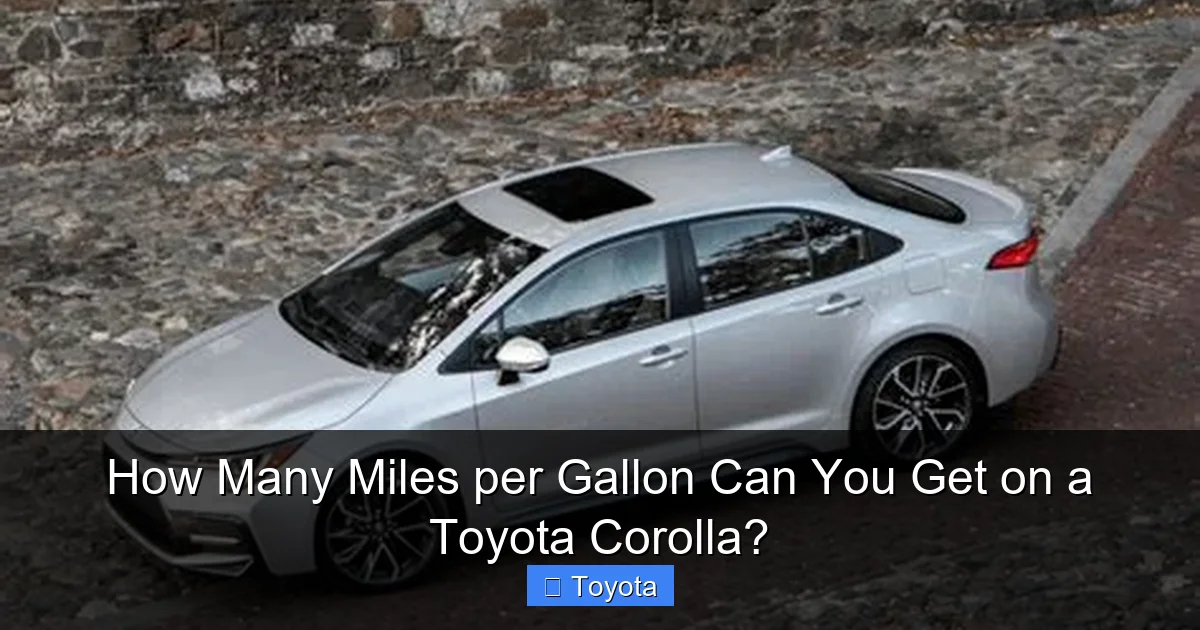
Visual guide about How Many Miles per Gallon Can You Get on a Toyota Corolla?
Image source: autozonic.com
The Typical Owner Experience
For a modern (2018+) gas-only Corolla with a CVT, the most commonly reported real-world combined MPG sits between 33 and 38 MPG. Highway-only trips, with gentle driving and cruise control engaged, often yield 40-45 MPG. Pure city driving in heavy traffic might drop to 26-30 MPG. For the Hybrid, owners consistently report 48-52 MPG combined, often exceeding the EPA rating in gentle, mostly highway driving.
Let’s put some concrete numbers to it. If you drive 15,000 miles per year (a national average) and your real-world combined MPG is 35, with gas at $3.50 per gallon, your annual fuel cost is about $1,500. If your driving style or conditions drop you to 30 MPG, that cost jumps to $1,750. That’s a $250 difference just from MPG variation. Over five years, that’s over $1,200 back in your pocket from achieving the higher number.
Why the Gap Between EPA and Real-World?
The gap exists for several reasons. The EPA test cycle, while standardized, doesn’t account for extreme temperatures, high altitudes, the use of air conditioning, or the wear and tear on an older vehicle’s engine and exhaust system. Furthermore, the test is done with a brand-new, perfectly tuned car. Your 100,000-mile Corolla with its original spark plugs and a slightly clogged air filter won’t perform identically. Also, driver behavior is the wild card. The EPA test uses a very moderate, predictable driving style. Most of us aren’t that calm all the time.
The Key Factors That Influence Your Corolla’s Fuel Efficiency
Your miles per gallon is a direct output of engine work versus fuel consumed. Anything that makes the engine work harder or less efficiently burns more gas. Let’s break down the major levers you can pull.
Visual guide about How Many Miles per Gallon Can You Get on a Toyota Corolla?
Image source: i.pinimg.com
1. Driving Habits: You Are the Biggest Variable
This is the #1 factor under your control. Aggressive driving—hard acceleration, speeding, and abrupt braking—can lower your MPG by 15-30% in city driving. Think of it this way: every time you slam the gas pedal to pass someone, you’re injecting a precise, wasteful burst of fuel. The solution? Drive smoothly and anticipate traffic. Accelerate gradually. Maintain a consistent speed. Use cruise control on flat highways. Observe the speed limit; aerodynamic drag increases exponentially above 60 mph. A Corolla is most efficient between 45-65 mph. Your right foot is your most powerful MPG tool.
2. Vehicle Maintenance: A Well-Tuned Machine
A neglected Corolla is a thirsty Corolla. Here are the critical maintenance items that directly impact miles per gallon:
- Engine Oil: Using the correct viscosity and changing it on schedule is vital. Old, thickened oil creates internal friction, making the engine work harder. Always use the oil grade specified in your owner’s manual. For reference, most modern Corollas require 0W-20 synthetic oil. You can find the exact capacity for your model year here.
- Air Filter: A clogged air filter chokes the engine of the air it needs for efficient combustion. It’s an easy, cheap fix. Check it at every oil change; replace it according to your manual, or more often if you drive in dusty conditions.
- Tire Pressure: This is a huge one. Under-inflated tires increase rolling resistance dramatically. For every 1 PSI below the recommended pressure, you can lose about 0.2% to 0.3% in fuel economy. The recommended pressure is on a sticker inside your driver’s door jamb, not on the tire sidewall. Check pressures monthly when tires are cold. Learn the proper technique for your Corolla here.
- Spark Plugs & Fuel System: Worn spark plugs misfire, wasting fuel. A clogged fuel injector or fuel filter restricts flow. Follow your maintenance schedule for these items.
3. Environmental and Situational Factors
You can’t control the weather, but you can understand its effect.
- Temperature: Cold starts are inefficient. The engine runs rich until warm. Winter fuel blends are also less energy-dense. In winter, your MPG can drop 10-20% compared to summer. Using the heater doesn’t hurt MPG much (it uses engine waste heat), but defrosters and heated seats/steering wheel draw electrical power from the engine, slightly increasing load.
- Terrain: Hilly roads force constant acceleration and braking, killing MPG. Your Corolla’s regenerative braking (on hybrids) helps, but gravity is a relentless foe.
- Air Conditioning: AC puts a significant load on the engine, especially at low speeds in city traffic. At highway speeds, the impact is less because the engine is already working hard against drag. Use the recirculate setting to cool already-cooled air more efficiently.
- Cargo & Accessories: Every 100 pounds of extra weight reduces MPG by about 1-2%. Roof racks, even empty, create massive aerodynamic drag, reducing highway MPG by 5% or more. Remove them when not in use.
Model Year, Trim Level, and the Hybrid Revolution
Not all Corollas are created equal in the MPG department. The model year and your choice of trim have a tangible impact.
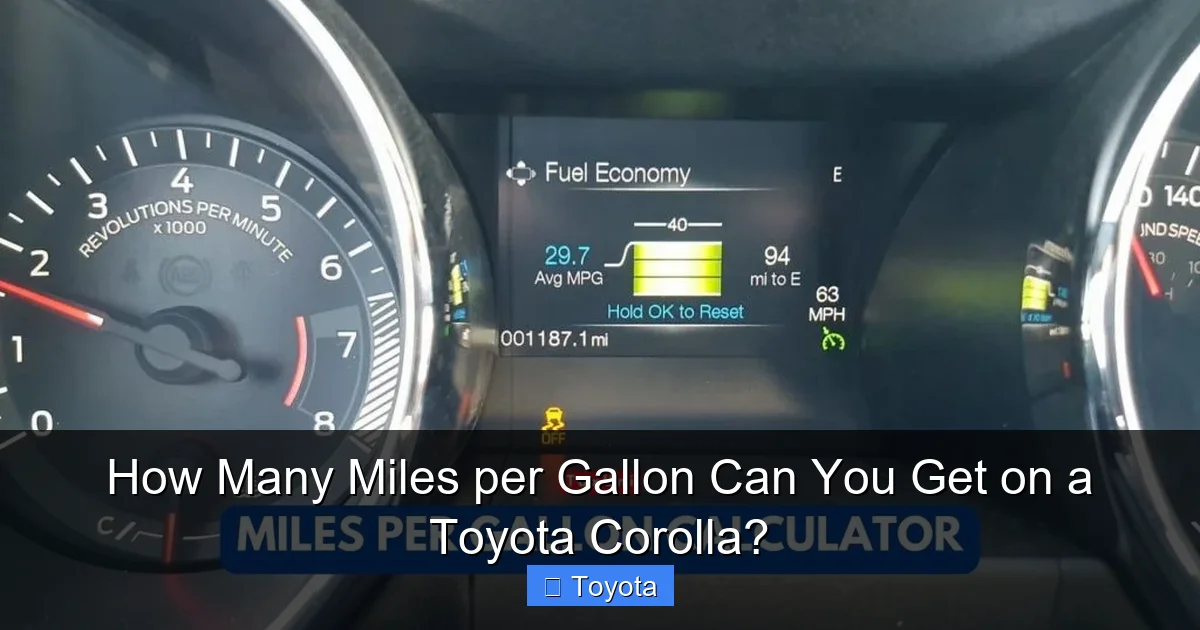
Visual guide about How Many Miles per Gallon Can You Get on a Toyota Corolla?
Image source: taxuni.com
Evolution of Efficiency (2014-Present)
The 2014 redesign introduced the more efficient 1.8L engine and CVT, bumping MPG up. The 2019 minor refresh brought subtle aerodynamic tweaks and engine calibration updates for small gains. The biggest leap came in 2023 with the introduction of the all-hybrid powertrain across the entire Corolla sedan lineup. For 2023 and 2024, the gas-only models use a 2.0L engine (slightly more power, similar efficiency to the old 1.8L), while the Hybrid uses a 2.0L gas engine paired with an electric motor for a combined system output of 138 hp and that stellar 50 MPG combined rating.
Trim Level Nuances (Gas Models)
Among gas-only trims (L, LE, XLE, XSE), the differences are minor but exist. The base L and LE typically have the most fuel-efficient tires and slightly smaller wheels (15″ or 16″) compared to the XSE’s 18″ wheels. Larger, heavier wheels and lower-profile tires increase unsprung weight and rolling resistance, leading to a 1-2 MPG drop. The XLE, with its leather and sunroof, also carries a bit more weight. If max MPG is your absolute goal, the LE trim is often the sweet spot for gas models.
The Hybrid Difference: A Game Changer
Choosing the Corolla Hybrid isn’t just a small step; it’s a giant leap in efficiency. The hybrid system uses the electric motor for low-speed, low-load driving (like in parking lots and city traffic), where a gas engine is least efficient. The gas engine shuts off at stops. Regenerative braking recaptures energy. The result is that city MPG (53) is actually *higher* than highway MPG (52). For commuters stuck in traffic, the hybrid is a money-saving machine. The trade-off is a slightly higher purchase price, which is often offset by fuel savings and potential tax incentives over ownership.
Practical Tips to Maximize Your Toyota Corolla’s MPG
Armed with knowledge, you can actively push your real-world miles per gallon closer to the EPA estimates. Here is your actionable plan.
Driving Techniques You Can Start Today
- Use Cruise Control on Flat Highways: Maintaining a constant speed is far more efficient than the slight speed fluctuations of your right foot.
- Look Ahead and Coast: See a red light or slow traffic ahead? Take your foot off the gas early and coast. The Corolla’s fuel-injected engine uses zero gasoline while coasting in gear with your foot off the pedal.
- Limit AC Use at Low Speeds: In city driving, roll down windows at moderate speeds. At highway speeds, the drag from open windows outweighs AC load, so use AC with windows up.
- Combine Trips: A series of short trips with a cold engine uses more fuel per mile than one longer trip where the engine is fully warmed up.
Essential Maintenance Checklist
- Stick to the Service Schedule: Don’t skip oil changes, air filter replacements, or spark plug changes. Use genuine Toyota parts or high-quality equivalents.
- Check Tire Pressure Monthly: This is the single easiest, cheapest way to protect your MPG and your tires. Invest in a good digital tire pressure gauge.
- Use the Right Fuel: Your Corolla is designed for regular unleaded (87 octane). Using premium provides zero benefit and is a waste of money. The engine control unit is tuned for 87 octane.
- Address the Check Engine Light Immediately: A faulty oxygen sensor, for example, can reduce MPG by up to 40%. The light is your MPG’s worst enemy.
Smart Ownership Habits
- Remove Roof Racks When Not in Use: This cannot be stressed enough for highway MPG.
- Travel Light: Clean out your trunk. Don’t carry around unnecessary tools or cargo.
- Plan Your Route: Use a navigation app that can route you based on “eco” or “fuel-efficient” paths, which often prioritize steady-speed highways over stop-and-go city grids.
- Know Your Range: Understanding how far you can go after the gas light comes on helps you avoid topping off too frequently or, worse, running out. For a Corolla, that reserve is typically 30-50 miles. You can find the specifics for your model here.
The Long-Term Value: Cost Savings and Environmental Impact
Let’s talk numbers. Choosing a Corolla, especially a Hybrid, is a direct financial decision. Let’s compare a gas-only Corolla (35 MPG combined) to a popular competitor SUV that gets 25 MPG combined. Driving 15,000 miles per year at $3.50/gallon:
- Corolla Fuel Cost: (15,000 miles / 35 MPG) * $3.50 = $1,500
- Competitor SUV Fuel Cost: (15,000 miles / 25 MPG) * $3.50 = $2,100
That’s a $600 annual saving just from better miles per gallon. Over a 5-year ownership period, that’s $3,000 saved—enough to cover multiple services or a large down payment on your next car. For the Hybrid (50 MPG), the annual cost drops to about $1,050, saving you $1,050 per year against the gas-only Corolla and a staggering $1,050 against the SUV.
The environmental impact is equally significant. Burning less gasoline means fewer carbon dioxide emissions. The Corolla Hybrid’s exceptional MPG translates to a much smaller carbon footprint over its lifetime compared to less efficient vehicles. You’re not just saving money; you’re making a cleaner choice.
Conclusion: Your Corolla’s MPG is in Your Hands
So, how many miles per gallon can you get on a Toyota Corolla? The official answer is 30-35 MPG for gas models and up to 50 MPG for hybrids. The real answer is: it depends on you. It depends on the specific year and trim in your driveway. It depends on how you drive, how well you maintain it, and the conditions you drive in. The Toyota Corolla provides an exceptionally efficient and capable platform. By understanding the factors that influence fuel economy—from tire pressure to driving smoothness—and by adhering to a disciplined maintenance schedule, you can consistently achieve, and even sometimes exceed, the expected miles per gallon. This turns your Corolla from just a reliable car into a masterclass in cost-effective, low-emission transportation. The journey to better MPG starts with the first step: checking your tire pressure and committing to a smoother ride.
Frequently Asked Questions
Does using the air conditioning significantly reduce my Corolla’s miles per gallon?
Yes, using the air conditioning increases engine load and reduces fuel efficiency. The impact is most noticeable in city driving and at low speeds, where MPG can drop by 10-20%. At highway speeds, the effect is smaller (around 3-5% loss) because the engine is already working hard against aerodynamic drag. Using the recirculate setting and parking in the shade can help mitigate the load.
How often should I change my oil to maintain good MPG?
Follow the interval specified in your Toyota Corolla’s owner’s manual. For modern models using synthetic oil, this is typically every 7,500 to 10,000 miles or 12 months. Using the correct oil viscosity (usually 0W-20) is just as important as the change interval. Old, degraded oil increases internal friction, harming fuel efficiency. You can find the exact oil capacity and type for your specific model year in this guide.
Can a dirty engine air filter really lower my fuel economy?
Absolutely. A clogged air filter restricts airflow to the engine, forcing it to work harder and burn more fuel to produce the same power. The EPA estimates a severely dirty filter can reduce MPG by up to 10%. It’s one of the easiest and cheapest maintenance items to address. Check it at every oil change and replace it according to your service schedule, or more often if you drive in dusty environments.
What’s the single biggest mistake people make that hurts their Corolla’s MPG?
Neglecting tire pressure. Under-inflated tires are a silent MPG killer, increasing rolling resistance. For every 1 PSI below the recommended pressure (found on the driver’s door jamb sticker), you lose about 0.3% in fuel economy. A tire that’s 5 PSI low can cost you 1.5% or more in MPG. Check all four tires monthly when cold with an accurate gauge.
How much does driving at high speeds affect my highway MPG?
Aerodynamic drag increases with the square of your speed. Driving 75 mph instead of 65 mph can increase fuel consumption by 10-15% or more. Your Toyota Corolla is most aerodynamically efficient and fuel-efficient in the 45-65 mph range on flat highways. Using cruise control at or near the speed limit is one of the best ways to maximize your highway miles per gallon.
How many miles can I expect to drive after my gas light comes on?
When your Corolla’s low fuel light illuminates, you typically have between 30 and 50 miles of range remaining. This is a safety reserve, not an invitation to run the tank dry. Driving on a near-empty tank can overheat the fuel pump (which is cooled by gasoline) and draw sediment from the tank bottom into your fuel system. It’s best to refuel within 30 miles of the light coming on. For precise estimates for your model year, you can read more here.
