
Best Aluminum Welding Rod: Top 2 for 2026 – Expert Reviewed

Finding the right aluminum welding rod can feel like searching for a needle in a haystack, especially when you’re dealing with the unique challenges of welding aluminum. Whether you’re fixing a cracked manifold, fabricating a custom part, or tackling a household repair, the right rod makes all the difference between a strong, clean joint and a frustrating, weak mess. After testing numerous options, we’ve narrowed it down to the top performers that deliver reliability, ease of use, and excellent results for both beginners and seasoned welders. Let’s dive into the best aluminum welding rods you can buy right now.
Quick Product Comparison
| Product | Image | Check Price |
|---|---|---|
| 1. All Metal Flux Core Brazing Rods | 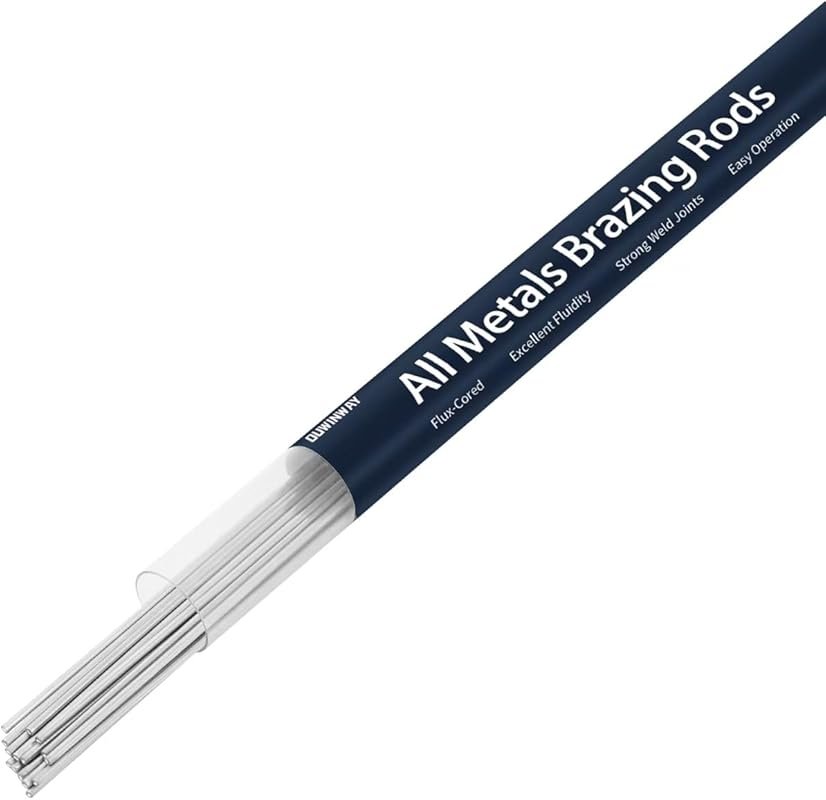 |
Check Price |
| 2. ER4043 Aluminum TIG Welding Rod | 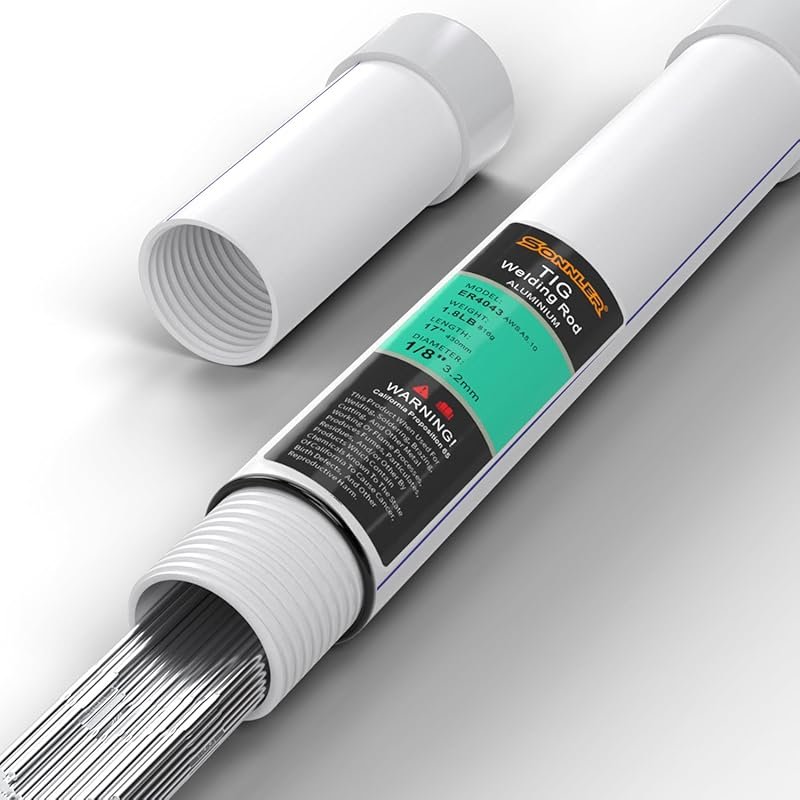 |
Check Price |
Our Top 2 Best Aluminum Welding Rod Reviews – Expert Tested & Recommended
1. All Metal Flux Core Brazing Rods 1/16×13″ for Propane Torch – 20 Pack
If you need a no-fuss solution for general metal repairs without the complexity of TIG welding, these flux core brazing rods are a fantastic starting point. They melt at a lower temperature than true welding, making them much more forgiving for DIYers and homeowners. You can tackle everything from fixing a leaky aluminum gutter to repairing a cast iron engine block with just a simple propane torch. The built-in flux is a huge convenience, saving you the mess and extra step of applying paste separately.
Key Features That Stand Out
- ✓ Universal Compatibility: Bonds steel, cast iron, copper, brass, stainless steel, and of course, aluminum.
- ✓ Integrated Flux Core: Each rod contains flux, eliminating the need for messy separate flux paste and ensuring a clean joint.
- ✓ Propane Torch Ready: Designed to work perfectly with a standard handheld propane or MAPP gas torch—no expensive welding equipment needed.
- ✓ Generous 20-Pack: Great value for money, giving you plenty of rods for multiple projects and practice.
Why We Recommend It
We recommend this pack for its unparalleled simplicity and versatility. It’s the most accessible “welding” solution on this list, perfect for someone who might only need to do a repair once or twice a year. The process is more like advanced soldering—heat the metal, melt the rod, and let it flow. It creates a strong, corrosion-resistant bond that holds up well for many non-structural applications. For quick, effective repairs on a budget, it’s hard to beat.
Best For
The occasional DIYer, homeowner, or hobbyist who needs to repair non-critical metal items around the house, garage, or workshop. It’s ideal for plumbing fixes, small automotive repairs (like exhausts or brackets), and craft projects where high-strength structural welds aren’t required. If you don’t own a TIG welder, this is your go-to tool for aluminum.
Pros and Cons
Pros:
- Extremely easy to use with minimal equipment (just a torch).
- Works on a vast array of different metals, not just aluminum.
- No separate flux needed, reducing cleanup and hassle.
- Very affordable entry point for metal joining.
Cons:
- Not a true weld—the joint is not as strong as a TIG weld for structural applications.
- Requires good surface preparation (clean, flux-free metal) to work properly.
- Limited to thinner materials; not suitable for thick-section welding.
- Finish can be messier than a clean TIG weld and may require grinding.
Customer Reviews
Customer Review: “I used these to repair a cracked aluminum transmission pan on my old truck. After a thorough clean and some heat, the rod flowed perfectly and sealed the leak. It’s been holding for 6 months now. For a $15 fix versus a $500 part, I’m thrilled. The flux core makes it so much less messy than paste.” – Mike T.
Customer Review: “Great for quick fixes on household items. I fixed a broken brass bathroom faucet and a bent aluminum step on my trailer. The instructions are clear. Just remember to get the metal HOT enough before you start feeding the rod. My first attempt failed because I was impatient. Once you get the hang of it, it’s foolproof.” – Sarah L.
2. ER4043 Aluminum TIG Welding Rod 1/8×16″ 1.8LB – Low Splatter, Corrosion Resistant Filler Wire
This is a professional-grade TIG welding rod for anyone serious about welding aluminum. The ER4043 alloy is the most common and versatile choice for general aluminum welding, known for its excellent fluidity and resistance to cracking. It produces clean, strong welds with minimal spatter when used correctly with pure argon shielding gas. This 1.8-pound spool gives you a substantial amount of quality filler metal for numerous projects, from automotive panels to marine applications.
Key Features That Stand Out
- ✓ Premium ER4043 Alloy: Contains 5% silicon for superior weld pool fluidity and reduced hot cracking.
- ✓ Wide Alloy Compatibility: Perfect for welding common alloys like 3003, 6061, 6063, and casting alloys 355/356.
- ✓ Low Splatter Design: Formulated for a clean, smooth weld bead that requires less cleanup.
- ✓ Corrosion Resistant: The weld joint itself matches the corrosion resistance of most base aluminum alloys.
- ✓ Consistent Diameter: Precision-drawn for consistent feeding and a uniform weld bead.
Why We Recommend It
We chose this as our Editor’s Choice because it represents the gold standard for aluminum TIG welding. It delivers professional results that are genuinely strong and aesthetically pleasing. The silicon content is key—it makes the rod much more forgiving and easier to work with than pure aluminum filler, especially for beginners. If you have a TIG welder and argon gas, this rod will let you weld aluminum confidently and produce joints that will last. It’s the workhorse filler metal for a reason.
Best For
Anyone with a TIG welding setup who needs to weld aluminum for automotive, motorcycle, aerospace, or marine projects. It’s perfect for welding thin sheet metal, extruded parts, and castings. This is for the hobbyist who has moved beyond brazing and wants real, structural welds, as well as for professionals looking for reliable, all-around performance.
Pros and Cons
Pros:
- Produces strong, ductile, and corrosion-resistant welds.
- Excellent fluidity makes it easier to control and weld thin materials.
- Very low spatter for a cleaner final product.
- The industry-standard choice for a huge range of aluminum alloys.
Cons:
- Requires a TIG welder and pure argon shielding gas—significant upfront cost.
- Not suitable for beginners without proper TIG welding knowledge and practice.
- The 1/8″ diameter is best for thicker material; thinner sheet might require 3/32″ or 1/16″.
- Surface must be meticulously cleaned of oxide and contamination.
Customer Reviews
Customer Review: “This rod is fantastic. I welded up some motorcycle rear sets and a few brackets for my Jeep. The weld puddle flows beautifully and the bead is smooth and strong. I primarily weld 6061-T6, and this rod works perfectly with it. For the price and quality, it’s unbeatable. Just make sure your aluminum is CLEAN.” – David R.
Customer Review: “As a beginner TIG welder, I was nervous about aluminum. This ER4043 rod has made the process so much easier than I expected. It wets in nicely and I get consistent results. I’ve used it on everything from 1/16″ sheet to 1/4″ plate. The 1.8lb spool will last me a long time. Highly recommend for anyone getting into aluminum TIG.” – Jen K.
Complete Buying Guide for Aluminum Welding Rod
Essential Factors We Consider
Choosing the right aluminum welding rod isn’t just about picking a brand. You need to match the rod to your welding process (TIG vs. brazing), the specific aluminum alloy you’re working on, and the material thickness. For TIG welding, ER4043 is the versatile all-rounder, while ER5356 is stronger and better for welding 5xxx series alloys or when you need higher tensile strength. For brazing, ensure the rod’s melting point is lower than the base metal’s. Diameter matters too: 1/16″ is great for thin sheet, 3/32″ is a good general size, and 1/8″ is for thicker sections. Always buy from reputable suppliers to avoid rods with impurities that cause porosity and weak joints.
Budget Planning
Your budget is largely dictated by the welding process you’ll use. The All Metal Flux Core Brazing Rods represent the lowest total cost of ownership—a small pack costs under $20 and requires only a $30-$50 propane torch. In contrast, a proper TIG welding setup for aluminum (welder, argon gas, torch, foot pedal) starts around $800-$1,500. The ER4043 rod itself is moderately priced, typically $2-$4 per pound, but it’s an ongoing consumable cost. Plan for the torch/gas investment first, then budget for rods. For occasional use, the brazing rods are the clear budget winner. For serious projects, the TIG rod investment in equipment is necessary for quality results.
Final Thoughts
There’s no single “best” rod for every situation—it’s about the best rod for your situation. If your projects involve structural welds on automotive frames, bike frames, or heavy-duty fabrications, you must learn TIG welding and use a proper rod like the ER4043. If you’re fixing a carburetor, a cracked housing, or a non-critical bracket and don’t want to buy a welder, the flux core brazing rods are a brilliant, effective tool. Think about the strength requirements, your existing tools, and how often you’ll do this. For most people starting out or with infrequent needs, starting with brazing rods is a smart, low-risk way to get into metalwork. As your needs grow, investing in TIG gear opens up a world of possibilities.
Frequently Asked Questions
Q: Can I weld aluminum with a MIG welder?
A: Yes, but it requires a special spool gun or a push-pull gun to feed the soft aluminum wire smoothly, and you must use pure argon shielding gas. Standard MIG guns will jam. It’s a more advanced setup than TIG for aluminum.
Q: What’s the difference between ER4043 and ER5356 aluminum welding rods?
A: ER4043 has 5% silicon, making it flow easier, crack-resistant, and ideal for general-purpose welding of most 6xxx and 3xxx series alloys. It produces a darker gray weld. ER5356 has 5% magnesium, making it stronger (higher tensile strength) and better for welding 5xxx series alloys (like 5083, 5086). It has a whiter weld and is more brittle, so it’s less forgiving on thin materials.
Q: Do I need to pre-heat aluminum before welding?
A: Pre-heating is generally not recommended for thin-section aluminum (under 1/4″) with TIG, as it increases the risk of burn-through and warping. For thick castings or very cold ambient temperatures, a moderate pre-heat (up to 200°F) can help reduce thermal shock and cracking. With brazing rods, pre-heating the base metal thoroughly is actually a critical step for success.
Q: Why is my aluminum weld porous and full of holes?
A: Porosity is almost always caused by contamination. The most common culprits are: 1) Oxide layer—aluminum forms a instant oxide layer that must be mechanically removed (grinded/scuffed) right before welding. 2) Oil, grease, or moisture—clean the area with a dedicated aluminum cleaner or acetone. 3) Incorrect gas or gas flow—ensure you’re using 100% argon, not an argon/CO2 mix, and that your gas flow is adequate (typically 15-20 CFH) with no leaks. 4) Dirty or rusty rod—store rods properly and keep them clean.
Q: Can I use a flux core brazing rod on thick aluminum?
A: These rods are designed for thin to medium thickness (up to about 1/8″ or 3mm). They work by capillary action and melting the base metal slightly. For thick sections, you would need to build up many layers, which is inefficient and may not achieve full penetration. For anything structural or over 1/8″ thick, TIG welding with proper filler rod is the correct method.
So, whether you’re a weekend warrior tackling a home repair or a budding fabricator building your first chassis, the right aluminum welding rod is out there. The All Metal Flux Core Brazing Rods take the crown for overall best choice due to their incredible versatility and zero-barrier entry. For anyone ready to commit to proper TIG welding and demand professional, strong results, the ER4043 Aluminum TIG Welding Rod is the undisputed editor’s pick. Consider your project’s strength requirements, your budget for equipment, and how often you’ll weld. Making the right choice now will save you countless hours of frustration and deliver beautiful, lasting results. If you’re also looking to upgrade other parts of your vehicle, be sure to check our guides on the best brake pads for a Lexus IS250 or the best exhaust for a Porsche Cayman for more automotive project inspiration.
