
How Much Is a Bmw in Germany?

Curious how much a BMW is in Germany? Prices start around €35,000 for base models and can exceed €150,000 for high-end variants. This guide breaks down real costs, taxes, and what affects pricing so you can make an informed decision.
So, you’re thinking about buying a BMW—maybe you’ve admired them on the Autobahn, or you’ve always dreamed of owning that sleek German engineering marvel. But here’s the real question: how much is a BMW in Germany? It’s a fair question, especially since Germany is the birthplace of BMW, and you might expect prices to be lower than in other countries. The truth? It’s a bit more complicated than that.
While BMWs are indeed manufactured in Germany, and you’ll find a strong network of dealerships and service centers across the country, the pricing isn’t drastically cheaper than in neighboring European nations. In fact, due to Germany’s high standard of living, strict regulations, and value-added tax (VAT), the cost of a new BMW can still be quite steep. But don’t let that discourage you. Understanding the pricing structure, available models, and financing options can help you find a BMW that fits your budget—whether you’re looking for a compact city car or a high-performance luxury SUV.
In this guide, we’ll walk you through everything you need to know about BMW pricing in Germany. From base models to fully loaded M Performance variants, we’ll break down the numbers, explain what affects the cost, and offer practical tips for getting the best deal. Whether you’re a resident, an expat, or just planning a purchase during a trip, this article will give you the insider knowledge to navigate the German BMW market with confidence.
Key Takeaways
- Entry-level BMWs start at €35,000–€40,000: Models like the BMW 1 Series and X1 are the most affordable options for new buyers in Germany.
- Luxury and performance models cost €70,000+: The BMW 5 Series, X5, and M models come with higher price tags due to advanced features and performance.
- Taxes and fees add 19% to the base price: Germany’s VAT (Mehrwertsteuer) significantly impacts the final cost of any new BMW.
- Used BMWs offer great value: Pre-owned models can be 30–50% cheaper than new ones, with certified pre-owned programs adding peace of mind.
- Optional extras can double the price: Upgrades like premium interiors, driver assistance, and performance packages quickly increase the total cost.
- Leasing is popular and often cheaper monthly: Many Germans prefer leasing over buying, with monthly payments starting under €400 for compact models.
- Regional pricing is consistent nationwide: Unlike some countries, BMW prices in Germany don’t vary much between cities or dealerships.
📑 Table of Contents
Why Buy a BMW in Germany?
Germany is home to BMW—literally. The company was founded in Munich in 1916, and its headquarters remain there today. That heritage gives German buyers a unique connection to the brand. But beyond pride of ownership, there are practical reasons why buying a BMW in Germany makes sense.
First, availability is unmatched. With over 400 authorized BMW dealerships across the country, you’re never far from a showroom, service center, or parts supplier. Whether you’re in Berlin, Hamburg, or a small town in Bavaria, you’ll find knowledgeable staff and a wide selection of new and used models.
Second, Germany offers strong consumer protections. The country has strict laws regarding vehicle warranties, emissions standards, and dealership transparency. When you buy a new BMW in Germany, you’re covered by a standard 2-year manufacturer warranty, with options to extend. Used cars often come with certified pre-owned (CPO) programs that include inspections, warranties, and roadside assistance.
Third, Germany’s infrastructure is built for driving. The Autobahn’s famous unrestricted speed sections are a dream for performance car enthusiasts, and well-maintained roads make long-distance driving a pleasure. Owning a BMW in Germany means you can truly experience what the car was designed for—smooth, powerful, and confident driving.
Finally, there’s the resale value. BMWs hold their value well in Germany, especially well-maintained models with full service histories. This makes buying a BMW not just a lifestyle choice, but a smart financial decision in the long run.
New BMW Prices in Germany: A Model-by-Model Breakdown
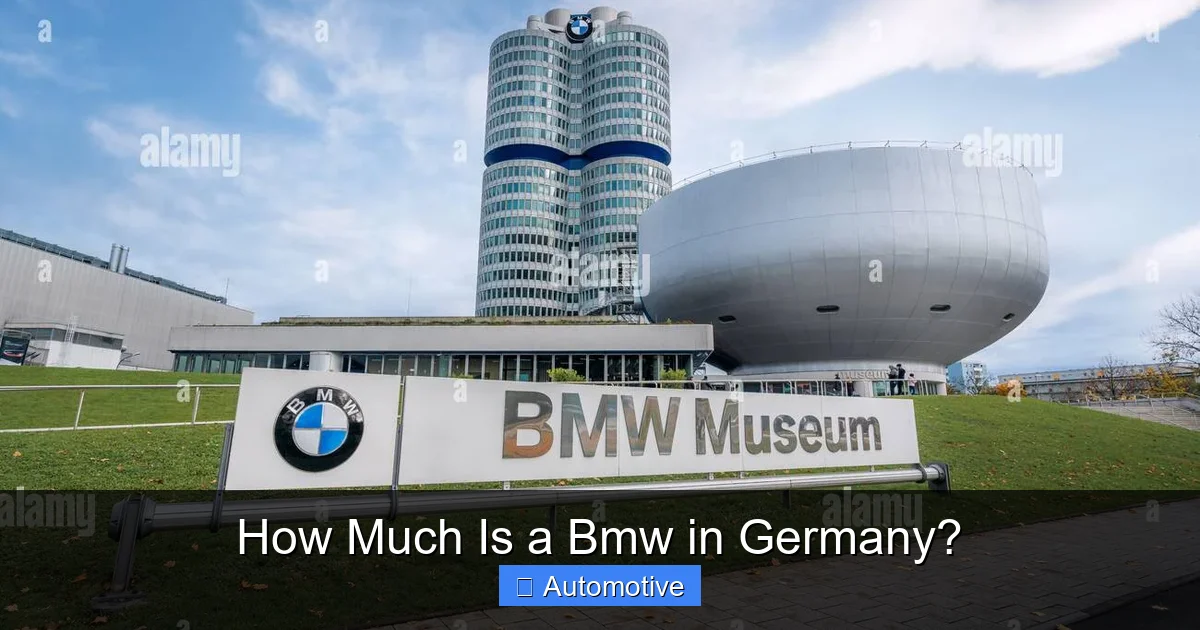
Visual guide about How Much Is a Bmw in Germany?
Image source: c8.alamy.com
When it comes to new BMWs, prices in Germany vary widely depending on the model, trim level, and optional features. Let’s take a closer look at some of the most popular models and their starting prices as of 2024.
BMW 1 Series: The Entry Point
The BMW 1 Series is the brand’s most affordable model and a great starting point for new buyers. As a compact hatchback, it’s perfect for city driving and tight parking spaces. The base model, the 118i, starts at around €35,000. This includes a 1.5-liter three-cylinder engine with 140 horsepower, front-wheel drive, and a basic infotainment system.
If you want more power, the 120i with a 2.0-liter turbocharged engine (204 hp) starts at about €40,000. Add the M Sport package, and you’re looking at an additional €3,000–€4,000 for sportier suspension, upgraded wheels, and a more aggressive exterior design.
BMW 2 Series: Sporty and Stylish
The 2 Series comes in coupe, convertible, and Gran Coupe (four-door) variants. The 218i Gran Coupe starts at approximately €38,000, offering a balance of style and practicality. For those who love open-top driving, the 220i Convertible begins at around €48,000.
The high-performance M2, a favorite among driving enthusiasts, starts at €75,000. With a 3.0-liter twin-turbo inline-six engine producing 460 horsepower, it’s a serious track-capable machine. Optional carbon fiber parts, upgraded brakes, and a limited-slip differential can push the price closer to €90,000.
BMW 3 Series: The Iconic Sedan
The 3 Series is BMW’s best-selling model worldwide, and in Germany, it’s a common sight on the roads. The 318i sedan starts at about €42,000, featuring a 2.0-liter engine with 156 horsepower. The 330i, with 258 hp, begins at €48,000.
For luxury and performance, the M340i xDrive starts at €65,000. It comes with a 3.0-liter turbocharged engine (374 hp), all-wheel drive, and a host of performance upgrades. The full-blown M3, with over 500 horsepower, starts at €90,000 and can exceed €110,000 with options.
BMW 5 Series: Executive Elegance
The 5 Series is BMW’s flagship executive sedan, popular with business professionals. The 520i starts at around €55,000, offering a refined ride, advanced tech, and a spacious interior. The 530i, with 258 hp, begins at €62,000.
The M550i xDrive, with a 4.4-liter V8 engine (530 hp), starts at €85,000. It blends luxury with sports car performance. The top-tier M5 Competition, with over 625 horsepower, starts at €130,000 and can easily surpass €150,000 with customization.
BMW X Models: SUVs for Every Need
BMW’s SUV lineup is vast, ranging from compact crossovers to full-size luxury vehicles.
– The X1 starts at €38,000 and is ideal for urban families.
– The X3 begins at €48,000 and offers more space and off-road capability.
– The X5, a mid-size luxury SUV, starts at €65,000.
– The X7, BMW’s largest SUV, begins at €85,000 and can exceed €100,000 with options.
The high-performance X models, like the X3 M and X5 M, start at €90,000 and offer supercar-like acceleration.
BMW i Series: Electric Future
BMW is investing heavily in electric vehicles, and the i Series reflects that commitment.
– The i4, an electric sedan, starts at €55,000 with a range of up to 590 km (WLTP).
– The iX3, an electric SUV, begins at €65,000.
– The flagship iX, a luxury electric SUV, starts at €80,000 and can go over €100,000 with premium packages.
These models qualify for German government incentives, including a €4,500 subsidy for electric vehicles, which can reduce the effective price.
Used and Certified Pre-Owned BMWs: Great Value Options
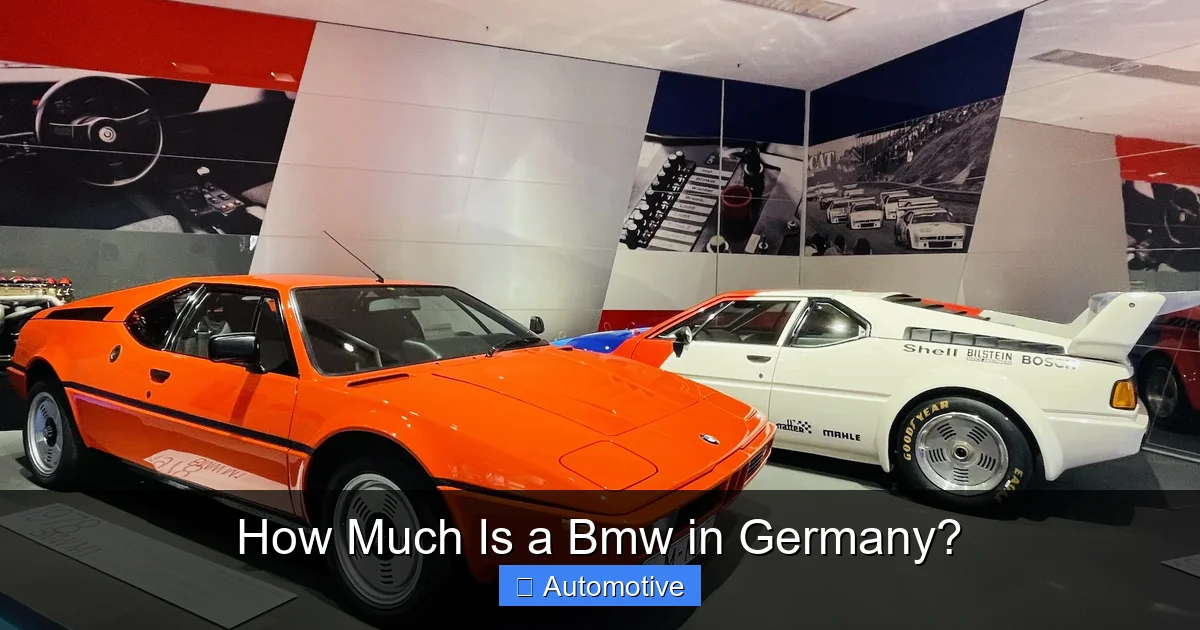
Visual guide about How Much Is a Bmw in Germany?
Image source: chicagodefender.com
Not everyone wants—or needs—to buy a brand-new BMW. In fact, many smart buyers in Germany opt for used or certified pre-owned (CPO) models to save money while still enjoying BMW quality.
How Much Do Used BMWs Cost?
Used BMW prices depend on age, mileage, condition, and model. Here are some realistic examples:
– A 3-year-old BMW 118i with 30,000 km might cost around €22,000–€25,000.
– A 5-year-old BMW 320i with 60,000 km could be priced at €18,000–€22,000.
– A 2-year-old BMW X3 with 20,000 km might sell for €35,000–€40,000.
These prices represent a savings of 30–50% compared to new models, making used BMWs an attractive option.
Certified Pre-Owned (CPO) Programs
BMW’s CPO program offers peace of mind for used car buyers. To qualify, a vehicle must be less than 6 years old, have under 120,000 km, and pass a rigorous 360-point inspection. CPO cars come with:
– A 12-month unlimited mileage warranty
– 24/7 roadside assistance
– Full service history
– No deductible on repairs
CPO models are typically 10–15% more expensive than private sales but offer greater reliability and support.
Where to Buy Used BMWs in Germany
You can find used BMWs through:
– Authorized BMW dealerships (best for CPO)
– Online platforms like Mobile.de, Autoscout24, and BMW’s own used car portal
– Private sellers (lower prices but higher risk)
Always request a vehicle history report (Fahrzeughistorie) and consider a pre-purchase inspection by an independent mechanic.
What Affects the Final Price of a BMW in Germany?
Visual guide about How Much Is a Bmw in Germany?
Image source: synapsee.com
The sticker price of a BMW is just the beginning. Several factors can significantly increase the final amount you pay.
Value-Added Tax (VAT) – 19%
Germany applies a 19% VAT (Mehrwertsteuer) on all new car purchases. This tax is included in the advertised price, so a €40,000 BMW actually costs €40,000 out the door. However, if you’re buying from a private seller or importing a car, VAT rules may differ.
Optional Equipment and Packages
BMW offers a wide range of optional features that can quickly add up:
– M Sport Package: €3,000–€5,000 (sport suspension, wheels, interior trim)
– Driving Assistant Professional: €2,500 (adaptive cruise, lane keep, traffic jam assist)
– Premium Package: €4,000 (premium audio, heated seats, ambient lighting)
– Performance Upgrades: €5,000–€15,000 (exhaust, brakes, suspension)
It’s easy to add €10,000 or more in options, especially on higher-end models.
Financing and Leasing Options
Many Germans don’t pay cash for their BMWs. Instead, they use financing or leasing.
– Financing: You can get a car loan from a bank or BMW Financial Services. Interest rates typically range from 2% to 5% APR, depending on your credit. A €40,000 loan over 60 months might cost €720 per month.
– Leasing: Popular in Germany, leasing allows you to drive a new BMW for a fixed monthly fee. A 36-month lease on a 320i might cost €450–€600 per month, with mileage limits (usually 10,000–15,000 km/year).
Leasing often includes maintenance and insurance packages, making it a hassle-free option.
Insurance and Registration Costs
Owning a BMW isn’t just about the purchase price. You’ll also need to budget for:
– Insurance: Comprehensive coverage for a new BMW can cost €1,500–€3,000 per year, depending on your age, driving history, and location.
– Registration (Zulassung): Around €100–€150, including license plates and documentation.
– Annual Tax (Kraftfahrzeugsteuer): Based on engine size and emissions. For a 2.0-liter gasoline engine, expect €150–€250 per year.
Import and Export Considerations
If you’re not a German resident, buying a BMW in Germany might still be worthwhile—especially if you plan to export it. However, you’ll need to consider:
– VAT refund for non-EU residents (if exporting within 3 months)
– Shipping and import duties in your home country
– Compliance with local regulations (e.g., emissions, safety standards)
Always consult a tax advisor before making an international purchase.
Tips for Getting the Best Deal on a BMW in Germany
Want to save money on your BMW purchase? Here are some proven strategies used by savvy buyers.
Shop at the End of the Month or Quarter
Dealerships often have sales targets. Visiting at the end of the month or quarter increases your chances of negotiating a better price or getting free extras like floor mats, service packages, or extended warranties.
Compare Multiple Dealerships
Prices can vary slightly between dealers, even within the same city. Use online configurators to get quotes from 3–5 dealerships. Mention competing offers to leverage a better deal.
Consider Demo or Nearly New Cars
Demo models (used for test drives) or nearly new cars (returned leases) are often sold at a discount—sometimes 10–15% off the new price—with full warranty coverage.
Negotiate the Out-the-Door Price
Don’t just focus on the monthly payment. Negotiate the total price, including taxes, fees, and extras. Ask for itemized breakdowns and challenge unnecessary add-ons.
Use BMW’s Online Configurator
BMW’s official website lets you build your dream car and get an instant price estimate. You can then take this quote to a dealer and ask them to match or beat it.
Take Advantage of Incentives
Look for current promotions, such as:
– Low-interest financing
– Lease incentives (e.g., reduced down payment)
– Trade-in bonuses
– Electric vehicle subsidies
These can save you thousands.
Is Buying a BMW in Germany Worth It?
So, after all this, is buying a BMW in Germany worth it? The answer depends on your priorities.
If you value German engineering, brand prestige, and driving performance, then yes—owning a BMW in its home country is a rewarding experience. You’ll benefit from excellent service, strong resale value, and the joy of driving a car designed for German roads.
However, if your main goal is to save money, you might find better deals in neighboring countries like Poland or the Czech Republic, where prices can be 5–10% lower due to different tax structures and market conditions.
Ultimately, the decision comes down to what you’re looking for. Whether you choose a new 1 Series for city commuting or a fully loaded X7 for family road trips, understanding the costs and options will help you make the right choice.
Conclusion
So, how much is a BMW in Germany? The answer isn’t a single number—it’s a range that starts around €35,000 for entry-level models and climbs well beyond €150,000 for high-performance and luxury variants. But beyond the price tag, buying a BMW in Germany offers access to world-class engineering, strong consumer protections, and a driving experience that’s hard to match.
Whether you go new, used, or leased, the key is to do your research, compare options, and negotiate wisely. With the right approach, you can drive home in a BMW that fits your budget and your lifestyle—right from the heart of Bavaria.
Frequently Asked Questions
Is a BMW cheaper in Germany than in other countries?
Not significantly. While BMWs are made in Germany, prices are similar to other European countries due to high taxes and living costs. You might save a small amount compared to the U.S. or Asia, but don’t expect huge discounts.
Can I buy a BMW in Germany as a tourist?
Yes, but you’ll need to handle VAT refunds and export paperwork. Non-EU residents can reclaim the 19% VAT if the car is exported within three months. Consult a tax expert before purchasing.
What’s the cheapest BMW you can buy new in Germany?
The BMW 1 Series 118i is the most affordable new model, starting at around €35,000. It’s a compact hatchback ideal for city driving and first-time BMW owners.
Are used BMWs reliable in Germany?
Yes, especially if they’re certified pre-owned (CPO) or have a full service history. German drivers tend to maintain their cars well, and strict inspections help ensure quality.
How much does it cost to lease a BMW in Germany?
Leasing starts at around €400 per month for compact models like the 1 Series. Mid-size sedans and SUVs typically cost €500–€800 per month, depending on the model and lease terms.
Do I need to pay VAT when buying a BMW in Germany?
Yes, a 19% VAT is included in the price of new cars. Private sales may not include VAT, but the buyer is still responsible for it unless exporting the vehicle under specific conditions.
