
How Much Can a Gmc Acadia Tow?

The GMC Acadia is a capable midsize SUV with a towing capacity ranging from 1,500 to 4,000 pounds, depending on the model year, engine, and drivetrain. With the right configuration—especially the V6 engine and trailering package—it can confidently tow small trailers, boats, or campers, making it a versatile family hauler.
If you’re considering the GMC Acadia as your next family SUV, you’re probably wondering: How much can a GMC Acadia tow? It’s a fair question—especially if you plan on hauling a small camper, a jet ski, or even a utility trailer for weekend projects. The Acadia has long been praised for its comfortable ride, spacious interior, and upscale feel, but how does it stack up when it comes to real-world towing?
The short answer? It depends. Towing capacity isn’t a one-size-fits-all number. It varies significantly based on the model year, engine type, drivetrain, and whether you’ve equipped your Acadia with the right towing gear. From its debut in 2007 to the latest 2024 models, the Acadia has evolved—both in design and capability. While earlier versions were built more like traditional SUVs with stronger frames and V6 power, newer models have shifted toward car-like unibody construction and fuel-efficient 4-cylinder engines. This evolution means that while the Acadia remains a solid choice for light to moderate towing, you’ll need to pay close attention to the details to get the most out of it.
In this guide, we’ll break down everything you need to know about the GMC Acadia’s towing capabilities. We’ll cover the different engine options, how model years affect performance, the importance of factory towing packages, and practical tips for safe hauling. Whether you’re eyeing a used 2010 Acadia or a brand-new 2024 Denali, this article will help you understand exactly what your SUV can handle—and how to do it safely.
Key Takeaways
- Understanding How Much Can a GMC Acadia Tow?: Provides essential knowledge
📑 Table of Contents
- Understanding Towing Capacity: What It Really Means
- GMC Acadia Towing Capacity by Model Year and Engine
- The Role of the Trailering Package
- Drivetrain and Towing: FWD vs. AWD
- Practical Tips for Safe Towing with Your GMC Acadia
- Comparing the Acadia to Competitors
- Final Thoughts: Is the GMC Acadia Right for You?
Understanding Towing Capacity: What It Really Means
Before diving into the numbers, it’s important to understand what “towing capacity” actually means. Simply put, it’s the maximum weight your vehicle can safely pull behind it, including the trailer, cargo, passengers, and any additional gear. This number isn’t arbitrary—it’s determined by GMC based on engineering tests that consider the vehicle’s frame strength, engine power, transmission durability, braking system, and cooling capacity.
Towing capacity isn’t the same as payload capacity. Payload refers to how much weight the vehicle itself can carry inside—passengers, luggage, and gear. Both numbers are crucial when planning a trip with a trailer. For example, if your Acadia has a 4,000-pound towing capacity but a payload limit of 1,500 pounds, you can’t just load up the trailer and ignore the weight of your family and belongings. Overloading either the trailer or the vehicle can lead to poor handling, increased stopping distances, and even mechanical failure.
Another key term is “gross combined weight rating” (GCWR). This is the total allowable weight of your vehicle, passengers, cargo, and trailer combined. Exceeding this limit is dangerous and often illegal. Always check your owner’s manual or the door jamb sticker for these ratings.
When shopping for an Acadia, don’t just rely on marketing claims. Look for official towing specifications from GMC, and verify whether the vehicle includes the necessary towing equipment. A higher towing number sounds great, but it’s only useful if your SUV is properly equipped to handle it.
GMC Acadia Towing Capacity by Model Year and Engine
Visual guide about How Much Can a Gmc Acadia Tow?
Image source: rvandplaya.com
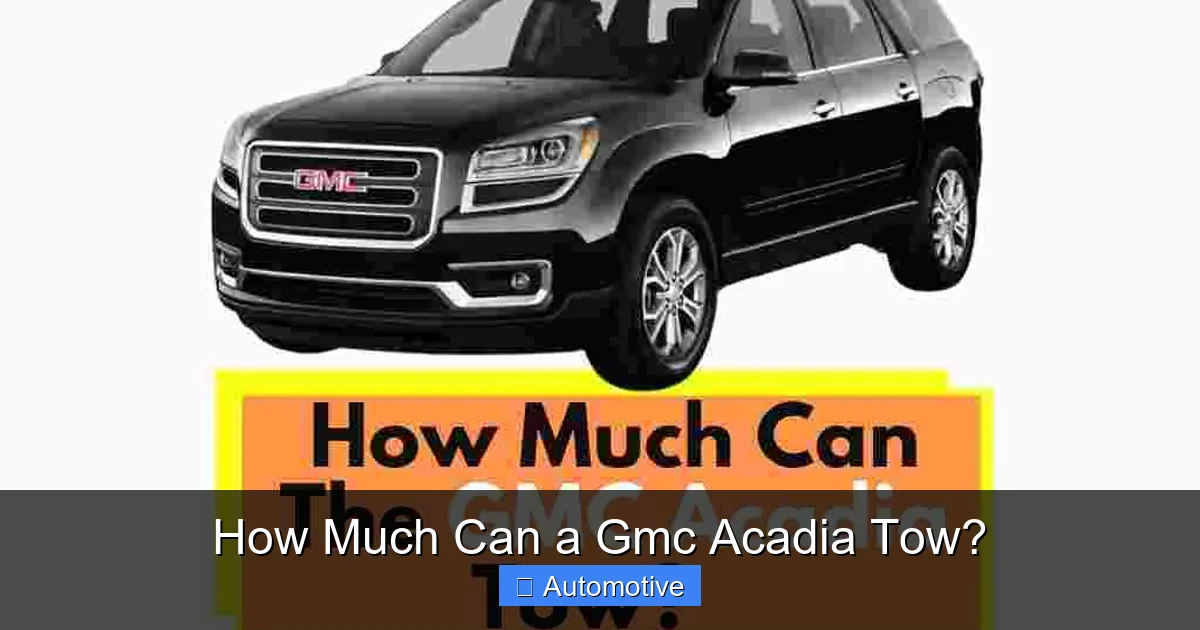
One of the most confusing aspects of the Acadia’s towing capability is how it changes over time. The SUV has undergone major redesigns, especially in 2017, which shifted its platform and powertrain options. Let’s break it down by era.
First Generation (2007–2016): The V6 Era
The original GMC Acadia was built on a robust platform shared with the Chevrolet Traverse and Buick Enclave. These models came standard with a 3.6L V6 engine, which delivered strong torque and reliable towing power. With this engine and the optional trailering package, the Acadia could tow up to 4,000 pounds—a respectable number for a midsize SUV at the time.
This generation also offered all-wheel drive (AWD), which improved traction and stability when towing, especially in adverse weather. The body-on-frame-like construction (though technically unibody) gave it a sturdy feel, and the suspension was tuned to handle heavier loads. If you’re buying a used Acadia from this era and plan to tow regularly, this is the sweet spot.
Second Generation (2017–2024): The Efficiency Shift
In 2017, GMC redesigned the Acadia to be smaller, lighter, and more fuel-efficient. While this improved gas mileage and handling, it also reduced towing capacity for some configurations. The new platform prioritized urban driving and family comfort over heavy-duty capability.
Here’s where things get nuanced. The 2017–2024 Acadias offer multiple engine options:
– 2.5L 4-cylinder (base engine): Found in lower trims like the SLE and SL. This engine is fuel-efficient but underpowered for towing. Towing capacity is limited to 1,500 pounds—enough for a small utility trailer or a couple of motorcycles, but not much else.
– 2.0L Turbo 4-cylinder: Available in mid-level trims. This engine offers better performance and can tow up to 3,500 pounds when equipped with the trailering package. It’s a good middle ground for buyers who want better fuel economy than a V6 but more power than the base engine.
– 3.6L V6 (available in higher trims like SLT and Denali): This is the towing champion of the current generation. With the V6 and trailering package, the Acadia can tow up to 4,000 pounds—matching the first-gen models. However, this engine is only available on select trims and may require upgrading to AWD.
It’s worth noting that not all V6-equipped Acadias are created equal. Some 2021–2024 models with the V6 are rated for 4,000 pounds, while others—especially those with front-wheel drive (FWD)—may be slightly lower. Always confirm the specific configuration.
Real-World Towing Examples
So what can you actually tow with a GMC Acadia? Let’s look at some practical examples:
– 1,500 lbs: A small utility trailer with lawn equipment, a few bags of mulch, or a pair of ATVs.
– 3,500 lbs: A mid-sized camper (like a pop-up or teardrop trailer), a small boat with trailer, or a motorcycle trailer with two bikes.
– 4,000 lbs: A larger travel trailer (under 20 feet), a pontoon boat, or a small enclosed cargo trailer.
Keep in mind that these are maximums. Always leave a safety buffer—don’t tow right up to the limit unless absolutely necessary. And remember, the weight listed on a trailer includes everything: the trailer itself, cargo, water tanks, propane, and gear.
The Role of the Trailering Package
Visual guide about How Much Can a Gmc Acadia Tow?
Image source: autouptodate.com
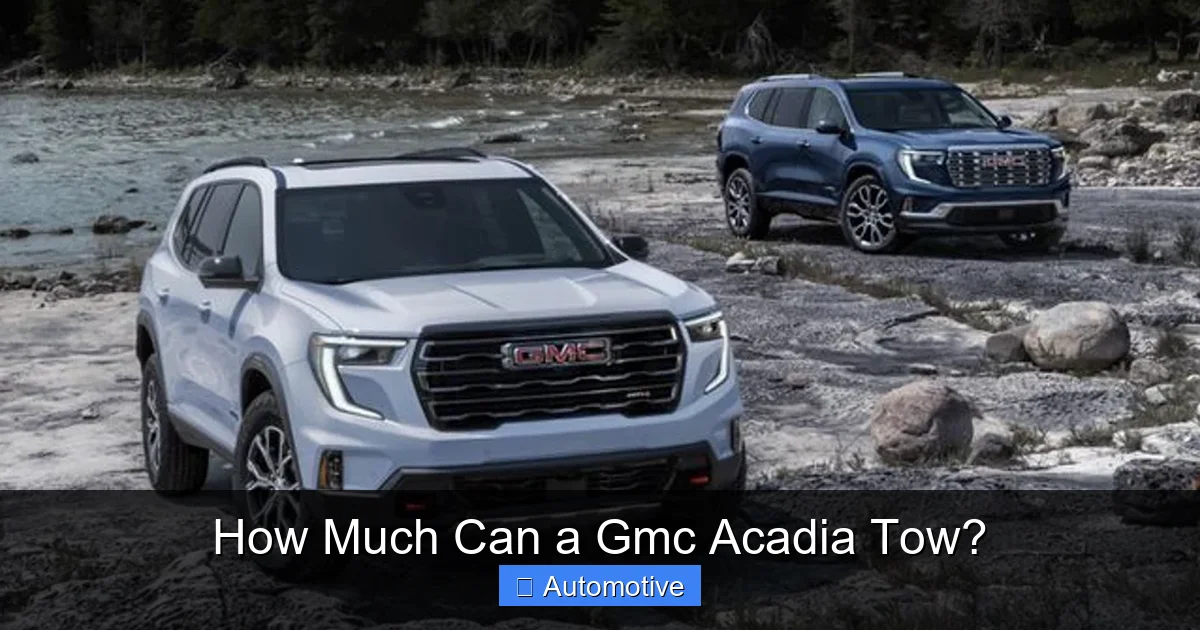
You might be wondering: “Can I just add a hitch and start towing?” The answer is—technically yes, but it’s not recommended. To safely and legally tow near the Acadia’s maximum capacity, you need the factory-installed trailering package. This isn’t just a hitch; it’s a comprehensive system designed to handle the stress of towing.
What’s Included in the Trailering Package?
The GMC trailering package typically includes:
– Class III hitch receiver: Rated for up to 4,000 pounds, this heavy-duty hitch is mounted securely to the frame.
– Wiring harness: Allows your trailer’s lights (brake, turn, and running lights) to sync with your Acadia’s signals.
– Transmission cooler: Prevents overheating when towing heavy loads, especially in hot weather or on long climbs.
– Heavy-duty alternator and battery: Ensures electrical systems can handle the extra load from trailer lights and brakes.
– Integrated trailer brake controller (on some models): Allows you to manually adjust trailer brake pressure from the cab.
Without these components, your Acadia may overheat, have electrical issues, or lack the braking control needed for safe towing. Even if you install an aftermarket hitch, skipping the cooler or brake controller can lead to dangerous situations.
Aftermarket vs. Factory Packages
Some owners consider aftermarket towing solutions to save money. While third-party hitches and wiring kits are available, they often don’t match the integration and reliability of GMC’s factory package. For example, an aftermarket brake controller may not communicate seamlessly with the Acadia’s systems, leading to inconsistent braking.
If you’re buying a used Acadia, always check if it has the trailering package. You can usually identify it by the presence of a hitch receiver and a wiring plug behind the bumper. If it’s missing, factor in the cost of adding it—typically $1,000–$1,500 professionally installed.
Drivetrain and Towing: FWD vs. AWD
Another factor that affects towing performance is the drivetrain. The GMC Acadia is available in both front-wheel drive (FWD) and all-wheel drive (AWD). While both can tow, AWD offers clear advantages—especially for heavier loads.
Why AWD Matters for Towing
All-wheel drive sends power to all four wheels, improving traction on slippery or uneven surfaces. When towing, this means better control when starting from a stop, climbing hills, or driving in rain or snow. It also reduces the risk of wheel spin, which can destabilize the trailer.
In real-world terms, an AWD Acadia with the V6 and trailering package will feel more confident and stable when towing 3,500–4,000 pounds compared to a FWD model. The added grip helps maintain momentum and reduces strain on the engine and transmission.
FWD Limitations
Front-wheel drive is fine for light towing—say, under 2,000 pounds—but it has drawbacks. The front tires handle both steering and power delivery, which can lead to understeer (pushing wide in turns) when towing. Additionally, FWD models may have slightly lower towing ratings, even with the same engine.
If you live in a region with hills, mountains, or frequent rain, AWD is strongly recommended for towing. It’s not just about power—it’s about safety and control.
Practical Tips for Safe Towing with Your GMC Acadia
Knowing your Acadia’s towing capacity is only half the battle. The other half is using that capacity safely and responsibly. Here are some essential tips to help you tow like a pro.
1. Know Your Load
Always weigh your trailer and cargo before hitting the road. Use a public scale (many truck stops have them) or a portable tongue weight scale. Remember: the trailer’s listed weight is often dry (empty). Add water, gear, and propane, and you could easily exceed limits.
2. Balance the Load
Proper weight distribution is critical. About 60% of the trailer’s weight should be on the front half, with 10–15% on the tongue (the part that connects to the hitch). Too much tongue weight can cause the rear of the Acadia to sag, affecting steering and braking. Too little can lead to trailer sway.
3. Use the Right Hitch and Accessories
For loads over 2,000 pounds, consider a weight-distribution hitch. This device spreads the trailer’s weight more evenly across all four tires, improving stability. Also, use safety chains crossed under the hitch and ensure your trailer brakes are functioning.
4. Check Tires and Brakes
Both your Acadia and trailer tires should be in good condition with proper inflation. Underinflated tires overheat and can fail. Also, inspect trailer brakes regularly—especially if you’re towing frequently.
5. Drive Cautiously
Towing changes how your vehicle handles. Allow extra distance for braking, take turns slowly, and avoid sudden maneuvers. Use lower gears on hills to reduce strain on the transmission.
6. Maintain Your Acadia
Towing puts extra stress on your engine, transmission, and cooling system. Follow the severe-duty maintenance schedule in your owner’s manual, which includes more frequent oil changes, coolant checks, and brake inspections.
Comparing the Acadia to Competitors
If towing is a top priority, it’s worth comparing the Acadia to similar midsize SUVs like the Honda Pilot, Toyota Highlander, and Ford Edge.
– Honda Pilot: Offers up to 5,000 pounds of towing with the V6 and trailering package—more than the Acadia.
– Toyota Highlander:Ford Edge: Maxes out at 3,500 pounds with the turbocharged engine.
The Acadia holds its own, especially with the V6, but it’s not the strongest in its class. However, it compensates with a more upscale interior, smoother ride, and strong reliability ratings. If you’re towing under 4,000 pounds and value comfort and style, the Acadia is a great choice.
Final Thoughts: Is the GMC Acadia Right for You?
So, how much can a GMC Acadia tow? The answer ranges from 1,500 to 4,000 pounds, depending on your model year, engine, and equipment. For light hauling—like a small trailer or pop-up camper—even the base 4-cylinder model will do the job. But if you plan to tow a boat, larger camper, or anything over 3,000 pounds, you’ll want the V6 engine, AWD, and the factory trailering package.
The Acadia isn’t a heavy-duty tow rig, but it’s more than capable for most family adventures. It blends practicality, comfort, and style in a way few competitors can match. Just remember: towing safely means knowing your limits, equipping your vehicle properly, and driving with care.
Whether you’re heading to the lake for the weekend or moving furniture across town, the GMC Acadia can be a reliable partner—as long as you respect its capabilities and prepare accordingly.
Frequently Asked Questions
What is the maximum towing capacity of a GMC Acadia?
The maximum towing capacity of a GMC Acadia is 4,000 pounds, but only when equipped with the 3.6L V6 engine, all-wheel drive, and the factory trailering package. Lower trims with 4-cylinder engines have significantly lower limits.
Can a 4-cylinder GMC Acadia tow a trailer?
Yes, but with limitations. The 2.5L 4-cylinder model can tow up to 1,500 pounds, while the 2.0L turbo can handle up to 3,500 pounds with the trailering package. These are suitable for small trailers, jet skis, or lightweight campers.
Do I need a special package to tow with my GMC Acadia?
Yes. To safely tow near the maximum capacity, you need the factory-installed trailering package, which includes a hitch receiver, wiring harness, transmission cooler, and other essential components.
Can I tow with a front-wheel drive GMC Acadia?
Yes, but AWD is recommended for heavier loads. FWD models can tow, but they offer less traction and stability, especially on hills or in wet conditions.
How do I know if my used GMC Acadia has the trailering package?
Look for a Class III hitch receiver mounted to the frame and a wiring plug behind the bumper. You can also check the vehicle’s build sheet or ask the dealer for confirmation.
What happens if I exceed the towing capacity?
Exceeding the towing capacity can cause transmission failure, brake overheating, loss of control, and void your warranty. It’s also illegal in many states and can lead to fines or liability in accidents.
